Response to Peter Attia Insulting Low-Carbers
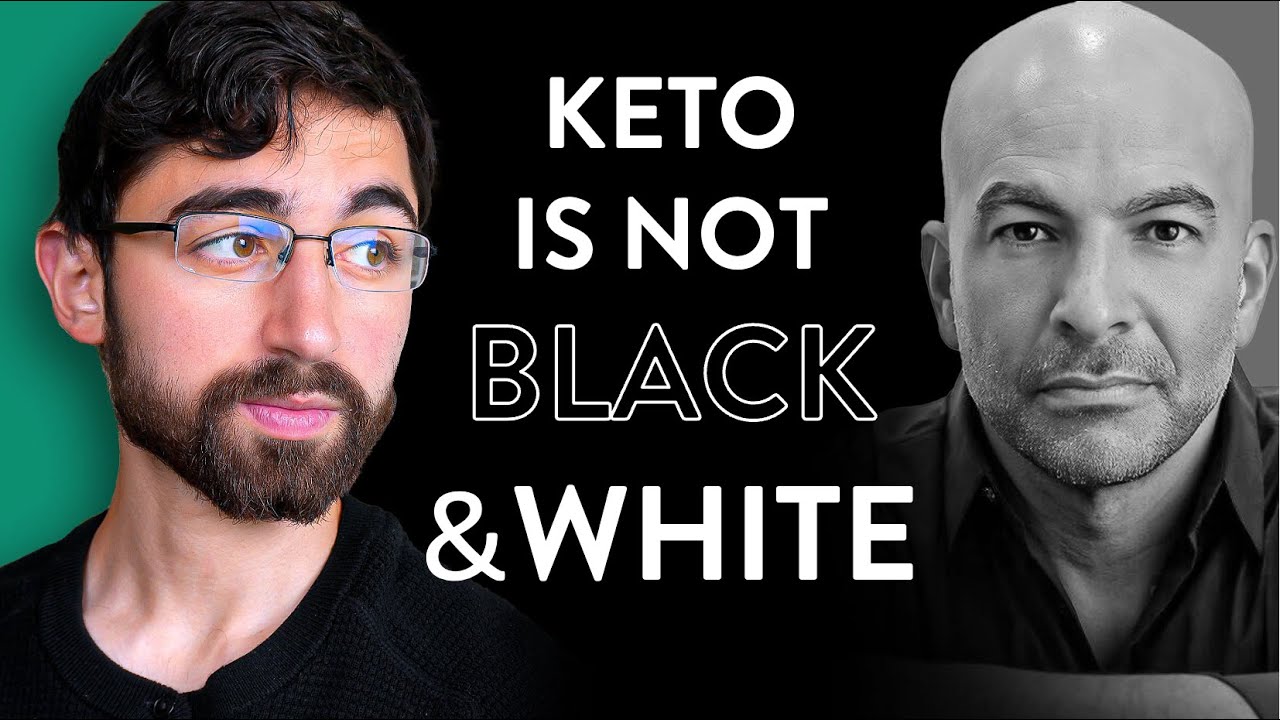
Nick Norwitz responds to Peter Attia's criticism of low-carb advocates, defending the Lipid Energy Model and the Lean Mass Hyper-Responder phenotype. He cites the Oreo versus Statin experiment as a test of the model and notes that lipid researchers like Ronald Krauss and William Cromwell are now engaging with the debate.
Chapters
If you're watching this, you almost certainly know about Oreo versus Statin and that it's gone relatively viral. We've gotten millions of views and watches across YouTube and podcasts, had multiple interviews, news articles are dropping left and right. It's been quite an exciting time. In that maelstrom, a lot of people have been DMing me clips from old podcasts, particularly one, a conversation between Dave Feldman, my colleague and the man who came up with the Lipid Energy Model and Lean Mass Hyperresponders in the first place, and Dr. Peter Attia. Now, I don't tend to like to air dirty laundry or dig up things from the past. So this was a podcast back in 2018. I think it was episode 19. I'll link it below. Because people are allowed to, you know, change their ideas and what now, 6 years is a long time. So I want to caveat what's about to happen, which is me reacting to a little bit of conversation with the statement, I'm not trying to shame anybody. However, this is a really important conversation, lean mass, hyperresponders, and lipid energy models that I think we all need to be having as a scientific and medical community. And Peter has a massive voice. He is someone that, quite frankly, I think he should talk with Dave again or talk with me about the evolving science, because even in recent times, and you can see my past reaction video, I think there's been mischaracterization of the work that we're doing, the claims that are being made. And so this is just a little snippet. I'll react to it and then leave the door open to response by Peter and colleagues so we can have an evolved discussion that hopefully can move the conversation forward. So with that, let me play. This is the timestamp around 3 hours and 6 minutes in the podcast.
The question is, how does it alter our understanding and thinking of the problem.
Look, the whole reason I'm even pursuing this particular strata is because of the model in the first place. I had to have something that I could conceive of that would inform the decision by which I would be looking for what the data is that would disprove it. That's why I'm in pursuit of disproving it. At the end of the day, Peter, I, I can't emphasize this enough, I'm not looking to talk to the echo chamber or looking to just maneuver around inside of a number of people that are going to congratulate me.
I specifically But I think you're better off going to an NLA meeting than—
I want to pause and just reflect on what Dave said there. He's trying to disprove lipid energy model, the observations were being made. That's how science works. That's how it should work. A lot of the time people are looking for confirmation bias, but a good scientist will take the model and really try to smash it. And quite honestly, maybe I have a biased perspective, but I would pat our whole team on the back for doing a really good job of doing that in the first place. I think we can use Oreo versus statin as an example. You know, if you take your model and you want to kind of break it, break it with a hammer, Oreo versus statin is like getting a a rhino high on cocaine and like shooting it at the model and seeing if it breaks. The idea that, you know, for me it was I announced that I was going to do this, didn't know if it would work but thought it would work, and we see where the data landed, you know, half a year later. And the data are what the data are. If you haven't seen that video abstract, definitely check it out because this conversation needs some context. But that aside, I think in general we've been trying really hard to break the model and speak across the aisle. I've contacted Peter, I've contacted, well, I mean, Plant Chompers, Walter Willett. We're willing to speak with people outside the low-carb community. In fact, those those are the conversations we really want to have. However, in order for that to happen, the onus is on, you know, the hosts to have us on and platform us, be willing to have the discussions. It's really impossible, or at least unfair, to expect us to speak across the aisle when the other side of the aisle doesn't want to speak with us. With that, we'll continue.
And then a low-carb meeting.
Sure, but they're freaking expensive. I've looked at all of them.
I got the low-carb community to fund you. If they want to know the answer, Because I don't think they do, if I'm going to be brutally honest. I think the worst of that crowd just want their confirmation bias. They have seen these incredible benefits of low carbohydrate diets, and their belief is nothing can be wrong with this. Like, we somehow live in a mono-dimensional, monochromatic world where, like, it's that black and white. And if the diet is good for this, it can't be bad for anything. And they are so wed to that that they construct these crazy arguments. But if they share your passion for truth, then they should happily fund you to go to an NLA meeting and spend a week there and, and actually start—
I'll pause it there for a few comments. One, his challenge to Dave to get the low-carb community to fund him— well, I think Dave picked up that gauntlet pretty well, having now started a grassroots movement that funded the trial that's going on at the Lundquist Institute looking at lean mass hyperresponders and plaque progression. Plus, he has gone to many NLA meetings. Now, the second portion by Peter, when he's calling the low-carb community and basically calling them out as, uh, monochromatic thinkers, I think is the way he put it, thinking in just black and white. I'm going to call a little bit of hypocrisy there on a few fronts. One is that quite honestly, Peter, I think you've been a monochromatic thinker on some of these topics that have now been evolving. This wasn't just like one esoteric blog at this point in 2024. We've had, you know, 10 or so papers on the topic and really trying to distinguish different etiologies, different causes of high LDL cholesterol, and why high LDL in a lean lean mass hyperresponder context is very, very different than FH, which you seem to continually conflate. So this was a video I did over a month ago in response to you and Derek and your conversation and saying, look, you have some good points which I line up, but it's completely inappropriate to conflate these different causes of high ApoB, high LDL, FH, and lean mass hyperresponders. They're distinct and you don't seem to want to separate them. So you can go see that other video if you want, but the bottom line is like in the one, FH, you have a congenital disorder with a broken metabolism. Yes, you can say it's a phenotypic diagnosis with a genotypic etiology, but the basis is you have a broken lipid metabolism. This is congenital, and there aren't things like in lean mass hyperresponders where we see the inverse relationship to BMI, that it's inducible with carbohydrate restriction and reversible with carbohydrate reintroduction. Even Oreos— bottom line, these are distinct etiologies, distinct phenotypes. You can't just look at the LDL and call them the same, or then conclude from that high LDL that they're at the same level of risk. We need to ask those questions. They're beyond the boundary of our current knowledge base. So it's monochromatic black and white to say high LDL is high LDL is high LDL, because quite honestly, we don't know that.
So continuing, hang in with these guys who are way smarter than me. Like, I'm a knucklehead. I mean, I know a lot about lipids for a knucklehead, but I'm talking about like the smartest people in the world are the ones you need to be talking to on this topic, and they're not at low-carb conferences. I promise you that. They're not on Twitter, and they're not playing patty cakes on their like high-carb or whatever, low-carb blogs. Like, it's just not about that stuff, man. And again, I mean, I think what you're doing is really interesting.
I don't agree with the model, but I think that was a little bit condescending. I'll leave you to make your own conclusions regardless of this was in 2018, just as condescending and I think inappropriate call, plus easily falsifiable. I mean, William Cromwell, who is the senior author on Oreo versus statins, trained Thomas Dayspring, who trained Peter Attia, and he's coming to COSI in March, the conference that Dave is running. You can't just blanket say the smartest people in lipids aren't at these meetings. That's just a jerk thing to say. I'm sorry, you're concluding based on somebody's dietary preferences their intelligence. That's a little bit knuckleheady, as you call yourself. I will say, he goes on to say we should speak to these people. We have. I reached out to Peter when I wanted to write the Journal of Clinical Lipidology report, and he very nicely declined, saying that he wasn't an expert on this and that I should talk to someone like Ronald Krauss. We talked to him, now he's senior author on that. Point being, talking about these experts— Cromwell, Krauss, Anatole Kontouch— they're now joining in the conversation with interest around lean mass hyperresponders and the lip energy model. So my question to you, Peter, now speaking directly to you: why haven't you expressed interest? So I'm gonna leave it there. Again, I'm a little bit pokey punchy, but that's because this is evolving quickly. We'll soon have a dozen papers on this topic. We have pretty compelling data, including a recent meta-analysis of 41 randomized controlled trials spearheaded by our good Adrian Sotomayor, MD, PhD, in the American Journal of Clinical Nutrition. Like, that's not low-level data. It's a meta of RCTs. And yes, I'm doing things like Oreo versus statin because what that does is give me a platform to speak to you and to speak to the community. It seems to be working, and I am at some level throwing down the gauntlet and say, let's have an evolved conversation. I think you'll find me pretty reasonable. I'm not gonna say high ApoB is fine. I'm not gonna say ketogenic diets cure everything and there's no problem with them. I don't believe that. I actually probably can come to a pretty decent center and agree with statements that you make, like It's part of the LDL-APOB, it's part of the causal cascade. It's necessary but not sufficient. And what do we do with the information we have and the tools we have? The tools including now, you know, a wide buffet of drugs, including in addition lifestyle modifications. And how do we wrap context around individual patients to treat with appropriate clinical caution and then at the same time pursue more research that we can then use to again inform decisions of real people? So those are my words. I hope you actually respond to this. I realize you're a busy man, but I think this is important and I hope you agree.










