Sardines, Sleep & Super-Longevity | ft' Professor Dominic D’Agostino
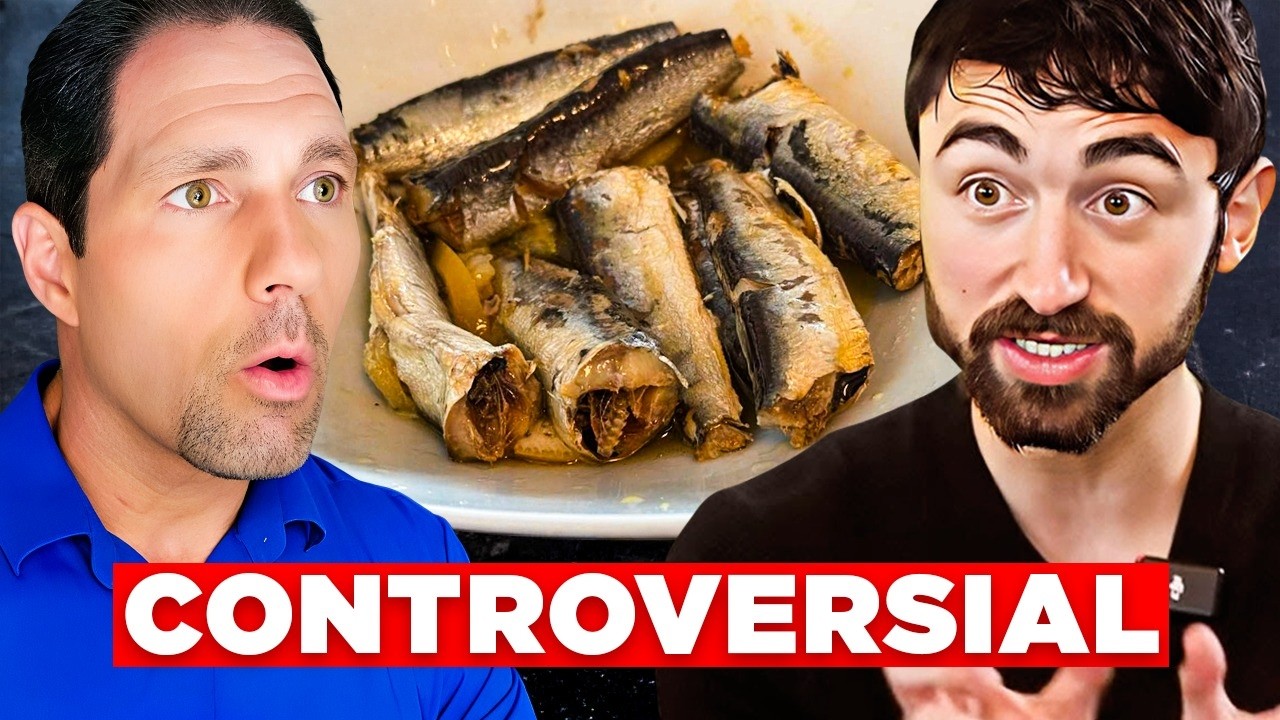
Professor Dominic D'Agostino discusses melatonin's 30-year track record, creatine dosing at 10-20g daily for brain energy, and sardine fasting as a nutrient-dense protocol. He reviews a 117-year-old woman's biomarkers: short telomeres but youthful epigenetic age, high omega-3 status, and a diet of fish and yogurt, arguing purpose and social connection may matter more than LDL cholesterol.
Chapters
antioxidant effect, anti-inflammatory effect, and anti-cancer effect for both the brain and longevity. Becomes like the perfect food.
Mindset really does change our metabolism.
I have so much energy now, I'm so much stronger.
That it's actually not a good thing to take.
All these farmers lived 10 years beyond the normal male lifespan.
They're just absolutely delicious.
A very intense focus on LDL, even manically.
I will call it the most elite form of biohacker fasting. I just have to say, the interview you're about to see is one of the most jam-packed, fun, and for me, educational interviews that I've conducted thus far. We go over a litany of things.
If you're particularly interested in the sardine diet, which I know has been going viral, you can jump to 29:40 in the video.
But I really hope you watch this all the way through. Professor Dom D'Agostino drops some knowledge bombs. This was a fun one. We cover everything from super longevity to creatine to sardine fasting, melatonin, and so on, you're gonna wanna watch this one probably several times. Anyway, let me get to it. All right everybody, I'm back with part 2 with Professor Dom D'Agostino. If you missed part 1, it was a masterclass in exogenous ketones. Professor, uh, D'Agostino blessed us with his exogenous ketone wisdom. I don't think there's anything like it on the internet today. But anyway, that aside, we're gonna now go into some hot button topics. It's gonna be, gonna be a rapid fire of, of controversial things in the nutrition space. I just want to kick it off getting right into melatonin, which I think is a very misunderstood molecule as a supplement. So I've heard mixed things like melatonin can disrupt your hormones, that it's actually not a good thing to take. And I know the people who take it religiously. Where do you stand?
Yeah, I, you know, I've been taking melatonin since 1993. Since I was a senior in high school. It's when I started taking creatine too, when it first came out. And I'm a fan of melatonin. It helps get me to sleep faster. I have no problem staying asleep. And I became so interested in it that I studied it in grad school and then later as a postdoctoral fellow, I did some studies with melatonin, putting it into artificial cerebrospinal fluid where I did electrical recordings and, and recorded oxidative stress in hippocampal brain slice preparation and clearly showed that it has neuroprotective effects and reduces superoxide production. So I have mostly been interested in melatonin because it crosses the blood-brain barrier. It's a small molecule, it gets into neurons, and it has a remarkable antioxidant effect, anti-inflammatory effect, and anti-cancer effect. So, uh, and I think, uh, To my knowledge, and maybe someone can correct me on this, uh, melatonin does not suppress, uh, your own melatonin production. So I was curious about that. So I actually did studies, you know, I did, you know, N of 1 on myself to see, cause it makes it kind of made sense that it could, but I did not see that in myself. And that is not anywhere in the literature that I can find in humans at least. And also, uh, melatonin does not suppress hormones. So there's no feedback mechanism that would suppress, for example, luteinizing hormone, follicle stimulating hormone, or testosterone. So I knew that must be the case because I was taking melatonin. My testosterone, you know, has been fine. I'm in my 50s now. So, and, you know, there's no suppression of hormones or melatonin. So I, you know, and I knew that I did not become dependent on it either. What's that?
Where does that rumor come from though? Because I mean, even people I think that we mutually respect, um, speak about the potential hormonal harms of melatonin. So is there any kind of basis and logic or is it just a myth and rumor?
Well, I mean, uh, people that emailed me and said, uh, Andrew Huberman was talking about it and I, I think he's an amazing neuroscientist and even maybe, you know, equally amazing scientific educator and I think he actually did research maybe on a rodent model or maybe like a guinea pig model. And it, there is some evidence perhaps in like hibernating animals that there could be a suppression of hormones in, in certain animal species. And we could go into the mechanisms of why that's the case, cuz I studied hibernating animals and, uh, but in humans there's absolutely no evidence, uh, to my knowledge published anywhere. If people, you know, send me the, the publication, No evidence that I'm aware of that melatonin has any negative feedback on sex hormones or interestingly your own melatonin production. And if someone has evidence to the contrary, I would love to read it. But, uh, I'm also my N of 1, so I, I know personally that it does not, you know, affect me personally, but there's no human data to support that either.
So it sounds like, you know, sometimes we have animal data and we make cautionary speculation, and that maybe there's a paucity of human evidence, but, and then I guess your personal protocol's been informed on having taken this for at least now 32 years and not seen any negative hormonal effects. Just on the practical element, what dose do you take and in what form? I actually use it and I use like 2.5 milligrams sublingual. Do you have any thoughts about any other forms?
Yeah, I buy, I think 5, no, or 10 milligrams and I cut it depending if I'm traveling, I will bite a 10 in half and then chew the 5 and hold it underneath my tongue, you know, to reset my circadian. But otherwise, I think I buy the 10 just 'cause it's like cheaper and I, and they're fairly big and I just split it in quarters and I take like a, a 2.5 typically and just chew it and hold it underneath the tongue. Maybe when I'm finishing up the day and taking the dogs out to, you know, for their last pee before the night. And I think it has, you know, it could be placebo, but I feel like it has a nice relaxing effect and it puts me to sleep faster. Although I've been in situations where I forget the melatonin and I fall asleep equally fast and have a great night's sleep. So I'm not physically or even psychologically dependent on it.
Same boat. And I've always said, hey, if it's a placebo, it still works. But it sounds like the primary reason you take it routinely is, you know, it, especially the sublingual form, gets straight into the blood but then can cross into the brain. With potential neuroprotective properties. So, acting as an antioxidant agent there. So, it sounds like your primary reason from taking it, correct me if I'm wrong, is not to get to sleep but because you think it's probably a cheap neuroprotective compound.
Yeah, absolutely. And I've kind of shown this experimentally. I could send you the publication. It came out about 20 years ago. Yeah. But I did a lot of, I was trained as a patch clamp electrophysiologist measuring electrical recordings, action potentials, little spiky things. Uh, but also I developed various techniques to measure, um, to measure oxidative stress in, in cells, in, in brain cells. And specifically there was a dye, various dyes. One was dihydroethidium. And instead of just like soaking, soaking the brain tissue or cells in it and then experimenting on it, I developed a way to infuse it continuously. So you could do long recordings, uh, on brain tissue and, and cells and actually measure the superoxide production. And melatonin was one of the things that worked remarkably well in basically reducing, uh, hyperoxia-induced oxidative stress, but also various like chemical agents that could cause mitochondrial dysfunction. It was like protective against that too.
That's awesome. All right, I wanna move on and keep this rolling. Speaking of popular compounds, creatine. So I don't wanna speak about creatine and muscles. I wanna go a little bit beyond that, particularly creatine for both the brain and longevity. And I'll double-click on the longevity thing first, but what can you tell us about creatine and brain function?
All the rage now on social media is to take a higher dose of creatine. The, the liver and the muscles are kind of greedy. So if you're taking like 5 grams a day, the liver and muscles are kind of soaking up a lot of that. But if you take additional amounts of creatine, 10, 20 grams a day, that kind of spills over into circulation where it crosses the blood-brain barrier and you're dumping more and storing more in the brain. And studies have shown that this could mitigate maybe sleep deprivation or, you know, situations where your brain energy metabolism is taking a hit, right? So if you're fatigued, So, uh, I think there's a good rationale. Creatine, I think there's like 500, 600, maybe even 1,000, you know, clinical trials now on creatine. So it is by far the most studied ergogenic aid. And I say ergogenic aid, but I think most studied nutritional supplement because originally it was studied as an ergogenic aid. In 1995, I wrote, I put it into my final exam as an ergogenic aid and I got zero points for it because the, the professor thought there was no data for, for that in '95 because I'd been using it for 2 years. But now the data is unambiguous that it's, it's the most effective supplement on the market, but not just for muscle and strength. The muscle thing is a little bit controversial, whether it increases protein synthesis, but strength and, and muscular resilience, meaning, or muscular endurance, meaning it enhances your capacity to do multiple sets. Of the same weight over time. That's really where it shines. So, but now the, the emphasis has really been on the brain and potentially mitigating mild cognitive impairment. So that's a very exciting area of research.
I'm gonna get into that in a moment, but I just wanna quickly ask a practical question, which is tolerating a dose as high as 10 to 20 grams. So I get bloating even at like 5 grams. I have a very sensitive stomach. So are there tips and tricks for you know, building up to a dose that could be beneficial for the brain without having GI upset.
Yeah, I get irritation too with creatine on an empty stomach, you know, not 5 grams, but definitely 10. Like, I wouldn't want to take 10 or 20 grams in a single dose. Some people do and are fine with it. But one way to mitigate the potential GI side effects and bloating of creatine is to drink lots of water, right? But also just take your creatine with food. Food. There's some evidence that you should not take it with coffee because the caffeine could interfere with some of the signaling and absorption and, and metabolism of creatine and the way it's used. But for example, like if I have 3 meals today, I'm going to include 3 creatine in the meal and I kind of, I'll space it away from when I have coffee too. So there's some, some evidence emerging that that could be counterproductive to like throw creatine in your coffee. So, so don't do that. But I would add it to 5 grams or even 5 to 10 grams if I'm kind of sleep deprived with meals with protein too, it helps. And of course, like something like sardines, fish I think has the highest creatine content. So sardines have like tons of creatine and I, I, I eat a lot of beef and sardines. So, but I would say this, I've communicated with people, a few that were vegan or vegetarian and those diets have essentially no creatine and they're like massive responders to creatine and they're like, it like changed their, like, I have so much energy now. I'm so much stronger. I had a response to creatine in 1993. I keep a training journal, but it was like, you know, 2 or 3 reps with like 225 or something on the bench. So it was like a modest, but it was like after a month, it wasn't like I was like super excited about it cuz it was, you know, it was expensive and, but I was also eating a lot of meat. So I think that you need to, you know, your, your response to creatine will be dependent upon your dietary consumption of creatine.
Yeah, I'll have to report back. I have to come out of the closet as a metabolic health advocate who does not take creatine because of the, the GI upset. So as I was reviewing for this, this chat, I was starting to look into the literature. I'm like, yeah, it's pretty good.
So are you using CreaPure? CreaPure comes from— it's a source in Germany. So make sure you source your creatine and get the micronized CreaPure supplement, and it'll be Most people, like even people that have GI upset with regular creatine monohydrate, many of them can tolerate CreaPure better, I think. So maybe try that.
Oh, that's great. Yeah, I'll check that out. I was, I was making into panna cottas this morning. I was just making my coffee. I didn't put into coffee, but I sometimes put in like an Element salt and I had the chocolate salt and I had some cream. I'm like, hmm, put some gelatin. I just like whisk together and then toss some creatine in. So we'll see if it sits better and then I'll get that reappear as well and try it out, and I'll let you know how it goes. Hey, future Nick here.
I actually recorded this interview with Professor Dom D'Agostino many months ago. Since then, I have updated my creatine protocol. I do now take at least 5 grams daily with food, and I find I do tolerate the creatine monohydrate when I take it with food.
So there's your update.
Dom convinced me. I did this interview intentionally naive and then delved into the creatine literature a lot more deeply.
If you want my breakdown on that, I did write a newsletter and I'll have a video coming soon as well, so you can check the links below for that. Yeah. Okay. Another thing on creatine, I mentioned longevity. So one paper I know we both read, it's like a viral paper right now. It was out on this woman who died in Spain recently. She was 117 years old and 168 days, the oldest verified woman at the time. I was looking through some of her metabolic panels and there were a few markers that stood up, but one was her creatine level was like off the charts high. So this is an n 1, but with respect to what we know about creatine, do you think there's something there that it might have had some role in her longevity?
Was that in the supplementary? Did I have some thoughts? So it wasn't creatinine, right? It was creatine. You're sure it was creatine and not creatinine?
Literally look right now. I'm pretty sure it was. Yeah.
If it's metabolomics, maybe they would measure creatine, but you, I mean creatinine for sure. That was, I would like to know what her creatinine levels were. Uh, I think, I mean, her creatinine. Um, yeah, double-check that.
Oh no, I think you're right. I think her creatinine was a little bit high.
Okay.
Oopsies.
Well, okay, so I mentioned that because that could mean she's getting creatine in her diet. So high consumption of creatine in the diet will almost unambiguously lead to higher creatinine, but also creatinine is a marker for age-related decline in, you know, kidney function too. So, so I just kind of, I wanted it to, oh, that just came to mind to, to look at my dyslexia popping up there. Okay.
Okay. I'm actually looking at how I had her meal plan though. She ate a lot of eggs and egg protein. I don't see, she had a, a decent amount of fish.
I saw that fish. Yeah.
In her diet. So anyway, right. Okay.
That's what I was thinking when you mentioned that, but it just occurred to me that, you know, I mean, I've never measured my, I've measured my creatinine a lot, but I've never measured my creatine. I was like, okay. So it's not something that's commonly, but I think Elevated creatine or creatinine could be a sign of, so my creatinine's always elevated. So, you know, the doctor always, you get muscle mass though. Yeah. Yeah. So that, but also more muscle mass, more lean mass is gonna increase it.
So you're put on a normal population distribution and what are you like?
Yep.
215 pounds at 8% body fat or something.
Something like that. Yeah. Mm-hmm. So yeah, that, that's a factor. I've rarely had like creatinine in normal range, right? But I do take, I've been taking creatine for over 30 years, so, so I think that factors in and then yeah, muscle mass too. So, but I think like, you know, if we're talking about, you know, if you're gonna take a muscle biopsy and measure creatine, it's probably a marker of like a, a good diet, a good diet that's like rich in, you know, fish. Fish I think actually has some of the highest concentrations of creatine.
Some fish more than others or just in general?
I think fish like per gram has the highest level of creatine. Obviously beef does too, but beef has other things like collagen and other things in it that, but per, per gram, I think, I think fish actually might have the highest creatine con. I heard, I heard this mentioned on a podcast and, and then I had to, 'cause I was always thinking beef, like red meat. But then I fact-checked it and yeah, like fish was the highest and like sardines who were kind of like up there as like being one of the highest. And sardines are great too because, you know, a lot of, I heard someone say that salmon has the lowest heavy metals, but like, no, it's actually sardines. Sardines have proportion. There's a wide spectrum on, you know, heavy metals in fish and sardines and chub mackerel. Anchovies, they're like the lowest. So you could eat— so salmon's pretty low too, but it's not, you know, if you're going to, if you're really into fish and you're eating a lot of fish, like, I mean, there's like, I mean, I measure my heavy metals and I eat massive amounts of, of mackerel and sardines and it, I'm usually like the low end or non-detectable. Yeah, I was just looking at my blood results and it, it's like non-detectable lead and mercury in it. And there's, yeah, my arsenic was in the middle, but it was like normal range.
I mean, mercury is the one we hear about most and just kind of frame this up for people. The amount of diversity in fish, if you generally eat like a higher trophic level fish, so higher on the food chain, it has more. And to quantify how much that is, let's just take salmon, which is still higher than sardines. If you were to eat salmon every single day for a month and a half, that will be the equivalent of one serving of swordfish at the equivalent mass. So there's huge spectrum. So things like swordfish, shark, you know, bigeye tuna are gonna be very high mercury. But salmon I think is generally pretty low. Sardines are even lower. On salmon, I'm very bullish about wild Alaskan sockeye. Atlantic salmon I think is pretty highly contaminated. Did a whole different bit of content on that, but just as a fast fact there. I do want to get to sardines quickly though, because I keep you up, but I don't wanna steal the moment. This paper on the 117-year-old, I was a jerk and I had you actually read it because I wanted to pick your brain about it. What stood out most to you about this paper?
You know, yeah, I, I, I read it and kind of meditated on it a little bit. And I think that, you know, she had short telomeres. I did something like TelaYears a while back, like 10 years ago, and it, it had me at 58 years old. Based upon my telomeres. So that was like over 10. So I was like, I had this like negative view towards telomeres, but she had short telomeres, but her epigenetic age was, was pretty young. And I think like her mindset is really— so I'm saying things that were a little bit counterintuitive, but what really interested me, you know, the biochemistry and the metabolism was super interesting, the blood work. But I was What I think could be a bigger factor in her longevity is like her mindset. So her curiosity, stay curious, right? Her curiosity, her gratitude, her being socially connected, but also like light exercise. She wasn't a marathon runner. She wasn't like, you know, pounding heavy weights or anything. But she was really into gardening and she did like light exercise. And I think those things are multipliers and they amplify her biochemistry, metabolism, and genetics and epigenetics. So I think that like, and her overall metabolic health. So I think these lifestyle things combined with, and her microbiome, and you had sent me the, you did a really good, interesting sort of IG reel on the Bifidobacteria, cuz she was interestingly consuming yogurt like 3 times a day that had this probiotic that was, which is, it's gonna, I'm gonna start, I don't, eat yogurt routinely, but I think your IG reel and just looking at this paper made me think that I, I should probably get that probiotic into my daily routine.
Yeah. So there were two specific bugs. They're actually very common in most, like probiotic yogurts. There was S. thermophilus and then Bifidobacterium delbrucii subspecies bulgaricus. So I actually went on a little hunt. There's just like, if you could just get like the, Siggi Skyr yogurt, or there's, there's several brands you can look on it. It's pretty common. I don't think it was carrying the weight of her longevity, but people like practical fun facts. So that was the purpose of that. But just to lean in and clarify some things you said, because I think even I created confusion. The short telomeres, I found this fascinating and I, it sounds like you do too. And people keep on coming back and saying, well, she was 117, so of course her telomeres would be short.
Yeah.
If you actually look at the graph, what was really fascinating is if you pop, like, you know, you, you plot out a population distribution, you put a trajectory line on it. This is, if we think of telomeres, so they're the cap at the end of your chromosomes that shrink as cells replicate. If we think of them as a marker of biological age, my expectation would be she had longer telomeres for her age. So she wouldn't have been on a normal population distribution., but she was, so she was like your average person just strung out to 117. And it doesn't seem that her very short telomeres, which we generally think of as important, actually hindered her ability to live to, uh, 117 and 168 days. So my conclusion from that, while this is an n 1, was maybe this isn't quite as important to longevity as we otherwise would've thought. And then there's other things that stood out for epigenetic age. We talked about in the, a little bit in the last episode, epigenetics, or things like her mitochondrial function, which are very modifiable. She had very youthful mitochondria and then her microbiome. So yeah, I think it's just, this is stretching a little bit because there's n equals 1, but if you think about all the things that really carried her beyond her genetics, mitochondria, microbiome, things that are very targetable and actionable. So. I thought it was a very cool paper.
And then nature, getting outside, gardening. I think that's, yeah. And then the social network too. They kind of, they didn't talk about like spiritual or anything like that, but I sensed that she had a certain level of contentment that they, you know, talked about her being very content and sort of purpose-driven. And, um, yeah. And I think just the gardening and just being in nature, I'm convinced that these things massively factor in and they synergize. You know, yeah, with these other dietary things. Did, did she drink coffee? Do you know? Was that mentioned?
I didn't see she drank coffee. I talked with the first author. He said she drank very little alcohol. My, my, my read on the coffee literature is it's generally very good for health overall, especially when you have it in the morning. There's actually some literature on morning versus afternoon drinking, but I think coffee tends to be quite healthy, but I don't have information. There's a lot of information they didn't have on her. Um, like I, I think you mentioned like it wasn't even an insulin level. They didn't have an LP to delay. There's a lot we don't know about her. And also things like they gave her a diet plan. It's like, this is amazing. We have her diet plan for 20 years. I'm like, well, that's starting at age 97. So what did she eat for the first 97 years of her life? Probably had a lot of impact. We don't really know. We just have the information we have. But to your point about social connection and purpose, if you just look at the stories of all these supercentenarians, like that is the one thing that is consistent among them. It's not a particular dietary pattern, it's purpose, social connection. It's just really hard to operationalize and study because we don't know the, the true mediating biological mechanisms. So they don't often take emphasis in the academic literature. But I agree, I think if there's one thing that's probably important for longevity in humans, it's having a social network and having purpose in your life and like a good mindset. We're just still figuring out like What are the mechanisms? And we're starting to elucidate some. There was a really cool paper, I don't know if I shared it with you, but about how, uh, stress impacts liver metabolism via a direct brain to liver line where it makes your liver just pump out sugar, like literally changes gene expression in the liver to pump out sugar. So just an example of how much our mindset really does change our metabolism. Yeah. How that really longevity in the, you know, most precise sense we're still uncovering, but I agree. So connection and purpose.
And I mean, all great points you bring up and I think maybe mitigates some other factors that get like manic focus, you know, I mean, I mean the LDL thing, there's like, you know, a very intense sort of like focus on LDL, even kind of manically as this like, you know, biomarker that's linked to atherogenic risk. But, but also I, I was just thinking, 'cause I mentioned gardening and she liked to, you know, be out in nature and garden. I worked among many different farmers and they were essentially saturated with glyphosate. They, they had DDT. I used DDT, glyphosate, malathion, potato farming. It's like pretty nasty to, you know, all the different chemicals used. And like all these farmers lived 10 years beyond, you know, the normal male lifespan and their blood and tissue levels of these toxins had to be off the charts cuz they never wore any kind of protective equipment. Unfortunately, like I worked in that environment too and didn't wear the protective equipment cuz I did, I farmed growing up, but it just made me think that like, I mean there's, there's like a lot of focus on these things causing a lot of— and I do think they are problematic in the environment and through bioaccumulation, but I also think that one thing they did do as farmers, they had a sense of purpose. They were outside every day. They're out in the sun, sunlight. They didn't have great diets either, but I, but I think just like the network that they had and just being out in the environment and having a purpose, I think that mitigated all the potential, you know, toxicity and lifestyle things that that a lot of people focus on.
So I, I think just the broader point here, since you brought up the LDL and also just the idea of focus, is the spotlight of what we talk about is generally directed by what we can and do study, and then also by like broader incentive structures. So to take the example of the LDL, this is kind of what I use for my hook on the solo content, or LDL was quote unquote high. It wasn't astronomical, But the point I really wanna make, and I'll see if you agree with me, is that like, you know, when you have an interaction with a physician or you go and get your lipid panel done, the way it is reported, you have rows, you have markers, and then you have a reference range. And if your marker is out of the reference range, it just shows up red. Like, hey, target me, I'm bad, I'm out of range, fix me without being seen in the fuller context of the individual. And the ones that get the most focus aren't necessarily the ones that actually associate with the most risk, but the ones that we can hit. So we know how to smash LDL into the floor. It can be a quote unquote easy win. So it gets the focus, not because it's most important, but because it's most targetable and it's been studied using studies around which there is wrapped a very clear business model. Do a population study. Buy pharma, develop a drug, sell it. And that's not to say bad. That's not to say that like this doesn't have its place or anybody's evil. No conspiracy theory here. It's just an acknowledgement of why we talk about and focus what we talk about and focus on. So in this case, this woman, she, her LDL was a little bit high and they tossed that over in the supplement because, and I have this now from the horse's mouth, like this just wasn't important for her longevity. We're not trying to hide it. It's just like, her LDL level, it's not that relevant to her living to 117 or not. Hmm. So it doesn't deserve the emphasis because you're looking at this woman now in multiomics in her complete context. But that is not how we do it in clinical medicine. These things get isolated out, not because of their importance, but because of broader factors.
Yeah, it's, uh, often a myopic focus and, you know, we have a drug to crush it and sort of becomes, but one thing that, that comes to mind is that her, her HSCRP, her inflammatory markers were very low. And I think that that HSCRP, my understanding is that has like a, a higher hazard ratio than LDL, I think.
Yeah.
So I, you know, that, that, and I, I'm also of the opinion that she was eating fish too, that the OmegaQuant test or just DHA, EPA, I think that should be part of standard blood work. I mean, all information.
Thank you.
Rhonda Patrick brought this to my attention and then connected me with the guy. And I did my omega-3 test and I know your omega-3s are like, like a dolphin or whatever, like, like off the charts, right? I think you mentioned that to me.
Yeah. Well, I gotta retest. I mean, different, different services have different amounts, but I recently got it at MegaQuant. They give a really nice profile. Yep. But yeah, I, I have, I eat a lot of fish too, so probably eat the same volume of fish, but I'm a much smaller person, so maybe it gets concentrated Yeah. But speaking of fish, one more thing I wanna talk to you and then I wanna be respectful of your time. We've been going for a couple interviews is sardine fasting. And this is one of those things like you see it on the internet at first and you're like, this is gimmicky. But I heard you talk a little bit about it on Tim Ferriss, his podcast, which people should go check out. And then started thinking about it a little bit more critically. And it's actually, I would call it the most elite form of biohacker fasting. And I think I can back that, but I want you to tee it up. What is sardine fasting?
Yeah, I had no idea he was even gonna ask that question as sometimes Tim does that, but maybe it makes him a good interviewer. Well, sardines, I got, there was a book called like The Sardine Diet in 2006. I remember 'cause I, I got it just when I landed in Tampa and started reading about it and I was like, sorry, I could never eat sardines. And the sardines in Europe, by the way, are like magnitude of, you know, much, much better. But the more I delve into the research, if there is a perfect food, I think sardines, if we could just like, you know, live off, if one food was nutritionally complete, it'd probably be sardines. Maybe it has like a little low, you know, vitamin C or folate or something like that. But I eat sardines and eggs and then sardine eggs and liver this morning. So that's actually nutritionally complete. You could live your life on that. So it, it's a, it's a perfect, uh, source of nutrition to get the maximum amount of nutrition in like the minimum amount of calories. So historically when I did like, you know, 7-day fast or I do this fast, I would lose lean body mass and, and also be a little bit hungry, but not that much, you know, with the fasting. And I, connected years ago with, uh, Dr. Fred Hatfield, who is a mentor of mine in many ways. And, and he was diagnosed with cancer, and we would meet, and, and we had many meetings and discussions. And he likes sardines a lot, and he was using it as part of, uh— he didn't like the ketogenic diet. He did low carb, but he couldn't do like a strict ketogenic diet. But what he could do, uh, and it was part of his like spiritual, you know, fasting too, that he would do intermittently do these like sardine fasts. And that That caught my attention. And the more I replaced other types of protein in my diet, like beef and chicken with more fish, especially emphasis on sardines, the better I felt. My biomarkers, everything just like improved. So sardines too, they, uh, there's papers on, you know, they increase GLP-1, they increase CCK, they increase, uh, uh, PYY, like various hunger hormones. Too. And then they have the omega-3s, which are remarkably anti-inflammatory and anti-catabolic. So that's like, makes it— they're nutritionally complete, they reduce appetite, and then they have these anti-inflammatory, anti-catabolic effects. So it becomes like the perfect, you know, food to do a, a modified fasting protocol. Sorry, a sardine fast, for lack of a better term. So, or maybe it is a good term.
So what, when I was thinking about it, they just, more and more mechanisms came to mind for, yeah, this muscle protective fat burning effect during a fast. So I'm gonna throw 4 out there and maybe we can elaborate on them, but it's like, okay, you're fasting and it usually you lose a little bit of lean mass, but okay, how you have a protein source. So the sardines are providing a protein source, which is all obviously good for lean mass. However, the protein source is actually gonna be quite low depending on how you're dosing it. So look, if I have fast with 2 cans of sardines per day, my protein is still low enough that one, I'm getting into ketosis. Ketosis, also muscle sparing. So you have ketone sparing muscle, protein sparing muscle. And the third thing is you're probably gonna get some FGF21 response because you're protein restricted. And to that extent, that is both muscle sparing and also increases, it appears to increase uncoupling at fat cells potentially for more fat burning. This was shown in a trial in Nature, I think it was Nature Metabolism earlier this year. It was actually really interesting. I related it to the sugar diet because this is probably how that works.
Mm-hmm.
Protein restriction increasing FGF-21 from the liver, which goes to the muscles and uncouples. It actually has, at least in animals, a longevity effect too. And then the fourth component is omega-3s, which spare muscle. So you have ketones, you have proteins, you have FGF-21, and you have omega-3s all protecting muscle. While, I mean, like if I have 2 cans of Wild Planet sardines, that's what, like 280 calories, something like that, and 36 grams of protein. So I haven't done a prolonged sardine fast. So for 30 days, out of gross curiosity, I went full dolphin. I too am worried about losing the little lean mass I have. Maybe I'll, I'll play around with it and see what happens. But it, it does just, it is pretty ingenious. Any mechanisms I meant, I didn't mention that pop into your head?
No, I think, you know, what you're achieving is you're getting, you know, optimum nutrition and you're creating a pretty massive energy deficiency, you know, caloric deficiency, right? And it's that, it's that suppression of insulin and insulin signaling that comes from the energy deficit that's driving the benefits of fasting and you are maybe attenuating some of the autophagy, but I think as you mentioned, you are still protein restricted, you're suppressing insulin, and then you're also nourishing your muscles, your brain, and other tissues with, you know, uh, anti-inflammatory sort of muscle protecting, you know, nutrition that You can achieve many of the benefits of fasting without a lot of the negative effects of fasting, which I think I have to do another experiment, but I've done this several times and there seems to be like no objective biomarkers that would otherwise show up with a, with a zero calorie fasting. Like, like testosterone went down, like I lost lean body mass. There's things that happened. That were not readily apparent at the very end of fasting, but after the next week with refeeding, it took me a while to like get going again. Yeah, it was like for sure this delayed effect.
And it's like, I think it's different for different people. Neither of us have much like fat mass to lose.
Mm-hmm.
So it might be something a little bit more specific to leaner people, but I love the idea of sardine fasting. I do wanna make it a little bit more operationalized and practical. So Question 1, how do you dose the sardines? Like how much sardines should an individual take on a sardine bath?
Yeah, I kind of thought about it as like 1 can per 50 pounds of, of body mass. So if you're like 200 pounds, that would be like 4 cans per day. And then you could ideally divide that into like 2 meals, right?
Is a can 100 grams? Like what is the definition of a, a can? I get Wild Planet in brine. I think it's like 8 grams of protein, 140 calories. So that's a can to me, but what do you define as a can?
Yeah, so yeah, one can is typically about 150 calories. So 4 cans would be sort of analogous to the fasting mimicking diet, right? Which is like, you know, 400, 500 calories a day. So one can, it depends on the brand. Wild Planet's great, King Oscar, you know, there's a number of, Seasons brand is, is pretty good. And they're all typically about 140 to 155. And I get the ones, I think it's important too to get sardines that have the bone, the skin packed in extra virgin olive oil, right? So that's, that's, that's like the ideal, cuz the having the bones in it, you get a lot of calcium.
Because the olive oil's presumably not real extra virgin olive oil and is oxidized. Is that something you're worried about or not?
Well, it depends what brand I think you're talking about. So, uh, I think, I don't know, I haven't like measured the, you know, the olive oil oxidation state of the, but typically sardines are heated up, you know, in that. So, but it's also, they're heated up in a hypoxic or anoxic environment where ox, you know, oxidation's not gonna happen if the can is sealed. It's gonna be very limited. So it's not like, it's not like they're heated and exposed to oxygen.
I would probably tend to agree. You know, I had to ask because, you know, people will go at it in the comments if I didn't.
Yeah.
Anyway, so I actually, my favorite, these are more expensive, so I only get 'em as a treat, but there are these, I don't know if you've ever had 'em, these Maine sardines, like in this little circular tin in olive oil, the little ones. Mm-hmm. I'll get you the brand and I'll post it on screen now. I have no affiliation. They're just absolutely delicious, but they're, they're quite a premium.
From. I would say like the sardines in, uh, someone texted me the other day about they're in Portugal right now, so they're talking, they're raving about like the Portugal sardines. And like when we were in Sardinia, we're in Croatia, we're in Spain, like there's such a huge variety of sardines, like brands I've never even heard of. And like every brand was better than in the US. So they're just like, they're just sardine connoisseurs over there and So much better sardines.
Yeah. Well, we've covered so much and I have you at about the, the 2-hour mark here, so I wanna be respectful of your time. I got through like half the questions I wanted to, so I'll have to have you back. But great. Thank you for joining me and let me know, or let people know where they can find you and follow along if they're interested in engaging.
Yeah, thanks for asking. ketonutrition.org and sign up for our newsletter. We include a lot, we'll put this podcast in that newsletter and send it out. Also products that we like, and also direct people to the Metabolic Health Initiative platform. So you'll see a link to the Metabolic Link podcast, but also it's our platform for our education platform for— that's ACCME accredited, so you can get medical education credits. And, uh, a lot of speakers, a lot of content in that platform that I think, uh, your viewers or listeners Love to hear.
That's awesome. Thanks so much for joining me, Don.
Thanks for having me, Nick. Appreciate it.










