Seed Oils Need Nuance and Humility: Deep Dive with Physionic
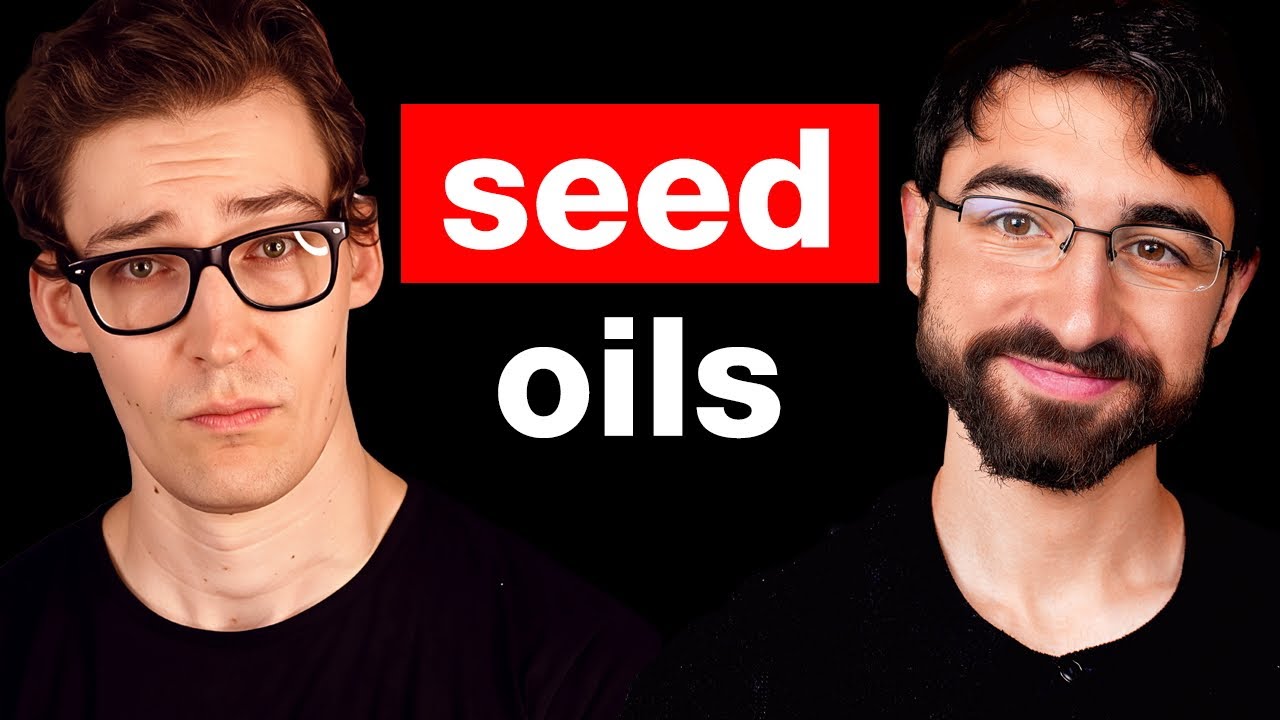
Dr. Nick Verhoeven and host examine seed oils and omega-6 fats with nuance. Cold-pressed seed oils appear neutral to beneficial when the omega-6 to omega-3 ratio stays below 14:1, though the evidence splits: omega-6 alone shows neutral-to-negative trends, while omega-6 with added omega-3 shows benefits. They stress humility in science communication and warn against sensational claims like equating heated oils to cigarettes.
Chapters
Tallow fries are a health food. What do you think?
I think absolutely not.
What fascinates me about the seed oil debate is the biochemistry in part, but that's only like one side of the coin. The other side is the sheer confidence with which different groups speak. McDonald's fryer oil is not the same as say walnut. What are your go-to sources of healthy omega-6?
I can tell you walnuts is definitely in there.
Am I tallowy enough for the tallow club?
I love it.
Seed oils being as bad for you as cigarettes. Of seed oil French fries every day for 6 months, or a family-sized bag of Sour Patch Kids every day for 6 months, what would you choose? All right everyone, this marks a milestone for my channel. I haven't historically done interviews, but I really wanted to start. So our first guest we have is Nick Verhoeven. We have him from, uh, Physionic channel. You probably know it. He has a PhD in molecular medicine and a master's in exercise physiology. As I mentioned, he runs the channel Physionic, which you should definitely check out. It's dedicated to like what I try to do here, analyzing health and research and making it understandable to the public, but with a lot of nuance. And he does this spectacular job. So I thought he'd be the perfect person to have as our first guest to discuss some controversial topics. We're gonna start by talking about seed oils and then we'll drop the second part of the interview about the sugar diet and maybe one or two other things if we have time. So Nick, thanks for joining me.
Yeah, thanks for having me. This is an immense honor. I absolutely love your videos. I think partly because they just, they have so much depth to them and different topics that you cover that, to be honest, on social media, there's a lot of the repetition of the same stuff over and over again. So, and people need to be exposed to the sheer amount of incredible science and new science that's out there. And your channel does that extremely well.
And I appreciate it, Nick. And the, the feeling's mutual. I think you're very good at, this is what I try to do as well. Like you put something engaging up front, but there's always a nuance. There's always a twist. There's always like sincere depth to it. So I love what you do. Thank you for joining me. I'm gonna start, we're gonna start by talking about seed oils. I'm gonna start with an easy question. Are tallow fries healthy? A lot of people in, let's say my keto sphere are saying tallow fries are a health food. What do you think?
I think absolutely not. There's my answer, right?
I think we're gonna return to that question, but I like the punchy open So, okay, we'll evaluate that claim and then come back to it. But okay, let's kind of step it, take a step back and talk about just seed oils in general. Do you think you can make a claim as to whether they're healthy or harmful, whether the science is settled on this?
Yeah, so I, I've started looking at seed oils, omega-6s and whatnot. I know that we're gonna get more into that and whatnot. So I think of it in 2 kind of broad camps currently, and this is certainly going to evolve. So the answer to the last part is no, it's not settled in my mind. But the first part is, is it cold? Then I think that the answer is it's generally neutral to healthy. And if it's heated, then there's some indication that it may be unhealthy. So that's, that's where I stand currently.
I like that heuristic. And I guess to ask a complementary question, we should define what we're talking about because I think a lot of the issues in the space come from when people are thinking about seed oils as one thing versus another. So how do you define seed oils? How do you think it should be defined?
Yeah, it's funny. I'm sure you've gotten comments from people that say, well, actually this technically isn't a seed oil, or this is, or you should define it this way or that way. And yeah, you're absolutely right. Everybody's got different definitions and I'm sure the definition that I'm about to provide is, is off for some individuals. So I think of it as just like a subset of vegetable oils with a major contributing factor coming from omega-6 polyunsaturated unsaturated fats. So examples of that would be like soybean oil, sunflower oil. People throw in canola even though it's actually relatively low in those polyunsaturated fats, the omega-6, or I suppose I should say linoleic acid. And, but people often throw it in there as well, I think just because it's extremely common. But yeah, in general I just think of it as a subset of vegetable oils. Yeah.
I, I would also build on that because I think what I see, and tell me if you see the same thing, but like as a logic creep, you have this picture of like the hyper-industrialized oils. There's always the same B-roll of like the plastic oil with this yellow goop. And then it's defined by, like you said, the omega-6 content. And then there's the logic creep. Okay, any omega-6 is bad, then PUFAs are broadly are bad. I've gotten to the point where I've had commenters saying sardines are unhealthy because they have high PUFA intake. And so I just wanna call out that discrepancy in how I think people define seed oils. And I think what we'll try to do here and what should just be done in general is like being very specific about what we're talking about when we're talking about these oils, how they're processed, not just the omega-6 content. But with that, I wanna get into the nuance, maybe starting with, you shared with me a meta-analysis, I think it was the Ramsden et al. 2010 meta-analysis where they did something quite brilliant. I covered it in my letter. I'm gonna cover it in an independent video, but you shared it with me. I want you to explain what they did in your words and, and why it was so important.
Yeah. So what Ramsden et al. did is that they looked at randomized controlled trials that compared omega-6s or omega-6 consumption versus really another condition, but typically it was a more saturated fat or at least low omega-6 condition. And the distinguishing feature about this analysis compared to other analyses was the fact that they actually tried to separate out what studies just looked at omega-6 versus the intervention being omega-6 plus omega-3s. And in their view, that there's a significant difference in the physiological effect or the, the outcome results that come from focusing on just omega-6 versus doing the combination of the two. And there's a bit of a back and forth actually between their group and another group, the Harris Group, who are really big into omega-3s. And the literature that I've looked at so far has been more focused— has just kind of generally talked about omega-6s but hasn't made that distinction. So the Ramsden analysis did that, created that distinction, I thought, which I thought was really clever and a good idea. It's one thing that we should be looking at, not just muddying the results and just kind of making assumptions just because we have large amounts of data in general. We should be honing in on some of those details. So just focusing in on omega-6s while trying to maintain everything else as, as regular or as flat as possible.
Right. And can you remind us what the, or, or I'll, I'll just say, if I recall correctly, in partitioning the studies, they found that those that looked at omega-6 and 3 together, so interventions were both were increased, there were generally improvements in outcomes, cardiovascular outcomes. But if you partitioned out the ones that were just the omega-6 without the omega-3, that there was a non-significant trend towards negative outcomes, the opposite direction. That really colored my interpretation of the existing literature. Because you're right, when you look at most analyses, meta-analyses of controlled trials, observational trials, they look specifically at omega-6. But being an essential fatty acid, at least linoleic acid, you can't just, it, well, it's, it's very hard to isolate in the diet. So it, it does raise a question about whether or not the entire literature is muddied by the fact that there are other dietary modifications necessarily taking place in humans. So what do you think about that? Do you think we need to like reinterpret the existing literature on omega-6 based on what happens with the omega-3 in any given study?
I think that's a, I think that's a useful place to start and I think it would answer a lot of questions to reanalyze a lot, a lot of the literature in that lens by, by trying to remove the variable of omega-3s. I will say there are some analyses that have looked at that or just looked at, for example, like substitution analyses where they've replaced particular macronutrients with omega-6s. And they've still shown some of these, these effects, some of these either neutral or positive effects. But still, I think that there's, there is a need for a lot more study. And I'm a little bit surprised by the sheer confidence that a lot of people have in relation to omega-6 polyunsaturated fats. And I'm, I, I tend towards the, the direction of they are at least a neutral to a positive. So it's not like I'm against that mentality. It's just, I think I'm against the mentality of not, again, just to bring up your channel as well, is getting into those nuances of separating out. Yeah. Omega-3s, do they have an, a effect that we need to try to separate out. Just one more real quick about the Ramsden analysis. I did have some pretty harsh critiques of that analysis because of the quality of the studies that they had included for that subgroup analysis. So again, breaking up omega-6-only studies versus omega-6 plus omega-3. So I just want to be responsible and just quick add that as well.
Yeah. What we'll do is we'll link, I know you did a video reviewing it, so I'll link it in the notes of this video so everybody can go watch Nick's analysis of that study and some others. He did a really excellent job. I do wanna double-click on something before we get back to the science, just about what you said about needing more research on this topic, because I think what fascinates me about the seed oil debate is the biochemistry in part, but that's only like one side of the coin. The other side side is the sheer confidence with which different groups speak. You have, you know, the conventionalists who say like the science is settled, like polyunsaturated fats, plant fats are good for you in some really dismissive and arrogant ways. I don't know if you listened to the Diary of a CEO podcast that got a lot of heat. There was a, a nutrition researcher from Zoe that went on Diary of a CEO, if people don't know, is a really big podcast. And she was calling basically the idea that seed oils are bad for you as nutra-bullocks. Was the term, basically like nutrition BS.
Absolutely no evidence to show seed oils are harmful.
And this is part of a larger picture that I see with like the conventional point of view where it's projected in such a science is settled and rather arrogant manner, manner that you, you need to anticipate a counterculture because the science isn't settled. So then people push back because they're like, You are overstepping on the literature, which she in, in fact was. And I think people in fact do. But then the pendulum swings to the other side where you get people saying, making extreme claims like, yeah, sardines are unhealthy because of PUFA, which is obviously ridiculous. Or even that like walnuts, which are very high in omega-6, think like 10,000 milligrams per ounce are bad for you because the omega-6 content. And that is also incorrect, but it sets up this, this tension that is obviously just in like the, you know, engagement bait ecosystem that is social media continually exacerbate. And I'll say one more thing before I ask you to react, which is I've had the chance to speak with quite a few people in this space who, let's just say, actually I'll just call it out. Paul Saladino was one. He's a pretty provocative guy. We had some exchanges. He shared with me some studies about omega-6 and he's gone on record saying some pretty negative things about seed oils. I was surprised by how mild his opinion was behind the scenes. Maybe he'll ding me from saying that. Maybe that's privileged information, but honestly, I thought he was much more in the camp of you or me when it came down to it. We're like, yeah, the science is unsettled. Here's what we don't know. We shouldn't push them as like supreme health foods, but honestly, there's just a lot we don't know. So he shared with me quite a few studies where actually higher omega-6 blood and tissue levels were associated with better outcomes. And when I replied to him via email, he was like, yeah, yeah, I know. And I'm like, you do. Interesting. And so I just think it's worth highlighting because what I try to highlight every now and then is like, there is an incentive structure. There is a game here whereby whatever you wanna call 'em, science communicators are going to lean into certain things. Because of the incentive structure of social media. I do it as well. But I guess one thing we agree on is the science is not settled. And so in the rest of the discussion, I really wanna unpack like the pro and con arguments and how things do butt heads in a legitimate manner. So I guess the next question, and I'll, I'll, I'll let you have free rein with this one, is what are the studies that you found most compelling? You said cold seed oils tend to be healthy in your opinion on balance in the literature. What are the studies that have led you to that conclusion?
So, you know this just as well as I do that we have to look at, I mean, you mentioned it briefly, you mentioned mechanistic data. Then we also have to consider clinical trials. We also have to consider the outcomes of those clinical trials. So sometimes you'll have like a randomized controlled trial that's designed to look at markers of inflammation as opposed to specifically looking at cardiovascular disease deaths or whatnot. So, so those are two different types of trials, although they're in humans. And then you've got epidemiology, which is a whole nother area of, of research. So for me, when I look at the totality of the evidence, and I go, I go from a top-down format. So I go to clinical trials and I have to look at the outcomes and see, is this a reasonable outcome for them to have detected an effect in the time that the trial took place? And if the answer is yes, then I can at least trust that trial to give me some indication of, you know, what's what. And if you look at a lot of the clinical trials that have been done, and I'm still in the middle of looking at different types of seed oils and whatnot, I've focused most of my attention on canola and a little bit on just omega-6s as a whole without necessarily looking at like, you know, sunflower, safflower, etc., etc. So there's still a lot that I need to do. But the research that I've looked at in terms of clinical trials has indicated generally a reduction or neutral effect on like inflammatory markers, has seen some improvements in cardiovascular disease. Some, if you look at the epidemiology, it typically indicates that there's again neutral to positive effects. And there's even an analysis that's been done where they looked at the omega-3 to, or omega-6 to omega-3 profile, and also indicated that within a, what I would consider relatively wide range, that you see positive effects. And once you go beyond that, you start to see some of those negative effects.
So, sorry, just interrupt for a second. Yeah. To clarify what you're saying, you're saying higher levels of linoleic acid or omega-6 provided your omega-6 to 3 ratio is in a particular range.
Yeah, exactly.
So you remember what that range was?
Yeah, I'm trying to remember. I think it was up to 14 is, so the ratio of 14 to 1 was when you would start to see neutral to negative effects if you started going above that. And especially, definitely, if you really went above that, then there was a relationship with worse mortality, worse cardiovascular mortality. And I don't actually, oddly enough, and I don't know if off the top, top of your head, you can think of a reason why that might be the case, but for cancer, there was actually a slight increase and then it started to dip back down and decreased again to the point where if you were taking, if you were in this really high ratio of let's say 30:1, you'd actually had neutral to reduced risk of cancer. I will quick point out though that the sample size as you got out further to that point was much, much smaller to where you have the majority of the data, which is where you have the most certainty.
I'm not sure. Maybe it has to do with some sort of inflammatory response that's limiting the cancer cells' growth.
Could be. Yeah, could be.
You know, on effects on telomerase activity. I don't know. It's a very interesting observation. So yeah, I, I found some studies that were very interesting about just, yeah, circulating levels, even tissue levels. Like there were, there was a meta-analysis, there were only 2 papers within that meta on looking at adipocyte levels. But my concept was always maybe one of the limiting areas of the literature is we don't have good controlled trials that are long enough to change tissue levels, which might affect the metabolic profile. But in these studies, even higher adipose tissue levels of linoleic acid were associated with better health outcomes, which is interesting. To circle back to something you said, the omega-6 to 3 ratio, do you think the ratio is more clinically valuable to an individual than say focusing on their omega-6 intake? So like if you had to choose between, all right, should somebody reduce their intake of seed oils, define it however you will, or just know their omega-6 to 3 ratio and quote titrate to need. What do you think about those two different personalized approaches?
Yeah, that's a great question. The way I would think about it is there's two ways to think about it. One is a simplistic way that I think is probably a lot more, a lot more applicable simply because a lot of people aren't going to be able to measure their omega-6 to omega-3 ratio on a consistent basis. And then I think that there's the more scientific, more rigorous way to go about things. So the, the best answer, I think the best scenario is yes, go with your omega-6 to omega-3 ratio. But I think for the majority of people that aren't going to be sitting there measuring on a consistent basis, making sure that they're hitting everything, I would say that typically aiming for more omega-6 consumption over some other macronutrients— not all, but some macronutrients— is typically going to lead to better outcomes. So that's the— that's why I say from like a practitioner's perspective, just saying, oh, eat some more omega-6s is usually a good idea. But, if you want to get really granular, then definitely go for your omega-6 omega-3 ratio.
Okay. I'll follow that up with two chaser questions. One, do you think that needs to be done in the context of high omega-3 intake? So, you mentioned earlier the Harris Group, Bill Harris. I think they started OmegaFlant where you can actually, I have no affiliation, but you can get your omega- profile quite comprehensively. And I remember hearing from, uh, Bill that really what matters is your omega-3 intake in terms of your overall inflammatory profile and your omega-6 to 3 balance, provided you're hitting enough omega-3, say eating fatty fish twice per week, then you don't have to worry about your omega-6 as much. But if I understand their position correctly, you do have to worry about your gross omega-6 intake if you're not taking in enough omega-3. What do you think about that?
Yeah, I love that take. Obviously he would know better than I would simply because he's a specialist in the field and I'm not. But from the literature that I've looked at, I agree with him. I think that if— and actually in that analysis that I was referencing about the omega-6 to omega-3 ratio, those researchers came to the same conclusion. They said, hey, you should— you probably shouldn't be focused too much on decreasing omega-6s or the amount of omega-6s you're taking in. What you should be concerned about is how much omega-3 you're taking in. And So everything that I've read up to this point indicates that that's the case.
Yeah, I actually, just while we're here, I'm gonna go look, I just got an analysis via OmegaQuant.
Oh, okay.
And it was interesting because I'm someone in the keto space. I don't know if people realize this, but I have a very high unsaturated fat intake in my diet. So it's always been funny with the seed oil thing because like I'll have, I can have up over 50 grams of linoleic acid per day. Like quite a lot. And my ratio and levels have always been quite good. So I'm looking right now and I can post this at OmegaQuant. I've gotten it via other service, but my omega-3 index was 12.2% and above 8% is supposed to be optimal. And my omega-6 to 3 ratio was 3.3 to 1. So I eat a decent amount of fish, but like if you look at my dietary intake, I mean, you can't eat a 3:1 ratio if you're eating like 60 grams of omega-6, you don't get 20 grams of omega-3 per day. So I think the point I'm trying to make here using my own data is the dietary intake doesn't necessarily reflect what's circulating around in your body. And I'm inclined to think that practically speaking, even if you don't get your levels measured, that yeah, focusing on omega-3 intake is probably more important than trying to reduce your omega-6 intake if you're trying to optimize your levels. And it sounds like we agree on that.
Yeah, definitely. Definitely. Definitely.
My next question is you seem to be in favor of, in that context, getting more omega-6 in exchange for say other macronutrients. What would be your preferred sources? Because I think we're probably in agreement, like fried McDonald's fryer oil is not the same as say walnuts. So what are your go-to sources of healthy omega-6?
Oh man, I haven't thought about that quite some time. I'm so, I'm so focused on like the statistics and focused on the actual like data and whatnot that I never, I don't often consider their food sources. One of the big ones.
All right, let me give you multiple choice. Is that better?
Yeah, but I, I can tell you walnuts is definitely in there.
Walnuts. Yeah, yeah, yeah. I, walnuts I find very interesting cuz of, what was it? Is it hippuric acid or whatever the precursor is?
Yeah, yeah.
Remember it came up in a few things, but yeah, some of the polyphenols and no, no, no, sorry. Ellagitannins.
Ah, yeah.
I think it's the ellagitannins in walnuts that are a precursor for urolithin A. I hope I'm not screwing up the biochemistry. That'd be very embarrassing. It's been a moment since I, I went into that, but I just, you know, something I wanna highlight, I think you agree with, is like these foods, these whole complex foods come with so many other things that determine their overall profile and impact on health. So if you're changing the microbiome, making like mitochondrial boosting secondary metabolites, then like, you know, the omega-6 content's only one small part of the larger picture. But okay, how about this? Canola oil, walnuts, or sesame oil or corn oil? Of those, take 2, leave 2.
Ooh, I haven't done enough research on sesame oil, but walnuts for sure is number 1. That's a take. Maybe canola oil, assuming that you're not cooking with it. Which is, and that's really based on some extremely preliminary evidence. It's that study that I sent you that you looked over as well, which you pointed out for another one, I think, was it safflower oil or sunflower oil, something like that, that if you heated that repeatedly, that it led to an increase in some of these inflammatory metrics. It wasn't a very good study, but again, that's why I'm saying it's extremely preliminary. Preliminary, but yeah, I haven't done enough on sesame oil to, to be able to speak to that. So maybe you could educate me.
It's one of my favorites, why I brought it up for two reasons actually. The reason I got into it interestingly was I just liked it. Like I would put it on chicken and I noticed it was skyrocketing my ketones like way more than MCTs. Like next day I was hitting like 4 or 5 millimoles, which is like a 4 to 5 day fast. So I just found it fascinating. Yeah, it might have to do with the polyunsaturated fat content because that tends to be more ketogenic, but But anyway, that's what got me down the rabbit hole. There is some interesting in vitro work. I do caveat it's in vitro, but sesame is naturally packaged with these lignan antioxidants, which really protect the fat from oxidation. So when you look at it like in an in vitro setting, when you have the, the like omega-6 without these lignans from sesame, there is quite a lot of oxidation and damaging of fats, but you add them and it cuts it massively. I'll post the graphs when we have my editor edit this and I'll send you the paper. But it's quite remarkable. I add a line in my— I have the tallow fry video coming up and I basically say, as kind of a goofy way to frame it, sesame oil acts, I think, a little bit more like tallow under heat than, say, a typical seed oil. Actually, I'm going to play that B-roll for— I don't know if you ever saw the movie Master of Disguise. No, I haven't made a car. Oh, it's such a funny movie. People have to watch it. But there's this scene when he dresses, I'm just gonna say this for people to know the movie cuz they'll know it. And like this turtle suit and he's super goofy and he is like, am I turtle-y enough for the turtle club? So I have Sesame Oil doing that. Am I tallow-y enough for the tallow club?
I love it.
It's a, it's a one of my family's favorite movies. But on the study you mentioned, which again wasn't a perfect study, but there was one that I wanna mention about I think it was safflower oil and heating versus butter and animal fat. And the reason I think this is really important to highlight is because my understanding is it's the basis of a very bold claim some influencers have been making about seed oils being as bad for you as cigarettes. Not a claim I agree with, but I think in understanding the claims, I, I think it's important to understand the origin of these claims. So I'm just gonna explain it to you as I understand it and then get your reaction, which was that that if you heat these quote seed oils, in this case safflower oil, they generate these cytotoxic aldehydes and other components that are known to be carcinogenic. Like the WHO admits these are carcinogenic and the WHO gives like safe intake thresholds. And for this one compound, it was about 500 micrograms is the safe intake threshold per day.. And a single serving of say potato chips has like 3-fold that, something like 1,500 micrograms. And levels skyrocket when you heat some of these quote seed oils. So safflower oil. So in one experiment they took the safflower oil or the butter and they heated it. It was something like, I forget how long it was, 180 minutes I think. No, it was 180 degrees Celsius for 20 minutes. I forget. I'm gonna, I'm gonna, I'll post the graph so people can, fact-check what I'm screwing up right now. But anyway, the point being, the safflower oil did generate much, much more of what is a carcinogenic compound as compared to the butter. And then the framing was the dose of this acrolein, this carcinogenic compound, is about equivalent for this particular compound of smoking 25 cigarettes per day, which I would say based on the physiologic rationale is not an unconvincing argument that this could be harmful in, you know, in the absence of long-term human controlled trials, which we really will never have for that outcome. So what do you think about those data in general and then the claim?
So this is simply based on that one molecule that's produced?
I, that's my understanding. Okay. That is my understanding. Of the origin of the claim. Generally when people say this is bad to cigarettes, they don't like, you listen to the interviews, they're not like, and this study by blank et al in this journal. So it's hard to trace. Yeah. I still notice there's a pattern, but that's my understanding. Yeah. Yeah.
Yeah. That's a good point. That, so the way I think about my brain immediately defaults to what kind of outcome results would we expect, things of that nature. And especially when I hear about a single molecule, I wouldn't debate that the levels are equivalent to 20 or 25 packs of cigarettes or whatever it might be. Even if we accept that as true, what I immediately start thinking about is just like in any mechanism or any single molecule study is what else is changing throughout that process? Because there's plenty of healthy foods, just like you were alluding to earlier, when you eat the food, it comes with a bunch of other things or it has other effects. Effects. Even if it's a, if we just limit it to the polyunsaturated fats of omega-6s, those can have a variety of different effects. And actually I think we're gonna be getting into a little bit of that a little bit later. But the, the idea that we should just focus on a single molecule and then equate that to cigarettes and then say, see, it's as bad as cigarettes. It's like, yeah, maybe for that molecule. But when I, when I think about it from a, like a, a higher perspective of, okay, well, what would I predict would happen on cardiovascular disease, cancer, things of that nature? And I, I'm just not that convinced because we have the data for cigarettes, but we don't have that data yet, which goes back to one of our very original points, right? That we just don't have enough of information on what happens when you heat especially repeatedly, but I'd be especially interested in just heating it once, which is what a lot of people do in their households, right? They'll just use like an oil to heat on a pan and then they'll cook the food. And it's not like they continuously reuse that oil. So I'd be especially curious what happens if you heat it just once. Yeah. So I think that there's too many unknowns to really make a true comparison between the two. But The one that we know for sure is that highly detrimental with outcome data is smoking. So I, I'd be open to the possibility, but so far I, I would say no.
Yeah, I would tend to agree. And we're gonna get into some more of the limitations of the literature. That's gonna be one of my closing questions. But I did want to ask you something you just alluded to, but which is the mechanisms. So what do you think the mechanisms are by which seed oils could harm health? So consider this your like physiology highlight reel. If you were to speculate, how would seed oils harm health? What would the mechanisms be?
Yeah, so I thought about this a little bit 'cause I've looked into it a bit. Let me preface this by saying that I know that people will bring up like the processing of the oils and things of that nature. Some, something to do with like hexane and whatnot. Like people, lob all kinds of different mechanisms at me of like, well, what about this that comes along with the seed oils and stuff like that? And what I'm concerned about is what do we generally get exposed to? And that's the omega-6 fats after they've been— they've gone through a lot of this processing and whatnot. So what happens once it enters our body? And I've identified 3 mechanisms. There may be others, of course, One of them is if we think of like omega-6, specifically linoleic acid gets converted to arachidonic acid and a number of other kind of pro-inflammatory molecules because it's a reactant for this family of enzymes called the cyclooxygenases as well as some, some others as well. So that ultimately that conversion of these arachidonic acid or the linoleic acid to arachidonic acid also leads to this production of prostaglandins, which are again highly inflammatory. And they bind to these different receptors on the cells, which ultimately changes how the cells behave. So the intracellular signaling changes within the cells, and that's been linked directly to things like pain. So increases in feelings of pain. So if that's like from arthritis or whatever, It might be inflammation, platelet aggregation. So there's, there's a, there's a broad different, like a number of different mechanisms by which it works. Another one is through linoleic acid and its competition with certain enzymes for its conversion or the conversion of ALA or alpha-linolenic acid, which is one of those omega-3s being converted to DHA and EPA. So the competition for those enzymes has been thought to potentially lead to a downregulation of DHA and EPA. And I'm going to have some, some pushback on my own points in just a second. I just want to point out some of the arguments that have been made. And finally, I would add that potentially omega-6 incorporation into the cell membrane. We know that different fats, so saturated fats or polyunsaturated fats, if that's omega-3 or omega-6, they get incorporated, they can get incorporated into the cell membrane, which changes how the cell membrane behaves. So is it more stiff? Is it fluid? Does it allow for more of recruitment of different master proteins to the, to the cell membrane? A great example of that is in the insulin cascade. So the insulin sensitivity cascade, you have this protein called the AKT, and that actually has to get attracted to the cell membrane. And the only way that that happens is through the incorporation of different, uh, molecules into that cell membrane. So if you change the structure of the cell membrane, then you could theoretically have an effect on the cell as how it communicates in just kind of day-to-day, or I guess I should say second-by-second functions. So let me circle back real quick and kind of address some of those points. So those are some of the arguments that could be made. And if you look at the in vitro evidence, so look at some of the cell work, that, that makes sense. You actually see a lot of these effects. So it's, it's not so far-fetched to say, okay, well then linoleic acid and omega-6s are therefore a negative for our health. And if you look at some of the studies that have been done, especially let's say for the first one, so it's conversion to some of these negative molecules like arachidonic acid and eventually into prostaglandins and whatnot. There have been studies that have looked at linoleic, dietary linoleic acid consumption and shown that it doesn't actually lead to much of a budge in arachidonic acid. So, from that perspective, there's at least some evidence. I wouldn't say it's a, you know, open-cut case or anything, but there's at least some evidence that we don't really need to worry about that too much. The other one from linoleic acid competitively interacting with these enzymes and blocking alpha-linolenic acid. The, the, if you're taking fish, if you're consuming fish, you're already consuming it in DHA and EPA form. So you, you probably don't even care about the conversion from ALA to these other fats. And in terms of the greater incorporation into the cell membrane, actually you brought it up earlier saying that you can have these increases in the incorporation into the cell membrane of, of linoleic acid. And yet we still see these generally positive health outcomes. So there's, that's, that's kind of how I would frame it, although I'm sure there's plenty more to discuss on the topic.
If you saw me lean away from a second, you were mentioning the cell membrane thing. I doubt you've had a chance to find this paper. It came out a few days ago in Nature Metabolism entitled Dietary Control of Peripheral Adiposity Storage Capacity Through Membrane Lipid Remodeling. If you want a mind bender, and this is one of those moments where like I'm speaking to the audience, if you want to be humbled by how complex this gets, read this paper. I'll send you the PDF, Nick, when we're done. And I'm interested to get your thoughts because yeah, these things, like you're right, you can speculate on all the mechanisms out the wazoo, but becomes so complex. So like for example, in this paper, my takeaway from it, I want to see if you even have the same takeaway. So sorry if I'm biasing you up front, but basically the idea is that that adding linoleic acid, provided you have the right enzymatic activity and metabolic substrate, can basically make adipocytes more expandable. The reason this is really important, and now speculating well beyond the paper, but like an individual's insulin sensitivity and metabolic health is determined in part when they like hit a threshold for their personal fat cells. So I think it's spillage of excess fat into quote, ectopic sites. You get buildup of liver fat, fat spilling over into the blood. So subcutaneous fat's not actually unhealthy, but if you have remodeling of these cells, you can actually have a situation in theory where you can increase the expandability, the pliability, the flexibility of the actual fat tissue. So you can get bigger fat cells, but you end up with a healthier metabolic profile at a given body fat percentage. So it, I'm interested to see what you think of that paper, but I, I agree with all your points and I appreciate you speculating for, you know, that side of the argument because I think again, to hammer on the point, there are so many unanswered questions in this space and this does deserve a lot more research. We really can't say yes or no with respect to are seed oils healthy because we have to define what they are, what the population is, metabolic context, duration, form of administration, et cetera. So with that, what do you suggest as some points for moving the field forward? Research, communication style, whatever. Answer it however you want.
Ooh, yeah. Well, I mean, communication style, I think that, I think to use your word earlier of kind of an arrogant take, taking a step back and and being a little more humble about what we know and what we don't know. And I think one area that my sense is that the public has, or certain groups in the public have become incredibly distrustful for, I think in certain respects, good reasons, simply because the way that we've been communicating as science speakers has been non-nuanced, essentially we'll just say non-nuanced and just kind of dismissive. Like the science is settled on a particular topic. And I think on certain things the science is settled. I think that everybody would agree exercise is a net benefit for health. Obesity is typically not a good state to be in. Like those kinds of general statements, I think most people would agree with that. But when you're getting into some of these topics, especially after looking at the literature, I just don't think that there's enough holes that have been filled. And another thing that we fail to do as science communicators, and I'm certainly not lumping you into that category, is that we talk about data and we, we fail to consider that there are subgroups or circumstances of individuals that can change how something might affect a person. So, and that is really difficult to, to try to tease out and to try to communicate. So what I think most people do in the science communication field is they just kind of talk in generalities. They just say, hey, seed oils are beneficial. But then they, in their, their claims like that, they, they fail to consider that there are, there might be some subgroups in these mass pools of data that we're missing. That where seed oils may be extremely detrimental, or, uh, you could come up with almost any example. Um, when you're looking at large pools of data, once you start to break into that and try to figure out some subgroups that, uh, you realize that there's a lot of nuance there that we need to be able to communicate that effectively and not just dismiss people just because the average person doesn't experience any negative effects from from, let's say, seed oils again, just because we're talking about it.
I think— excellent. I want to respond to two things came to mind. Sure. One had to do with scientists as a broad class. I heard a conversation, I don't know if you listened to it, between Andrew Huberman and the new NIH director. And one point that came up anyway was this idea of mistrust. And one thing Andrew was saying was it's obvious the public is very skeptical article about science as an institution. And I think for us, we're both PhD-trained scientists. We're like, there, it's easy to say like there's a, there's an ego element wrapped up in it because it's like, it's a little bit offensive when you're just trying to communicate science. Like, we don't trust you, your centralized medicine or centralized science. Um, but in the context of the way science has been communicated from from, let's say, institutional bodies, and we won't mention the C word or the V word, but they are, you know, relevant here. It seems like the public just doesn't care, and they just want an apology from the broad scientific community, even those who weren't involved in, let's say, overstepping the data. And I just want to name that. Wouldn't need to go deeper into it, but I think that is, you know, an element at play. And then the other thing you mentioned was this idea of the majority versus individualized responses. And I think, you know, speaking from the, the vantage point of someone who has some training in, in clinical medicine and what clinical medicine is based on, there's this idea of evidence-based medicine and it sounds so great and so sexy, but what we mean by that is we are appealing to what is perceived to be the gold standard, this randomized controlled trial approach, which is very common for, you know, like pharmacology monotherapies, which makes sense and it has its strengths. However, you're necessarily lumping together a large heterogeneous group of people. So you end up with this, quote, statistically significant results that then get generalized when in reality you can have statistical significance without even the majority being helped. So if you look at— I think this was in Nature in 2015— like the top 10 grossing drugs, they only help on average between 1 in 4 and 1 in 10 people who take them. But you can still reach statistical significance in an RCT. So just this idea of there's a very individualized response Bringing that back to seed oils, what would you say if somebody says, look, I know there's literature that's outstanding, but based on my personal experience, I feel more anxious or I have joint pain when I say eat more omega-6. What would you say to that person?
Yeah, so this is kind of going into that territory of trying to put away your scientific mind a little bit and try to speak to the person as a person. And first of all, just acknowledging like, hey, you're going through something and just, and not dismissing them just because I think that happens a lot. I think that people just get told, well, that just can't be because the science says, you know, and I think that I would tell a person, hey, I understand where you're coming from. Let's talk about, you know, and I probably probe and just ask particular questions like, well, What else did you change about your diet? Have you changed anything? Have you added more seed oils? Have you, uh, started new supplements? Have you started a new exercise routine? Have you started a new job? Like, there's a bunch of different things, and it's not like I'm accusing them of being wrong. It's just I would want to understand, uh, what may be some confounding factors. So I'm kind of putting on the scientist hat on, on for a little bit. From there though, if I couldn't come to some sort of conclusion, I'd be like, well, I mean, you could easily run an experiment on yourself, right? You could try to cut way down on your seed oil consumption and see if you feel better. Now, of course, there's going to be inherent bias and that kind of stuff, but ultimately we're not doing a science experiment to find out, uh, if it's scientifically accurate or not. What we're trying to find out is how can we help this person. And when it comes down to the individual, you do have to put some of that scientific mindset aside and just try to communicate, hey, how can we help you? Beyond that, I would just— the one scientific hat that I would put on is just try to strengthen their understanding of you are experiencing this and nobody's trying to take that away from you. But when you communicate to somebody else about seed oils, just make sure that the science says this and your experience can still be very, very true. So just be careful when you're communicating to somebody else so that you don't dissuade them when they could very well fall into that study population and you just fall outside of that study population. And now you're starting to emit this message that's simply based on anecdotal experience. So it's again, finally Teasing out those two and making a person feel heard while still being true to the science, which is difficult to do, but it's, it's necessary.
I think that's very well stated. I think people fall prey to the idea that if somebody else's nutritional journey doesn't align with theirs, it somehow discredits theirs, which when you say it out loud is such a ridiculous thing, which is why I think it's important to name. I think, you know, like I speak a lot about my personal success with the ketogenic diet and I think people then intuit, oh, I'm a keto zealot. I get this all the time. I don't really mind, but I'm like, no, it was successful for me. It, it's drawn my interest to that. But like if you succeeded with a plant-based vegan diet, like great, I'm happy for you. Like that doesn't threaten my experience and where I am in life. So I really appreciate the way you respond to that question. Now your last question, and this is gonna tee us up for our next discussion. If you had, if you had to eat a diet that consisted of either a jumbo container of seed oil french fries every day for 6 months or a family-sized bag of Sour Patch Kids every day for 6 months, what would you choose?
This is a, this is a difficult question. Um, I, I love Sour Patch Kids. I mean, they taste absolutely incredible. Uh, however, I'm a calorie-first person, so I— the first thing that I look at, or one of the first things that I look at, I should say, is looking at the overall caloric burden. And I did do the math on this. Um, so for a family-sized Sour Patch Kids, it would be something over 3,000 calories. However, for a jumbo-sized container of French fries, it's closer to 500 or 600 calories. So my answer would be the seed oil French fries. If the calories were equated, my answer would actually change. It would switch to Sour Patch Kids.
All right. Well, we're gonna have to have another debate about calories at a future point in time. Okay.
Sounds good.
Thank you for this conversation about seed oils. I think people will get a lot out of it.
Bit.
And yeah, I'm gonna close this one for now and then we're gonna jump into the seed oil discussion. So please everybody leave your questions and comments for Nick. Go see his channel, he's great. And if you enjoyed this conversation, tell us what you'd like to hear about, how, hear us talk about next time.
Yeah.
After the sugar diet and seed oils. So I'm gonna wrap this one up. Thank you so much Nick, for joining us.
Yeah, thanks for having me.










