Stanford’s Top Researcher (Michael Snyder) Reveals What Really Causes Diabetes
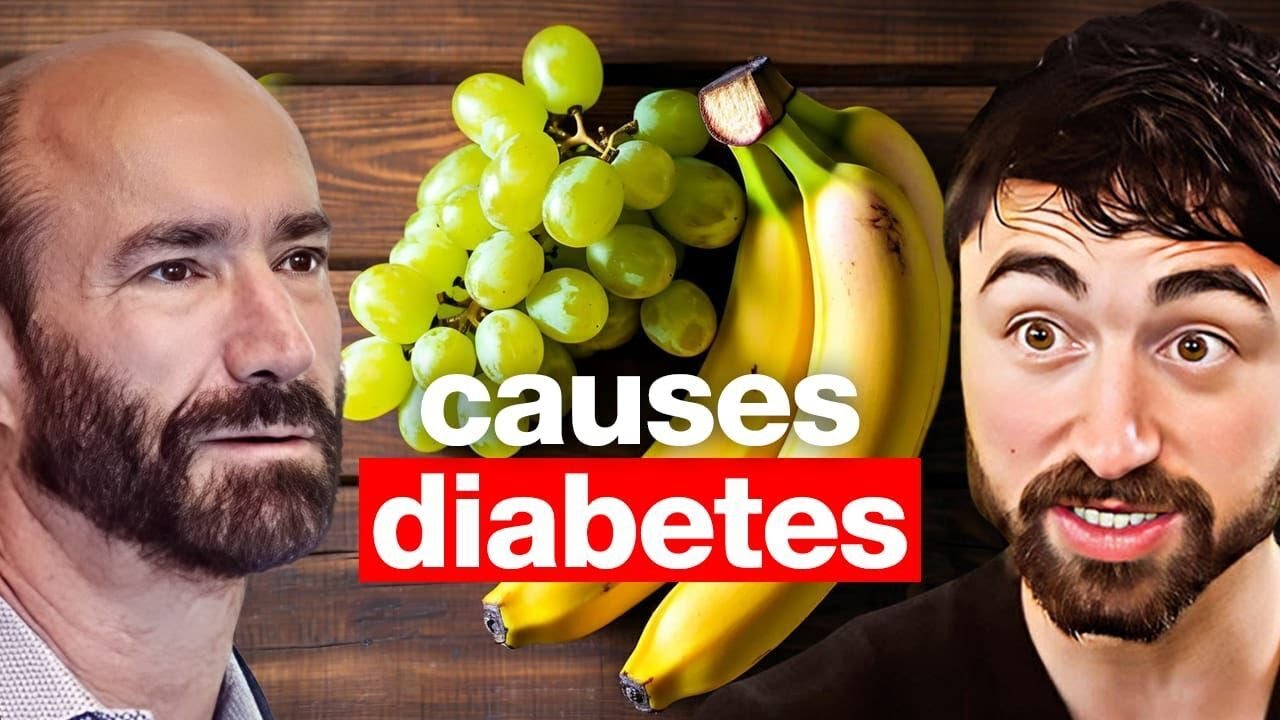
In a lengthy YouTube interview, host Nick Norwitz talks with Stanford geneticist Michael Snyder about his lab’s pioneering work in deep multi‑omics and longitudinal phenotyping to dissect type 2 diabetes. Snyder explains how his team collects massive data streams – genome sequencing, transcriptomics, proteomics, metabolomics, microbiome, and wearable‑derived physiological measurements – from individuals over many years. Using continuous glucose monitors (CGMs) and machine‑learning analysis of glucose‑curve shapes, they identified four major sub‑phenotypes of type 2 diabetes: muscle insulin resistance, beta‑cell dysfunction, impaired incretin action, and hepatic glucose dysregulation. The study showed that average blood‑sugar metrics (HbA1c) do not predict the dominant pathology, and that each sub‑type responds differently to lifestyle changes and drugs (e.g., metformin non‑responders, repaglinide responders, GLP‑1 and SGLT2 inhibitors). Snyder discusses how the approach could be turned into an at‑home test (a standardized glucose drink plus CGM) that predicts a person’s subtype with high accuracy (AUC ~0.9 for two sub‑types). The conversation also touches on broader issues: the broken, siloed healthcare system, the need for n=1 precision medicine, the impact of statins on GLP‑1 via the microbiome, and the potential to apply similar multi‑omics sub‑phenotyping to other complex diseases such as obesity, cardiovascular disease, Alzheimer’s, and mental‑health conditions. Snyder invites viewers to join ongoing studies via his lab’s website.
Chapters
For me, as a dorky scientist, this is like a Swifty meeting Taylor's.
And then you think about diabetes, it's not just one condition. You've got a lot of different organ systems. You've got your liver, your muscle, even your brain's a major glucose consumer.
People want to know who's doing the legwork behind the scenes.
Our healthcare system's broken.
Target lifestyle approaches with precision on the n=1. That is, to me, absolutely mind-blowing. This might be clinically available. People shouldn't be threatened by other people's narratives.
The grapes to potato ratio.
Maybe have a little bit more ice cream instead of— All right, everybody, we have a special treat on the channel today. One of my favorite scientists of all time, Professor Michael Snyder. I'm gonna give a longer intro than normal, and you'll understand why. I want you to understand why I'm so enthusiastic about this interview. So, you know, on the academic credentials, Professor Snyder served as the chair of genetics at Stanford School of Medicine, is currently the director of Stanford Center for Genomic and Personalized Medicine. His lab is literally the world leader in advanced deep multi-omic profiling. We'll get into what that means. And this is demonstrated by an unprecedented, unparalleled publication record. Cell, Science, Nature, basically monthly. For those of you who know what an H-index is, I did look up his this morning. It is a grotesque 220. Now, for reference, there's no like thresholds for what excellent is, but 20 is considered good. 40 is considered outstanding, 60 is considered exceptional. I got this from an AI summary. 220 is like the highest I've ever seen. But those are just the checkboxes. I've known a lot of academics in my time, especially senior academics as I've gone through my PhD, my MD, and it's very rare that someone's at the pinnacle of the career like this and is still so engaged with the work. I think a lot of PIs often, you know, shift shift off the thinking to postdocs, and there's only a few people that I've corresponded with who are deep in the work themselves. Actually, just as a quick tangent, I believe you have like an n=1 experiment in one of the Cell Press journals.
Is that correct? That's correct. Yeah. Oh yeah.
Which is insane. It like blows my mind. So, you know, for me, I don't know how to describe this other than like, this is the Thanos of PubMed, Cell, and Nature. For me as a dorky scientist, this is like a Swifty meeting Taylor. So, uh, sorry to embarrass you, but it's true. Um, I have an embarrassing story I could tell, but maybe I'll leave that for later and we might have to clip it because it gets a little bit edgy. But anyway, today we're gonna delve into some of his incredible studies. We could go on for many hours, but I want to hit on two. One about the four types of type 2 diabetes, and then what was the most popular paper ever published in Nature Aging. So with that, uh, Professor Snyder, welcome to the channel. Um, I'd like to give you a chance to respond and tell us a little about yourself, your lab, um, and what you do.
Sure. Well, Nick, it's great to be here. My lab is a big data lab, as you probably figured out. Uh, I guess it started with trying to look at problems in biology with you know, holistic approaches, collect as much data as possible to learn how the biological systems work. And then I moved to Stanford about 16 years ago, and then really the goal was to apply it to medicine. So collect big data around systems and in this case individuals to try and understand and track disease. And that's really where it started. Just step back a minute and you probably would agree, everybody agrees with this, our healthcare system's broken. We, you know, practice sick care rather than healthcare, meaning We don't work on keeping people healthy. We treat them rather when they're ill. And even the way we practice healthcare, it's all broken. And so certainly with the revolution of data technology collection, data collection, all these new technologies like genome sequencing, mass spectrometry, wearables, you know, you can now collect data around people at a level that's never been possible. We can really transform the way, you know, healthcare is practiced. And that's really what's driving us. And so that's what our lab does. We do deep data profiling on people. We'll sequence their genome, we'll make as many measurements out of their blood, urine, and poop, if you will, their microbiome, along with these physiological measurements with wearables to try and collect data while they're healthy and track their health.
Yeah, very well said. You know, I often say like medicine is siloed, metabolism is not. And if, you know, people want to know who's doing the legwork behind the scenes to make personal, like true personalized medicine, mainstream. It's, it's people like you. So I want to thank you for that. And I also want to describe a term that I know will come up in this interview, which is multi-omics and longitudinal multi-omics. Can you unpack what that is? Because that's kind of at the heart of a lot of the work you do.
It is. Yeah. So omics, of course, is a collection of molecules. So your genome's collection of your genes, if you will. Your transcriptome is collection of RNA transcripts. Proteomics, collection of proteins. And so multiomics is where we actually do all of these things. Our lab was a little unique at the time we launched this because we were doing a lot of proteomics and we were doing a lot of transcriptomics. In fact, our lab, for what it's worth, invented RNA-seq. And so we've, along with other labs, but anyway, we, yeah, we're collecting a lot of data on these different systems. And really the goal Well, multiomics profiling is to make as many measurements as possible out of people's, again, blood and urine, especially blood, because that is a window into your health. And that turns out to be very, very informative. You only get part of the picture with your transcriptome. You get more with your proteome. And we think you get a ton with your metabolome. It's one of the better -omes to study, actually.
Yeah, it's really phenomenal. And I really want to hammer home how important this is. I'll use an analogy. You can correct me if this is an inappropriate analogy, but I imagine like when I go to my PCP and get a panel of labs, that's like them. They're taking a cross-section at a point in time, doing like a hand-drawn doodle of what I am. Now, multiomics is taking, like you said, your genome, your transcriptome, your proteome, your fecal microbiome, and then integrating it into a high-resolution 4K image of you. And then longitudinal is you do it over time. So this is like the difference between a hand-drawn doodle, standard medicine, versus like watching Avatar in 4K. That's how it feels to me. I don't know if anybody's used that sort of analogy. Do you think it's fair analogy?
I agree. Yeah, I use a related one. I always say, you know, if your health is a 1,000-piece jigsaw puzzle, we're trying to get 700 pieces, whereas in today's world they get about 5 or 6. They really get an incomplete picture. Yeah. So it's the exact same analogy, I think. Um, and we're capable of getting these much better pictures. And, and, you know, maybe to go in the story a little bit, we started this just to get the technology going on me, uh, and then later applied it to 109 people. Now we have a few more on, some have dropped off, but we've been doing this study for about 12 years now, uh, on most people, me longer. Um, and by actually doing these deep data dives, uh, 49 of the first 109 actually learned something pretty important about their health in the first 3.5 years, meaning we saw something was off with them pre-symptomatically. They didn't have any symptoms, but we could see that something was not right. In fact, we caught someone with early lymphoma, 2 people with pre-cancers, 2 people with serious heart issues by getting these deep data dives. So we think that's very, very important. And so, yeah.
It's definitely going to transform medicine. But let's get into specifics. So the first paper I wanted to talk about was the many flavors of diabetes. So you published a paper. It was in Nature Biomedical Engineering last year. Last year. It was truly fascinating because basically what it showed was that type 2 diabetes, the most common type, typically adult onset associated with obesity, obesity is thought of as a single disease because of how we diagnose it now, but in fact it's not one disease. It's closer to being 4 diseases. We're going to get into that, but what was the motivation behind this study?
Well, a couple things. One is, one, I'm type 2 diabetic. I'm, I'm a weird one, and in fact that is really what triggers this whole thing. I have a beta cell defect. Everybody looks at me and says, "There's no way you're diabetic," 'cause I'm pretty thin. And so that was very unexpected, certainly at the time. It's actually predicted from my genome, believe it or not, by Atul Butte, who passed away recently. Yeah, I have a very, very high on the polygenic risk score. Polygenic risk scores don't work. That's a whole nother thing for most people. But I'm at the—
I mean, cardiologists that, but anyway, that's—
Yeah, they do a little better than most fields. Anyway, I'm at the extreme end, and that's why it worked for me. Time someone predicted their gene, their disease from Apologetic Risk Score.
Wow.
But anyway, backing up, so if you think about diabetes, there's another motivation is the fact that it's so rampant. You probably know, just to set the stage a little here, 11.6% of people are diabetic, 20% don't know it, and 33% of US citizens are pre-diabetic, and 90%, 80 or 90% of those don't know it. So we have this problem out there that a lot of people aren't even aware of, and yet it's getting worse and worse and worse. I argue it's worse than the pandemic, the diabetes pandemic. And then you think about diabetes, it's not just one condition. You've got a lot of different organ systems. You've got your liver, your muscle, your, even your brain's a major glucose consumer, your pancreas, of course. And then you have all these biochemical pathways. You have insulin, you have something called incretin. That's these GLPs that are getting a lot of attention. So you have all these biochemical pathways, very complex, process. And then, of course, with me getting diabetic, and we didn't realize what was going on at first. I'm not muscle insulin resistant. We can dive in on that a little bit. It's pretty clear. And actually, by the way, South Asians, there's a lot of them that are thin diabetics as well. So if you just look at the people out there, we're all not overweight, and that's— this visceral fat is not what's triggering our diabetes in many cases. And so that was the motivation for this.
Wow. Yeah, so we'll get into some more details. Basically, uh, the spoiler alert is you identified 4 different types. We'll get into the methodology, but just to describe what those were, I'll go over them quickly. There's muscle insulin resistance. So your muscles are your biggest glucose sink, and if your muscles aren't listening to insulin, you can't sink glucose. So then you have glucose dysregulation. That's, you know, ingredient 1, you could say. There's beta cell dysfunction. So as you mentioned, I guess that's what's predominant in you, where your pancreas, the beta cells that make insulin, they're dysfunctional. That's flavor 2, impaired incretin action. So as you mentioned, you know, incretin hormones are released from your gut. Some of them synergize with insulin to amplify the effect. One's called GLP-1, very well-known hormone now. We'll get into a little bit more of that later because there was a pretty viral study that I want to talk about that's been in the news recently with respect to some other popular medications. And then finally, hepatic glucose dysregulation. So your liver also handles glucose, it produces glucose, and if that's awry, it can lead to high blood glucose. So say you're insulin resistant at your liver, then the insulin is not good at telling the liver to put the brakes on making more glucose. Um, and just as kind of an aside—
and there are more, by the way, but those are the 4 main ones we studied. But there'll be some other, um, diabetes subphenotypes as well.
Yeah. So let's get into why is it so important to dissect these subtypes. We will get into more specifics on— yet a second paper in Nature Medicine this year, but at a high level, like, why is this important for everybody in everyday life?
Because we're all different. And, um, and, and in fact, that gets set probably early in life. You may know your microbiome gets set in the first 3 years of your life. So we're all very, very different, and we all then respond to foods very, very differently. Some people— and we'll talk about this more later, I'm sure— where some people— most people spike to white rice, but a lot of people spike to bread, some to pasta, some potatoes, it's all over the map. It's clear we're all reacting differently. We respond to medications very differently. So something is heterogeneous out there. And so it's reasonable to think that this heterogeneity is due to these diabetes subphenotypes, which people haven't really looked at. And that's what we did. Now I should emphasize, we spent a lot of time on so-called normal people who often have glucose dysregulation. That was one of the first things we learned. And prediabetics. In fact, these continuous glucose monitors are very, very powerful for measuring this. I'm sure your audience probably knows about these, and I'm wearing one right now. They're these patches that measure your glucose every 5 minutes. And they now, they're just very revolutionary for following your glucose patterns. And that's when you can see you react differently to different foods. So there's gotta be an underlying basis for this. And that's what we dug into. We started measuring some phenotypes on people. And then we'll talk a little bit about ways you can do that now with machine learning and AI. And then we basically started matching it up with foods and seeing what subphenotypes put you off for certain foods, if you will.
Yeah, no, it really is the frontier of personalized medicine. And we will get into what you were able to do with CGMs, which was quite remarkable. Going forward, you're going to learn very quickly I love analogies. So just to kind of hammer this point home, I'm going to write a letter on this paper. It really caught me. And the analogy that came to mind, because now I'm an influencery person, so I think in thumbnails was, um, salad and pizza. So as I read the paper, I was imagining like a recipe for disease. Um, say one pathology is bread, another is vegetables, another is cheese. You can mix them together in different ratios and get different dishes. So you can get a Caesar salad, lots of vegetables, a little bit of bread in the form of croutons, and then topping with cheese, or a pizza, different amount ratios of, you know, bread and vegetable tomato sauce and cheese. And depending if you're like a metabolic salad or metabolic pizza, you're gonna have different— well, one, metabolic impacts, you're gonna— but also like, now I'm mixing analogies, but you're gonna consume the food differently, you're gonna address it differently in your real life. So, um, hopefully that's a reasonable analogy. I don't mean to make a light of this, but just to get people to think about like, we think of type 2 diabetes as one thing, But it is diverse.
Really is. Yeah.
So my next question for you is, why has nobody looked at type 2 diabetes like you did in this study? Why has nobody looked at it like this before?
Yeah, I think there are probably two reasons. One is medicine's very conservative, very, if you will, simplistic. And I don't think there's— and probably from the pharma standpoint, it's nice if you can just give one drug for everybody.. But as I mentioned before, that doesn't work. Turns out I'm a metformin non-responder. So I don't respond to the most popular medication out there anyway. And I respond to certain ones but not others. And again, it made a lot of sense for my subphenotypes. We can talk about that as well. But I think people haven't got into it because also then they didn't really know how to act upon it. And I think now with these glucose monitors, it's pretty clear you can bring lifestyle into glucose management, which wasn't possible before. And now with lifestyle, we see that different foods do spike different people, as I say. So basically you should be able to match people's foods with what spikes them. And knowing their phenotype, you can get predictive. And we'll talk about that, I'm sure. So meaning that if you measure some phenotype, it's very actionable information now. And I don't think people realize that before. It's only in recent years too that a lot of these new drugs have come out. They're called SGLT2 inhibitors is one kind of drug, and the GLPs that are out there. Those are gaining a lot of popularity. So, so some of these drugs do work pretty globally. Some of them are very specific. One that works well on me, it's called repaglinide. That is actually— it promotes insulin release from your pancreas. And I'm a great responder to that. So actually, that works pretty well on me, although these days I am on the GLPs and the SGLT2s because they work even better. But anyway, but the point is that I can match the drug with my phenotype and get a response. And I mentioned before, I'm a metformin non-responder, and I can tell you other things as well. We'll probably get into this as well, that I made lifestyle changes, some of which worked, some of which didn't work. And in hindsight, now knowing my subphenotype, my beta cell defect, it's pretty obvious why some worked and some didn't.
So this basically allows you to target lifestyle approaches with precision. On the n 1 level rather than like, you know, shooting in the dark. So it's like trying to hit a bullseye on a target with a bow and arrow if you're like a professional archer versus if you're blindfolded and an amateur. Like, it really is game-changing. Um, you did—
maybe I'll dive into this one now, actually, if you want, which is, um, I'm a beta cell defect, and, and I initially got my diabetes under control with lifestyle. I cut out all the cakes and sugars and all that sort of stuff, and I was running and that was working pretty well, meaning I was, well, it went in two bouts of this thing, but in the second bout, I got it down to about 5.7. And then I kept creeping up with age and I was running about as much as I could, you know, work into my schedule 4 times a week, about 45 minutes a run. And it was kind of working, but it was still creeping up. So I shifted from running to weightlifting to build muscle mass. And that worked actually, by the way, I gained 10 pounds of muscle mass. It had zero effect on my glucose control. Okay. And the reason is I'm a beta cell defect, meaning I can lift weights till the cows come home, gain as much muscle mass I want. It's not going to fix the insulin release from my pancreas. I didn't know it at the time. That was my defect. Yeah. So the point is, if you can match your defect, you will actually— you can improve things with a lifestyle change. And actually, we've shown in other studies that muscle insulin resistance for folks who are muscle insulin resistant, if they're more active, they actually do improve their glucose control. So we think, again, matching people's subphenotype with their lifestyle can be very, very powerful.
I want to double-click on that. I mean, the examples you gave are tremendous. I think we'd once discussed, though, there was a— I think this was back in like 2015, so I can't believe it's been a decade, but there was a letter out in Nature and it cited a figure that the top 10 grossing drugs only help between 1 in 4 and 1 in 25, I think, people who take them. And the reason that's so important is because what's considered now like gold standard is the human randomized control trial. And what people need to understand is that is, yes, a randomized control trial, but it's on a heterogeneous group of people. So you can get a statistically significant result while helping the minority of people. And then what you end up with is a large proportion of people where, you know, to take your example, they're being given the frontline drug even though it's not helping them at all. And you can imagine where that ends us up.
Huge problem. Exactly. We're all, we're all different. And I don't really care what happens to the average person. I care what happens to me when I'm trying to get my glucose under control.
Exactly.
And that should be true of everyone. We want to get everybody treated right, right? And we're all different. And again, knowing the subphenotype then is the only way to get it right, I think.
Right. But even just zooming back without advanced multiomics, I mean, you mentioned CGMs, so powerful. I'm going to show— my editor can bring up figures. I'm going to have him show a figure from the paper, but you showed all the different glycemic curves from participants in your study. Um, I'll put up two side by side now, but it's been S14 and S42. And what I want people to notice is often diabetes can be defined or characterized, diagnosed by an average blood sugar, or if you do something called an oral glucose tolerance test where you take, you know, a carbohydrate glucose challenge and that at key time points measure your glucose. So say at 2 hours, what is your glucose? And then you can help use that to diagnose diabetes. But if you look at the 2 participant curves I'm showing, you're going to see their CGM curves in blue and yellow. And at the 2-hour mark, the person who is the yellow curve has a lower glucose. The person who has a blue curve actually has a higher glucose. But if you look at the shape of the curves, the yellow curve has this massive spike over 200 milligrams per deciliter, and the blue curve is like flat as a pancake. Pardon the, um, pun/analogy there. But the point is, if you're not looking at the shape of the curve, if you're not getting continuous glucose data, you completely miss that. And you will conclude, oh, the person on the blue curve has worse glycemic control, even though it's way better. So give you a chance to respond to that, the importance of just like—
yeah, I mean, you hit the nail on the head. There's two aspects of this. One is that those are single measurements. And they weren't always picking the right time points for these people. Again, these are dynamic things, but we think area under the curve is probably the most important of all that, and that's missed when you pick a single time point of some people have rapid response, some have slow. So you're spot on that one time point is not an accurate way to measure this. And the other thing that was pretty valuable to us was the shape of the curve. That's also what drew us into this heterogeneity of diabetes. We all have different curves, if you will. Some people have slow rise, slow fall. Some people have a very rapid rise in their glucose. This is after they drink a glucose drink. They'll have a very rapid rise and a slow fall. Some people have multiple humps, believe it or not. They'll have multiple bumps. Some people go down below their resting glucose, or if you will, they become hypoglycemic. Others don't. So what's going on? That was one of the motivations for this whole study as well, this first one you referred to. Where we saw these shapes of the curve and we said, there's— that's probably reflecting what's going wrong, right? They're all drinking the exact same drink, glucose.
Yeah.
Yet the shape of the curve is very, very different. That's got to be reflecting how they're metabolizing that glucose. And that's why we did the subphenotyping. And then that's how we started relating the subphenotypes in the shape of the curve. And here's where we used AI and machine learning to actually figure this out. We took many features from these curves. They call these, you know, these characteristics features, as you know. And they— we took, I think, initially 50, ultimately zoomed in on 14 that were informative, like how fast you rise after 30 minutes, how fast at 2 hours, and, you know, how fast you go down, whether you have 2 humps or 1, and do you go down below the line. We take basically 14 features and then we relate them to these 4 types of diabetes you referred to. To see if we can build predictive models. And 2 of them worked really, really well for muscle insulin resistance and beta cell defect. We're pretty precise now, about 0.9. And we think this is a big deal because they now sell these glucose monitors over the counter.
Yeah.
So that means at home you could drink a glucose drink and we could tell you whether you're muscle insulin resistant or a beta cell defect from a simple assay. If you were to do this in a clinic, It costs over $1,000, takes 6 hours, at least the way we do it, to measure muscle insulin resistance. It's pretty elaborate. And now you can do this in a simple at-home test. It's not yet out to the world, but that's our plan. We're going to put it up online for free so that anybody can just do this glucose curve at home and then know what their subtype is. And we'll talk about the ramifications of that in a minute.
Yeah, you anticipated where I was going. Thank you. I'm going to pull back and then direct right back where you were. I did want to show— and now I'm challenging Professor Snyder because this is one of many dozens of papers he published over the last year. So I'm going to mention a figure you guys are going to see right now. He's not seeing, but I don't know if you remember, I think it was Figure 2A through E. So there's basically— A is showing the average blood sugar. So the HbA1c, and it's organized with the participants going lowest HbA1c, so lowest average blood sugar, to highest. And you see it kind of like building up. And then the next 4 columns are these 4 flavors: muscle insulin resistance, um, the deposition index, the beta cell function, incretin effect, and then hepatic insulin resistance, liver dysfunction. And really what I want you to take away from this is that there isn't any coupling between the average blood sugar and any of the other elements of the profile, but everybody might have some dominant effect. So we talked about like the, the recipe for diabetes. Somebody might have like mostly vegetables or mostly cheese or mostly bread, but you can't predict it based on the average blood sugar. So that's what we're talking about. This is just a different graphical way of depicting it. And another point I just want to emphasize is in order to figure out what your dominant pathology is, for Professor Snyder, it's beta cell dysfunction. Right now, the kind of tests you need to do, you can't get in clinic. You need to be in a research lab. So what they did next, which Professor Snyder already mentioned, was the really revolutionary part of the study when it comes to patient care, because as you described, you can't just look at a glycemic curve, any of these curves, and like intuit what's going on. But if you have huge datasets, machine learning can figure out this particular shape of the curve, how it slopes at different points. Actually tells us about what your dominant pathology is. And so using the dataset they collected, now patients in theory can have a CGM that, you know, directs to an app and it says, oh, based on the curve of your response, we know this about your metabolism. We know you're insulin resistant at your muscles or not. Your beta cells are doing X, Y, and Z. That is to me absolutely mind-blowing that we can do that now in the year 2025 and that it sounds like this might be clinically available within the next several years.
I hope so. So we're going to repeat it. We're— that's in progress now. And then I'm pretty confident because the signal is so strong, at least for those two, muscle insulin resistance, beta cell defects. And we're still working on adding other features, if you will, to improve those other phenotypes I mentioned. So the goal will be to get them all there, and we're going to try and bring in microbiome as well, which we know has an influence. And so the ultimate goal would be that you do this at home. You drink a glucose shot, you know what your subphenotype is, and you just save yourself tons of money and hopefully tons of time because you can do it all at home. That's the goal. All right.
I'm going to ask two questions before we get to your Nature Medicine study, which was one, I know people are going to ask, so I'll just ask it. Do you need a glucose drink or can you replace it with your favorite candy of choice? Be that Sour Patch Kids.
Well, yeah, I was trained as a chemist, so I'd prefer you do the glucose drink, and you can buy these 50-gram drinks. But believe it or not, grapes and potato, that ratio— grapes are like solid sugar, and some people, you know, they'll spike the grapes badly. Most people spike a little bit anyway. But if, yeah, the grapes to potato ratio can actually pretty pin down whether you're insulin muscle insulin resistant, believe it or not. Wow. The problem with that is we eat different amounts of grapes and potatoes. So that's what makes me a little nervous. But we can try and tell people to eat. I forgot what that number is. It might be like 20 grapes is the equivalent of what, of, you know, the sugar. So, so there probably are ways to do it that might be a little more palatable. But yeah. Anyway, the chemist in me would prefer— by the way, you should do this while you're fasted first thing in the morning.
So you're saying one could develop a protocol with a standardized mass or number of grapes and amount of potatoes cooked a particular way and then use their CGM responses even now to figure out what's going on?
You can.
Do you have a protocol for that? I mean, we can do it after the fact. I can drop in the notes.
Yeah, you'll have to drop it in the notes. I don't have it off the top of my head. I, I know what the amounts are. I believe it's 50 grams of carbs for each we use. But what I don't remember is what that translates into, the number of grapes and, okay, you know, the amount of potatoes that was—
yeah, it does depend on the amount. So, okay, we'll try to collect a protocol and drop it in the notes. That's pretty awesome. And we're going to get to the Nature Medicine study. I did just want to pick your brain about one other thing. A study came out last year that I covered recently. It's been a little bit of a hot debate. Because— and I'll explain, it's going to be obvious in a second— there was a human trial published a little bit before this study that we're talking about now in Nature Biomedical Engineering. It was published in Cell Metabolism. It was a human trial that found that statin medications, which are prescribed to about 1 in 4 adults over 40 for secondary prevention of cardiovascular disease— we already kind of know they increase HbA1c and increase type 2 diabetes risk, that's known— but they also smash down GLP-1. The effect was very dramatic. Like, you know, a 7-year-old could, could see it. I'll show the graph on screen now. But the reason I raise it is because, given the nature of the study that we just discussed, did you, or would you be interested in looking back to see if patients on statins predominated in the incretin effect, um, dominant pathology? I can send you the paper. This is— I'm springing this on you, but I'm just curious get your thoughts.
We should definitely look at that. And, and to your point, actually, I'm textbook this way. That is to say, when I go on statins, my glucose goes up. I know that already for me. And I wasn't aware it might be due to the GLPs. There's another study suggesting there's a modest effect on insulin resistance when you go on statins, you increase that. So, um, but the GLP-1 probably makes more sense in the sense that I'm, as I say, I grew up on statins. So I've been a little careful about that. In fact, I give my heart guy a little bit of grief on this. He, because he wants me to keep increasing my statins. And I said, "Well, you're just trying to prevent me from getting a heart attack. You don't care if my sugar goes way off the map." And we laugh about it.
That's where we talk about, yeah, medicine being siloed. They just care about this.
It is, yeah. And so he's not looking holistic, whereas I'm trying to balance this thing. In the end, I'm on these PCSK9 inhibitors to control. So I didn't say, but I have high— if I didn't take something, I would have very, very high cholesterol. So these PCSK9 are amazing. I mean, I went— it drove mine way down. So I've— so now I'm off statins, to be honest, and it's controlled pretty well.
Yeah, there's a lot of places I could go that are controversial. I will just say, though, on a functional end, and I'll send you this paper, and then I'm going to be covering in a separate video, but The interesting thing about this study was that they actually decoded the mechanism by which statins lower GLP-1, and it was through the microbiome. So basically, they showed a change in the microbiome as a function of statins. In this case, it was 20 mg atorvastatin, um, and there was a decrease in the production of a secondary bile acid, UDCA. So then what they did, because UDCA is actually available as a medication for liver disease, is they gave in a pilot trial patients on statins who had glucose dysregulation, UDC-A. And guess what? Insulin resistance dropped, blood sugar dropped, GLP-1 went up. So I'll send you the paper to see what you—
yeah, very, very cool. And I think this fits with this whole concept. Again, metabolism is complex. It involves a lot of different organ systems, a lot of different relationships, and you have to understand the whole thing if you want to manage it properly. And again, we're all different in how we've set up our homeostasis or lack thereof. Yeah. And so we really need to control this. Yeah.
Yeah. And the lipid stuff's super interesting. We'll have to talk more about that at length. I know I have a dream study I'd love to do with you, but yeah, my LDL is on last check.
This is—
this came up on Huberman Lab, so it's already out in the open. Mark Hyman and Andrew brought it up, but just give a wild guess.
Oh, what? I probably should—
Yes, as high as you possibly could think.
300?
574.
Holy cow. Wow.
And I'm not saying I'm comfortable with that, but it is an area of interest. Right now I have no cardiovascular plaque on coronary CT angiography. We can delve into that. It's an area of interest. I'm not endorsing this for your average person, let's be clear. But the theme of this conversation between us is n 1. And people shouldn't be threatened by other people's narratives. I'm certainly in, in certain ways anxious, but there's a lot of information and a lot of nuance around every individual's choice. Um, we can go into that another time, but hopefully this will be a good time capsule because you're the guy I'd like to work with to figure out precisely what's going on in my body because I can change my LDL between 100 and 500 and backwards lifestyle, which is not something cardiology even recognizes.
But anyway, no, they don't bring lifestyle into medicine in general at all anymore. There's a few, you know, these integrative medicine institutes and things are doing this. I actually just did a sabbatical for 2 months at one at UC Irvine that was incredibly interesting and valuable. Actually, I believe it or not, I got my hypertension under control through acupuncture. Yeah. It was pretty wild. I do wanna add one last thing though, back on this point while we're on the topic of subphenotypes and foods, And just to hammer home, it turns out your subphenotype does determine what food you'll spike to, meaning if you are insulin resistant, muscle insulin resistant, you will spike to potatoes and pasta, but not if you're insulin sensitive. And likewise, if you have a beta cell defect, you'll spike to potatoes. So we can match foods with these subphenotypes. And again, we think this is why this is very important, not just for You know, exercise also affects your subphenotypes, but we think the foods you eat will— well, your response to the foods you eat are very important. So we just think this whole thing, you know, we can match this stuff up and do a lot of control through lifestyle changes. And again, I hope that'll be very valuable for controlling this diabetes endemic. The bottom line is that, again, based on your subphenotypes, is gonna determine what food you spike to. Yeah. So really knowing your subphenotype is a big deal. People with, again, who are insulin muscle insulin resistant, they will spike to potatoes and pasta. Those who are, I should back up, those who are insulin resistant or insulin sensitive spike to rice. Everybody spikes to rice. Interestingly enough, that's white rice it is. Asians spike more than non-Asians. To white rice, which is something I don't fully understand. And that's been reported before. But then we also found that, again, muscle insulin resistance spikes to potatoes and pasta, but not if you're sensitive. If you have a beta cell defect, you'll spike to potatoes. Yeah. So anyway, you can match these, these subphenotypes with the foods you eat or shouldn't eat.
I think that actually has been an effect that's been independently replicated, the rice thing. You might know the work of Aaron Seagal at the Weizmann Institute. They had, um, uh, yeah, some study out. I think it was Nature's— it was maybe ZV 2015. I'm gonna mess up on the year, but they had a paper on personalized glycemic responses. And I remember watching his TED Talk, uh, and he said something to the effect of his wife's a nutritionist and they were shocked that everybody spiked to rice a lot more than, say, ice cream. So she would be like, oh, you know, to control your blood sugar, maybe have a little bit more ice cream instead of rice. I think he was saying it lightheartedly, but yeah, there's something about rice apparently. Go figure.
Well, rice, you may know, it's bred today to be for yield. Yeah. And it's highly glycemic. So in the old days, rice apparently many, many moons ago, rice was 20% protein. Rice today is 8% protein. Yeah. The white rice you buy in a store. So if you go find, you can find these specialty blends of rice that are 20% protein. I bought them for my family. I'm the only one who likes them. The other members don't. So it's— you may have some taste issues going on there, but I actually like it better because it has a lot of flavor. It's more— but there are these rices that are better. And more recently I found, for me anyway, I take these and I don't have any stock here, but these Mission pita things and I eat the ones that I think they're called carb balance. And they actually suppress, I wouldn't say suppress, they give much lower spiking than the ones that don't have the carb, but they have more fiber. So the form of the carbs is different. That was another thing in that Nature Medicine study. We gave, the study you mentioned from Aaron Siegel, it's a classic where he shows a picture of someone spiking to a banana.
Bananas and cookies. Yeah. I'll throw that now. I use that all the time. It's a great, yeah.
Yeah. So that's a classic. And, Yeah, we did a very controlled experiment in this recent paper where we had 55 people eat 7 different carbohydrates that were in different forms, the exact same amount though. So one was, one was white rice, one was mixed berries, one was grapes, pasta, and potatoes. And again, everybody did spike to rice, but some people spike more to bread and some to pasta. And we could match again some of these things up. Bread, people of hypertension tend to spike more to the bread.
That's amazing. All right. My last question for you, and then we're going to leave the audience on a cliffhanger for the most viral paper ever published in Nature Aging, which is this process we talked about, you know, multi-omic profiling, sub-phenotyping for diabetes. Can it be applied to other diseases? Obesity, cardiovascular disease, Alzheimer's?
It should be. I think all these diseases, anything that's a complex disease, is probably by its very nature personalized. And we know that for, for example, for cardiovascular disease, there's many different ways to get there with either high, like, high lipids in your blood, or what you're at risk for. And same is true for, as you point out, for Alzheimer's. There's early onset, a lot that's genetically induced, if you will. It's not 100% clear all the things triggering dementia and Alzheimer's. There's a lot to unpack there. But most of these autoimmune diseases, they probably all are complex coming in different forms. And so I think we do need to subtype them. I think these new molecular tools, the omics tools that we talked about at the beginning, are going to be the way to do a lot of this. And at some level, we have omics signatures for insulin resistance and such as well. That's another way to do it. Yeah, we think the shape of a curve on a home test is the easiest way to do these things, but it may be we need to do omics stats or more biochemical ones for some of these complex diseases. And if you want to pick one that really needs a lot of work, it's mental health. All these anxiety, depression, things like this, that's almost certainly due to many different forms of disease and condition. I guess you don't say disease in that case, you say conditions, but you get the point.
It shouldn't be unmedicalized. The brain is a metabolic organ like anything else. You are so right. I'm actually part of a startup and co-founding a startup called NeuroVitals is going to try to use— we should bring on as a consultant AI and metabolic health therapy along with talk therapy for mental health. But because of that, I've been delving more and more into the literature. It is remarkable, like you're looking at signatures in depression. So you can look in the brain and see autophagy is dysfunctional in certain brain regions and that different medications that are antidepressants converge on this. Or— and I have to send you this paper— there is one on I don't know if you've heard of homovanillic acid. It's a dopamine derivative. Sorry, not a dopamine derivative, a tyrosine derivative. So in kind of the same catecholamine family as dopamine. But unlike things like people say, oh, serotonin is made in your gut, but that doesn't cross the blood-brain barrier. Homovanillic acid crosses the blood-brain barrier. And what they found was that people with depression are deficient in homovanillic acid and the bugs that make it. And then they modeled depression in mice, different mouse models. So corticosterone model, and chronic, um, unpredictable, um, mild stressor model. And they found that homovanillic acid went low, and if they supplemented homovanillic acid or the bugs that make it, they were able to basically reverse the depression phenotype in mice. And this is a neurotransmitter made by the gut that can be orally supplemented that goes through the blood-brain barrier. So to your point, just like you did with this diabetes paper, if you can identify subphenotypes of depression that are primarily, you know, dominance in homovanillic acid deficiency, you could just give a supplement that could have a tremendous impact on mental health.
Yeah. No, I think that's incredible. So, and I think we need to do a lot more of this. It's very understudied. And of course, you know that, you know, ketogenic diets are amazing for people with bipolar conditions. So yeah, we, we really need to, you know, dig into this a lot more, sub-phenotype people, find out what therapies work. Yeah, and if we can do it all by lifestyle, that's by far the best way to manage this.
Yeah, so I mean, that's now my job. I'll build a platform, hopefully can get some wealthy philanthropists interested in, in funding projects by, by you, the workhorse of personalized medicine. So, you know, with that, I'm going to pause here. We're going to go into our next conversation, but quickly, I know you're doing so much work. If people want to engage with the research and/or if you have ongoing studies that people might want to volunteer for. Where can they find this information?
Yeah, well, you can visit our website. We have a list of studies that are active. Some you need to be in the Bay Area because we do intense measurements on them and we need to collect the samples there. But some you can do anywhere around the country, in the world even. And then, you know, of course, we're always looking for funds to fund the research. So same thing, if you go to the website and you want to contribute, we'd be more than delighted and because we have lots of amazing studies we want to run. And so some with you, Nick, would be great. And yeah, so any support people want to do, either by participating in our studies or financial, that'd be fantastic.
Yeah, absolutely. All right. Well, everybody should come back for part 2. We're going to talk about the most viral study ever published in Nature Aging. Thank you, Professor Snyder.










