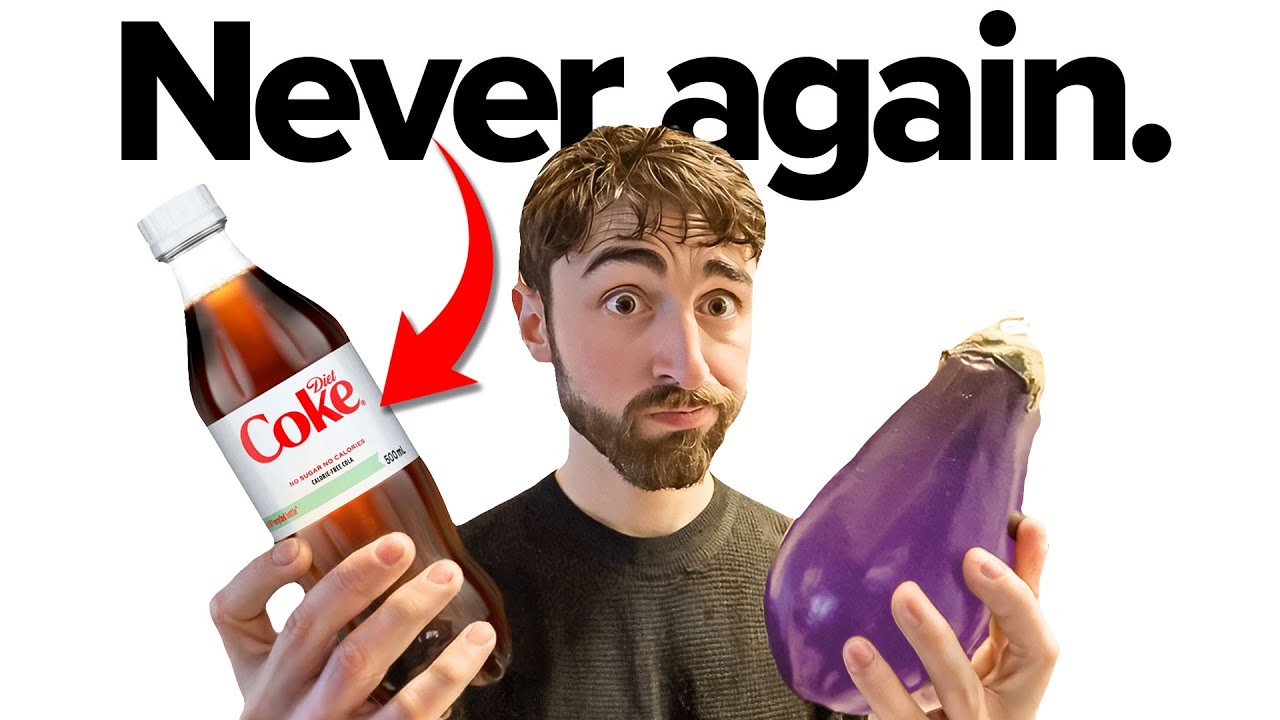
In this YouTube commentary, the speaker reviews a PNAS mouse study that administered a low dose of aspartame—equivalent to 2–4 eight‑ounce cans of diet soda per day—to mice for 12 weeks. The study found increased anxiety‑like behavior in both male and female mice, linked to altered glutamate and GABA receptor levels in the amygdala. Crucially, the anxiety phenotype persisted in the offspring and grandchildren of the exposed mice, despite no direct aspartame exposure, indicating a transgenerational effect. The speaker challenges the common dismissal of animal data by highlighting the impracticality of conducting multigenerational human randomized trials, using a smoking‑risk analogy to illustrate the danger of waiting for perfect proof. He then walks through his personal risk‑benefit calculus: uncertain but potentially high‑impact risk to sperm and mental health versus negligible benefit from diet soda, leading him to avoid aspartame and favor alternative sweeteners such as stevia, monk fruit, or allulose. The video concludes with a direct excerpt from the paper warning that aspartame consumption below FDA limits may cause neurobehavioral changes in consumers and their descendants, urging viewers to make informed choices rather than dismissing animal evidence.
Chapters
Men, this drink could be screwing with your swimmers. You know what I mean. Your sperm. It's a hard truth. Do you have the balls to hear it? Alright, in this video, I'm gonna quickly drill you with some data before we cuddle up with a broader point about interpreting animal model literature in science in an intellectually honest way. Get ready, these data go deep. Now, the paper I want to spend a few minutes exposing you to was published in PNAS. No, no, no, get your head out of the gutter, I said PNAS, which stands for the Proceedings of the National Academy of Sciences, which is a rather prestigious journal with an unfortunate abbreviation in this case. Basically, the researchers in this study exposed mice to low-dose aspartame, the artificial sweetener found in diet sodas. The mouse-to-human equivalent, the dose used in the study was the equivalent of 2 to 4 small 8-ounce cans of aspartame-sweetened diet soda per day, as it says explicitly in the paper. Now, exposure to this low-dose aspartame caused anxiety in both male and female mice over 12 weeks, as measured by validated behavioral tests. —like this open field test, where lower levels on the chart indicate more anxiety-like behavior. Now, the mechanism at play had to do with changes in levels of receptors for key neurotransmitters in the brain—glutamate, an excitatory neurotransmitter, and GABA, an inhibitory neurotransmitter—changes in the emotional center of the brain, including the amygdala. Now, I know what you're thinking—wow, this research goes deeper than a prostate exam from an overenthusiastic urologist. But we're not even at the interesting part. Yes, there was a clear behavioral effect of low-dose aspartame and a reasonable biological explanation: the messing with the balance of the excitatory and inhibitory neurotransmitters in the brain. But the really terrifying thing, at least to me, was that this effect was transgenerationally inheritable. In other words, the offspring of these mice, and even the grand offspring, had signs of anxiety on validated behavioral testing despite never having been exposed to aspartame themselves. You can see that here, again in these graphs, where lower indicates more anxiety-like behavior in the offspring, the children, and the grand offspring, the grandchildren of these mice, despite no aspartame exposure themselves. Take a minute to think about how profound that is. The aspartame equivalent of even just 2 to 4 diet sodas per day, and the small ones at that, the 8-ounce little cans, can lead to increased anxiety in the offspring, the children. But of course, the immediate retort is always, "But these are just animal data," with the implication being that I or others who talk about the potential dangers of chemicals like aspartame in our food supply are overreaching on the data and creating unnecessary fear—fearmongering, if you will. At least, that's usually, or seems to me usually, to be the accusation rendered by the diet soda defenders on the internet. But now I want to ask you a question: What human data will be required to demonstrate without a shadow of a doubt that diet soda or other aspartame-containing foodstuffs cause transgenerational anxiety in human children and human grandchildren of human aspartame users? Well, you'd probably need a multigenerational randomized controlled trial where you take a large group of humans—it needs to be large because you need it to be a pretty high-powered study—and randomize a subset to consuming a specific aspartame-containing food dose and others to consume no aspartame. Then you need to follow them and their children and potentially their grandchildren for the next 50 to 60-odd years. Guess what? This study will never be done. So, in disregarding animal data with the statement, "But prove this works in humans," one often overlooks practical limitations of the scientific method and creates an impossible burden of proof. To hammer home this point with a provocative analogy, imagine if we applied similar logic to smoking. If we dismissed all but the perceived top-tier human randomized controlled trial evidence for smoking and health risks and waited for a 50-year randomized controlled trial to be conducted, say, for cancer outcomes, immortality, millions of people would die because no action would be taken, waiting for data that will probably never exist. Sometimes waiting for the perfect proof isn't wisdom, it's willful ignorance. Now, to be clear, I'm not saying drinking diet soda is as bad as smoking. I don't believe that. I'm just clarifying that because I know someone somewhere is going to go on some angry rant about this problematic equivalency. It's an analogy, but I actually think it's a fair one. It's simply emphasizing that data are often imperfect, incomplete, and we need to make do with the data we can collect and have collected, which almost always has major caveats. Then, given imperfect and incomplete data, we must make calculated health decisions. In this case, I'll walk you through my own mental calculus as an exercise. Okay, diet soda may mess with my sperm and put my children at higher risk for anxiety or other mental health disorders. Do I know this will happen for sure? No. But is there a chance? Yes, there is. So I've identified the risk as an uncertain but potentially high-impact negative outcome. How about the reward? Well, for me, zero. The cost to me of giving up diet soda is nothing. I think water is fine, sparkling if I'm in the mood for it, and even if I were to want a diet soda, I know I could opt for one with an alternative sweetener that I deem safer, like stevia or monk fruit or allulose. That would be my preference. I definitely think it's safer than aspartame-sweetened diet sodas. So the risk-benefit analysis to me makes it clear that I'll probably never have another aspartame-sweetened diet soda as long as I live. Otherwise put, if a drink might sabotage my sperm, I'm pulling out faster than— well, you get the idea. Oh, and if you perchance wanted to hear the author's own conclusions from the paper, here's an excerpt straight from the paper. I'll read it for you. Extrapolation of these findings to humans suggests that aspartame consumption at doses below the FDA-recommended maximum daily intake may produce neurobehavioral changes in aspartame-consuming individuals and their descendants. Thus, human populations at risk of aspartame's potential mental health effects may be larger than current expectations, which only includes aspartame-consuming individuals. At the end of the day, this isn't about fearmongering. This video isn't about fearmongering. You're an adult, you can make your own decisions. It's about understanding the risks and making an informed choice given the data at hand. We may never get a perfect long-term multigenerational human study proving with absolute certainty and without a shadow of a doubt that aspartame messes with our brains, sperm, and our children's mental health. But dismissing compelling animal data just because it's not human data, that's not science. That's denial. So here's the question you need to ask yourself. What is diet soda, specifically aspartame-sweetened diet soda, really worth to you? You don't have to agree with me. You don't have to have the same mental calculus, but at least be honest about the trade-offs. Because when it comes to something as important as your health, and possibly your future kids' health, waiting for perfect proof might just be the worst mistake you could make. Now, wrapping up, if you like hard science with a little playful edge, hit subscribe. Let me know your thoughts in the comments. What did you learn? Was this video valuable to you? And share this with someone who drinks this stuff daily. Because whether they want to hear it or not, they deserve to know what's at stake. Some say ignorance is bliss. I say man up and grab the data by the variables. Stay curious. I hope you enjoy puns. There were definitely a lot of them. Peace.