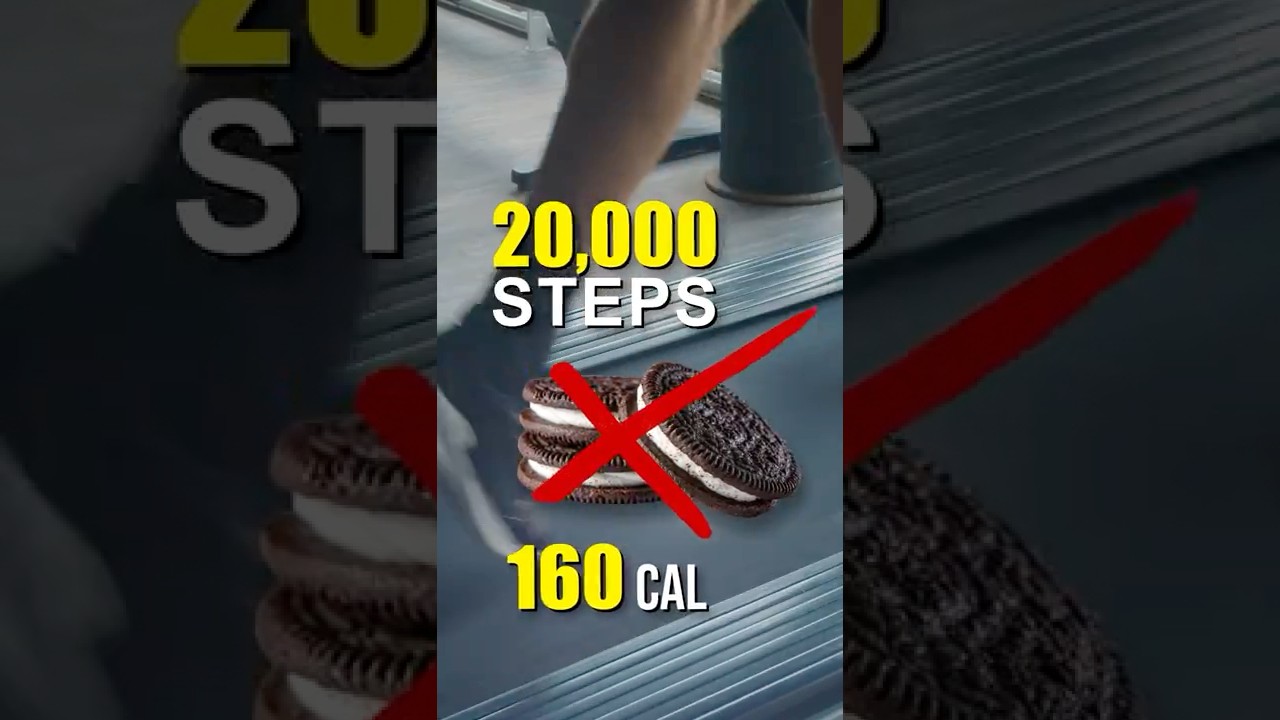
Nick Norwitz breaks down a viral claim that 20,000 steps equals three Oreos. The math is wrong, but the bigger problem is treating food as pure calories. Sugar and fructose change how your body stores energy, not just how much you burn.
Chapters
Okay, this tweet has over 500,000 views in about 24 hours, and I'm reacting to it— no, not because it's one of the dumbest bits of math I've ever seen. Walking 20,000 steps is not the caloric equivalent of 3 Oreos, which is 160 calories. To make that math work, you need to weigh about 25 or 30 pounds. No, I'm reacting to it because I think the premise is entirely wrong. It's true, you can't outrun a bad diet, but it's not because You can't get the amount of movement realistically to burn off the calories, the empty calories in say something like an Oreo. But because the foods that we eat, like Oreos, they're not bad because they just have 160 extra calories that are then going to go into fat tissue. No, it's because the actual components of the food, including energy carrying molecules, fructose, excess sugar, they disrupt your metabolism. They screw up your microbiome. They alter fuel partitioning so that you're taking the energy you're consuming and partitioning it into say fat fat tissue instead of lean tissue or other metabolic functions. So I am against the premise that this is just a problem of a caloric imbalance, an unrealistic movement to energy intake ratios. No, this is a matter of the quality of the food we eat. That is why I'm reacting to this, setting aside the piss-poor math.