The Simple Molecule That Could Save You From a Heart Attack
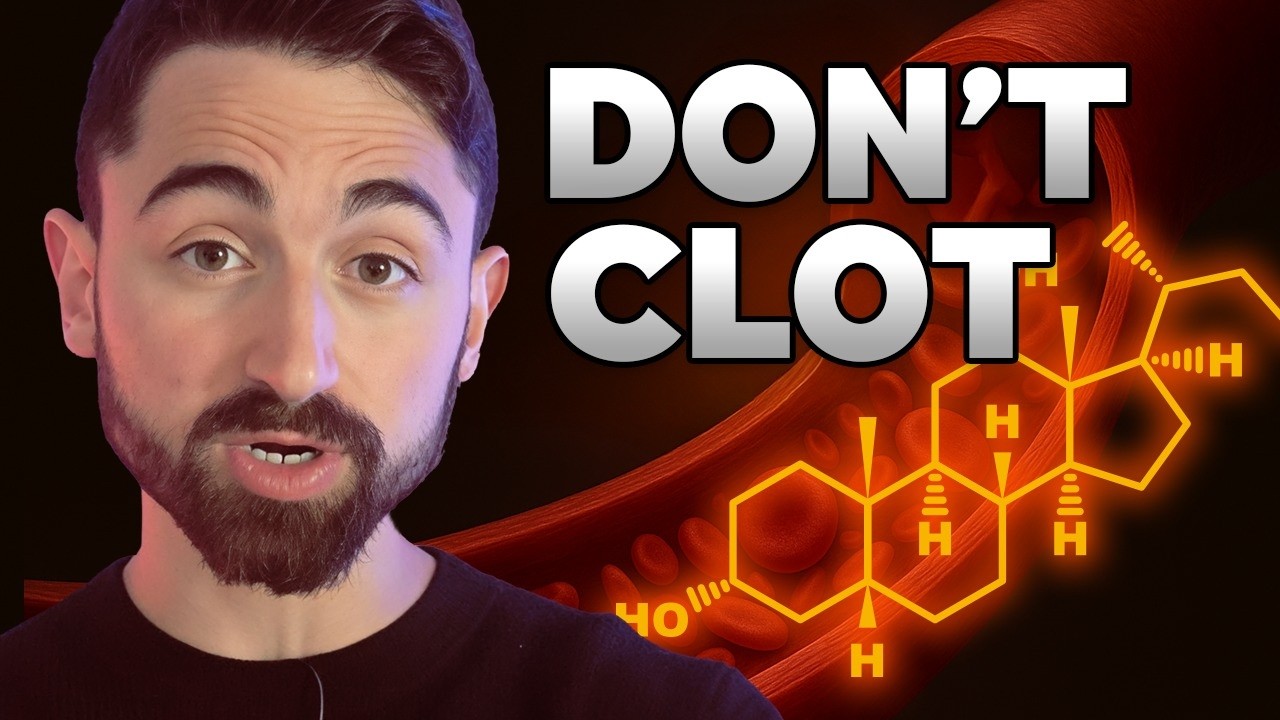
Nick Norwitz breaks down a study linking a gut-produced molecule called deoxycholic acid to lower heart attack risk. The molecule works by binding to a receptor on blood platelets and reducing clotting. People with heart disease have less of it, but ketogenic diets, certain supplements, and new drugs targeting the same pathway might restore protection.
Chapters
What if a very simple molecule made by your body and the microbiome could literally save you from a heart attack? Now that's not exaggeration, and I'm going to prove it to you. But first, let's zoom out. Whoa, not that far. Sorry, I have an overeager editor, but I love the energy. Let's bring it to this video. Let's zoom out and talk about bile acids, simple misunderstood molecules that most doctors think about as just sidekicks of digestion, but they're not. They're part of a complex signaling network, a universe of metabolic complexity unto themselves. And today we're going to talk about new research in Nature Cardiovascular Research showing how a bile acid made by your body and the microbiome can alter the clottiness of your blood, improve vascular health, and ultimately potentially protect you from a heart attack. Patients with cardiac disease are characterized by a relative deficiency in this DCA bile acid. The lower the DCA bile acid circulating, the clottier the blood. Let's talk about therapeutic potential. They took mice predisposed to cardiovascular disease and treated these mice with the DCA bile acid, B. vulgatus, or fecal transplants. The results were striking. How do we boost B. vulgatus levels, or how do we increase DCA specifically? It's not really the DCA molecule itself, it's the lock. That the DC8 key opens. So here are 4 methods that could work. First—
All right, a little bit of a transparency moment before we begin, just a couple seconds. I was rewatching the edit of this video and I have to admit I get more into the weeds than I usually do and I know my videos are complex at baseline. So I would apologize for that, but actually I think different videos serve different purposes and this one's for the nuance ninjas. So stick along if you can. If you do always want the extra details, check out the Stay Curious Metabolism newsletter. There's always one associated with the video. Right now, on Substack were a top 3 bestseller globally and only rising thanks to your enthusiasm, curiosity. I could not be prouder of that. And, uh, finally, this success has allowed us to experiment with different approaches. You might notice we're trying new intro styles. Let me know if you like this intro, um, the edits, what you like, what you don't like. Your feedback are data for this social media science communication experiment. So without further ado, let's get into this video.
Patients with coronary artery disease, a type of heart disease, are known for having different profiles of these bile acid fat-digesting molecules. These molecules actually circulate around in the blood, and patients with coronary artery disease just have different profiles, different fingerprints of bile acids. This is because their gut microbiomes contain different levels of microorganisms, bacteria, that produce and process these bile acids. So the researchers behind this study, they wanted more specificity. So what they did was they compared patients with coronary artery disease to healthy control patients, and they found: 1. Patients with coronary artery disease had lower levels of a bile acid called deoxycholic acid, or DCA for short. 2. Patients with coronary artery disease also had reduced levels of a microbial species, Bacteroides vulgatus, which produces DCA. And 3, they find a positive relationship between the abundance of this Bacteroides vulgatus and circulating DCA levels. So to put it simply, it appears patients with cardiac disease are characterized by a relative deficiency in this DCA bile acid and a deficiency in the bacteria that produce it. But what, if any, is the functional consequence of reduced DCA levels in patients with heart disease? More at risk for heart disease. The researchers observed that coronary artery disease patients had, now quoting, "substantially enhanced platelet aggregation." Platelets are the things that make your blood clot, so in plain language, patients with coronary artery disease had clottier blood. And that matters, because blood clots are the immediate causes of most heart attacks and strokes. Platelets clump together, they obstruct blood vessels, and they block the delivery of oxygen and nutrients to the heart or brain, causing what's called an ischemic cardiovascular or cerebral vascular event. In simple terms, again, a heart attack or a stroke. And the researchers also noted a fascinating inverse association between platelet aggregation—think blood clottiness—and DCA levels. So again, simply put, the lower the DCA bile acid circulating, the clottier the blood. Let's summarize what we've gone over so far to make sure you get the points. Patients with coronary artery disease have lower DCA levels circulating in their blood. They also have fewer microbes that make DCA, this Bacteroides vulgatus. They also have clottier blood, and lower DCA levels correlate with more blood clotting. To add yet another layer, the researchers also found an inverse association between DCA levels and the risk of major adverse cardiovascular events, like heart attack and stroke. Specifically, what they found is that on patients with 4-year follow-up data, patients with higher DCA levels were less likely to have a heart attack, stroke, or just die. The authors, in their own words, even go so far as to suggest the predictive utility of DCA as a biomarker. They say, "DCA was negatively associated with the cumulative burden of thrombotic events," like heart attacks and strokes, "even after adjusting for hypertension," high blood pressure. This suggests clinical utility for the prognostic, or predictive risk stratification of patients with coronary artery disease. So, again, putting this in simple terms, higher DCA levels predict better outcomes, while lower DCA levels may identify patients at higher risks for having a heart attack or stroke. Of course, thus far we've actually only discussed associations. Maybe you picked up on that. I don't know about you, but I'm already thinking I'd prefer higher DCA levels. Still, correlation doesn't prove causation. So the researchers dug deeper to explore the mechanism. And they showed in the paper, this is how it works. DCA directly inhibits platelet aggregation, making blood less likely to clot and thereby reducing the risk of heart attack or stroke. And mechanistically, what is really happening is DCA is binding to a receptor for bile acids called Tocata G-protein coupled receptor 5, or TGR5 for short. TGR5 sits on platelets and DCA binds to it, and this triggers a signaling cascade involving the PKA-CAMP pathway, if you know your biochemistry, which is ultimately what inhibits platelet activation and aggregation. The simple result? Blood that is less clotty. DCA binds TGR5, and that results in less clotty blood. But now, let's talk about therapeutic potential, from bile acids to microbiome transplants. The research team went further, testing the therapeutic efficacy in animal models. They took mice predisposed to cardiovascular disease and treated these mice with the DCA bile acid, or B. vulgatus, this microbe that makes DCA, or fecal transplants from humans. And the results were striking. DCA, or B. vulgatus, which makes DCA, or stool from healthy individuals all reduced platelet activation. But stool from patients with coronary artery disease that really didn't contain much B. vulgatus and didn't produce DCA did not. Isn't that fascinating? Just think about how cool that is. But we're not done. In a heart attack model where they surgically blocked a major artery in the heart in mice, treatment with DCA, B. vulgatus, or healthy stool transplants protected heart tissue. It literally saved heart tissue from death. You can see that here. More blue means more dead heart tissue, and you can clearly see the bile acid, DCA, the bacteria, B. vulgatus, or a fecal transplant all reduced heart tissue death after a heart attack. I told you I'd prove it to you. So, to reinforce the takeaway, any intervention that increased DCA in these models reduced blood clotting and could directly protect against cardiac damage during and after a heart attack. Wow. Now, let's discuss turning insights into action. When it comes to applying the knowledge gained from these data, we might ask questions like, how do we boost B. vulgatus levels, or how do we increase DCA specifically? Those are reasonable questions to ask. However, I don't think they're the most practical or common sense questions. Let me unpack that. First, the human literature on precisely shifting the microbiome is scarce, and though I tried, I couldn't find any solid data on diet or lifestyle interventions that can reliably increase B. vulgatus in humans. And as for DCA, while we could focus specifically on this bile acid since it stood out in the study, High DCA levels actually have mixed associations and effects on human health more broadly. Plus, it's not really the DCA molecule itself we ultimately care about. It's the lock that the DCA key opens, the proverbial lock here being TGR5, this receptor. It's activation of TGR5 that is really what underlies the anti-clotting effects we just reviewed. And that's where the real therapeutic potential lies. So the better question to ask is, how do you increase TGR5 signaling? This will be predicted to reduce blood clottiness and potentially protect you against a heart attack. So here are 4 methods that could work. They're informed speculation. First, ketogenic diets. Carbohydrate restriction sufficient to raise levels of ketone bodies in the blood and intestines alter the microbiome in ways that generally increase levels of bile acids that activate TGR5, including towering conjugated DCA, T-DCA. If you want a video covering these data, you can see this video. Also, somewhat related, weight loss. Weight loss also appears to increase bile acids that act as TGR5 activators. Certain bile acids like cholic acid 7-sulfate may additionally boost TGR5 expression, the receptor expression itself, and promote the reduction of the anti-obesity hormone, the incretin hormone GLP-1. The study supporting this particular connection was conducted in bariatric surgery patients, so honestly it remains unclear how or whether these results generalize to other forms of weight loss like diet and exercise. Third, TUDCA. While I won't explicitly encourage bile acid supplementation given some risks of, say, high dose intake like diarrhea, TUDCA is a common over-the- or supplement. You could get it on Amazon. I don't have any affiliations, but you can. TU-DCa is a TGR5 activator that engages this PKA-CAMP pathway that we highlighted in the main study. And if you want more on TU-DCa, check out this video, which I thought reviewed some shocking data. That's why I made the video. And then finally, there are non-bile acid activators of TGR5. It's worth noting that these are in production. Some of them are synthetic, some of them are natural. And this isn't an endorsement of pharmacological approaches to activating TGR5 per se, but I highlight it because I think it underscores the growing medical interest in this fascinating receptor TGR5, which actually has therapeutic potential beyond the heart, including in conditions like depression. So summing up, this study shows something amazing: your gut can literally change how your blood clots. That means it can change your risk for heart attacks and strokes. Now, while we can't yet micromanage one microbe or specific bile acids with precision, the bigger picture is quite clear. Lifestyle choices that support your metabolism, that support your gut, your blood, your heart, they all connect. It's one system. In fact, many of these systems are copied all over the body, so acting on these pathways we've discussed should have ripple effects throughout the body and mind. In fact, as I mentioned, this TGR5 receptor, it's in the brain, and activation has antidepressant-like properties. For more on that, you can see the associated newsletter linked in the video notes. But the bottom line, again, is simple: metabolism is unified and quite incredible. Do you agree? Stay curious, and thanks for learning with me.










