The Strange Science of Eating Only Meat
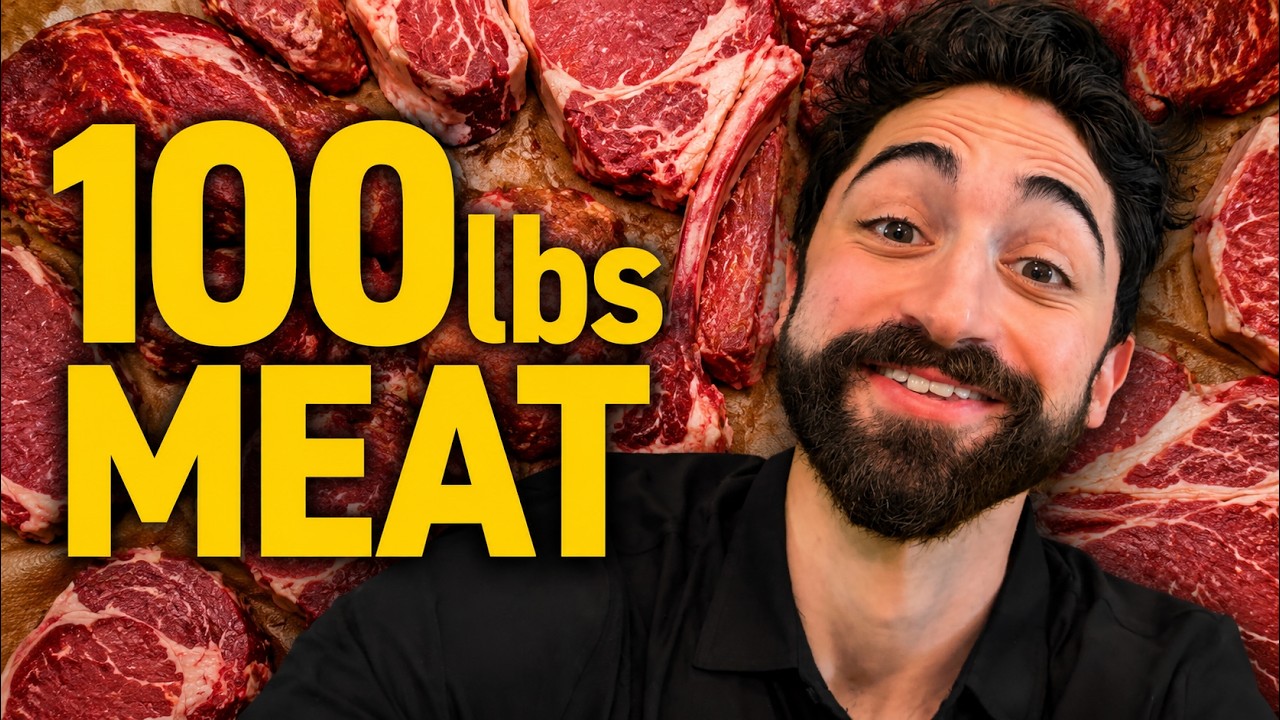
In this monologue, Nick Norwitz recounts his 30‑day “Lion Diet” (strict carnivore: meat, salt, water) and situates it within the broader rise and recent decline of the carnivore movement. He reviews personal observations—daily bowel movements, normal blood work, no scurvy, modest cholesterol change—while highlighting that his experience is a single data point. Norwitz then delves into scientific evidence: fiber‑free diets improve IBS‑C symptoms; a case series of ten ulcerative colitis/Crohn’s patients showed dramatic remission on carnivore; ketone signaling, microbiome shifts (starvation of pathogenic bacteria), and preserved microbial diversity support mechanistic plausibility. He discusses nutrient concerns (calcium scarcity without dairy, rapid omega‑3 decline on ruminant‑only meat, and a paradoxical vitamin‑C sufficiency via reduced glucose competition and NADPH‑driven regeneration). The talk expands to potential therapeutic uses beyond gut health, citing anecdotal and emerging evidence for autoimmune diseases, mental‑health disorders, and especially anorexia nervosa, where ketone‑driven metabolic changes may aid recovery. Finally, Norwitz offers a pragmatic framework: carnivore may be a targeted medical intervention for treatment‑resistant gastrointestinal, autoimmune, or metabolic conditions, but is unnecessary for healthy individuals and requires biomarker monitoring. He concludes that the diet is not a fad to be dismissed nor a universal cure, but a powerful, highly restrictive tool that can be life‑saving for some.
Chapters
I ate over 100 pounds of meat. And that's not even the craziest part. Let me explain. The carnivore diet has a fascinating trajectory over the past decade. It exploded into the mainstream as prominent advocates promoted it as a solution for everything from athletic performance to body composition. I'm coming up on 5 years on the Lion Diet. I never imagined in my wildest dreams, number one, that you could just live on meat. Many, many, many people are starting to get interested in carnivore. More people are trying to do this. I've been on a carnivore diet. Treating obesity to autoimmune diseases and other chronic illnesses. Specifically autoimmune disorders and mood disorders, but also fatigue, skin problems. Recently though, the narrative seems to have shifted. To many people, it looks like carnivore is on the decline. Part of that perception comes from some of its biggest advocates moving away from strict carnivore. Perhaps the most notable example is Dr. Paul Saladino, better known as the Carnivore MD, Who now reintroduce fruits and other plant foods. So the bananas in here, the cantaloupe I had at breakfast, the fruit that I'll have at dinner. So did the carnivore diet fail? Did it simply follow the predictable life cycle of every fad diet? Or did people get scurvy like old-timey pirates? Or is carnivore fading away like a cauliflower fart into the wind? Not exactly. Because beneath the internet debates and social media hot takes is a much more nuanced story. And that's what made me want to try carnivore again. A few years ago, I followed the diet for 5 months and overall had a surprisingly positive experience. Although, to be fair, my prior version was fairly liberal. I did eat dairy, eggs, and if I'm being honest with you, I also cheated with coffee. This time though, I wanted to go further, more extreme. So I went whole hog, or more appropriately, whole cow, because for 30 days I followed the Lion Diet. The strictest, most extreme version of carnivore. No dairy, no eggs, no seafood, no coffee, not even organ meats. Just meat, salt, and water. I'm meal prepping and this is basically all I'm eating today. Well, plus salt. Now, my experience, which I will tell you about, is only one data point, but it's also a springboard into a much bigger story about the carnivore diet, its rise in popularity, its controversies, what the science tells us, And what's left to learn. So let's get into it. Maybe we've been thinking about the carnivore diet all wrong. You just eat meat, you're going to get scurvy, right? Not quite. Patients with anorexia have attested that a carnivore diet saved their lives. Fiber-free diets for gut issues sounds like health heresy, but it also works. This one will surprise you. Real quick as always, all the references, extra nuances, and access to much more content like this can be found at the Stay Curious Metabolism Community, which is now a top overall global bestseller on Substack. Members call it an oasis of nuance on the internet and the best investment they've ever made in their health. But with that being the only plug in this video and now out of the way, let's ruminate on our roadmap for today. We're going to start talking all about gut health, from poop to microbiome, all of it. Then we'll talk about nutrient deficiencies, what you have to worry about. Then we'll talk about potential medical indications, and there are a few that will really surprise you. Finally, we'll answer the question, who should try it? Alright, let's address the question I know many of you are wondering about: did the lack of fiber make me horribly constipated? No. In fact, I did poop. I pooped every single day, and by the end of 30 days, my bowel movements were about as close to perfect as they've ever been. Now, this isn't just my experience, it's consistent with the published literature. For example, a 2012 study published in the World Journal of Gastroenterology found that in people with irritable bowel syndrome with constipation, eliminating dietary fiber improved bowel frequency from 1 bowel movement every 3.75 days to 1 movement every day, along with complete elimination of bloating and straining. There was even a dose-dependent effect, meaning the more fiber people with irritable bowel syndrome with constipation consumed, the worse their symptoms became, not better. And the researchers concluded that constipation and its associated symptoms can be effectively reduced by stopping or lowering intake of dietary fiber. But it goes a level deeper. What about fiber elimination not just for irritable bowel syndrome, but inflammatory bowel disease, including ulcerative colitis and Crohn's disease, which are much more severe? I should know. Ulcerative colitis took my life away from me for several years. Anyway, colleagues and I did publish a case series of 10 patients who adopted carnivore diets for this very purpose, for their inflammatory bowel disease. And these were medically confirmed cases, not just internet hearsay. We had doctors' reports, reports of their colonoscopies, biopsy reports. And some of these cases were really severe, requiring harsh biologic drugs or even surgery to remove parts of their intestines. And most of these patients had already tried a long list of elimination diets out of desperation: vegan, vegetarian, low FODMAP, paleo, and others. You can find details in the paper. And each one experienced substantial, life-changing improvements on a fiber-free carnivore diet. For example, one patient said, a keto carnivore diet let me forget I have Crohn's disease. No drugs, no surgery. The decades I dealt with Crohn's were like another lifetime. Another patient told us, with this lifestyle, I have not had to worry about my colitis for 6 years. And if you want to read all the patient perspectives, they are in the open access paper that I'll link below. And importantly, paired with these clinical narratives are biological mechanisms that can explain the therapeutic efficacy of a carnivore diet for gut disorders like IBS and IBD. Let's go through a few, starting with ketones. When you remove carbohydrates from your diet, your body turns fat into ketone bodies. These are in part fuel for your brain, But this also happens in your gut. And gut ketone bodies, they're signaling molecules. They reprogram immune cells to make them less inflammatory. There's even a suggestion that they can help stem cells in the gut renew to better heal the gut lining. And then there's the microbiome. Research published in Cell Host and Microbe, which is a highly regarded journal, found that a fiber-free diet effectively starves off certain pathological gut bacteria One in particular called Muscusberrilium. At a high level, it kind of makes sense, doesn't it? If your gut issues are caused, in part, by an imbalance in gut bacteria, so-called dysbiosis, that's the science-y term, you could starve off the bad guys. And apparently that works. I will say, as a nuanced note, truthfully the mechanism is a little bit more complicated and involves changes in the location of this bad gut bug. It's called intraluminal migration. But for our purposes, I think it's reasonable to think about removing fiber starving off the bad guys when you have an imbalance in your gut bacteria. If that doesn't make sense to you, drop a comment below and I'll try to answer your questions. I'll also emphasize, this isn't just rigorous basic science published in a top journal and consistent with the case series we published. Doctors actually prescribe this, in a sense. Yes, I said that. Because fiber-free diets are used for treatment-resistant cases of inflammatory bowel disease already and can be highly effective with response rates of 60 to 85%. Now you've probably never heard of this. In fact, those of you who are doctors in my audience who went to medical school probably haven't heard of this because it's generally assumed that these diets are unpalatable and unsustainable, probably in part because conventional medicine administers them as nasty shakes, fiber-free gross shakes, and few people have even thought to entertain the idea that you could achieve the same ends, fiber elimination, by just having people Eat meat. So fiber-free diets for gut issues sounds like health heresy, but it also works. And the last thing I'll say on the topic of gut health and carnivore diets is that while one might assume that microbiome diversity atrophies away like a bicep on a raw vegan diet, that's not actually the case necessarily. There are in fact data on microbiome diversity in people on carnivore diets. Most recently, a study was published comparing 10 healthy individuals who had been on a carnivore diet for an average of 3 years with 874 matched controls who were eating a mixed diet with more fiber. And quoting from the study, diversity metrics of the microbiome did not differ significantly between groups. They didn't. And these findings challenge the assumption that dietary fiber is essential for maintaining microbiota diversity. If you want more on gut health, we do have a MasterClass video on it. Here and linked below, but the high level for this video: does a carnivore diet stop you from pooping? Nope. Does it destroy your microbiome diversity? Not necessarily. Does it have therapeutic potential for certain people with compromised gut health, like I did? Absolutely. Now that doesn't make carnivore a panacea, it doesn't, but it does make it interesting, and I think that's somewhere to start. Now let's talk about nutrient deficiencies, some concerns worth taking seriously. This is where most of the critics of the carnivore diet plant their flag, and to be fair, there are some real concerns There are concerns here that are legitimate, and I will focus on those. Let's go through them one by one. First, calcium. On a standard carnivore diet that includes dairy, calcium is not an issue. But on a lion diet or other forms of carnivore that don't have dairy, the topic deserves attention and concern. Here's the deal: muscle meat is not a good source of calcium. You're looking at roughly 10 to 20 milligrams per 100 grams of beef compared to the recommended daily allowance of 1,000 to 1,200 milligrams of calcium per day. That's the general target. So even if you're being generous, you'd need to eat about 11 pounds of beef daily to hit your recommended daily calcium intake. So if someone were to adopt a carnivore diet for years, especially a lion diet, I would absolutely consider a calcium supplement, be that an actual calcium supplement, 100 grams of Parmesan cheese per day, and some carnivore dieters actually creatively turn eggshells into calcium supplements, and it's surprisingly easy. But let's move on— omega-3s. This one hits close to home. As many of you know, I prioritize my omega-3 intake. I ate 1,000 sardines in a month. My omega-3 index is measured at 16%, which is more dolphin than human. So you can imagine how I felt going 30 days on nothing but ruminant meat— no fish, no sardines, no omega-3 supplements. And to nobody's surprise, when I checked my omega-3 levels after 30 days, they had dropped substantially. Down from 15.68% to 10.51%. Now, that 10.51% is still considered within the optimal range, however, it's clearly a swift drop in just 30 days and I assumed it would have continued to trend downward. And for me personally, this is a concern and one of the chief reasons I wouldn't actually follow a lion diet over the long term without supplementing omega-3s because my brain, given my genetics, is vulnerable to Alzheimer's disease. I carry 2 copies of APOE4. So maintaining high omega-3 intake is for me absolutely non-negotiable. And the reality is beef is not a good source of omega-3. Even grass-fed, grass-finished beef provides only a fraction of what fatty fish delivers. For reference, a serving of grass-fed beef might give you 50 milligrams of omega-3, and a can of sardines gives you about 1,500 milligrams— a 30-fold difference. So in this domain, sorry, but sardines do beat a steak. It's also worth noting this isn't the sort of dietary deficiency you detect easily. The concern here is what a subtle omega-3 deficiency could mean over the course of decades for brain health. So if I do a carnivore diet again in future, it will definitely be one that includes a healthy amount of seafood or added omega-3s. But now let's get to the most fun nutrient deficiency, and this one has a plot twist: vitamin C. This is a paradox that breaks most people's brains, so try to hold on. The standard argument goes like this: meat is relatively low in vitamin C. It contains some, but not very much, especially once it's cooked, and especially if the steak is well done. And if you get your steak well done— Please seek psychiatric support. Anyway, of course the party line goes, you just eat meat, you're gonna get scurvy, right? Not quite. Let's start with some historical evidence. In 1928, the Arctic explorer Vilhjalmur Stefansson checked himself into Bellevue Hospital in New York City and, under continuous medical supervision, ate nothing but meat for an entire year, and yet he didn't develop scurvy. His physicians monitored him closely and published the results. He learned this dietary pattern from Inuit populations who traditionally consume diets almost entirely composed of animal foods— seal, whale, caribou— with minimal plant matter in their diets at all, and yet they don't get scurvy. So what gives? The answer likely comes down to a couple pieces of often overlooked biochemistry nutrition textbooks won't teach you. First, vitamin C and glucose, they're structurally similar molecules, so they actually compete for some of the same cellular transporters. So when carbohydrate and sugar intake are high, glucose floods these transporters, effectively outcompeting vitamin C for entry into cells. In effect, what this really means is without sugar in your diet, your vitamin C dietary needs drop because you absorb it more efficiently. But to me, that's the less interesting explanation. There's another level as well, because once inside the body, vitamin C can be regenerated. As an antioxidant, vitamin C has what's known as a reduced and an oxidized form depending on how many electrons it's carrying. We don't need to go into the rabbit hole of redox reactions, and I don't want to incite any PTSD from college biochemistry, but let's just say there is a capability to recharge many antioxidants like vitamin C. And that rechargeable battery depends on a molecule your body makes Called NADPH. And here is the punchline: on a zero-carb diet where you're making ketones, like a carnivore diet, that might actually support the NADPH system, in effect helping to regenerate antioxidants like vitamin C. Does that make sense? So now we have a mechanism by which you're absorbing vitamin C more efficiently and you're able to regenerate it like a rechargeable battery if you're eating a diet that increases ketone levels and is low in sugar. But now let's pivot. We've already discussed gut health in detail, but what about the other potential therapeutic applications of a carnivore diet that extend beyond the gut? But before we do that, let me pay off the hook of this video, because what happened to me when I ate over 100 pounds of meat, nothing but meat for a month? Pretty much nothing. It was remarkably unremarkable. I pooped, I didn't get scurvy, I did desperately miss cheese and coffee admittedly. Oh, I missed you. But physically, I felt pretty great, and my blood tests were normal. My nutrient levels were normal, my thyroid, my cortisol, my cholesterol didn't change a smidge. In fact, my cholesterol actually dropped by 20 milligrams per deciliter, but that's within the realm of noise for me. So my experience was remarkably unremarkable, but maybe that's the point. Nothing horrific happened. See, I did everything that attracts a sea bear and nothing happened. Nothing miraculous happened for me either, but that's because I've already found something that works for my medical condition, ulcerative colitis. In this case, it was the ketogenic diet. So what I'm really getting at here is maybe we shouldn't be thinking about the carnivore diet as just a diet, but a potential medical intervention for people in need, which is a great transition to talking about other medical conditions, including other autoimmune and inflammatory conditions beyond inflammatory bowel disease, because the carnivore diet functions at its core as one of the most extreme elimination diets possible. You remove almost every potential dietary trigger in one swoop, and for individuals whose immune systems are reacting to specific plant compounds, this can be transformative. And I will admit, this is certainly an area where strong human evidence is desperately limited, but that's not something to hide from or brush under the rug, it's something to hold up as a deficiency in the scientific literature. Because unless you think hordes of people are simultaneously fabricating reports about their lupus, rheumatoid arthritis, multiple sclerosis, psoriasis, and other autoimmune conditions improving, and I have met some of these people, then you have to acknowledge that this dietary movement, the carnivore diet, whether you call it a fad, fringe, or salvation, is helping at least some people. So the question we should be asking isn't whether this is happening, the question we should be asking is why, and more importantly, how do we avoid throwing the baby out with the bathwater? So taking a step back before we get into specific conditions, when you combine the mechanistic data on ketones, the microbiome research, the clinical evidence on fiber-free diets in inflammatory bowel disease, the signal is enough to warrant serious investigation. But let's talk specifics. This one will surprise you. It surprised me, which is why I had to write a paper on it. But anyway, there's emerging interest in using carnivore-style animal-based ketogenic diets to support recovery From anorexia. And as counterintuitive as it might sound, it's actually incredibly intuitive when you consider one simple biological fact: mental health disorders are not purely abstract psychological phenomena. They arise from altered neurochemistry and changes in brain metabolism. So if you fundamentally alter brain metabolism, say with ketones made on a ketogenic or carnivore diet, Is it really that far-fetched to think you might also improve mental health? And that possibility extends across mental health conditions: depression, anxiety, binge eating disorder, addiction disorders, bipolar disorder, and anorexia. And indeed, patients with anorexia have attested that a carnivore diet quite literally saved their lives. Let me share just one illustrative example. Consider a woman we'll call Catherine. When she and I met and I interviewed her, She was 39 years old, and she had been struggling with body image issues since the age of 7. At her worst, at age 34, she maintained a BMI of 10.7— that's on death's doorstep— and she subsisted on a diet that on some days included little more than lettuce dressed with zero-calorie stevia sweetener. But after adopting a carnivore diet in desperation, she reported— And these are her own words, this solved all of my issues. All of them. For the first time in decades, she experienced a sense of mental clarity and calm. Her weight recovered to a healthy level, as did her relationships, and she's remained healthy for years. Now, I want to be very clear. I'm not suggesting that anyone with a mental health disorder self-treat with a carnivore diet now, per se. Eating disorders in particular are serious complex conditions That require professional support. But I do think this should be on clinicians' radar as a potential tool in their toolkit. In fact, I would go so far as to argue that for conditions like anorexia, where outcomes are so horrible, mortality rates so high, and current treatments so pitifully unsuccessful, that we need to be curious about outside-the-box tools that are helping people and saving lives. Sorry I'm getting emotional, but you say that and people think it sounds unreasonable, but I think it is the most reasonable thing in the world. What do you think? But that brings us to who should try it. Now let me give you a framework rather than a prescription. Carnivore makes the most sense as a therapeutic intervention for people who have treatment-resistant gastrointestinal conditions or autoimmune conditions or metabolic health conditions. Carnivore makes less sense for people who are healthy and already thriving on their current diet and anyone unwilling to monitor key biomarkers and rabbits. Since I am not a rabbit, no, I do not. So at the end of the day, I suppose I'm quitting carnivore again, but not because it failed, because I didn't need it, because different bodies need different things and that shouldn't be stigmatized. If someone with a devastating condition regains their health through a dietary intervention, be it a 30-day carnivore diet elimination reset or a 5-year extreme lion diet before gradually broadening their diet a little bit, It's not the diet failing, it's that person evolving. So maybe we've been thinking about the carnivore diet all wrong. Maybe it isn't a religion or just a movement to join or reject. Maybe it's simply a tool, a fascinating, powerful tool that won't be right for everybody, but it might be exactly what someone needs at a particular moment in their life to save their life. And that, at least to me, is something that deserves not ridicule, But curiosity. Thanks.










