THIS is Why There is Confusion about Lean Mass Hyper-Responders with high LDL on Ketogenic Diets
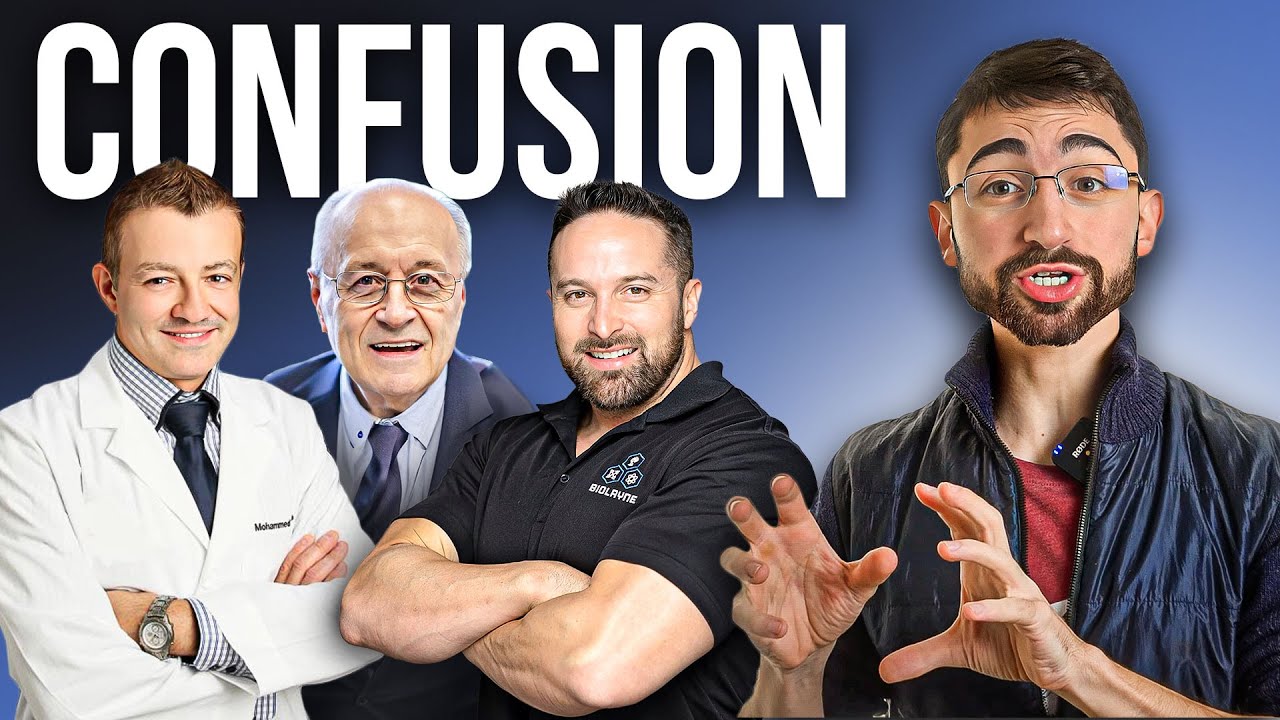
Nick Norwitz defines lean mass hyper-responders: people on ketogenic diets with LDL over 200, HDL over 80, and triglycerides under 70. He explains the lipid-energy model behind this pattern and pushes back against physicians misrepresenting the research on whether it raises heart disease risk.
Chapters
Lean mass hyperresponders have been a confusing and controversial topic for far too long, and it doesn't need to be this way. In this video, I have 3 goals: 1, define lean mass hyperresponders on a ketogenic diet; 2, clarify my positions with respect to high LDL cholesterol and ApoB on cardiovascular risk; and 3, articulate why I think there is so much confusion on this topic. And spoiler alert, I will be pointing the finger at those who I feel have failed to faithfully represent the phenotype, the physiology, the literature, most likely due to ignorance. Otherwise, I'd have to assume some sort of intentional deception driven by an ulterior motive other than communicating nuanced science, and I don't like to do that. This is going to get spicy, but I think you'll find my arguments are well supported. Stick around. Welcome to my channel. Stay curious. Part 1: Defining lean mass hyperresponders. The lean mass hyperresponder phenotype is defined by 3 cut points and only 3 cut points: LDL cholesterol greater than or equal to 200 mg/dL, HDL cholesterol greater than or equal to 80 mg/dL, and triglycerides less than or equal to 70 mg/dL. There is no BMI and no body composition cut points. For lean mass hyperresponders. The lean mass part comes from the empiric observation, now validated by multiple studies, that people that manifest this phenotype tend to be lean and very low carb. Now, are there data supporting that? Well, yeah, I just said there was. There are, including a meta-analysis of 41 randomized controlled trials showing a dose-response relationship between LDL cholesterol and BMI on low-carb diets, whereby lower BMI correlates with higher LDL cholesterol. This has now been shown in a meta-analysis of 41 randomized controlled trial, as well as cohort analysis, and just been generally reported in the population at large. So again, the lean mass hyper-responder phenotype is just the 3 cut points: LDL over 200, HDL over 80, triglycerides under 70. That's it. The leanness derives from the fact that this phenotype tends to manifest in lean people, and the leaner you are, the more exaggerated the phenotype. Now, what explains the phenotype? The lipid energy model is a metabolic model, a metabolic hypothesis to explain the lean mass hyper-responder phenotype. I reviewed it, Dave Feldman has reviewed it, others have reviewed it elsewhere. I'll give a very brief overview now and then link to more material below.. But briefly, the lipid energy model says that when someone is typically lean, insulin sensitive, and very low carb such that they deplete their liver stores of glycogen, there's a shift towards a lot more fat burning metabolism. And after free fatty acids are released from fat cells and can be used by muscle tissue, some of those free fatty acids are taken back up into the liver, resynthesized into the storage form of fat, triglycerides, where about 3 fatty acids go onto a glycerol backbone. Those triglycerides are packaged into the core of what's called a very low density lipoprotein particle, a VLDL. That is then shipped out into the periphery and turned over by a protein called lipoprotein lipase, that muscle and fat tissue. The triglycerides in the core are sucked out, the VLDL shrinks into an LDL, so as you're sucking out the triglycerides, they go low because the turnover is very fast. The VLDL, which are short-lived, turn into LDL, which are longer-lived, so now your triglycerides are low. Your LDL is high, and when you shrink this VLDL sphere, surface components get shed off and picked up by HDL, resulting in the high HDL. So that's how you get the triad of the high LDL, the high HDL, and the low triglycerides. So again, lean mass hyperresponders, just those 3 cut points. Leanness occurs typically with this phenotype, and the leaner you are, the more exaggerated the phenotype, and it's explained by the lipid energy model. Again, more resources below. Now, part 2: my positions with respect to high LDL cholesterol, high ApoB, and cardiovascular risk. Let me be very clear about something. LDL particles, ApoB-containing particles, are part of the causal pathway of ASCVD. They are necessary but not sufficient to drive ASCVD, and the preponderance of evidence to date In the general population, argues that all things being equal, all things being equal, a statement I'll get back to in a minute, higher LDL particles, higher ApoB, associates with increased risk and faster plaque progression. Hopefully that's clear. However, all things are rarely, if ever, equal in medicine, and other factors certainly influence progression, plaque progression, and risk profile. Those are not controversial statements. And a really important thing is that lean mass hyperresponders are unlike any other population that has ever been studied. This interesting phenotype appears to be a metabolic response to carbohydrate restriction. It's not a congenital genetic defect like in FH, in which the lipid receptor is broken, from birth, and people manifest early on in life with very high LDL. And it's not a metabolically unhealthy population, a metabolically unhealthy background, which typifies the developed world. So again, this is a unique population unlike that we've ever studied. There's no broken lipid metabolism that we're aware of, and they're metabolically healthy. Thus, it's fair, it's a legitimate question to ask are lean mass hyperresponders at increased risk? The answer is unknown. There is no answer, as this is a physiologic metabolic response that's unlike anything we've ever seen. So we can't extrapolate scientifically, we can't appropriately extrapolate from current data to this unique lean mass hyperresponder population. However, even if this is a natural metabolic response a normal physiologic response. It does not necessarily follow, as some people try to argue, that this isn't a higher risk lipid profile, at least higher risk than is optimal. It could well be that this is part of normal human physiology, that lean insulin-sensitive people, when they're carbohydrate restricted, have this normal response. It still could also be that it increases risk. Those things are not mutually exclusive. Point being, From a scientific perspective, we do not know the risk profile. We simply do not know the risk profile of the lean mass hyper-responder phenotype. And in the absence of specific population data, it's actually prudent— not actually prudent, that seems like a qualifying statement— it is prudent to take a clinically cautious stance because you don't want to gamble on your heart health if you don't need to. That's a statement I've been completely consistent about. One thing I've been trying to get people to read, people who are our detractors, is the Journal of Clinical Lipidology editorial I co-authored with 9 other co-authors, including Professor Ronald Krauss, who was recommended to me by Dr. Peter Attia. I really encourage people, if they want my stance on this as articulated as part of a team, a consensus statement of sorts, to read this editorial. Please, please, please read this editorial., and I've also provided tools on LDL manipulation, LDL lowering in a ketogenic context, which you can see down below. Please check out that video where we go over how to use the principles of physiology proposed by the lipid energy model to lower LDL cholesterol if you choose to do so. I'm not being prescriptive here because that's not my place, and you should not be getting medical advice off social media, but I'm happy to to explain the science that we understand and provide people tools for lowering LDL if they choose to do so. And I will be very, very, very clear now. I do not, nor have I ever advocated, endorsed people living with the lean mass hyper-responder phenotype, nor have I tried to issue unsubstantiated assurances about the phenotype's safety profile or lack thereof. To the contrary, I've supported many low-carb people in titration protocols, carb titration protocols, and provided resources and tools for LDL lowering for anybody to take or leave as they choose, because that is not my place to tell you you should or shouldn't lower your LDL. I'm not here to place value statements on it. That's a conversation between you and your doctor, given your personal considerations, your personal comorbidities, and personal preferences. YouTube and Twitter are not places for medical prescriptions. Point 3, and now is when things get pretty spicy. Everything I've just stated, I've said multiple times before. So why are some people still confused about what lean mass hyperresponders are and about my position and those of my friends and colleagues? What are the sources of confusion and by extension sources of danger? Because in this context confusion can lead to danger. And I think it's best demonstrated through select examples. Of note, I will be calling people out. In all cases, I rationalize doing so because I and we have taken the time to clarify the science, clarify the literature, clarify our positions to the individuals I'll be naming on multiple occasions who have chosen to continue to misrepresent the facts or spread rumors about our messaging that are simply untrue. And quite honestly, if you can't tell from my voice, it's getting frustrating. So I want to correct the record, and if they take notice, that is a good thing. So hopefully they won't misrepresent in future. So I hope they do watch this. Now, this misrepresentation of our positions, this creates confusion that in my opinion is a source of danger and obstruction of the progression of the research, research that will help people. The first example really came to me after I became public about my own medical circumstance, which was to use a ketogenic diet to therapeutically treat inflammatory bowel disease, and started talking about the lipid profile that emerged for me. I chose to be transparent about this in order to be able to connect with people and provide data that shows them, you know, my life, my heart are on the line. So this is not something that I have incentive to take flippantly. I don't want to die. I want to progress this research to help patients. And as a patient myself, I thought that was worthwhile communicating transparently. I was surprised early on—call me naive—to see physicians even take advantage of that and tease the topic. Here's an example from Dr. Spencer Niedolski that happened early on, where he photoshopped me onto the Drake meme with the thumbs up of my LDL cholesterol being over 500 and the "this" expression to artificial sweeteners. To provide a little bit of context here, this is after I did a breakdown of a cell metabolism paper about saccharin, sucralose, and artificial sweeteners' effect on the microbiome that came out of the Weizmann Institute in Israel. So, I was just doing a paper breakdown, and he chose to then tease my medical case in this context. Via direct messaging, I explained to him why I thought this was harmful. And it wasn't ego protection, I can laugh at myself, I don't really care if he wants to point and laugh at me, but the issue I was seeing was that people were clearly being deceived about my position, which I just articulated in this video, with respect to high LDL. Putting my head and a thumbs up next to an LDL of 500 makes it seem like I deal with this flippantly, which I absolutely do not. Now, again, not an ego defense, but there are people that follow me, people who respect me, and if you introduce into the zeitgeist the impression that I have this flippant position, then it starts to bleed in to potential public opinion of what my opinion is, which is a falsehood. So you, Spencer, are the one that are introducing the confusion and the belief that I'm flippant about high LDL when I've never articulated such a stance before. People can try to find anywhere where I say, quote, "high LDL is safe." You won't find it. Maybe the reason some people are confused about that fact is because people like Spencer are so flippant about spreading rumors and misinformation about other people's point of view and rather try to strawman them and poke fun and become a meme doctor than take the situation seriously. So if I have a finger to point, it's at people like Dr. Nadolski. Moving on, another example will be Dr. Lane Norton. Now, Lane, unlike some people, Lane I actually think is a pretty smart guy. At least I've been told he is. So I took him at good faith when we started a group discussion about the meta-analysis of RCTs we have. Now, I was excited that he seemed excited about this because he flexes all the time how much he likes to cite human RCTs. In the human randomized control trial. And here we have a meta-analysis of 41 RCTs that are supportive of the lipid-energy model. So I'm explaining things to him, my friend Adrian Sotomayor, MD, PhD, is explaining things to him, and I'm hoping he's actually going to put forth forward some information that will help clarify things for the masses and audiences that we normally can't access. In addition, for a little bit of extra background, I previously emailed him offering to give him a, a draft of the Oreo versus Statin paper prior to its submission and highlighted the Journal of Clinical Lipidology editorial because I wanted him above all else to understand my position and those of my colleagues with respect to clinical conservatism. Now, I was very disappointed therefore when he went off and gave what I thought was a hatchet job review of the Oreo versus Statin paper, completely ignoring the context of the other literature, including completely ignoring the meta of RCTs, despite flexing he likes to cite RCTs. In the human randomized control trials! And then cherry-picking randos off of X, off of Twitter, who were being a little bit, let's say, extremist with respect to their positions with LDL-C and risk, and completely ignoring our positions with respect to clinical conservatism. What I wanted from Lane was to accurately represent the body of literature, not to try to leech attention off of something that was understandably viral, Oreo versus statin. Now, when I put that out, I understand I was playing with fire, and there's the opportunity for others to get on board and help me in my messaging with respect to how this was a metabolic demonstration to point attention towards the body of literature, other papers we have showing that carbohydrate reduction can lower LDL cholesterol for those who want to do so via the principles of the lipid-energy model, point attention towards the meta-analysis of RCTs. Instead, he did a hatchet job, misrepresented the phenotype, misrepresented the physiology, ignored the RCTs, and misrepresented our clinically conservative stance. I thought that was in poor form, and if you want more details on that, you can check out one of those videos below. Moving on, the next example is Dr. Muhammad Allo. This guy is a source of medical misinformation. That is not an ad hominem attack. That is simply a fact that I will prove to you now. Here are a couple tweets from Muhammad Ala. Here's one: "Statins will prolong your life by years. People with PCSK9 loss of function mutations have very low LDL and live 15 to 20 years longer than those who do not, and we now have meds that will cause that effect." That is made-up nonsense. There are no studies that show PCSK9 loss of function or PCSK9 inhibitors extend lifespan by 2 decades. If you want to prove me wrong, please find that citation and send it. He could not do so, and I don't think you can do so either, because those data don't exist. Now, here's another one. Statins reduce all-cause mortality in every study. He tweets, statins reduce all-cause mortality in every study, includes a graph in which statins do not reduce all-cause mortality in every study. This is very clear. He couldn't read his own graph. And this guy has a pattern of doing this. Now, why is this such a problem? Because what he's doing is providing the easiest ever straw man for people to knock down who are looking to lack trust in the medical community. There are people who do believe LDL is not a problem. Those people aren't me, But there are people that will say high LDL is meaningless, an LDL of 500 is meaningless. And if you provide those people with a super easy straw man to knock over who proclaims to be a doctor, they become entrenched in their positions and mistrust the medical community. So he is exacerbating mistrust. He is giving those people a position of power by providing clear medical misinformation. That would almost seem a parody, or seems a parody, if apparently he weren't a real person. Or maybe he is a parody and just a really committed one. If so, kudos. But, you know, when you have this person providing what is clear— again, this is not an ad hominem attack, this is just clearly misinformation— and then on top of that, he's making defamatory accusations Towards me? He makes up random things, by the way. He like said I have type 1 diabetes. He said, "This Oreo kid has type 1 diabetes." I have no idea where he got that. He was just starting rumors arbitrarily. But then he's accusing like Dave Feldman of genocide and saying Dave Feldman and his LMHR group are doing their best to accelerate the loss of life. People who are actually interested in this research and patients get very frustrated when a doctor provides medical information— misinformation. About LDL cholesterol, which he is doing, and then basically attacks people who are actually trying to pursue the research and help these patients. So they are going to react negatively against him. Again, all he's doing is creating a straw man for the, quote, LDL deniers, a vulgar term I don't like, to smack over and win points. So again, I think he's not only stirring confusion, but helping to cement the position of those, not us, who are saying high LDL is just fine. Now, the last example for today, and I'll bring my tone down for this one, is Dr. Thomas Dayspring. Now, Dr. Thomas Dayspring is respected by many. He's a smart guy, and overall very informed on lipidology. But that doesn't mean he's informed in every niche of the field. And on the topic of lean mass hyperresponders and the lipid energy model, I'm sorry to say, but he's not informed. And he makes dismissive claims that are often false and/or can't be substantiated. This was a tweet from today as I record this video, which came out after an interview between his mentor, Simon Hill at The Proof, and my friend Dave Feldman. He says, "They," "they" being me, Dave, and lean mass hyper-responder researchers, "cannot answer that and numerous other questions, and that's why this mystical theory," lipid energy model, "will never survive a serious peer review." He's also said that there never have been any literature on lean mass hyper-responders. Now, I'm sorry to say, but there have been, and I've tweeted these papers at you We have at least 8 papers. Most recently I gave you a select 6 to read. They include co-authorship by Ronald Krauss, somebody I know who you respect, by Bill Cromwell, who was your mentor. And these papers have been tweeted at you in replies ad nauseam. The fact that you aren't acknowledging them doesn't mean they don't exist. You can't say they just they haven't gone through peer review when they have. It's like, if a tree falls in the forest and no one is around to hear it, does it make a sound? Yes. If 8 papers are published and you don't read them, were they published? Yes. As for rigorous peer review, I mean, the American Journal of Clinical Nutrition is the top-ranked nutrition journal with quite a rigorous peer review, and we have a meta-analysis of 41 RCTs out of that journal. So that's just an incorrect statement. You didn't read the papers and you're making a statement out of ignorance. Which is unfortunate. Here's another tweet: "There is no meaningful definition of lean mass hyperresponders that has ever been published in a peer-reviewed medical journal, and honestly, without DEXA or other sophisticated studies, the term lean mass has no real meaning. On the internet, where else, laughy face, has it been defined?" Again, 8 papers that you didn't read. There are 3 criteria. I have tweeted them at you at least 6 times. With little triangle figures of high LDL, high HDL, low triglycerides, clarifying there is no BMI criteria. That's because BMI is associated with LDL cholesterol in low-carb diets, which we have a meta-analysis of RCTs on. I don't know how many times I've said that in this video. I know it's probably getting annoying, but hopefully by now you and maybe Dayspring are aware. Bottom line, We're publishing papers, you're just not reading them. So please stop complaining that there's not a definition. There is, and it's consistent. And please stop complaining that there isn't, you know, papers on the model or papers supporting the model at multiple levels of evidence, including observational trials, interventional trials, case series, meta-RCTs, editorial hypothesis model papers. There's a lot of literature there. Moving on. He makes claims about, you know, why LDL will be high in a ketogenic context. One is here: "Ketosis causes downregulation of LDL receptors," a statement he's made multiple times. This actually came up in an interview with Chris McCaskill at Plant Chompers, because when he put up this tweet, I was asking for citations, and he wouldn't provide them. In fact, he's never replied to me ever. We've never actually had a negative interaction of sorts. You just never replied to any of my questions, tweets, references, etc. But I think it's fair, if you're making this categorical claim, ketosis causes downregulation of LDL receptors, provide references, please. Did not provide references. I can provide references that ketosis in mouse models increases— doesn't decrease— increases LDL receptor expression on the liver. There's limited human data for ketosis affecting LDL receptors because that kind of requires isolating that as a variable aside from ketogenic diet, so requires exogenous ketones and a liver biopsy if you want to look at liver levels. But what we have is human randomized controlled trial data showing that in circulating cells, a ketogenic diet, even one rich in saturated fat, does not lower LDL receptors. So I can give you human randomized controlled trial data and mouse model data showing that LDL receptors do not decrease and may even increase in some circumstances. So please substantiate this claim that ketosis causes downregulation of LDL receptors. Another example from Thomas Dayspring, he states, "Only those on a ketogenic diet who have had serious rise in ApoB. The glucose replaces the extreme intake of saturated fat, but not in anyone else." He was trying to explain why ApoB goes up. He's pinning it all on saturated fat, which is again directly falsifiable, particularly in his extreme wording, not in anyone else. That's categorical. We now have multiple lines of evidence showing that's not the case in many lean mass hyperresponders. Again, case series, observational trials. But to make it very simple to disprove using the claim, but not in anyone else, the Oreo versus statin study proves that just fine. Not in anyone else. We can't find one person? One person? We found that person. We added back carbs along with more saturated fat, because Oreos have saturated fat, and guess what? LDL went down by 71% in 16 days, which was twice as potent as high-intensity statin therapy. So again and again, he makes false statements, ignorant statements, that can be directly falsified, and/or he doesn't provide substantiation and citations, highlighting an area of ignorance, which is really unfortunate because I think he's a really smart guy, who could contribute to the discussion, but he's choosing not to do so and making arrogant remarks that, quite honestly, are harmful. So in conclusion, I want to leave you all with a call to action, which is to have nuanced conversations and to platform, if you have a platform, nuanced conversations. We're not here to be your enemy. We are here to spread nuance, to progress scientific discourse, and progress conservative messaging in the absence of data around lean mass hyperresponders in order to keep people safe. While advancing the science. So don't be afraid of us. We are your allies, or we can be your allies. And that's all we're really asking for, is the opportunity to have an elevated discussion. And I really want to hat tip to those people, an increasing population of people who are willing to have those discussions with us in an open-minded manner, including Chris McCaskill at Plant Chompers, Physionic, Nick V, Professor Walter Willett at Harvard, Ronald Krauss, Anatole Kontouch, Bill Cromwell, and I'm really looking forward to my discussion with the proof, Simon Hill, next week as I record this. The pool of people who are having open-minded discussions with us about this incredible phenotype is expanding, and I hope one day it does include Lane and, um, Dr. Dayspring and others. But at this point in time, if You're getting in our way and spreading misinformation. You know, we play good cop, bad cop. Dave's a really nice guy, good cop. I don't mind putting on my bad cop hat and calling out what I consider dangerous misinformation not coming from us, but coming from them.










