This Saturated Fat Can Burn Fat: A Milkshake Experiment
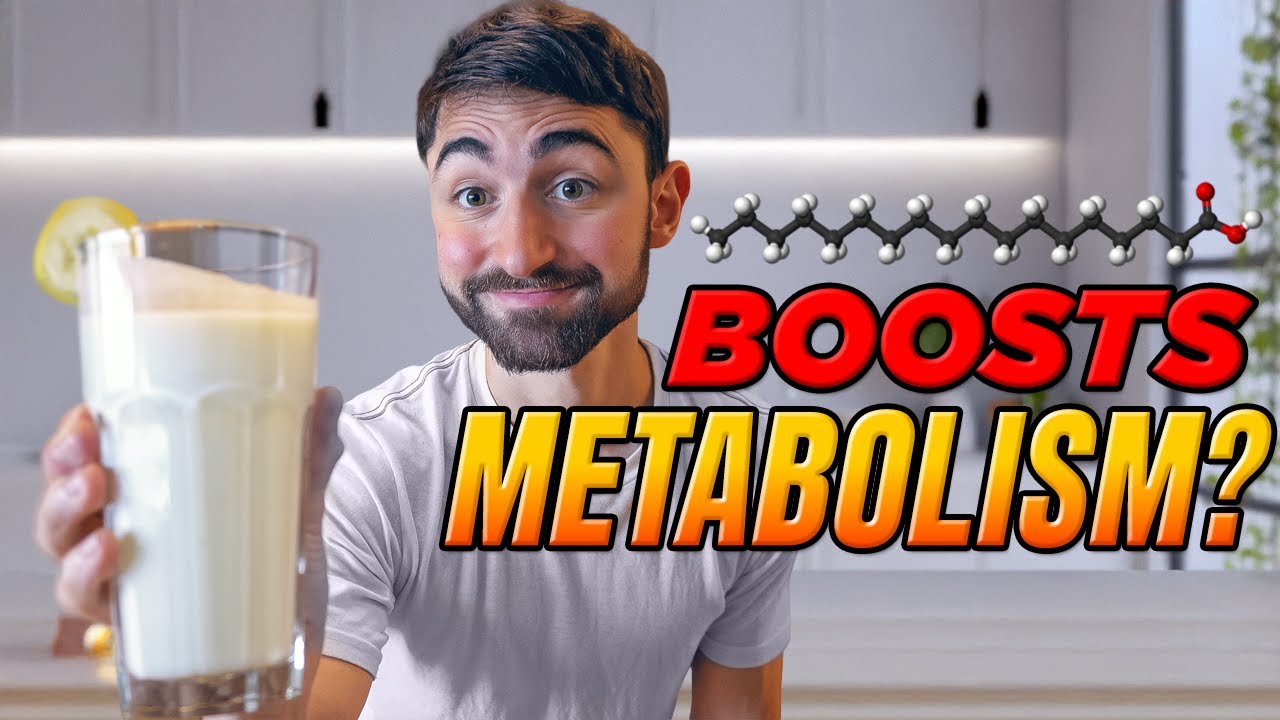
Stearic acid, a saturated fat in cocoa butter and beef tallow, triggered mitochondrial fusion and fat-burning markers in a milkshake study across diverse participants. The effect was specific to stearic acid, not other saturated fats, suggesting it may signal whole-fat intake to our bodies in ways modern diets have lost.
Chapters
Without a doubt, saturated fat is one of the most misunderstood nutrients in nutrition. And part of this misunderstanding stems from a stereotype. Saturated fats are often lumped together as if they are one homogeneous entity, but they are not. Lumping together all saturated fats as a single article and labeling them as dangerous is the same as lumping all felines into a single group and calling them dangerous. Even though a tiger could rip off your head with a swipe of its paw, and a kitty is only dangerous insofar as its cuteness factor could be off the scale. Aww, kitty. In this video, I'm going to prove this point to you by reviewing data showing how one specific saturated fat, stearic acid, positively influences metabolism to increase fat burning at the mitochondrial level. I'll also provide you a broader evolutionary framework in which to understand not only these data, but general principles that are important to your nutrition. And I'll give you practical takeaways, including where you can get this fat in your diet, and I'll speak to the other health benefits of saturated fat, including potentially reducing visceral fat, reducing blood pressure, and even fighting certain cancers. So, Let's dig in. Stearic acid is an 18-carbon saturated fat found in certain animal fats and chocolate, specifically cocoa butter. Because it's saturated, it has all single bonds and looks biochemically like an unassuming molecular stick composed of hydrogens and carbons, just 2 carbons longer than the common 16-carbon saturated fat palmitic acid. So palmitic acid, 16 carbon. Stearic acid, 18 carbon. Now, the study in question set out to investigate the differential effects of these saturated fats on metabolism, particularly on mitochondrial dynamics and mitochondrial function. So what they did was they took a diverse group of individuals, including those who were omnivores, those who were vegetarians, those who were healthy, and those with type 2 diabetes. And started all of them on a low-fat vegan diet for 2 days. This was to reduce their saturated fat intake, to reduce their stearic acid intake to a low baseline. They then looked at participants' mitochondria at 0, 3, and 6 hours after consuming a stearic acid, C18, because there's 18 carbon in the stearic acid, milkshake or a mock control milkshake. And they saw that the stearic acid caused the mitochondria to fuse together. What you're looking at here is an image where red marks mitochondria in the participant's cells. And when given the stearic acid milkshake, including 24 grams of stearic acid, the percentage of fused mitochondria increased fourfold. This did not happen with a control drink. So if you want a pop culture analogy, think of it like assembling the Avengers. Individually, they are impressive, they being mitochondria, but together, fused, they are more powerful. In fusing, the mitochondria become temporarily more efficient and more productive. By contrast, stearic acid restriction in the form of the low stearic acid vegan run-in diet caused mitochondria to fracture and fragment. More on the long-term effects later, but the point is low stearic acid intake fragmented mitochondria, high stearic acid intake fused mitochondria that are stronger. And they also found an association between increased levels of stearic acid in the blood and increased mitochondrial fusion. This association was specific to stearic acid, not to palmitic acid or other molecules assayed. The researchers also did experiments with isolated stearic acid, not in the banana milkshake, and palmitic acid controls, and replicated their findings again and again under various conditions to show it was indeed the stearic acid causing mitochondrial fusion. Isn't that cool? But what were the consequences? In parallel, With the mitochondrial fusion, there were signs of increased fat burning by mitochondria as assessed by changes in levels of what are called acylcarnitines, long-chain acylcarnitines. For details on the methods, you can see the nuanced notes in the associated Stay Curious Metabolism newsletter. But collectively and basically, simply, the data show that stearic acid changes mitochondrial dynamics, causes them to fuse to increase fat burning,— the process called beta-oxidation— after feeding stearic acid. But why? Now let's place this in a human evolutionary framework. First, consider that it's a general truth that not all nutrients of a given class, be that proteins or carbs and sugars or fats, are sensed the same. That's a general truth. Different amino acids stimulate growth pathways differently. The simple sugar glucose spikes insulin far more than the simple sugar fructose, which is metabolized differently. Evolutionarily, this makes total sense as whole food diets are molecularly complex, and it's unlikely that our ancestors would have been able to eat in such a way that was strongly biased towards one nutrient in a group. Thus, certain nutrients can basically act as proxies for the entire class from which they're from. So in the case of fat, the flesh and fat of a mammoth would have offered a diverse breakdown of fatty acids, including stearic acid. Now, if that didn't land, let me try an analogy. Think of it like hearing one musical note that cues the brain to anticipate an entire melody. Stearic acid may have served as one of those signature notes, an evolutionarily historically reliable indicator that the body was going to have a full spectrum of fat incoming. Does that make sense? However, speaking now to a broad truth, modernization has changed this, providing humans, us humans, with food sources particularly enriched in specific nutrients like high fructose corn syrup, or palmitic acid, and deficient in others, like stearic acid. In the words of the authors themselves, this leads to mismatches between what the body senses and what it's actually ingesting. But back to the stearic acid specifically. These data show that stearic acid may act as a unique signal for mitochondrial fusion and fat burning, beta oxidation, offering metabolic benefits distinct from other saturated fats like palmitic acid or myristic acid or lauric acid or a lot of other fatty acids. So instead of fearing all saturated fat, we should ask the butter question: which saturated fat and in what context? And yes, that pun was intentional. Stearic acid, unlike its shorter cousin palmitic acid, appears to support healthier mitochondrial dynamics, and fat metabolism, potentially offering both metabolic and therapeutic, potentially, advantages when included as part of a balanced diet. Now, I put balanced diet in quotes because by this I mean a diet in which nutrients of a given class are distributed in a balanced manner rather than being hyper-concentrated or diluted in a way that confuses are evolutionarily primed nutrient-sensing machinery. Does that make sense? Lots of words. Go back and listen. That's a really important point. Now, quickly, some limitations on this study. This was an acute feeding study, meaning they primarily looked at short-term effects. It's not entirely clear to what degree there could be adaptations, including endogenous stearic acid synthesis, where the body or the microbiome, both can make stearic acid, make stearic acid to supplement a reduced intake. Additionally, the study didn't include long-term vegans. They did include both vegetarians and omnivores who generally ate those diets before the 2-day vegan run-in diet, but these omnivores and vegetarians didn't differ at baseline with respect to their fasting stearic acid levels. However, vegetarians can acquire stearic acid from dairy as well as from cocoa and shea butters, and baseline levels—this is before the vegan running diet—were taken in a fasted state. So, high level, it's difficult to draw conclusions based on these data about how different dietary patterns—vegetarian, vegan, omnivore, or even carnivore—impact average stearic acid levels and the proportion of time that mitochondria in people eating these different dietary patterns spen, fused, or fractured. These are relevant caveats, but they don't undermine the importance of this research. Rather, they emphasize that these data are interesting, and these are questions that deserve to be chased. Now, moving on, what are the best sources of stearic acid? Well, the word stearate actually comes from the ancient Greek word for tallow. Tallow is rendered beef fat and is about 15-20% stearic acid. In terms of other animal fats, butter and lard are each about 12% stearic acid. Now, quick tangent, but anticipating a question I will receive in the comments: Does grass versus grain-fed cattle alter the stearic acid content of beef fat ? Answer: Not really. While my Google search to that question did generate a "yes" answer, when I chased the citations, I could not find anything compelling. The claim that grass-fed beef has higher stearic acid content by any appreciable amount appears to be mostly marketing. In one study I did find, it was reported that "regardless of feeding regime, approximately 1/3 of the saturated fat in beef fat is stearic acid." Now, if someone has other data that contradicts this, please post it in the comments. I'm very open to reading it. I will be very interested. All that said, The two richest sources of stearic acid are admittedly from plants. Cocoa butter is the classic high stearic acid food at 34% stearic acid. And yes, that includes dark chocolate. Professor Lupin would be happy. And then there's shea butter from the nut of the African shea tree, which contains also over 30% stearic acid and in some cases up to 50%. Now, switching gears again, I want to top off our stearic acid sundae with some sprinkles of other purported benefits of stearic acid. I'll note first I'm going to provide you with a concise list of additional benefits, rifle through them pretty quickly, but additional details can be found at staycuriousmetabolism.com along with all the references to this video. Okay? Ready? First, visceral fat. Visceral fat is an unhealthy inflammatory form of fat found around your internal organs. Think beer gut. If there's a fat you really don't want, it's not your love handles, it's visceral fat. And controlled animal model studies show that stearic acid can reduce visceral fat up to 70% compared with other fatty acids, even without overall weight loss. I don't know how much this will translate to humans, but it's still pretty cool. Moving on, blood pressure. Studies suggest higher circulating stearic acid levels, which are predominantly influenced by diet, are associated with lower blood pressure. This contrasts stearic acid to its shorter saturated fat cousin palmitic acid, circulating levels of which are associated with higher blood pressure. See the discrepancy? It's pretty interesting. Moving on, blood clotting. In general, stearic acid makes the blood less prone to clot. So here's an analogy to make it stick. Hehe, punny. Sometimes blood can clump together like logs gathering in a river, forming a clot that blocks the flow, the blood vessel, causing problems like a stroke. Anticoagulants help prevent these logs from sticking together and causing a blockage. So what I'm really trying to say here is for more reasons than one, chocolate might be very good for your blood vessels. You're welcome. Moving on, antioxidant capacity. Stearic acid has been found to increase levels of antioxidant enzymes to protect cells from oxidative stress. Cool. Moving on, neuroprotection. Given its positive effects, stearic acid's positive effects on mitochondrial function, which we discussed, it's perhaps not surprising that stearic acid might offer benefits in disorders where mitochondrial dysfunction is a core process. This includes almost all neurodegenerative diseases like Alzheimer's disease and Parkinson's disease. Indeed, there are animal models in which stearic acid improves symptoms of Parkinson's disease. However, it's a bit too early to say if this has much relevance to humans. But it coco butter. Okay, that was a terrible pun, I'm sorry. But if you want to learn more about Parkinson's disease and diet, you can see this video. Finally, cancer. Higher levels of circulating stearic acid conjugates have been associated with lower rates of certain cancers, including breast cancer, prostate cancer, and colorectal cancer. Now, while these human associational data are limited, there are also controlled animal studies showing that stearic acid has causative anti-cancer properties, including reducing inflammation in the tumor microenvironment and causing cancer cells to undergo programmed cell death, apoptosis. So wrapping up, what do we do with all of this? We evolve our perspective. Saturated fat is not a villain, it's a complex cast of characters, and stearic acid appears to be one of the good guys at a high level. Its ability to support mitochondrial fusion and function enhance beta oxidation, fat oxidation, fat burning, reduce visceral fat, and potentially combat various chronic diseases highlights the need to treat nutrients with nuance. Nutrition isn't black and white— well, cocoa butter is white, but you know what I mean. Nutrition is a symphony of biochemical signals honed over millennia of evolution. And if we silence the wrong instruments, or amplify the wrong ones, we risk misguiding the entire orchestra of health. Music becomes noise. Health becomes disease. So instead of asking, "Is saturated fat good or bad?" let's ask the better question: "Which fat, in what context, and for whom?" And if you found this helpful, please be sure to subscribe. I promise subscribing is less invasive than a cardiac biopsy to harvest your heart's mitochondria but way more fun. Stay curious. I hope you got something out of this video.










