Unlocking the Power of Metabolic Medicine with Nicholas Norwitz, PhD
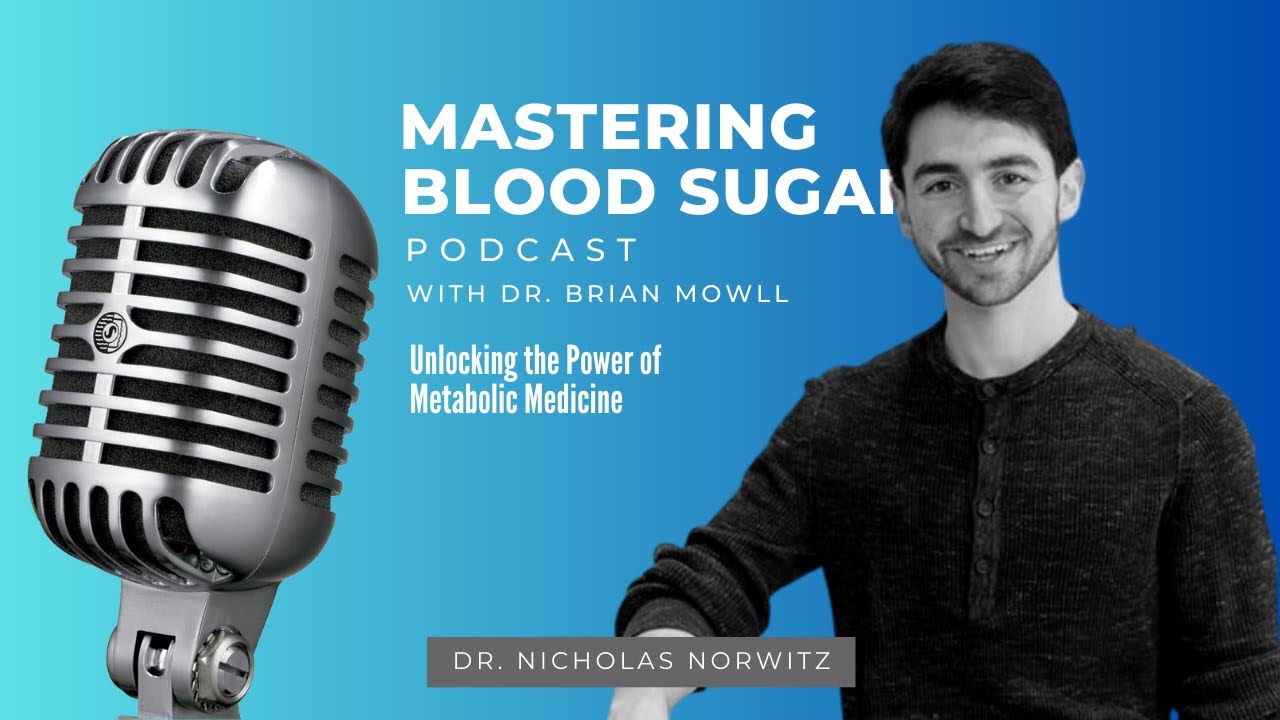
In this interview Dr. Brian Moll talks with Nicholas (Nick) Norwitz, PhD, about his personal health journey, scientific background, and advocacy for metabolic medicine. Norwitz recounts severe osteoporosis and ulcerative colitis that culminated in a life‑threatening hospitalization at Oxford. After trying a wide range of diets, a low‑carb/ketogenic approach dramatically reduced his inflammatory markers, allowed him to wean off medication, and accelerated bone healing. He frames these conditions as manifestations of a broader metabolic disease spectrum driven by oxidative stress, insulin resistance, and inflammation, using a tree analogy to link diverse pathologies (cardiovascular disease, diabetes, Alzheimer’s, osteoporosis, colitis) to a common metabolic trunk rooted in nutrition and lifestyle. Norwitz critiques the current LDL‑centric cardiovascular paradigm, citing a JAMA Cardiology study that shows insulin resistance and diabetes confer far greater risk than LDL cholesterol, and argues that low‑carb diets improve triglycerides and small‑LDL particles. The conversation expands to the influence of the sugar and food industry on nutrition guidelines, the role of continuing‑education for dietitians, and the concept of processed‑food addiction, supported by neuroscience evidence. Norwitz discusses the limits of “moderation” and “intuitive eating” in an addictive food environment, proposing that low‑carb metabolic correction restores true intuitive eating. He describes his practical projects: a science‑based low‑carb Mediterranean cookbook co‑authored with chef Martina, a metabolic health coaching practice, and a presence on YouTube, Twitter, Clubhouse, and the KetoDietApp. Finally, he shares his plans to return to Harvard Medical School and to push metabolic medicine into mainstream clinical training.
Chapters
Hey, it's Dr. Brian Moll, and I'm here with a new friend. That's Nick Norwitz. Hey Nick. Welcome. Nick's got an interesting story and he stumbled upon a low-carb ketogenic style diet and has turned this into a few interesting projects that I want to talk to him about today. In addition to it impacting his own health, he's been able to now help others with this. And I think, Nick, are you currently in medical school or have you graduated medical school? Are you as far as your education goes?
I was admitted to medical school 3 years ago at Harvard, but I deferred to do my PhD. So I've been in Oxford doing my PhD in metabolism for the past 3 years, but finished that up in November. So now I'm returning.
Okay.
So starting this summer, I'm quite excited. Yeah.
Excellent. And so you were telling me before we started recording that when you were at Oxford doing your PhD, you had some experiences there that kind of changed the direction of your health and kind of the way you're looking at diet and nutrition. You want to explain that a little bit?
Sure. I'll give the relatively quick version and we can direct people to— I have a little 5-minute clip that says it better than I ever could because it was made by someone who is much more artistic than I am. But yeah, my health experiences climax in Oxford, but they really started when I was probably 17 or 18. So for most of my adolescence and childhood, I didn't go to the doctor for more than a suckers, genuinely. I just did not get sick. And I was a very sporty kid, lean kid, ate a pretty standard diet, but I was aware of general health policy. So I went after the whole grains and ate tons of fruit, like mountains and mountains of fruit. And I was skinny and I just was of that mentality, eat many small meals, eat carbs to fuel your activity. I became a runner and I did a lot of other athletics and I figured, oh, skinny is healthy. So I thought I would just even get away with a little quote cheats. If I went out for ice cream, it's like, doesn't matter. Like I have a six-pack, therefore I must be healthy. But obviously Ultimately, I was wrong. So I started to realize that when I was 18. So I had been competitively running then for a year. My first year of running was pretty great. I did about 3,000 miles that year. I was winning half marathons. I was the youngest qualifier for the 2014 Boston Marathon. But just before that race, I got my first fracture. It was a fracture in my tibia that happened while training. And I just thought, oh, this is a standard stress fracture. No big deal. It's sad that I can't run the race, and obviously I was quite upset, but I didn't think there was anything out of the ordinary. Over the next couple years though, it was weird because my fractures wouldn't heal, and I started getting lots of them, and at lower mileage thresholds. So before it was like 100-mile week and I'm just fine, and then it's 40-mile week, 20-mile week, and over 2 years it got to the point where I couldn't run 5K without breaking something. And so I've been begging for a bone scan for a while, but around 2 years after my first fracture, I did a sprint triathlon and in the 5K snapped this bone in my foot called the cuneiform and went to the, the doc, the orthopedist, and he said, I've been doing feet for 40 years, never seen somebody break a bone like this. And so we finally got a bone scan on me and it revealed that I had severe osteoporosis. My T-score spine was -3.3. Which, that's genuine osteoporosis. And that was also weird. I had, I wasn't energy deprived. I had a normal BMI, normal testosterone. So that was just peculiar. And again, I thought I was just a zebra and that was upsetting because I lost the sport. But I continued to do the same kind of health practices, standard American diet type stuff. A couple of years later, my senior year at college, Dartmouth College, I developed ulcerative colitis. And that was, although it doesn't sound as severe as osteoporosis, ulcerative colitis is inflammatory bowel disease. You can hide it pretty well, but it is the— for me at least, it was the most debilitating condition I could have imagined. I wasn't even scared going into exams about choosing the right answer. It was like, am I gonna have to run out of the room because I'm having a flare or an emergency, have to go to the bathroom? I don't wanna get too graphic, but it was quite bad. And then it got really bad after I graduated. And went to Oxford. And as soon as I arrived in Oxford, I had the worst flare of my life, to the point that within a few weeks I lost 15% of my body weight. And one night the pain was so severe that the university called an ambulance to bring me to the John Radcliffe Hospital in Oxford. It was at 2 AM. And incidentally, they noticed my heart rate was 28 beats per minute, which is like the heart rate of an elephant. Bradycardia, which means low heart rate, is below 60 beats per minute. So my heart rate was less than half of that. And that was really weird to have a heart rate of 28 beats per minute. My heart was like failing. My mom flew over from the United States. She was freaking out. And then they ended up bumping me at one point to the palliative care ward, which is like the death ward. And I was there for 3 days. And after 3 days, I was discharged really without an answer. My heart rate was still in the 20s. They had this really goofy hypothesis, but I promise you it was Absolute nonsense. I can go into it if you want later, but I don't want to get too medical, but it was nonsense. Then I spent the next few days just prone in my bed, like at wit's end and hopeless. Like at this point I'd wanted conventional medicine to cure me. I felt like a kid, you know, why my doctors are going to fix me. I have to try. I just haven't found the right drug. And I realized that kind of, that probably isn't going to happen. And so I was left with only one option, which was to take things into my own hands and just start exploring other possibilities. And I had no expectations, but it literally was the only option. So I went into the fringes of medicine, alternative therapies, and was trying everything— probiotics, supplements, meditation, and then a litany of diets. So things like a specific carbohydrate diet, low FODMAP, gluten-free, casein-free, vegetarian, vegan, pescatarian— like anything you can imagine, I probably have tried it. I also have a personal policy that I don't comment on diets that I haven't tried. You can hold me to that. I've tried basically every diet you can imagine, and One that I was very hesitant to try was a ketogenic diet, just because of everything I'd been— I'd internalized over the years about fat just being bad intrinsically. It wasn't even a conscious thing. I could see, I could read about a ketogenic diet. I'm like, I get this, kind of makes sense. But it was a visceral reaction to the concept of a high-fat diet. It was really hard to get over that. That was one of the last ones on my list, and I eventually, I tried it and it was like a light bulb went off. A light switch went on, and within a week, my inflammatory marker in my bowel, my calprotectin, dropped to 1/7 its normal level and was well within the healthy range, the lowest it's ever been. And progressively, over the next— follow— over the following months, I came off my medications for my gut, and my colitis just stayed in remission. It's been in remission ever since I've been on a low-carb diet. And progressively, my bones have gotten better. I am on medications for that, but the low-carb diet actually only accelerated the bone growth and cause bone to accrue in areas that it hadn't before, like my femur and my hip. The drugs weren't helping that even though they're the most potent drugs on the market. So that really shocked me. And then I started to, as you mentioned, engage with other people. At the beginning, I thought, oh, I'm a zebra, I'm unique, this worked for me. But then I started to realize, and I say this all the time, the most remarkable thing about my story is that it's not at all unique. Manifested metabolic disease in some, in, in colitis and osteoporosis. Other people manifest it in diabetes or Alzheimer's, cardiovascular disease, obesity, what have you. And I started working with people just around Oxford and they started just asking me for information. I started giving information that led to offering people like direct help when they requested it. And I was helping people reverse diabetes and obesity and just for providing them information and support. And that's when I realized through those people, like, this is a potent tool. And it just clicked. The last thing I'll say before, before I stop taking up all the air is that I now looking at medicine, conventional medicine, and the diseases that are afflicting us, which are all metabolic diseases. And it makes absolutely no sense to me why we wouldn't be addressing metabolic diseases first line with metabolic medicine, which includes a low-carb diet. So that's where I am now. I finished my PhD at Oxford. I've been engaged in a bunch of different projects from health coaching to giving lectures, writing papers, writing a cookbook, and now I'm on the cusp of starting medical school at Harvard and trying to get metabolic health into that community because I think that's really important.
So important. And you're right, if you look at most conditions that are plaguing humanity right now, it's not infectious disease, it's almost all metabolic metabolic disease. And look at the top 10 killers, and you have heart attack and stroke, and many forms of cancer are metabolic in nature. You've got Alzheimer's disease, diabetes— these are metabolically driven problems. But I'm not sure that everybody understands that. So let's just take a minute to look at— you mentioned colitis and osteoporosis. Can you talk specifically about those, maybe starting with osteoporosis, and how that could— how that is considered a metabolic disease? As opposed to just a bone or skeletal disease?
Yeah, there are a lot of different— osteoporosis is a tricky one just because it's generally associated with postmenopausal women, right? After you go through menopause, you lose your bone density, but it can— it's— I would say it's a rarer manifestation of metabolic disease. Ulcerative colitis also, it's an inflammatory disorder. So I think the triad of pathologies that are associated with metabolic diseases are oxidative stress, insulin resistance, and inflammation. And these things feed on each other like a triangle. They just bounce around. So the analogy I use to explain metabolic disease is that of a tree. So if you think about a tree, it has a bunch of different branches, and each branch has distinct leaves. And those leaves, the foliage, represent different symptoms. So you have cardiovascular disease, obesity, diabetes, Alzheimer's disease. Those are the better classified metabolic diseases when you look at the pathology. But you can also manifest like I did in other ways, like osteoporosis or ulcerative colitis. And the reason, at least in me, I would consider those metabolic diseases is because when I addressed it with metabolic medicine, that was the cure. But moving back to the tree analogy, you have all these branches, but they connect to a common trunk. Those are the pathologies I just mentioned: oxidative stress, inflammation, insulin resistance. And more importantly, that trunk is fed by a set of roots that are all lifestyle factors. So getting good sleep or poor sleep, sedentary lifestyle versus exercising, low stress versus high stress. And the biggest root is nutrition. And so that's how I like to explain that. I think a better case in point for people in general, just because I know my— the way I manifested is quite rare for a metabolic disease, especially in someone my age, although it can happen, is something like cardiovascular disease.
Right.
So the typical idea is, oh, you have saturated fat, that raises your cholesterol, that clogs your arteries. We're now realizing that's very much not the case. So I'll give you an example of a study you probably read, Brian. It was published a couple months ago, January 20th, in JAMA Cardiology, Jan 20, 2021, and it was looking at the Women's Heart Study. So in this study, what they did is they followed I think it was 28,024 women for a median duration of 21.4 years. So they were following tens of thousands of women for multiple decades and then looking at who developed heart disease, coronary heart disease. And what they did in this study was, which was quite unique, is they were looking at a much larger panel of risk factors, including clinical risk factors like diabetes and metabolic syndrome, and then biomarkers. So something called LIPR, lipoprotein insulin resistance— LP-IR, sorry. So a measure of insulin resistance and other things like LDL cholesterol. What did they find? Having diabetes increased your risk of having coronary heart disease by over 1,000%. The hazard ratio was 10.71 to 10.92 in people under 65 versus, say, LDL cholesterol. Which we normally would look at in a clinic, the hazard ratio for that was just 1.38. So it was like 1/8 that of having diabetes. And just having insulin resistance even without diabetes was associated with a fourfold risk of having coronary heart diseases compared to LDL. And then just to get a little bit grander, when they actually looked at the LDL and broke it down into different particles, the particles that were associated with insulin resistance, the small particles, were the ones that drove the risk, whereas having big fluffy healthy particles didn't increase risk. So a study like this, and I could name many more studies like this, but a study like this, it's consistent with the idea that if you address metabolic health, say you go on a low-carb diet, that is much better at reducing your risk for the number one killer of Americans right now, cardiovascular disease, than most likely other interventions. And it's a little bit paradoxical because then when you think about actually how we treat, which right now for heart disease primary prevention, the medical algorithm is if your LDL is above 190, you go on a statin. The issue with that is you're only addressing that little 1.38% hazards ratio versus the 10.71, 8-fold higher, associated with diabetes. Plus you're actually throwing the baby out with the bathwater because you're not looking at— say I go in and I actually have very low small LDL, but my total LDL is very high because I have big fluffy LDL. That doesn't mean I have increased risk, but someone might tell me to go on a statin. And then another paradox there is that, or counterintuitive notion, statins can say increase insulin resistance, which might increase risk in someone who's metabolically healthy. So that's just one case in point. We can talk about any number of other diseases.
Yeah, no, it's interesting. And we see that in people who are eating a higher percentage of their energy intake from fats because they're, they're carrying more fats in their blood. So they're going to have more circulating fat in safe places like large LDL particles that are getting recirculated by the liver, but they don't have those small, dense LDLs that get oxidized and lead to the inflammatory cascade that drives heart disease and plaquing. So yeah, I think that's really important to separate, and your description is perfect. And this is where insulin resistance, diabetes, can drive problems like cardiovascular disease. Just jumping back to the osteoporosis thing. Yeah. We also have to realize the effect of hormones on bone health and vitamin— like vitamin D and vitamin K and so forth. And these can be metabolically driven. Your free estrogen, for example, in a woman who's postmenopausal, can be tied to insulin sensitivity, insulin resistance, and blood insulin levels. And of course, fitness level and activity level and all of this. So these are— there's more to something like osteoporosis than age. And certainly in your case, it had nothing to do with age or fitness, but there were other factors. And I'm not sure what all factored into that, but certainly the changes in your diet helped. And you're probably still unpacking and working through that.
The reason I don't want to go into it, I've actually written a paper on it. I have a very— I did a whole genome sequence and then did this deep dive. So I published a paper on it like Frontiers in Endocrinology a few years ago. Uh, it's just, it's a very technical particular case. The reason I manifested in this weird way has to do with an interaction between my lifestyle and genetics. It's just, it is, I can send you the paper, but it gets a little bit technical. But you're right, like all these diseases that you mentioned, you mentioned women's health, and I think you might have alluded to like fertility, but things like PCOS. I was talking to someone yesterday. Yeah, like the doctor said, you're never going to have kids. I went low carb, had twins. And I can describe why that would happen and why PCOS is a disease of insulin resistance. It's actually quite interesting. But now I see that all the time, and it's remarkable how many different diseases are improved, even ones we don't really understand why at this point. I don't really understand the details of why my bones seem to be improving more on a low-carb diet. Or I have someone else with COPD massively improved on a low-carb diet. We don't really understand it because we're only just coming to appreciate this concept of metabolic medicine for metabolic diseases. And so we have a few of these conditions like diabetes, in which it's very clear we have a lot of data, and a little bit like on, say, Alzheimer's. But then there's this huge— again, go back to the tree— we've explored a couple branches and how they connect to the trunk, But we haven't explored most of them, and that's why this area is so exciting. That's why I see it blossoming in medicine. And quite honestly, although I think a lot of people are cynical of standard care, I can just say I've talked to young doctors or upcoming doctors, and I see a lot of interest and realization even in people that haven't had personal experiences. Like, the awareness that what we're doing— I'm not sure what we need to do, but what we're doing is definitely not working. We need to find something else. Which brings me a lot of hope and optimism that people will be receptive to it.
I think that's where it starts. You've gotta, you've gotta at some point say what we're doing can be improved by maybe— and it's not just the therapy can be improved, it's maybe the model needs to change. I think that's where things can really start to shift.
But how do— that's a big question is how do we get there and how do we fight the influences at hand? And I feel like I, I sound like a conspiracy theorist when I go down this avenue of talking about like big sugar influence. And right when I heard it for the first time, like, this is a conspiracy theory. But then you read the published documents of like the Sugar Association paying off researchers at Harvard to write publications for them. Like, they're published. And I read them, I'm like, this is a— this is— this happened. Like, how did this happen? And then you tell other people about it, you're like, oh, you're a conspiracy theorist. Here, read this. Or we were talking about this just before we started recording, but I was reading The favorite book that I've read over the past couple months was this book, The Dietitian's Dilemma by Michelle Hearn, who's a registered dietitian. And she gave a lot of insight into how, like, how she was trained and the conflicts there. I think this was in Chapter 6. She was talking about the education they get and how it's funded by bodies like Coca-Cola and Pepsi, General Mills, Kellogg's. And what was really interesting was the question she posed, which was, why would they fund So they fund the Academy of Nutrition and Dietetics, which controls what dietitians learn and how they disseminate information. And she asked the question like, why would Coke fund the Academy of Nutrition? Because no dietitian is going to say have a Coke. They won't. Like, good enough not to say go have a Coke or a Pepsi or Mountain Dew or really sugary cereal. So why would they do that? And then she further went on to explain that so they can influence the continuing education credits. So like that dietitians get, they have to get ongoing training. And then when you look at look at the learning objectives. For, for example, she gave this one that she got. It was funded by General Mills, and literally one of the learning objectives was— I'm paraphrasing— helping teach dietitians about how packaged processed foods should be included in a sustainable diet, then communicating that to patients. Like, the goodness of packaged processed foods and the everything-in-moderation mentality. And this is what, that, what we were talking about before that I find really interesting is that everything-in-moderation model It sounds good, it makes sense, and it will be good if you can apply it. But what happens when you have the same industries that are literally spending most of their resources trying to engineer genuinely addictive foods? And yes, food and sugar addiction is a thing, and we can talk about how it's a thing in the neuroscience of it. But what happens when you have companies developing addictive foods, addictive like nicotine or cocaine, combined with everything in moderation. What happens when you have an addictive substance in moderation? What does that equal? It, it equals what we have. But how do you fight that? How do you fight that lobby? It's really difficult. And how do you flip the model to one that is not sick care and just prescribing drugs that make money in the short term, but value-based care where the system is evaluated based on how patients are rather than the income of each department? It's a really messy space.
Yeah, these continuing education courses are like a Trojan horse, kind of using the idea that packaged foods are just part of life and maybe tolerable to some degree, or maybe even beneficial, so that people can live and exist and maybe even positioned as healthier versions of packaged foods. But that just then leads to an acceptance of maybe not Coke or Pepsi, but they make a lot of other products too. It starts to like subconsciously open the mind to that these things are somehow okay or acceptable or just part of life, I think.
Yeah, it gives people excuse to indulge in things that are unhealthy for them. And a good example, I think I heard a very well-regarded medical institution came out with an article. I won't name names, but it was promoting including dried fruit for part of your 5-a-day fruits and vegetables, including dates. And so just for kicks and giggles, I went on to look up the nutrition information for dates and pick out what is the nutrient dates are richest in terms of percent daily value. Turns out it was potassium. How much dates would you have to get even the lower threshold of the recommended amount of potassium, which again is the richest nutrient in dates? You'd have to have 340 grams of sugar. Sugar, not just total carbs, but like sugar.
Wow.
Yeah. Like it's a Trojan, Trojan horse for that little date. And what you said about packaged foods potentially being, quote, better. That just made me think of the word fortified, which is thrown around all the time, and yet on nutrition labels where if you have a packaged food and there's like all these percent daily values, you can take a sugary cereal and put a bunch of stuff in it, but that doesn't mean it's a healthy food. It doesn't mean the nutrients are actually available to your body. So there are different forms of nutrients, some of which are more available, some of which are less available, and generally the things put in refined and packaged foods They're not that available in your body or to your body. And there are other things in those foods that block their absorption or ability to be used. Yeah. I would take nutrition labels with a grain of salt, especially on ultra-processed foods.
There's also a lot of bias that's just formed over the years, I think. So there's a group called Nutrition Coalition. Nina Teicholz and Sarah Hallberg are working together on that, and they are really trying to change nutrition guidelines. And I think some of it is influenced by industry, but a lot of it is just bias too. People just assume that the data supports one thing when really, if they looked closely, the data supports something else entirely.
Yeah, no, it's quite astonishing. I know Nina quite well and the work she's doing is amazing. And you're right, in fact, it's not just her saying that. The National Academy of Sciences did an independent evaluation of the most current nutrition guidelines, and they said, I think that the phrase they used was the, it lacks scientific rigor, which they try to be political. That is a very strong statement coming from the National Academy of Sciences to say that the standard guidelines lack scientific rigor. It's spelled with a bunch of information. And when you look at the people that are sitting on the board, like some of them are Seventh-day Adventists and some of them, a lot of them are very heavily funded by industry. How the Seventh-day Adventist Church got to stand up the Academy of Nutrition. The history there, that's also in Michelle Hearne's book, but it is quite like fascinating and kind of like dominoes from a place of somebody has a vision of God and they think that meat causes masturbation and it spirals from there. That sounds so extreme to be feeding into our current guidelines, but that was one little domino in a chain. And from there you can see how it accelerates in the absence of adequate scientific investigation. And it becomes extremely insidious because when you have these funding bodies that want to support a particular approach, they can fund studies that support their conclusions, but you really have to dig in to the methodology to see how screwed up it is. I'll give you one example. In a study recently I looked at that argued a low-fat plant-based diet causes you to eat fewer calories than a high-fat, low-carb diet. This is actually going beyond— you probably talked with your listeners before about the issues with epidemiology. Analogy and correlation not being causation. This was actually a metabolic ward study that was a crossover study, which sounds like a gold standard study. When you're talking about human nutrition studies, this sounds like a gold standard study. Crossover study, metabolic ward, you're monitoring what people are doing, and you're comparing people to themselves as their own controls and putting people under each intervention. So it sounds great, but then you actually look at how it was designed, and there are a lot of weird things. Like there's not a run-in period or a washout. It's a pretty short-term study. And then when you look at the supplements about the foods they're actually feeding people, the, the low-carb diet, for example, the snacks are like dried apricots and like roasted edamame or soybeans. And then the snacks for the, the high-fat low-carb group are like roasted salted nuts ad libitum. As much as they can eat. And then the meals are like store-bought mayonnaise, American cheese included. They're very poorly formulated. And so you just think to yourself, huh, you're taking a population of overweight people because they was overweight, they were overweight, so they're presumably insulin resistant, in the habit of eating a lot without a run-in period. You put them in a room for 2 weeks, but they actually can't do much. It's not that much to do, so they're kind of bored. They're insulin resistant, they like to probably snack, and now they have roasted salted nuts and a bunch of obesogenic food in front of them without much to do, then just snack for a couple of weeks. Honestly, I'd probably eat more too. But then you see how that gets reported. And that's just a small example. Honestly, that study wasn't by any means the worst study and it had its merits. But people— physicians definitely don't look at the studies with, for the most part, with the detail that's required. And it's not their fault. They don't have the time. But it's just—
we see this with meat a lot too. Meat gets demonized, especially in the diabetes community. And there are plenty of studies linking meat to diabetes risk, red meat especially, and processed meats, but most— the large majority of them, 99% of them, do not tease out meat from the rest of the diet. It's like you said, epidemiological studies, self-reported nutrition logs, and most of them looking back, and they're, they're looking at just populations who eat more meat or less meat, and it doesn't take into consideration smoking and exercise and what else they ate and everything else. Yeah, I just don't see how you can really get any useful data from that?
No, that's just cherry-picking. You're right. First of all, it's epidemiology, and because people are being told red meat is bad for them, there's this concept of healthy user bias where the people that are eating more red meat are going to tend to do other unhealthy things like smoke and live sedentary lifestyles. Plus, if you actually look at the trends of things, diabetes and heart disease— or diabetes especially— is going up. Red meat consumption has gone down. Butter consumption has gone down. And vegetable oil consumption has gone up. And then actually, if you look at any of the randomized controlled trials, there is, there's no evidence. And the American College of Cardiology has even stated directly, this isn't diabetes, but saturated fat intake from whole foods is not associated with an increased risk of heart disease, and it's associated with a decreased risk of stroke. That was ASTROPEDAL last year, 2020. So it's very promising for me. To see. I think the LDL issue with respect to low-carb diets is like the last defense for people like, oh, but it'll make your LDL go up. That's why we're brushing it under the rug. That— I don't think there's much— many arguments against low-carb diets, but that, that singular last bastion, it seems to me that it's starting to be taken down when you have reputable, like, standard bodies, not unconventional bodies, but like JAMA Cardiology, Journal of the American College of Cardiology, coming out and saying saturated fat doesn't cause heart disease. Insulin resistance and diabetes are much worse for heart disease than LDL cholesterol. Oh, look, we're doing the subfractions and it's only small LDL that is harmful. And that actually is contributed to by sugar fat. And just circling back quickly to one thing you said earlier, because I'm always nitpicky and I don't think you meant it like this. But you said that eating a high-fat diet puts more fat in your blood when you were talking about like LDL particles, right? Fat in your, fat in your blood is measured as triglycerides, right? And yeah, and triglycerides go down. So even if you, right, correct, control for calories, if you swap carbs for fat, triglycerides go down. So it's funny, it's like you look at saturated fat in the blood, higher saturated fat in the blood does increase issues like it can contribute to Alzheimer's, it can contribute to cardiovascular disease.. But that saturated fat's coming from sugar, not fat. You can trade sugar for saturated fat. Your saturated fat levels will go down in your blood. So metabolism's complicated. The whole idea that we are what we eat, I think it just overlooks the fact that, yeah, metabolism's—
Right. Yeah. That fat's being transited through the blood, chylomicrons, for example, on its way to fat cells or in LDL going to useful places. Not that it's bad, and you're right, triglyceride levels— and the data shows this, and we see this clinically— go way down on a low-carb, relatively higher-fat diet. Yeah, absolutely. Let's— I want to talk more about this idea of everything in moderation and this other concept of intuitive eating that I see pushed around a lot by probably well-meaning dietitians. I see it on social media quite a bit because I think it's I think it's a defense against the idea of deprivation and having unhealthy relationships with food and starving yourself and all these things. A lot of people have been on and off the diet yo thing. And so they're gravitating back towards intuitive eating. Just give your body what it wants, what it's craving, because that's somehow healthy. And you said earlier to me, I think is a really huge point. That may be, and probably is a great eventual goal, but that's not the path to get to the goal. You probably said it better than that. So maybe explain that.
I think the whole, okay. I agree. Everything in moderation probably is fine. If you can achieve that, say you like ice cream cake. If you're only going to have ice cream cake on your birthday and Thanksgiving, and that's your moderation, then that probably is fine for you. But who actually does that? It's a slippery slope because these foods are addictive. Oh, I'm gonna have a little bit of sweet here, a little bit sweet there, and then it becomes snacks 5 times a day, or you're eating 5 times a day with multiple snacks and carbs and sugary things all the time. Eating in moderation in an addictive food environment is really difficult. If you're someone who can actually achieve that, then great. And then yeah, with respect to the intuitive eating bit, give your body what your body's craving. These foods are engineered to make you crave them. If you're an alcoholic and you crave alcohol, do you want to go off that intuition? So the way I described it earlier was telling somebody to eat intuitively is like telling people to— somebody wants directions to point X, so to give them directions to point X, your directions are arrive at point X. I guess it's technically right, that's where you want to be, but it gives you no idea about how to get there. And so what I find with, say, the metabolic health say, low-carb approach. When you take somebody who's insulin resistant, has dysfunctional metabolism and cravings, and you give them this as a tool, what happens over time is their metabolism corrects itself, and then they are able to achieve intuitive eating. So that's when you hear people talk, I'm like free to food, I don't have cravings, which is distinct from hunger. There are like this hormonal hunger and cravings when you're riding this insulin roller coaster, then There's actual hunger. And so when people are freed of this obscuring force of hormonal hunger and the cravings, they are liberated and they can actually eat intuitively because their body then tells them, "Oh, I'm actually hungry for nutrients now." And then you go eat a nutrient-rich meal and you can actually sit with it and indulge it. Like, if you're a fat burner and you're just like, you're having dinner with your family and you eat a bunch of steak and you feel a little bit overfull, it's not a big deal because your body will just get hungry again. When it needs to be hungry again, and then you're eating intuitively. And so I agree, eating intuitively is the end goal, but how do you get there? And you can't just start there. You can't just say, to get to point X, arrive at point X. People need a path through our food environments. Because if you say just eat intuitively, right now I feel like ice cream because I'm a sugar addict, where's that going to lead you?
I think logically you can examine that. If it's— if the intuitive thoughts are, I think I want salmon today instead of chicken that I had on my menu, that's understandable and fine and go for it. If it's, I really want a giant kitchen sink cookie, that's probably not a good instinct. So there's probably something else driving that intuitive desire to have that food. To understand this, I think we have to unpack food addiction a little bit because I think this is something that also gets described as not real at times. I've heard people say, you can't be addicted to food. Food is something that we need. It's sustenance. We can't be addicted to— it's like being addicted to air. You can't be addicted to air. But I think that's missing the point a little bit. So can you describe what food addiction really is or how that shows up for people?
Yeah, defining food addiction is really difficult. I just read the Pulitzer Prize-winning author Michael Moss's new book, Hooked, which is about food addiction and— or actually, corrected to processed food addiction. And the whole beginning was like, how do you define an addiction? Does it have to be something that is non-essential? Is it based on the neurological correlates? The way it's really defined is repeated harmful use, repeated use of a substance that like is out of an individual's control that causes harm. And on the topic, just because you brought it up, of can you be addicted to something that you need? Let's actually— I would argue no. But then let's narrow the focus to not food addiction, but processed food addiction or sugar addiction. You don't need sugar. In fact, you don't need carbohydrates. The essential amount of carbohydrates your body needs to ingest for life is zero. You don't need to eat processed foods. You don't need to eat sugar. So I would say you could argue that we can have processed food and sugar addiction. Talking about the neurological correlates, that's exactly what we see. We see when we give people food that's controlled for all of the variables, including total carbohydrates, fiber, protein, fat, but it has, say, a higher glycemic index, it's more sugary, they have a bigger insulin spike, a bigger glucose spike, bigger drops, and then you can look in their brain at some of the desire centers, the dopaminergic centers, and they light up like a flashlight in a dark room, just like when you give somebody cocaine or somebody, you know, has opportunity of, say, sex. The same desire centers pop up. So it's activating in the brain the same addiction centers. And you can look at every level of evidence, be it optogenetic mouse studies, genetic trials. Like, there are people with modifications in the dopamine 2 receptor that are at higher risk for being obese or having like food addiction. And there are even been now like clinically validated addiction scales that have been adapted for processed food addiction. Bittin Johnson and Joan Ifland are two people to look up if you're interested in the idea of food or sugar addiction. Bittin Johnson and Joan Ifland, they do some work in this space. But yeah, you can modify scales in a very conservative manner. Take like an alcohol addict scale and modify it in a way that only if somebody probably genuinely has an addiction will they be an addict, and people tend to pass. So right now it's being talked about. I know Dr. Jet Unwin and some others are talking to the WHO about how to define food addiction, but a really messy space. But based on what I've seen clinically and the evidence I've read, I have a really hard time thinking that it's any less of a severe addiction and that sugar is any less addictive than something like nicotine. And if you want to read Michael Moss's book, I think he makes a pretty good argument that processed foods are— they have properties in some ways that are more addictive than things like nicotine and heroin. And then again, they're non-essential.
You don't really need to explain it to somebody who's experienced it. When you've had that addiction to a food where, you know, it controls you rather than you controlling it, you You don't want to eat it, but you find yourself eating it anyway. You want to stop, but you can't stop. You have it once and you want it again and again. These are all very classic behaviors, addiction behaviors, and people experience them around food. And a lot of people experience them around food, specific foods, and not food in general, but specific foods. Yeah, I think that it's a little bit academic making the argument because people who experience it know it's real. But at the same time, I think that is important to tease out so that we can gain more clarity on what it is.
Even the lingo, though, as you just mentioned, like people who live through it, if you say to someone, oh, try to go keto, try to go low carb, a lot of times what they'll say is, oh no, I need my popcorn, or I can't live without my cake. Think about that terminology. People gravitate towards— people are really attached to their processed food. They think that they can't live without it, that it's an essential part of their diet and that it makes them happier. And the funny thing about that, as anybody who's, say, been a carb burner on the sugar addict spectrum and then gone low carb, the funny thing about that is, and this is where we get into, quote, restrictive eating, once you adapt, you realize that it's actually not restrictive, that you didn't need these things in the first place, that you weren't deriving the pleasure from them that you thought you were. So it's a misconception that, like, liking is proportional to pleasure. The amount of pleasure you get from something is basically neurologically coded as the difference between the experience and what you expected. It's called positive surprise. And so as you adapt to these hyperpalatable foods and just get more and more, you get to the point where you actually don't experience pleasure from it at all, but you're still driven. The drive to have it goes up, but the pleasure from it diminishes. It's a paradox, but that's what occurs. And so when you free yourself of that and let yourself adapt, what you find is that you actually have the potential to enjoy things a lot more. I will just tell you from personal experience, because I never struggled with being overweight, but I was on the— it's a sugar addict spectrum. Maybe it wasn't addicted, but I couldn't imagine living without sweets. Like, I loved like ice cream cake, and I used to come back from like long runs and basically just drink Nutella. And after a couple years of just without anything sweet, I remember having the first sweet thing I ever had, like a little bit of like red pepper or some blueberries, and it tasted sweeter than anything I'd ever had in my life. Like sweeter than the ice cream I used to have. And it was like, I am phenomenally enjoying this. And now I enjoy simple foods so much more than I ever did extravagant meals like fried chicken and onion rings and big burgers. I used to eat them and they, they looked good, and I desired them, but I don't know, think I really appreciated them. Now I just have like eggs with olive oil and salmon, and I actually enjoy that food so much more than I did. And I don't feel I'm restricting, I actually feel I'm enjoying food more. Maybe you can talk about your experience and your experience with, with patients.
I have gone in and out of following what I believe is the ideal diet for myself. There are times when I will get— where I will fall off the wagon, so to speak, and I'll eat some things that that are not ideal or optimal for my body. And I've experienced what you just described. I'm sure most people listening to this have experienced it, where the first time you have that food, it's a wow, oh my gosh, I missed this, that's delicious. Sometimes, depending on how bad that food is— big plate of nachos with gooey cheese all over them or something— that, that usually makes me feel terrible afterwards. But if it's something like a, like a KIND bar which I've been addicted to, that type of processed food. I feel fine afterwards. I can— I eat it, it tastes really good, I enjoy it, but I immediately want another one and another one, and I've gotten sucked into that type of addictive eating.
Yeah, just the way you describe it, like your bar is like here. You're addicted like unhealthy food is like a Kind bar, which is pretty wholesome. Like you're here. I would say that you got to point X that we're talking about where you can eat intuitively if you want something in moderation, quote at this point and you want a Kind bar, I think that's totally reasonable. And to flex in and out. But you had to go through the process of getting to X before you could eat intuitively or in moderation. I think that's the point. And some—
but sometimes I will have the plate of nachos and then, and then I'll feel terrible afterwards, which is that negative reinforcement that usually keeps me away from it. But there are some foods that, you know, that, that are a little bit harder that I don't feel that necessarily with. It's interesting. It is a— there is a spectrum, of course, and we just want to keep nudging ourselves. I wanted to ask, you talked about you Tried all these different diets and then finally landed on keto and a light bulb went off. What did that look like? What was your first foray into a ketogenic diet?
My ketogenic diet started very Mediterranean-esque, and I think there's actually an argument for that, but like lots of avocados, macadamia nuts, monounsaturated fats, fish. And I actually do love cheese, so there's a lot of cheese. They made this lovely cheese market, so I was having a lot of cheese. That's what it looked like. Like anybody, you just start somewhere within the keto sphere if you're starting keto, and then over time your diet adapts. So my ketogenic diet has gone through various ebbs and flows. It's looked very carnivore at points in time, low fiber but high monounsaturated fat. I've experimented with some things that people might not be a big fan of, like certain seed oils, like sesame oil, which is a very interesting oil among the seed oils, I have to We can get technical about it, but it's just about, I think, looking at your nutrition journey as a journey, that every— everything you do is a little experiment on yourself because everybody's so individual. I think there are certain principles that we can adhere to improve metabolic health, but once you get to a certain point, it's just about empirical investigation on yourself. I don't really— I can't really describe my diet overall because it's always changing and I'm always experimenting, but I encourage people to do that. So when I work with people in my little metabolic health practice, it is an education process, and over the first month or 2 months I get them into that adapted space, but then set them up with the tools. So yeah, like, here's how you integrate trying different things and evolving your nutrition journey. And if I could ever plant one way of thinking in somebody's head, it would be that— not low carb, not keto, just thinking about nutrition not as a chore but as a fun journey, opportunity to do experiments on yourself. You're putting input into your body, figure out, observe how you feel. And then move forward because I can nerd out all day on how the lignans and sesame oil affect delta-5 desaturase enzymes, blah, blah, blah. But in the end, it doesn't matter because there's so much going on in each individual's metabolism. And we're also distinct that the only thing that matters in the end is how the food affects you. In my little hierarchy of studies, you think like, all right, maybe epidemiology is the bottom. You have randomized controlled trials pretty near the top, but above randomized controlled trials is your n 1 life. That's really all that matters in the end. It doesn't matter what the trials say. If what you're doing for you is working— I tell people that to this— I tell people this all the time. I have my perspective, but if you're doing something and you're not deluding yourself and it's genuinely working for you on every level, then my opinion just doesn't matter. You have to be honest with yourself and be able to approach nutrition, then with an open mind.
So you have a, uh, you have a cookbook that you just collaborated with our mutual friend Martina. Can you talk a little bit about that, how that project came to be and what it's all about?
Yeah, when I was doing my thesis at Oxford, uh, one of the people I worked with first in my metabolic health practice was a head chef at a local restaurant, and he got pretty into keto. So we hosted a keto dining event to which Martina came, and we met there, and the chemistry was just perfect. And what we realized is We could do something that I don't think has really been properly done before, and that would be collaborate between chefs, low-carb chefs, and then scientists and doctors to create something that is a science-based keto cookbook. And so what we did with this book was I did the scientific contents along with collaborations from some of my colleagues, and then Martina and Rohan, they would do the cooking and we'd iterate. So we first thought about what we wanted the overall book to look like, how it would lay out, and then the principles that would be based on. I gave him some ideas. She would generate a recipe. I would say, let's tweak this, tweak that. She would try it, and we'd go back and forth to optimize it for not only taste but things like— we report in this book, I don't think it's ever been reported before, but like omega-6 and omega-6:3 ratios in each recipe.
Cool.
There's also front matter on what is inflammation in simple terms, what is oxidative stress, what is insulin resistance, and why do these matter. And then throughout, my whole thing is, again, educating people, making nutrition fun. We have fun facts like embedded in little pop-ups in the, uh, in the recipe. So it says a salmon recipe, here's why salmon are actually pink in color. And here's why that matters. Stuff like that. Or just little tips. Like if you get bloated when you have cauliflower, but you still wanna have cauliflower, like here's a trick that you can try to ameliorate that. Or if cheese gives you problems, here's a trick you can try that this, that, and the other. And it's really our, I think, first of many projects. We're gonna see how it goes, but going forward, I would love to build on that model of getting more of my colleagues involved with talking with people like Martina and Chef Michael Silverstein, who's a new friend of mine. So we're gonna probably have a little project so that we can bring science and food together because I think people just want fun practical tools like that. It was just one more thing. I'm very passionate about getting involved in this community at every level, one-on-one coaching, writing papers, lecturing, and this is just one more opportunity to do that, podcast or another.
Yeah, it's very cool. What's the book called?
The New Mediterranean Diet Cookbook. Okay. We're using the Mediterranean diet as far— again, Trojan horse of sorts. It's not like there's no grains in it. It's all less than 10% carbs. It's not anti-saturated fat, but genuine Mediterranean diets aren't. They don't fear away from meat, fat. We feature that in the book. In fact, Nina, you were talking about Nina. Nina Teicholtz adopted a recipe. We have like collaborators and hers is a tzatziki. And the fun fact from that is pulling from that Journal of the American College of Cardiology saying No, don't fear saturated fat. So it is our Trojan horse just because keto is— it says keto-friendly in the subtitle, but it's getting such bad slack that we wanted to provide a tool to people that maybe could work as a middle ground so that if they have that and they go to their doctor, say, I've had people that I work with, they go to their doctors and they said, oh no, I don't want you to go keto. What if you do Mediterranean? But if they had a book saying The New Mediterranean Diet Cookbook and then had the glass of avocados and greens and salmon, I think I think it would just open up receptivity to it. So I'm not anti-carb or anti-different styles, but it seems strategic to me. So yeah, it's available for preorder. Preorders help. We want it to hopefully kick down the fake Mediterranean super grain cookbooks down the list and it'll give us a platform to generate more books like that. So yeah, preorders are appreciated and there's bonus content and we're working on getting like the website together and stuff.
Excellent. Yeah. As we're wrapping up here, Nick, you are also a metabolic health practitioner and I know you like to do coaching and so forth. If people want to find out more about you, is there any— I know you have a YouTube channel, Twitter handle. What's the best place to connect with you?
Yeah. If you want to see my story, the YouTube is the best place. I'm most active on Twitter @NickNorwitz, N-I-C-K-N-O-R-W-I-T-Z. And if you message me on Twitter, I will get it. I don't keep my DMs open to everybody, just people I follow. Otherwise I get way too many things. And then I'm also pretty active now on Clubhouse for people who have that. I think a great platform to just be able to talk to people. So I've connected with a lot of people there. And also I've written enough papers on which I'm the corresponding author that if you really wanted to do your homework, you could find my email online pretty easily. I'm not inviting people to do that. If you have a compelling reason to reach out, I will drop that. So yeah, I'm not that hard a guy to reach. If you just add a message to me on Twitter, then I would follow you and we can DM if you have those requests, anything, or going on Martina's Keto Diet app blog, because I read a lot of things there. And if you post a comment, then she'll notify me. So there's lots of ways to get in touch with me. But yeah, I do enjoy engaging with people.
Great site and a great app, ketodietapp.com. Check that out. And man, I'm excited. I hope this isn't our last conversation. I'm excited to see what happens with your career, and you're going to change lots of lives. Lives with the path that you're on and the work that you're already doing.
I appreciate that. Yeah, I hope so. And thanks so much for having me on and for all the great work you do.
I appreciate it.
So thank you.
All right, check out Nick Norwitz on Twitter and You Keto Diet app to check out Martina's work and the new Mediterranean Diet Cookbook. Sounds great. Thanks, Nick.
Thank you.










