What I Actually Eat on the Keto Diet | Nick Norwitz MD PhD
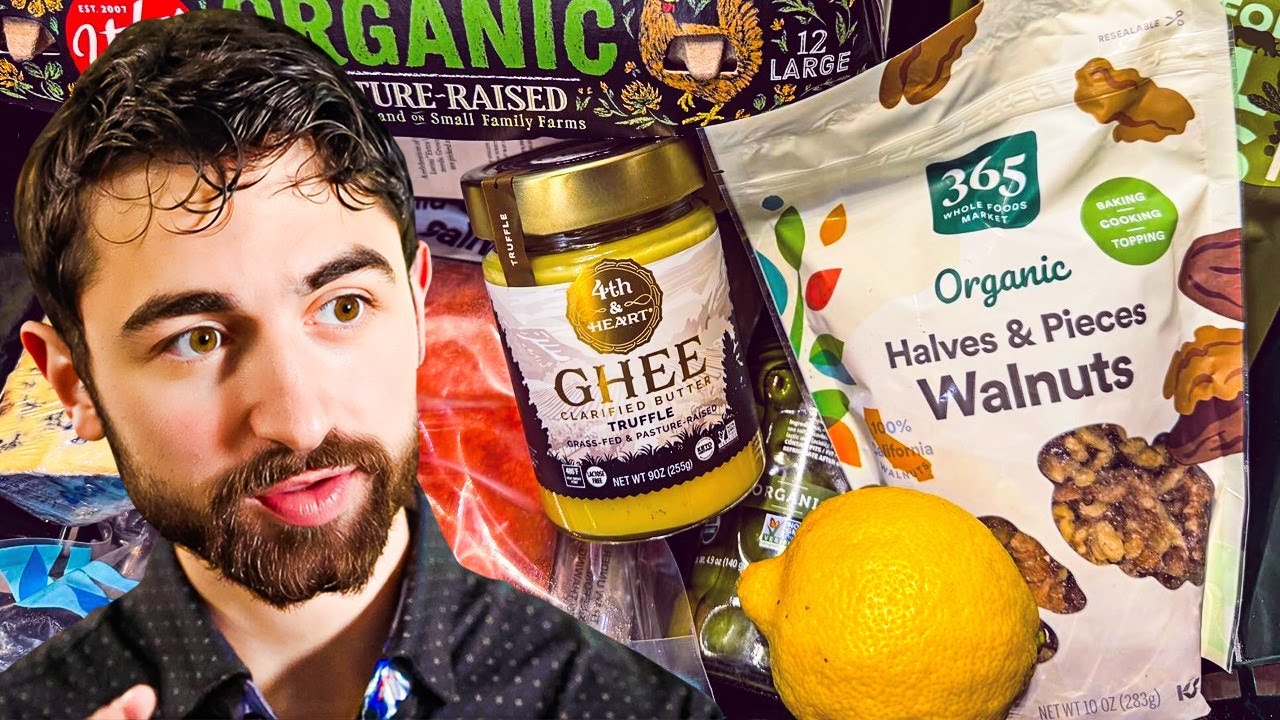
In this video Dr. Nick Norwitz, a metabolic physician, shares a detailed "what I eat in a day" walkthrough of his therapeutic ketogenic diet, emphasizing that nutrition is highly individual. He walks through his shopping list, pantry, and fridge, explaining the rationale behind each food choice. He covers pasture‑raised eggs (including preparation tricks to reduce AGEs and the cholesterol‑inhibitor hormone cholecin), wild Alaskan salmon and sardines (omega‑3 content, low mercury, astaxanthin, whole‑organism benefits), organ meats, regenerative meat, and a variety of A2 dairy products (casein types, BCM‑7, evidence from a double‑blind RCT). He discusses fermented kefir’s lactase‑like enzymes, cooking fats (ghee, macadamia oil, extra‑virgin olive oil, toasted sesame oil) with smoke‑point and antioxidant considerations, and his typical macronutrient split (≈79 % fat, 18 % protein, 3 % carbs). He highlights nuts and seeds (macadamia’s palmitoleic acid, walnuts’ ellagitannins, raw vs roasted oxidation), tahini, and high‑cocoa dark chocolate. Fruit and veg are minimized due to his inflammatory bowel disease, with olives as an exception (hydroxytyrosol vs oleuropein). Beverages include licorice tea, coffee, yerba mate, water with apple‑cider vinegar, and sparkling mineral water containing trace lithium. A brief sponsor spot for Chapter (a Medicare‑insurance advisory) is included. Finally, he reflects on social pressures, dietary boundaries (e.g., no eating after 6:30 PM), guilt, and the philosophy that diet should be an experiment, not a religion. Throughout he provides links to deeper resources and a modifiable newsletter with brand recommendations.
Chapters
I've probably been asked to do a what I eat in a day video about 1,000 times, and until now I've resisted. The reason being is I think diet nutrition should be highly individual. It's your n 1, so I don't want people generalizing from what I do to what they should do. That said, I'm finally doing this video. I guess call it cracking under peer pressure, like an egg. But I think I can make it useful. I think I can go through my shopping list, pantry, and fridge and give you insights into how I think rather than what to think. So let's go shopping. Throughout, I'm going to try to direct you to additional resources such that hopefully my shopping cart and fridge can serve as a triage station for deeper learning. Finally, if you want my preferred brands—no affiliations, just my preferences—I'm going to consolidate all of these and lay them out in the newsletter linked in the video description. Now let's do like my favorite cheese and rock on. Starting with eggs. Yes, I do eat eggs every day, specifically pasture-raised eggs, both for their nutrition and ethical reasons. Pasture-raised means the chickens were given more extensive outdoor access, with about 108 square feet per chicken being the norm. Pasture-raised basically suggests that chickens can actually roam freely on grass and forage for bugs and engage in more natural behavior. By contrast, the other common label, Free range? It's a misnomer. It's like calling instant ramen gourmet noodles. Total misnomer. The chickens still have a little space, but it's like 2 square feet per chicken, and limited outdoor access, as in a small door to a crowded pen. So for these reasons, I go for pasture-raised over free range. And in terms of how I eat eggs, I eat 'em in all forms, but one of my go-to preparations is scrambled with a dash of A2 cream, put a pin in that, we'll get to A2 later, and a smidge of lemon juice or other acid. Doesn't give it a lemony flavor, but the acid changes the protein chemistry during cooking, making the eggs fluffier, and then I just sprinkle on some cheese. But that's not the primary reason I use this acid method. It also reduces the formation of what are called advanced glycation end products, or AGEs for short. Maybe you've heard of these, these are harmful compounds that can be created during cooking, especially high-heat cooking. For more on that, I have a video dedicated to it in which I go over a randomized controlled a clinical trial around AGE formations with cooking. Anyway, moving on, many of you probably know this already, but no, eggs do not tend to increase cholesterol. It's more or less a myth. Yes, individual responses do vary, but the consumption of dietary cholesterol from eggs or other foods doesn't tend to increase cholesterol because it triggers the release of a hormone called cholecin. This is short for cholesterol inhibitor, and it signals to your liver to downregulate the liver's production of cholesterol to keep your cholesterol levels in balance. Again, individual responses do vary, but I know I'm not the only person who can eat hundreds of eggs per month without seeing any change in his LDL cholesterol levels. Oh, and the last thing I'm going to say on eggs is I'm not the only member of my social circles who is an eggthusiast. Hey, what's going on, man?
This is your boy Akon. Just wanted to give a big shout out to my man, Dr. Nick Norwitz. You know what I'm saying? I mean, listen, just want to say it's a great job you out there doing. You know what I'm saying? Everybody know how much I love music, but they don't know how much I love eggs, though. I don't wake up in the morning without making me a nice, nice, you know, plate of scrambled eggs, man. So definitely, man, you know, you might want to try the same to get your day going, right?
You feel me? Okay. Cameo flexes aside, I also love seafood. My top 2 sources of seafood are wild Alaskan sockeye salmon and whole tinned sardines. Both are excellent sources of long-chain omega-3 fatty acids. EPA and DHA, and both are naturally low in mercury. I'll link a useful list of the mercury contents of various fish in the letter, but just to give you an example of the range, here are the mercury levels for sardines and salmon and swordfish. You'd literally need to have salmon every single day for a month and a half to get the mercury bolus as equal to one serving of swordfish. Pretty crazy. And sockeye salmon are my favorite in particular because they're high omega-3 content, and also they get their red hue from astaxanthin, a powerful antioxidant with very interesting properties. And on sardines, they're little nutrient bombs because you're eating the whole organism— bones, skin, and all. I also want to give shellfish, in particular oysters and mussels, as well as fish roe honorable mentions because they are each particularly nutrient-dense. For example, oysters are a powerhouse of zinc, and fish roe is packed with a a particular form of omega-3 called lysophosphatidylcholine DHA that has privileged transport through the blood-brain barrier through something called the MSFD2A transporter into the brain. So basically, the omega-3s in fish roe get into the brain more easily. That's the simple version. I do also eat red meat, poultry, and occasionally pork. I'm a ribeye guy and definitely thighs over breast, and this is just based on my taste preferences. When possible, I also try to buy regeneratively raised meat, mostly for ethical and environmental reasons. I also like organ meats, in particular liver and heart. Liver is absolutely jam-packed with nutrients. And if you have reasonable amounts, I usually eat about 200 grams once or twice per week, you're unlikely to get hypervitaminosis, unless you're eating polar bear liver, which is basically poisonous, but I don't know where you get that anyway. And heart, particularly beef heart, is packed with coenzyme Q10. If you want more on CoQ10 and getting that into mitochondria, you can see this video. Now, let's move on to the dairy aisle. I'm especially drawn to hard cheeses— basically all of them, but I particularly like Manchego and Pecorino. They're rich in calcium and low in lactose for those who are lactose intolerant. They're also both from sheep milk. Now, sheep cheeses, also goat and buffalo, are all A2 dairy. Now, what does that mean? Why does it matter? Okay, time for a little biochemistry lesson. Casein is a protein found in dairy, and casein protein comes in two primary forms: A1 and A2. A1 casein arose in domesticated cattle and thus is exclusively in cow dairy. And notably, A1 casein but not A2 casein can be broken down in the gut into a molecule called beta-casomorphin-7, or BCM-7, which is an opioid compound that can contribute to GI discomfort inflammation, bloating, or even autoimmune flares in sensitive individuals. To provide some specific evidence, just one trial, one double-blinded randomized controlled trial comparing the effects of milk containing A1 and A2 casein, like in standard cow milk, versus just A2 casein found that the presence of the A1 casein increased digestive discomfort and gastrointestinal inflammation, delayed gastrointestinal transit time, which promotes constipation, and even decreased cognitive processing speed. That RCT also aligns with my personal experiences as well. I just do way better when I focus on A2 dairy. Now, I'm not here to scare anyone. I'm not here to be a Munster. Eh. If cheddar works great for you, then great. And I'm also not religious about staying away from A1 dairy. For example, I sometimes have full-fat Greek yogurt, which is typically A1 dairy. But I think this is all a relevant consideration. Overall, I feel better when I focus on A2 sources like sheep, goat, and buffalo milk products. And some of my go-to soft cheeses which I also enjoy include buffalo mozzarella, which is amazing drizzled with or just swimming in olive oil and cracks of sea salt, sheep's milk feta, which is amazing crumbled on fish or chicken, and of course, drum roll, my favorite cheese, Roquefort, which is, yeah, my all-time favorite. It's creamy, funky, delicious, definitely an acquired taste, and it's packed with anti-inflammatory and probiotic benefits. I love it so much I actually have a whole video dedicated to just this cheese. So if you're a Roquefort enthusiast, see this video. Moving on from solid dairy to liquid dairy, I also enjoy goat milk kefir. And just as a quick reminder, all my preferred brands are mentioned in the letter linked below. And as a practical fact on kefir, the live bacterial cultures in the kefir contain enzymes that break down lactose, Once you consume them, effectively your enzymes, the enzymes your body makes, pop open the bacteria that themselves contain enzymes that then get released into the lumen of your gut to digest the lactose sugar. It's kind of like a natural built-in lactaid supplement. That means if you're mildly lactose intolerant, you're less likely to be bothered by the same amount of lactose from kefir as compared to that amount of lactose in milk. Kind of interesting, right? And I always keep some A2 cream in the fridge. Which I use in coffee, mix into scrambled eggs as I mentioned earlier, or even just drink on its own sometimes. Yes, I'm that guy, the guy who drinks cream. There's probably a support group for us somewhere, but I'm not looking for help. And moving on, there's ghee, or clarified butter. I love using ghee for cooking because the milk solids are removed, which significantly raises the smoke point as compared to regular butter. The smoke point of ghee is between 450 and 485°F versus butter which is between 300 and 350°F, so you can see a significant jump in the in the clarification process. It also has a distinct nutty flavor that I really enjoy, and as a bonus, my local grocery store carries a variety of ghee options. It's basically a little ghee buffet. This Himalayan salted ghee, that is a standout, I love it, sometimes I just eat it on its own, and there's even vanilla-infused ghee or truffle ghee which are both surprisingly good. And again, before we move on, no food sponsorships here, I'm just sharing what I genuinely like. But with that said, I do want to tell you about a sponsor. Before we talk about fat sources, nuts, seeds, fruits, vegetables, and social pressure, I want to take 1 minute of your time to let you know about Chapter. Chapter is an organization I believe shares my mission to arm people with information that can improve their overall health. But whereas my expertise is metabolism, Chapter's expertise is Medicare insurance. And here's a fact: the right health insurance can improve all-cause mortality. That's not just correlation, that's causation. But most people on Medicare have the wrong Medicare insurance. Because the insurance market is freaking complicated. I think it's more complicated than neuroquantum mechanics, which is a field I just made up. Anyway, that's why Chapter exists. Chapter is a fully independent organization, the only national advisors who search every single Medicare plan available to find the one that truly fits your needs, or a loved one's needs and priorities. They aren't an insurance company. They advocate for you against insurance companies. And I'm gonna link more information below, but the punchline is Chapter users save an average of $1,100 per year. And the right health insurance can extend your life. And Chapter makes this longevity hack, choosing the right health insurance, far less painful than say cold plunges because you'll never be caught on a phone line and always speak to a real person. To me, that's pretty meaningful. So, if this service could help you or a loved one, consider calling 815-STAY-CURE, as in 815 stay curious, that's 815-782-9287. I believe metabolic health is life insurance, but you also need the right real health insurance. Anyway, I'm proud to plug Chapter, they're doing amazing work. But now that that's clarified, back to clarified butter. When it comes to fats, My top cooking fats, as I mentioned, are ghee and also occasionally macadamia oil. It's a little bit more esoteric, but it shares a high smoke point like ghee and has this neutral creamy flavor that I really like. So I use it for fish, chicken, or yes, meat, and also sometimes mix it into my scrambled eggs. I kind of have scrambled eggs all the way, like I tell you. And my favorite dressing oil is hands down extra virgin olive oil. I'm very particular about my olive oil. I look for oils that are in dark glass or metal containers with harvest or press dates within the past 2 years. If you want more on how to select the best olive oil, you can see this video. I have a whole video dedicated to it. I also occasionally— toasted sesame oil. I find it useful when trying to deepen my level of ketosis. This is because the polyunsaturated fats, like the omega-6 in the sesame oil, they do tend to be more ketogenic than saturated fats. Now, if you know me, you know I'm not anti-saturated fat, but it's true, polyunsaturated fats are more ketogenic. So for me, swapping some butter for the equal amount of sesame oil can raise my ketone levels significantly, even up to 6 millimoles sometimes within 20 hours, which is quite impressive. And because I know I haven't mentioned it yet and I'll get asked, now seems like a good time to mention my general macronutrient split. It does vary, but typically I eat about 79% of my calories from fat, 18% from protein, and around 3% from carbs, more or less. That's pretty standard for me, and usually I'm targeting around 1 gram per pound of, uh, protein. So, anyway, back to sesame oil. Sesame, in addition to its fat profile, contains lignan antioxidants, in particular sesamin, sesamolin, and sesamol. These help protect the omega-6 fats naturally found in the sesame from oxidation. So this graph here, it actually shows the oxidation of the omega-6 fat linoleic acid in the presence or absence of these antioxidants found in sesame. And what you can clearly see, the punchline, is that these natural antioxidant compounds really reduce the oxidation of this fragile omega-6 fat. So having some sesame oil is very different than having fryer oil at McDonald's. Now, onto nuts, other than myself. My top nuts are macadamia and walnuts. Macadamia are low in antinutrients so they're easier to digest, and they're rich in a rare fat called palmitoleic acid, which is an omega-7 monounsaturated fat. And they're also very low in carbs, they're basically the lowest carb nut. Not to mention they're delicious. Palmitoleic acid though, it's a lipokine, a fat-derived signaling molecule that can help support metabolic health. I have a whole video devoted to that as well. And walnuts, like sesame, are particularly ketogenic because of their fat profile and they're also packed with compounds called ellagitannins, which your gut microbes can convert into something called urolisin A, which is a compound that supports mitochondrial function and muscle performance. But I only eat raw walnuts, specifically raw walnuts, since the fats in walnuts are fragile and prone to oxidation when roasted. In fact, here's a fun fact for you. If you roast an equal amount of macadamia and walnuts at 300°F, the walnuts will end up with 30 times the oxidized fat as the macadamia. And there's also some research suggesting that the compounds in walnuts can help target visceral fat. I have a video on that, although I'll admit this was part of a multimodal intervention so we can't isolate the effects of the walnuts alone. Anyway, you can see the video, see what you think. I thought it was interesting. Now, as for seeds, my favorite seed is tahini, so sesame seed butter. I actually prefer it to peanut butter for flavor alone. And tahini makes a great base for sauces and dressings, like a garlic tahini dressing—the recipe is linked in the letter. And it pairs beautifully with fish, eggplant, or chicken. Eggplant I only eat on occasion, it hurts my stomach a little bit, but I do love the flavor, especially with a garlic tahini dressing. And I also suppose cocoa is classified as a seed as well, so let's talk about dark chocolate. I stick to 90% and above, and I will mention my preferred brand in the video which is Teysa, which tests low in heavy metals like lead and cadmium, and their Wicked Dark Ginger is my absolute favorite. Again, no affiliation, just genuine cocoa love. Now, moving on, when it comes to fruits and vegetables, I do admittedly keep it minimal. This is not because I'm anti-fruit and vegetable, this is because my therapeutic ketogenic approach for managing my inflammatory bowel disease leads to the limitations of many fruits because of excess sugar, and the fiber can cause IBS issues for me. With that said, there are a few exceptions. For example, I love olives, of all types. And because I know the question sometimes comes up, No, there's no one healthiest type of olive, different types have different benefits. For example, ripe black olives and Kalamata olives are rich in hydroxytyrosol, whereas unripe green olives tend to be richer in oleuropein. So eat whatever olives you enjoy more. Sometimes we can let our flavor preferences guide our health choices. I know, health nut heresy. Anyway, for drinks, I do keep it simple. I love tea, especially licorice tea, and I also drink coffee and yerba mate, usually both daily. Yes, for some caffeine, but also because they contain chlorogenic acid, a compound with antioxidant and heart-healthy properties, and also brain-protective properties. Other than that, I mostly drink still water, and occasionally with a splash of apple cider vinegar for a little acetate boost. I sometimes also have sparkling mineral water. If you drink it too fast, it can cause a little bit of bloating, But I do enjoy it on occasion, maybe with a squirt of lime. And certain brands also contain trace amounts of lithium, which is a trace metal that has neuroprotective benefits, including against Alzheimer's disease. There was a huge recent study on that. If you haven't heard about that, see this video. And again, I've linked my preferred brand in the letter. And by the way, if you're wondering why I'm linking all the preferred brands in the letter, it's not just to annoy you. The letter version is modifiable, so I can expand or retract my brand suggestions over time with your input. Rather than having them set in YouTube stone. Also, I'm trying to avoid YouTube auto-spamming you with product plugs, which it's prone to do. Now wrapping up, I just want to offer a quick word on how I manage social life around this way of eating. I'll be honest, it's not always easy. As a young adult, there's often real cultural pressure to go out, eat adventurously, and be flexible. And I really used to thrive in this space. I used to take pride in how adventurous I was as an eater. But I've had to make hard decisions. Many would classify these decisions as rigid with respect to the way I eat, like not eating after 6:30 PM, which is a hard line for me. This really helps my digestion and sleep, but it often conflicts with social norms. To take that boundary as an example, beyond making me feel like a phase-shifted dietary Cinderella, that boundary has caused tension at times with friends, family, or my partner. And yes, I still feel guilty for being that guy with the rigid dietary pattern, but I've accepted that it's what I need to feel my best. And I've learned to be okay asking for that support from others that I love. Sometimes it gets easier. Sometimes people understand and sometimes they don't. No matter how long you're on this journey, sometimes people don't understand. If you've been there, just know, You're not alone, and don't ever feel guilty for putting your health first. I'm in part saying this to you because I still feel guilty, but it's a message you need to reinforce to yourself again and again, and it's not always easy. And one final thought: diet shouldn't be a religion. It should be a living experiment. If I recreate this video in a year or two, and maybe I will, I bet you my grocery list will look totally different. And that's not just okay. It's good. So to everyone who's asked what I eat in a day, well, now you have at least a temporary answer. Thanks. Oh, and no, I don't miss bread, but thank you for your concern.










