Why High LDL Cholesterol Doesn’t Always Lead to Heart Disease
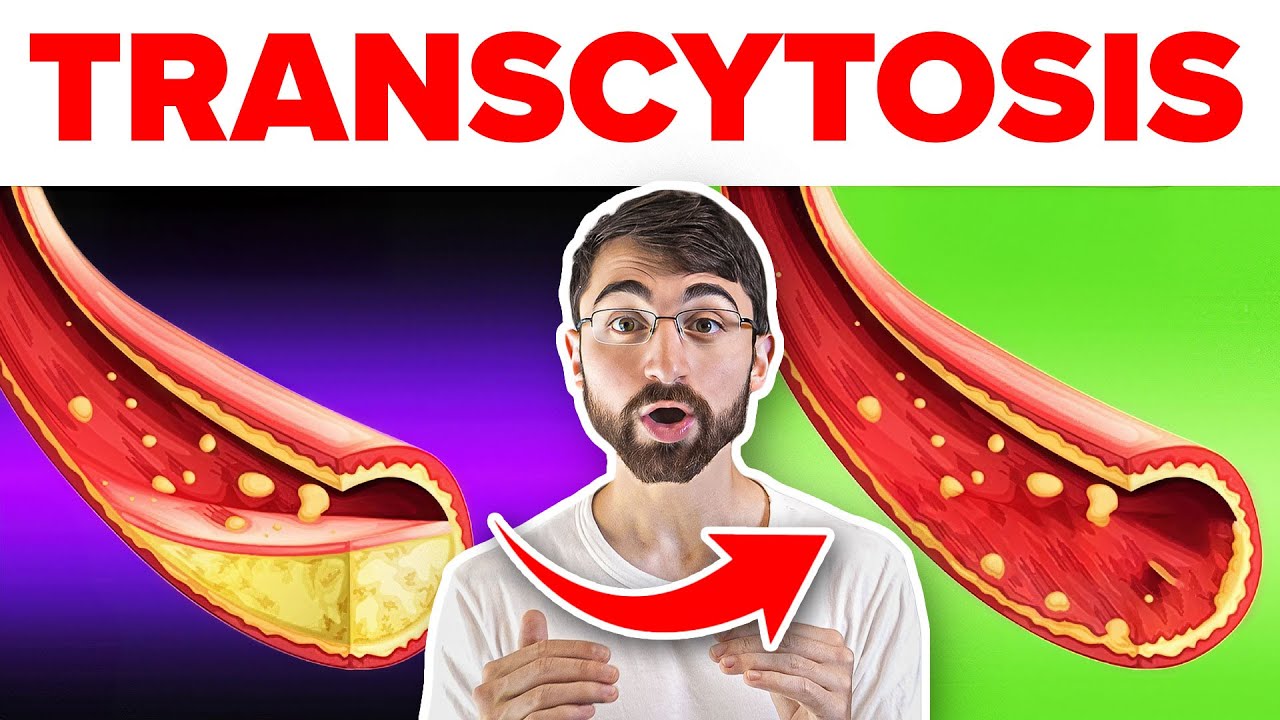
Some people with very high LDL cholesterol never get heart disease while others with lower levels do. A 2025 study identifies three receptors that control whether LDL actually crosses into artery walls, and shows that inflammation, HDL levels, and insulin sensitivity matter more than the LDL number alone.
Chapters
Imagine someone with LDL cholesterol levels so high it would give most cardiologists nightmares of the cholesterol boogeyman. And yet, their arteries are clean as a whistle. Meanwhile, someone else with "perfect" LDL levels is developing dangerous coronary plaque. What's going on? Well, we recently published first-of-its-kind data showing that some people with astronomically high levels of LDL cholesterol do not appear to be at high risk for heart disease, or more specifically, coronary artery disease. Now, if you haven't seen that video covering those groundbreaking data, you should really give that a watch first to give this video full context. That said, if you don't want to or you're time-pressed, this video is going to be self-contained and provide one answer to the question of why. Why do some people with crazy high LDL cholesterol and ApoB levels develop no plaque in their arteries, while others, including those with far lower LDL cholesterol and far lower ApoB, do develop plaque? We know for a fact that's a phenomenon. Even the staunchest pro-LDL and ApoB-lowering devotees admit you can have high LDL and high ApoB and be perfectly healthy. For example, quoting lipidologist Thomas Dayspring, who some of you may know, he says, "There are people with high ApoB who live long and healthy lives." But he continues, "But I don't know what else is going on in their artery wall." So, let's address it. Let's tackle one possible explanation centered around the following term: transcytosis. I know, transcytosis probably sounds to you like a secret maneuver in a sci-fi space battle. Initiate transcytosis, Captain! But in reality, it's just how stuff gets past your artery security system. Or maybe is your artery security system. Let me make it simple. Your arteries are lined by cells called endothelial cells. Endo means within, as these cells are within the tube that composes your blood vessels. And "theli" means nipple. That doesn't really make a ton of sense to me, but I suppose your heart is beneath your nipple, so it sort of makes sense. And hey, if nothing else, now you have a fun fact to make your next dinner party super awkward. Anyway, the endothelial cells—within nipple cells, I guess—line your blood vessels, and plaque grows when cholesterol-containing particles, including LDL particles, which carry cholesterol, slip through the endothelial barrier and begin to seed plaque. But how? How do cholesterol-containing particles penetrate the endothelial barrier? It's not like a healthy endothelial barrier is coarse chicken wire. It's actually rather tightly knit. And this is where transcytosis, comes into the picture. Transcytosis is the process whereby a cell, in this case the endothelial cells lining your arteries, sucks up something from the outside, here an LDL particle containing cholesterol, and passes that something, that particle, through its interior, then out the other side, to the inside of your artery wall. The exact mechanism is not well understood, But by way of analogy, think of your artery wall like an exclusive nightclub. Some particles get waved in, VIP style. Others are stuck outside. But what if LDL wasn't just passively slipping through a hole in the wall, but was actually being escorted through into the VIP section, into the artery wall, by a bouncer? That's transcytosis. Now, given this perspective, you may have just made a connection, or had a coronary epiphany. People often talk about the process of plaque development in heart vessels in a manner that suggests the more cholesterol-containing particles, LDL particles, you have in the blood, the more that end up getting inside your artery wall and getting trapped there, like flies to sticky flypaper. I know, I'm really hitting it hard with the analogies. I'm just kind of hoping something will stick. And that it won't be a plaque. Anyway, let me be clear. This idea that more cholesterol-containing particles in your blood automatically equals more flow of these particles into your artery walls and more coronary artery disease is a massive assumption, and likely incorrect, or at least incomplete. Incomplete. Instead, transcytosis is an active, regulated process, as nicely described in a new 2025 paper in the journal Atherosclerosis, Thrombosis, and Vascular Biology, or ATVB for short. This paper describes how transcytosis across endothelial cells is the dominant pathway by which cholesterol-containing particles get across the endothelium, And this paper notes how this might explain currently unexplained differences in disease—coronary disease—susceptibility. Like those people we are studying, some with cholesterols in the 500s who might not actually be at high risk for cardiovascular disease. And for those of you in my audience who didn't know already, I am one of those people. So, call me biased if you want, but also bear in mind, my heart and life are on the line. So I have every incentive not to misinterpret or misrepresent these data. Some influencers risk embarrassment. I risk something a little more serious. Like, say, my continued existence. So yeah, I have every reason to get this right. And with that candid conflict of interest and caution raised, I want to highlight some fascinating points raised by this new ATBB paper about the regulation of transcytosis. First, whereas one might think the LDL receptor is key to the process of transcytosis of LDL particles across the endothelium in heart blood vessels, that's actually not the case. LDL receptors in the coronary endothelium can promote transcytosis, but particularly in an inflammatory environment when stimulated by the inflammatory signaling molecule, the cytokine interleukin-1 beta, or IL-1 beta. Thus, the LDL receptor can promote transcytosis of LDL particles containing cholesterol into blood vessel walls and promote coronary artery disease, but particularly when inflammation is high. And this also suggests low inflammation will lower LDL receptor-mediated transcytosis at coronary endothelium and reduce coronary plaque development. And a more important receptor in the transcytosis of LDL particles at the heart is actually called SRB1. And the reason this is so interesting and so important is because the best known ligand, or or binding partner for SRB1 is HDL particles, often called the good cholesterol particles. That is a simplification, but higher LDL cholesterol levels are typically associated with better metabolic health. And critically, studies show that HDL can compete with LDL for SRB1 and lower LDL particle transcytosis. So in effect, the HDL particle can act itself like a bouncer, preventing LDL from slipping through into the club, by which I mean past the endothelium into the artery wall. And this might be one more way HDL is cardioprotective— protects your heart from coronary artery disease. So now we've mentioned two receptors, the LDL receptor and SRB1, which also binds HDL particles. I now want to introduce one more and then I'll piece the puzzle together for you. The third receptor is called ALK1. One regulator of ALK1 is the signaling molecule called BMP9, and BMP9 reduces ALK1 levels, thus reducing transcytosis of LDL particles. This means in a nutshell, lower BMP levels will cause more LDL transcytosis and increase susceptibility to coronary artery disease. And guess under what conditions BMP9 is low? Metabolic syndrome and type 2 diabetes. So in those with metabolic syndrome and insulin resistance, BMP9 levels are reduced, which would logically lead to more LDL transcytosis and eventual plaque progression. This may be another way insulin resistance contributes to, or even causes coronary artery disease. So, stepping back and putting it all together, we have 3 key receptors involved in transcytosis that are reviewed in this paper: the LDL receptor, SRB1, and ALK1. LDL receptor-mediated transcytosis is activated by inflammation. SRB1-mediated transcytosis is inhibited by HDL particles, particularly larger HDL particles. And ALK1-mediated transcytosis is inhibited by BMP9, which is reduced by insulin resistance. Therefore— I know this is a lot, maybe you have to re-listen— but therefore, if you wanted to design the perfect circumstance to minimize transcytosis across the endothelium and reduce risk of coronary artery disease despite higher LDL levels, You'd want an environment of low inflammation, lots of HDL, especially large HDL, and insulin sensitivity. And this is exactly what we see in our population of lean mass hyperresponders on low-carb, high-fat ketogenic diets who have sky-high LDL but as a population appear at much lower cardiovascular risk than status quo thinking would have you believe. Now, getting to our conclusion, before you accuse me of being an LDL cholesterol denialist, let me be clear. I'm not saying LDL and ApoB don't matter. Rather, I'm saying the simple story we're often told is incomplete. Rather than seeing LDL levels in isolation, we need to consider the entire metabolic and inflammatory context. This nuanced perspective challenges dogma and "settled science," which I place in very heavy quotes because there is no such thing as settled science. And it forces us to ask better questions, harder questions. So if transcytosis is regulated and influenced by factors beyond just LDL levels, then shouldn't we be focusing on the bigger picture? Like inflammation, HDL and HDL function, and critically insulin sensitivity, rather than just treating a single number on a lab report. Now, as we continue this line of research studying lean mass hyperresponders and others with high LDL but possibly low cardiovascular risk, one thing is clear: the traditional model is incomplete. And if we are serious about preventing heart disease, We need to rethink what truly matters, think deeper, have harder questions, and have nuanced discussions. Now, if you found this video interesting, I have a CTA for you, by which I mean a call to action, not a coronary CT angiogram, although I suppose we have those too. But anyway, first, check out the video covering our study and the paper that I mentioned that showed lean, healthy people on ketogenic diets with sky-high LDL do not actually appear to be a high-risk group for cardiovascular disease. Then please, please, please join the movement and be the first to know the latest about our upcoming movie, The Cholesterol Code, by signing up for the newsletter and notifications at cholesterolcodemovie.com. You can find the link in the notes to this video. Finally, as usual, if you found this video interesting, nuanced, and worth sharing, please do so. And comment with your thoughts. And if you aren't already a subscriber, please subscribe. I want my community to do what I want my plaque not to do: grow rapidly. So, transcytose that subscribe barrier and join the plaque that's sticking it to dogma. Stay curious. I hope you enjoyed this. Maybe you need to listen to it once more.










