Why Roquefort Cheese is the Greatest Cheese in the World!
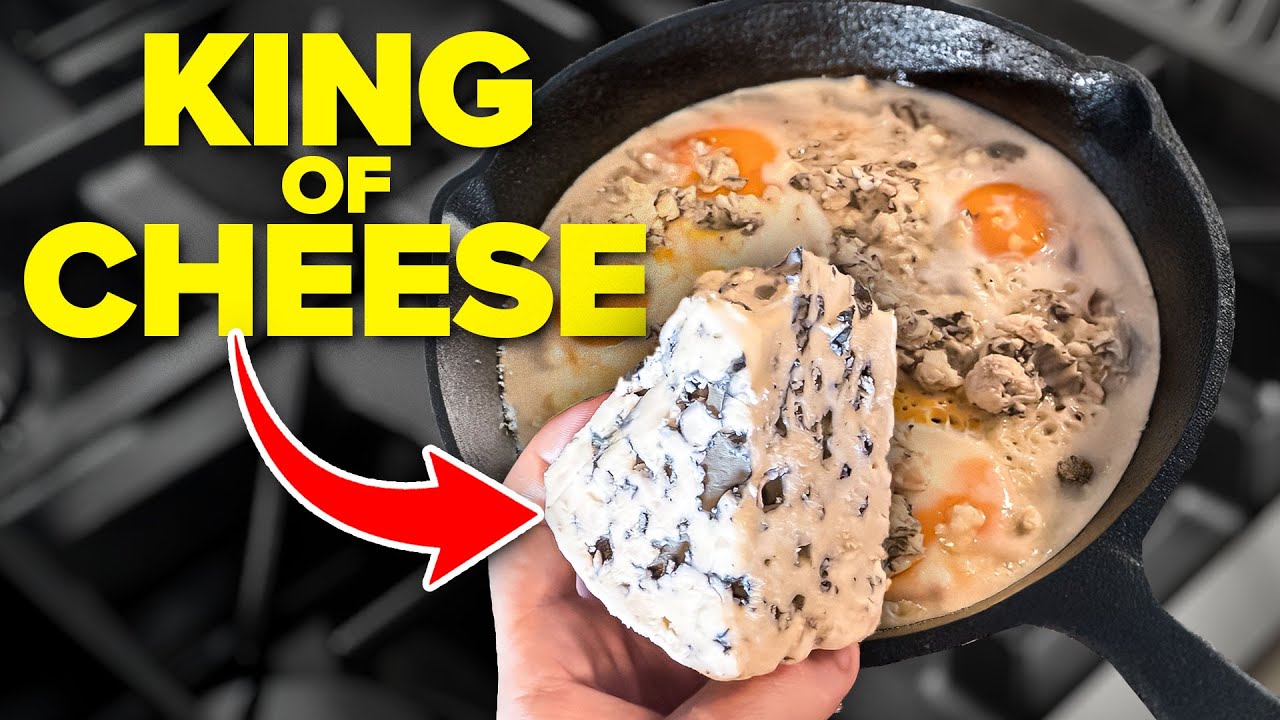
A deep dive into Roquefort's origin story, strict French production rules, and science showing it reduces inflammation and inhibits harmful bacteria. The cheese has a 1:1.5 protein-to-fat ratio and 3% butyrate content, with pairings from eggs to steak.
Chapters
Roquefort, a tangy, creamy blue cheese from southern France. It's not just the king of cheeses because it tastes incredible. It's also steeped in history, legend, and surprising health benefits. This video is my nerdy love letter to Roquefort because, yes, it is my favorite cheese. So get ready to learn some fascinating cheesy facts that will boost your health literacy, or at the very least give you some fun tidbits to churn up amusement at your next dinner party. Or at least puns so stinky they'll have everyone exclaiming, "How dare he!" Truly, roquefort is a mold breaker. And as a bonus to this video, I want to play a little optional game with you called Catch the Puns. And you can tell me how many you counted throughout this video and propose butter ones that I may have missed. And I promise I'll pin the most creative, enthusiastic, and brilliant pun-packed comment to the top of this video. I'll also feature at the end of this video some community comments on the newsletter associated with this video for kicks and giggles, because laughter is a health hack too. And a lot of you are pretty freaking creative. Anyway, a quick history about the legend, the lore of the King of Cheeses, also known as the Lover's Cheese, because here's how Roquefort came to be. Over a millennia ago, Roquefort was discovered when a young man eating his lunch of rye bread and sheep's milk became distracted by a beautiful woman in the distance. So he abandoned his meal in a nearby cave and ran after her. Months later, his life changed now forever—he had a little one in the oven—he returned and discovered that Penicillium roqueforti had transformed his simple milk and bread into something extraordinary: Roquefort cheese. One bite of the cheese and he was struck by love again. Quite a story, right? Kind of romantic. And I have to wonder why he decided to eat the moldy cheese, but I'm glad he did. Anyway, Roquefort, it's not just a legend, it's not just lore, it's a cheese with a real resume. And before we dive into its surprising health benefits, I want to churn through some quick facts about what makes it so special, because it's pretty interesting. Roquefort is made entirely from the milk of the Lacaune breed of sheep. A hardy, hornless breed with kind of floppy ears, which makes me giggle, and the deepest udders of any milking sheep in the world. Yes, you can tell I went udderly down the rabbit hole on this one. It takes about 4.5 liters of this sheep's milk and at least 3 months of aging to make 1 kilogram of Roquefort cheese, or as my local grocer refers to it, one Nick serving size. Legally, as dictated by the INAO, which regulates certain French agricultural products, Roquefort must meet very strict standards. The sheep themselves must be kept on pasture, the milk must be whole milk, raw, not heated above 34°C, which is 93°F, and be unpastured and unfiltered. And the Penicillium roqueforti must come from the caves of Roquefort-sur-Soulzon. Cheese, Roquefort, has more protection laws than my Wi-Fi password. By the way, my Wi-Fi network is called Jeff Axolotl, after this little guy. Now, I promised to discuss some of the health benefits of Roquefort, so let's get into it. Roquefort contains anti-inflammatory proteins, And extracts from rucfort have even been shown to inhibit the growth of certain pathogenic bacteria like Chlamydia pneumoniae. And in rodent studies, even a tiny 10 mg dose of rucfort reduced signs of immune activation and inflammation. One paper even concluded the ability of this protein from rucfort to inhibit the propagation of Chlamydia infection as well as the anti-inflamm— inflammatory and pro-regenerative effects of the roquefort itself may contribute to the low prevalence of cardiovascular mortality in France, where consumption of fungal fermented cheeses is the highest in the world. And on that note, life expectancy in France is 82 years as compared to 77 years in the United States. And speaking of longevity, In another study in a worm model where the worms were exposed to harmful oxidative stress, Roquefort extract increased survival more than 5-fold. Now, can we say from these worm data that Roquefort will extend your life to 500 years? Maybe not, but it will make each year of your life more delicious. I promise you that. Who knew moldy cheese could be way ahead on health benefits? And for what it's worth, the finding that fractions of Roquefort cheese can reduce oxidative stress has also been demonstrated in human cells. The pathway affected is actually pretty conserved. Roquefort components appear to double the expression of conserved antioxidant genes like catalase and superoxide dismutase, which is SOD for short. You can see that here in this figure. At a high level, all of this reinforces the idea that the king of cheeses, the cheese of lovers, is anti-inflammatory in nature, a fact backed by modern science and encoded in historic wisdom. In fact, historically it was common for shepherds to apply Roquefort to wounds to prevent gangrene, a severe form of tissue death that can follow infection and lead to limb loss. Pretty interesting, right? And lest you think I forgot about the macro and micronutrient profiles of roquefort, roquefort also boasts a lovely 1:1.5 ratio of protein to fat and that 0.88 omega-6:3 ratio, although I still personally recommend getting your omega-3s from fatty fish. And 3% of its fat is actually butyrate, a short-chain fatty acid, which many people think can only come from the fermentation of fiber, but guess what? You can get it from certain dairy too. Butyrate, the term, actually derives from the Greek word for butter. So those were some of the health facts. Now, what's the best way to eat roquefort? Well, my number one favorite way is on eggs. It melts beautifully and gives scrambled eggs or fried eggs or omelets or even deviled eggs an incredible creamy tang. It is beyond eggcellent. It's also fantastic with nuts, primarily pecans or walnuts in my opinion, bacon, and if you're not sugar-free, fruits and honeycomb. And if you're really looking to splurge, a ribeye with roquefort either crumbled on top or as a roquefort butter cheese sauce might be in my top 3 favorite dinners of all time. And if you're feeling particularly adventurous and kind of quirky, I've even made a Roquefort cheesecake before. Once, because frankly it was actually pretty expensive, but if this video gets enough views, you can probably guess where I'm spending my AdSense revenue. Not on a Ferrari. And I'll also drop some combinations and recipe ideas in the newsletter linked to the video in the video notes if you want more ideas or or if you want to submit ideas that I can also share with the broader community. Your contributions are always appreciated. So, closing, Roquefort isn't just a cheese, it's an experience, a legend, and a health food. Whether you enjoy it for its complex flavors, rich history, or surprising health benefits, one thing is for certain: the king of cheese reigns supreme. So whether you savor it on steak, smelt it on eggs, or just eat it straight from the wedge, which I always encourage, long live the king of cheeses. And before I close shop, I just wanted to emphasize to you, my metabolic health community, thank you. These videos are so much fun to make. Some are deep dives into new papers and some are kind of quirky and tangential, like this one. And I can only do this because of your interest and support. And the more we expand together, the more liberty I'll have to branch out and experiment with new and different content—like this video. One might even say this channel and our nerdy metabolic health community is aging to perfection. So, if you haven't already, go ahead and subscribe before things get even funkier. Oh, and if you still don't like Rookford, well, I have great concerns about your life choices. Alright, how many did you count? Do you have better ideas for puns? And here are some community comments that I found really amusing. And now, for your entertainment and to do some community building, here are some comments from our community, including puns and some pretty cool fast facts. Chris said, "Rookfort is not a good idea, it's a great one." I think you all know I agree with Chris. Another person said, OMG, your puns are hilarious. Are you a dad by chance? Me? No, but I'd really like to be one, so admittedly I am practicing my dad humor on this channel. I still need to convince my girlfriend to move up her timeline. Another person said, you didn't leave any puns for the rest of us. I'm kind of fed up with that, in fact. Apparently not. Good one. We also got a lot of shares of really cool fun facts. Like, there are over 2,000 varieties of cheese in the world, and mozzarella is the most popular worldwide. I did not know that. Another person shared that Pizza Hut uses about 300 million pounds of cheese per year, presumably on its pizzas. That's pretty impressive. That's a lot of cheese. Another person shared that the oldest cheese ever found was in a jar in an Egyptian tomb and was over 3,000 years old. That boy had time to ferment. And another person shared, Serendipity's quintessential grilled cheese sandwich in New York City goes for $214 per sandwich. It's made with rare casicavolo podolico cheese and 23-karat gold flakes. Honestly, I feel like the gold would kind of ruin the cheese, but I guess don't knock it till you try it. I don't know that I can afford to try it, but it sounds interesting. Alright, with that, hope you enjoyed this video. Let me know in the comments what you got. Puns, fast facts, or whatever you wanna share. Have a great day. Appreciate you.










