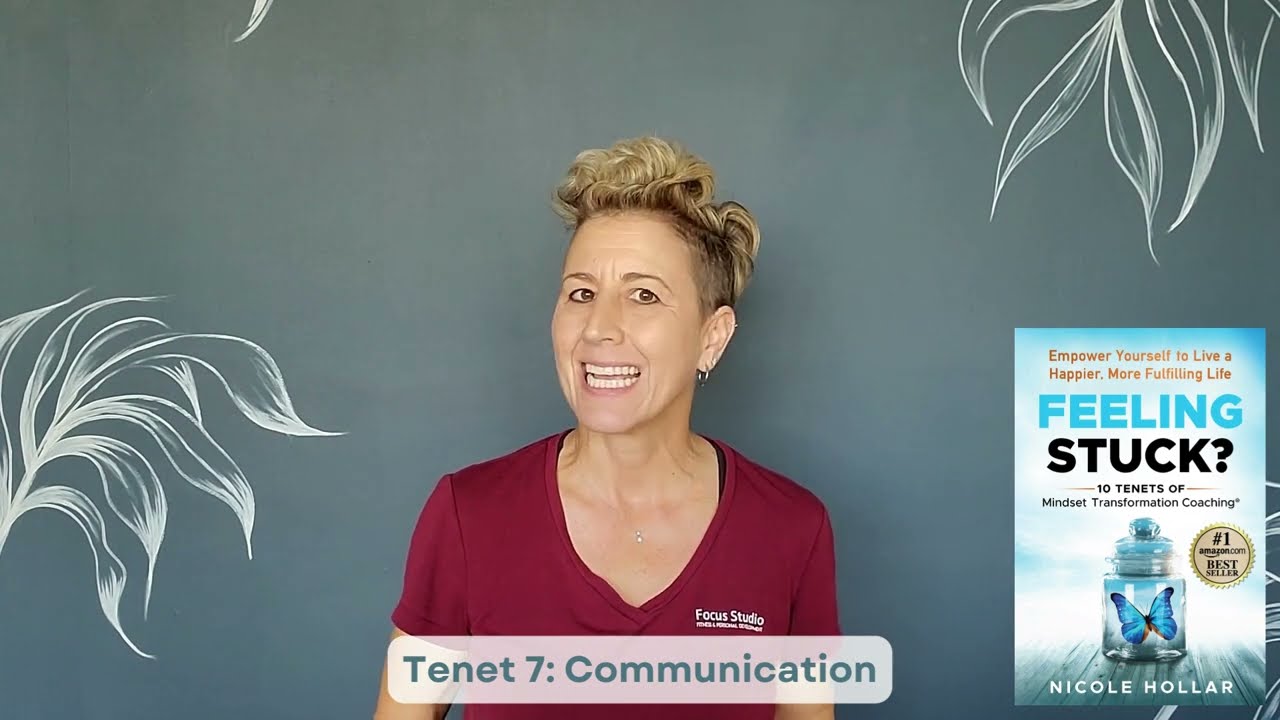
Tenet 7 from Feeling Stuck teaches communication through openness, honesty, and precision. An active-listening workbook exercise moves conversations from surface-level exchanges to genuine understanding of content and feelings. The tenet connects to confidence and boundaries, showing how self-worth lets you express needs clearly and create safety for others.
Chapters
Hello everyone, thank you for joining me today. Tenet 7 of Feeling Stuck is all about enhancing your communication skills and boosting its effectiveness, all while becoming more attuned to the people around you. The goal of your tenet on communication is helping you to learn how to navigate conversations with more openness, honesty, and more precision. You're also going to learn how to recognize your learning styles and those of other people and how to use active listening techniques so you can better connect with the thoughts and the feelings that others are expressing. In the workbook, there's an active listening exercise that's going to help you move past the typical tennis match of word exchange and into a genuine exchange where you absorb the content and feelings a person is conveying and learn to respond more meaningfully. Active listening is really about helping us break free from the habit of waiting for our turn to talk and truly engaging with what another person is saying. The reason this tenet on communication follows the one about confidence and boundaries is because your self-worth and your confidence play a vital role. So you're going to discover how to communicate your needs confidently and, equally important, Create a space where others feel comfortable sharing their thoughts and feelings too. I don't know about you, but I know I have been— have you ever been in a little spat with somebody who said they don't remember what you told them? Meanwhile, you know they need a visual list, not just rattling off words. Well, that's an example of a learning style. You're going to learn how to identify someone's learning style in this tenet. So that you can communicate your needs most successfully and also know the importance of identifying your own learning style and telling people what you need in order to receive information best. So you're going to see a lot of examples of this in Feeling Stuck. In the book, I'm also going to be sharing with you the requisites of good communication, and we'll touch on each point. Remember, Everyone perceives the world differently, so empathy is really important. Another thing you're going to learn in Feeling Stuck is how to shift your communication from direct to indirect communication. It doesn't mean that we never are direct in our communication. It's about putting thoughts and decisions in the other person's hand. It's the difference between, you should do this, And have you considered other options, or what would be best for you? Look, at the end of the day, it really comes down to being confident in communicating your needs, being open to someone else's, even if they aren't yours, and flexibility. Sometimes even the smallest shift in how we communicate can transform our personal and our professional relationships.