21 Futures #9 — Behemoth — SF
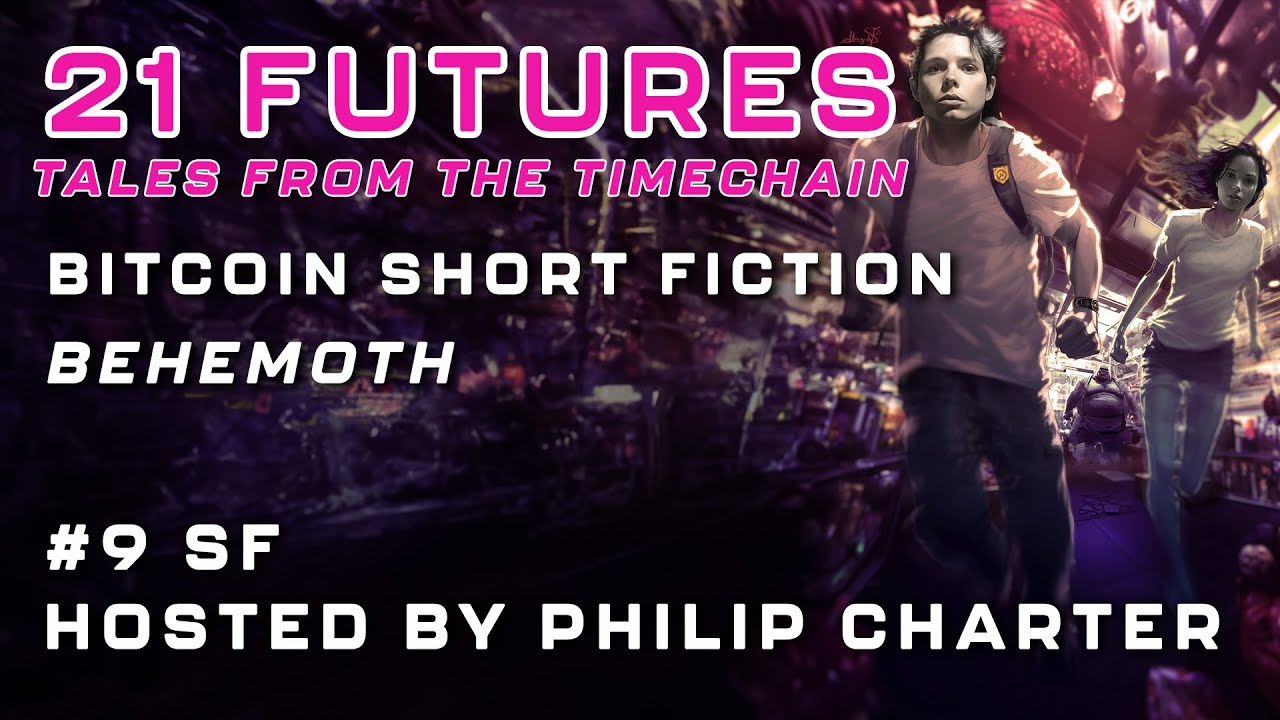
In this interview for the upcoming anthology 21 Futures: Tales from the Time Chain, host Philip Charter talks with author Asif (SF) about his involvement with ConsenSys Network, his personal journey into Bitcoin, and his speculative short story "Behemoth". Asif recounts early Bitcoin experiences in 2011, costly trades on Mt. Gox and BTC‑E, a period of disillusionment, and a later re‑engagement that led to a deeper understanding of the protocol. He describes his background as a graphic designer and occasional writer, noting a preference for broad, interdisciplinary learning over narrow specialization. Influenced by Neal Stephenson, Larry Niven, and classic hard‑science concepts like O’Neill cylinders, Asif built a twin‑cylinder space habitat as the setting for his story, focusing on two child protagonists, Iris and Flint, navigating a refueling hub at Lagrange Point 2. The conversation touches on the role of short fiction in exploring Bitcoin’s cultural impact, the importance of analog media as a redundancy to digital records, and speculative predictions that Bitcoin’s “hash horizon” will drive humanity toward interplanetary expansion. The interview concludes with Asif reading a passage from his story and offering a hopeful, albeit cautious, outlook on Bitcoin’s future.
Chapters
TranscriptAuto-generated · 26 min
Welcome to the world of 21 Futures: Tales from the Time Chain. This book, forthcoming in December '23 with Consensus Network is the world's very first Bitcoin fiction anthology. I'm the editor, Philip Charter, and today we speak with one of the authors featured in the anthology. SF, welcome to the show. How is it going today?
Hi, thank you for having me, uh, Philip.
Awesome. So let's jump straight into talking about the 21 Futures Project and your role in it. How did you decide to get involved with what we're doing at ConsenSys Network?
I guess I was already doing some work for ConsenSys. Um, I, I really enjoyed working with all of you guys and girls on, uh, Anil's book, for instance, uh, doing the typesetting for that. Uh, I really liked, uh, doing a few of the COVID designs for let's see Bitcoin techniques and what was it again? Few a few few cover designs for the books. Everybody's been really friendly and kind, and I really enjoyed every aspect of it. So when I saw you were looking for short stories, I just jumped at the opportunity and. Started to pen something down, I guess.
That's cool. Yeah, it's, it's nice that like so many things are blending into one in this community of, you know, artists getting into writing and vice versa. And, you know, so many things are blending together. That's, that's really cool. Uh, so yeah, tell us more about your path into Bitcoin.
Yeah, well, I came into contact with it quite early in 2011. Um, but I was a bloody, I was a bloody idiot at the time. Um, I, I, I strangely, I, I did know that the fiat system was just utterly, uh, fucked. If I may say so.
Sorry, you can swear.
Yeah, no worries. But at the time I did not have the energy, nor the time, nor the want to dive in and try and understand Bitcoin itself. I think it's a familiar story. I just saw it as a quick way to try and make some extra money. Of course, I fat fingered a lot of that away on my crappy smartphone of the time. Trying to trade it on Gox and on BTC-E, all of which I've lost in both of those hacks. So yeah, I've never been— I've never had a lot of material wealth, I would say. I do think I'm lucky to live where I live and Basically won the lottery of life when it comes to the country I live in and stuff like that. Um, but yeah, I guess I, I reached grit after the second time I lost everything in 2014. I thought to myself, I just never want to touch this stuff ever again. Yeah.
Uh,
of course, uh, we all know, uh, it didn't go like that. And, uh, got in again, mostly bought the top in 2017. Um, but ever since, uh, at that point, I finally took the time to try and understand it. Uh, and once it finally clicked for me, uh, yeah, it's been, uh, nothing else ever since, I guess.
Yeah, it sounds like you've got plenty of material for cautionary tales and You know, the, the downsides and the, the pain of, um, of these ups and downs. Uh,
yeah, I guess it's a familiar path. I think lots of folks will have to walk it still to come. Lots of folks still to come here will, will, will travel a similar route. I'm, I'm pretty sure. Um, I guess it will be part of my task to tell them, don't worry too much about it. If you make a mistake, just start over. And, uh, you'll be fine.
And in terms of your writing, um, what kind of writing do you do? Is this one of your first pieces of fiction? What else do you write?
I did some writing in the past for, uh, a blog. I, I won't get into that, uh, right now. It was years ago. Uh, it was fun. It was Also future-related stuff, lots of sciencey sci-fi kind of things. Um, but mostly, uh, nonfiction. Um, honestly, I haven't been much of a writer since. Um, there was a story I was working on and I'm just still chewing on that one, but it's, it's a different beast than the short story and 21 Futures. So. That's a, a longer-term project, I guess. Um, not making any promises on that. Maybe it will pan out, maybe not.
Yeah. Well, great, great start with the, the story that you submitted for the, for the anthology for sure. And we'll hear more about that later in the show. So thank you.
I appreciate it. Yeah, I appreciate that. I, I must say, um, this is the first time that I've written something and it's gone through this, uh, editing process with you and it's been a very nice experience. I think you were a major help. You had some really good advice and yeah, I loved it. I hope we can do it again someday.
You're giving us a nice plug there. Any authors listening, hit us up. ConsenSys Network. ConsenSys Network. Yeah. Um, one, one of the things I've really liked about working on this book is the different backgrounds of the writers involved. You know, some people are Like career writers and some people are completely new and it's been great to like navigate all those different approaches that people take. And it's really because it's about the idea, it's about the sci-fi, you know, the possibility or the new world order that can be created by this. I think it's such a great like vehicle for creative ideas. That's what inspires people to, to get into it, to write about it. So that, that's what I've, one of the things I've really enjoyed about this. And speaking of that, uh, all of your sci-fi background and, uh, high concept speculative fiction stuff, your story is set aboard a huge spaceship. Tell us more about the world where all of these events take place. Yeah.
Yeah, I borrowed from, uh, earlier sci-fi. I think, uh, uh, I've read, I haven't read too much sci-fi, I must honestly say. I really love the work of, um, um, Neal Stephenson. Snow Crash is obviously a great book, I think, to maybe understand the near future somewhat better. Um, but as for the, the hard sci-fi stuff, yeah, I think I read about O'Neill cylinders sometime, uh, years ago when I was reading stuff like, uh, uh, Ringworld and, uh, books by Larry Niven and Jerry Pournelle, Dune, uh, those kind of classics.
Feels like it's having a real resurgence, like in cinema and In books as well. Um, yeah, I was a bit late to sci-fi. I really always thought it was a bit kind of, the moral was a bit obvious, right, of a lot of sci-fi stories. But I think now things are changing so fast, you know, sci-fi is, is like all around us. So
yes, you gotta,
gotta get on board, right?
Yeah. When you see how these, uh, AI programs are moving, how quickly They are improving and things changing. The lines between what is real and what is fiction might be blurry any day now, become real blurry. So that's gonna be a weird, I mean, it's already a weird world, uh, no matter how you look at it, I think. So that's gonna be an even stranger ride.
So yeah, why not set, set the world aboard a spaceship?
Exactly. So my story is, it's a, I think the whole family can enjoy it. It's, uh, not too difficult, uh, to understand. It's, uh, set aboard a giant O'Neill cylinder, basically. Uh, I think, uh, lots of folks will understand what What I'm saying when I use the term, uh, it's basically a big cylinder in space that has artificial gravity and it spins around, uh, one of its axes to keep that gravity. Um, yeah. And it's a, it's a twin O'Neill cylinder, so there's 2 of them. Uh, in theory, this one turns one way, the other, the other way. Right. To counteract, counteract the What do you call it? The centrifugal force. Force. Mm-hmm. So it doesn't spin out of control, basically. Yeah. There's a different term for it, but I can't reach it right now.
And I, I
guess
you know, you know more about space travel than I, than I do, that's for sure. But I'm sure people out there listening are taking notes and drawing spaceship designs, whatever. Um, yeah, so the, there's 2 main characters in this, Iris and Flint, and they're both kids on the ship. Uh, what made you wanna tell the story from their perspective?
Honestly, I just started writing. I had no idea what would come out. Um, so I had no preconceived, uh, ideals, ideas on what to do. Um, so I just, I just, and I think if anybody is listening and wants to give it a go, just try and make up a first sentence and see where it will take you. Um, I have found that it can at times be hard to figure out What, what will come next? Um, but once you get into the flow of it, there are moments where it'll just, as by magic, appear on the page. Uh, it's a, it's a weird, a weird thing.
Yeah. But it's fun. Uh, you know, everyone has different ways of doing this and different methods, but like auto-writing's great for When you have a really deep understanding of the subject matter, and I think many people in the Bitcoin community already have that and they really get these high concept things. So it's a good way to start for sure. And I'd also say short fiction is the perfect medium to like explore different types of storytelling. You know, we, Often think, oh, it has to be like a movie. It has to be like a novel, you know, which is quite a long, complex structure with a lot of different points that we need to reach. And short fiction can just be a thing, a thing that affects the lives of these characters and makes them change. It's like a moment of change, right? So you can present that in so many different ways and I think readers will see that in the book as well. There's a lot of great variety.
I can't wait to read some of the other stuff by, uh, the other authors. I've talked to a few of them just shortly because everybody is just so busy, uh, with, uh, doing more work around Bitcoin or whatever, whatever it is they do, uh, normally. Personally, I've never been a specialist at one thing. I mean, my expertise mostly is graphic design stuff, creating logos, illustrations, things like that. But I've always had the inclination to try and have a very broad view on the world. instead of, um, hooking into one piece of subject matter and trying to get to the bottom, absolute bottom of whatever that piece will be.
Mm-hmm.
Um, I, I heard, I once heard somebody say, um, specialization breeds extinction. And I don't know if it's something Darwin said or Somebody in regards to Darwin, I am unsure, but I, that always stuck with me. And it's a very, a logical thing, I would say. Uh, if you have a species and something in the ecological niche they are in, uh, goes awry. Yeah. Um, if there's no weird outlier doing a different thing. Um, the species is doomed. Very true. That's why I think Bitcoin is also, also very important. Um, I think it's the first time, uh, weirdly enough, uh, that we have a real incentive to get ourselves off this rock. Um, because my feeling is, and this is Totally, because I read the piece by Dhruv Bansal, amazing piece called Hash Horizons. Everybody should read it. And I think Bitcoin will eventually win the apex spot of money here on Earth. And the only thing that will succeed next must lie outside of Bitcoin's hash horizon. So that will be a big driving factor for some group of folks or multiple groups to venture out into the wild unknown of the void, I would say.
You went from let's not specialize too much in our jobs to we are going into the void. That's, you know, how quickly things are happening. So.
Yes.
Let's hope we've got a few years to prep for everything. But yeah, like what you said about specialization, we seem to be with all this digital connectivity, we seem to be, yeah, everything's connecting up and we can learn things very quickly and be multifaceted and, you know, run our lives in a way which isn't just doing one mechanical task because that's definitely What will make what that one mechanical person does less useful if, uh, if that chain changes, like you say. Uh, yeah. Yeah. One more question before we, before we hear a little bit of the story from USF. Uh, stories about hidden treasure. Um, have you got a prediction what kind of objects that we use now will be valuable in the future? Bitcoin mining equipment and such aside, what, what do you think will be, will become hidden treasure in the future?
Well, the story that we tell ourselves, I guess, will dictate that for a lot of parts. I think the, the human story of Where we came from and how we got here and where we will go is an interesting one. There's a lot of lessons to learn from history, and I think, I think not the objects itself, but the context around them is more important. And the lessons we can draw from that for our future.
And maybe even stories as well, because if we're talking about the change from physical to digital treasure, well, digital treasure is harder to, to fathom without stories around it and this meaning that we attach to stuff. So yeah, uh, storytelling's definitely got a big part to play.
Yeah, and that's a bit of a danger in the fact that Relying solely on the digital to keep record might be a bit of a risk. So, uh, that's, that's why I think it's good that you are still printing books. Um, so there's just a copy of, uh, of things.
There's nothing like holding it in your hands, right? I mean, I'm not saying a book is not a book without that, but, um, It's certainly a wonderful thing to, um, to have stories contained within the pages.
It's, it's good to have, uh, this form of telepathy, uh, beyond just a digital medium. Uh, and, uh, book is, uh, perfect for that.
It's like analog telepathy.
Exactly. It's good to have some redundancy.
Great. Well, um, without further ado. Would you like to read us a short passage from your story? I'm sure people are interested. They'd love to hear it.
Yeah, sure. The massive ship had just docked at home, Steadfast 2, and Flint Mulvesspor was ready to board. Whoa, what a beast, he thought as he ran towards the airlock. Normally you could see deep space all around the docking bay. You could see none of it now. Flint had never seen anything like it. Can you believe it? Iris nudged him. All the way from Earth. Finally, we get to see some real Earthers, Flint, Iris said as she giddily made little jumps next to him. Flint couldn't believe it either. Why aren't we moving? Everybody wants to get on, Iris responded. A door that big and we still have to wait. She pointed towards the airlock. Flint watched her brimming with excitement, doing her little signature jumping motions in place. The airlock leading to Freyr Biermatt 7 stood as tall as 2 grain silos. It was situated at one outer end of Steadfast 2, half of the citadel they called home. All right, that was a better, better, better try.
Thank you. Great. Yeah.
So it's Is that enough or should we do more? What do you think?
I think let's make a little bit more. Read the next paragraph. Yeah.
All right.
So maybe this section.
Sure. Let's see. All right. From where they were standing, just inside the last segment of one of the 2 32-kilometer-long and 4-kilometer-wide pipes that made up the O'Neill cylinders, They could see the outer dome. It capped one end of the tube they called home. Steadfast 1 and 2 were a pair of counter-rotating cylinders. They served as a refueling hub located at Lagrange Point 2, some 1.5 million kilometers from Earth. It offered food, drink, and lodging to weary travelers. These consisted mostly of workers that were coming from or going to their next shift recovering rare Earth metals from distant Kuiper Belt objects. Iris and Flint had strict instructions not to interfere with the travelers. The outer dome consisted of transparent panels made from some kind of metal alloy. They were the size of football fields near the center, gradually shrinking towards the edge. These were framed by printer bot structures. It looked almost organic. There was a fractal symmetry to it all. In the center of the dome, a large spherical hatch had lifted from the airlock. It blocked their view. They could not see what was happening on the other side. Co-inhabitants were making their way up, slowly trickling in. Suddenly, the queue to enter the vessel started to move. Finally, Iris growled. Come on, let's go. Slowly, the crowd shuffled forwards.
Great. Thank you. Thank you very much. Is that okay? Great.
Yes. Brilliant. I trust you'll, you'll edit it into something, uh, something worthwhile. And I, I probably, I probably, we won't be listening to it because I, I can't stand to listen to my own voice.
Don't worry everyone, the story's not gonna change. We're gonna, uh, keep it just the way it is. Uh, great. It's a really great setup and, um, you know, I feel like I'm there on the spaceship, so great. Great job setting the scene for for this great treasure hunt that happens.
Yeah, it's I'm really curious what the folks will will think of it, and please, if if you're out there listening and you've read it and you liked it or you don't like it, please let me know. I'm I'm I'm I'm considering writing more stuff. It's, uh, yeah, it's been a fun process.
Go for it. Once you start writing stories, there's no, there's no looking back. You're one of us now. Uh, just before we go, do you have a prediction about the future of Bitcoin?
Hmm. Well, That's a good question. I don't think
you can think short-term, long-term. Yeah.
Um, so, so nobody can predict the future, right? So it's, it's, it's, uh, it's fun to speculate. So I, I'll speculate.
Speculation about the future. Thank you. Yeah.
I'll, uh, I think, um, I think like I said, the, the writing of Druff, Druff himself, is really, really interesting. I think he's got a great point on hash horizons and how it will make us an interplanetary species. So, um, yeah, but beyond that, well, I guess it's, uh, Up to you and me, uh, to write that story that is still to come. And my hope is that Bitcoin will be a great help and example, um, in helping us improve the lives of everybody here on Earth. And, and, uh,
and beyond.
And beyond. Exactly.
help out our alien brethren as well.
Yeah. Yeah. Who knows what the kind of stuff they, they come up with. Uh, but yeah.
Great. All right. Well, um, thanks so much for coming on the show, Asif. Uh, well done.
Thank you. Thank you for having me.
Making the anthology and, uh, yeah, really excited to have that book in my hands and, uh, Yeah, that's it for this show. See you in the next one.
Awesome. Thank you very much, Philip. Please give my regards to the rest of the team and, uh, yeah, let's, uh, work again someday, someday soon. All right. Work together again. All right. Have a good one. Bye-bye.
More from Niko
Achieving #Freedom: Overcoming Jealousy & Finding #Success. #inflationstrategies #investing


#FreeMarket: The Alternative to the Old Nation State. #inflationstrategies #economicrecovery

Nation State: The End - Examining #Future #Security #inflationstrategies #economicrecovery


#Bitcoin Escape Velocity: Why I Stopped Talking About It. #crypto #inflationstrategies
American Dream: Freedom, #Government Size, and Opportunity. #freedom #sovereignty


