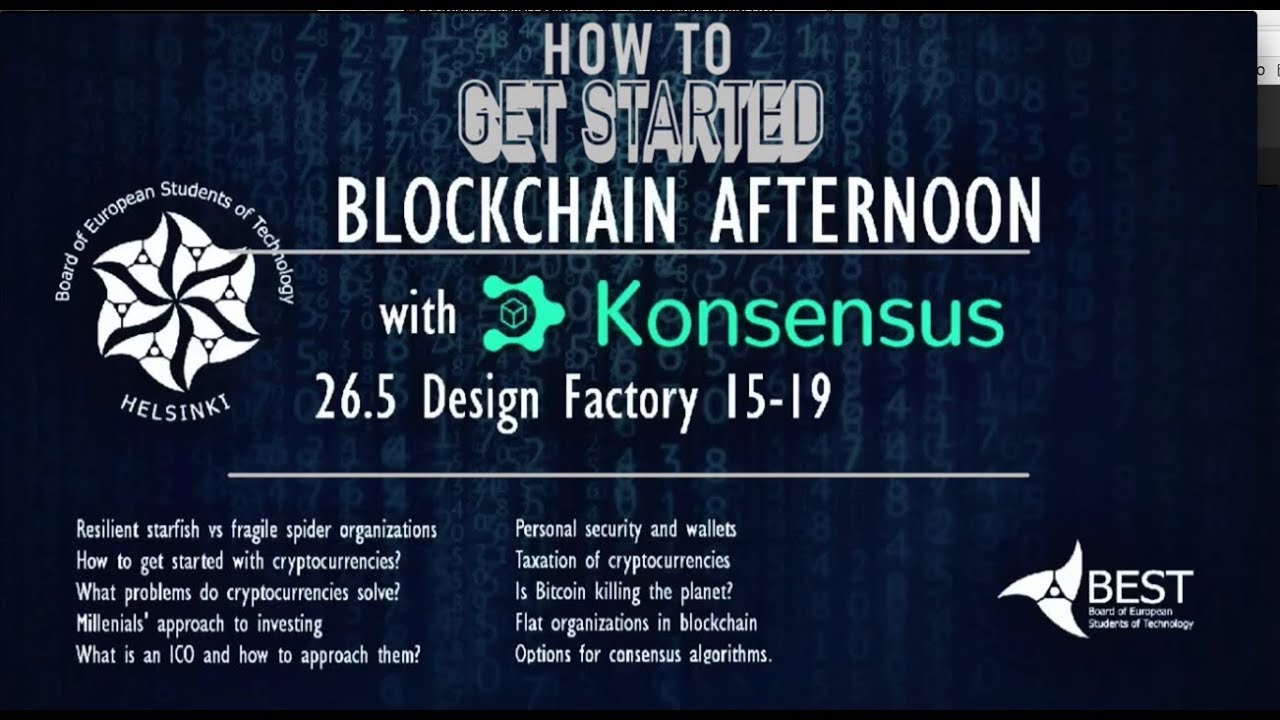
In this live presentation, the speaker provides a beginner‑friendly tour of the cryptocurrency ecosystem. He begins by recalling early Bitcoin price spikes, framing them as bubbles that illustrate the market’s volatility, and cautions that crypto value could drop to zero. He then explains what a blockchain is—a decentralized ledger that enables trustless value transfer—and distinguishes first‑generation blockchains (e.g., Bitcoin) from second‑generation platforms (e.g., Ethereum) that support immutable, Turing‑complete smart contracts. The talk clarifies the difference between coins (native blockchain assets) and tokens (assets built on top of existing chains). A substantial portion is devoted to wallets: the role of public and private keys, various wallet forms (paper, mobile, hardware), and how they affect security and usability. The speaker discusses how to acquire crypto through exchanges, gateways, ATMs, or peer‑to‑peer methods, highlighting the trade‑off between convenience and custodial risk. He warns about security threats such as 51 % attacks, exchange hacks, and the current regulatory vacuum, urging personal responsibility. Throughout, he emphasizes that the session is educational—not investment advice—and encourages attendees to invest time in learning the technology as a career asset. The presentation concludes with practical recommendations for newcomers on choosing wallets, using exchanges, and staying informed.
Chapters
TranscriptAuto-generated · 19 min
So what is this? Maybe, maybe some of you are interested of the whole event because of this. Can someone explain? Market cap. Okay. When, when did this happen? 2 months ago. It's a bubble. Yes, that's true, Will. Some people say like Bitcoin is not a bubble. Well, if it's— this is a bubble moment. It's not— and it doesn't mean something is a bubble that doesn't have value. Bubble is basically just a rapid expansion of value in a non-sustainable way. But actually, this is not 2 months ago. This is was this was when I first got introduced to Bitcoin. This is in 2011, so the peak was at $32, and throughout couple months or three four months decreased down to two. And I felt so lucky that that I didn't put my money in that. So you can think how bad I feel now. So maybe you meant this, right? Did you mean this one? Yeah, 2 months ago. Actually, this was in 2014. And 2014 is now here. So this is where we are right now. 2015. Just to give you a little bit of perspective, like most of you started to hear about Bitcoin or blockchains somewhere at the end of 2017 or something like this. But it's been around for years and it's not the first bubble. Well, it is a bubble, but it's not the first bubble. But the Point of this event not— is not to advertise Bitcoin as an investment or way to get rich, and it's totally possible the value will go down to zero. For example, if they find a way to crack the current hash algorithms, Bitcoin will basically have no value at all, which could happen anytime. It's just not very likely yet. At some point it will most likely happen. When? Nobody knows. Within the couple next years? Probably not. But we're gonna talk about the applications of blockchain and why they matter. What's the big thing about them? Why does it have so much value? Does it make any sense? By the way, it's the shittiest blockchain picture I have ever seen. Made by my own bare hands. So what is actually a blockchain? And in the simplest form, basically it's a central ledger or a central record of transactions. That's the first generation of blockchain. It's basically just a record, but in the decentralized database. And what's the biggest benefit of it is what people call trustless. You don't need to trust any central authority or third party when you use it. It's not actually trustless, just that trust is distributed so much it doesn't make difference. At least it's not, it's not easy to fool the system. There are ways to fool the blockchain, the 51% attack, but it requires you to handle more than half of the actual blockchain network. So what the first-generation blockchains basically allowed is a universal platform to transfer value, which doesn't sound that different or that revolutionary. However, it actually is. It changes the way we transfer value and what we have done to transfer value throughout the years. And it's taking away multiple authorities from the middle. Now you don't need to trust actually any central authority, like I said. But the transfer of value is only the most simple thing you can do with a blockchain. So then became the second generation. And someone realized that actually we can do other things in the blockchain. So you can do smart contracts that are immutable, that are public. So you can make contracts without anyone fooling you if you do it in the blockchain. That's a simple way to say it. And the biggest thing is that they are, in computer science terms, they are Turing complete. How to pronounce that? Turing. Turing completeness. So what that means is that the system is able to execute any single mathematical expression that is given to it if it has enough time and memory. Theoretically. So current limitations of blockchain are the transaction, number of transactions and actual processing capability, which is quite limited. So there's not actually that many things you can do in blockchain, but it's only the very beginning. You can compare it to the beginning of internet, like you couldn't do really much. Live streaming is a really new thing. Now it's every day, but a couple years back it wasn't possible because of the limitation of the network. And where we are actually going is we have started the evolution into a distributed virtual computer, which means you can do basically anything, any program, because a program is just a sequence of mathematical expressions. Thus, given the blockchains develop further, you can do anything, any program in a distributed blockchain. So maybe there is no need for servers anymore, which means basically disruption of the whole internet, which is quite the big thing right now, I would say. So in my option, you can at some point compare the Bitcoin bubble to the dot-com bubble, and that's the minimum level. So it's only the beginning. I'm not saying like you should invest I'm not saying it will be seen in the market cap, but through the size of the industry. And the size of the industry does not relate necessarily to the value of the individual units. So don't take this as investment advice. But for your career or for your future education, maybe That's something maybe you can take advice to. And most of you only know Bitcoin, maybe Litecoin, but the space is actually really vast. So CoinMarketCap, how many of you have visited the webpage? One-third maybe. Okay. So it's actually tracking Close to 2,000 coins or tokens. Can someone explain the difference between a coin and a token? We can use the catch box. Pakkopol.
Common blockchain like Ethereum?
Yeah, so, yeah, so there are, there are independent blockchains. We have Bitcoin, we have Litecoin, then we have Ethereum. And what Ethereum allowed is you can make a blockchain using the same protocol. So you can say blockchain inside a blockchain, which allowed easy development of different different blockchains that are meant for a specific purpose. Utility tokens. So you can have a token that's— and issues right to a service, or it can be a very specific asset of some bigger entity. And so Niko asked me to have a short introduction about how you can actually utilize, if you want to utilize somehow different cryptocurrencies. So like I said, what a blockchain is, it's a central record of accounts and transactions between the accounts. So obviously what you need is to have an account, and that we call a wallet. It consists of your account number, which is the public key. So we're talking about Public key, private key encryption. And then you have your own access to the wallet, which is the private key. And all wallets, all possible solutions to different cryptocurrencies are just different ways of handling your public key and private key. The simplest form of a wallet could be just your private key. Printed on the paper, and the encryption is made so hard to solve. As long as you have, you are the only person who has access to the private key. You have had access to the wallet, and your public key is something you can give to anyone. And a little bit related to this. The concept of the event is free, so there was no fee. You get free beer, and we didn't charge a fee from any of the project presentations either. So however, if you want, you can pay, and we accept cryptocurrency. So we're gonna put the wallet addresses of ConsenSys and best to the wall in case someone wants to, but it's not necessary. No social pressure here. So what you need to make a transaction is you have to have your own wallet, or you need to have an access to a third-party service which handles your wallet, which is usually an exchange. And of course you need the public key of someone else, and then you can make a transaction. So how can you actually get a wallet? There are multiple different ways, multiple different wallets, and it depends mainly on the way you want to use your wallet. So how many— let's do another question. I'd like to activate you because you're so silent otherwise. So how many of you have actually used for transaction, for buying things? We have up to 10. How many of you have traded? How many is just having it as an investment in cold storage or long-term? Okay. I'm not from the tax office yet. So Of course, it's really different if you want to trade daily, because then you probably want to have it on the exchange. But the problem with that is you are actually not having your own wallet. You are not your own bank. You are trusting someone else, some third party. But that is the way to do transactions right now, especially in the current network, at least in Bitcoin, because the transaction cost may not be the best and the transaction time is not the best for short-term trading, at least. So the trading in short term is not done in the blockchain, is done inside the exchange currently. Let's hope the further development allows making actually transactions through your own wallet. So if you just want to use, you want to purchase, purchase things and use it in your daily life, the best option would be probably to have a mobile wallet. Do you agree? Maybe not for storing a lot of value, but for basic transactions. Maybe paying a beer or paying your blockchain afternoon voluntary entrance fee. We have a question. One good thing about, uh, Yeah. How much money would you have in your actual wallet? That is how much you would want to have in your mobile wallet. And then if you want to just store it for some reason, the best option maybe would be to have a hardware wallet. Ledger Nano is a USB stick you can buy for around €80. and it takes care of the private keys, and it can handle multiple different types of currencies. Or if you are a really folio hat person, you can just print everything without using— you can print your wallet private keys without it being connected to the internet and never never ever show that to anyone and put it in the bank or whatever. So there are multiple ways. It's basically about how you handle your own private keys and how you want to use it. So essentially, your wallet is just the combination of the public and private keys. And the software you can download, they are just ways to connect to the network and ways to handle the different private and public keys. But they are Developed by different, different third parties. And of course, related to the software, well, there are also risks. And we are going to have a longer speech about your personal security and risks related to your personal security later on. And how you actually get, get the cryptocurrency, because once you have an account, if you want to use it, you actually need to get The actual units. So you can use an exchange. You can use a gateway. You can— there's actually ATM in Helsinki. Is it still working? Yeah. There are probably higher fees. You can also buy it just from social media or your friends. You can distribute it in like any, any single other asset. Of course, there are tax implications when you realize it to fiat currency, and we're gonna have a speech about that. So how many of you have used actually an exchange? How many has used LocalBitcoins? How many has used Kraken? How many of you have used Bitira? Okay, so multiple different services. And using it through the exchange is easy. Again, you are trusting your, your money and your value to an exchange, which is not very safe. There have been multiple different events in history when an exchange has been hacked, people have lost their coins or something else has happened, or there have been some internal trading that— and abuse of the exchange. And the current situation is unfortunate because of the lack of regulation, but like all technologies, that emerge, they are at first unregulated. You can come— someone compared blockchains to actually electric cars. So actually autonomous electric cars are banned in most countries right now, but they are still doing test runs on it. Like the regulation always comes after. And it could be the same with different cryptocurrencies also in the future. So in many ways it is a risk, and it in the end comes down to your personal security and your own ability to take care of your accounts. More information can be found from these links. So Consensus is making a lot of work to make people more aware of the technologies and different services related to that. Bitira is a common exchange. And like I said, the best investment you can make is actually use your time and effort to get known to the technology and all different projects. And that was my part. How much is the time? Oh, we are on time. Exactly. Thank you, Niko.