Starfish Cast #1 - Niko, The Shadowy Super Publisher: Foundations of Konsensus

In this inaugural episode of the Starfish Cast, Niko Laamanen, founder of Consensus Network – the first Bitcoin‑only publishing house – sits down with Luke from Freedom Footprint to discuss his personal journey, the philosophical and economic inspirations behind his work, and the practical mechanics of running a volunteer‑driven, leaderless organization. Niko recounts his transition from a decade‑long career as a construction engineer to a Bitcoin maximalist after a disillusioning encounter with fiat economics and the 2009 documentary Zeitgeist. He describes how reading the Bitcoin whitepaper in 2017 and The Bitcoin Standard in 2018 propelled him into Bitcoin education, leading to the creation of Consensus Network in 2019, the translation of seminal works like The Bitcoin Standard and Knut Svanholm’s Everything Divided by 21 Million, and the rapid expansion to a library of about 60 books across multiple languages. The conversation delves into the “starfish” model – a leaderless, self‑organizing structure inspired by the book Starfish and Spider – and how it manifests in translation projects, editorial teams, and other creative initiatives without formal hiring or salaries. Niko explains the free‑market incentive system, contribution weighting, and quality‑control processes (raw translation, proofreading, editing, and a “fresh eyes” review). He outlines future ambitions: publishing original English titles, launching courses (e.g., a praxeology course with Emerald Eyes), a merch shop, and a broader educational platform. Throughout, Niko emphasizes the importance of aligning personal skill sets with meaningful Bitcoin‑centric work, encouraging listeners to join the network via Telegram, Twitter, or email, and to spread Bitcoin awareness in everyday life. The episode ends with a rallying call to “wield Bitcoin” beyond mere HODLing, to build tangible change for future generations.
Chapters
TranscriptAuto-generated · 46 min
Oh, hello there. Welcome to the Starfish Cast. My name is Niko. I'm the founder of Consensus Network, the first Bitcoin-only publishing house, and this show is all about showcasing the many starfish that contribute to our work and help us spread the Bitcoin knowledge far and wide all across the globe. And today, Luke is going to be here. Hello. Familiar maybe for you from Freedom Footprint. That is Knut Svanholm's show. He's going to be interviewing me, asking questions about this show, asking questions about the Starfish organizational model. I'm not going to bore you anymore with those details. Let's welcome Luke. Luke, thank you for taking your time to interview me. I always like to talk about this stuff. I'm completely obsessed with it. So I'm just going to let you ask the questions and I'll be a reactive guest. In this show. In the future shows, I'm, I'm gonna be hosting it. But yeah, let's go.
Let's go. Yeah. Thanks, Niko, for bringing me on and letting me help to present you in the Starfish Cast. Yeah. And I, I've appreciated the opportunity to come and contribute to ConsenSys Network. So I'm sure you'll hear my story in Starfish Cast one of these days. But for now, let's, let's talk about you, Niko. So Can you tell us about yourself and then about how ConsenSys Guard started?
Okay, so I'm, by my fiat trade, I'm a construction engineer. I did about a 10-year career in that, thought that that was, that was the proper life, the proper thing to do. Got my education, spent like 20 years in school, did all the things, checked all the boxes that you're supposed to as a young guy. went to the military service and went to the school, got my degree, got a job, and everything was fine. Except it wasn't. Like, in fact, not many things were fine in my life. I just didn't— I refused to acknowledge it. I refused to address the actual problems. I wasn't really enjoying my life. I mean, I was numbing myself with the parties, alcohol, video games, whatever. to, to, uh, kind of like take away the pain that I didn't really accept that it existed, so I couldn't do anything about it. And I watched this, uh, we, um, this movie called Zeitgeist in 2009 that really, uh, shook me up because then I started to realize how truly fucked we are in, in the world, like the fiat money system. I didn't really, uh, know anything about money at that time, but I, I could recognize those issues that it caused. The problem with the zeitgeist is that they don't really offer any solutions in that movie. Like the end of the movie is like a pie in the sky socialist utopia, and I just couldn't buy it. I was like, nah, that's not gonna happen. So I thought we're completely lost and we're screwed. So I just went back to my fiat life. Actually, I was running the Bitcoin client in 2010. That's another longer story. And maybe, you know, there's— I've talked about this on multiple occasions, so I'm not going to included here. Let's just say that, uh, I was curious about technology, and I did find about Bitcoin in 2010, run the client, but then I decided to finish my master's degree, go back to my fiat life, and stop playing with magic internet money. So that was my choice then, and it continued to be my choice until 2017 when I actually took the time to read the Bitcoin white paper. And that's kind of like where my journey really started. Like, I already exited fiat in a way in 2011 when I became a freedom maximalist. And that's something I also like to talk about. I went on, quit my fiat job and went on traveling for like 12 months, 13 months, and then tried to reintegrate to the fiat life. But I was unemployable at that point. I could not work for anybody. So I started my own company. It was still construction consultancy. But it was the first step, and Bitcoin was in the way back in the back burner. I didn't really think about that, so I was still thinking very much in fiat terms. But it was it was the start. So 2017, I read the white paper, and then this whole fiat life, construction engineer life, took a complete backseat in my life. Like I was utterly unable to focus on anything. Non-Bitcoin related, or rather crypto related. Unfortunately, I did take that shitcoin detour about a year in 2017, 2018. Really expensive lesson. I'm sure many, many can relate. And in 2018, I, I started really ramping up on the education side, started writing a lot of articles, going to podcasts, making my own podcasts. shout out to Rafa, who was also in Freedom Footprint recently. And, uh, yeah, he, uh, he made most of those videos with me and, uh, really fueled my fire to, to do better in education of Bitcoin and Austrian economics. And, and to that end, also shout out to Max Hillebrandt. He was, was one of the first, uh, so-called Consensus Network contributors. We, we started as, uh, just a collective of, uh, like-minded individuals making videos mostly and podcasts and talking about liberty, Austrian economics, Bitcoin, all that good stuff. And then I read Bitcoin Standard in 2018, and, uh, as a Finnish guy, I figured, all right, this is a high-impact thing that I can do and I must do because, you know, there's, there's not that many books available in Finnish about the topic. And mostly I wanted to kind of orange pill my dad, who is not that good in English. And I think this is, this is something that drives a lot of the translators that come to work with us as well. So that's, that was, that was the rationale. And to be able to do that, I had to start a company. So that's when ConsenSys Network became official, you know, this fiat entity. It's kind of like just a proxy just a placeholder to be able to sign those fiat contracts and stuff. If I had my way, it would be completely uncorporated, Bitcoin-based, but we're not there yet. So here we are. That was 2019, and, and, uh, we published the finished version in September 2019. Saifedean, by the way, huge shout out to him. He came to Finland to, to, to the launch party. That was awesome. Had some reindeer, did some sauna. Yeah, it was a really good time. Yeah, shout out to Knut Svanholm as well. His book was the second one, Sovereignty Through Mathematics, and, and that was the second book we did. And then things kind of got crazy and out of hand in 2020. We, we started expanding internationally, which is something I, I didn't plan originally. I thought it's, uh, it's just an outreach program for, for Finnish Finnish people to learn about Bitcoin. But then I realized that this, this concept, if I can make it work in Finland out of all the places, I can make it work anywhere. And I realized that the same demand for this kind of information exists everywhere. And I was right about that. And now we've expanded to— we, we have about 60 books in our, in our library now. So in, in 3, about 3 years We've more than doubled our library every year. So really encouraging from, from the, the community. The, the new starfish that I like to talk about are, are joining in out of their own needs, same way that I started. And that's like, I've never worked with such people in my fiat life. Like, this is, this is it. Like, I don't want to work with anybody except Bitcoiners because it's just so wonderful. Like you get, you get all these inspirational talks and nobody's asking for, you know, salary or anything. They just want to work on this because the kind of like the compensation we get is the reputational capital, the skill capital, and the network capital. So that's what ConsenSys Network is kind of about. It's just reaching out as, as far as we can, and then later we can cash in that reputational network capital, hopefully. So that's kind of like the business model, but it was never about the money. It was always about making a difference. That's, that's the thing that matters to me. Like, I want the recognition and I want to think that my great-grandchildren will, will hopefully look back and say like, wow, that, uh, that guy, uh, he did something meaningful. That was, that was really cool what he did. That's my fantasy and that's, that's what I'm working for.
I want to go back a little bit to the inspiration of all this, The Bitcoin Standard. Can you talk just a little bit more about what specifically about that caused such an inspiration to start this project, which has, as you're describing, become way more than what you originally intended, but can you just talk a little bit more about what inspired that originally?
Yeah. So when I was actually listening, this is as an audiobook, it's about 10 hours. I didn't take a pause. I was sitting in Jatkösari by the channel, by the water, and just in the middle of the night.
I remember that exactly because in the Finnish Bitcoin Standard book, you make a shout out to the Roholatti Canal, and I happened to be living 50 meters away from that at the time when I first found it. I think that's part of the serendipity, how we ended up getting connected, but that's a story for another time. Continue.
Yeah, right. So it was just like, I would say that I already knew most of the stuff that was in the book. Like, it was, uh, more like solidifying and bridging the gaps and making the connections between all different things and the ways CypherDM puts it, puts those things in that book. It was just mind-blowing to me. Uh, the— his writing style really spoke to me. And what, what is the most important thing about it is like, I was pretty well-versed in Bitcoin at that point already. I was just maybe expecting some kind of like a circle jerk book for Bitcoiners, toxic Bitcoin maximalists, but it was not that at all. It was a money book and Austrian economics book first and foremost. So what it did for me was, was put me on a new— on an edge of a new rabbit hole, which was the Austrian economics rabbit hole. So I started going through the references that he was using— Rothbard, Mises, all these great, uh, economists. And, uh, in 2019, I don't think I've ever read so many books in that year. Like, I read Man, Economy, and State. I read basically everything I could get my hands on from Rothbard, who is my, my now maybe favorite author. I mean, I, I don't think that guy wrote a, wrote a single bad book. If you want to get started on the Rothbard rabbit hole, maybe you can start with Anatomy of State and What Has Government Done with Our Money? Very short ones. But yeah, Man, Economy, State was really the magnum opus of Rothbard that really changed me in 2019. And it was maybe even a more fundamental change than simply learning about Bitcoin. Maybe. It's hard to say because they kind of like mesh together, and obviously they are very complementary. Like, Bitcoin is just a logical, logical step to the whole Austrian and free market libertarian view of the economics— economic system. Basically boils down to that all of this fiat economy is, is based on this illusion of control of and understanding and knowledge of the market that cannot exist. So, so we have to deduct those and make those predictions, entrepreneurial predictions from first principles. It completely changed the way that I think and it's rippling through my life every day still. And thank you for CypherDIA for doing that, causing that. Yes. I mean, That information has existed for decades, and I can't believe the world is the way that it is with that information out there. It's really appalling actually, and, and really depressing when you think about it too much. One thing that I want to do with ConsenSys Network is, is to expand more to that side. Like I said earlier, that we're, we're the Bitcoin-only publishing house, which is true, but Bitcoin is not just the technology. It's not just this crypto coin. It's freedom technology and it's adjacent to a lot of these other topics that I also want to touch. So in that sense, they're also very much Bitcoin books. So I want to go to Austrian economics. I want to go to more like self-help books, anything basically that helps people to claim their sovereignty and freedom and just, you know, let other people leave them alone. Like, that's the only human right. The fundamental human right is to be left alone. There's no other.
Like you've already got Choose Life, Daniel Prince's book, right?
Exactly. Yes, that's the kind of thing that I'm talking about. So that's kind of like an exit fiat book. And shout out to Daniel also, really, really good book. Highly recommend to anybody who's thinking about like, oh, but I have family and, you know, it would be nice to travel and go blah, blah, blah. Stop making excuses. Like read that book. Like Daniel has 4 kids. He can do it, you can do it, like anybody can do it. So it's a, it's just a mind thing. Like people are so invested in the fiat life and I understand, like I was invested in that 20 or almost 30 years of my life, heavily invested in the fiat lie. And to let go of that, it's kind of like ego death. Like you gotta kill your past. Well, not a lot of people are ready for that. Not a lot of people are ready to hear that everything you've learned is a lie. It's your fault that you, you fell for it. It's a harsh truth and it's never been in, in the favor of the masses, unfortunately.
Yeah. And I like the sound of that as an ongoing mission at ConsenSys because there will always be more Bitcoin books and I'm sure there will always be a space there for Bitcoin books and good Bitcoin content, but the things that come outside of that, we've been having lots of conversations sort of similar to this at Freedom Footprint where it's concepts that are things that really just fall in line either once you fall down the Bitcoin rabbit hole or you fall down the Bitcoin rabbit hole because you've been exploring these adjacent ideas. And I certainly think that's a natural Next step. So makes total sense to me. So pulling this back just a little bit, can you maybe talk, talk us through the process of how this initial first translation got started? The Finnish Bitcoin Standard,
right? So yeah, it's, it's an interesting story as well. It was my idea originally, but I talked about it in like Bitcoin Telegram groups. And specifically, I talked with Laura, who was the editor of that specific book. So it was just 2 of us in the beginning, like when we started, and we had this like really naive idea that we're just going to, oh, it's no big deal. Like you do half, I do half, and it's gonna be like maybe a couple of months. But yeah, it was a little bit more complicated process than that as it turned out. But luckily, uh, we didn't really have to— like, we, we let people know that we're working on this, and then people approached us. Like, a huge shout out to Thomas Brandt, who is one of our most accomplished Finnish translators, a machine, uh, if you will. Like, I can't believe how fast he can do really, uh, really good raw translations. He's been working on almost all the Finnish— I think all of the Finnish, actually, uh, translations. So huge shout out to him. He called me. He was trying to do it on his own, but I kind of beat him to it. So he joined the effort on Consensus Network. There was Tommy, who did basically the same thing, contacted me through Telegram, wanted to work on the project. And there was Anita, Crypto Granny, who did the same thing. So none of these people were recruited. And, and that's true to this day. Like, we don't recruit anybody. We don't have job interviews. We don't— well, we don't pay salary either. I mean, it's all voluntary. So people come to us and join the effort because they want to. Like, they feel like this is the high-impact work with their skill set that they can do. And if that's not the most beautiful thing about the, you know, human coexisting and cooperation and division of labor, I don't know what is. Like, it's, it's like you know, Nash equilibrium, kind of like Bitcoin really. Like Bitcoin is maybe the most pure manifestation of Nash equilibrium that we've ever seen. And it ripples through, like everything is Bitcoin. Like we are, Bitcoiners are the quintessential starfish organization, right? I mean, there's no leader, there's no boss. It's just an organization of people that may seem to work chaotically, but somehow manages to produce wonderful, extraordinary stuff out of their own selfish needs and cooperating with other people with selfish needs. It's just, I mean, you don't see this in the fiat world. Like, if you're stuck in your fiat grind, and this is, by the way, why I don't like the, like, stay humble and stack sats. That's fiat mindset. Like, what are you using to stack sats? I mean, of course you can stack sats by working and earning Bitcoin, but I think that's not the majority. I think majority is Stuck in the fiat life, and no offense, Luke. I know you're still stuck in fiat life, and look, it's it's fine. Like I totally get it. Makes sense if you have a good fiat job and you get get a monthly salary and you can stack sets. Nothing wrong with that. All I'm saying is that to be able to see the world that we all envision for our grandchildren. We have to do more. It can't be the final stop. Like, you're still supporting the fiat system. So to be— to find these ways to actually work for Bitcoin, even if you don't get paid right away, like you get paid in the reputational and skill capital that you can cash in later in other, other kinds of projects. Yeah, we can, we can do way more. Like stacking sats and staying humble, that's only, only the beginning.
You've talked about the starfish concept now a couple of times, and I have a feeling that some people who might already be familiar with ConsenSys might know what that means. But for those who might not be familiar with this concept, can you explain the starfish model?
Certainly. I already have a reputation as the guy who can't shut up about starfish, and this goes back to Early days when I started learning about Bitcoin, I read this book called Starfish and Spider: The Unstoppable Power of Leaderless Organizations, which was written one year before Bitcoin, 2008. Highly recommend that book, changed my life. It kind of made me realize that my leadership methods were very different from, from what you normally see in fiat life, like leading, leading from within. leading from the trenches rather than from an ivory tower or something like that. And there's more than that. Like a starfish, if you think about it as an animal and contrast it with a spider, if you pull a leg off a spider, you severely cripple it and cripple its ability to hunt prey, and the leg won't grow back. If you take a leg off a starfish, the leg may grow into a new starfish. And the, uh, the original starfish will grow, uh, a new bigger mutant leg. So it's kind of like Hydra, kind of like Bitcoin as well. The attacks on the, on the organism only make it stronger because they prove that it needs to, needs to defend for these attacks. So in that sense, it's just like amazingly uncanny to Bitcoin, the whole starfish idea. That's why I started— I, I co-opted it And I started promoting it as the, the go-to model for this kind of educational enterprises. And it can work in many different enterprises. Like, for example, Amazon started as a starfish organization. I don't think a lot of people know that. There's others too, but the core principle is that, uh, everybody is kind of like— there's, there's no, uh, traditional leadership. There's hierarchy, sure, There's team leaders and there's like in ConsenSys Network, we have the management team and we have the localization team editors who are kind of like managing their starfish or small starfish organization inside the organization. But it all happens organically because there's a need for that to happen. And these people who raise to the manager roles or any kind of roles, do it organically. Like I said, there's no interview process, there's no job listings. Like, we don't have job listings generally. Maybe we tried that once or twice, but it didn't really work. Like, it doesn't work for us. What works is that people approach us and then we'll just see where they fit in, invite them into a couple of Telegram groups, and, and let them take it from there. And I like the fact that I don't have control over it. Like, I wouldn't even— I couldn't even tell you how many people are working on ConsenSys Network projects. I couldn't tell you that. And I love it. Like, in my mind, in the future, the whole Starfish organization will be fully owned by the Starfish, and my role is going to be diminishing. Not that I would ever leave the project because it's too important, just that I don't want to be the single point of failure either. Like, I want this collective of starfish to thrive beyond what I'm capable of. And I think it will.
Yeah, great, great setup. The starfish analogy is quite compelling, especially in terms of the comparison to a spider and being able to lose its leg and all this. It's quite interesting because it speaks to decentralization, but also resiliency, which is Which is, I think, important with the turbulent times we have in the world today. So yeah, great analogy. Can you go into a little bit of detail about the mechanics and the, I suppose, the day-to-day of how one of these translation projects works?
Sure. So we operate on purely free market principles. So this is something that I have to explain constantly, especially to authors that may have experience with traditional publishers that if, if they make a contract for some languages, then it will just happen at a set timeline. We don't quite work like that. What we do is we publish in these groups these, uh, books that we can work on, and then we let the Starfish pick on those. So for us, that signal, like whichever books get the— get so-called get the most votes, or, or most interest rather, They get made first. So for example, Knut's books are quite popular, especially the 21 million, everything divided by 21 million. It's rapidly becoming our second most published book right after Bitcoin Standard. So kudos to Knut for writing a great book. Probably one reason is also that they're, they're not that long and they're not that difficult to read than some other books maybe in Bitcoin, especially technical books. But the point is that we, we don't really tell the teams that, okay, here's a book, now you have to do this, because we can't really— we're not in a position to do that because everybody's a volunteer, right? So we just let them know that we can work on these books. What do you think? Like, what do you want to work for? And then usually people are like, oh yeah, I want to work on that book, and I want to work on that book. So then we break out another group for that specific language. That specific book. And then somebody takes charge, somebody becomes the editor, kind of like managing that team within. And, and that team has like these guidelines for raw translation, proofreading, editing, typesetting. All of those are written, written down. So there's a protocol that you can follow, but you can also modify it. Like, it's, it's not set in stone. Like, all we care about is end quality. Like, as long as we ship top quality, I don't really care how people get there as long as they do. And in terms of like contribution, we have a sheet for every translation project to track who did what in which project, and there's weighting. Like, for example, proofreading has a lower weighting than raw translation or editing. Editing has the highest weighting because it's the most work. So if we reach, and one day we do reach, we will reach the point when we actually start making money. out of this, then, uh, the starfish also will get paid based on their contribution that they set up and agreed upon, uh, themselves. So I don't have a hand in that, and I— all I do is provide the framework of, of this kind of like a starfish organization, and then the teams will modify it on their own and agree, come to consensus on their own. And that's kind of like the, the whole idea. And then that goes to all these starfish cells, like, you know, podcasting. Luke here is, is in charge of that. So, and, and growing his own starfish network within the ConsenSys network, just doing podcasts and videos.
Yeah, it's, it, well, and, and that part has been awesome, by the way. And lots of, lots of exciting things going on there. And in terms of kind of this translation part of it as well, I guess the entire model has to be to a certain extent this way because you need teams in every language and there's no way that you or someone else in the management team who doesn't speak certain target language is going to have any idea if the book is the right quality or not. So there's a lot of trust placed into these teams to actually get it right.
Right, exactly. And that's why the incentives have to be correct. And that's actually a really good point that you bring out. That's one reason why we use volunteers and not professional translation agencies. 2 reasons, actually. The first reason is the cost, of course. Like, if we would start a professional team in every language, I would I mean, we'll be bankrupt in the— within a couple months. So that's really expensive. The second and more important thing is the quality, the quality control. So if you have enthusiasts, Bitcoin enthusiasts who believe in the world that we are building for our grandchildren and they want to do their best, they want to give the book to their grandparents and parents to orange pill them, they're going to do the best they can, uh, to, to make sure, uh, that is, is the best possible translation. And I honestly, I don't think— and also based on the feedback, I don't think anybody can do better, better translations than we do in Bitcoin Books because everybody who works for us is, is— works with us is, is basically a Bitcoin maxi. It's the ideology that binds us together and, and the goal, the common goals And also we have this thing that I used to call fresh eyes. So after a translation is done, it's the final quality control round. So we show it to a couple random bitcoders from that language region so they can read through it, and then we get confidence that, okay, this is good enough. We've only had like a couple occasions when we had to pull a translation from production because it wasn't good enough. Most of it is like 90%, 95% of it is top quality. So I'm really happy how, how this whole incentive model works. Like, I only know English and Finnish, so obviously I, I wouldn't know any better, but I trust— like, this is the funny thing about Bitcoin, it's a trustless protocol, that's what we like to say, right? But it somehow enables us to trust people more. So we are actually moving towards trust-based society, at least within the Bitcoiners. And that's, that's really something that is making me extremely optimistic about future.
Fantastic. And translation isn't the only thing that's happening at ConsenSys now, right? There's also publishing of original books. There, there was a couple already in the last few years, but that's becoming a bigger thing now, right?
Yeah, we actually just started with, uh, with Knut's book, Everything Divided by 21 Million, uh, last last year, April. So it's a, it's a fresh thing. Like, we still specialize very much in the localization, uh, of, of great Bitcoin books. But in terms of growth, and especially revenue growth, like, if we want to start making money— and we do want to start making money as well— we are now expanding to original English works. And, and we actually signed last year probably more than 10 of these, uh, original authors that are yet, uh, unpublished. And, and there's— this year it's going to be crazy because there's going to be really cool original English books coming from Consensus. And the best part is that we already have the translator network, so they're all going to be available really soon in other languages as well. Like, for example, Knut's work— Knut Swanholm is working on this, uh, Praxeology book, which I'm really excited about. And it's almost finished, by the way. And that's going to be an outreach for normies, how to learn how to think, basically what I talked about before, what the whole praxeology and Austrian rabbit hole did to me. I want to do that to everybody in the world. And then Knut's book is going to be great for that. Another book that is worth mentioning is by Joni Appleberg that I'm working currently. Really underrated Bitcoiner. You should definitely check him out, yoniappleberg.com. His book is called Abundance Through Scarcity. Yeah, it's going to be one of the big releases, original releases that we're going to do this year. I'm really excited about that as well. And there's a bunch of others. But yeah, you can tune into our Twitter, ConsensusN on Twitter, to stay up to date of what we're planning and what we're releasing. And also there's, uh, there's going to be an update on the website. We're going to, like you said, we're going to expand way beyond just books. Right now if you go to consensus.network, it's just a bookshop, but it's going to be a landing page where you can go into education, like kind of like this academy. We're collaborating with Emerald Eyes, which is this great Lightning-based learning platform. Uh, really excited about that. There's going to be a praxeology course based on Knut's book, and I think we're going to do other book-based courses as well there, maybe some Starfish courses, really exciting stuff. We're gonna have a blog there. We're gonna have a merch shop. And this is, by the way, from the original OG Money Badger shop that I started in 2019. It was a little bit premature. I think I sold one coffee cup, but it was Bitcoin sales. So it wasn't a total loss, but a good learning experience. There's gonna be a merch shop. I'm looking forward to releasing this book-based merch, author-based merch, maybe some book quotes and cool graphics. Uh, we're putting together like a proper creative team, uh, because we've been kind of like all over the place and, and just, uh, randomly tweeting and, and, you know, trying to gain some popularity. And we're slowly getting there and, and we're becoming a little bit more professional. Like, I, I would say that we're like professional amateurs in, in publishing. But that's kind of like what also makes us super resilient, and we, we can just outlast the competition, which is gonna be interesting to see. Like, we are completely revenue funded at the moment. We don't have any investor pressure, and we basically do whatever we want. And how the, how the starfish are going to evolve, it's a mystery to me as well. And I think that's, that's the strength of the organization. And there's no limit how far we can expand this, like, educational initiative. And as always, from the beginning, the, the thesis of why I think this can be successful and why I think it will be successful is because it's, it's heavily tied to Bitcoin. And if we believe that Bitcoin is going to be successful, then that means, you know, as the Bitcoin number go up also the number of people who are going to be interested in this knowledge will go up. So that's, that's the, that's the basic thesis, and that's, that's where we are right now. And that's what all you are also doing and are very accomplished in with expanding our reach in the, with Freedom Footprint and a couple other shows. I think we have like, what, 5, 5 to 7 different shows in the pipeline. Yeah, look forward to those.
Something like that. And yeah, I'm, uh, definitely looking forward to getting all of this, uh, this going? And I guess I think you've given a fantastic overview of how ConsenSys works, what the starfish model is like. So maybe one thing that might be relevant to anyone who's hearing this and wants to get involved, what are the kind of skills that people would need to get involved with ConsenSys in any of the capacities that you've mentioned?
Yeah, that's a, that's a good question. I don't know how to, how to really answer that. Like everybody has accumulated this kind of like specific skill set. Like if I think about myself, I'm, I'm a generalist, so I can do almost— that's how basically the company started. I was doing everything myself— graphic design, typesetting, and, and project management, all of that. I'm not a master of any of those fields, but, uh, my role is kind of like a catalyst. So I know enough about everything to kind of like throw in ideas and, and catalyze the, the reaction out of the, the Starfish organization. That's my role. Some, some people there are really experts in their field, like editing, really good with English language or, or their own language. And, and you can tell because, uh, people take pride in their work and, and they know that they're good, and that just shows in, in how people act. And I guess it's something that I'm pretty good at picking up. So then all I have to do is kind of like nudge them in the correct direction that I think is right and then just let them do their own thing. So I would say like no matter what your skill set, specific skill set is, I think there's something that you can work on, even if it's a completely new field in education or some fringe topic that you're really obsessed with and good with, just reach out and we'll, we'll see where, where you might fit. And that's, that's how we've been operating. And people are just— sometimes people send me their CVs. I don't really care too much about those. All I care about is, is the results and, and the fire that fuels, fuels you. So the first and foremost thing is you should be doing what you want to do, what you like the most. Like, that's kind of like a cliché to say that, you know, when you do, uh, something that you like, you never have to work. I like work, and I think having, uh, doing work, doing meaningful work is very different from having a job. Having a job is something that you go to convert your time into fiat coupons. I'm sure you can relate, although you— I'm sure you also like your— some people like their fiat job as well. But some people, like for example, for me, like I, I like construction, but it was still like, it was maybe not the thing that was really, uh, in tune with my specific skill set. So it was something I picked up throughout my, uh, my fiat education and, and life and kind of like indoctrinated myself into that role. Don't do that. Like, just be honest to yourself, like who you are, What do you, what are you good at? What do you like to do? And then just find a way to do meaningful work with your specific skill set. That, that would be my, my advice.
Yeah, I can add a little bit of kind of the experience of the, the network in ConsenSys Network. I think that's a real thing to emphasize here because it's not just anymore about the localizations. That's amazing, but It's building so much more. As you say, there's the creative team, there's all these other projects going on, the content work that we're doing right now to be able to build more audiovisual content for not just in English, but in other languages to enable that. That's entirely the, the goal here. And so even in the short time I've, I've been involved for about 6 months maybe, I, I've been inspired by the network itself and the things that I've been able to do because as you say, you just kind of gave me something I could do that I enjoy and I ran with it. And so far that's been going pretty great and I enjoy every minute of it. So I think me as an example, yeah, just to be able to come here with, with a passion for Bitcoin as a good start, that would be good. But bringing something to the table, anything to the table, and no matter where you're from in the world, I think that's the message, right? Is that we're trying to spread this knowledge all over the world, anywhere. So every little bit helps, right?
Exactly. And the only thing I would maybe correct there is that I can't give anybody anything. Like, you have what you have and then you take it. Like, you take what you want. And, uh, yeah, if I can provide some guidance or some kind of a framework for to let people thrive, I don't see that as, as giving something to people. It's more like a catalyzing effect. Like, this is just like, you know, what do you think? This is what we have, this is what we've built, and, uh, do you like it? And what do you want to do? And then just take it from there, and, and you have free hands.
Connecting, growing, and building together. It's very inspiring. I think this has been a great overview of what ConsenSys is. Good introduction to you as well. And you're, you are in a bunch of other podcasts and talking at further length about some of this stuff. So I think we'll maybe include some links for anyone who wants to get a little more information about your story and your background. You had a recent podcast with, on John Vallis's show about the Free Madeira Everything interesting going on there. You've been on Safe Beans podcast. So lots more places to, to find you, to get a little more information about you personally. But where would you like to send people who want to find out more about ConsenSys, get involved, or just check out some good books?
Well, of course you can go to bitcoinbook.shop, which redirects you to consensus.network. As I mentioned, soon this year, There's going to be a landing page on consensus.network and bitcoinbook.shop will probably direct directly to the shop. That's happening. So yeah, check out our expanding library. Follow us on Twitter, definitely ConsensusN. We also have forked the Twitter in multiple languages like Spanish and Dutch, Finnish. And this is also something great because people just pick up on it. Whoever wants to promote those specific language region Books. We have Consensus FR, which is French, Consensus ES, which is Spanish, and so on and so forth. So you can, you can tune into those if you're, if you're interested in those language regions. If you want to get in touch with me, I'm Omnifin, double N at the end, both in Telegram and on Twitter. So my PMs are always open. You can also email me niko@consensus.network or work@consensus.network if you want to work with us. That's, that's a great way to get started. And usually what happens from there is we're gonna start a conversation on Telegram, and then I'll just add you to all the relevant teams that I think that you can contribute in. And yeah, start, start building from there.
Wonderful. This has been a great overview, Niko. Thanks for this. And I think I'll hand it back to you for any closing thoughts and to end this episode 1 of the Starfish Cast.
Thank you, Luke. This was really— it's a pleasure. There's a few things in life that give me more pleasure than talking about Bitcoin and Starfish organization with cool people. So yeah, I like to talk about this stuff. It's important. And I want you guys to talk about this stuff. Any little bit helps. Talk about Bitcoin, talk about freedom, how important it is. When you go to your local coffee shop, ask them if they accept Bitcoin, even if they're going to be like, ah, bro, what are you talking about? Plant those seeds. Send some Bitcoin to your your friends and families, even small sums, to to instill this idea that you know there's something that they need to be thinking about. It's baby steps. It's super early days still. Sometimes we forget it in when when you're in Bitcoin Twitter and you think that tomorrow we're going to have Bitcoin standard and and you know we already won, but we're not there yet. Like there's plenty, plenty of work to do. Like, the Bitcoin price, uh, recently went up like, what, 10, 10, 15%? People are going bananas over it. Calm down, get back to work. It's not good enough to stay humble and stack sats. I mean, that's a start, nothing wrong with that, but it's a start. Uh, what I like to say is learn how to wield Bitcoin, and this is something that, um, I maybe, maybe there's going to be a podcast. I'm planning to write a book about it as well. The idea is to not only accumulate cash, but invest and use your Bitcoin to bring about the world that you want for your grandchildren. So that's wielding Bitcoin. And you can also check my article on Citadel 21. I wrote about this. Yeah. So hodling is great, but that's not going to cut it going forward. Like, we have to build the— we have to build the moon. The moon is not just going to come to us because we sit on our stack and keep holding. I mean, that's something, but dead men can hold, as we know. Like, you can take your keys to your grave and nothing has changed in the world. Like, is that what you want to do? That's not what I want to do. That's not what I'm doing. And I want to see more people building. And that's, that's why I love bear markets actually, because it kills all the, a lot of the buzz and, and all the noise. And so you have signal, and that's what we try to be at ConsenSys Network, the, the lighthouse, the beacon. And, and, you know, focus on, on the signal and use your specific skill set to build something that you want to, want to give To the, to your future offspring.
Those are inspiring words and fantastic words to end on. I think the only last note that I will make is that Starfish Cast will be a regular series on the ConsenSys Network YouTube channel, and it will also be a podcast. You'll be able to find all that information at the Twitter accounts when we release and anywhere that you listen to podcasts. So visit consensus.network or Bitcoinbook.shop, plus all of the other places you'll find in the description. Anything else, Niko?
That's it. Thank you for listening. And yeah, keep wielding.
More from Niko
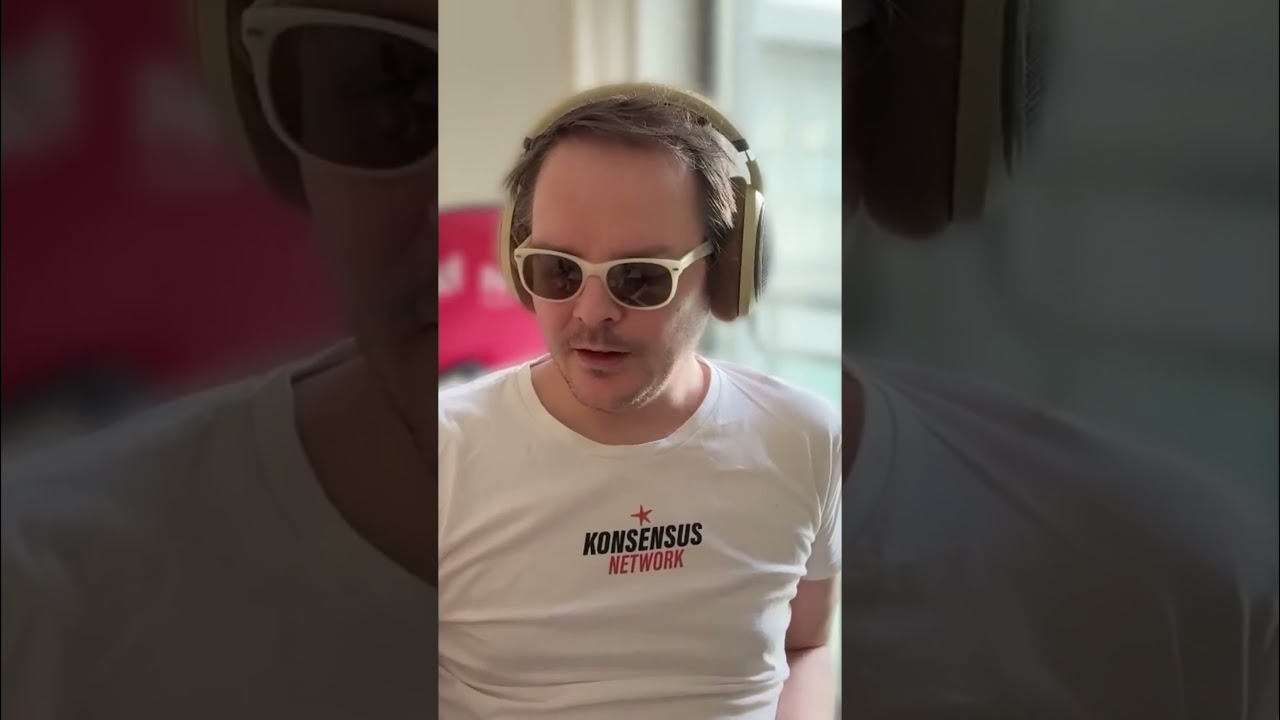
Achieving #Freedom: Overcoming Jealousy & Finding #Success. #inflationstrategies #investing


#FreeMarket: The Alternative to the Old Nation State. #inflationstrategies #economicrecovery

Nation State: The End - Examining #Future #Security #inflationstrategies #economicrecovery


#Bitcoin Escape Velocity: Why I Stopped Talking About It. #crypto #inflationstrategies

American Dream: Freedom, #Government Size, and Opportunity. #freedom #sovereignty


