What do Mycelium, Bitcoin and Starfish have in Common?
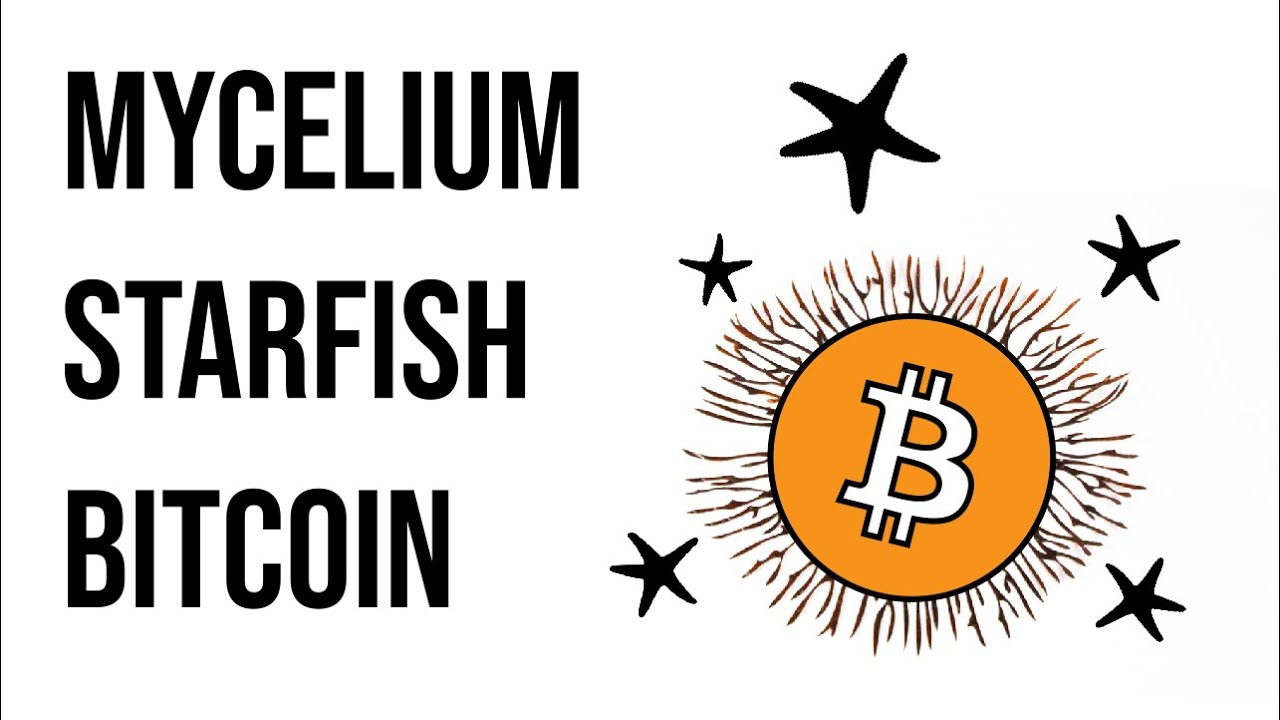
In this July 31, 2019 ConsenSys Network livestream, host Niko Laamanen (OmniFin) convenes Bitcoin enthusiasts Brandon Quittem and Max Hillebrand to explore Bitcoin through biological analogies. Brandon introduces the mycelium analogy, describing fungi’s underground network as a decentralized brain that senses threats, creates custom enzymes, and becomes antifragile over time—paralleling how Bitcoin developers identify bugs, craft patches, and disseminate them across the network. Max expands on the theme of mutual benefit and symbiosis, arguing that while Bitcoin’s decentralized nature mirrors mycelium, it remains a human‑centric monetary tool that requires participants to allocate scarce resources. The conversation then shifts to the starfish analogy from the book Starfish and Spider, emphasizing resilience of decentralized systems and warning against centralizing pressures (the “golden cow” metaphor). Both guests discuss the importance of low time preference: investing patience and capital to acquire privacy‑enhancing tools (e.g., Wasabi Wallet) and to run full nodes, versus high time‑preference shortcuts like custodial services that erode sovereignty. Brandon envisions a speculative future where proof‑of‑work incentives could drive machine participation in the network, while Niko reflects on the broader societal impact of Bitcoin as a foundation for a long‑term, low‑time‑preference economy that could unlock human potential and even support space endeavors. The panel wraps up with promotional mentions of Niko’s translation of Saifedean’s Bitcoin Standard into Finnish, the Money Badger shop, and calls to follow the guests on social media.
Chapters
TranscriptAuto-generated · 33 min
It doesn't look like the live is working. If you guys have speakers or anything like that, please turn them off so we don't get any noise. And it would be great if we can get a confirmation from the chat that we are actually in fact live and you can hear us and you can see us. We're gonna wait for a while to get a confirmation. Just gonna be talking here for a while. It's only 2 people watching, so if either one of those people— I think one of them is Could let me know if this is—
And the other one, me.
Right. So, uh, let's wait for a couple more people. All right, looks like we are alive. Awesome.
It's alive.
All right, welcome peers. This is ConsenSys Network. My name is Niko. This is going to be a new format we're going to try. We're going to get straight to the business. We're going to give you our best ideas as condensed as possible. with as little gunk as possible. Welcome to the show, awesome Brandon Quittem, the guy behind the mycelium and digital slime mold analogy article, which we're going to be linking down below. And of course, Max Hillebrand, the Bitcoin digital animal guy, is going to tell you all about that. What's up, guys? Why don't you introduce yourselves and let's get right into the business. Max, you go first.
Yes, what's up, peers? Glad to be back on the ConsenSys Network. Looking forward to this conversation because I think we have similar— yet similar points of view, but still nuances in our— it's gonna be interesting to see where this conversation goes. Brendan, how are you doing? What are you usually up to here in the Bitcoin rabbit hole?
Yeah, yeah, I do all kinds of stuff in Bitcoin land, but I'm mostly focused on trying to communicate novel ways to understand what Bitcoin is. And I have no finance or economics formal training, and so I have to do a lot of studying before I can make a clear picture of what this stuff is. But for me, what really sent me down the rabbit hole was kind of mapping my love for fungi or mushrooms and how that maps to Bitcoin. And I think everyone can agree that Bitcoin's really hard to understand. And so, you know, once I started to map that and looking— started looking at Bitcoin as a living system, my views on Bitcoin started to radically shift. And there's no way I could leave this industry after comparing 2 of my favorite things. And so, yeah, I think, I think that analogy is pretty robust. I think most people in Bitcoin Twitter land have bumped into it at some point, but I would love to just dive through and just give an overview of that, if that makes sense, Niko.
Yeah, of course. Please go ahead.
Okay, awesome, awesome. So, uh, quick thing about fungi or mushrooms: they have their own kingdom. They're not plants or animals. There's more fungi than plants and animals combined, and they're over a billion years old as a kingdom. And I share that because they are unique. They have their own thing going on, and they're ancient, and they sort of act as a decentralized brain or a centralized internet underground. And most people don't run into this decentralized brain, um, unless we see a mushroom in the forest or in the grocery store. Um, however, those mushrooms are just the reproductive organ and the main organism is underground, and that's mycelium. And you can think of mycelium as a root structure. It's a one-cell-walled network that's alive underground, constantly changing and eating new food, sending information bidirectionally. It actually trades resources across species lines. So this membrane underground connects all the animal or all the plants together, and then they broker resources. And it's a really important part of the forest. We couldn't have the biodiversity or the ability for organisms in a forest to specialize if they didn't have this underground Earth's internet, would be one way to describe it. And so you can kind of think of this natural internet underground. It's the decentralized brain of our biology, of the forest, et cetera. And what's interesting about it is that, um, sending information, let's start with that. So on the edges of this network, there'll be little tentacles, and these little tentacles made of mycelium will sense a predator or prey, and then they'll send information through the network back to what I call the mushroom scientists. And these little mushroom scientists create a new custom enzyme, and they're the best chemists on our planet. And so they create a new custom concoction and then they ship that over to, uh, wherever this predator or prey was, uh, identified. And then like a key in a lock, this new enzyme is used to digest or defend itself against the new prey. And over time, the, the mycelium builds a chemical library of, um, new molecules to eat and new molecules to defend itself. And so it's very antifragile and it, it builds this immunity over time. And all organisms that interact with this mycelium also benefit from this, uh, research that the mushroom scientists do. And if we use that same little story about the mushroom scientists to Bitcoin, it's very similar because in Bitcoin land, let's say there is a bug identified in the code or some weakness or some opportunity. Information travels through the decentralized Bitcoin network, AKA people talking, and eventually that information makes its way to a mushroom scientist or a developer. And then that developer creates a new software patch that's built custom to the problem or the opportunity, and then it's shipped out through the network and the full nodes decide whether or not they want to run that software. In which case, over time, Bitcoin becomes more antifragile. Yeah, that's kind of a good overview. I'd probably like to stop there for now and see where we want to take this, but this analogy goes quite, quite deep.
Absolutely. Thank you for that, Brandon. And I highly, highly urge you to read anything Brandon has written on the topic. It's really interesting, and there's really a lot of, lot of similarities and overlap there. And which, you know, leads me at least to believe that Bitcoin is truly a new kind of a life form, or a digital animal, or a form of an artificial intelligence, if you will. And I might even question whether, whether Bitcoin is going to need Human beings, us, in the future. I mean, what we have here is a perfect game that has created this game around itself to sustain itself without any— anybody controlling it, just like the fungi that have outlived absolutely every single organism so far. So maybe this is something to actually give the natural world a challenge, something made by man. So some, something, uh, I would say like monumental, like, uh, like a superstructure, which I think you, Brandon, also wrote about, um, a comparison to, uh, the pyramids. Like, how can something like that be built by men that will outlast so many men and probably will outlast the human race as well? So there's a lot of things we can explore here. But what I would like to hear from Max here is, uh, you know, we've heard a lot of, a lot of good keywords from from Brandon, like antifragility. And I think that is something really that ties all the 3 things we're talking about here together. Bitcoin being the newest form of this antifragile creature, and then we have starfish, and then we have mycelia. So, Max, yeah, I'm eager to hear your thoughts on that. Like, how is that? Is Bitcoin now the apex predator?
Well, most likely it is. Yes, absolutely. It has arrived so far. That's quite a good track record. Well, Brandon, great points that you bring up, and I would specifically like to highlight one thing here, that in this fungi kingdom, these actions are mutually beneficial, right? That actually there are always like some people who are entities in this kingdom that sacrifice something, right? That give up these nutrients, for example, but then they get something back in return, and thus it's this, well, growing and symbiotic relationship. Which is quite beautiful, right? And the same is the sense in Bitcoin here. These are individuals, right, who are separate entities, yet they still engage with each other and they exchange valuable goods and services with each other. And they do so, well, because they benefit from it. Everyone. It is an absolutely voluntarily based system. And that kind of thing also goes to, or a bit challenges, what Niko brought up. in the sense that Bitcoin might outlive humans. And I don't think so, because fundamentally Bitcoin is a monetary tool, right? And this monetary tool is used to help humans allocate scarce resources throughout time. And this task of resource allocation is fundamentally human, right, to a very, very deep level. So if there would not be human, if there would not be an entity that applies its own logical reason to manifest change in this world, right? Without having someone who acts that is a human, then there is no need to really allocate anything because our existence in this matter doesn't really exist anymore. Um, so I, I'm not certain if Bitcoin can exist without humans because it is fundamentally a human technology. Now, it can definitely, uh, exist without one particular human. It does not rely on any one individual using it or existing in order for the system to function. It is agnostic with what humans it can use, but it needs— or Bitcoin needs humans that use it. Otherwise, it's quite pointless.
Yeah, those are good points you bring out, Max. Obviously, the game needs players, right? Otherwise, it's not going to play well. And it is possible, of course, that if you remove one key player, which is human beings with their ingenuity here and their use cases, sure, it's going to be like— well, let's go to the analogy about starfish and spider. It would be kind of like lobbing off a leg from a spider, maybe. It would definitely impair its— Its ability. Um, you know, impair its possibilities to operate in, in the adversarial system. But eventually, I think there's also another possibility that it would actually grow to that, like, uh, just like a starfish would grow a new mutant leg, you know, maybe it will find these new use cases and new players for the game, like other artificial intelligence. Like, granted, it's, it's, uh, something spawned by It might be the first— it probably is the first life form that is created by man, which is already quite legendary. So I still— I think it could outlast— while you make really good points and it possibly could kill Bitcoin if humans are not there anymore, maybe there's no use for it. But I'd argue that there's also a possible universe where the opposite is true. What do you think, Brandon?
Yeah, I actually agree. I see your point, Max, and I think in its current form, Bitcoin is still a juvenile organism. It's a child and it definitely needs us to shepherd it. But I could see some sort of a strange sci-fi future where through proof of work, Bitcoin essentially pays people to support the network. And I could see machines seeing that incentive and saying, okay, if we harness energy, we get money and other people are willing to accept this money, So it makes sense for us to go fly into space and harness the sun's energy or somehow plug in miners and innovate in energy field or in energy technology. And if that could happen, then you could have a machine economy in some capacity where, yeah, like the incentives of the game are there and machines know how to play the game. So what's stopping them from playing? I wouldn't say my thoughts are fully baked on whether or not it could persist without any humans, right? Maybe if the protocol, Bitcoin protocol, was ossified in a way where it didn't need anyone to keep an eye on it, that's potentially true. It's wild to think about though.
Yeah, definitely. I love to think about those post-apocalyptic scenarios. In fact, I'm writing a book fictional book about that, which I'm going to release at some— probably never. But it's very interesting to me to think what could be, and I think it's a very important exercise also to practice, kind of like play these mind games with yourself and practice— prepare rather for the possible future, kind of like you will be practicing for a speech subconsciously. But yeah, that's really good, and I want to move this ahead fast. So I want to dive in right now because we've been talking about the, you know, mycelia and Bitcoin. And let's talk a little bit more about the starfish and spider analogy here and how Bitcoin is just like starfish. And of course, uh, read the book, uh, Starfish and Spider: The Unstoppable Power of Decentralization. It's a great book. And, uh, there's a couple good analogies also that apply to Bitcoin, uh, really well. And what I think We can— the key takeaway from the Starfish ideology is not necessarily, uh, that we have Bitcoin, but we have also other ways to utilize the power of decentralization. I'm talking about organizational models, how to motivate people to, to play these games. Like, we can start creating our own games with incentive models that are based on Bitcoin now, uh, to create organizations that are decentralized. And, and what is Bitcoin coin, if not a decentralized organization in its purest form, I would say, as can be with the technology we have at hand. Of course, we have trade-offs. But yeah, I would like to— I think, Brandon, you had a really good analogy from the book about the Amazons. I think we could take that here and then maybe Max could comment on that. I'm just going to enjoy this, uh, this coffee outside from this toxic maximalist cup that you can go and order for yourself at themoneybadger.shop, uh, if you like to support the toxicity of the channel. So Brandon, please go ahead.
Yeah, absolutely. So I, I would echo your point there, Niko. It's a really great book, and for some reason it doesn't get as much love in Bitcoin land, um, but it's really good. It gives you tons of case studies from the internet, from BitTorrent, from real life, all these different ways to, you know, evaluate what decentralization could mean in different forms. And one analogy that has stuck with me this whole time is about the Apache Indians or Native Americans. So if you look at colonialism throughout time, what usually happens is the stronger group finds a weaker group, instantly enslaves them, dominates them, extracts resources, and it's just game over. It's a very lopsided battle, hardly a battle. And in one other example, we see the Spanish conquistadors, and they were arriving in Baja California, and they came across the Apache natives. And in traditional fashion, they said, take me to your leader. And the Spanish were dumbfounded when the Apache said, we don't have a leader. And in that culture, the Apache warriors are able to follow whoever they want. And so what that means is they form a decentralized network and all members are free to come in and out of any group as they wish. And so if one leader is stronger or changes their mind, they fork off, no problem. And this caused a big problem for the conquerors in this situation because they could not kill the tribe, right? As soon as they find Geronimo, they execute him. And now there's 2 groups and then they execute the 2 leaders and now there's 4 groups. And this process continued for a very long time, and the Spanish were pretty upset about it. They didn't know what to do. And so what ultimately ended up happening is the US decided to give each Native Indian there a cow. And in order to deliver these cows, the natives had to create some sort of a hierarchy in order to distribute these resources. And ironically, what happened was the flood of resources and the forced organizational hierarchy required to distribute them is what took down Apache, right? They had to be settled, they had to create all these rules, and now all of a sudden they were just like any other centralized organization, and they were quickly, uh, handled at that point. And so a very good example mapping that to Bitcoin, where right now I would say Bitcoin is very much that Apache tribe. We're decentralized, we all make our own decisions based on the market that we see in front of us. However, and Max and I were talking about this recently, what happens if, or what would be the way that Bitcoiners receive that golden cow, right? Is there a way for the state or for lack of vigilance on our part to lead to an environment where, let's say, Bitcoin becomes more financialized and we start giving up these assurances that makes Bitcoin what Bitcoin is, simply because we want some convenience or because we think— you know, integrating it with governments and banks is better for the price, or some, some other short-sighted decision. And if we go that way, maybe we could accidentally subvert Bitcoin from the inside. And so I would say keep an eye out for those, those golden cows being presented. Deny those. Do not succumb to short-termism and play the long game and, and stay vigilant. Stay toxic.
That's great advice. Yeah,
that's great.
Um, yeah, I think that's what exactly what's going to happen. It's going to be like about the, you know, Pareto, um, 80/20. About would be the percentage of people, uh, the 80 percenters would, would then choose to use a custodian service for the convenience and thus lose their sovereignty. And, uh, the 20 percenters, uh, granted, uh, we We can have a sky in the castle. This is the kind of like the most likeliest thing that I'm going to see, that we're just going to, you know, up and go because, you know, screw that system, we don't want to be a part of that. But I don't think there's anything that we can do to stop that from happening, nor should we do to stop it from happening. It is a tragedy, obviously, that many people are going to be left behind from this, but this is precisely why we do these videos and try to educate people about these ideas that Not only about this technology and the money and the Lambos and the number goes up, but what the ideology can make possible. Like, how can— how we can find new productivity. Like, I used to be working in a big corporation. It's a terrible place to work because you don't really make any calls for yourself. You have to always follow— you know, you have to, absolutely have to follow certain orders or you get fired. And then people are really scared, and I used to be scared too. But now, you know, there's no fear because you're only doing things that you want to do from your own free will with people that you want to do them with. So that's already pretty awesome, and I wish more people would realize that what is true wealth in life is not really, you know, how much money you have in the bank account. I mean, granted, you get a lot of freedom with that because you can buy other people's time. With that. But what really is wealth, at least for me, is that whenever I wake up in the morning, you know, I decide when I'm gonna wake up what I'm gonna do next. So that's pretty much it. That's like literally all there is to it. And Bitcoin is currently the best tool to achieve that for me. And to sum it up and kind of like take away the whole show, I would like to bring up time preference, which is also something that Saifedean talks about in His book Bitcoin Standard, which I'm also translating in Finnish. It's very, very key thing that you can learn from all these organisms and all these superstructures like pyramids. Like they just don't care. They just keep lasting. They just keep lasting and being valuable and being something and being immutable and being irrefutable monoliths of human achievement, so to say. So they don't really care. So why should we care? Why should we be hasty with our resources? We should really treasure that. And yeah, let's have one more round about time preference. I really want to hear you guys talk about that, and then we're gonna wrap it up.
And you know, this kind of always ties in with what we had in the previous conversation, in the sense that we have these conveniences, right, that kind of detract us from, from the defenses that we could muster up and to, to reclaim our sovereignty and privacy. And these tools are at our disposal, yet they are costly, right? They don't come for free. You actually have to get educated about how to use these tools, and then you have to acquire these tools, and that oftentimes is rather expensive, and not everyone can save up that much capital. But Those who have a high enough— a low enough time preference, meaning those that can build up their savings and their capital, can then learn about these tools and buy these tools so that they can be used in self-defense. And here's where Bitcoin comes in, right? These early Bitcoiners had huge capital costs to somehow understand what the hell is going on here with this Bitcoin thing and to then still use it correctly, right? To then control their own— private keys and run their own full node. And then they're pretty untouchable, right? Nobody can take away their property rights in these Bitcoin. However, then those who do not have that low enough time preference in order to get educated on how to use the tools, they will go to a custodial service if they even use Bitcoin, right? And they will leave the money on the exchange until exit scam Mt. Gox and, oh, sorry, your sats are gone. And this is a show of high time preference. Right? I want to have this instant gratification of having these tools, but I'm not willing to invest enough time in order to learn how to use them properly. And the, well, somewhat solution to this kind of problem is to build better tools, right? To reduce the capital cost needed in order to pick up these defensive weapons. And we do this by further developing and developing Developing and developing, which by the way is a form of investment that's manifested with high time preference— sorry, with low time preference. So it all ties back into the conversation. Bitcoin is a tool of self-defense used by those who are willing to invest enough to learn how to use it.
Love it, love it. I'd like to actually attack the time preference angle from a macro view. and sort of comparing how a fiat-dominated world with infinite inflation could compare to a strictly limited Bitcoin world, right? If we just swap out the monetary units, sort of the base money around the world, what does that give us? What is the outcome? And I put out a tweet recently sort of comparing these 2. And essentially, the too long, didn't read is that in a fiat world, which is a high time preference world, we accept systemic instability meaning volatile business cycles like the dot-com or the 2008 collapse, things like this. So we accept that systemic instability, but in exchange, we get short-term economic stability, meaning the central banks can pull some levers and tweak the interest rates and try to steer the ship, right? It gives us the illusion of that short-term economic stability. However, in a Bitcoin world, we accept the short-term economic instability, There's a limited supply, strictly limited supply, so price is dominated by demand, right? And so that's going to cause wild fluctuations in price. Obviously, volatility will go down as the market cap increases. Bitcoin's still small, so we have a lot of economic instability. But what we gain in Bitcoin in exchange for that short-term instability is we get long-term systemic stability, and it gives the people the long-term perspective, the low time preference perspective, where if you put money in the bank account, you see that— in other words, Bitcoin— you see the value or the purchasing power of that increase over time. And if we multiply that by every single individual actor around the world, a large percentage of people will realize that by not spending my money, I have more economic purchasing power in the future. And so maybe I shouldn't go out and spend $100 at the bar tonight because tomorrow that's worth $200. And I think if you look at this on the macro scale on our planet, I think what it does is it, it has the potential to usher in an entirely new renaissance of human achievement where a fiat world, a high time preference world, delivers us cheap plastic toys from China and all this other crap. However, a Bitcoin world gives us this economic, fair economic layer, this value layer which rewards people for creating real value. And that will give us the opportunity to overcome some of our large challenges as a species, one being go to space, which I think is an important next achievement for humanity. Not because we should turn our back on our planet here, we should protect our garden planet, but if we all agree that going to space is important, It gives us this shared vision, this shared goal in which we can work towards instead of kill each other over resources here. And so, yeah, I mean, that's kind of my big view of Bitcoin is it's this membrane that, or this foundation that allows us to achieve more as a species. We can actually specialize more. We can unlock people who are living in developing nations with no access to good money Instead of having them locked and trapped in their nation-state, we can unlock them, allow them to participate in the global system. And how many, how many Maya Angelous are buried in sub-Saharan Africa right now? Or how many Einsteins and Newtons are buried in other countries and they just can't play the game? And I think Bitcoin invites more people to the game.
That's fantastic, Brandon. Thank you. Yeah, I agree. Bitcoin is the lifesaver, literally, already for many people. And it will hold on to the— whoever needs it the most will find it the most valuable and benefit from it the most. And those who see the vision, the long-term vision, who have the low time preference, will always prefer to hold the good money. And which is, uh, one reason why almost every single merchant that I've seen that accepts Bitcoin gives you a good discount for using your superior money against your, well, fiat money. So, you know, that's kind of like the TL's law, the inverse of Gresham's law in workings there, where actually we are literally seeing how the good money is driving out the bad money. I think we are about done with the show here. I would love to have you guys on later to talk about each of these parts of the, uh, of the, of the trio here, like the mycelium, Bitcoin, and Starfish. And, uh, right now I guess we'll just, we'll just wrap it up with your closers. And then please do remember to tell everybody where to find you because I'm sure people want to reach you, follow you, all that good stuff. If you have any projects or products you want to advertise, then go nuts. And, and from my, uh, My heart, thank you guys for being here. It's been fun. It's been way too long since I did a show, so let's let's keep at it. So yeah, why don't you go ahead, Brandon?
Awesome. Yeah, thanks, Nico. I really appreciate it, Max. Great talking to you as well. I could go on with you guys for hours, so I really appreciate it. Hope the listeners out there took something away from this. If you want to come say hello on Twitter, my handle is B Quidam. B-Q-U-I-T-T-E-M. And if you search my name, Brandon Quittem, you'll find my Medium where I write about most of these things. I have a backlog of a ton of articles. I'm slow to publish things, so I can't promise when those will be out. But if you have any ideas on how Bitcoin is a living organism or any of these wacky ideas are interesting to you, please come say hello. I think I've learned more from you guys Just by putting my own ideas out there. And so yeah, don't be shy, come say hello.
Yeah, that's exactly— absolutely follow Brandon. He does fantastic work. And good that you're a slow writer because that means you got your low time preference and thus you really have interesting ideas that are worth writing down. So that's absolutely fantastic. Piers, you know where to find me. towardsliberty.com/contact has all the contact details as well as a knowledge archive of all this awesome Bitcoin, Austrian economics, natural law, phenomenal stuff. And maybe the recent stuff I'm working on, I would say if you want to learn more about Bitcoin and privacy, check out the Wasabi wallet documentation, which I'm working on currently. We're trying to build here a huge, huge archive of all the best practices for how to use a Bitcoin wallet privately, and, you know, the nuances of coin control and coin joins and network-level privacy and all this really really difficult. Brandon and I spoke about this a bit earlier. It's insane, privacy in Bitcoin. Although it is possible to get really good privacy, it's very difficult to achieve. And we need to build better tools in order for others to really reclaim their privacy. And that is exactly what Wasabi is doing. So, Niko, thank you very much here for bringing us together. That was a phenomenal conversation, and I'm absolutely looking forward to the next one. Bye-bye. Thank you.
Awesome. Thank you guys. It's been a pleasure, an honor as always. My name is Nico. You can find me from Twitter, OmniFin, double N at the end. And lately I've been super busy not only with the Money Badger shop but mostly with the Saifedean's book translation. And the affiliate program is coming out tomorrow. So if anybody, anybody you know, Finnish people who might be interested in getting the book, please direct them my way. And I'll be sure to hook them up. Also, I decided, because I have had to source basically the whole supply chain from the translation to the, you know, when the customer actually gets the physical copy of the book, and I've been reaching out to several different communities around the world who would like, who would be interested in translating Sai's book into their local language. If you need somebody to publish your book please contact me as well, uh, since now I already have the supply line heated up here. So I'm sure we can come up with a better deal than you just go about it yourself. We can work together for sure. This has been pleasure, guys. I hope— I'm, I'm hoping to see you on my channel soon. And please follow these gentlemen. I'll be including their Twitters in the description, of course, as always. And yeah. Remember, being toxic is just caring. And let's see if I can just turn this live off. No, we're still live.
As if the technical stuff would ever go over with all the hiccups.
I guess what we can do is we can just end the call here. So yeah, bye-bye.
All right, see you guys.
Bye-bye.
Thank you very much.
More from Niko

Achieving #Freedom: Overcoming Jealousy & Finding #Success. #inflationstrategies #investing


#FreeMarket: The Alternative to the Old Nation State. #inflationstrategies #economicrecovery

Nation State: The End - Examining #Future #Security #inflationstrategies #economicrecovery


#Bitcoin Escape Velocity: Why I Stopped Talking About It. #crypto #inflationstrategies

American Dream: Freedom, #Government Size, and Opportunity. #freedom #sovereignty


