Tomorrow's Breakthroughs Today: Dr. Nir Barzilai
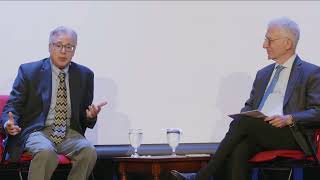
Dr. Nir Barzilai discusses new Alzheimer's treatments like donanemab and lecanemab, plus blood tests that catch the disease early. The FINGER trial showed lifestyle changes—exercise, Mediterranean diet, cognitive work, blood pressure control—slow cognitive decline. Targeting aging itself, not just disease, may be the better strategy.
Chapters
Good afternoon and welcome to the Society of the Four Arts. I'm Sophia Maduro and one of my tasks is to ask everyone to kindly pull out their phones and see if they're on silent mode. Now extensive to your Apple watches because that's the new thing is the watches ring and the phone doesn't. Delighted to have you all back for another season of tomorrow's breakthrough. Today, a scientific symposium here at the 4 Arts that was founded in partnership by Tom and Heidi McWilliams and looking into top investigations as to the development of drug drugs to help with the research on Alzheimer's. The ADDF Alzheimer's Drug Discovery Fund was created in 1998 by Leonard and Ronald Lauder and is dedicated to rapidly accelerating the development of novel therapeutics and biomarkers to prevent, treat and cure Alzheimer's and other related dementias. As many of you probably know because you're in a very aware audience, the there's more than 50 million people worldwide suffering from Alzheimer's and other similar diseases and so far there's no cure. Even though we do feel that we're on the brink of something really important with regards to this devastating disease. And I'd like to acknowledge many of the board members of ADDF who are here and of course Tom and Heidi's sponsorship of this series without which we wouldn't have such fabulous scientists coming to speak here at the Four Arts. Today's speaker, Dr. Nir Bazilai, a professor of medicine and genetics at the Albert Einstein College of Medicine, is the chair of aging and Research there. Research Aging. His other titles include having been president of the Academy of Health and Lifespan Research, which is a non profit dedicated to advancing research on aging and promoting longer healthier lives, something we all aspire to. His nonprofit involvement has taken him all over the world, not just to Palm Beach, Cambodia, South Africa, Zulu Village where he built a nutritional center in a village. He's also an entrepreneur. He is the co founder of cobar, a biotech company that develops mitochondria based therapeutics to treat diseases associated with aging. Since 1998, Dr. Barzilai has been at the forefront of aging research by founding the Longevity Genes Project which focuses on understanding the genetic factors that contribute to exceptional longevity. He actually discovered the first longevity gene in humans, which is, let's admit, a pretty amazing feat. And his research established that the gene variant that leads to high hdl, what we call good cholesterol, is linked to healthy aging. And I'm sure we're all looking forward to I'm Sure. We're all looking forward to hearing more about that directly from him. We're really privileged to have him here. Born in Israel, Dr. Barzilai served as chief medic and physician to the Israeli Defense Forces. He completed his medical school in Israel and his internal medicine residency there. He's completed two fellowships at Yale, Cornell. So as you can tell, his credentials are beyond impressive. Joining him today is moderator Dr. Howard Phillip, a distinguished geriatrician, neuroscientist, co founder and chief science officer of the addf, and has held esteemed positions at Rockefeller University, at the Stony Brook School of Medicine, at the also at Cornell, and since 1987 has been a clinical professor at the Mount Sinai School of Medicine, specializing in palliative care, geriatric medicine and neuroscience. In addition to all those roles and to being kind enough to be our moderator in the conversation and just so that you know what the role they're going to discuss knowledgeable questions for about 30, 35 minutes and then open it to the floor and there'll be two mics running through the room. So if you have questions, be prepared for those. Dr. Phillip has authored over 300 books and as you will see today, is an expert in and of himself. So we're really privileged to have this series beginning today here. Ladies and gentlemen, please welcome Dr. Barzilai and Dr. Phillip to the stage. Oh dear.
Thank you, Sophia. And I'd like to speak for everyone at ADDF to say we're very excited to be here at the Four Arts with you today. I also want to extend my really great personal thanks to Heidi and Tom McWilliams who had this idea to start this symposium serious about four years ago. And it's wonderful to see how it's grown as tomorrow's breakthroughs today continues to evolve each year. Before I introduce Nir Barzilai, a good colleague from many years, I'd like.
Can he introduce me again?
No. Okay, forget it. I'd like to take a few minutes to discuss why I'm so optimistic, having been doing this for about 45 years. Research in clinical care, about the state of Alzheimer's research and what the payoff's been. We're in an incredible time of progress in Alzheimer's research and care. We've gone from a time when there were basically no treatments at all for the disease and no way to diagnose the disease with any definitive blood tests or brain scans or anything like that, to a time when we have the first two disease modifying agents which slow down the course of cognitive decline. And functional decline in patients. And so for the first time, we have a breakthrough with Eli Lilly's Donanemab or Kinsula, and E Cybiogen's drug, which is called Leqembi. And these drugs are just rolling out into the marketplace. I think they're going to find it important place in the treatment paradigm as they move from IV infusions to subcutaneous administration at home. It's going to be a real revolution. This past year of 2024 was also what we're calling the year of the blood test. If you had asked me even five years ago, certainly 10 years ago, if there would ever be a blood test for Alzheimer's disease, I would have said no, there's never really been a blood test for any neurodegenerative disease. But now we have blood tests on the market through companies that we've supported, like a company called C2N, out of which was spun out of Washington University in St. Louis. That's on the market and in 49 states around the country. The only state not making this test available right now is New York, because we have in New York the most stringent regulatory requirements for blood tests. But in all those other states, if somebody goes into a doctor's office today and has a memory complaint and they want to know if they have Alzheimer's, they can get a blood test that has about 90% accuracy, which is really very high. And many other blood tests are being developed at this time to further characterize patients with dementia or with cognitive impairment, to understand the cause. And as we can understand the cause and the contributing factor in each individual's case, we can begin to treat each of those factors in a paradigm of combination therapy, the same way that cancer patients get their cells typed, their tumor cells typed, and then patients get drugs according to their cellular typing, might be on three, four, or even five drugs. And that's the world that we envision, which is already beginning to happen now. There's over 140 drugs in development. We currently have about 30 clinical trials just that we're supporting through the foundation around the world. And prevention is the last pillar of what we do. And prevention has come of age for Alzheimer's disease. One of our board members, who's a professor at the Karolinska Institute and the Imperial College of London, ran a trial called the finger trial, which was the Finnish geriatrics trial, where she looked at lifestyle management much as the way you'd look at it for heart disease. Exercise is critically important for the brain diet, the Mediterranean Diet, socialization, staying occupationally engaged and managing your diabetes and hypertension, which are the two main risk factors in terms of other diseases for the onset of cognitive decline in old age and Alzheimer's disease. And what MIA did was the first randomized clinical trial of prevention for Alzheimer's disease. So one group was told about this information, but they weren't forced or helped to be compliant. And the other group got a lot of support for compliance with the five things that I just mentioned. And the group that was compliant with exercise and diet and managing diabetes and hypertension and staying engaged, cognitively engaged, had a slower decline with aging of their cognitive function. And if they had the earliest stages of symptoms called mild cognitive impairment, they had a slowing of that. So now we can say that prevention works. And we're currently looking at what we call finger 2.0, which will be adding onto the original finger paradigm a drug which we'll talk about today called Metformin, one of the leading anti aging drugs that leads me. I'm a geriatrician by training and a gerontologist and a neuroscientist. And from the beginning, when I started my research 45 years ago, I was always interested in the impact of aging and chronic diseases on the brain and how that might be a focal point of treatment. And today that concept has come of age. Aging has always been our primary strategy for developing drugs. So not just beta amyloid, not just the pathology trying to cure the pathology of the disease, which is the beta amyloid plaques and now the tau tangles that were discovered by Dr. Alzheimer's in 1906, but also these other mechanisms that we're going to talk a little bit about today. Inflammation, a hallmark of aging, autophagy, which NIR will talk about a little bit. Many targets that are related to the biology of aging. So our scientific strategy is a little different. We're driven by knowledge of the biology of aging to develop new drugs for Alzheimer's disease. And again, that would be in the context of a combination therapy approach based on typing each patient's biomarkers to see which of the pathways in the complex biology of aging are contributing to that patient's cognitive impairment and Alzheimer's pathology. You've already met Dr. Al Barzilite. We've heard about his background. So I'm going to just turn it over to nir. And our first question for NIR is, why is the biology of aging key to our fight against Alzheimer's disease? Terrific.
First of all, thank you, and I'm grateful for the Invitation. I'm also grateful for this organization. It's a really great organization. We interacted through the years. You've done studies with me, with my companies, and, you know, if we got it right the first time, it wouldn't be called research. Right? It just takes. It just takes a little time. So look, you all know that there's a biology of aging, right? You know, who's young and who's old. That's not that. That's not the new discovery for you. I bet that, you know, another thing, and I notice it in. In you guys, there's a biological age and chronological age, and they're not the same. The older you get, the more friends you have that age. You see that some are aging quicker and some are aging slower. Okay? So obviously there is a biology and there's some flexibility in this biology that we need to understand. But I think what people didn't realize is that this biology also drives the diseases that we get with age. So it's not that you get sick and then you get old, okay? You get old, and that drives you to be sick. And why is it important to know? For example, for Alzheimer's, it's because you can be born with genes that are making you. That are making you high risk for Alzheimer's. If you heard the genotype, that's called APOE4, and if you have two copies of that, you're really likely to be, you know, to get demented at age 60 or 70 and die at the age of 80. But the point here that you are born with this genetic defect. And when you're born, you're smart, and when you're one year, you're smart. And when 10 and 40 and 50 and 60 years almost, you're smart. It needs this biology of aging to come. To come out. And that's why the biology of aging is such a very important target for us. And the revolution that we're leading is to treat the two. To treat your health, okay? To treat the biology of aging when you're healthy rather than to treat your diseases, okay? And that's the progress we're making in this field. We're finding, how do you. What's wrong with aging? How do you target aging and do it in prevention of diseases?
Yeah. So I have a plaque on my desk that my daughter gave me, and it says. It's sort of along the lines of what you said, but it's a quote from Albert Einstein, and it says if we knew what we were doing, we wouldn't call it a research And I think that's probably true.
You know, Albert Einstein is quoted a lot. Albert Einstein. And if you go back, if you go back, you see that not everything Churchill and Einstein didn't say everything that people say. And now I have this method when I want to say something important, I say, you know, as Einstein used to say, and then I say what I want to say and then it's accepted.
So one of the things that's really interesting about what you do and a few other places in the world is you have this centenarian study. So you have. I remember we funded Tom Perls to do this back about 20 years ago. And he had 700 people that were in the over the age of 100. And we looked at the families. There's a picture that I have that he sent me of one family of centenarians where there were six brothers and sisters and they all got to be 100. And then there were six generations of people in the same picture. So there was the great, great grandparent and then she was 110, and then the 90 year old and the 70 year old and the 50 year old. And you know, this was clearly genetic. It's like if you have cancer, you get those circles and boxes and how many people have breast cancer in the family and so on. So there's clearly a genetic component to the centenarian study. So I'm just wondering what, how. Let me just ask you one question before. That is how do drugs that target aging differ from drugs aimed at a specific mechanism of disease? And how would we apply that concept to developing new drugs for Alzheimer's?
So maybe I will flip it back, okay, because, because of the centenarians and in my study, I have the same, you know, the same thing. I have families that everybody's over there, you know, I have four siblings, all of them died above the age of 102. So you know that there's a genetic component to that. The most important thing for us, we have, we have 750 centenarians and their families. And we've done a lot of discoveries, but the most important thing was to see, okay, those guys, do they get sick when everybody gets sick, and now they are living sick longer because we're not interested in that. But is their health span and lifespan, does it go together? And the answer is yes. Actually, our paper was with Tom Pearls. We harmonized the data and our centenarians leave. First of all, they already doubled their lifespan from the people they were born with because when they were born, life expectancy was 50 when we started this study. But even in people who live today, they remained healthier 20, 30 years later. And that's not the important thing. The important thing is not only their lifespan and health span went together, but they had what we call a contraction or a compression of morbidity. They were sick very little time. At the end of their lives, we're kind of sick five, eight years. At the end of their life, 30% of them don't take even drugs and they don't wake up one morning. And I'm telling you that because it's very important to know that we have this capacity. We have examples of people who live much more than the average lifespan in the United states is below 80 now.
Okay.
So I think this is really very crucial for us to know the second part. So I wanted to with the centenarians because I'll give example of maybe two genes that are actually we think are providing for targeting the aging process and delay meat significantly. One of those genes is called cetp. It's a cholesterol gene. But it's not the bad cholesterol, it's the good cholesterol. And we found that people that heavy that this mutation in the gene, these changes in the genetic is common in centenarians and their families and that they all have also high level of hdl. It's like a biomarker for that. But even more important for this discussion this, the people who had this mutation had extraordinary cognitive function.
Okay.
So Merck, the pharmaceuticals have taken our data and although other company have previously failed, they have the right drug and they are going to come up with a drug that it's by the way, they test cardiovascular disease. Okay. But you can see how this drug is going to be tested to see if it really improve cognitive function. The second example is we found that 60% of our centenarians have something that impairs the action of their growth hormones. Okay, what did I say? First of all, there's only one growth hormone. There's only one hormone that's called growth hormone. But there are many growth hormones. They have just different names. So there are many ways. There are 50 ways to impair growth hormone. And it's very common in our centenarians. Not only it's common even in our centenarian. So they're all already hundred years old. Those who have the highest level of those growth hormones, or let me say it's the opposite, those that have the lowest level of growth hormone live twice as long. Okay. Even when they are already hundred years old. What am I telling you? I'm telling you something really, really important. When we started the aging process, so we go from growth to breakdown, okay? It's actually important to shift the energy, okay? We want to spend less energy in growing and more energy in protecting from the breakdown. So we took this discovery and we have a drop that impairs the action of growth hormone. And now we give it to animals, to old animals, and guess what? They live much longer and much healthier.
Okay?
So I gave you two examples. I have more. You know, unfortunately, there's only not only one way to get to 100. Maybe. Fortunately, there's no one way to get to 100. There are several discoveries and several discoveries that are worth drug development. And think what happened in parallel will know which drug is going to go to which, which person and will be able to treat better and prevent better.
So is Alzheimer's common in centenarians?
So look, what do centenarians die from? They die from the same. So there's. There's actually a really good paper from Germany. Okay? So you have to be Germanic to understand that. And they did the right study. They took centenarians who died at home and compared them and did pathology, okay, what's the cause of death? Comparing it to other people who died at home. Because if they die in the hospital, then we're killing them, the doctors, right? So people who died at home. And the title of the paper was something like, there's nothing special about the centenarians. They die from the same thing, but they die 30 years later. Right? So what happens with centenarians? Their aging is slow. Do they never get Alzheimer's? No, they also. Some of them have cognitive decline. Less in our study, more in Tom Perl's study. Some of them have Alzheimer, but what's common to them is they live. They live, they live and then they get sick and die quite fast.
Okay?
And this is. This is the horizon that, that we want to live. To live to live and then die one day.
Now that's a. That's like some sort of a gerontological principle.
You're laughing at the death, right? The death, okay?
A gerontological goal is to live until you die. You know, die. To die suddenly and so that you don't suffer from frailty and all those other things.
I just want to say one thing, because it's all relevant to Alzheimer's. But of course, let's say you don't have Alzheimer's. You want the rest of the body to go with you too. Okay. You want your heart and the kidney and liver to be. And I think that's the promise. We're much more holistic.
In fact,
it doesn't. I'll make this point because I know your next question. So I'll make this point clear. I think I know. Well, I don't have to answer his questions.
How do drugs that target aging differ from drugs that treat specific mechanisms of disease or specific diseases?
So the answer for us scientists, we call ourselves geoscientists, we came up with a concept that's called hallmarks of aging. What are the hallmarks of aging? It's something that goes wrong with aging. And when you fix them, let's say in animals, they live healthier and they live longer. And there are like 14 hallmarks like that. And the nice thing is you don't have to target all those hallmarks to get an effect. You can target one hallmark and your animal will live healthier and longer. It will affect the other hallmarks. And this is kind of the light we're looking under. So for us, gerotherapeutic is something that we know affects a lot of the hallmarks. So I'll give you example statins. Okay. Lipitor. I'm sure a lot of you are taking Lipitor. And it's a very important drug to prevent cardiovascular disease, which is the most major disease in older humans.
Okay.
But if we give those statins to animals, they don't live longer and they don't live healthier. So this is a drug that is important to prevent the disease, but we're looking at drugs that will prevent diseases including cancer, including heart and including Alzheimer's, and also decrease overall mortality. This is how we judge if a drug is general therapeutic.
So if there was a drug that did all that, like let's say Ozempic, which is under study for multiple diseases, heart disease, kidney failure, diabetes, now Alzheimer's. So there's a drug like semaglutide that will come to market and it hits all those different diseases. Could it get a label as an anti aging drug? Would it be the first. Could it be the first FDA approved anti aging drug?
Well, there are many aging drugs, but they're not improved for aging. Right. We'll get to that. They're not. The FDA does not improve them to aging. That's, that's a portion. But, but those drugs. And by the way, I'm, I'm also diabetologist. I don't know that my introduction was too long. I fell asleep. But I've, I've no, thank you. I have a diabetes, I mean, diabetes clinic, like once, twice, twice a week. So Ozempic, those drugs have been part of what we're doing in the last decade. Okay, so we know it's good. Let me tell you, when I started aging research, the experiment that everybody who did aging research, not many people did, is we took our animals and we divided them to half to two groups. One ate whatever they want and the other ate less. Like with rats, we gave them 40% less food. So they ate 60% of what their brothers ate. And those who ate less food were healthier and they lived 40% longer. I mean, 40% longer. Imagine. And people. And so this, this is a really good intervention. In fact, with all the drugs that we have, we don't get to the, to the level of caloric restriction. But, but listen, this is in part what Ozempic is doing, because obesity drives aging. At any age, when you have obesity, you're more sick. And so just by keeping people not being obese, it already targets a lot of the aging. And then on top of that, it has its own effects, which are really interesting. So it's absolute. For me, it's absolutely a drug that targets aging. I'm not telling anyone to take that for that. But this is coming.
But on the regulatory side, I know you've spoken with FDA about this issue, and you know, in order to incentivize, let's say, pharmaceutical companies to try to actually bring us to this new world where we have anti aging Drugs that prevent 4, 5, 6 diseases with 1 pill, what do you think is going to be the framework for that kind of thing?
So I just want to say news that I just got from the Wall Street Journal, Make America Ageless. Trump's Health takes Longevity Movement Mainstream. They're talking not about rfk, but on Jim o'. Neill. Jim o' Neill has been a colleague and a fighter and a leader with me in this field. And he's going to be number two. So I think he knows more than anyone that those drugs need to go mainstream. And what I've been doing is having this conceptual framework and study that's called tame, where we take one of the drugs that does it, which is called metformin, and work with the FDA on what does it take. Because if the FDA doesn't approve aging as a target, healthcare providers don't have to pay. And if healthcare providers don't pay, you, the pharmaceuticals want to get into it because they need a business plan. Right. So the goal of the TAME study is to do a study that will show the FDA that we can target this process of aging and prevent variety of age related diseases. And it's going to be launched now also probably not final yet with Lily, who's doing with a GLP1 agonist with their Ozempic, a trial that is carefully thought of, that you'll have to call it aging at the end.
Okay, and you mentioned Metformin. How do you think metformin prevents aging or it slows aging?
So Metformin, like all the other drugs that we know, targets the those hallmarks of aging. In fact, metformin targets all the hallmarks of aging. Okay. We were discussing if it has through one mechanism or it has something that it's doing. But it's one drug. It's an extract of the French Lilac that was used in the 1920s to the 1950s to prevent age related symptoms and diseases, arthritis and flu. And when they used it in Europe, they saw that people with diabetes have lower glucose levels. So it became a diabetic drug. And in the field of diabetes it was tested when it was tested against other diabetic drug, it shows that it decreased cardiovascular, that there were less cancers, that it decreased cognitive decline, that it decreased mortality. And so a lot of drugs have been done so that we knew that this is and of course giving it to animal models who live longer and healthier. So a lot of those things have been done to make us understand that it comes from the hallmarks of aging. And when we give it, it prevents not one, not two, but many diseases of aging. By the way, it was already repurposed for many things I heard today. Ron Khan, do you know Ron Kahn anyhow, A very famous diabetologist in their eye clinic they give for macular degeneration, they gave metformia. It's like a practice women with polliciscovery syndrome. Metformia, it was used for obesity. It's not. You lose weight on that, but it's not. There's better obesity drugs. It's now given to people who have Covid on the first day of COVID within three days of COVID if you get metformin, it prevents half of the hospitalization, mortality and 60% of the long Covid in a clinical study. So lots of evidence for many of those drugs that they're available. And we have to think how we move them forward.
So your TAME study, which is targeting aging with metformin, that's what TAME stands for, is that like sort of the first attempt to prove this to the fda? So that we could move along the path of getting Metformin recognized by the FDA as an anti aging drug.
Exactly. Because many of those drugs have already shown that you give them for one disease and they prevent other diseases and they prevent overall mortality. It's been shown that. But we're packaging to the FDA a study that's just designed to show how the cluster of aging is being delayed.
So basically let's say a 100-year-old who's going to get three, four, five diseases. And so the typical hundred year old has five diseases that they started getting at age 80, let's say. And then the treatment group with Metformin only got one or two diseases. Would that be enough to prove that it's an anti aging drug because it reduce the risk or the occurrence of three or four diseases?
Well, look, this is a, this is, you know, there are 3000 people, 1500 on metformin and 15 are not. So you're going, you know, so you're, you're going to adjust for lots of things. But centenarians, okay, if centenarians ask, should we be on metformin? I don't think so. They've, they've already done better. Okay. Not only that, we have, we have eight centenarians who have mutations around complex one of the mitochondria that we actually think that they are like metformin. So what, you, you want to give them more? Maybe it's going to be harmful, you know, so the hundred years old, when 100 years old, come to me and say what is for me? I'm kind of working. Want to tell them you're it, I'm done. You'll help those who are not getting there.
Okay, we have time for questions, if there's any questions for. Do we have a microphone?
You have not mentioned anything about side effects.
Yes, absolutely. And, and you know, I didn't say talk about side effects because I didn't tell any one of you to take any of the drugs. Right. But, but we all understand, I think you understand also that any drug that was FDA approved is going to save hundred people and kill three people. Okay. I mean it's unavoidable because our biological is so complex. We have to get better at choosing the right hundred and totally avoiding those three. And part of what we're working on, we have like four drugs that we think are ready for prime time. We need to educate physicians, but we're going to kind of go over which drug goes to which patient and it'll improve with time.
Hilarious.
You Mentioned human growth hormone.
Correct. I have self injected for 32 years. HGH.
I'm 95 years old, almost 6. I played pretty good golf in 10. I mean, I'm still. Howard knows me well. I'm on the board of this institution. But I don't know if HGH has helped me. But I've done it for 32 years. I've injected every day and I'm still hanging in there pretty good on my 96th year. Do you think HGH is responsible? Terrific. First of all, this is like the best question I ever got.
Okay?
It's really. And you were very kind to me. Okay. You didn't say, you stupid asshole. You know, growth hormone is great and I'm shocked that you're alive. So I'll tell you two things. First of all, or let me ask you, do you have longevity in your family? Do you have longevity in your family? Your mother? Mother. No. Two out of eight.
Yeah.
So I think that one possibility is that you would get there anywhere. Okay. I didn't mention actually that on centenarians, I have few centenarians who have APOE4 this genotype, that they should have been demented at 60 and they're 100 years old and not demented. You know, if you're going to be 100 years old, you can suffer lots of other things and still get there. I would say maybe if you stop growth hormone, you'll get to 120. I don't know. Yeah, yeah, no, I did. But another thing I want to say, which maybe I should have said before, in our study, those effects are mainly on women. They're not as much, they're not as much as men. But that doesn't mean that growth hormone is safe for most men. And I know there's a lot of growth hormone used and there's nobody who monitored who died, so. But if you were, if you were now 35 years ago, I would have told you not and I would have made the mistake.
And first cousin, all have Alzheimer's disease. What does that mean for the genetics of my husband and my children?
That's for you, Howard.
I'm sorry, you said your brother in
law, my brother in law, my grandmother in law, brother in law and a first cousin.
Okay, so none of them are first degree relatives to you? Maybe the cousin,
she's the caretaker. She's the caretaker, which is worse.
Right. So when people have a close family member, like a sibling or a parent or even a grandparent with Alzheimer's disease, the person's risk is increased significantly. And if you have two, then that multiplies the the risk. One thing you can do today is get this protein measure that Dr. Barzilai mentioned called apolipoprotein E, which is by far the major risk genetic risk factor for Alzheimer's disease. People that have two APOEs in the four categories. So there's APOE 2, 3 and 4. People that have APOE 4, if they have two of them, APOE 4, 4, they tend to get Alzheimer's disease symptoms about 10 years earlier than the average population. So instead of getting it at 75, they're getting it at 65. But they're also about 15 times more likely to get it than the average population. So one thing you could do to determine your risk is ask your doctor. It's a Quest or LabCorp test. It's commonly used. And again, it's called apolipoprotein E genotyping. So if you want to know your genetic risk right now, that's kind of state of the art. There are other genes that have been discovered that are risk factors for Alzheimer's, but they're uncommon and they're not widely available at this point in time. But we're going to get there.
But I do want to say, obviously this is the family of your husband's side, but you're a caretaker, you're taking care either specifically or you're in charge of some of those people. And so it's important for the spouse also to be healthy. Okay, so it's, we need, we need to prevent diseases and we need to make everybody healthier and stronger as they age.
Yes. On that side back there, what do
you think of David Sinclair's list of supplements?
And does one need to take them every day? So, you know, the issue of supplements is a pretty serious one. It's, it's really multi. Billions and billions of dollars that we spend in this country on supplements. We have a team of three neuroscientists at the foundation that are doing reports. One report for lay people and one report for scientists on many supplements. And you can go there. The name of the site is called cognitivevitality.org it was named by the AARP as probably the only site on the Internet that does this sort of thing. We have 250 reports on supplements and other things for professionals which are readable, I would say, by the average person. I see a lot of people that come in with the roller bag and I say, where are you traveling? And they say, no, you told me to take everything out of my medicine cabinet, and I'd line them up on my consultant's desk and go through each one and try to tell the person whether there's evidence for that supplement or not. And I'd say, many times I get people off of 80, 90% of what they're taking, and many times they're taking supplements that aren't proven to be safe, that we don't know what's actually in those bottles. We don't know if there's arsenic in those bottles or if it says it's vitamin B12, whether it's 80% vitamin B12 or 20% vitamin B12. So if you're going to take supplements out of the drugstore, look for a label called the USP label. It's a circle on the front of the label of the bottle. And it means that this organization, which is the leading organization that tests these things, this organization has tested that supplement and says it confirms that that bottle has what is supposed to be in there and doesn't have contaminants that aren't supposed to be in there. I think in a lot of cases, the supplements don't help. Sometimes they do. One of the things we're interested in is doing clinical trials of these supplements because many of them have never been tested in a clinical trial. For example, there's a supplement that we tested up at Weill Cornell in New York, a derivative of thiamine, which is a vitamin B test supplement, but it's called Benfotiamine, B, E, N, F, O, Tiamine, Tiam, and it's a much more efficient type of vitamin B than the thiamin that you get in your multivitamin. So there's ways that these supplements can actually be tested. It's been shown that vitamin B12 complexes slow down the rate of hippocampal atrophy, which is a sign of early Alzheimer's disease. And so I think we need to get into an area, an era where we're more. We're more careful in doing clinical trials of supplements to prove that they actually have value. Because a lot of people take these and they take complexes of these, and there's all sorts of drug interactions. And it's just not, in my opinion, not the way to go. Because people are putting things in their body that they don't know the value of them and they don't really know the safety of them.
I want to add one thing, and David Sinclair is a friend of mine, so I don't want to speak about it, except to say that my book is Better than his, but it's called age later. But Brian Johnson is really the guy who worries us a lot. I don't know if you heard about him, but he's taking 150 supplements a day. Now, you could theoretically understand why he chose 150 supplements, but he assumes that if he takes a lot of them, they'll add or even synergize, okay? The action, when actually a lot of them are antagonistic to each other. We know now from studies. You know, there's a recent study that followed 7 million people over 12 years, and those who took multivitamins had increased mortality, okay? Now, people who take multivitamins actually usually also exercise and diet and stuff like that. But those supplements, we know nothing about them, okay? Even if we know if they exist in the bottle, but we don't know any clinical outcome. While drugs that are FDA approved, we know a lot about them, okay? They went through safety, they went through efficacy, they went for use. There's clinical experience with them, like there was with metformin or like with the GLP one. So I think those supplements. But by the way, the supplements are good for the economy, okay? No doubt. But otherwise, I don't think you need to. How risky is it for men and women to drink moderately, to drink alcohol moderately?
That reminds me about the value of parachutes. And parachutes have never been proven to be efficacious because if you had to do a placebo, you'd have people jumping out of planes without parachutes. And I think you'd probably get a positive result that parachutes have value. But there's never really been a clinical trial that I'm aware of to prove in a randomized way what we call the gold standard of evidence. So most of the evidence comes from epidemiological studies, which are observational, and they can only show correlations. They can't show causality. So that's why the evidence for the risks of alcohol is a little bit on the weaker side. Alcohol is a neurotoxin. That's why when you get drunk, it affects your mind, right? Because it's essentially a neurotoxin. People die from alcoholism when they take too much. So if I see a patient in my practice, for example, and I take a history, and they tell me they're sitting there next to their wife, and I ask them if they're drinking, and they say yes. And I say, how often? And he says, every night at dinner, I have a glass of win. And I say, is it a little glass of wine or is it A big glass of wine. And the wife looks at me cross eyed and says, you know, it's a big glass of wine. So I basically will tell people as a clinician to stop drinking because, you know, we don't really know the answer to that. You're talking more about prevention. If I'm seeing someone that's already affected, I want them to stop drinking. I want to again thank Heidi and Tom for this day today. And I've never seen a Palm beach audience so engaged as they are today.
So you and I, we all talked
a little bit at the beginning about attitude, kindness. What role does attitude play in the aging process? Meaning good attitude versus bad attitude.
So I'll give you a story that will really depict. Depict everything. Because we were looking at the personality of centenarians. We have several papers on the personality of centenarians. And we said, you know, centenarians are kind and loving and extrovert and with humor and things like that. And then, you know, a lot of people are telling me, you have to see this person, you know, he's 100, 104 years old. You have to see them. And I, I kind of know they're very special. And I see them when they're healthy, so they're really great. But I went to see this guy, he's 104 years old, and I'm sitting with him and I'm telling you, he's the nicest person that I ever saw. Kind of what you describe as the best person in the world, okay? And he has no grudges to his daughter in law, right? Everything is good. And so I meet with him and then I go out and guess what? I bump into his son, who's 82 years old, who's right. And I'm telling his son what I just told you. Your father is incredible. And his son looks at me and he says, you should have seen this son of a when he was my age. He was a terrible, terrible person. And then you realize, you know, what we know about personality are studies that went into people who are in their 60s. But what happened, you know, at some point you retire, your spouse died, you move to one place, then you will, you go to assisted living and stuff. So your life is changing. Lots of adaptation. And also your brain is changing with a lot of adaptation. So to take at the end of the life somebody who's 100 years old and to say, oh, his personality got me here is very wrong. That's why we're doing longitudinal study on their children to see which of Those traits are really very important. But be kind to each other. Hi.
For people who have a genetic predisposition
to Alzheimer's, like an APOE 4, 1 or 2.
Have there been any, has there been
any success with gene editing and things like that?
So we funded the spin out of a company called Lexio out of Weill Cornell, probably the gen chairman of the department of genetics there and what he's done. So there's three types of ApoE, which the molecule itself has many different functions in the body and in the brain. And so there's three types, Apoe 2, Apoe 3 and Apoe 4. 70% of people have Apoe 3. About 5 to 10% of people have Apoe 2, which is protective. So if you have Apoe 2, you're protected, your onset is delayed. And if you have APOE 4, either one or two of them, then you're at greater risk, as I said earlier. So the idea was, could we take people who were double fours, who we know are at risk, create an adenovirus vector? So you take the gene for APOE2, you put it in a virus, you inject the virus into the spinal fluid, it goes into the brain, it gets absorbed by the cells, and the cells presumably would start making APOE 2. So they did this in, in animals, in monkeys and primates. It worked. They got approval from the FDA to use it in people. And sure enough, it turned out that the use of the viral vector for delivering ApoE2 was safe and they could show that the ApoE2 protein was being produced in the brain. So the next step would be to do a phase two trial to see if injection of the virus somehow is either protected. People who are double 4s are protected against symptoms or Alzheimer's disease or people who already have Alzheimer's disease, it can be slowed. The one problem with that approach, I was talking to somebody at dinner last night who's a geneticist, is that you can only do that injection really once, because as you do it, even though it's in the brain, which is somewhat immunologically protected from the immune system, that the brain, the body, would make an immune response against those virus, and ultimately a second injection might not work. So there are other technologies, obviously, CRISPR is a technology, but these are, you know, somatic mutations. They're not embryonic stem cell mutations. So it's not known exactly how CRISPR is going to work on organ diseases at this point, but I think genetic approaches to Apoe 4, which is the most common genetic risk factor by far, for Alzheimer's disease and also for other illnesses, by the way, like multiple sclerosis and stroke and even heart disease. So having a genetic approach to fixing APOE 4. There have been many biological approaches that we've tried to advance, but it's really a genetic disorder. So we think that's the future of dealing therapeutically or preventatively with APOE 4. Yes.
Hi, my name is Mary and I just came from the came to from a lecture from the Boscar Palmer Institute for lunch and learn at Club Colette. And last year I went to the same luncheon and Dr. Terry O', Brien, my eye doctor, gave a lecture on superagers and it was all about 80s and you have to have the 7A's of super agers is attitude, activity, attachment, awareness, achievement and avoidance. Like avoid negative people, you know. And I'm 86, so I think, and I'm paid to football and you know, I have fun because I told this nice lady next to me, I think somebody says if you sit next to somebody, they have something to give you and you have something to give them. So I love to be around people. The worst thing I can do is be alone.
That's another A.
Yes.
Not all the A's are working, but first of all, you look young for your age, first of all.
And I play pickleball.
But I would say, look, if those A's help you to remember them, it's fine, they're okay. We really, we're really talking about four things without the letters. You know, the things that we can optimize at any age is our exercise or movement, our diet, our sleep and our social connectivity. They all have underlying the biology of aging. As the fin the finger study showed, they'll prevent not only Alzheimer's but also other diseases. And they're base for everybody to start. Now, will we agree on what kind of exercise and what kind of diet? I'll tell you at the end, it's very personal. Not everything, everybody fits everything. I would tell you, I told you, I told you the story about my rats that live longer when they're caloric restricted. And people took it to say that you need to eat less for breakfast, lunch and dinner. But that's not what we did with animals. We gave them all the food in the morning, they were hungry, they ate the food in 20 minutes and then they were fasting for 23 more hours. So it's kind of caloric restriction and fasting. When we gave them food throughout the day, this little food throughout the day, they were thin, but they didn't live much longer. So my diet is intermittent fasting. I'm every day fasting for at least 16 hours. So I'm after dinner till lunch, and then now I can eat whatever I want, and then I go for another fasting. But I'm saying not because I'm selling my. And it's not good for everyone, but people are figuring out what's the kind of exercise, diet, how to manage sleep and social connectivity. Social connectivity here doesn't seem to be the problem with you guys.
Hi.
Thank you very much. Lots of things to think about. I know you're not health policy specialists, but it's an interesting question as to. These drugs are coming down the line and their price tags are really extraordinary. 25,000 for Lequembe, I know, among others. And the efficacy is still up in somewhat up in the air as to how long they work and how well they work, et cetera. So at some point, someone's going to have to come up with a resource allocation model to look at how these drugs would be given to people with Alzheimer's, early Alzheimer's, later, et cetera. And that's going to be an enormous issue economically in this country. Have you thought about that or addressed it at all?
Yeah.
Yes.
So
you'll answer Alzheimer. Okay. But I would tell you that the price of metformin, one of those drugs, it's the smallest. It's the less expensive medicine in the arsenal. Right.
I'm thinking of the newer drugs that have come out specifically like Lequembe or.
Okay, most drugs that we'll have will, just like it happened so far, will go through a phase where they're expensive and then they'll be cheaper. Also. Some of those drugs that we inject will be able to be in pills, and that's what's going to talk. But I want to say something else that's very important. The cdc, the center of Disease Control, have showed that people who die after the age of 100 have third of the medical expense in the last two years of life. In other words, this thing of being healthy, healthy, healthy and die. You can measure the economy. There's another professor of economy from London who comes and said, guys, you don't understand the economy. What's the matter? He said, because you're saying those patients are not in the hospital, but what are they? They are traveling, they're shopping, they're doing things, they're bringing economical value. That is like 200 and $360 trillion. Even if we extend the health span in two years. So I think it's both things. I think it's medical costs that we have to be aware of, of treatment. The Alzheimer's, really a good example. But the other part is what is the cost of increasing healthspan and how much is it better for the economy? We cannot afford not to increase the healthspan in my mind, from an economical perspective.
So I've done a lot of health economics actually in Alzheimer's. It was shown 20 years ago that people who took a drug that many would consider not so effective, Donepezil, which is Aricept, actually decreased hospital costs by about a third. And the way it works is that by improving cognition, people are more able to manage their chronic, their other chronic diseases, which almost all of these patients have. Diabetes, for example, and so on. My father was an insulin dependent diabetic. He was an engineer. He was very careful with his diabetes. He managed it for about 30 years, never went to the hospital. He started getting cognitively impaired. He started going into the refrigerator in the middle of the night thinking he forgot to take his insulin. He ended up four times in the hospital with hypoglycemia. He was in a coma. And that's just an example about how cognition affects costs. It's not just through hospitalization, but it's through the management of the many chronic diseases that these people have. The cost of leukemia and Kinsula is within the range of other biologicals that are delivered by infusion, such as cancer drugs, such as biologicals for multiple sclerosis and rheumatoid arthritis and ulcerative colitis and all these other drugs which have ultimately moved from the infusion, many of them, to pills. And what we're going to see in the next year, I would say, from what I understand, is that a large part of the cost of delivering these infusions is the administrative costs of the facility and the doctors and the nurses and the rent on the room and so on. So it's not just the cost of goods, but what's going to happen is the cost of goods is going to go down dramatically because it's going to go from an IV infusion to a subcutaneous injection. And, you know, just like insulin or any of the other biologicals that we're so used to, it's just going to be like a pen and you'll get your monoclonal antibody. So I think, I think we're going to see this is just the beginning of a real revolution in treatment. And I think we'll See, the costs come down and the benefit clearly has been modeled. There's a delay. Basically one of the major economic causes, delayed prevention of hospitalization and delayed in nursing home placement, which is very expensive. And we're going to see that as the data roll out over years. We'll actually see whether there's a delayed in nursing home. But I expect there will be given the fact that patients who take these infusions have a stability of somewhere between 12 and 18 months of a disease that's uniformly progressive. So if you just take that window and model that window, what does it mean if somebody's stable in remission, if you will, for 12 to 18 months, what does that mean downstream in three to five years in terms of where they are? And probably it's pushing off those moderate to severe stages of dementia where people really need nursing care 24, 7 and it gets very expensive. Last question. Yes, I grabbed the microphone. Sorry.
I was very interested in this study that came out of Case Western University last year about the millions of patients that have been on semaglutide for a long time, which showed dramatic drops in onset of Alzheimer's, like 40 to 70%. And I wondered if you had a take on it, whether that was, was something we could expect those sort of dramatic improvements in the general population, the non diabetic population, from taking these GLP1s.
Diabetes is a risk factor for Alzheimer's disease and diabetics get cognitive impairment. So it's a little mixed. I think you'd have to do the trial, as you said, in a population without diabetes, to see the independent effect. I wouldn't be surprised if diabetes was very well managed if there was a decrease in the risk. One way I look at it, which is probably very simplistic, is that the brain is about 2% of the body weight, but it's the most metabolically active organ in the body, consuming about 20% of available energy primarily through glucose. So very hyper metabolic requiring glucose. So if glucose is not available, not because people don't eat it, but because there's insulin resistance at the blood brain barrier and even in the cells of the brain, so that the cells can't effectively use insulin even when it's available, and to the degree that semaglutide does not only have some anti inflammatory effects, but also affects the way the body uses glucose, I could see where the prevention of energy deprivation and highly metabolically active cells would be neuroprotective. Thank you.
Thanks very much.
Okay, thank you all for joining us. We really appreciate it.
More from Nir

How to Die Young at a Very Old Age | Dr. Nir Barzilai, 2024 Longevity Summit | Aviv Clinics