Square Metre Rates Are a Trap! What You Should Know Before Building
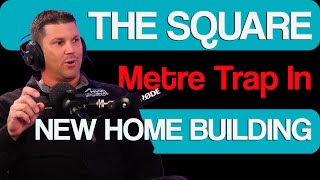
Norm Wales explains why square-metre rates for home builds are unreliable. Every site differs in classification, wind speed, flood risk, and orientation, and skipping detailed plans leads to massive cost blowouts. One project's initial quote jumped $150-170k once specifics were added.
Chapters
A lot of people run with the square meter rate. It's a quick, easy way of trying to find out what it's actually going to cost them to build a home. It's very misleading to the point that it doesn't include the whole outcome of what your home is truly going to cost. Hey, guys, welcome to the Builder's Edge. I'm Norm Wales from Norm Miles Constructions. Now, for me, the whole purpose of this podcast here is to bring a little bit more awareness around the construction industry. I've been feeling for many, many years that there's not enough helpful information out there to support you guys to make the right choice. Now, we are a smaller family independent building company, and we're not here to build everybody's home. But we would definitely love to be able to work with you to facilitate your dream home. But if we don't build your new home, we want you to be able to make the right decision in choosing the right builder for you. So hopefully the information that I'm able to provide through this podcast can be informative and helpful that you can now create your dream home. So I hope you enjoy and thanks for watching.
So, Norm, why is the square meter rate so misleading in home building?
Yeah, look, a lot of people run with the square meter right there. And the reason why they do that, it's because it's a quick, easy way of trying to find out what it's actually going to cost them to build a home. But the problem with that is it's very misleading to the point that it doesn't include the whole outcome of what your home's truly going to cost. It's a very broad, you know, stabbed in the dark. And too many people use that tool and take that as gospel and run with that. And the problem with doing that is that they're misleading themselves or being misled by being giving these prices, and they're setting themselves up for failure. You know, so if you haven't actually worked out the true costings of a home by taking the time and calculating that properly, by talking with your trades and suppliers and that sort of stuff, and you've just worked to a square meter, right, you're really going down the wrong path. Like, every single home is built differently. They've got different site classifications, wind speeds, you know, it could be flood zones, bushfire codes. So many different elements and ingredients to that specific block that no two homes are ever the same. So trying to base that around a square meter, right, it's really, really important that you don't have that mindset and think that's actually what it's going to cost.
Could it be though, that homeowners or people looking to build just want to get some form of a ballpark pricing?
Oh, look, definitely using a square meter rate. You know, it's a way people start a conversation. But you've got to also understand just working off a square meter right there without having your plans and specifications done, it is still a very loose term, you know, and it's not something that you should be physically engaging a builder and signing contracts there because you're really going to be setting yourself up for extras and variations and, you know, that's just going to lead to, you know, upset with time frames, you know, delays, but also it's costing you more money, you know, so it's really, really important, I guess if you follow the right process there and don't get caught up in that square meter rate there, take the time and do the investigation and align the elements of what you're wanting in your home so then you can get more information to actually what you're wanting to get a better idea of an estimate.
So, I mean, you, you've said many times before, you guys get people coming to you guys literally calling guys on the phone, ring, ring, you know, what's your God? What do you guys sort of charge per square meter? Right. And I suppose for those people, if you were to educate them on some other or better questions to ask, what would those questions be? In, in. And that's, that's at the early stages. Somebody's looking to build in the next sort of, you know, six to 12 months down the track. What are some better questions that, that they can be asking?
Yeah, so the questions, like there's many that can be asked, but it's a matter of actually then having a good conversation, you know, like, so it's about finding out the location of the site, you know, what they're wanting from their home, the orientation of how it's going to be positioned there. That's going to affect, like, energy efficiency now as well. Like, it's more about developing a close relationship other than one question or two questions, because there's many questions to specifically be asked there. But if you work with a good builder, they should be able to openly discuss, you know, what you're wanting in your home. If you can share, you know, your journey and what you're expecting, they'll be able to guide you upon what might be more feasible options or, or if what you're proposing could be a great option. To take.
So why would. Why would builders, and still like residential builders, why would they still be charging a square meter, right? Like, you know, like there are some guys out there still doing that.
Look, a lot of builders will base things off a square meter, right? And that's purely just to save themselves time. So, you know, like, they're dealing with such a high volume of inquiries. They're not really set up to spend a time with the customer and go through those questions that we're discussing. And every question can be slightly different to each person because it's uniquely to their block and their lifestyle and how they want to live in their home and the outcome that they're trying to actually achieve. So a builder will just use a square meter, right, as a loose term. But then that starts mentality of what things will actually start costing and people start thinking, okay, I'm going to be able to build this home for X amount of dollars. But because I haven't spent that time with the actual builder and had many discussions and asked questions and gone backwards and forwards with things there, they're setting themselves up for a false start and the misconception of actually what they're really, truly going to get. And it was only literally the other week I had a conversation with a couple and unfortunately it was out of our area. Look, you know, we don't travel too far. We just sort of stick to our Bundaberg market there. And he just said, like, every builder came across there, they give you this starting price, you know, you get on the website we've got started from here, or they go and see the salesman and okay, look, we can start from this. And once they started asking a couple questions or finding out a few little things that they wanted to add to it, the price escalated dramatically. It was like 150, $170,000 on top of what he first got told.
Wow.
And, you know, so I spent some time talking to the couple there and, you know, I guess informed them that that's, I guess, the starting point where people lure them in, you know. You know, so, you know, if you think some is too good to be true, it generally is too good to be true. And unfortunately for them, you know, with what they thought they were going to get to where it ended up. And it wasn't even actually getting to a proper quotation side of things there yet. And he could see that it was going to escalate above that as well. So, yeah, it's just very misleading and people aren't quite aware of that there. If they don't actually start asking the right questions.
I would assume that that's. I mean, is that a common occurrence? You hear many stories where people go in at a certain entry point or price point and then really quickly things just.
Yeah, look, it can be quite a common trend that we do come across there. And you know you are going to come across that there when you start working with these higher volume sort of projects that are building companies. Like, it's. If people are trying to shorten the process, you're only going to get a basic answer if you spend the time and invest in yourself and then actually work with a builder that you feel comfortable with after you've spoken to a few of them there. And if you can start establishing a relationship with the builder and start working on your plans, your specifications, even if it's just an early stage of some concepts, and then start layering that up, the more information that you can start sharing with the builder and layering those concepts up there, the more help that builder will be able to give you and give you more information as to what the actual cost will be to build that home.
I mean, so what, what really is the problem then? Is it a lack of awareness from the general public? Is it builders, construction companies being poorly managed and due to that they're too reactive in the quoting stage? Or what really is the problem? Is it the lack of awareness or is it, is it the general public not having enough education around how they need to approach the sort of the building process?
Yeah, look, I think it's a bit of a mixed bag there. Like the general public, obviously they're not builders, so they only know what they know. So obviously the more information that they can digest to help educate themselves. So when they actually have that first meeting with a builder, they can actually ask the right questions that's relevant to themselves there that can help them feel more at ease. But it is also about the building industry and hence why we're very proactive in sort of trying to be out there to support the industry. Like more builders need to actually start having good, honest conversations with the customer and not just telling them what they want to hear. They need to actually be more informative. But the problem is they're not doing that because it takes time and time is money, you know, so they're always trying to sign as many contracts as they can, instead of knowing their numbers and knowing what they can facilitate and just working to a certain amount that they can work with each customer in detail and answer their questions and concerns and then they have the confidence to move forward. Whereas by just working to a square meter, Right. And wrapping it up nice and quickly, it's giving people false hope, you know, and, you know, as I said, people outside the general public, they don't know what they don't know. So if a builder's just giving you a square meter, right, and that sounds great, why would you argue it?
Yeah.
You know, and that mentality is just continued to grow and grow, that people think that's acceptable, but it can't be any further from the truth.
The challenge here, though, I see for you as a builder is I know in the past that you've said that, that sometimes people just want a quick price. Right. But you're sitting here telling me that the, the kind of, the solution or the best approach to the beginning phase is to, to sit down and have a conversation with the builder. Could it be that, you know, there could be a lot of friction from them thinking, if I sit down with a builder, he's going to try and close me in and go into a prelim process too quick. I, I might not be ready for it. Like, I just, can I just get some quick figures? And that's a mentality that they have. How do you then approach it as a builder? Because you know that you need, in order to serve them best, we need time, we need space and we need to be able to go through what exactly you want. But then you're experiencing friction from them. They may not want to dive in that deep with you. How do you manage that whole situation?
Yeah, look, basically it's never too early and it cost you nothing to have a conversation with an expert, you know, so if you are serious about building and you're going to take that journey, the sooner you can actually start asking questions and researching yourself, the better that's going to be for yourself to get the best value for your money. And if the timing isn't right, that's okay. A good builder is going to be there until you're ready. So it's not necessarily about the timing. Even if you're 12 months off from building, having an early conversation and trying to set a bit more of a roadmap up for yourself that's going to lead you to success than failure. It's really about investing a little bit of your time in the early stages to have a conversation there and, and work out when is going to be the best time to start taking action. You know, like, it's always best to start as soon as possible to give yourself time and even if you just work with a basic concept, you know, invest a few hundred dollars there to get a bit of a rough chook scratching together to get a bit of a roadmap of what you may be wanting and then take that away and think about that for a few months. You know, like, you got to have something to look at to be able to give you an idea where you're going. Because if you're just talking in general, that's when it gets very confusing and people start procrastinating on things so they don't know where to take that next step. So it's really important, I guess, to avoid those situations. Really, it is just a matter of communicating early with your builder.
Yeah, yeah. So if they're at that stage and they're thinking, well, I just want to ask what a square meter rate is. If a builder, perhaps a better option would be to invest a bit of time to sit down with that builder. And before asking that question, let's go through what we actually want and let's get a bit more clarity around the overall project to then get a more accurate pricing. If you are serious and if you're not willing to do that, then perhaps maybe they're not, then might not be the right fit to go for a good home or.
Oh, look, it's not about necessarily been the right fit there, but that's a better process to sort of take to give them more helpful information so they can make an informed decision if they go forward or not there.
Yeah.
You know, like, you can always get given guides and estimates and stuff there, but until you actually start working off actual drawings and concepts, there's so many variables that can sort of change there. But working with a good building company there, they should be able to guide you and help you, you know, down that path.
Love it. Love it. All right, well, on that note, Norm, let's jump to our get to know your Norm jar and let's wrap up this episode. All right, thank you, sir. Okay, so, Norm, if you could solve one global issue overnight, what would it be and why?
I think there's one global issue there. Like, there's unfortunately a few of them around, but I think it'll be hunger. It's. There's enough food around the world and we unfortunately are a little bit wasteful with, you know, what doesn't get used. But, you know, so there shouldn't be any reason why someone doesn't have a meal. So I think if, you know, you could ensure that every person was, you know, had at least one meal a day. I think it'd be a much better place.
Love it. Love it. All right, well, on that, thanks so much, Norm.
Pleasure. Thanks, mate.
Cheers.
More from Norm
Professional Builders Secrets Episode 104: Adopting A Learning Mindset With Norm Wales