The Cost of Tomorrow: Building Wisely Today
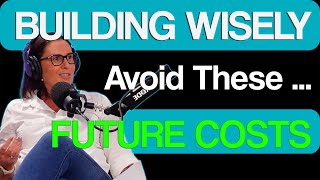
Podcast episode of The Builder's Edge (host Norm Wales) featuring Nicola discussing building low-maintenance, future-proof homes, design decisions that reduce long-term renovation costs, and energy-efficient choices (insulation, double glazing, solar, rainwater tanks). Emphasis on understanding location/climate, working with knowledgeable builders, proactive maintenance, and designing for long-term livability and accessibility.
Chapters
Build your home to make it as low maintenance as possible because that's going to be your forever home that you design it in the beginning, forever. So what suits you now might not actually suit you in the future.
Understanding your environment, your location of your land, the elements.
Hey guys, welcome to the Builder's Edge. I'm Norm Wales from Norm Wales Constructions. Now, for me, the whole purpose of this podcast here is to bring a little bit more awareness around the construction industry. I've been feeling for many, many years that there's not enough helpful information out there to support you guys to make the right choice. Now, we are a smaller family independent building company and we're not here to build everybody's home, but we would definitely.
Love to be able to work with.
You to facilitate your dream home. But if we don't build your new home, we want you to be able to make the right decision in choosing the right builder for you. So hopefully the information that I'm able to provide through this podcast can be informative and helpful that you can now create your dream home. So hope you enjoy it and thanks for watching.
So Nicola, what are some proactive steps homeowners can take to prevent costly renovations down the line?
I think first and foremost ensuring that the design that they're going with considers their livability for the future and accessibility. But as you know, with the recent NCC changes, that's taken into consideration anyway. But just make sure that if that's going to be your forever home, that you design it in the beginning forever and then you don't have to renovate it down the track.
That's right. You're, if you're focused and, and spend that little bit extra time in that design phase and have that good relationship with your builder and their, you know, draftsman team and your sort of full round table and putting it all down and communicating with what your, each area, how it's going to work, you know, how it's going to flow, what you're going to use out of that space there. It's definitely going to avoid, you know, a bit of a pitfall.
Absolutely, yeah. Speaking to a few of our builders and you know, asking, you know, questions around, around this and, and they'll say, you know, well, I, I want to know what you want, what your vision is, what your budget is and then we just build your home around you.
That's right.
You know, that's, that's how you get it right.
Yeah, no, that's fantastic. And how can families make investment driven choices during that initial build.
So what suits you now might not actually suit you in the future. Right. So, and we were talking about this earlier out the front, that not everybody building their first home is building their first home forever. Some people are building their first home as their first step to get into their second home. And possibly then they're forever home. So is this your forever home? Are you a growing family? Are you a young couple? You know, like, what is it? What is it you're after? It's. Yeah, it's. It's the investment now might not be what their investment will be in the future.
It is. And the way I like to describe that too, like, look beyond the dominoes. You know, we always look what's in front of us here now, but what's behind that one and the next one, you know, so.
Yeah, but I guess too, working with.
The right builder, they should be able to help you unfold the future a little bit there and trying to future proof your home as well.
100. Because your vision now might not actually be what your vision will be in 15 years because we change and adapt and grow and then we'll be thinking, oh, wow, we really should have put that extra room in because, you know, we didn't know little Jimmy was going to come along. So, you know, like, yeah, think ahead always.
Yeah, that's a great advice that. And which building materials or finishes are known to minimize future repairs and expenses.
I'd love to hear this from you, to be honest, because, you know, again, talking about this with, with our members depends on the location and the climate first and foremost.
That's exactly right.
Yeah.
Like, definitely, as you say, the climb like that, that's, you know, very well put. Like just simply like that. Understanding your environment.
Yeah.
Your location of your land, you know, the elements and, and how that's going to impact that build, you know, because there's a big difference of building on the coast spot on the ocean front, or building, you know, 100 kilometers out of town out on a cattle property, you know, so everything's going to have its pros and cons and they've all got, you know, disadvantages and advantages that will help you get the most out of your home. And once again, I guess if you're working with a good, knowledgeable builder, they can give you all the pros and cons, all the insides and outs and that, you know, we've had other people on, you know, the podcast previously that are more than happy to come out, you know, other suppliers, other trades. They'll, they'll have that One on one with you, you know, if that builder's got that, you know, that network to be able to facilitate your inquiries and, you know, help you make that right decision. Yeah, yeah, no, but, but I think you're on the money there. Exactly. It's location and, you know, the elements there. And like, I guess from that there, like, you know, how can a well thought out maintenance plan, you know, save money over time?
Every home requires maintenance. That's something, that's, that's conversation. I have a lot when I get a call from someone who says, you know, but when it rains, I've got water pouring through my home. And you go out there and they've got, you know, 6,000 gum trees hanging over their house and you can actually see things growing in the gutters because they haven't cleaned the gutters out. And it's like, guys, you know, like, you can't expect the builder to come and, come and look after this if you aren't maintaining your home. So every home requires maintenance. So it does. You know, play smart, not hard. You know, we're a really, really busy society, right? We're all really busy. We've got careers, jobs, families and everything else. Build your home to make it as low maintenance as possible. But have that conversation with your builder and play smart.
Yeah, yeah, no, look, that's definitely right on the money with that there. You know, it's just that education around, you know, the maintenance and the upkeep of your home to get the longevity out of it there, to avoid those problems, you know, that you mentioned.
And be honest, as, as well as a builder during that, during that conversation. And if a consumer comes to you and says, oh, you know, I was driving past Bock beach and I saw this incredible, you know, home with this gorgeous frontage and these are the materials that I want. Here's a photo. And you look at it and you think, well, this is going to cost a small fortune, first and foremost. But secondly, this requires a huge amount of maintenance. Have that conversation with the, with the consumer because again, if I'm not a builder, I don't know. And I hear that a lot. Right?
Yeah, that's right. Yeah. And like we said before, you know, having those right conversations to understand the products and your choices, because you'll hear.
That, you know, when you, when you speak into consumers, they'll say, but I didn't know that, you know, I'm not a builder. And it's like, well, yeah, yeah, look.
And that's, that's a fair point there. I Guess then too. But I guess then the old 80, 20 rule that we only hear what we want to hear and quite often, you know. Yes. And we only, you know, remember 20 of the conversation. So you know, in some contractors or builders defenses their conversations are being said. But maybe we're not quite understanding that. So potentially just to do the extra due diligence there, maybe research the product yourself as well before making that final decision as well, you know, and as we've said previously, you know, have clarification on the decisions you're making.
Yeah.
You know, so you know, that's you know, very important there. But like what role you know, do energy efficient choices play in reducing long term expenses?
This is a conversation that you need to have, you know, straight away with your builder and your, your engineer and your certifier or your design team, whoever's working on your home. But you know, insulating the walls externally and internally in the ceiling and you know, minimizing your air conditioning and your heating costs and, or the cooling of your home and the heating of your home. Double glazed windows was something else we were talking about. But it's also very costly. So it's not something that necessarily fits into everybody's budget. Be amazing if we could all do it.
No, look, that's very true and unfortunate sometimes to make things a little bit more friendly and you know, better for us in the energy efficiency sort of side of where in now. Yeah, it does come at a little bit more of a cost but that's where you've got to make that choice. Is, is this your forever home? Is this the investment that, you know, are you going to see a return on that investment?
Yeah, absolutely.
So definitely, you know, put in those things in place there are definitely worth doing it now if it is more of a long term thing and you know, you will definitely see a return on your investment, you know, in, in the longer run.
Yeah, rainwater tanks, you know, for your garden, you know, something as simple as that. But rainwater tanks just minimize the amount of town water you're using and you know, lower that, lower that cost and solar and you know, just that smart thinking and planning ahead reduces the outgoing.
So no, definitely now look Nicola, that's wonderful advice there. Thank you again for you know, coming on another episode of the Builder's Edge. But like always, I like to sort of always ask one final question.
Okay.
And we'll get into the, the jar again. Okay. So Nicola, what's something you've always wanted to try but haven't yet and what's holding you back.
Wow. This is a very personal norm. I've. I've wanted to bungee jump, to be honest, and what's holding me back is my terrible fear of heights.
Okay.
But I would love to do it. My husband's done it and he had a blast. But, yes, I actually have not done it because I am too scared.
Look, that's nothing wrong with that. Like, I think all the things holding us back that we've all got some fear or we're, you know, scared of at times there. But I guess putting your foot forward and taking that leap of faith, I guess you could say it's.
I've done that today. So maybe this was the leap of faith.
Maybe it is. And look, you know, we greatly appreciate you coming on today and sharing your wisdom because it's, yeah, very, very informative and I really hope that people watching this can take something away from that there. So thank you once again for your time. It's been greatly appreciated.
Had a great time.
Thank you. Thanks, Master Builders. It's great being affiliated with this and, you know, having a group there that's there to support everybody, to grow and do the right thing. So everyone watching once again, thanks again for watching the Builder's Edge. We'll see you on the next one.
Thank you.
More from Norm
Professional Builders Secrets Episode 104: Adopting A Learning Mindset With Norm Wales