The Downside of Building With Volume Builders - The Builders Edge
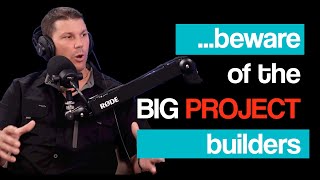
Norm Wales explains why volume builders prioritize speed and profit over quality. They lock you into limited designs, communicate poorly, and cut corners to hit production targets. Custom builders cost more upfront but give you flexibility, better trades, and homes built to last.
Chapters
What are the primary differences between a volume project builder and a custom home builder?
You're going to get a lot of inconsistency. Custom design building company, like someone truly focused on pure custom design, they're one off builds. There's nothing else like it.
Three downsides of engaging a volume or.
Project builder, they're not going to offer you the flexibility or the customization. You're not going to have the same relationship with those builders there. They either go two ways. It's got lack of information in there or it's got information that's so overwhelming. Then the of day they're just after that sale.
No, what are the primary differences or the key differences between a volume project builder and a custom home builder?
Yeah, look, a lot of people don't really understand the difference between a whole high volume building company there, you know, a project builder to a true custom design building company. Now a volume builder is based purely on numbers, more or less, you know, like they've got specific targets and numbers that they have to hit now for them to achieve that. There's, you know, they're not necessarily focused on the overall quality or how everything's going to be coming in together. You know that they'll be to achieve those numbers they'll have multiple lots of contractors and suppliers. So you're going to get a lot of inconsistency. It's going to be a bit of a licorice all sort to what you're going to be getting there. Whereas custom design building company, like someone truly focused on pure custom design, they're one off builds. There's nothing else like it. The time that goes into that there and to get that level of quality and to have that attention to detail, they often select one trade or one supplier, you know, and those trades and suppliers that have been hand selected dialed into exactly what needs to happen and those specific requirements. So then you're getting consistency and the quality, you know. So there's a big difference to how each one of them operate. But it's going to come down at the end of the day to really what you're wanting in your home. And if you're focused on those 1 percenters and making your dollar go that little bit further. Whereas if you're going with a project builder, you're really limited to choice. You don't really have that flexibility to really craft something that is so uniquely and really should be. The biggest investment in our max is building a new home. You really want to have some good input and make sure that all your Hard earned money is going to something special for yourself, I guess.
Taking a step back, how can homeowners say, for example, a mum and dad, this may be their first time engaging with the builder. How can they identify if they're dealing with a volume project builder or a custom home builder? Like, what are some of the telling signs of a volume builder?
Yeah, look, people don't know what they don't know and that's fair enough there. But like, I guess if they start seeing the big billboards and you know, there's signs everywhere, it's a pretty good sign that they, they're potentially a quite a large scale building company, which is fine if that, if that's the, you know, the process they want to sort of take there. But if you're truly trying to craft something that's one of a kind, you really need to be talking with the builder that's only building a handful or two, you know, no more than say 15, 20 homes. There's a year, you know, that they're mindful of your project, specifically that one most important, they can facilitate your specific requirements in your build. Like every build is different and unique in itself. Not every builder can build every single home and give it the justification and make it what it really deserves to be.
So then specifically, what would be, say the top three downsides of engaging a volume or project builder from your perspective?
Look, in my opinion there, you know, a high volume project builder there, they're not going to offer you the, the flexibility or the customization and you know, getting the home that you truly want, you're going to start getting cornered and pushed into an avenue of a specific build or method, you know, pacific materials there. You'll find yourself that you're not going to have the same relationship and rapport with those builders there because of the, the lack of communication and often the systems and the processes they have in place there or the little systems and processes I have because they're not used to streamlining different unique builds, they're used to doing the same thing all the time. So it becomes more of a production line, you know, like, more like of a car manufacturer there. So you sort of want to make a small change that you may believe is very minor, may be impossible for you to do with a, you know, project builder.
Yeah, it sounds to me from the way that you're describing it, a volume home builder has a slightly different objective to a custom home builder. And the volume, from what you're saying there, volume home builder, their goal is it's just pumping out houses, it's set designs and it's a numbers game look.
That's right, like, like a volume builder, you're not going to see them saying no to signing a contract. Whereas a custom design building company will actually say no. We cannot facilitate that at this point in time where, where things are like a good quality builder knows the perimeters that they can work within, you know, knows what each specific unique builds and how long it's going to take. A typical project builder, most of them have good salespeople and they just after a commission, you know, it's unfortunate that, you know, they can sometimes become a bit of statistic there that they're getting signed up and told what they think they're going to be getting and then once they're already committed and they find out they've only got a choice between A, B and C, you know, as an example there. And that can be very deflating, you know, for, for people there. And we've had many people come back to us there that have sort of gone down that project building path there, you know, potential for the first build or they've done it before. And then I realized, you know, that they want to have that bit more attention to detail and you know, really have a bit more input in their home and that's why they'll actually come and see ourselves and you know, engage in like a full custom design.
But what's an example? Like you talk about flexibility and you just mentioned there, you know, having those finer details looked at by a custom home builder. What are some examples of that like in real life. What are some paint the picture of that.
Yeah, look, when we talk about the finer details and customer design that is uniquely different to each individual person, you know, so where a project builder will have specific designs and you know, they'll stick you to, you know, what, you know, I guess that footprint happens to be. Some of them may use the word oh look, we can custom design as well. They'll change a couple of little elements to it there but you're still really getting pushed into a cookie cutter sort of style where a true custom design building company will focus on the customer's specific requirements. You know, and it could be something really quirky and simple as they want their toilet roll hold on the left hand side, you know, or the right or you know that they want to have double showers. They have one a rail shower, one come from the ceiling. You know, it's a matter of just accommodating their specific wants and, and making their wants all come into the actual bill method in itself there, you know, it could be something in the heart of the kitchen, could be something in the outdoor area or how things are going to tie into the growth of what they're seeing. It could be a young couple that may not necessarily have the funds to facilitate their complete dream home right now. And we've done this for customers, you know, so they've been open, they've communicated about it with us, they've got their perfect piece of land, you know, and then they'll go, look, this is where we're at. This is what we would like the big picture. But look, if we've done this part now, we can make it easy to add on those extended rooms or that extra wing of a home when the family becomes a little bit larger and things like that. So it is about the communication and really refining, you know, what they want specifically and, you know, sitting down and listening to exactly what they want. It's really important that everyone's on that same page.
So let's talk about that young couple that, you know, they potentially may be engaging a volume builder. What, what would some of the, what, what would some of the hidden cost that they might not anticipate dealing with a, with a volume home builder?
Yeah, definitely like, you know, dealing with a volume builder there. At the end of the day, they're just after that sale, you know, and they're going to build you that home with maybe not as much thought process into a. Okay, in five years time or 10 years time when you've got that extended family, you know, how are you gonna, you know, join that wing to that home? Whereas custom builder would have thought about that and sat down and digested all those little bits and pieces there with you and gone. Okay, well look, if we do this here now, we can actually join that in much easier later. That's gonna save you money. You know, it could be a provision that you run now that's going to make it much, much easier for when you do that, you know, next stage there such. So yeah, it's just diving in that little bit deeper there and implementing, you know, aspects. It could be a, you know, a conduit for a feed. You know, it could be physically, you know, putting a beam in place there that know you can actually take that extension and cradle that next weight.
So I mean, are there any upsides?
Look, 100, like, look, there's many good builders out there. There really are, you know, I mean, and for ourselves, we chose the custom design, you know, route there because we really Wanted to craft unique things for our customers, you know, and going with a volume builder may be a, you know, a good choice for some people there. Look, if they're not purely focused on the overall quality and they're not really concerned about having a lot of input there and they're just going to sort of turn and burn home, you know, that may work but you still got to be very mindful that, you know, if you're going to turn a burner home that is it actually going to be worth the money that it is that. Whereas if a custom builder actually worked on that project there for you, you know, that quality is there, you're not going to have to worry about putting more money into, you know, something to, to sell it there. Whereas if things have been done on the cheap, you may have to put a bit more money into that, you know, potential project building home to, to make it viable and selling down the line.
Yep, yeah, so, so what would some of the red flags be to look out for when, when looking to sign a contract with a volume home builder?
Yeah, look, unfortunately a lot of people are always driven by price and look, we've all got our, our ceiling and you know, perimeters we have to stick with in there. But when it comes down to signing a contract there with a, you know, high volume builder there, you've got to be really careful that the proposal and contract most importantly is easily understandable. Like they either go two ways. It's got lack of information in there or it's got more jargon and information that's so overwhelming that you've got to be a solicitor, you know, to be able to fully understand all the T's and C's and that there. And if that builder can't explain all this there to you very clearly and black and white, just with simple yes or no, what's included, what's not, you know, you've got to start asking questions there, you know, so be very careful of that. Like a good builder should be easily able to show you what's included. You should be able to fully understand what that is. If you don't understand what it is, ask the question, ask for it to be reworded, you know, rephrase it there, you know, things might be okay, but in my experience there, there's either over complicated information that you really don't understand or not enough information in there that could go either way that they can sort of just make it up as they go along. And that's where people can run into some really big horror Stories which can cost them a lot of money.
I mean, speaking of horror stories, do you have any examples of customers coming to normal house constructions after having dealt with volume home builders?
Look, we have actually had many people come to us there, unfortunately, you know, for, for some of these customers have come to us, you know, mid construction and that as well.
Wow.
Asking us to sort of take over builds and that there. And, you know, it's, yeah, very sad at that point.
What's the emotional. Like, what's the emotional state of the home owners at that point when they're coming to you mid construction and things are turning sour on the, on the build?
How are they distraught? Like tears. It's full waterworks most times. You know, I mean, like, it's a very emotional, you know, and then that draws us into that there as well. Like it's a very complicated process that can become, you know, but, you know, we've had many other customers, you know, that have built before or, you know, that have also tended to the same project and have come back to us and sort of said, look, you know, we could see with what you've actually, you know, proposed here for us, it's, you know, very black and white. It's very simple, yes or no, it's included or, you know, if it's an option there for things. And they could see the difference in quality and the level of detail just in the paper trail, you know, without even just going around asking about who we are and what we do, you know. So, you know, for them to acknowledge that, you know, and comparing us to a project builder is obviously comparing an apple to a banana, you know, to be honest there. But, you know, not many people can understand and, and are able to compare things equally. And for, you know, some of these people to be able to come back and actually say, well, look, we, we could also see the additional stuff that you were allowing for where others weren't. But also they could also then see the quality in either the product or the trade or the supplier that we're working with there compared to the others, you know, so that's really important and nice to know that people can see that.
So overall, what advice would you give to someone considering engaging with a volume home builder to ensure that they're making the best decision for them?
Look, the biggest advice I get there is make sure in the early stages before you sort of fall into the sales trap and get locked in with them, is have a good conversation with them, you know, have a good chat to a couple of builders like narrow the field down, do your own research to begin with and then start comparing, you know, your top two, top three have that good, you know, one on one meeting conversation. And you've obviously got to filter through, you know, everyone's going to tell you what you want to hear, you know, and you know, a good builder should actually just be upfront and honest with you, you know, so example of that.
What's an example of being upfront and honest?
Look, I think it's a transparency of saying, no, you, you can't do that, or no, you shouldn't be doing this, where a lot of people will physically just go, oh, you know, we can do that, or she'll be right sort of thing. And then you get down, you know, in the mix of it and then it's like, no, we can't do that now. But you said that you could do this, you know, but it's like, well, it wasn't in the contract, was it? You know, so, you know, it's really important. I guess if they're looking at engaging that and I said it might be a good fit for some people to go down that path. But if that builder's not engaging with you or returning your phone calls or responding to emails in the early stages of things, that's a pretty telltale sign to sort of maybe start looking elsewhere. If you can't have a good relationship at the beginning, it's not going to end. Well, I love that.
Thanks so much for that. No, I think it's time for us to get the get to know you jar.
Okay.
And it's probably my favorite part of the segments, but here you go, mate. Pull that, pull that one from there. So this is a question that's going to help us get to know Norm just a little bit more. Okay, you ready?
Okay.
So Norm, if you could have one do over in life, what would it be and why?
1 do over in life. Okay, and there's a little bit left field. Look, I think if you could do a whole new do over for me, it would be what I know now. If I could actually take that back to an early stage of myself and implement my knowledge and life skills now into, into a younger me. Yeah, I think that would be more the do I. I'd like to do so then for myself by being able to do that there, I believe I'd be able to, you know, empower and take care of more people around me with the knowledge and the things I've learned.
I love that. Awesome. Well, thanks so much for your insight. And wisdom, Norm. And until the next one on the Builder's Edge. Thank you.
Thanks, mate.
More from Norm
Professional Builders Secrets Episode 104: Adopting A Learning Mindset With Norm Wales