Why Does It Cost So Much To Build A New Home?
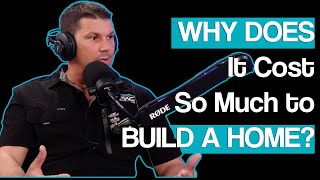
Norm Wales explains why new homes cost so much: inflation, supply chain issues, and site-specific factors like soil conditions and slope that make identical-sized homes vastly different prices. A detailed preliminary agreement upfront prevents hidden costs and surprises.
Chapters
Why does it cost so much to build a home today?
The cost of building it doesn't go down. It really has started to push some people out of that market. The general cost of materials and rate and bringing all that stuff to site, it really does start compounding. And what goes into each and every unique home can very heavily dictate the overall cost.
Hey, guys, welcome to the Builder's Edge. I'm Norm Wales from Norm Wales Constructions. Now, for me, the whole purpose of this podcast here is to bring a little bit more awareness around the construction industry. I've been feeling for many, many years that there's not enough helpful information out there to support you guys to make the right choice. Now, we are a smaller family independent building company and we're not here to build everybody's home, but we would definitely love to be able to work with you to facilitate your dream home. But if we don't build your new home, we want you to be able to make the right decision in choosing the right builder for you. So hopefully the information that I'm able to provide through this podcast can be informative and helpful that you can now create your dream home. So I hope you enjoy and thanks for watching.
Why does it cost so much to build a home today, mate?
Unfortunately, the cost of building it doesn't go down. Do you know what I mean? And with what we've experienced over the last three to five years, you know, Covid, you know, and just general inflation of how that is there now, you know, it really has started to push some people out of that market and, you know, like the general cost of materials and freight and, you know, bringing all that stuff to site, it really does start compounding.
So how does the complexity of a home design also affect the overall cost?
Yeah, look, that's why it's really important, you know, to work with customers on building builder so you can be focused on your budgets and what your wants are. And when you start detailing these concepts and designs up there, the, you know, complexity and what goes into each and every unique home can very heavily dictate the overall cost. Like, you might have a home that's 250 square meters and then another home that's at 250 square meters, they're not going to be the same price. You know, that can be built side by side, but you got so many different variables that can still come into play that's going to heavily dictate, you know, what those overall cost actually going to be like. No two homes are the same.
What would, what would Some examples be of like different variables in a home.
Like yeah, like, you know, continue on with those two same, you know, homes, 250 square meters. There's one block might have one soil classification. The next door neighbor's got another soil classification site. So, and there could be, you know, big differences between those two. One could be a little bit more sloping on that block. That's going to require more material to level a pad up, put peer holes in like, you know, it might be $50 here, thousand dollars there, but you know, that all compounds on each other and adds up at the end of the day that can really heavily dictate the, the overall cost like through the design aspects and that there, you know, it could be the difference of a beam, you know, how far that's spanning, you know, does it spin that little bit further. Now you're going to go into a steel beam, you know, then you're going to need a crane to install that beam, you know, so it's about being creative, you know, around what you're trying to, you know, build and construct there and find the best methods possible to keep those costs in know, I guess to a realistic, a more realistic area that's going to be achievable.
I mean, coming out of COVID how did you. With the cost increase of materials and then also trades as well, how did you guys manage the expectations of clients coming out of COVID Because obviously you guys knew that everything increased, but then you guys have to go off and tell the clients that. So talk us through that process of, of meeting the expectations of the clients and then also new prospective homeowners who are looking to build who thought, you know, before COVID the cost of build was X. And then they've come to you after Covid and they've gone, whoa, what happened there? Why is this so, so much more expensive?
Yeah, definitely. Good question there. Like, obviously Covid did change a lot of dynamics of cost and you know, know a lot of things in the building industry there. But for ourselves there, like we still stayed on point with everything that we'd committed ourselves to. Like for us it's about having that plan in place, then also most importantly, having the open communication channels with our customers and you know, future customers there and advising them upon stuff there. Like unfortunately, you know, it wasn't a good time for neither, you know, customer or builder. But we didn't have problems ourselves there because we, we took it, you know, front on, you know, we, we communicated and I'd like to think we over communicated the best we Possibly could with everybody involved. And we all understood that we're on that same trajectory to, you know, get that great result at the end. We had to be on the same page together to get there, to achieve that. There's.
How did you find those conversations? I mean, how did your clients respond to that? How did they respond?
Look, the.
Our customers are fantastic, I must admit, you know, like, yeah, so fortunate to be able to have worked with, you know, some of these people. They're like, it's a true pleasure, it really is. You know, and for me, I felt absolutely terrible, you know, I mean, with, you know, if there was a small delay or, you know, a cost I run or a product that, that they had selected that now just does not exist and they've had to reselect, you know, something there. But we all definitely banded together and you know, work towards that same common goal. And it was, you know, a really enjoyable experience to sort of be able to sort of have that communication and then I guess that support with each other there that we could openly, you know, work through any problems there, you know, so that was really apparent itself there. But it was good that they put the faith into trust into us and you know, we had that transparency, you know, so it was very black and white to where things were.
And I guess speaking of transparency, what would some of the hidden costs be that perhaps homeowners don't initially consider in the early stages.
Look, in the early stages there, if you haven't taken the right steps forward and you know, done a proper preliminary agreement and you know, gathered all your plans and specifications, you know, and you've gone with a. Another builder that's potentially shortcutted that process. You know, it could be something as simple as just knocking the soil test done, but you're signed a contract there and it's that unknown that then can really dramatically blow out the, the cost of your foundations, you know, so it's about taking the right steps. You know, you can't put the icing on the cake before you bake the cake, you know, you got to wait, let the cake cool down. It's the same as building, you know, you've got to take those correct steps forward there and to get the right outcome and the best result there is no shortcuts.
Yeah, absolutely. Can can opting in for energy efficient or smart home features in like, how does that affect the overall pricing?
Look, it's a fantastic way to go, but obviously if you're going to be investing into solar or double glass and insulation and things like that there, that is going to add, you know, cost to your build, but that's also an investment in yourself and the, the home there that you're actually going to get that return on your investment there. You, you know, some of them, you know, in that three to five years time that, you know, your power bill is now, you know, much less than what it was, you know, it's paid off. That solar system there as an example, you know, by putting that insulation in that you can enjoy, you know, your home all year round instead of just parts of the year there because it's, you know, stays at a nice comfortable level so you don't have to run those air conditioners and things like that as frequently. So it is a good way to invest in yourself there. But it is an outlier, which is an additional cost, unfortunately.
I mean, so looking forward, you know, homeowners looking to build, what's some overall advice and perhaps some strategies as well that you can share with with them now that they could use to help manage their finances better?
Yeah, look, the best advice, if you're looking at constructing and you know, you're mindful of cost there is, it's to take that right step forward there and do a proper preliminary agreement, not just work on some glorified concepts there. You've got to get into the nitty gritty, the bones of it all there. And you know, a good example of that there, you know, just say you hurt yourself, you fell off your motorbike and you know, you know, you break your arm or you believe you've fractured yarn or done something to it there, you are going to go to the doctor, the doctor's going to go, yeah, it looks like you broke your arm. They're the experts, aren't they? But they're actually going to turn around and say, hey, let's take you for an X ray to fully diagnose it is a broken arm or the extent of that broken arm. Now by getting that X ray, they can say, oh, okay, yeah, you broke down. We know you've done that there. But if we now do this and that, we can help that heal quicker. Or if you're a sports player, they can get you back on the field quicker there. We're exactly the same. By doing a thorough building, preliminary agreement, getting all those specifications in place, that is our X ray to bring back, we piece all that together and then we can give you the best game plan and the best approach there to make the best informed decision that's going to, you know, help you Guys get the most value for your money, right? I love that.
That is absolute gold. Cheers, mate. Well, before we wrap up, let's get to our get to know your Norm question. There you go. See how you can get out of that. All right, mate, here we go. Oh, okay. This is. This is a tricky one. Okay, so, Norm, what's the most profound lesson you've learned from a book or a movie, and how did it impact your life?
I would actually say it would have been a book. I can't remember the name of the book, but it's actually. I apply this all the time, but there's probably two things. But I've always been a big believer. The 1 percenters, you know, and focusing on little things and never giving up there.
And.
And I guess when I, you know, know I like doing a lot of audible and reading. And there's a saying that it's how do you eat an elephant?
And you do always say this.
Yes. And. And the answer to this is one bite at a time, you know, so the more of that is, you know, it doesn't matter how big the hurdle is or. Or what, you know, obstacles you have in life there. You can achieve it if you're willing just to chip away one bite at a time. You know what I mean? And, yeah, that really resonated with me because it's something that I'd had always believed in, you know, and there's a similar things that I've always sort of, you know, been really drawn to. So I definitely think how to eat an elephant, and it's one bite at a time.
I absolutely love that that's gone. Thanks.
No worries, mate.
More from Norm
Professional Builders Secrets Episode 104: Adopting A Learning Mindset With Norm Wales