
Cooking Up Cultural Understanding with Jonathan Tushman
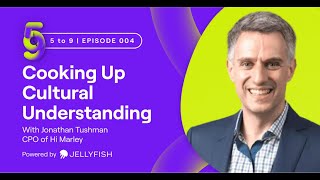
In this episode of the Five to Nine podcast, host Andrew Lau interviews Jonathan Tushman, Chief Technology & Product Officer at HiMarley and a lifelong Boston technologist, about his deep‑seated passion for cooking. Tushman traces his culinary journey from an early fascination with bread and sourdough—sparked by Ken Forkish’s Flour, Water, Salt, Yeast—to a seasonal approach where he immerses himself in a different cuisine each year, currently focusing on wok‑based Asian dishes. He walks through the essential pantry staples (multiple soy sauces, Korean chili flakes, gochujang, black vinegar, MSG) and explains how he curates and rotates starters for sourdough, treating each baking season as a project. The conversation then shifts to his kitchen hardware: a Made‑In carbon‑steel wok, the nuances of flat‑bottom versus round‑bottom woks, the importance of high BTU gas flames for achieving “wok hei,” and his preference for carbon‑steel pans over stainless or cast iron. Tushman also shares his outdoor cooking arsenal—Traeger pellet smoker, a $200 rotisserie spit, and plans for a solid outdoor pizza oven—detailing how he brines, spatchcocks, and smokes a Chinese‑five‑spice turkey for Thanksgiving. He discusses his love of MSG, debunking the 1980s myth, and his philosophy that MSG is a “magic seasoning.” Beyond technique, Tushman reflects on cooking as a work‑life separator and a love language for his mixed‑heritage family (Jewish father, Taiwanese wife). He outlines future culinary horizons: a deeper dive into Thai fish‑sauce cuisine, a two‑year focus on Indian vegetarian dishes, and the practical challenges of strong aromas and kitchen ventilation. Finally, he recommends resources that shaped his practice—Kenji López‑Alt, The Walk of Life blog, and YouTuber Josh Weissman—providing listeners with a roadmap to emulate his systematic, project‑based cooking style.
Chapters
Well, I love MSG. It's been, you know, growing up in the '80s, there was this big backlash against it and people said, "Hey, it'll give you headaches and it's not good for you." That's been largely debunked.
This is Five to Nine, a podcast where we discover the hidden passions and hobbies that engineering, product, and technology leaders obsess over when the workday ends. Hey, Mr. Churchman, how are you?
Hello, Andrew. I'm doing great.
I got us up early in the good old days. I'm at the, uh, the fabulous home office here with all the junk, right?
I'm in my fabulous home office with a little less junk.
Yeah, yeah, I think you're good. You got a nice designer back there. So, uh, we already talked what we're doing here today, broadly speaking, but maybe for the mic, can you do a brief introduction? Like, you know, what's your name, what do you do, and, and like, and then we can talk about the fun stuff. Sure.
So I'm Jonathan Tushman. I'm a longtime Boston technologist. I'm currently the Chief Technology and Product Officer for a Series B company here in Boston called HiMarley. So we're the communication network for the insurance business. So helping connect insurance carriers with their policyholders and helping them communicate more efficiently. I've been doing that for roughly 2 years, but I've been in the Boston tech space for the last 20 years as a hands-on keyboard technologist and product guy, specifically tends to be in VC-backed early-stage companies.
You're the best in many ways, but the, the part that's cool is you're a good nerd, uh, but you're also a B-School guy, so you got both slices on you.
That's right, a little bit of nerd and a little bit of business, but I think I err more on the nerd side, as you would see in my office here. With lots of— yeah.
Well, okay, so here we're doing today, um, I called you up because, uh, we have some common friends. We originally started the conversation, um, which is like Jonathan does big old cooking projects, and, um, and I was talking to this common friend of ours, and it was originally talking about sourdough. I know this is a very pandemic era conversation, and, uh, he's like, do you read this blog? right? Um, this blog, I think it's called Perfect Loaf or something like that. And, and he, uh, he said like, I think Tushman put me on that thing. And so we fell into the whole discussion, the lore of you and your cooking projects and passion projects. So I don't know, was he right to tell me that? Was that the right— for like, are you into, uh, projects?
I think that's right. Cooking's been a big part of my DNA for the last 20 years. I think much more deeply in the last 10, 12 years. And I I do think it all started with bread. And actually, I brought some visual aids here. It all started with this book here. I don't know whether you've seen this one. I know this is Flour, Water, Salt, Yeast by Ken Forkish. Yeah, one of my two pivotal books that have shaped my culinary career, culinary journey. And like roughly 10, 12 years ago, I got really into baking bread in the house, and it's something awesome about smelling and making and having sourdough. And there's nothing better than bread. There's nothing better than carbohydrates.
Do you still— do you have like a 12-year-old, like 13-year-old starter now? Is it still going from there?
My starters die. So I go through these phases where I'm doing a great job on it, but then I'm not shy of going into great bakeries and asking them for their starters. So I've been to Scratch and Scratch and in Portland, Standard in Portland, High Rise here, some other ones in the Berkshires. So every season I go and grab a different starter for my—
Is it awkward? Are they like, uh, please leave, sir?
Yeah, uh, I mean, a couple times they've said no, but more often than not, uh, they'll go in the back and you'll have a great conversation. Okay. And I don't know whether you bake either, but I tend to— I'm a seasonal guy, so like right when it starts to get cold is my baking season. So right around now For the next 4 months, I'll be doing a lot of baking of bread.
I still do it, although I, you know, during pandemic, we were all baking a lot. And like, I keep a little bit of a, like, a write-down when I did it. And I just did one recently. I realized I hadn't done it since February. And so one, hey, life got busy because we're all traveling around now. But it's also like I've learned the lesson of baking in the summer out here sucks because things just go out of control.
Did your journal keep track of like how much time and all the little details and how it came up? I did that for a little while.
I'm a Mac Notes guy, cuz it's just like the easy, like I've fallen back to, that's the easiest answer cuz it's a stream and it's in every device. So, um, early on I used to like super take pictures and like notes this stuff. Now I actually just kind of, I, I'll note the temp and the, uh, the ratios and then like if there's something that fails on it badly or something that like went well. So I just kind of keep it indexed for myself around. How much I'm creeping up the hydration and stuff like that. But actually, since we're here, I think you're nodding, but you know what I mean. But like, for other folks, what does that mean when I say hydration? What does it mean to you? Because you're nodding with me.
Oh yeah, so like, you know, in general, you're probably— I do 2 loaves, I use 1,000 grams of flour, and how much, you know, we, we, you know, we all have scales and we measure exactly how much water we want to put into the flour. I mean, bread is the simplest thing in the world. It's just flour, water, salt, and yeast. So all the little dimensions matter. Temperature matters, age of the yeast matters, age of the starter. So it's just fun to have these little knobs.
It's only 4 axes, but somehow it ends up being tremendously complex, right? All of it. Yeah, well, right on. The original point here was talking about you and your projects, and I vectored us into bread. Like, what's cooking for you? Yeah, like, if you're— if, if, if Jonathan is known for cooking projects, like, what, what kind of cooking are you doing these days? And what do you prefer to cook? What do you like? Is this big ornate feasts or what are we talking about here?
So when I think about projects, the way I kind of think is there's— my kids went to Montessori schools and there's things about having sensitive moments where you just get into repeating things. So I think I'm kind of the same way with cooking where I won't be working on one big, one big crazy meal and event. I guess I had the upgraded OS on, on the Mac and now weird things happen on my screen. But like every year or so I'll go through a season of I'm going to focus on a certain cuisine deeply for a period of time.
All right.
Which makes a ton of sense. So like right now I've been really into wok cooking and Asian cooking. Before that it was Spanish. Before that was Italian, which makes a ton of sense because the pantry around that you need to have and use repeatedly and you need to take Whenever you cook something, you need to make it a bunch of reps before you get really good. So I think you learned that with bread, right? Yeah. So bread, the first time is, you know, pretty magical, but the more you rep and you get it, it gets into your DNA.
You do feel it. You actually end up like, you, you figure out some sensory stuff where you're like, oh, this is feeling right. Right.
Um, yeah.
Kind of get that instinct. Yeah.
So right now my main project for the last year, maybe year and a half, has been wok cooking. So I'm using my wok 2 or 3 times a week. Wow.
I'm the Asian guy on the call here and I have a wok and I definitely don't use it like this. So maybe once a month I'll get a move in here.
So my wife is Taiwanese, I'm Jewish. For a mixed race household, I think the way you get your background, your culture, is through food. I think that is That's my religion. That's my way to bring people together.
That's how you guys split the world. Like you, you're the one cooking the Taiwanese food or the Asian food.
Totally.
Or is she doing it too with you? Or do you guys tag team it?
No, so I'm the cook in the family, but you know, I think, yeah, so I'm super into Asian cooking. I feel like I'm bringing that to my, my Asian kids.
So like just to contextualize it, because you said earlier, I'm stocking the pantry every season. You're like, you're like the Asian gear and the wok, right? So like, did you do just some huge shopping trip? You know, how often do you stock in this, you know, seasonal flavor pantry? Like, what's the stuff? What's the gear we're talking about here?
Yeah. So, and I think there was in the beginning of the Asian pantry, there's a handful of ingredients that you start off with and then you go from basic to more advanced. Okay. Um, so you start off with soy sauce, rice vinegars, Chinese cooking wine, the other 2 ingredients that— and then you start going to the next level. And for me, that has been mixing it with the Korean palate. So I think— and by the way, I apologize to all the listeners here, I'm going to mess up all of the names of all these words, but the Korean chili powder—
Save space for all this. We all get it wrong. Yeah.
Korean chili flakes is the best chili flakes that that you can have. I make a chili oil with that all the time. And gogujang, the Korean fermented spicy bean paste, I use all the time. So one of my weekly meals, probably if you ask my family what my best meal is, it's a Mapo tofu.
Okay.
Which I make weekly and I do more of a Korean version of it.
Okay.
And then the more advanced ones here, and I'm not sure whether you use these ones, is I love a black vinegar and I love a dark soy. So I think in the beginning when you think, oh, it's a soy sauce, but there's all these different versions of soy sauce.
Yeah, soy sauce. Like, I use soy sauce. Like, it's like, what's the difference on this stuff? But, but, but you now can tell.
Yeah. So I now have 3 different soy sauces.
Okay.
The core ones is light and dark, which I use all the time. And then my new best friend who I brought here as well is MSG.
Uh-oh, okay, controversy. Talk to me about this.
Well, I love MSG. It's been, you know, you know, growing up, the '80s, there was this big backlash against it, and people said, hey, you give you headaches and it's not good for you. That's been largely debunked. It's been wholly debunked. And now I view this as this magic, this magic seasoning that I put not just in my Asian cooking.
I consume it from a restaurant. I don't actually use it at home. So how do you use it? Like, is it like a little salt, like a salt shaker? Are you like dropping it like on a sandwich? Like I don't use it raw.
I don't think people do it. I think it's a cooking seasoning. Okay. You know, next to my cooking setup, I have a Salt Pig.
Salt Pig's the thing you put your hand in to get the salt, right?
Yes, 100%. Yeah, so I'm a big fan of that too.
So you have an MSG Pig?
Yeah, I do. And this is the main thing I use, but I do envision eventually getting an MSG Pig too.
Okay. Okay, so you got a little shaker here you're showing me that's like a, like a pudgy—
it feels good. It looks like, yeah, for all the listeners, it looks like a little panda and it looks cute. It makes people feel less afraid of it and it makes it delicious. Yeah, and other places I put it into is like, like Thanksgiving gravy. I put it into other kinds of pasta sauce, anything you want that's meat and game you want to give it a little kick to, uh, you give it a kick to.
All right, it's that umami thing, right? It's the kind of meaty, unctuous flavor kind of thing.
Totally. And before I was using this, I was using like a combination of soy sauce, Parmesan cheese. I, I use Marmite and Vegemite a bunch. All these things are like MSG, but like you're just working around the fact that you don't want to use MSG. So now I just go right to the source.
Now I know the juice So, so now I got your wok, you got your things. Like, so how do we do the wok? Like, what's the wok setup? Like, what, you know, is there, is there a spatula? What am I using with this thing? Like, because, because I've seen them in the restaurant, it's like, like doing that.
Okay, I guess a lot of people are watching here. I actually brought my wok up here too. So this is, uh, a Made In wok. So the brand is Made In. I love this thing. My friend, um, Chasey Chang of Pagu gave this to me a couple years ago. So it has a little bit of like a real chef used this. So I feel some of that energy in it.
Yeah. Yeah.
Is carbon steel— carbon steel is another big transformation of my cooking career or cooking experience. So I'll talk about carbon steel in a second, but I love carbon steel in terms of my pans and for my woks. It holds heat super well. It gets— it's easy to take care of and it basically acts as a nonstick. So my wok also is a, um, has a flat bottom.
Okay.
So it's not like a full, you know, round wok thing. Full round wok, which in an American kitchen we don't have a full wok setup. So I have a standard 4-burner.
Yeah.
Okay.
Yeah. Where do you go? Because, because I think you need gas on this thing, right? Because, you know, yeah, right. Because the word I grew up learning is this word, uh, in Chinese called a wok hei. I speak Cantonese, so probably different than your, than your wife says it.
But like, uh, it's kind of like, like wok wind or wok breath or, you know, when the fire comes up over the thing and you get a series of flavor. I can't pull that off with my setup. So like in my dream, I will eventually have an outdoor kitchen with this one of these huge BTU flame things going on where I'll be deep frying and have this thing wok. I'll be my dreams. I, this gets close to that.
Yeah.
Um, the other things I use, anyway, so I love this thing. I think everybody should have one. I'm curious what you have.
So my setup is, um, I actually have a round bottom wok. I actually got it from my mom back in the day. I came out, my current stove right now has an extra attachment that you put on top of it to cradle the roundness on the thing. And like, it, it, you know, it actually works. But like, if I'm really going hard on this, I've actually done the thing is take it outside with a turkey fryer And like, and, and I've actually learned that thing is too hot. Like it's actually, you know, they talk about more, more cooking with gas, more BTUs. Like you go too hard and the thing, and you're like, oh my God, everything's just burning as soon as it hits. So it actually, in that setup, you gotta turn it down a little bit. But yeah, like I actually think this is actually an interesting discussion cuz like all, you know, when you get a new kitchen now everyone's moving to induction and all these things like that, which I think totally like a lot of great reasons why. The other thing though is like, I think. Asian cooking is one of the ones that actually uses, or at least Chinese I'll say, like uses this kind of needing the burn part of it. Not just, not just, I'm saying it wrong, not like burn, like burn, like toasty. It's like the, it's the fire and it's going to lap over the sides thing. And I, I grew up in California. I was talking to my dad about this and like, we're probably in California and end up in some kind of weird world where like the, you know, most gas things will disappear. Except for in the Chinatowns and stuff like that, because they need something to kind of get that flavor. Like, they're talking about using propane instead, because like, just like me using outside, because to get around some of this stuff, because certain kinds of cooking require— not all kinds of cooking, right? But like, it's a really kind of nail that cultural flavor and that style, you need that. Anyways, that's my two cents on it.
I'm curious how it's gonna affect home cooking. Like, for everything else, like boiling water and even like frying eggs and stuff like that, I think it's okay. But I really think with a wok, I'll struggle not having the flames going up the side. So I mentally can't see that there. I know it's a huge trend coming. I'm curious how—
yeah, how it plays out.
Authentic Chinese cookers, uh, Asian cooking is going to do with the wok.
Yeah, I'm sure we'll invent something. It'll be like a bonus top on, like stoves that have like— given I said only whip this out once a month, like 29, you know, 29 of 30 of the real estate of the thing is like induction and then has a little gas kicker on it. I don't know, something like that.
Yeah. But also I'm like, I don't know if the word is violent with this, but like I'm pretty violent on it. I like, and when it's just like a pure flat surface, I worry that that same kind of motion is gonna be— Yeah.
Yeah.
Yeah.
I mean, but see, that's, that I think is like a, a physical part of it. Then there's like the physical and the fire. I think the physical, it's probably handle— I mean, my stove came with a little attachment that sits on top, like it's like a flat burner. It does that. Okay, yeah, yeah. And, and we're actually speaking about woks here on this stuff. So let's go back real quick to your, your concept of, like, you use the word carbon steel. Like, what is that? Like, how is that different than nonstick? And then, and then just did it with a wok. How do you treat this thing? Because, uh, we have a debate in the house on this whole thing.
Yeah, so there's a lot of debate on how you how you keep track of carbon steel. So my wok, I don't know if you guys can see it, but you see it's really kind of shiny.
Oh yeah, it's better than mine.
Yeah. So after you cook it and you rinse it up with like a bamboo kind of thing and you try not to use dish soap on it, you probably run under, you cook it and before it gets too set in, you run it under the sink with some kind of bamboo or rough cleaner on it, get all the particles off. And then when you're done cleaning it, you put a little bit of oil on the thing and you rub it with a paper towel. So you store it, um, with a small sheen of oil. And I do that with all my other cast carbon steel pans. So carbon steel is like roughly half the weight of cast iron. Cast iron.
Yeah.
But so it's a lot more, you know, movable and feels lighter taking out of your thing, but it has the same kind of characteristics of it being able to hold heat. And also it's a much smoother surface. So that was another, just having like this, one another one of my core things I make every week is just, you know, salmon, salmon with the skin on or chicken thighs with the skin on.
Yeah.
And all you need with that is just, if you take, you know, a chicken thigh and a carbon steel pan and salt, that's all you need. You put it face down with the skin, you render out the fat, and you flip it over and you salt.
Boom.
There's something about— and I wasn't able to do this with my normal— was it steel? Normal steel? Or cast iron?
Cast iron.
They're not cast iron. The other pans that you have that you get—
oh, like aluminum pans or like whatever, the stainless steel things.
Stainless steel. Yeah. So like, like I never use stainless steel anymore.
Okay. Um, I dig it. That's a pro tip. When I get my new pans here, I'm gonna do this.
No, and then also like for salmon with the skin, it's like an amazing, like you feel like you're a world-class chef just, but it's the pan that does it. And it's much cheaper than any other pan out there. You just go to, but you have to go to Restaurant Depot to find these things.
Oh, okay. Or the internet. I'm sure the internet.
Or the internet. Yes. There's also the internet.
That magic thing. You press a button and things suddenly show up. Yeah. Yeah. I like that. I like both. Right.
Okay.
Well, we're talking about cooking here and I think you and I both like cooking and we're talking about this, like. You know, how do you incorporate in your life? Like, is it, you know, how do you— how does it dovetail with the workday and your family? Like, what does it mean for you? Like, like you said, you already cook. You cook a few times a week. You're like making chicken, making salmon. You're walking twice a week. Yeah, like how does it all fit in?
So cooking strikes so many positive things in my life. So, A, I probably every night that I'm home, I'm cooking dinner. So I'll probably cook 3 to 4 nights week.
Okay. Yeah. Yeah. How much are you in physical office, commuting, traveling for work these days? Like, how do you work?
We're hybrid right now. I'm in 2 and a half days a week. And then, you know, and during the pandemic, I was working from home all the time. And what I loved about— one of the things that cooking was great for me was one of those barriers between the work day and the home day. And I call cooking is one of the few things that I'm able to do where my brain is not spinning on work. So it works really well. I come home, I'm able to, you know, pour myself a glass of wine, start cooking, and I'm— it's a great segue from my work day into my family day.
I'm nodding at you because I, I find cooking the same thing.
Then he has all the other benefits. It's like, you know, cooking is like my love language. Like, that's how I show love to my family and to my friends. So it's also cool that the side benefit of me doing this is showing how much I care to my family, and I love seeing them enjoy. And there's also the whole creative aspect of it.
So you're not making the same thing every day. I already heard that from the beginning— different cuisines every season, different, you know, like, meals every week, shifting from a little Taiwanese flavor up to Korean flavor, back and forth, right? You're moving.
Yeah, yeah, totally. And then there's always the holidays. We had the Jewish holidays, the Chinese holidays, Thanksgiving. Thanksgiving's coming up. Those are all great opportunities to do something fun.
Well, okay, so holidays, let's get in this, like, because I think holidays touch on a bunch of stuff around cultures, traditions, rituals, all this stuff. Like, how do you mash them? Like, yeah, well, yeah, you said the Jewish holidays, Chinese holidays. I'll tell you my favorite holiday in a second, but you go first.
Well, I'll do my, my Thanksgiving I did last year, which was awesome. I did a Chinese five-spice turkey Okay, which I smoked. It was awesome, super awesome. And they did a sticky rice stuffing with Chinese sausage. Oh, so, um, so a little bit of, you know, good old-fashioned American Thanksgiving with some Asian flair to it. That was a big, big hit.
I did a fun one a couple years back. Um, so you know that Thai-style chicken that's really kind of fish saucey, cilantro, coriander? And I did a big version of that with a spatchcock turkey that way too.
Yeah, I'm Spatchcock all the way.
Yeah, pro. All right, so how do you smoke a turkey and do 5-spit? How does that work? Yeah, let's get in there.
Yeah, so I have a Traeger, which I got a handful of years ago. Do you smoke stuff?
I do, uh, for another discussion, uh, weird trivia about me, I'm a certified barbecue judge, Kansas City circuit. Um, so that was a thing that I did back in the day. I've done less so with the kids, but, um, but yeah, so I like have, I have a bunch of smoking rigs. Um, but actually right now I'm using a, uh, like a Weber Smokey Mountain. It's the tall one. Um, it looks like a rocket ship. Right. So I actually, I think the pellet stuff is amazing, but as like, as a guy who's gone through that whole ricket, like I think pellet stuff is too easy. I like to lick my way harder.
Yeah, yeah, yeah. No, I'm not, I mean, I'm not in the, in the advanced world that you're in, but for me, like a handful of years I'm able to do it and it gives me some great flavor. Yeah.
Yeah. So back to your turkey though, like how did you go from like this? Like, yeah, break it down. You got to the turkey. We said spatchcock. We said five spice. We said Traeger smoker. What do all these words mean? Break it down.
Yeah, spatchcock is just a fun word to say, but basically all it is is cutting out the back of the turkey and smushing it down. No matter how you cook it, whether you cook it in your oven or on— maybe less so in the Traeger— it allows for more even heat distribution, so you get more juiciness across the board.
Yeah, it makes it all flat like a big fat steak, right?
Yeah, so you don't have that big, you know, when your grandfather used to come in the room and have this big turkey showing, so you lose a little bit of that, but I think you make up for it is ease in flavor.
Okay, okay.
And in terms of, you know, I always do a brine, so I, I soak— I'm actually, I'm pro-wet brine when it comes to a turkey. I know there's—
explain what's a wet brine here.
Yeah, yeah, sorry. So wet brine is submersing a turkey or whatever you're brining in a water bath with salt and sugar fundamentally. And you can add other things to it like orange rinds and peppercorns, but fundamentally it's just salt and sugar and water and everything else is a little bit gravy. And the salt makes it, lowers the chance of you making it less dry, and the sugar gives a little bit of sweetness to it. So for my turkey last year, I will have done a brine, and then what I do next, take it out, is I, you have to get underneath the skin So, you have to be not afraid of getting your hands dirty.
You use a glove or you're just getting up in there?
No, I just get in there. Roll up my hands. There's a few spots where it's easy to get under the skin and just with some olive oil and then with, again, with some salt and a bunch of Chinese five spice, you get in there and you rub it underneath the skin and over the skin.
I got a trivia for you because I don't fully— I think I know this, but what are the five spices in Chinese five spice?
Oh, I don't know. I mean, I can guess, but I don't know. Do you know what they are?
They're not as foreign as you think they are, actually. So the one that I— I don't know them all, but, but one of them is fennel, fennel seed.
Huh.
And like, it's one of these things where you're like, oh, these actually are cross-cultural things that you didn't think of. Um, that I, I don't know the like food etymology of how it got there or like what came first, but it's also like, it's just interesting which things actually come from other place. Okay, so it's star anise It's Szechuan peppercorn, fennel seeds, cloves, and cinnamon sticks. So you actually, if you think, if you drop the peppercorns and star anise, it's actually a very Western-sounding spice mix, right?
Totally. Yeah. And then all those spices would feel good on a Thanksgiving plate.
Right. And so the question is, and probably what happened is that, you know, what we consider Western probably came from that direction, right? It's the other way around is what we probably process, but who knows, right? Like, Yeah, it's fine.
I don't even know if five spice is a Western thing. Like, it's only done—
oh, I don't think it is, but I'm saying the composite pieces of it, right? Like, yeah, you know, like we use each of those, but I mean, not star anise and saffron, but the other three we use in various forms of Western cooking, right? Um, and, and like, how do they pull there?
So tell me about Thanksgiving.
Oh, you know, before there, like, so we got your turkey, we got your five spice on there, and then you said you smoke it on a Traeger. Break that down for me. What is a Traeger? Like, what does smoking mean? And then we'll go to mine.
Got it. Yeah, so Traeger is a cheater version of a smoking rig. So basically there is this auger, is a bunch of pellets which are basically dried wood, whether it's cedar or apple or what have you. And then it's, there's a little auger that pushes it into the thing. So it has a very controlled burn versus what you're doing in your pitmaster days is making sure that, you know, your dry wood and charcoal is heat on the side. So this is a very, simple way to keep the heat consistent. So you can keep your heat at a 225 for a long period of time. That's a great thing about cooking in general is simple ingredients and time is where flavor comes from. That comes back from the sourdough days and comes back to smoking. Anything that has simple ingredients and time is going to be a win.
How hard do you smoke it?
I do— I don't know what hard means, but I keep it at either between 200 and 225 as the main thing, and then I'll bring it up at the end to finish it off.
Is it getting like hammy at the end, or is it like— because you could push smoke so far where it's like, you're like, oh, this is ham now. Like, or we still— like, is it like some light smoke on this thing?
Yeah, I, I don't know. Like, you'll see the rings on the edge of it and it'll feel like it's been smoked. So I think that's kind of a fun flavor.
I like it. I like it. So what I want to have your— so, so like, well, yeah, we barbecue one day. I'm like, one of the things I got better at during COVID is to hit a brisket, like a legit brisket, and like, you know, wake up at 5 in the morning and really do it right. Yes. But like, you know, it's in my world of it, like, unlike yours, I have to tend it. So it's, it's a different form of commitment, but like, you have to be around. And it worked during COVID time because I'm around, right? So like, it wasn't a big deal to go outside and check the temp and run things back and forth. And it's the best.
There's nothing better than being outside with your meat. Being smoked and having a beer and they get into that jiggly state.
It's got that nice jiggle, which, uh, which I was a big fan and doing all that jazz. So yeah, we should, we should do that.
And did you wrap it with butcher paper?
Yeah, I've been, I've been doing the wrap or AKA the Texas crutch as they do it. But like I do, uh, I hit the butcher paper wrap. It does. I think it works pretty well.
How often can you eat a brisket in a year?
I actually make it more of a celebratory thing. I don't like, I mean, again, there's two worlds, right? It's just like bacon and bread. There was during COVID and then there was like now. Like if you, if I'm doing a full brisket, I mean, that's a lot of meat, right? Point and flat, right? The whole end to end.
Yeah.
It's gotta be a project for that. And like, even if you say I'm going to freeze some of it, there's no way rational family of 4 can actually do it. So it's about the ritual as much as it is, because I couldn't crush that much brisket, right? It's just too much.
Oh, speaking of the other thing that I've gotten recently is I got one of those outdoor rotisseries, stand-up rotisseries, like gyro machine. That was—
I don't know where you get— okay, timeout. You have like a Euro thing, like we could make like shawarma at your house or we can make a real al pastor, but that feeds like 200 people.
But it's the event. You can make it a little smaller. And that was, that's been some of my best food parties. Everyone loves being outside. There's meat spinning on the thing. You're shaving it off.
Like, I'm just trying to imagine how this is like the size of a phone booth and you've got like, and you bring like 200 people.
It's, it's like a small one. It's like 3 feet or 2.5 feet, 3 feet.
And you put it in the garage afterwards? Like, you put it in your, like, kitchen? Like, where does this thing go?
It's in the basement. Okay. And I'll put it up next to, you know, I'll put it on a table outside.
Your family must love you or hate you. I can't tell. Or both.
No, they love it.
Be true.
They love it. Al pastor was awesome. And yeah, it's Super delicious. You make homemade, homemade tortillas.
Dude, what other crazy equipment do you have that I don't know about that we need to know about here? Do you have like a pig pit that I don't know about? Like, can you roast a whole hog in your backyard? Or like, what can we do here?
No, I think that's probably my— I think my smoker and my spit, and my spit's probably my most crazy thing. And I highly recommend that you get one. It's not that expensive.
Okay, I'm going to double-click on this. When does one decide to go get a rotisserie spit thing? How much does it cost? How do you get it? Do they have to bring like special movers to bring it in? Like, how does this all go down?
I think I watched, uh, a YouTuber making it and said, crap, I'm gonna— I really want to do that. And I looked it up, it was like less than $200, maybe it was $200. What?
Okay, in my head I'm thinking kitchen industrial, a couple G's, gonna take some big burly dudes to bring this thing into your backyard, bring it on a crazy semi-truck.
No, no, not that crazy. So it's within reach and it's like, you know, and when you're hosting a party, that's not, you know, compared to getting something catered, it's all in that same, you had to get all the meat and you had to stack it and do this stuff and like marinate it and you stack it. I'll send you some pictures later on.
Yeah. Or, um, yeah, we, we got pictures. I mean, that, that's a thing that, I mean, regular, let me be clear. Regular people don't have that at home. I hate to tell you this, Jonathan, like this is not a, normal thing. This is why I love you for this, but that's not a normal thing that people have at their house, right?
Yeah, yeah, that was a hit.
Yeah, it sounds like a hit. I want to come over next time.
I think the next thing that I don't have that people would assume that I have is, you know, a solid outdoor pizza oven.
Okay, I mean, those are like— so, so actually, I know a little bit about those. Like, I have— well, I have one of those Ooni ones. Those are great.
Yeah, those are great.
Those are super stellar. But I mean, if you mean like a built-in ceramic, like, I don't know the name of the brand, but they're beautiful.
They're made in Italy.
Oh, they're the Domi ones. Yeah, yeah, yeah, yeah. But here, here's the problem. I, I, like, I have a friend who has one of those. Well, depend— there's varying sizes of them, but the amount of fuel you have to get to get that thing moving to the heat that you want to work with, it's an energy-time— and it's a commitment.
I guess the other thing I have, um, passionate about is hot sauces. So on a scale from 0 to 10, Andrew, how spicy do you like your food?
Oh, I like spice, uh, but I, you know, I think you can get stupid. Like, I, I think you push it to like, you know, I don't know what your gradients are, but like there's one of these restaurants right here called Hell Night and their whole stuff is just to like just rip you. Like, it's just like it just breaks you. And, and like, you know, I, I've learned that most spicy food, like no matter how spicy, kind of goes away after 15 minutes. Like, you're gonna die Within 15 minutes, it gets a little better, right? But where do you lie on this whole thing?
So I ask this question a lot. I am an enthusiastic 6, meaning like I love spice.
You like the flavor.
Yeah, I love spice. I want it on everything. So I enthusiastically want stuff to be spicy. I don't want it to be crazy spicy that I'm going to have stomach issues, but like a solid 2 peppers on any kind of menu is what I want. I want it all the time.
I, I've actually, I, I'm still trying to figure this out, by the way. Like, like, so it turns out the whole spice concept is a thing that we have adapted as humans with certain kinds of like sensory things to like detect it. And so there are other animals that eat the same thing that they're like, I don't know, it's not spicy because the whole concept of spice is a receptor thing that we've adapted to. Right. So like, so the question is, okay, so there's like, we perceive it. Does it actually do damage to your stomach and why? Or like, is this one of these things where, you know, like what's the juxtaposition? Is this like, like, are they both can be true thing or what's happening here?
Yeah, I don't know. I, I love, I mean, I, at a certain level you start sweating and then I might have some indigestion. So I feel those things.
Yeah.
Okay. But mostly I'm, I'm, I'm ready to be challenged.
All right. Well, I know. So, so we've, we've had some sick projects, sick equipment, and, and you, you've talked about you working in seasons. So what's the 2024 flavor? What's the next season or what's the next aspiration? What's the next horizon? What's the big project that we're thinking about right now? Like what's the new frontier?
I think I still have another year and a half in Asia walk land. So it's a big world. I think I'm moving more towards Thai right now, more towards fish sauce things. I think that'll probably be the next evolution there. I would love to spend—
you should do, you should do, you should do my turkey thing then. You should do it that way. Think about that. File it away. Yeah. Anyways, I interrupted you. Hit it.
Yeah, I want it. So I want to know that turkey recipe. We'll talk about it offline later on. And then eventually I would love to spend 2 years focusing on Indian food, and I would love to spend time more on the vegetarian side of things too.
I love—
not that I'm a vegetarian— I love meat and all things meat, but I love to focus on really nailing how to cook the vegetarian realm. Yeah. And I love the Indian spices. I do worry about how it smells the house up, so I need to figure that out.
But, and also, I mean, all these foods do, like, that's the cost of flavor, right? Right. Flavor is not just in your mouth, it's in the air. So yeah, yeah, like, get a big old hood and go hard on that thing.
Yeah, I want to fix the hood thing. My hood is so loud in my kitchen.
Yeah, but you're probably pulling some good air out, so pick your poison. That's a great, great project here. Okay.
Yeah.
So let's cap this out. Favorite resources. You're inspiring me. Like, how do we— like, there's so many ways to go with this, but like, you talked about a book that got you started in baking, but how do we get to be you? Like, what? Like, yeah.
Yeah. I have a handful of go-to resources. So I think first, my first one was Kenji. So Kenji López-Alt, he used to be a writer for Serious Eats. Then he's wrote a couple of really great cookbooks. If you basically search Kenji anything you wanna make, that recipe is always going to be like spot on. He comes from MIT, he's a scientist. And whatever it is, his flavor profile matches my flavor profile. He's a great writer and a great author. So he's one of my standard guys. He has this book called The Walk, which came out like a year ago. I think if anybody's interested, it's a beautiful book and it's great inspiration. Similarly, online there's The Walk of Life, or The Walks of Life. It's a family that blog— does video blogs and articles on Asian cooking. They're a wonderful resource as well. So I think those are probably 2 of my main resources for Asian cooking. In terms of like, I love watching YouTube and watching video, you know, chefs working. I like the medium form. I'm not super into the 30-second, 60-second shorts. So I like Josh Weissman a lot. I don't know if you've seen him. He's got weekly things. He's been a lot of inspiration. I think he was the original inspiration for me getting the rotisserie thing. Yeah, I think those are some of my core influences.
Yeah, let me throw a couple back at you because I think you like a good, good trade on, on books on this stuff. Um, you were talking about Thai. I'm actually— the restaurant doesn't exist anymore, but I really like the book Pok Pok, right? Um, it's, it's, uh, I think it's— this is, uh, Andy— I forgot what his name was, uh, but like there's a cookbook that he has also called Pok Pok, P-O-K-P-O-K. And I think the pictures are great, but it's, I wouldn't call it accessible, but it was actually like, uh, interesting. Like it breaks down a lot of stuff. Um, I think some of the stuff is, is too like on a regular basis, probably too, like it doesn't fit my pantry, but I like, so I take a lot of stuff from there. And then I think other things that I always, I started reading, um, ever read a woman in a British woman named Phucia Dunlop? No, this woman named Fuchsia Dunlop, and this is maybe like over a decade, 20 years ago, she went to China and actually got trained in one of these Chinese, Chinese cooking schools, like not for Westerners. And I think it's really cool, right? I think the original book is Shark's Fin and Szechuan Peppercorn, I think, or something like that. It's like a little bit of memoir of how she actually got there, or one of her early books. It's a fun read, both from a like you know, just fun reading of nonfiction journey, but it's also, then you kind of like hear about, oh, that's what, you know, like you're watching her process, like from a, like a Western British style of like, oh, this is what this spice or cuisine means. This is what, you know, um, fish-scented sauce means and kind of go down there. So as someone that's actually a pursuant of like different kinds of Asian cuisine, I found those like cool, both from a journey and learning referential words and how they connect there. So cue those up as things to like read on those things. So definitely fun. Anyways, okay, so I, I think this is a wrap here, um, and, and thank you for sharing, um, the things that you're into.
Yeah.
Andrew Lau here. I hope you enjoy this episode of Five to Nine. Don't forget to subscribe so you don't miss out on our next episode. Who knows what hidden talents or hobbies we'll discover on the next episode of Five to Nine.
More from Pamela





68% say AI enhances efficiency. But only 10% report strong AI enablement. More trends on May 7.

68% say AI enhances efficiency. But only 10% report strong AI enablement. More trends on May 7.




