
Crafting the Perfect Cup of Coffee with Matt Brown
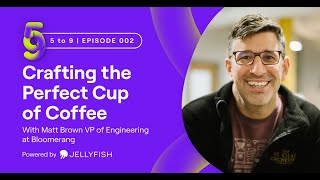
In this episode of the 5 to 9 podcast, host Andrew Lau interviews engineering leader and coffee enthusiast Matt Brown about his deep dive into third‑wave coffee. The conversation starts with Matt’s personal coffee ritual—freshly ground, half‑caff Ethiopian and Kenyan beans brewed in a Chemex—and expands into his journey from a vacation in Hawaii that sparked his love for specialty coffee to becoming a home roaster. Matt explains the three waves of coffee, the significance of roast levels (especially the “Full City” and “Full City Plus” range), and how regional origins (East Africa, South America, Indonesia) shape flavor profiles. He details his home‑brewing arsenal (Chemex, French press, AeroPress, gooseneck kettle, burr grinder, Stagg Fellow kettle) and the step‑by‑step process he follows each morning, including bloom, pour technique, and keeping coffee warm in a double‑walled thermos. The discussion moves to home roasting: sourcing green beans from Sweet Maria’s, using a Fresh Roast 500 starter roaster and later an Aleo Bullet (nicknamed “Wilbur”), measuring in grams and Celsius, accounting for weight loss, and the economics versus buying pre‑roasted beans. Matt shares his cupping methodology, cleaning routines (Cafiza for Chemex and thermos, grinder maintenance), and the community aspect of sharing roasted beans with friends. They brainstorm a personal coffee brand—“Indie Brown” or “Full City Brown”—and talk about logo ideas, packaging, and how to start small (even using a cast‑iron skillet). Throughout, the episode blends enthusiastic storytelling with practical, instructional tips for coffee lovers looking to elevate their home coffee experience.
Chapters
Oh, you fresh roast every morning?
Oh, 100%. Like, I think that's one of the keys. That's the key.
This is 5 to 9, a podcast where we discover the hidden passions and hobbies that engineering, product, and technology leaders obsess over when the workday happens. Hey, Matt, how are you?
I'm doing well, Andrew. This is a happy Friday.
Happy Friday. And look what I got. I got myself a nice cup of coffee. This is some nice third wave coffee. We'll talk about that in a second. You're gonna be upset, or I'm upset. This thing costs $4.81. I mean, it is delicious and it has got that nice mouthfeel. This is my second cup of coffee in the day, and you can see it just kind of like getting into my— my warming up my nasal passages here in Boston. But it's, uh, it's delicious. But I'm like, $4.81, what the hell?
Yeah, yeah. I'm not— I, uh, I mean, I am a frequent coffee shop guy, but I hate paper cups. We can get into that too. But yeah, yeah, $4.81 for a small cup of coffee, it better be good.
Hey Matt, welcome, welcome to this whole thing. Um, could you mind actually sharing who is Matt, where are you hailing from?
Yeah, yeah, so I'm Matt Brown. I, uh, live in the beautiful state of Indiana in Indianapolis, uh, happy Hoosier native. I'm an engineering leader, a multi-time founder.
But today we're actually not talking about that. We're actually talking about this delicious cup of coffee, your delicious cup of coffee. You got to tell me what you're drinking and then we'll go into this.
Yeah, yeah, I actually meant to look it up. So I, um, am drinking, uh, homebrew brewed home roasted, uh, Indie Brown special. So this is a half-caf. I have an Ethiopian regular and a Kenyan decaf Swiss water process. Um, I mix half and half every day, um, brewed in a Chemex. So I'm sure we'll get into more of that too.
I love it. And, and, uh, about Ethiopian, it's a little acidic for me, but we can talk about that. Yeah, but I heard something snuck in there. You dropped an Indie Brown. Yeah, like, hey, I'm gonna call that one hashtag Indy Brown. This is, uh, this is your brand. Okay, we're gonna get into this, right? That's, that's the lead here. All right, Indy Brown, man, don't mess with that.
Exactly. Yeah, sometimes also known as Brown Scones. So, uh, we, we have two brands in the Brown household. So, uh, yeah.
Okay, that's also your DJ name. Yeah, yeah. All right, well, okay, so you clearly are a coffee aficionado, and I am a fanboy here, uh, learning about it. But how did you get into what we'd call proper coffee here?
Yeah, yeah, yeah. So good third wave coffee. So it started, uh, man, I— my wife and I at our 15th anniversary took a trip to Hawaii, um, and visited a coffee plantation in, uh, on the Big Island. Um, and so I got sort of my first experience of like good Kona coffee. And then, you know, after a week of that, I thought this was really good. I went back to the office, I you know, got a cup from the vending machine and I was like, oh my goodness, what happened? I can no longer drink this. And so, uh, exactly what you went through there. Exactly, exactly. Yeah, yeah, yeah. So, you know, I was drinking black coffee and, uh, if you, uh, have good black coffee, you can really taste all the things. And so once you get that experience of a really great cup, uh, it is really hard to go back.
I agree. And I, I love black coffee. By the way, I'll give an engineer nod. I used to work with this guy and he drank black coffee And I was like, oh, you drink black coffee? Me too. I love the taste of it. And he goes, oh, I don't like the taste. I was like, so why do you— it's such an engineer thing. Like, why do you drink black coffee? He's like, well, I need the coffee, I need the caffeine. So why do you drink black coffee? He's like, well, because, you know, every once in a while I spill my coffee and if I get it on my keyboard or laptop and that stuff, I don't want it to be sticky. And it was such a functional engineer. Are you on this thing?
Yes, yes, yes. That's, that's next level thinking.
Yeah, yeah, yeah. Okay. I heard you drop a word here and I got a funny story with Third Wave in a second, but But you said third wave, and, and so break it down. What does third wave mean? And oh, one last thing, by the way, you said Hawaii and coffee. Please don't tell my family I've never gone to Hawaii with them, and it's a point of contention with the family. Um, I grew up on the West Coast, it was much easier to get to Hawaii, and so I felt like it wasn't such a big thing. But now from the East Coast, it's a big thing.
Yeah, it's a long flight.
Yeah, it's a big trigger issue.
Yeah, sorry about that. Yeah, yeah, yeah, one day we'll get there.
Yeah. The third one, talk to me.
Third wave coffee. So three waves of coffee, uh, first wave is, uh, like Folgers. It is what brings coffee to, uh, America, is like easy, instant, quick-to-make coffee. Um, second wave coffee is like your Dunkin' Donuts, like a slightly better but commercial coffee cup. And then third wave is more specialty coffee. And really Starbucks kind of starts this with their own coffee shops making, uh, single origin, um, at the beginning. At the end, they're not, you know, currently I don't think they're, they're selling much single origin. But, but that leads to this specialized coffee market that we're in now, where you get lots of single origin, where people are caring about how coffee is sourced, where it comes from, how the farmers are getting paid, um, just a whole bunch of stuff related to that.
Yeah. So, so here's my Third Wave funny story. Um, so I have a friend who's like a brand designer, amazing brand designer out here, and, uh he, um, has another friend of his who wants to start a coffee shop, and they want to make a— the town they're in north of Boston, they want to make a third wave coffee shop. Okay. And, um, so because he's a, he's a brand designer, he, he knows that third wave coffee, when you're opening a coffee store, isn't just the coffee. There's all the signaling we do, like, yeah, the look, the feel, the words, like all these things that, that put into the whole package what codes third wave. And so he, he got, uh 10 of us, and he's like, let's go on a third wave coffee tour. So we started in Arlington, Massachusetts, just here north of Boston here, and we worked down to downtown Boston, and we did 10 different places. And every place, like, I think the rule is we're trying espressos because we wanted to taste it. But then once you were there, someone's like, well, I got to try whatever this place is specialized in. I had never— I mean, I drink a lot of coffee, probably drink like 4 or 5 a day, And, um, I've never actually pushed the limits here where like I was like, I got really red and I got like, I felt the shit. I think I felt the heart pounding. I was like, this is the edge. I didn't know there was an edge, but I found it now, right? And I did like 10 shots of espresso and it was a lot.
That is a lot of coffee. That is a lot of coffee. Yes.
But I have an opinion. So when you come to Boston, I'll take you.
Oh yeah, yeah, yeah.
Opinion of best stuff. Okay, well, part of my coffee journey, by the way, is like, uh, you know, early on I found this maybe a to go. Clearly not as far as you, but I've learned my way through these, what I like, enough so that we did a cupping thing with some friends. And maybe you can explain to people what cupping is. But the more I pointed out today, so I have my coffee from a third wave spot called Intelligentsia here downstairs of my office. And I love my co-founders, but one of them is a Peet's fan. And I actually grew up drinking all Peet's. Yeah, I make the same sound now too. It's a little overroasted for me. It's a little burnt. For me, but that's his jam. But, you know, he'll go downstairs and get this coffee and he will— he'll cringe. And, and he'll cringe like me around this $4.81, but he'll also cringe because it just tastes acidic to him, right? And this thing, or it's too sour. I don't exactly know the word. And I said it earlier to Ethiopian, but it's a thing, right? Yeah. Yeah. So Yeah, like, tell me, like, you said you can taste it better when it's black. Well, am I, am I off base? Is he off base? What's going on here?
No, totally, totally true. So Peet's, like, sort of the Starbucks competitor that never got quite as big— still pretty big, right? But, uh, mass-producing, uh, better coffee. Um, and the reason they, uh, what I would consider over-roast— they, uh, certainly roast it farther than I like— it's because, um, you can source your beans from multiple places, and when you increase the roast, you consistency across the bean, across multiple types of bean. Um, and so that's why that gets that sort of further sort of charcoal-y, uh, carbon kind of taste that goes with it, right? But if you— so I'm a, I'm a light roast guy for sure. For the nerds out there, I'm at full city, maybe full city plus is where I roast. So that has to do with, you know, sort of the coloration, um, how, how far into the, the roasting process. Um, uh, so like as you roast, the coffee changes from a green to a light brown to a darker brown to more of a brown, um, to like even like a dark brown where it starts to get oily and you see it. That's all the length of pro— of how long you're roasting. And then as you're roasting, there's certain parts where the chemical processes are changing and it starts to sound like popcorn as you're roasting. Like, it's like pop, pop, pop. Um, that's like what's called first crack. Um, so that's when the, the bean is doing its first crack, and it'll cool, um, and roast a little longer. It'll roast a second crack again. That's when the more oil start to come and be present, and that's what you get at Peet's. Um, and that's a more consistent roast regardless of what the bean is. And so, like, I like Ethiopian. Uh, it has lots of body and more of like a fruity taste to it. Um, maybe a little, uh, like cocoa chocolatey taste to it. Um, I, I think there's really like, you know, so there's lots of regions, and the more you know, the, the more you slice it up. But I think there's kind of 3 big groupings. There's like African there's South American, and then there's like Indonesian, uh, uh, Asian flavors there. And so, uh, East African, uh, definitely my favorite. Uh, Colombian, uh, or like, I believe Colombia makes the most coffee of any country. It produces the most coffee of any country. But, um, South America in general has this very— is kind of the, the standard coffee taste that you think of is South American. Um, and it's going to be— it's going to have good body, it's going to have I think slightly lower acidity. Um, it's going to have some other flavors with it as well. I think Indonesian, um, tastes like dirt. It's very earthy. Uh, like, the, the, the proper term is earthy, uh, but I think it kind of tastes like dirt. So, um, not a fan.
Everyone's got their flavor, right?
Yes.
I, uh, I, I think the, the Ethiopians taste too much like a tea for me, a little bit light for me, um, but, but Hey, this is what all this preference is actually. Exactly, exactly. And, and, uh, years ago I tried a bunch of different ones to figure out.
Yeah, yeah, yeah. So, so cupping, great way to do that. So, uh, back to your original question, I think we got sidetracked a little bit. Cupping, right, is when you, uh, typically what they're going to do, this is how they grade coffees. So it's a consistent process a cuppy, uh, a coffee grader will use. Um, they'll have a little bowl they'll put a standard amount of coffee in and they'll pour in a known, uh, amount of water. So get a water to probably 205, um, pour it in, and they'll use spoons to taste. So a little bit of a process. They'll like let it steep for a bit. The, the coffee will kind of crust on the top. They'll sort of siphon or spoon out the coffee grounds, and then you'll like dip your spoon in this bowl and like slurp it in.
Um, it's like wine tasting, right?
You know, it is.
Yeah, yeah, yeah.
Yeah, and you get like— that's because it's, I think, the same in wine, right? You're trying to get the coffee on all parts of your tongue, and you're trying to cool it down enough to taste it. But, um, it's the way in which they, uh, grade coffee on all of these dimensions. Um, and usually, so like, if you go to like a commercial one— I've been to several of them— but they'll put out different kinds of coffee, and as you're going around, you can like taste the difference. Oh, this one's like really fruity because it's a natural process, or Um, you know, this one's more acidic, we roasted it different. Like, if they, they have different ways that they can, can, uh, accentuate different parts of the coffee based on how it's roasted and processed. And, and that cupping is a great way to sort of accentuate the, the differences, like one after the other. Because a lot of times you get a cup, you're like, this is good, I can't really tell what the difference is. But like when you're doing 6 or 8 different in a row, uh, you could really, really taste them.
Yeah, it's the juxtaposition on that thing.
Yeah.
I like it. Uh, oh, you dropped a word in there, uh, like you explained how the different roasts work. Oh yeah, but you dropped a word like full city.
What's that?
What's the history of that word?
Like, you know, like, that's a great question. I don't know what the history of the world— that I use that word, but I'm not really sure. Like, like, it is like— it's a roaster's word. It's not a com— like, yeah, I don't think you ever see it commercially.
Like, it's like a mid roast.
Yeah, yeah, yeah. So yeah, so I It's like Full City and then Full City Plus, and then other things that I never look at because I never go that dark in my roast. Uh, like, I, I think like French roast is one of the words further on, but I don't ever use that either.
So that's another DJ name for you— Full City Brown. I think that works.
Yeah, I like it, I like it. Yeah.
Okay, well, okay, we talked about this earlier. Um, I think you were really gonna judge me for my rigs, but like Talk to me about like, what's your morning coffee made in? Like, how are we doing this, right?
Yeah, yeah. So I am a Chemex guy, so I make a—
me too.
Yes, I think that's the way to do it. Um, I prefer unbleached filters. Um, the brown ones. Yes, exactly, the brown one. It's all about the browns. So yeah, yeah. So I'm doing, uh, 1,000 grams of water at 205 degrees, uh, over 60 grams of coarsely ground coffee. Um, into the lovely Chemex vessel.
Do you drop like 60 and then you put 120 on it to let it bloom and then you hit the rest?
Exactly, exactly. So we— and we, uh, my wife and I sort of have, uh, varying techniques. She's, uh— so we'll do a bloom and then I do 2 pours after, she'll do 3 pours. Um, she thinks the 3 pours are better. Um, I'm a little more about efficiency.
Um, so she's also into coffee like you are?
Yeah, yeah. I think so. Actually, all my kids. So like both of my daughters are like part-time baristas in what the, you know, sort of summer jobs and other things. Um, yeah, my— it's, uh, I'm kind of like a virus. Like, if you're around me long enough, you'll get infected by it too.
Uh, well, I'm already getting into this too. And, uh, okay, so I, I also use a Chemex. Uh, I, I just got a Technoform if I— for like if a bunch of people are coming over. Yeah, like, and then And I've got an old burr grinder from like, I think, Kompresso or something like that. Is that—
yes.
So judge me, am I on the right tip here?
No, I think you're— I think you're right away, uh, right on it. Like, I think that's the best way. Like, a good burr grinder, a nice, uh, gooseneck kettle. Like, I have the Stag Fellow, uh, it's kind of a, uh, nice looking— exactly, exactly. And you get like a nice consistent pour. Like, it doesn't like rush out. It allows you to nice precision, um, a good Chemex, uh, but it all starts with good beans, uh, freshly ground. Like, that's, that's the key.
So let's talk about Full City brown beans here. Yeah, like, okay, so I don't know anybody who roasts their own coffee. That is crazy. Uh, you already talked about some technique here, but like, how the hell did you get into that? Because to me that sounds scary, it's intimidating.
Yeah, yeah. Yes, yeah. So I also got to the point where I was starting to really feel the coffee buzz every day, but I love it. Like, I love the taste of coffee, I don't— and I was like, well, how can I drink more coffee but have less jitters? And so I started to get into decaf, and it turns out like it was really, really hard to get good decaf. And so I was like, fine, I wonder what it takes to roast my own. You know, like any good engineer, I got a problem. How do we solve this? And so like I started looking into roasting my own. Um, I found there's a, uh, there's a company who makes a, a roaster. It's called a Fresh Roast 500. It costs like, I don't know, a couple hundred bucks. That and a few beans. I started roasting decaf.
Where do you get beans? Like, I don't even know. You don't go to the grocery store and get raw beans, right?
Yeah, yeah, the, the internet is a wonderful place. Um, I know, exactly, exactly. There's this, uh, really great website called Sweet Maria's. Um, it's a— I think it's a West Coast institution. Like, I think they've been serving green beans for quite some time. They have a, uh, like, if you go on their site, they probably have, I don't know, 200 different varietals of coffee you can choose from all around the world. Um, and you can buy anywhere from 1 to 20 pounds at a time. I think they have a commercial site where you can buy whole 65-kilo bags. Um, is this—
I mean, not to say that you're doing this for cost, but if you exclude the cost of your equipment, which is— we shouldn't exclude, but if you did, and we don't charge you for your time, is this cheaper or is it more expensive?
Yeah, yeah, yeah. It's, it's— so it's definitely cheaper for, uh, like if you're buying, you know, a good roasted single origin bag at the grocery store, you're talking, let's say, $20 for 12 ounces, right? Right.
So they get you on that.
Yeah, exactly. So like, that's what, uh, 16 ounces is a pound. So let's say were at $30 for a pound. I'm usually buying green beans, even like the, the best stuff I buy is probably $8.50 a pound. And with shipping, it's, you know, maybe $9 or $9 or $10. So like I'm paying about half price for what I do. So yeah, it's certainly— I think in the long run I've probably made— I've broken even on my equipment and stuff, but the enjoyment and the, the fun is well worth the cost.
So yeah, I love it. I'm gonna roll it back real quick. And we're talking about coffee rigs and I dropped you mine. Like, oh yeah, like how did you decide like the Chemex was the one, right?
Yeah.
Like, did you like, you know, how did you— I ended up there after trying like a French press and yeah, yeah, too messy. And like, you know, what's the journey?
Yeah. Yeah. So like I was just like a Mr. Coffee drip maker, you know, just an old school, put it in the filter, set it and forget it. And from there, like, then I would like— I got into it at work and so I started doing French press at work. So I would like take beans with me and just use hot water.
I hate the mess of it.
Yeah, yeah. And like, if you're buying like a cheaper, like the standard Bodum or whatever, like that, like you get, it's like a little bit gritty even. Some people like that mouthfeel. It's not for me. I actually have a really nice French press by a company called Espro. that has like, it's like double filtered and super fine, and it makes a really smooth cup, which is, I think, a really nice alternative. That's how it started. And then honestly, I think it's the look. So like, A, I enjoy like the daily ritual, um, of making a cup, and the Chemex is kind of a, like a, it, it might be considered a piece of art. Like, it's, I think it's a beautiful vessel.
It looks like an hourglass, you know?
Exactly. Yeah, it's, yeah, I think it was made by a chemist who was like like modifying beakers or something like that. And so like in the morning, uh, so my ritual starts actually every night, uh, so before I go to bed, I put, um, water in the kettle and I measure out my beans and stick it in the container at night. Um, and then when I get up in the morning, it's— I click the button to turn the kettle on and I turn the dial to roast the coffee. So it's already measured.
Fresh roast every morning?
Oh, 100%. Like I think that's one of the keys. That's the key. Uh, yeah, like, I think, uh, the, the very first thing, um, the biggest leap you'll make from, uh, mediocre to good coffee is roasting your coffee or grinding your coffee every day.
Well, I do that part of it, but roasting is like next level here.
Yeah, yeah, roasting's a whole other beast.
I mean, I already have the fussiness in the morning. I, I also have a similar, like, chemex in the morning thing. The, the act of needing to wet the filter and then put the coffee in, just somehow when you're like getting the kids ready and also you're just like, sometimes I'm like, oh my God, I just want this cup of coffee to be in my hands.
Yeah, yeah, yeah. So I have the fortune of my, like, my youngest is a sophomore in college, and so I don't have, you know, kids screaming around the house anymore. But, um, for me it's kind of like, uh, it's like a, a, uh, religious, like, it's a semi-religious experience, right? It's kind of like a liturgy. It's like the daily prep for my day. I can like sit and think about what's happening in the day as I watch the, the, you know, the water drain from the, from the package. Like, like, I'm really into it every day. Like, um, it's a part of my daily ritual that I really enjoy.
Yeah, that's amazing, man, that you roast in the morning.
Oh no, I don't, I don't roast. I only grind. Sorry, sorry, sorry. Yeah, I only grind every day. Yeah, yeah.
Okay. So you grind, okay, so you're doing the same thing. And how much do you make at a time?
Like, yeah, so I make a liter every morning to start the day. Uh, so for us in standard measure, what's a liter? Yeah, I think a liter is like 33 ounces. So like, uh, yeah, uh, uh, so it depends on like this. So 4, uh, mugs, let's say. Okay, I use a 10-cup, uh, coffee maker, uh, or my Chemex is a 10-cup, so the biggest one. That's 10 coffee cups.
That's the regular one, right?
It's the regular one, right? It's like, so I think there's a 4-cup, a 6-cup, and a 10-cup. Um, uh, maybe you might be able to find them all in my, uh, closet. But like, the 10-cup is what I use every day. Um, and I really like the small— like, we use small cups. So like, I drink, uh, probably 5 or 6 small cups a day easy, but that's equivalent to about 2 mugs worth. Uh, but because I'm drinking half-caf, it's only like 1 mug of caffeine per day.
Okay.
Um, and so I've like really pre-heat it, but I like to get the satisfaction of getting up from my, from my desk multiple times. Uh, I have lots of cups. Like, today was a day where I was a little slow going, so I've actually made a second, uh, 500-gram, uh, another 2 cups for the day.
So, so wait, you put it once for the day? How the hell do you keep it warm? Because I struggle with, like, you re-zap it? What do you do here?
Oh no, no, no, no microwave. Uh, judge me, judge me. Exactly. No, uh, heated thermos or no, so just a standard double-walled thermos. I have a couple of different ones. So right now, like, some downstairs for the wife when she needs her cups. I have mine up here because I knew I was going to be kind of uninterrupted. Stays warm throughout the day. As you reheat it, you're changing the coffee, right? So you're probably getting more water to evaporate and so you're getting stronger coffee. Uh, you're probably extracting some, some more from the, the— you're probably doing something to the coffee oils that have been extracted, so you're changing the flavor. Um, I'm drinking it pretty fast though, and so it'll easily stay an hour, um, in the thermos at the same temp. I just saw— do you know, uh, there's this really great coffee, uh, sort of personality, James Hoffman. He does reviews of everything, uh, and he— I just saw on his site the other day he's got a review of which thermos keeps your coffee the hottest the longest. Um, yeah, he does lots of very scientific research.
Yeah, I'm guessing it's got to be like a Japanese one because they always have those fancy, like, you know, like super thermoses, right?
Yeah, yeah, yeah. I don't remember what the brands were, but, uh, yeah, yeah, I'm sure it was a, uh, not inexpensive, beautiful looking, uh, multi-walled thermos. I'm like, yeah.
So, okay, you've got all this stuff, uh, I, you know, like, look, all of us engineer folks have lots of stuff Yeah, what do you— what do you like? I'm guessing you have an arsenal that I can't even imagine. Like, what do you do with it all? Where does it go? Like, how do you mean it? Like, this, like—
yeah, yeah, I basically have an entire cabinet in the kitchen full of coffee paraphernalia. So I have— I, I don't know, I probably have 3 or 4 different French press. Like, I have a travel French press, um, I probably have 2 or 3 kettles at least, also a travel kettle, um, I have an AeroPress, which is like that little plastic plastic.
Oh yeah, uh, uh, yeah, I saw them on like Black Friday sales already. Should I be getting one of those things?
Like, I think it's a good—
use it.
Yeah, so like if you want to make a quick single cup, uh, it's really great. Um, uh, you can get like— I actually think if you want to make the best single cup of coffee, AeroPress is the way to do it. And you can do it by putting more coffee, slightly hotter water. You you don't, uh, you don't, uh, extract for very long and you press it out. It makes kind of an expensive one, uh, but it'll get the sort of best of the flavors without the bitterness that you probably don't like.
What's the— what is the expensive quote? What does that mean?
It's like, yeah, yeah, you're using more— like, the primary expense here is coffee, right? And so you might use 2 or 3 times the normal amount of coffee. So like a standard, uh, AeroPress for me is 12 grams of coffee 200 grams of water, um, and you might do, uh, I don't know, 40 or 50 grams of coffee for 1 cup, um, with 200 grams of water, but you're only extracting for like a minute. Like, you're pulling the really good stuff out early, and then you're putting it through, um, and it is, uh, um, and it's incredible.
Oh, that is more expensive because I do 16 grams for like 300 of water, give or take, right?
Yeah, yeah.
Or nice and early, like 270 or something like that.
Yeah.
Um, so that is a lot more coffee. Yeah, yeah, triple the coffee, uh, for the same amount. Yeah, interesting, right? Uh, like, how do I— so I always have this stuff and then like, hey, it stacks up. My family hates me for it. It's like, too many coffee makers. Uh, and it sounds like you have a pro coffee family. I'm the only one that—
yeah, yeah, yeah.
But like, I find this thermos stuff and like cleaning this stuff's a pain, right? Like, or how do you do— like, what do you do with that stuff?
Yeah, yeah. So like, the, the thermos just gets rinsed every day.
Um, gunky and oily after a while.
Yeah, it does. It gets coffee oil that kind of stains it. Same with the Chemex. Over time, like, it goes from clear to a slightly, uh, sort of light brown discoloration. There is a, a product called Cafiza that they use to clean espresso machines. It will break down that coffee oil. And so I don't know, once a month, once every 6 weeks, I will put some, uh, Cafiza in the Chemex or the thermoses and just let it sit.
You don't put in the dishwasher? You're gonna judge me it.
And I, I don't— I, I, I don't put it in the dishwasher. I think I might have read at one point in time it's not good for the thermos. Uh, you could certainly put the Chemex in the dishwasher. Yeah, yeah, yeah, yeah.
I finally figured out how to untie that stupid knot and I was like, no, put in the dishwasher.
Yeah, yeah, yeah, yeah. I don't know that that will necessarily— I don't know, maybe that your, your regular detergent is good enough to break down the coffee oil depending on how long it's been in in there.
So, um, do you use that, uh, I got those— apparently your grinder gets oily. Do you clean your grinder too?
I do. I, I clean my grinder probably every other week. Um, kind of take it apart. I have like this tiny, uh, paintbrush that I use to like, you know, take the— I take everything apart and brush it down, wipe it down.
They have those like fiber beans that like— do you use those things?
I never have. Um, I, I read some stuff recently because I I'm— my grinder is— I think it's not grinding quite right. It's— I'm getting some irregularity in my grind. And so I think I'm gonna try those because I heard originally rice, but apparently the starch in rice is not good for your grinder either. It'll gum it up differently. But there's these like— yeah, these tablets you can put in.
I actually got them because they're on sale one day. I clicked them and I was like, I haven't tried them yet. They're just sitting on the shelf.
Yeah, I need to give that a try too.
So We can trade notes about this.
Yeah, exactly.
Okay, all right, so again, what's the brand I'm pitching? Full City Brown. Like, what, what, what are the other browns you, you were saying?
Yeah, Brown Scones or Indie Browns. Indie Brown.
I vote Indie Brown or Full City Brown is my, my two choice. But, uh, so how does one get a little Full City Brown coffee or Indie Brown? Like, is this something that I can get online and get some, or like, what, what's going to happen here?
Yeah, so right now, uh, I don't believe so, but if any, you could certainly send me an email, uh, and, uh I would happily ship you some.
Um, do you buy like a 60 pounds at a time? Are you buying like little things at a time?
No, I buy— I usually buy— it's exactly what I buy, 60 pounds at a time. Usually 2, 2x, 2x regular, and then 40 pounds of regular, 20 pounds of decaf. And I have, I don't know, 5 or so friends who, um, I roast for. Uh, I, uh, so I try to be, you know, ecological, and so there's these big Ball jars that will fit almost exactly a pound and a half of coffee. And so, uh, I'll put a pound and a half in there with the lid on it, and then we just exchange jars, and I don't have to worry about waste. It's a good airtight sealed container. Um, I've been doing that for a while.
Yeah, well, the, uh, the question also— I was tapping back earlier, you talked about the ritual like, how does, how does this both coffee making and going downstairs and filling the cup and little cups, how does that fit in your flow of work? Like, we're all in this kind of Zoom-ish thing, like, yeah, you know, is it, is it part of the chore or just like parallel paths? Like, what?
Yeah, yeah, yeah. So like, I, I, so I think, uh, so for me it really helps in my, uh, Zoom meeting breakup, right? So I got a half hour meeting, I got like, you know, I'm like, I'm gonna take 2 minutes, I'm gonna get up from my desk, I walk downstairs, I get a cup, I pour it, I come back up, and I might be 2 minutes late and you'll just have deal with it because I need my coffee. So, man, I need that.
I need to figure out, like, I've tried that 5-minute clip in Zoom meetings, or, and yeah, no one respects it, right?
I know, I know.
I need those breaks. Like, I, uh, I need to go to the bathroom. We're gonna do something on this.
Exactly. Yeah, sometimes I'll like join the, the meeting and I'll like share my screen, be back in 2, and just go.
Uh, you should have one that's like, I'm thinking like a little logo that has, you know, uh you know, like full city, full city brown, like, and I'm thinking like a little bit of zigzaggy kind of thing. I'm think— I'm visualizing logos here, like, kind of WKRP in Cincinnati kind of look.
Oh yeah, yeah, yeah.
So as soon as you show up, that's your like lead screen, and everybody says, oh, Matt's getting his coffee, I'm going to get out of the way.
Yeah, yeah, I like it. I'm not— I'm going to have to like— I don't— I have very little, if, uh, any, uh, visual design skills, but, uh, I know some people. I have to get on that. It's a really good idea.
Yeah, that'd be hot. You need a logo, right? Yeah, yeah, you got a brand coming together here.
Yes, yes, it's, it's perfect.
So, well, okay, so, so I'm reeling back here on the, uh, on the beans, like when you're roasting them. So Sweet Maria's, by the way, I— you said the name, I actually happen to know it because I think that's where I buy my Chemex filters from sometimes. Yeah, I'm cheap. Like, it's like Chemex filters are like, they're kind of pricey, so I'm always like scouring where they're cheap. And like sometimes, strangely, I will buy them from Pete's, strangely, because sometimes they have like website sales. Sometimes Sweet Maria has sales, so I'll kind of grab wherever I can buy a 3-pack or something like that of those things.
Yeah, yeah, yeah, yeah.
But I stumbled across that, so I didn't realize that was like the bean shop. But like, how do you know which beans? Like, we talked about, like, you said you liked the, uh, African beans versus, let's say, Indonesian beans, but like, it's the taste. But like, why that one, that thing? Like, how do you choose? Like, it's— you said, you know, 300 choices on the buttons.
Exactly. Yeah, yeah. So, uh, typically they're like, uh, I've probably roasted I don't know, 100 different varieties of East African from, uh, Kenya, Ethiopia, Tanzania, Rwanda. Um, uh, and so like I got a pretty good feel. Um, sort of like I have— I did this for a long time. I was like, you know, on the map I'd go find where's the village so I knew like what's the elevation, what part of the country. And now, so like from the name you can get a lot of information, um, from it. And so I'm sort of like price shopping also. Like, you know, it'll range from maybe $7 a pound to $8.50 or $9. And I'm like, depending on how I'm feeling, oh, I really like that dry process from this, so I'm willing to pay a little bit more. Um, and so yeah, I like have a catalog basically of all the things I've roasted.
Like, what's the rate you're buying? I mean, in my head, 60 pounds is an insane amount of beans. We buy like one 60-pound bag for the year? We doing like a few? Oh no.
No, uh, I probably buy, uh, I don't know, maybe 200 pounds a year. I probably have 3 or 4 orders a year. Um, yeah, yeah, your mailman must think you're crazy. Yes, I'm sure he does. Yeah, poor UPS guy. Um, yeah, who has to lug that box? So, uh, yeah, yeah, yeah, yeah. Back in the day though, like, you can buy like 1 pound at a time, like 1-pound bags. So like early on, before I knew what I was doing, that's how I would do it. Like, I'd get a pound and I'd roast it and, you know, try and figure out, okay, what am I doing and why and how and, uh, what do I like, the flavors. And I kept a pretty extensive logbook, um, of all my stuff. Um, this was on the Fresh Roast, right? So it was just, you know, it was like— it kind of looks like a popcorn popper, um, and the beans are in this tiny little canister. I was roasting— I was roasting 100 grams at a time, so, so barely a day's worth. Yeah. Yeah, uh, now I have a much bigger machine. It's called, um, an Aleo Bullet. Uh, it, uh, will roast to, you know, a kilo, 2.2 pounds at a time. Um, it's probably, uh, I don't know, uh, uh, bigger than that. So maybe 2 feet. So like 2 feet long. It's a cylinder. It's a— yeah, it's a cylinder. Um, and maybe like, uh, I don't know, the— maybe a foot foot, uh, diameter. So a foot by 2 foot. It kind of looks like a pig. Um, in fact, I call mine Wilbur because he looks like a pig. It's just this black thing that sits on my workbench in the garage because it's kind of a smoky process. But, um, yeah, yeah, it's electric. Uh, it's induction. Um, it'll, uh, get up to— I have to do the convert— I— so I have this bizarre— so I buy in pounds, I roast in grams and Celsius, and I sell pounds. It's a kind of an annoying process.
You buy it in standard, you go to metric for the process, and you push it back in pounds.
Yes. And there's like— so as you roast, the coffee loses weight. So you look, there's like about 20% loss in, uh, weight, but about, uh, I don't know, a 50% increase in volume. So as it heats up, like, it expands. Yeah, yeah, exactly. And so, uh, yeah, there's all kinds of like weird calculations. Yeah. Yeah, yeah, yeah.
I think it makes sense. Your market is in standard units, but your roasting is like science, which is like in metric systems, right?
Exactly.
What's going on here?
Okay, that's exactly right, right. The— yeah, yeah, because— and I, I, uh, I drink in grams. I drink in metric also, but like in the Brown House, because you're science when you're consuming. Exactly, exactly. So I think most consumers care about, uh, pounds and ounces, but, uh, we stick, uh, in the metric house, in, in the, in the Indie Brown House. So Indie Brown House.
Uh, okay, so if someone was trying to start this whole thing, like, like, you didn't get to Wilbur at scratch. Like, how do you stair-step into this? Like, can I do this in a pan?
Yeah, yeah, yeah.
Like, let's say I wanted to— let's say I wanted to be Indy Brown. Like, I want to be a fake Indy Brown. Yeah, I go to Sweet Maria's, buy a pound of beans, and then what? What do I do here?
Yeah, so I would recommend take your cast iron skillet, uh, just, you know, a large cast iron skillet.
Regular cast iron skillet.
Okay, yeah, go, go outside to your grill, heat up your grill, uh, put the beans on and, uh, get it smoking.
Like, get it hot.
Yeah, yeah, get it hot. Yeah, yeah, because it wants— you want it at, you know, 400-ish degrees, uh, 450, somewhere in there. You're gonna put the beans on and you're gonna kind of stir them with a wooden spoon and they'll start to smoke a little, um, then they'll start to change color, it'll start to pop. Um, like, one of the things that, like, I think, uh, on the, the stove like you get like this uneven roast. And so you get like this— you get a whole different flavor profile than you do from like a more sort of sterile scientific consistency, right? You get like— you're rolling the dice every cup you get because you have no idea what the beans are. There's just lack of precision. But it's a great way to do it. You can like— it starts off smelling grassy, uh, and then it moves to this, uh, delicious, I think, uh, like coffee oil smell that's distinct from coffee yourself. Yeah, there's lots of great smells and sounds and, and colors that, uh, all change as you're roasting.
When I, when I make my order with, uh, New City Brown, can you throw in some green beans?
Certainly.
So I can try.
Yeah, certainly.
This sounds, uh, so I can figure out how bad I am at doing that.
Yeah, yeah, for sure, for sure. I'll, I'll, uh, happily do so. Yeah.
Do you have a website that you would go to read about this? Because, like, you know, because if you just tell me to get in a black pan in and throws the beans in. I promise you I'm gonna burn or underdo things. Like, yeah, you're describing all these things around grassy smells and puffiness and cracking like popcorn. Sure, but like, there must be steps along the way where— and I'm not going to make you recite a YouTube video, but like, what's— where do I go as a resource to learn this thing?
Yeah, yeah. So, so Sweet Maria, great resource on roasting, sort of. They have good, uh, information about different roasters, different types of roasters, um, roasting process, what, you know, how you grade the color, the smell, all those things as you're roasting. A really good resource. There is this other, um, here real quick, hopefully my keyboard's not too loud, but there is this— yeah, Coffee Mind is this, um, very scientific— like, once you get deep into the nerdery, they're like a, like a professional roaster consultancy, um, but they also have classes. You could take on how to be a better roaster. Like, they have specifically an Aleo Bullet roaster class on how to be a—
have you taken this, I think?
Uh, maybe it's a Zoom class though, right? Yeah, yeah, it's a, like, a— yeah, I think Coursera for coffee roasting.
Okay.
Uh, specific to these, uh, to this.
It's not like you've gone to, like, some, you know, Italian, like, trip for yourself to learn how to roast this, you know?
Yeah, yeah. No, I, I have taken a couple of, like, in- person, uh, barista classes. Uh, there's a roaster out of Minnesota I really like. They make roasters, uh, Mill City Roasters, where I've looked on, uh, a couple of different, uh, uh, times to go take their class. I've never done it yet, but that's probably in my future. It's a good holiday.
I feel like I want holiday one day is you're gonna go to the source and find the beans. Like, that would be a cool, like, thing to go.
Well, I take the train. I've actually done that. So, like, I, I've spent a fair amount of time in East Africa, Uh, there's a school that my family supports there. My church does a fair amount of work. And we were in Rwanda once, and, uh, we went to a coffee farm, uh, got to see the cherries and, and the processing.
Um, did you get to drink the coffee while you were there?
Yeah, yeah, no, they, uh, we did a cupping there with their coffee and, and stuff. So yeah, it was an incredible experience.
Wow. So, so that is awesome. Like, I, I was joking, it turns out it was real.
Yeah, yeah, yeah, yeah.
All right, well, hey, Matt, here's the sad part of the story. I'm at the bottom of my cup.
Yeah, me too.
Which probably means I think we're on a wrap here. But, uh, thank you so much for sharing all these things. This is pretty dope. Uh, yeah, I have to learn some things today.
Yeah, yeah, uh, uh, certainly hit me up and I'll send you a couple pounds and some green, and, uh, you can, uh, have a delicious, uh, morning cup.
So some New City Brown.
Yeah, right. Good workshop.
Well, yeah, thank you. Andrew Lau here. I hope you enjoy this episode of Five to Nine. Don't forget to subscribe so you don't miss out on our next episode. Who knows what hidden talents or hobbies we'll discover on the next episode of Five to Nine.
More from Pamela





68% say AI enhances efficiency. But only 10% report strong AI enablement. More trends on May 7.

68% say AI enhances efficiency. But only 10% report strong AI enablement. More trends on May 7.




