
Is it cool to blast your interviewer on LinkedIn?
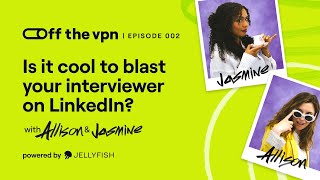
In this episode of the Off the VPN podcast, hosts Allison and an unnamed co‑host (Speaker A) explore the concept of "standing on business" – the act of speaking up in uncomfortable workplace situations. They begin by defining the term, discussing the roots of fear around voicing opinions, and offering practical tactics for overcoming that fear, such as treating statements like a PR release and rehearsing difficult conversations. The conversation then shifts to three real‑world case studies: (1) a job candidate who publicly called out a confusing interview on LinkedIn, (2) a software engineer who confronted a VP of IT about a toxic rotational program in a large meeting, and (3) a junior developer who dominates meetings with aggressive behavior. For each scenario the hosts dissect the dynamics, evaluate the appropriateness of public versus private feedback, and consider the role of managers and leadership. They also provide concrete advice on how to give feedback to difficult coworkers, emphasizing I‑statements, specificity, and escalation paths. Throughout, the hosts stress the importance of building a culture where speaking up is normalized, leaders are present, and conflict is addressed constructively rather than allowed to fester. The episode ends with a call for listeners to share their own tech‑work stories.
Chapters
If this person's really like acting wild in meetings, like, where is the manager? Where are you at? Where is the manager?
Many times, where is leadership?
What is going on? Where is leadership?
You're listening to Autha VPN, the show where two work besties get real about working in tech. What's up?
Listen, I'm actually really excited about the topic we have today. It's one of my favorites. It's about about speaking up for yourself, speaking up in uncomfortable situations, speaking your mind, or like what I like to call it, standing on business. Standing on business, Allison.
Okay, what does standing on business really mean? Break it down.
There are a lot of times people are in uncomfortable situations or they know someone needs to speak up, and a lot of people freeze or don't know what to say or let the moment pass them. And they just don't speak up for themselves or do anything. They will just stay silent. So standing on business is actually making the effort to either speak up or do the thing that you said you really want to do inside, and not being afraid of judgment. Or maybe you are afraid of judgment, but you do it anyway. You do that scary thing and speak up for the thing that you think is important. And so that's how you can talk about standing on business.
I love this. It is so important and yet so incredibly hard to actually do in practice. How do you recommend getting past the fear of speaking up or standing on business?
Yeah, I mean, I think the first question I would ask is like, where does that fear come from? You have to kind of think about what are the things that are really scaring you? Are you afraid of saying the wrong thing? Are you afraid of just, you know, maybe you're wrong. Being afraid of being wrong is something that might stop somebody. It might be whether you're sticking up for yourself or you feel like you have an opinion that needs to be heard. There's always that risk of someone who hears you to not like the thing or feel like the thing that you said was smart, or maybe they think it's dumb or whatever. So I think a lot of people get in their heads about what they say before they even say it. If you're scared, do it anyway. And it takes practice. And sometimes you're going to have conversations like that are scary. It doesn't get less scary. Some of them get a little less scary, but you'll still have conversations that you have that fear. But if you practice it, doing it anyway, you kind of rip that bandaid. You will learn and also kind of work through the scenarios. Like, What do you think is gonna be the worst thing that happens if you say something? I also like to think of it as like you're kind of shipping a PR with your words, right? Like you're never gonna get like a review on what you said or know if the thing you think is stupid unless you say it and you have a response. So I actually think you get better with how you respond to things or your ideas that are happening up here. If you don't say them out loud, no one's ever gonna hear from you. And most of the time it's probably pretty good. So you will actually tune your thought processes, I think, when you kind of send them out there and increase your confidence.
Yeah.
What about you? What do you think about like standing up for yourself, speaking up in moments that— do, do you ever feel that way?
Yeah, definitely. I mean, I think. There's a few things. What you said, doing it once kind of empowers you the next time, and then a little bit the next time, and the next time, and the next time. Because it's exactly as you said, you realize the worst possible thing in your head of like how that will go over is extremely unlikely to actually happen in reality. And I think oftentimes I know that I actually feel better when I do speak up and say something than if I let something slide. So the inaction would actually eat at me more than just taking the leap and, you know, going for it. For situations where I might be like really terrified or really unsure, I will try and find that person or those people to sort of talk it over with me first. And I find that that's really helpful.
There's tons of ways that you can, quote unquote, stand on business, but I think one of them is obviously conflict resolution, where I actually do think you end up out of those situations when you do have a conversation, you do conflict, you know, confront a situation, you are more likely to have a better situation coming out of it than if you just let things slide. It actually gets worse and worse and worse. Like you said, eating away. It might eat away at you, but actually it might have additionally a snowfall— a snowball effect.
Gets worse over time. Yeah, that's a good point. Well, I have a little Am I the Asshole story for you if you're ready.
Oh my God, I love these. Yes, I'm, I'm locked in.
Am I the Asshole for exposing an interviewer/company publicly? So I had a job interview today with a woman who was hiring for an associate software engineer role at a large CPG company. I logged into Teams and she was late by 10 minutes, didn't even introduce herself, and just started asking questions. I was baffled by this, but answered nonetheless. When she started talking about the role, I got really confused because she was saying how I would have to develop Excel reports, do sales analysis, et cetera. When talking about software engineering specifically, She just said that she's a businesswoman and doesn't know shit about coding, which is why the job would not involve anything related to that. That might be a paraphrase. I interjected and asked about the 3+ years experience in full-stack development, AI models, and a bunch of other niche technologies that were listed on the job description, and she said that her husband wrote it.
What? Yes.
Wait, her husband wrote the job description. She said that he's, her husband, really into coding and knows the importance of it, but since nobody on her team understands anything about it, they just outsource that to external software engineers. My role would be to instruct those people. I had prepared 2 weeks for this job, gone through multiple rounds of online assessments, which involves medium and hard level coding questions, only to be told that the hiring manager doesn't understand shit and that their team is completely incompetent. At this point, I thanked the interview and told the interviewer that she couldn't convince me about the job. Basically called the interview done. Later, I saw a post made by her on LinkedIn where she was complaining about how people these days don't want to work and how disrespectful candidates have become.
Oh no. All right.
This really angered me and I wrote down my whole side of the story and exposed both her and the company. This was like a public comment on LinkedIn. Yeah.
Stop.
My comment gained quite a bit of traction and later I got a DM from her where she called me a bunch of obscenities. Is this person the asshole for basically writing that public comment?
Everybody, everybody's doing a whole lot in this story right now. So can we like rewind the job that this person applied to? Did we know what the title was?
Associate software engineer.
So the problem here is like they were hiring an engineer and not to necessarily do engineering, but to manage. Other engineers that are being outsourced, right?
Which was only learned in the interview. The job description stated a bunch of different things, basically, including like they said niche technologies, knowledge of AI models, and full-stack development.
Sure. So I think, I think the thing I'm confused about is like, because they talk to this manager who knows nothing about coding, like, are those technologies included in this software or no? Because there are software engineers that are employed. So this person doesn't know anything about anything. So that doesn't tell me that the— these things are not included in whatever they're creating. It's just that this is outsourced.
Well, the one other detail that this person mentions in the interview is that the interviewer mentioned that they would have to develop Excel reports and do sales analysis. It sounds like in addition to instructing the outsourced software engineers, right?
So I think what I'm saying is like there's some core product that they're doing with software engineers and we don't know what is in that stack.
Yeah.
So potentially that was an entire lie and all of the things that were listed were obviously like, I'm just wondering, is there like an adjacency? Like actually they're not totally lying cuz the product or whatever their software that they're producing with these outsourced engineers have these things, which I, I kind of doubt. But I'm like wondering like, what does that tech stack even look like? We have no idea.
We don't.
So there's that then. So that's, that's issue number one is like, okay. Like, 'cause you could hire a software engineer and be like, hey, I don't really know a ton of things. We're looking for you to do X, Y, Z. But like you're asking them to manage other people. That's like a totally different job. Agree that like clearly like the job role was like messed up and they didn't do this appropriately.
Can we talk about the husband for a second?
Yeah. Where did they come in? Like, and then they said this is a large company, right?
Yes. Like, I have a lot of questions about the husband writing the job description and apparently doing that because the husband loves coding and knows the importance of it. I'm like, that's not a qualification to be writing a, a job description.
Okay, so our theory here is that the husband wrote all these qualifications so that this person, his wife, would find the best qualified engineer for the job, not necessarily the job she needs it for. And so now bring in junior engineer coming in and doing all of these things, which I'm curious— they said that they did all of these trainings and practices for this thing. So that they would land the gig. They're doing all of this, like, were there any screeners? Like, what— where were the flags? Like, why do we get this far down and now we know this?
This could have been the first screen, and the person was just thinking, let me practice because I'm going to be interviewing. And so when they said they prepared for 2 weeks for this job, I'm wondering if it's They did LeetCode exercises, right? And it wasn't specific to that particular job, but we don't know.
I see. So they like prepped, did all this prep work for like probably like the first call and it was bad. I wanna find like the empathy here of like maybe this person legit doesn't know they're, they hired for the wrong thing. 'Cause if they're doing like a bunch of rounds, this is like a later round to find this, that's bad. But if this is like the first call and you spent 2 weeks for like a screener to find out it's the wrong gig. That's probably less like, like, that's, that's more normal. Not normal, but that's more common than you would think, right? Like someone kind of tweaking the requirements, especially if this person knows nothing. Obviously they messed up, but like, I don't really put as much issue into the person who put out the rec. Like, I think that you sometimes have a first call and you're like, oh, this is not the thing that I want. So I think if it's a first call and it's not the thing that they want, and that's nothing crazy, they were late. Okay. Yeah, that's not a good signal, but that's not— again, listen, it was so worse things. I've, I've, I've seen that. I've been late to an interview before. I know other people have been late to interviews, either I as a hiring manager, or I've had people, me being late, and then I've had people who were late. And like sometimes just things happen. Not introducing yourself though is weird. That I will say.
Just calling you a bot with questions.
So I think this person genuinely doesn't know how to hire and is bad and maybe doesn't know it. And I would understand being frustrated about it, but also I think like part of this is a learning experience of like with interviewing, you want to like spend the least amount of time with the companies that don't work for you.
How do you feel about the interviewer turning to LinkedIn? Sounds like recent enough after the actual interview that the author is describing and saying that people don't want to work these days and candidates are disrespectful. What do you make of that?
I mean, I just feel like that is a ridiculous statement to say, like, people don't wanna work anymore. It's just like a very misguided thing to say. And I would definitely understand being mad on the other end of that, of feeling targeted by that, especially since it's so close. We're not sure if they were implying it was this candidate, but I could definitely see that if you've ever been on the other receiving end of something like that on social media. I'm definitely the type to like type a long paragraph but never send it. So no, I am so that person. I will never, ever, ever respond publicly. I like to like just like move on. So the fact this person sent— like sent it is wild. I kind of respect their game though. I'm not going to lie. Like, I don't— it's not something I would do, but it's pretty crazy. I'd have to see what they wrote. Is there any comment about exactly what the text was?
I don't see any additional context other than the author says that their comment gained quite a bit of traction. So we don't know exactly what they said, but they mention they wrote down their side of the story. So you could imagine that maybe it's like this post that I just read in some other, maybe more LinkedIn professional format. Or maybe like way less professional and this person kind of went off. I mean, we just don't really know. That's an interesting question because, right, they clearly spoke out about their interview experience. How angry they were in that comment, we, we can't say for certain, but I do wonder, like, does it matter if the tone was right or not? Should they have done this publicly, period?
It's not looking good. On this interviewer. They're kind of not super great. They don't really know what they're doing. And then they make this comment, which is not great. But like, what are you gonna get out of that? Like, I just don't understand. Like, that's my whole thing of like, why would I respond to somebody being messy on social media? It's like, has nothing to do with me. I don't know, some people do need to be addressed. So I do sometimes feel like, yeah, some— if you feel like it's the right thing, inside, like you feel like this needs to be addressed and this person needs to be told what's up, then like, I respect it. Like, I actually don't, I don't judge them for responding. I think how they respond is equally as important. Like if they were just saying some wild stuff, like I'm not with it, but if they were thoughtful in their response and they had something to say and they didn't want this person to kind of walking around talking about them, like. It's like kind of like a bully situation, right?
Yeah, that's exactly where my brain went, right? We don't know who this interviewer is. We don't know how well connected they are. The person who was interviewed, the author, could have literally been like, I need to say something because I can't have this person going around saying that I don't like to work, I don't want to work, and I'm really rude and disrespectful. That I'm totally with. Like, you should absolutely Go and have a conversation with that person to talk through what happened and why they came away with those impressions of you, right? Like try and break that down, whether it needs to happen on a LinkedIn thread or a simple follow-up email or on Glassdoor, like you said. I don't know. I mean, I think it's highly dependent on the individual. I agree with you. It wouldn't be me. I'm the type like, hey, let me send you an email and give you my feedback. If you want to talk about this, we can set up a time to chat on Zoom or whatever. But that's also because I'm scared of social media and LinkedIn, so I could never. Wouldn't be me.
Yeah. In person, absolutely. I would say something in person. On social media, especially if they didn't tag me or something, I'm the first to—
Can you imagine? People don't like to work. Yeah.
@jasminn. And I'd be like, you're right, I don't. Somebody put me on a yacht. Like, I'm over it. Um, just kidding. But it's just like a crazy, like, you don't wanna work, but you're in an interview. Like, what? But also, how do they know they're talking about them? That was my thing is like, it's a huge assumption. You don't know. You don't know if that person's really talking about you. They're clearly interviewing, so they might've interviewed somebody else or multiple people. Like, you just outed yourself and put attention that you just didn't need to. I don't know what this person said. So for me, like, this whole thing is just like very one-sided. There's no like clarity about the other person's point of view. And that's why I can't like make a judgment call. Cause it's just not—
we need the interviewer here. Yeah. Okay. So the ruling is we have no ruling.
Yeah. I think there's no ruling. Do you have a ruling?
I agree. We don't have a ton of information. I don't think we can say this person is an asshole. For exposing the interviewer or company without knowing how they did it. But I hope that they were respectful because yeah, let's not fight violence with violence, you know?
Yeah. So I wouldn't say not necessarily an asshole, but there's some room there that if there was some more information, maybe. So I have a story for you, and this is about giving that feedback, standing on business, and it just going completely wrong. All right.
And ready?
So this story is actually from a TikToker I found, Amiza, and it's about one of the worst days of her life as a software engineer.
Oh no. Okay.
I know. So I'm locked in. Buckle up, lock in. Like it's, we're, we're, we're getting through it. One of my worst days at work ever in my life, in all of my jobs, was at my first job. I was a software engineer. I was in the rotational program and we went to this room and we have this big meeting with one, with the vice president of IT at the time at this company. And he was asking us about our experience in the program and if we liked it. Now at this point, so many people had so many issues with the program. We would all talk about how much we didn't like it, how we got played, all of that. But when we got in this room, nobody said anything. This was like my second year in corporate America. I didn't know that you weren't actually supposed to say what you thought. So when he asked a question, nobody answered. I raised my hand and I was like, well, it really feels like y'all don't really care about us. And you know that y'all don't care about our career growth and that we feel like cheap labor. Now, I don't know if that's exactly how I said it, but whatever. I didn't say it in a rude way or anything. Just in a very matter-of-fact, like, this is what has happened and this is how you made me feel and other people feel this way too. And he goes, do you really think that? You know, that's how we feel about y'all and that's how, that's what we think. And at this point, people in the room are giggling. People are like shook. Nobody expected it. And I said, mm-hmm, yeah, that is exactly what y'all have done to me because I described exactly what had been happening to me. Now remember, I've been there 2 years now, so I'm honestly fed up and just trying to be polite. Well, when I tell you this man gets in my face, he's like, we never would have done that to you. The shock, the horror. You could hear a cotton ball drop in the room at this point, and I felt so unsupported. The leaders of the program were in the room and they didn't say anything. Nobody else in my cohort spoke up and said anything, and I just sat there and fizzled. I was pissed off. It was like whisper yelling. I don't know how to describe it, but it was so shocking to get that type of behavior from a vice president of IT. So after all that happened, the meeting ended. I was pissed off. Everyone comes up to me and they're like, oh, I'm so glad you said something. Like, I can't believe he did that to you. I can't believe, you know, whatever. I'm like, where were y'all in the room? Where was y'all in the room when I needed y'all? Like, Y'all agree why y'all didn't agree in front of him. Like, why didn't y'all agree? So anyways, the workday ends. I immediately go to an interview. It's one of these staffing agencies, so nothing really comes out of it. But I did start studying for interviews and eventually left. But yeah, that was my worst day. That was my worst day at work ever. I've never been so disrespected and humiliated in front of a group of my peers.
I am sweating from that story. My palms are sweaty.
I feel like I was there. Like, I was just like, ah, ah, ah.
I hated that so much. Okay, first of all, I have so many reactions. I, I do love that she was like, I didn't know that in corporate America you're not supposed to say the truth. Like, yes, you can. It's okay. But it's just funny because like, obviously it's not very common. For people. As we said in the beginning, it's not very common for people to feel comfortable speaking out or speaking up about something. And so that's obviously what she experienced, right, when she went ahead and did that. I was like, okay everybody, now's your time. Like, I know you all feel the same way. And no one said anything. That is crazy. I would have turned on all of them and been like— like, I would have called on someone. I would have been like, tell them, tell them, you tell them.
And this is in person, so you know it must have been painful. That is why I'm sweating. This guy raising his voice or like yelling is such a wild thing. There is no way.
She said he got in her face, right?
Yes.
Okay, like every HR violation flag that I can possibly wave. Like, I'm very confused how this person's, like, stayed at the company still.
I—
it's fine, we'll just—
I feel like this is more like, because people don't speak up, people like this get away with poor behavior, you know what I mean? But someone did speak up. No, no, no, no, no. If one person speaks up, it's not enough. Like, you need others to, like, also do something. Because, okay, so she was speaking up about something. Yeah. Once someone was doing something in a meeting that wasn't okay, someone else should have spoken up. This was like a, a net. Absolutely. This is like a domino effect of stuff happening.
Yes. You know, sorry, there's two versions. There is no one spoke up to sort of back the feedback, right?
Yes.
And then nobody spoke up when this VP started behaving in a way that was completely out of line and inappropriate. There's like exactly two layers to this.
Exactly. And I think like this is, this is what I mean by when I think about standing on business. I actually think what she did was awesome. I think if those were her exact words, I would maybe revise. This is the thing I was talking about where I think you have to practice speaking up. Like I hope she doesn't take this as like, oh, like she was saying, only two years in corporate America, you're not supposed to say how you feel. I hope that that's not what she takes into her career because I actually think speaking up is important. I think how you articulate that point in corporate America is the thing that needs to get tuned. If I give you feedback, I can be like, Alison, what are you like, bro? What are you doing?
We're very right.
And that's because we have trust and you know where I'm coming from and I don't have to like be as like, I'm thoughtful, but not like to a degree. I think with a something like this, I still would've spoke up about these issues, but I would've been more thoughtful about how they'd be received so that it actually progressed something forward and started a conversation, right? So it actually starts like a conversation. I mean, that doesn't make the vice president of IT, even if someone said some out-of-pocket stuff, as a leader, you're supposed to know how to de-escalate and also know how to help someone articulate those things. If someone was coming up to me and telling me, like, as like a manager or whatever situation I'm in, and they're like, you're just trying to take all the money out of me and you're cheap labor, my first response wouldn't be like, you're wrong. Like, you can't just invalidate someone's feelings. Like, and there might be truth to that. And then especially if she said other people feel this way, I would— my first response wouldn't be to defend, it would be to inquire. Right.
Hey, ask questions.
Tell me more. Like, I'm like, okay, that is certainly not our intention. Can you tell me more about why you feel that way? How could we make this program better? And there's a way to de-escalate and change the narrative of that situation so that you're also like protecting the company and you're think— bearing thoughtful. That is like the mark of like a good leader.
Yeah. I think it's a really good call out too, to talk about the way in which you deliver feedback and the skill. Involved in doing that that maybe was missed here. I do have a lot of questions though about this being— maybe it's unclear from the story— a team-wide feedback session. Is that how you prefaced it? I can't remember.
He asked a question about what they thought about the program.
Okay, right. While we're all in this giant conference room together, like I take a little bit of issue with maybe that being the first opportunity to really give feedback. Like, maybe that's not true, and I'm assuming that, but I do think that, you know, if this person were to have more time to prepare feedback, or if they were working one-on-one with their manager and not in this giant room, like, maybe— I'm not at all blaming their feedback delivery on how this ended.
No, I think even if it's messy still say it. Like, I still think regardless you should say it, and you can revise later.
I do think that the— in terms of giving feedback and asking for feedback, a large conference room is maybe a questionable way to do it because you either get people are terrified and don't say anything, or like maybe you end up in a situation like this, which I think is really painful, right, for the person who delivered the feedback. To basically speak on behalf of the group and then have no one back them. If everyone was sort of having manager conversations one-on-one or in smaller groups along the way, like that feedback would've maybe accumulated more in the sense of like people were more comfortable to share it one-on-one. And then like that actually becomes a vehicle for bringing that to a larger group later. Right? As opposed to the situation we all ended up in, which is where nobody said anything because they were too scared. So we think you also have to make space intentionally as a leader for people to give you feedback in a way that is comfortable. And if we're—
you're totally right—
being honest, a giant room is usually not the right venue for that.
I feel like this person, like the vice president, was like gonna be like, so what'd you guys think of the program? And everyone was just like It was good. Yeah, it was fine. I learned so much. And she's just like, we all think it sucks. He did not— he was not ready for that.
He was not ready.
He was not ready.
That's the risk you take when you ask an open room for feedback. Yeah, I don't know what you're gonna get.
And I feel like I would be pissed too if I was her, but I would also be very proud. Like, I think you should feel pride in the fact that you were the one in that group brave enough. But I think it's unfortunately a sad lesson. I've been in scenarios like this where I've said something and I was sweating, like saying something in a room. I've done this like maybe virtually, but I've done this before where I said something and I was sweating and I'm like, oh my God, oh my God. And I felt good that I said something or someone said something to me that wasn't okay and no one says anything in the moment. It's like feels like a million years are passing. And then I get like 20 people coming up to me afterwards, oh my God, I wish I said something. I'm like, so do it then. Like, this person felt completely alone and she stood up for all of you, you know? Like, you got to move past that fear and get over it because this was— this is not— it was just wasn't cool.
I genuinely hope that the outcome here was positive. That's one thing we don't know, right? And by positive, I mean that the leadership team, the VPs, what they took away from this was actually some of the feedback, because I'm assuming this is a program that runs annually.
I doubt it. The way that they responded, I completely doubt it.
Well, was it everyone or was it— I know everyone was silent, but it was that one VP that responded. Violently, but like we don't know about what happened afterwards.
Yeah.
Right.
We don't. So there's a glimmer of hope. My, okay, so it's an opinion. You can have a glimmer of hope. I'm gonna say no, they probably still suck and we should go find out where this place is and never go there and comment on their LinkedIn. You can be positive. Yeah. And comment.
Alright, so we've talked about two scenarios where people are giving feedback, right? They are speaking up, they are speaking out, they are standing on business, they are giving feedback. We question how they're doing it, but we know why they're doing it. I have a question here about how you might give feedback to your coworker who who's on paper and in practice really impressive and really good, but maybe they're a little aggressive. Are you ready to give this advice?
I love giving advice. It's my favorite.
And you're good at it. That's why we're here. That is why we're here today. Let's go. Here we go. I joined this new company and there is a specific person on the team who loves shouting. And dominating the room. This is so disrespectful, but no one is reacting to it. I've been observing this behavior for a year, and this junior dev is a person who just loves to impose their opinions, which are right 70% of the time. To be honest, she is smart and brilliant, but her delivery is always aggressive. Hmm.
Okay.
Mm-hmm. In today's retrospective, she basically glared her eyes and started shouting at something that bothered her and then continued to be rude randomly throughout the meeting. All the other seniors seemed to go easy on her, maybe because she gets the work done, but the attitude is so disrespectful. Maybe everyone is quiet so they don't lose an asset? Yes, she is fast and a perfectionist, but is it worth it? I might quit soon because this is not for me. It is like babysitting, and the younger juniors who work with her follow her lead because they can't beat her, so they join her. What is going on here? Has anyone ever come across a person who is equally good and disrespectful? How to deal with such things? And why is everyone so quiet about it?
That quiet. We talk about it, no one's saying anything, no one's saying anything. Someone's got to be the one to say something.
Mm-hmm. There's a lot of assumptions built in here, right?
I was thinking the same thing. I feel like anyone who writes these things, I am always looking at them with doubt. I take everything with a grain of salt.
We're data people. We need, we need the evidence. But I think maybe for the sake of giving this person advice or talking about how to speak up about something that everyone else is being quiet about. Maybe we assume some of it is true. Like we just take it as fact.
I will have to, because otherwise I feel like I won't get through this one. Cause I have a lot of questions of like, what do you mean by aggressive? The first thing I say to any IC who has a conflict, anyone, the first thing I ask them is, Have you tried talking to them? I will tell you, probably 90% of the time the answer is no, they did not even try talking to them. So you have to do that. This person didn't mention trying to have a conversation, and that would be the first place I start, is actually addressing it. Obviously you will need to be thoughtful about how you approach that situation. I think like you said, this, this perspective is very loaded. Like clearly this person has been dealing with this for a while. Over a year. Yeah. So a lot of this has built up assumptions and honestly at this point it might be hard to undo any of this. My first advice would be get a time machine and have this conversation when it first started. Uh, that would be my real advice. Now that it's a year later, there's a lot to unpack. Here, and so you kind of need to revisit and kind of throw away all of your assumptions and say, hey, here are the challenges that I'm having with working with you. And if that doesn't work, speaking with your manager, or maybe even starting there and having that conversation to help them, they can help you. They can either help to facilitate that conversation or they can handle it themselves if they're noticing that, uh, this is an issue and it's impacting other areas, or they can help you empathize in some way if they do have this person as a report. Those would be my first places to start. I have other advices, but I'll leave some— I'll leave it to you.
Yeah, I mean, the person that's described is someone who, quote, loves to impose their opinions. I think that's a really interesting behavior to narrow in on and address with that person. We love technology, we love coding, we love having opinions, right? Like that's just very common in this field. And I think it's an art form to learn how to manage your opinions with other people's opinions when it comes to tech. And it sounds like, again, if we're taking that as truth, that this person does just come into meetings and just like, listen, this is what we're gonna do, this, this, this, and this, and it's like aggressive in nature. I think that is a very concrete thing that you can focus on in your conversation with that person, right? It's very easy to say like, this is the observed behavior and this is how it makes me feel when I have maybe differing opinions, or like we can talk about all the other people in the room who— this person does say, you know, people just tend to follow this person maybe sort of blindly. That's what they made it sound like. But we can talk about the impact that that has on the entire team, right? When someone comes in and says, this is what it is, this is how we should do it, blah, blah, blah. Like, it's not leaving space for anybody to share their own thoughts or share their own opinions. And like, that's kind of the creative fun part of this job, is like the different ways that we can see a problem and sort of approach a solution together. And so I think you're totally right, starting with talking to this person needs to happen. But this— the person giving the feedback also, I think, needs to be really concrete about what has been going on versus just being like, you're angry all the time, you're aggressive. Like, yes, it's not going to be helpful whatsoever to approach it without sort of that level of specificity.
So I agree with you on focusing on impact and not the reason why you think— like, if you come into something and you have a conversation with them and you're like, you're aggressive, immediately that person's gonna be on defense mode, or they're gonna be like, What are you talking about? Right. But I think if you can explain it in I statements, here's how this situation made me feel. Be specific. The thing I disagree with what you said, and maybe it's not a disagreement, but I wanna say to be careful of is focusing on yourself. Like, especially if it's IC to IC, don't be like, oh, they just follow you and try to express the impact of others. Make sure you're not doing that. Like stay in your lane right now. You can maybe raise that concern with a manager who can assess that, right? That's not your gig. Or if you're close to those ICs who are impacted, you can help them. But I would say focus on your relationship to this person and improving it. And that is like a really good step. Outside of that is kind of outside of your scope unless you build that relationship with them. And then maybe you can say, Hey, I see this person trusts you with that feedback. Hey, I saw these things and I'm curious of what you think. This is kind of my perspective. I feel like they're not really making opinions and they might just be following you. And I actually think if they did these things, that would be better. So there's other ways you can help those people find their voices other than just taking down that one person who has opinions. Maybe rather than taking them down, you need to be focusing on bringing those other people's up, right? So that might be a better way to influence the culture around you than this person's this only problem. There's other problems here. Like, if this person's really like acting wild in meetings, like, where is the manager? Where you at? Where is the manager?
Many times, where is leadership? What is going on?
Where is leadership? I mean, either they're not aware or they don't agree this is a problem, Right? So that's the thing. So I think talk to the person yourself, build a relationship with them, understand them, and try to give feedback.
Be specific.
Try to make that better. Be specific. Talk to the manager about your concerns. It's literally their gig. It's their job to make sure that like team culture is good and everyone's working well to each other. If there's some HR violations being like swung around, like they're supposed to be the ones who report that, you know what I mean? So get that off your plate. And then if all of this is— if they're just like— this person was saying like, oh, maybe they're just letting the bad behavior because they're a good dev, which that is a tech culture thing, unfortunately, of like, what is the like, like prickly engineer? Or like, oh, like really good engineers don't always have good attitudes, or they're like very like, you know, they have lots of opinions. Like they don't always have the best people skills because they're good engineers. Trash. I don't care. I don't care. I don't— trash. That is not an excuse. Like, people can work on it. There's no reason to be rude to people and messed up. Basically, I'm trying to say there are many reasons that can impact someone's behavior. But if we set the standard of, oh, if they're good, they don't have to improve, we already lost.
Yeah.
So I think we can accept that people need to improve and that they come into situations, maybe they are a little they can work on it. But I think if we just say, oh, that's just how they are, we're never going to get better. So I think expecting more and working on people to improve is the way that we get better.
One other thing that I think is important to mention here is this idea that you sort of just started on around making sure that you try and actually help that person improve. And in some ways it's not even about that person necessarily, but this idea that the author is just ready to up and quit this job and go somewhere else. Like, okay, maybe that solves your temporary situation, but like there might be other people out there that are like this or worse, and this is an opportunity for growth on behalf of that individual that you're having conflict with. And for yourself to learn how to actually address feedback with a person who's quite difficult to work with. You may encounter that in every single future job. And so to me, like, leaving isn't the right solution unless you have tried all of the things that you already outlined. And I think that's really important to, to call out.
And also you're talking about this, like, they need to go and address this. The gag is they're complaining that no one says anything, but they didn't say anything.
Facts.
What are you mad for? You're doing the same exact thing as everybody else. Yeah, so be the change, you know, stand on business, say what's up, this is not okay for me, this is not okay for others, this needs to be resolved. And you will learn a lot by working that way. Thanks for listening to Off the VPN.
If you have any juicy tech stories or some burning questions that need answering, visit jellyfish.co/offthevpn to share them with us.
We want to spill them on Off the VPN. And don't worry, we'll keep it on the DL.
More from Pamela





68% say AI enhances efficiency. But only 10% report strong AI enablement. More trends on May 7.

68% say AI enhances efficiency. But only 10% report strong AI enablement. More trends on May 7.




