
Making Inappropriate Words Beautiful
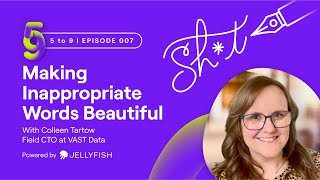
In this episode of the Five to Nine podcast, host Andrew Lau interviews Colleen Tartu, Field CTO and Head of Strategy at VAST Data, about her passion for modern calligraphy. Colleen explains how she discovered calligraphy on Instagram during maternity leave, took online courses (Calligraphy 101 and 201) and used the practice as a calming, meditative break during the pandemic and in her high‑intensity tech role. She describes the tools of the trade—pointed pens, interchangeable nibs, various inks (including Moon Palace Sumi and homemade gouache mixes), smooth paper, and starter kits like Japanese fudenosuke pens—along with how she stores them in a tackle‑box‑style organizer. Colleen shares how she integrates calligraphy into work (fidgeting during meetings to stay focused) and personal life (gift cards, holiday cards, a commissioned Ruth Bader Ginsburg piece, and occasional off‑color phrases from Crooked Calligraphy). The conversation touches on developing a personal flourished, slanted style, the community she found on Instagram, meeting fellow calligraphers at work, and the broader cultural context of handwriting versus digital communication. She reflects on calligraphy as a form of meditation that helps manage anxiety and slow her brain, and offers practical advice for beginners, including starter kits, basic supplies, and online classes.
Chapters
calligraphy is a really good way of like pausing and forcing myself to like breathe and think about something other than work.
This is 5 to 9, the podcast where we discover the hidden passions and hobbies that engineering, product, and technology leaders obsess over when the workday ends. So thank you for coming here and joining us here. So first of all, for all the folks listening, Can you please introduce who Colleen is and tell us a little bit around like what you do for work? And then like, we'll jump into the actual real meat of the podcast.
Okay. I am Colleen Tartu. I— Andrew, we've known each other for like a year or so, something like that.
But old school friends.
Yeah, I feel like we've both been on the Boston tech scene for quite some time. I am Field CTO and Head of Strategy at VAST Data. VAST is a data platform built for AI, which is very timely given the whole hype around AI right now, which is pretty cool. And I've just been like a like a wicked data nerd for a really long time. So data and engineering and analytics from lots of different angles, lots of different companies.
Yeah, data tech baller, right?
I like this. That's exactly what I am.
Yeah, tagline.
Thanks.
Trademark hashtag. Well, yeah. Okay, well, thank you for joining us here on Five to Nine. Um, I, I think you got the premise when we talked about it last, but the idea is to actually talk a little about the stuff that we do after work. Right? Because it like is part of the whole Colleen. But it also, um, I think it's actually helpful to understand how you got to interleave into life and stuff. And so when we were talking, I was surprised, uh, about what you do as one of your things that, you know, many things that keeps yourself sane. And you talked about calligraphy. Did I remember that correctly?
You did remember that correctly, yes.
Okay, well, I, I said there, we're like talking about things we do, and I got a glitter. I was like, whoa, I have some strange stuff, not strange bad, but just not every day that I meet someone that actually does calligraphy. So maybe you can introduce what calligraphy even means. Because in my like 10-year-old self got a kit at some point and had like a little fountain pen thing. And we like, and, and I think I went to visit, you know, Liberty Bell or something like that and got like a, like a feather that they cut into a thing and I tried to use it. Right. That was my exposure to calligraphy. Am I the right neighborhood? Is that what calligraphy is?
Sort of, yeah. And you can use a feather, I think. I don't own any professional-grade feathers. I just use a pointed pen and nib. And if there is a video, you can see it looks like this. But it's basically— the idea with calligraphy is that you have what they call a nib, which is the point, and it has two or more prongs, and you put ink on it. And as you press down, the harder you press, the farther apart the prongs go. And the ink flows heavier or lighter depending on how hard you press. And so it's partially that. It doesn't have to be that. It's typically that. But then it's also the style of writing. So it's not handwriting and it's not just cursive. It's actually the style of writing. And so there's like ye olde calligraphy, which is like medieval or the Liberty Bell or, you know, the kind that you could barely read because it was so fancy. And then modern calligraphy is much more legible. It's much easier to read. And I got into it. I discovered this app in like, I want to say 2018 called Instagram. Perhaps you've heard of it. That thing. Have you heard of it?
Yeah. And this didn't happen until we put it on Instagram. So let's make sure we get there.
Yeah, that's true. So I discovered Instagram. I think I was on maternity leave and my friend was like, you're not on Instagram? And I was like, I don't have time for that. And now I'm obsessed with it. Of course.
I'm so excited. I was just thinking to myself how this even connects, because first of all, we define calligraphy, it's a potentially a feather and there's prongs involved. And then we're at Instagram and we're like here and here.
I know.
And I'm excited where they come together. So like, okay, well I'm with you. 'Cause I like Instagram and I have a feather pen, so let's go the two. Like, yeah.
Instagram obviously sends you down these rabbit holes and you know, like Meghan Markle fashion or, you know, like people prepping lunches or whatever. And, but like one of the rabbit holes it sent me down was watching people do modern calligraphy. And I don't know how the algorithm found me, but I started getting really— it was just very soothing to watch people do it. And it was really interesting to me because it's different than the way you write normally. And, you know, in a lot of ways, handwriting is becoming a lost art, etc., etc. But like, it was just really beautiful the way some people will do this. And then I stumbled upon this woman, her name is Sheena, I believe, and she has a company called Crooked Calligraphy where she does a lot of like off-color phrases in calligraphy. She does a lot of like swears and stuff in calligraphy, and it's hilarious because you're like, oh, look at that beautiful thing. But then when you read it, it says like drop some F-bombs and stuff. And so I thought that was hilarious. And she teaches classes, and it kind of was always in the back of my mind that I was like, oh, that'd be really fun.
We're in a podcast, but we're allowed to say it. So like, what is your favorite swear here? Like, it was a calligraphy form.
I mean, it was just like 'Like, take the motherfucking leap' or something, you know? And it was just like, it was something really funny. And I just remember being like, 'Okay, that's hilarious,' because it was like, 'take the' was really small and then 'motherfucking' was like very flourished and fancy, and you almost didn't know what it said at first. And you're like, 'Oh, oh, okay.' So when the panini hit, when the pandemic happened, you know, much like most people, I went through the phases of like sourdough and banana bread and organizing my house and all that stuff and teaching my kids. But I found that, you know, I definitely had those hours post-child going to bed and pre-my bedtime where I was just like, my husband and I were like binging Tiger King like everybody else and doing all those things. But like after a while, after 6 months of that, you're like, I need a project. And so I decided to take the course and I took 2 courses actually, Modern Calligraphy 101 and 201 on this woman's—
this was the long game in 2018. Yeah. This woman was running it. Big Calligraphy was running their game on you to be like, let's put the algo on Colleen and wait for a couple of years and a pandemic to hit to take the class.
Oh, I am their ideal customer profile right here. Yeah.
Okay. Well, so I get it. So now I know what calligraphy is from the technique. I think I now know how you got there. Okay. I'm like, I'm piecing this together.
Okay.
I think I know what it is. But then I still don't know where the hell do you use it, right? So I get you to get into the class, then what?
So I, in my role, I have a lot of online meetings, and this is not an online meeting, this is very different, very, very different. This is incredibly different. I have— I am 1,000% focused on you, Andrew. However, there would be meetings like company all hands where like you need to pay attention but you're mostly listening, or you know, I did like courses, online courses and stuff like that, but like I would be sitting at my desk and just staring and like I would get distracted or I would like fidget with things. Like right now I'm fidgeting with little things on my desk. And so it became something that I was doing while I was in meetings, and it actually helps me listen better because I don't have to spend too much thought on what I'm actually It's more drawing than anything.
Yeah.
Um, but it's not something I have to give a lot of attention to, but it's, it's very soothing and it's kind of like a fidget in itself. It helped me focus on the meetings I was in, and so I did a lot of that during the pandemic.
I do less of it now, but hundreds of thousands of sheets of paper where they're like, I'm a fucking motherfucking baller, Colleen, like written in—
yeah. Oh yeah, I write some really filthy things sometimes, but my kids can now read, so I gotta be careful.
Yeah, right.
Even though it's like calligraphy and they're like, what does that say? And I'm like, okay, good, you can't read calligraphy yet. I have like a little thing next to my window that says, "Don't fuck up," right? And it's like very flourished and fancy. And so they can't read that.
I could use that right now. I'll make you one. Thank you.
Don't fuck up.
I won't fuck it up. I'm gonna try hard not to because Kali told me not to.
Yeah.
But do you have another place to actually put it? Like, do you do— because so, because we're talking about this, I picked up on your, your quirky cool thing you did because my daughters and I were at this kind of festival and I don't know, the river the other day and they, there was a giant booth from the Tourism Bureau of South Carolina, which is itself like crazy.
Oh, okay.
But they, they were offering free luggage tags where they like monogrammed your name. And I was like, this is pretty cool. And I was like talking to the people there. I was like, there was like a bunch of them, right? Like, and also you could, you know, feel the crowds for these things. And I was like, they're like, oh, we're part of the, like, we're on-call calligraphers. And like, there was like mailing lists that like whenever they like, it's, it's like a side gig. Is this, Yeah. So do you— are you doing wedding invitations? Are you like writing constitutions? Like, what's happening?
I am writing the constitutions for several companies. That is true. I haven't gotten to the point where— I have had exactly one commission, and it's a friend of mine, and I was like, I can't take money for this, I'm not like a professional. And so she was like, well, just tell me what charity to give money to. And when Ruth Bader Ginsburg died, we were both obviously very upset, and I saw a— I don't actually have it, she has it, but it was a calligraphy thing online where there was calligraphic drawing, which is basically drawing with calligraphy pen and using the like thin and thickness of the lines to make Ruth Bader Ginsburg's collar. You know, she had those fancy lace collars. And then in the collar it said Ruth Bader Ginsburg with her birth and death dates because it was just like really sad that she—
so you made—
she died. So I made that and she bought it. I think she bought it for like $50. It wasn't like significant, but that is the one thing I have sold, and she has it framed in her office, which is kind of cool.
So I think it's good. This makes good t-shirt. You should, you should press a few of those things. You should buy it back and make a t-shirt. Yeah.
And so other than that, like, I don't think I would ever do wedding invitations. Like, I don't know, I think that sounds like high stress, right?
So this is your artistic expression. This is your chance to kind of, uh, like a little soothing break mentally on things.
Yeah, but I've done like any time, like when my kids' teachers, when we give them end of the year gift cards, I'll like do calligraphy on them or I'll do like our holiday cards, our family holiday cards. I always put calligraphy on them because if nothing else, I can use it. I like mix my own inks and stuff because that's what you do and it's really cool.
Okay, so you described this pen thing, not Andrew's Feather, but like these two metal prongs. Let's talk about the equipment. Like, what goes on to do this? And like, is there like a well? Like, someone here at work actually writes with like an inkwell.
So like any good hobby, there's like a ton of gadgetry, right? Like, is it even a hobby if there's not like a ton of stuff to spend money on?
No, you gotta dump money into this thing.
Right? So there's obviously, there's actually like a really wide variety in pen holders, the actual thing you hold on to. And the nibs, which are the things with the multiple prongs. Yeah, the tips. And you go through those not quickly, but like, you know, if you're doing calligraphy every day, you'll go through them fairly quickly. So you have to like replace the nibs and there's different kinds of nibs and there's different sizes. And it depends if you have a heavy hand or a light hand. I have medium hand, but like some people write heavier or write lighter. And then there's the whole world of inks. And so there's like the standard ink, which I think is called sumi. Moon Palace Sumi. It's like very basic black, like ink. That's— I think it's like Japanese calligraphy ink, right?
Moon Palace ink, of course.
I know. And of course. And it's just like plain black ink, but it's like the consistency I learned with. So to me it's like the perfect consistency. And then you can buy inks, but some are too thin, some are too thick. So you have to buy like gum arabic to like mix in to thicken it, or you can just thin it out with water. And then you can also buy like a watercolor mix at like Michaels. And it comes in these little tubes and they're called gouache, and you just water it down until you get to the consistency you want. But you can make your own colors that way, which is kind of neat.
Do you use regular paper, or is my paper, like, from my printer, like, bad juju?
Oh, that's not good because it actually has little fibers sticking up that it would catch on. Yeah, so there's different kinds of paper, but it's a little— it's much smoother. You want smooth paper. So you can buy just, like, high-quality printer paper. That works really well. But you can also buy different colored paper. So one of the things I like to do is like mix my own inks, make really bright inks, and then go on a really dark piece of paper.
Okay, so yeah, opacity. So okay, so like how do you fill this? Like I'm imagining all this equipment, I'm imagining like ink stains everywhere, I'm expanding your hands like— so you're like on regular Zoom meetings, like where do you put all this stuff? Like is it like tables?
I actually, I have this little box If you can see on the video, I have this like box. Yeah, it's like a tackle box almost. It has like little dividers in it, but it has like a ruler and a pencil and eraser and then a white pencil for black paper. And then it has like all my different inks and my nibs and a chopstick for mixing because I use a chopstick for mixing inks and then like eyedroppers for adding like little bits of water, things like that.
It's a— okay, it's not that bad.
It's not that bad. But like at one point I did have just like such a huge stack of papers that I'd like used as practice sheets or whatever, just during meetings. Like practice sheets are my favorite thing to do during meetings. But after a while I was like, what am I going to do with all these? And I just recycled them because I was like, it's too much. I don't need these.
I have kids and I could draw. We just infinite paper everywhere. So I could imagine there's a version of this.
Yeah. So I only keep things that I really like.
This is like, so you started this, you learned about it pre-COVID, you started cranking into it during COVID But now we're like in this in-between space. Like, I think, you know, I see you out and about, we're like meeting up and stuff like that in person. You're not at that desk all the time.
No.
Do it anymore? Do you have a new— like, do you still get the outlet? Like, how do you incorporate it into like regulated meetings and stuff like that? Like, how does it, how does it show up now?
I have all sorts of meetings and I have fewer and fewer large meetings where I don't need to be on camera. And so it's hard to do it during meetings still, but like, I still do it sometimes during meetings. I actually did this during meeting today. It says jellyfish. Oh, that's so pretty.
That is so pretty.
Isn't that cool?
Wow, look at that.
Yeah, so, so I did that during a meeting today. Yeah, during a half-hour meeting. But for the most part, like, I, you know, I need to pay attention, so I shouldn't do it in meetings. So I often do it— I'll do it at night in front of the TV too. It's kind of like coloring, or I mean, sometimes I'll do coloring too. I don't do that as frequently, but And I also, you don't always need to break out like the pen and the ink and the fancy paper. Like you can do what's called faux calligraphy where you're just basically drawing the shapes with a pencil and then you're like covering in lines where it would be heavier. You like just add weight to that line. So you can kind of, I do that in meetings sometimes. It's more like doodling.
I mean, I look at that by the way, it's bigger than I thought. It's beautiful by the way. And thank you. I wanna get that tattooed on my stomach or something like that.
Yes, please do that.
But it's, bigger than I thought. Like, I'm thinking when I was jokingly said you're recopying the Constitution, like, those letters are small, right? But you're drawing things that are like big. And then I— people can't see this, but I've got my hands maybe about 7 inches apart kind of stuff. Like, that's like arm movement, right? That's not just hand movement. Like, it's, uh, you know, you're swinging a little bit on that stuff.
Well, and the trick to that when you're doing something that big, like, there's all these intricacies of like how heavy your your hand is and like how thick the lines are, but then also the slant. You want to get the slant same on every letter and everything. And so with that, what I did was I drew it out in pencil first.
Yeah. And how long is there? Is there multiple takes? Because I, I feel like if I were just freehanding that, I would get my arm swings wrong and stuff like that. Okay.
Yeah. Oh, totally. Yeah. Like I definitely messed with it a little bit as I was drawing it out, but then, but like you can also do it smaller, but that nib that I had, doing small with that nib would be hard because it was a thicker line.
But okay, so there's 9 characters there. Would that— is that like, assuming you're nailing the actual pass, is that happening over like just doing this in 3 seconds? Or is this a like, let me take a second, you know, like I'm trying to visualize how you do that.
Well, when it's something like with the Ruth Bader Ginsburg thing, that was like, I did many takes of that because it was hard. And also the other thing is like you can get a blob of ink just like you can get a blob of ink coming out of a pen and you'll be like almost done. And then all of a sudden, like, you know, like all this ink comes out and you're like, okay, that's ruined. That's totally ruined. But so for something like this, that wasn't too hard because that font is something that's sort of the one I always use. So like I'm fairly adept at making those letter, those letter shapes and things, but you kind of come up with your own style too. Like mine's more slanted and the woman that I follow who taught the class was more bubbly and like kind of, yeah, it's like hard to describe, but she, hers was more bubbly than mine.
And then how did, so like you clearly got your own style here. Are there like, do you like kind of develop over time? Do you like figure out your own look and style? Like, are you?
Yeah, I definitely have ones that I'm more drawn to. I like a more traditional like flourished style, especially on something like that. In the second course, the first course was all about like the letters, 'cause the letters are pretty consistent and there's some basic letter shapes that form all of the different letters. It's not like writing, it's not like cursive. Like you're actually drawing the letters. And so the first course was more about that. And then the second course, Calligraphy 201, was more about the style and teaching how to do different styles and how to make it look like whimsical or make it look modern or, you know, badass or whatever you want to make it. And so I kind of developed my own style, but it's basically like that flourished sort of, you know, slanted style that I like.
Got it. Well, you use the word cursive. I know we both have kids that are on the younger side on this, right? And I've noticed recently they don't like— they don't teach cursive, and kids don't even need to write anymore, right? So like, it's not a thing, right? I remember like in second grade I had to do like all the cursive and stuff like that. Like, what do you think? Should the kids learn this, or is this like— so it's just like your purview? You'd be like, nobody else learned this, this is my thing, right?
It's funny because like my kids refer to it as cursive, and I'm like, it's not cursive.
But then Is that a judgment? If I ever said like, oh, that's a very nice cursive sign, you said to me, you're, you're sitting there cringing.
I'd be like, excuse me, excuse me. So my son is in 4th grade and he actually did learn cursive, I think this year or last year, and it was more like an extracurricular. It was like a fun side project for them. They don't use it anymore at all. They just learned it that one time.
We barely need— I feel like they're not gonna need to type soon, right? Like, they don't.
Yeah.
Like we're in some weird world, right? Yeah, it's voice recognition. Like, it's all— there'll be brain implants soon. They won't need any of this stuff, right?
That's true. Yeah. And, uh, yeah, I don't know. So like, it's kind of becoming more and more of a lost art. And so it's fun though, because it's like, you know, I do type all day, every day, right? And I'm on my phone and I'm on my laptop, so it's nice to be like more tactile with the words you're creating. And it's a form of art and I think it's beautiful. But like, you know, like I said, I also had like a stack a foot high of like calligraphy practice sheets that I was like, yeah, I don't need these.
Fair enough. Have you incorporated into like your, uh, CTOing? Are you out there like writing specs for people in this stuff? Are you showing up at customer events with like big signs?
Yeah, unfortunately that's not something that people really want. You would be surprised. You would think they would.
You would think like an object model written in calligraphy would be really nice, right?
I mean, I think all data models should be written in calligraphy.
All data models and stuff, right?
Yeah.
Have you ever been like in a situation where you found another calligraphy, like, friend that you ran into? You're like, you do this, I do this. Is it like a secret handshake?
Yeah, no, absolutely. When I finally met people at my last job, like post-pandemic, like 2022, when you finally started going back into the office, there was a woman who was like, she said something, she had like a sticker on her laptop or something that was in like a calligraphy style. And I was like, did you make that? And she's like, yeah, I drew it and then I put it on my Cricut. And I was like, I'm sorry, do we both know calligraphy? And then it was like a whole thing. Yeah. So super fun.
Well, okay, so now that you've been through this whole journey and now it's part of your kind of thing, are there any lessons you take away from like how this changes your work? Or like how you show up at work, or like what have you learned about yourself through this whole thing?
That's a really good question. I think it's hard for me to slow my brain down sometimes, and I just, you know, I sometimes I get going and I need help stopping, and I need to like just slow my brain down, take a breath, like deal with my anxiety about work or home or whatever's going on. And so even just taking like 5 minutes and like writing some random words in calligraphy is a really good way of like pausing and forcing myself to like breathe and think about something other than work.
It's meditation. It's like a form of meditation, right? Yeah.
Yeah. That's a good way of looking at it. Yeah.
Well, someone told me once that, uh, I don't know if it's true, but that like we're kind of, uh, wired like kind of our lizard brain on this stuff. And so actually I think a lot of engineers and folks from technology backgrounds have the ability to kind of see patterns, right? Like, and, and you can, and there's good parts of that. Like, we think of patterns all the time. We think about how this should be built or how should be designed or what's this business gonna do. But there's a downside to it because like, if from a survival instinct perspective, that ability to imagine is a little bit how you can like imagine like there's a tiger coming after you. Like if you see, you know, a brush over there, that means something bad's gonna happen over here.
Yeah.
And there are parts of that brain that can get overwired sometimes where you're like, yeah, you know, like overly fatalistic if there'll be a bad version of it, or like you're overly correlating things. And like, I, I've met folks who are like, part of this whole thing around kind of contemporary meditation stuff is like learning to just slow down and chill because we, we are too good at imagination and too good at patterns. But sometimes the next thing you have to do is just take a step forward, just take the next step. Right. And, and like all these things come down to ways to calm yourself, to get back to the rational part of your brain and not the imagination kind of fear part of your brain.
Stuff like that. Yeah, no, and I mean, I think it's a very creative outlet, and I think during the pandemic I especially needed that, right? Like, we weren't— especially in the winter, right? It was tough. And you know, you're going outside less, you're like— I work at startups, so it's like, you know, hyperscale time. And so it was just— it was hard to like, you know, I didn't have like, you going out to dinner with friends to like, you know, take me out of my space.
I'll go to dinner with you. Okay.
Well, full fix. Thank you. Now I can stop doing calligraphy.
Yeah, you can stop doing calligraphy.
Yeah. It was a nice outlet. And like, I took some more classes. I learned some other styles eventually, but I keep going back to that original style 'cause I really like it. So it's been fun.
Well, Kali, this is awesome. And thank you for sharing this. If there are other people out there who want to get started in calligraphy, like what are your tips besides join Instagram and go to Michaels or like what should they do?
Yeah, I mean there's definitely like kits you can buy that are like very basic. There's actually these pens called, I'm gonna butcher this, I think it's called fudenosuke pens. They're Japanese pens that have the capability to like write thicker and thinner depending on how hard you push. And so it essentially is just like writing with these like ink and nib.
Without having to deal with all the ink and stuff like that.
Yeah, yeah. And so you can do that and like that's a good way of getting started because that can work on any paper. You don't need all the other stuff. And that's actually what I started doing before I took the class because I was like, let me just see if this is actually something I'm interested in. So, and it was.
Yeah. Okay. So I heard, uh, follow your Instagram. Um, you can go to places like Michaels or Amazon and buy kits, maybe these starter pens, and then maybe do an online class like you did.
Yeah.
It's just different ways to do this.
Yeah. And then before you know it, you can quit your job and be a full-time calligrapher.
That's right. And do like luggage tags at food festivals and make signs that say jellyfish on them.
That's right.
I think, I think you should buy back that the Ruth Bader Ginsburg thing and make t-shirts out of it. I think that would sell.
That's a really good idea. Maybe I will.
Yeah, we'll get this. All right. Side gig.
All right.
Well, Colleen, thank you so much. This has been super, super fun. And I look forward to actually hanging out in person soon.
Thank you. Thanks for having me, Andrew.
Andrew Lau here. I hope you enjoyed this episode of Five to Nine. Don't forget to subscribe so you don't miss out on the next episode. Who knows what hidden talents and hobbies we'll discover in the next episode of Five to Nine.
More from Pamela





68% say AI enhances efficiency. But only 10% report strong AI enablement. More trends on May 7.

68% say AI enhances efficiency. But only 10% report strong AI enablement. More trends on May 7.




