
Making the House Move with Jack Walter
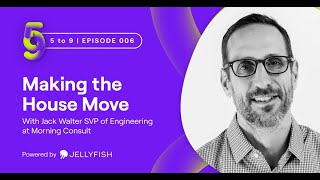
Jack Walter, SVP of Engineering at Morning Consult, talks about his decades DJing house and tech-house music in Syracuse and New York clubs like Twilo and Avalon. He placed third in a 2000 amateur DJ contest, used Technics turntables and Serato software, and explains why he stepped back as his engineering career and family took over.
Chapters
You wouldn't be able to tell from hearing it if it was a physical record or if it was an MP3 player.
This is 5 to 9, a podcast where we discover the hidden passions and hobbies that engineering, product, and technology leaders obsess over when the workday ends. Jack Walter, welcome, welcome.
Andrew Louse.
This is, this is what, this is, we've known each other now for 24 years now.
That's right.
Something like that.
It's been a while. It's been a while.
Let's drop it to folks. Like, who are you? Like, give it a quick intro. What do you, what do you do professionally? And then let's talk about what we're really here for.
I am the SVP of engineering at a company called Morning Consult. I've been doing engineering management leadership for quite some time now. Um, Boston-based, Morning Consult's in DC, so I manage a remote team. Yeah, that's it.
Gear change. Uh, so today we're talking about DJing. All right. So. Let me, let me set the clock. The year is 1999. I meet this guy named Jack. You know, I'm still in college and I walk into the office and this guy has like bleach blonde hair. Where maybe it was 2000, it was '99, 2000. You got turntables, we got the ones and twos up there. This guy's got Technics on the one and two and he's telling me he's dropping like he's club DJing down in New York. And then like, and that was, that was the setup. That was the start for me. So like Give me some context. What was that?
When I was in college, there was, there were these DJs and they're hip hop DJs. I was totally into hip hop in college and they were awesome. And it was like, you go to these live shows and they were small clubs. Like they weren't in clubs. They're like house parties. And so you'd be in like a big, big living room with a couple hundred people, but it was packed and they were just dropping. I mean, my stuff was like Tribe Called Quest and De La Soul and stuff like that. But, you know, Dre was coming out and there was this like the, you know, West Coast stuff, whatever. It was just a good time for hip-hop. Um, it's like early '90s, mid-'90s, and the DJs just owned the room. It was so cool. And we did— I did like basically just hung out by them with a beer, just watching them and watching them like do the crowd, play the crowd, like move the crowd around, like, oh, they're gonna drop this. So I kind of got hooked on just the idea of like, you know what, DJing is actually a pretty fun way I'm actually somewhat introverted at parties sometimes. Like, I like to just kind of like hang on the wall. And so I'm like, this is actually a cool way to do a party. You're kind of like orchestrating the party, but you're in the background. You know, I was not an MC. I never like had a microphone or anything like that. I was just playing music. So fast forward a couple of years, my brother was in school at Syracuse and he got into just the house techno electronica scene. Back then it was not called EDM. And so I, I was visiting him and went to those house parties and it was the same thing. It was just more amped. It was just instead of 90 beats per minute, it was like 130 beats per minute or 120 beats per minute. And people were just like working up a sweat. And it was a lot of fun. And he had some friends who had turntables and who were like starting to DJ these house parties. And so I kind of like saw the same vibe. It was just like a bit of a different channel for music. Yeah. And I got hooked as soon as I had some disposable income. I got some turntables, had a house setup. It's kind of like this rig back here. Got some big PA speakers in my little tiny apartment and just started buying records and trying to figure out like how you beatmatch, which we could talk about a little bit. Yeah.
You got to break that down.
Right.
So we're doing that in a second. Let's talk about those. So I grew up as hip hop kids. So like we have common ground from, from the, the Tribe and like those days and that vibe. But when I met you, you're dropping like French house and all this stuff, like the, and then like you took me to trip-hop, you taught me a different thing. Yeah. How'd you get from, uh, you know, A Tribe Called Quest to, uh, you know, like, like any French house?
Yeah.
Yeah.
And like I said, he was really just kind of like, it's weird. I would, I just have to go back and like look at discographies and stuff like that. Hip-hop started doing some different things and like going in different directions and it was Kind of cool, but it was, there was definitely like new hip hop that was coming out and I'm like, oh, this doesn't sound like, I always loved the jazzy, almost like the Roots and stuff like that. Like that was some of the stuff that I got.
Yeah, the Roots, Jazzmatazz, those kinds of, yeah. Gang Starr jazz.
So whatever, hip hop started going in slightly different directions. So like, and frankly, again, it was, I give a lot of credit to my brother and his friends. They opened up DJ Shadow introducing like the West Coast, like turntablism.
I remember that.
Trip hop stuff. And, uh, yeah. And then house music and like, and the other thing too, I just, let's see for a while there. I was still living in New Jersey, but then I moved to Boston and I lived down the street from, um, Lansdowne. And so back in the day that was, um, Axis, Avalon.
Avalon. Yeah.
Avalon. So I would go to these shows, I would go to these clubs and like, go see like Fatboy Slim, Underworld, Chemical Brothers. And it was just fun. It was like, it was a workout. It was fun. You would go and you would get started at like, you know, I mean, whatever it was Boston. So the scene was totally different. And then after my brother graduated from Syracuse, he was down in New York. I would go down and visit him. We'd go to Twilo. And again, it was just energy. So it's what musically, like it wasn't kind of the same thing, but it was still just playing records and working a crowd and like reading a crowd, either being a part of that crowd, part of that audience, and just like take on a journey through all the different things or being the conductor.
Do you have, I just remembered, I actually remember the one time you're in New York, I actually clipped it for you. I don't know if I still have it or you still have it. There was like a recording in like real audio or real video of you like running like a big club in New York. I gotta, I gotta rummage around for it.
If you still have that somewhere, that'd be amazing. I've looked, I, I like 10 years ago I looked for that and it had gone. It had just gone the way of old internet and kind of disappeared a little bit.
I might have it.
Yeah, that was my peak. That was my peak DJing, was this contest I got into. It was like 2000 or something like that. It was an amateur DJ contest. There were like 10 of us on stage and I came in third and I was playing to like a couple thousand people on a massive sound system. And yeah, it was a blast. That was a lot of fun.
Yeah, it was. I do remember you tipped us on that at work and I think I clipped it and it was like, I mean, it was, it was like a really ghetto, you know, video back then. So it was like very pixelated. I remember saying like, hey, here's a, here's a block that might be Jack, right? You know, he's got his hands up and that must be him.
Pixelated audio was terrible. But yeah, different times.
Okay, you dropped some words there. You said beat matching, we said turntables. So let's contextualize everything before, like, what are these words? What do these words mean? Like, what's all equipment mean? Like, what, how does it all fit together?
The funny thing I tell people is that house house DJing is literally the most simplistic, basic form of DJing possible. Like, it's— there's a bit of an art to it, and I'll talk about beatmatching a second, but relative to hip-hop DJs, to turntablism, to producing, like, that's what, like, quote-unquote real DJs do. And like, the house DJ that's just like, I take one song, I beatmatch to the other, I play the other song, and I play the song. It's pretty basic. Like, it didn't take that. That was the— beat matching was the skill you pick up, and then once you have that, and once you have a record collection, it's— there's— I mean, there's a few other nuances to it, but it's pretty straightforward.
So plain speaking for folks, you got two record players. You got a record player on your left, that's the 1. You got a record player— I'm looking at it here, you got a great thing— and you got the record player on the right, the 1s and 2s. Okay. And then you got the thing in the middle, that's the crossfader, right?
Mixer, which has got a crossfader on it. This is, uh, this knob is a crossfader, and then it's got a couple channels. Can zoom in on that later if we need to. Yeah, so, okay, so you play a record on the one, um, and it's going, and then you cue up a record on the second turntable, and you listen to it through your headphones, and you take one ear off so you can hear the room audio, which is what everyone can hear, and then in your left ear or your right ear, whatever your preference is, You can hear what's coming through on the other record, but just for you. And then what you gotta do is, again, for house, the, the whole idea of a house party, house DJ, is you just keep the vibe going. There's no stopping, there's no slowing down the music. You're at 125 beats per minute and you play one song at that, then you play the other song at that, and the other song, just this continuous like flow. And so you take the second record, you gotta find the right speed because that speed is probably not naturally 125. So we'll talk about the gear in a second, but these turntables have, um, pitch dials on them. You can pitch it up or pitch it down. It goes faster, slower, and then you can manually tweak it too. And so one is matching the speed and then you also got to match the beat, right? If you chop the beats, it sounds called a train wreck. Sounds terrible. So you want both the beats hitting at the same time. So I'm here kind of like keeping the, the, while the first record's going, I'm getting the second record lined up. Spinning it back, kind of finding the right spot where I can drop it in and it's hitting on the beat and it's going at the same speed. And then I'm messing with the mixer and I bring it in and with a house, again, with house music, you kind of bring it in slowly. So you maybe cut the bass and bring the volume up a little bit, but not full-throated. And you kind of get them overlapping with each other. And if you get lucky and are doing really well, you'll get like a breakdown where they'll kind of both be on top of each other. And then you drop the bass out of the one, pull the bass up to the other. And all this I'm doing on the mixer. Slowly move the other record out, move the second record in fully. Now that one's playing, take it off, get your next record, rinse and repeat 10 times. So I did a couple things as I was doing my record collection. First, I would, um, I would annotate the records with little stickers on them that had speeds. So this guy, you can see a 128 BPM on it, so that's how fast that track is going to be. And then the other thing is you can see the big grooves, kind of like the, the larger rings, That's where the bass line's going to go in and out. If there's a heavy bass line, it's pretty smooth. But if there's a breakdown that takes the bass line out, you can see those spots. So you learn to read, like physically look at the record and read the records and know, oh, there's a break coming in so I can mix in here. Obviously when the thing's getting out of the end, it's winding down, that kind of thing. You knew your bag, you knew your crate inside and out, not just the speeds and the breakdowns of the individual records, but also just like, what's this crowd into? Do they want something harder, more tribal that's going to go faster? Are they kind of still just mellowing into this. So like, take it back a notch, that kind of thing. So back to your question, like earlier, like hip-hop DJs do a lot of work with the crossfader. And like, if you're scratching, you're pulling the thing back, you're cutting the volume and bringing the volume back at like crazy fast rates, um, to achieve some desired effect. You do lots of like backspins. And so you'll see a good hip-hop DJ like play 5 seconds of a song. They'll have the same record on the 2 turntables, same copy of same record. They'll play 5 seconds. Spin the other one back, click 5 seconds, spin it back, click 5 seconds, spin it back, 5 seconds. And they basically are almost like, I mean, these days it's wild. You just use a sampler for that. You would like, you would just get like a drum, you know, keypad and sampler. But back in the day, people would like sample live with the actual vinyl, which was always way more technical.
Breakdown. What is the rig? Like, you know, okay.
So from the very beginning, um, Technics SL-1200s, those are the turntables of choice. Those have been like the preferred DJ turntables since the '70s.
Um, that was the same one. It hasn't changed.
It really hasn't changed. I mean, they added a couple features here and there. They came out like a Mark III version that lets you whatever, do some very detailed thing with the pitch control, zero out the pitch control. But it was like these turntables hadn't really changed. Every club you ever went to, any bar that had turntables, they all had the same thing. And you were asking about the earlier there. The biggest thing that they had was their own magnetic drive, not belt driven.
Okay.
So you can just stop and start them with your, like you could hold them and you're not burning out a, um, you're not burning out a drive basically if you hold them in place. So I'm trying to pull the platter off of this thing for a sec. All right. So this is the platter and this is just a, like that's a magnet in there. And the drive has a, has a magnet coil in there. And so it's, again, you can't, it's indestructible. Like you can't burn it out. You, and it also just goes automatically back every time. So it can be spinning 120. I can stop it. I can speed up a little bit. I can drag it and it will go right back to 120 almost immediately as soon as I let go of it and right back to the same pitch. It doesn't like, there's no wobble to it. So one, I was playing a house party up in Syracuse once and somebody knocked into the table that all the stuff was set up on and dumped the entire rig and nothing broke. Wow. I literally picked the one of the, um, one of the handles on one of the, uh, the arms on, uh, one of the needles snapped and that was it. And like everything else still worked.
It's just like solid, solid stuff.
Solid things.
Hey, well, what's the norms when you go to a club? Do you bring your own stuff back then, or did you like—
what, what, house parties? Yeah, part of the, part of the The pleasure of playing house party was you brought your own PA gear and your own turntables and everything because nobody had it. You would go to, obviously big clubs had their own setups and you'd bring your records. You'd bring your needles with you too if you cared specifically about the needles you had. And then, yeah. And then smaller bars that we, most of what we played at were like smaller bars in New York and stuff like that. And those, you know, had turntables and stuff. Just bring a bag of gear and bring a bag of records and bring your headphones. It's kind of it.
I like that good stuff. Right. The, uh, that's cool. What was peak sweet spot of DJ stuff? What are we dropping? Like, this is like Justice and stuff like that, or what was— what's the vibe? Like, what are you spinning right now? Because you pull this stuff back out.
It's funny, when I listen to— right, these days is kind of like still kind of the same. Yeah, I always classified as tech house. Yeah, so techno itself, like Detroit techno, old school techno, is like Kevin Saunders and Adam Byer, like It was that movie. That music was so underground. It never got above ground and always stayed underground. That stuff was really fast, hard driving, tribal drums, some like acid, like synthesizers, acid, you know, effects and stuff in there. I got into that, but then my main, the thing that I mainly fell back to was a slightly slower version of that. That was a little, had some aspects of house music, a little more melodic. House music was like from the '70s and '80s in New York and was very like soulful, lots of like female vocals and soaring vocals. With like a 4x4 beat. And so tech house was kind of like the slow and sometimes melodic 4x4, slower meaning like 120, 130 beats per minute.
Yeah, you must have one queued up here. Hit me with something so I gotta hear this. Yeah, sure. So I, so I, I can catch you what you're talking about here. All right, can you hear that?
Yeah. Okay, so that's, that's 120 beats per minute, part 23 of that. And if I fast forward this, there's like a little smooth bit.
Yeah, this makes me think French for some reason. I don't know why, but like, and the palace.
So that's my— that was always— that was my sweet spot. My best music, my best like records and the stuff. And I still kind of listen to it today. There's new stuff that's coming out, like that track. I was just playing. What is that? That's like 5 years ago or something like that.
Oh, okay.
Like that's not actually that old.
It hasn't evolved that much then on this thing.
The other thing we could talk to you about too is Serato, because that actually, that record that I was just playing—
Yeah, what is Serato?
Was that actually a record? Was it an MP3? Okay. So Serato is a piece of software that basically allows you to use the turntables as physical controls for playing an MP3. And it blew my mind when this first got introduced to me. This was like in the early aughts is when it came out. Um, but it's—
so wait, this is not a real record?
Not a record. There's a record on the table, but it's not a real record. So let me get—
so is it like a record that just plays like blips that it knows how to read the other side of it to know how fast it's going?
All right. So first part of Serato is this piece right here. Which is, uh, basically a USB controller that is plugged into a laptop over here.
Okay.
And then the red and whites coming out of there are from the turntable into the mixer. And this record on here is actually not a real record that has music on it. It's, uh, a dial tone, basically.
Okay, okay.
And so what happens is when I put the needle on, um, I tell the software, hey, I want to play Ghost on table 1, and it will take the, um, the encoded— that basically the, um, the tracking. Yep. And process it and let you play the MP3 like it's on vinyl.
Okay, so the— so, so that tone you're hearing must encode where it is on the record, right?
That's right, that's right. And you can pick— you can literally pick the needle up and drop it, and it drops it 5 minutes into your MP3 song.
Oh, wow.
Okay.
Is it accurate enough that if you were to scratch it, you could actually scratch it?
That's one of the coolest things that it does is it's not— so in the early aughts or maybe late '90s, DJing with CDs was a thing and it was brutal and I never learned it and I never got good at it because guess what happens when you play a CD backwards? It's gibberish.
Yeah.
Yeah. Sounds like crap. Like it doesn't, it's just bits coming in backwards. Yeah. The Serato thing, when you pull back a record, it literally plays the audio backwards like analog. So I could just— here, you probably might not be able to hear it, but let me play that last record again. Yeah, so we got this NFT free play. Oh wow, wow, like I'm just backspinning it and I can slow it down.
Huh, it's really good.
You wouldn't be able to tell from hearing it if it was a physical record or if it was an MP3 player. So that was like the last piece of technology upgrade that I did. And yeah, it's, it's wild. Like we were talking about earlier, stuff has gotten so much farther. Yeah. So much, so much more advancements have been made that I just couldn't bother to keep up with. So Serato does a ton of partnerships with like hardware providers, Pioneer and stuff like that, that add-on that have They're not turntables, they're just, you know, controllers. They're wheels. And a lot of clubs we use have those kind of setups because they're— it's cheaper for the most part. So it's a pure setup and they sell these integrated mixers with those controller wheels. But I love the turntables, always love the turntables.
This means if you're DJing a house party now, you got to bring a laptop stand with you though, right? Like, this is a—
oh yeah, yeah, yeah, yeah. You wouldn't have like over the mixer so you can kind of see it, or you just bring records. You'd be like, hey, I'm playing everything. I want everything I'm playing is gonna be 20 years old. Old school. Yeah, yeah.
Okay, okay. So So let's talk about time.
All right.
You and I were talking this from like, gee, this would've been like early odds. So this is like 20 years ago. Like you and I haven't been to a concert in a long time either, but like what happened? Like you don't get to do this anymore. I'm gonna bring up the video and let you get back out there. But like, yeah. What changed? Like, I don't know if it's working for you. Like, you know, I love that you still have it in your basement, right? That we can talk about.
Yeah. Yeah. Life happened. They, I definitely made, had to make conscious decisions at every move to be like, am I setting them up? Am I, am I putting the turntables up? At one, at one point we were in, um, you probably came to visit the small apartment in Cambridge. Yeah. I didn't set them up there. We didn't have enough space. The kids, you know, I had two little kids. They needed the second bedroom. There was no space in the living room. So these were in storage. These are in a storage unit, but I was never going to get rid of the turntables. I got rid of half the PA gear, but I still have some big, so the big speakers, big JBL speakers, um, tucked away in a storage room in the basement here. And I was never really interested in giving away the records, even though I don't like listen to them anymore. Yeah. I mean, what happened, like life happened, you know, got older, got married, had kids, family, like gotten other hobbies. It's funny. The DJ lifestyle was a ton of fun and I loved it. I love playing music. I don't know if you remember this, but when we had a set of, we had another set of turntables in the office and I would come in the office at like 10:30, 11 o'clock in the morning. I was at IC. So I would, Sling some code, grab some food, come back, write some more code. And about 10 o'clock at night, everyone's gone. We're in this office in a commercial business district without any residents. And I would just crank it.
Yeah, I remember those days.
I'd just play it loud. And I would stay in the office playing by myself at super loud volume, making demos and stuff like that until midnight, 1 o'clock, bike my butt home, sleep in the next day. And so that was a lot of fun, but it was not like a sustainable lifestyle for like an extended period of time.
Yeah, your spouse is going to love you for that. Like, why aren't you home? Yeah, what are you doing?
So, you know, other, you know, got into other things as I got older and as I progressed, I still like the music. I still listen to music. Carl, you remember Carl? Yeah. Carl is always just like, dude, when do you put another mix together? When do you put another mix together? That's cool.
He's like, just get on it.
And I'm like, I don't know, man.
I, it's pretty, it's pretty easy on Spotify now. You just like drag some things and like, you know, yeah, yeah, yeah. The, uh, okay. But, but you live like a work life like I do too, right? So like, you know, we get, we Zoom and all these meetings. Do you still find time during the day to drop the beats in or is this all kind of like after dinner, kind of like turn it on? Where do you get music in your life anymore?
I'll have music in between Zooms. I'll definitely put on headphones for some focus time and listen to this kind of music. It's usually my jam. When I go running, I'll throw this music on as well. Sometimes do it, try to get the kids into it. They were kind of like, "Oh, that's cool," but didn't totally stick.
That's cool.
This is Grant's gaming PC next to the setup. So he's down here gaming sometimes. So sometimes I'll come down and like play a song behind him. He's like, Dad, can you turn the volume down a little bit?
You're interrupting my game.
You're interrupting my game. Yeah, beats to play Fortnite to.
There's a playlist you should make. I bet you people would pick up on that.
There is definitely a thing now. What's the new game that's out? Starfield that has like In my YouTube playlist, there's like video beats to play fill-in-the-blank video game by, and it's usually like downtempo chill stuff, which could be good sometimes. Um, but there's definitely a, a thing there, a connection there.
Your kids are gonna go to college soon, I think. Okay.
Yeah.
So like, is there a version of this where you were back in the scene? Like, I'm gonna find a new video for you in a club in New York. Is there gonna spin this back up?
Probably not. I think if I had to restart it again, I would definitely get back and make a few more mixes. So what I did, what I would do back in the day is put a demo together, take like 12 tracks and mix them and then literally burn it on the CDs. I remember being at the office, we had a CD burner at the office. I would have a spindle of like CDs, burn them on the CDs. My brother was a graphic designer. He would design the COVID for me, print out the covers and then put these things together, hand them out to a couple of people. Anyway, it was not a large distribution. I didn't have like a mailing list or anything like that. So it was just like, But a couple of them are kicking around. So I would probably, two things. One, I would probably upload one or two of those to YouTube. That's been on my to-do list for a while just to have them for posterity. I've got the MP3s, but like, that doesn't, no, I can't be like, hey, you should listen to this because it's literally sitting on a hard drive. And then the other thing would be, I've got so much, I mean, again, my music acquisition rate dramatically slowed after I stopped doing this, but it still kind of ticks along and I've got enough good tracks that I could put together another demo. That'd be my retirement baby steps project. Um, probably not going back into a club unless there's some retro, unless like a really good club that happens to materialize out of nowhere, a Back to the '90s type night or something like that.
You should do that for like, I think all of us, like you can even, by the way, I'm back to my Spotify thing. You wouldn't even have to cut the, uh, you could just literally queue up the, uh, the songs would already be a step in that direction. Like Just bring back the old ones on this.
That's no fun though. That's just cheating. I would actually want— mixing is half the battle, so I'd have to at least do that.
That's true. No time for cheating on this thing. All right, so a couple questions. If someone wants to get into this, whether it's house DJing or kind of techno vibe or the Wiki Wiki Dawa Dawa style, like where do they get started? Like what do they do?
There's got to be some introductory videos of just like how-tos. Like I said, at this point, in terms of gear, I'm pretty sure you can do everything on your laptop. Like I was trying to figure out how to change the layout on Serato. And so I was like Googling Serato, you know, Serato screen layout configurations. And there's, you know, like 15 YouTube videos, like, here's how you do this. Here's how you do that. So in terms of like the, if you want to be like a turntablist, that one's a little bit harder because I think you do need a turntable at least.
So you need two, you need two used Technics 1200s. You need a, uh, some kind of mixer.
If you want to go all in, then yes, then you can do that. But again, that's kind of— I don't think that's how the kids do it these days. I know. I mean, I watch— the thing that I never got into, and this is where this whole genre went, is to, uh, producing. Like, everybody started producing and building tracks and building songs and like sampling, and that is this whole other like universe that I personally know nothing about. Like, I've watched people do it. I'm like, holy crap, you just completely reproduce the song or just produce a brand new song or just riffed on. And I think that's where it's at these days. I think that's what lots of people do, just taking a couple songs and like playing one into the other. You could do that with your phone. Like, like you go to a party and just like, hey, give me on Wi-Fi or get me on the Bluetooth and I can like play some tracks. And you know, nobody necessarily notices that there's that maybe didn't be matched perfectly.
But I noticed what you were saying, this, like, my, like, even the Macs these days come with GarageBand, and I had an effects board, or like, you know, one of those, like, uh, the Akai kind of button things, but I was using it for like Zoom kind of sounds and stuff like that. But my kids are playing with it, like, now with GarageBand. I know there's not a pro tool in that stuff, but it's like you literally have all the things. You can start, like, you know, mixing all the, like, the music on this stuff, right? Uh, It's pretty cool. I thought—
Cam did a music production class in— he was either like early high school or late middle school. And it's cool. Like the stuff they were doing was just like, I'm like, that's amazing. And the tools are just like right there and pretty easy. And he picked it up in no time. So I think the biggest thing for people who want to get into it is just like, what kind of, what music scratches your itch? And like, are you into— once you get, once you're there, then like, do you want to make your own music or just find music and listen to? That kind of like flows naturally and you can figure it out. But, and this is getting back to like very early in conversation, like, you know, going from hip hop into trip hop and turntablism and into house music and into techno and then back into tech house and like stops along the way. This record collection I've got, I was like flipping through it early this morning and there's just different big beat, right? Like Fatboy Slim and Chemical Brothers. And there's all these like little different subgenres. And you can go down crazy rabbit holes with different types of music. If you're in like whatever you get into, it just, you follow where it takes you and you end up in cool places. Love it.
All right. Before you go, uh, one other thing we're doing is, uh, like there's nothing to do with Tartanabolism, nothing to do with house. It's just like, what's something cool you saw or bought or read or listened to recently just to like, like tip somebody else being like, that was That was dope, right? Or something you ate or like a hike you did. Like what's something that's just like—
this was on my bucket list forever, but I went surfing 2 weekends ago for— it wasn't the first time. I had gone surfing once ages ago and was kind of like, oh my God, I need to do that again. But I had gone and hadn't taken lessons. Boston Surf Adventure. I got to double check that for you, make sure I got it right. I did it here up in Nahant Beach. Um, the instructor—
oh, with that Long Beach and the break there on that? Yeah. Okay.
And it was awesome. It was surf camp. Yeah, it was super fun. Um, it wrecked me. I felt like it was a car crash. We were out at one of the weekends where there was like hurricanes offshore and like a wind blowing in, so it was wild. But I always wanted to do it. It was as advertised, fun as hell.
That's cool. Um, yeah, it's just like snowboarding, right?
Not at all. Not at all. Snowboarding, also fun as hell, but surfing, different but fun. Yeah, it's good.
Right on. All right. Well, I think that's a wrap. So thank you for doing this.
Thanks for having me.
Yeah.
Andrew Lau here.
I hope you enjoy this episode of Five to Nine. Don't forget to subscribe so you don't miss out on our next episode. Who knows what hidden talents or hobbies we'll discover on the next episode of Five to Nine.
More from Pamela





68% say AI enhances efficiency. But only 10% report strong AI enablement. More trends on May 7.

68% say AI enhances efficiency. But only 10% report strong AI enablement. More trends on May 7.




