
Overcoming Obstacles On and Off the Track
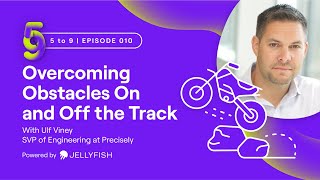
Ulf, an engineering leader at Precisely, built private motocross tracks in Southern California after his sons got into the sport. He walks through the specifics: 20-30 acres for motocross, clay-based soil, 4,000 cubic yards of dirt moved with heavy machinery, and testing with pro riders like Eli Tomac to refine the design.
Chapters
I truly believe that when things are easy, you are not tested. I don't think that you get better.
This is 5 to 9, the podcast where we discover the hidden passions and hobbies that engineering, product, and technology leaders obsess over when the workday ends. Oh, thank you so much for being here. I'm super stoked about this episode. It's, uh, multiple layers I'm connected to this. But before we jump into this, do you mind actually sharing a little bit around who you are and actually geographically where are you right now?
Okay, cool. Thanks, Andrew, for inviting me. Yeah, so right now I am in Ottawa, Canada. It's a place where I went to university, so I have a team here. I lead engineering for Precisely, company based out of Boston, and I live just outside of San Diego in California.
Awesome. Okay, well, now we get to what actually happens from 5 to 9 for Ulf. And, uh, so, you know, we originally talked about this briefly. Yeah, but like you've told me, you're like, first at the high level, like into motocross. So like, how do you get into motocross? And then we'll go into the details of how you're in the motocross. Yeah, how did motocross even cross your mind?
So it's a long story, but I'll make it short. It sort of happened by accident. I have two sons. My oldest son was really interested in riding a dirt bike. And I, my wife and I talked about it. I didn't know anything about it really. And of course, you know, I'd kind of been on one when I was younger, but I was sort of never into it and had done traditional sports. And at the time we were living in Ottawa, Canada. So I went out and bought him a Honda little 50cc dirt bike and started taking him riding. And we went to this track, it's here in Richmond, Ontario, close outside of Ottawa. It's the one of the oldest tracks in Canada and it hosts one of the pro nationals in Canada. And we went and it was on a weekend and they were having a race there. And my son saw people his age racing, like he couldn't believe it. He was blown away. He's like, I need to do this. And, um, and what did you know how to ride at this time? I mean, like, I mean, I've been on a dirt bike, but I was like, oh my God, like, this is crazy. Like, really? Is this—
are you sure these people— people are jumping and all that?
They're jumping everything. They're— I mean, they're like— you won't believe how fast they're going at this age. Like, you're watching them and it's incredible, like, the speed. So these tracks typically are about a little bit of over a 2-minute lap time. There's jumps on them, there's all kinds of obstacles, corners, rocks.
Like, help me, how fast we talking? Like, you know, 20 miles per hour? And like 20 feet in the air? Like, what are we talking here?
We're doing like 40 miles an hour. And then the, of course, the larger bikes, the full-size bikes, 250s and 450s, are like, they're 50, 60 plus in certain sections of the track, especially on the straight. So you're talking a lot of speed. They're in the air a lot, jumping like from one obstacle to the next, doubles, triples, tabletops. So we're of course watching this, and my son was like, this is what I want to do. And I'm like, are you sure you don't want to play Soccer or hockey? No, this is what I want to do. And, and we really didn't know much about it. Lots of people were helpful at the track. So I went home and started thinking about it and, you know, eventually decided to, to do it. And that meant purchasing new bikes, race versions of these bikes, 65cc, 50cc, two-stroke race bikes. And all of a sudden we start looking at the cost of these things. You know, we were like, wow, this can be expensive. And then that led into traveling for racing. So we started going to training at this track, and, and of course my son started getting better and better and better, and he started doing his first race. You know, he was sort of like top 5. We were like, wow, he's already really good at this. And you could tell like they were doing really well, and there's just only so much competition. And then we maybe go to other places and find some more competition. And long story short, they, my, my younger son and my older son have made it to the pinnacle of amateur racing in United States. And I would say if anybody knows anything about it, um, there's this one really big amateur race every year in Tennessee, which is the Loretta Lynn's Amateur National. And my, um, youngest son won motos there and placed second overall. In the country, and to get there is a huge journey if anybody digs into it. But I won't talk about it too much, but it basically demonstrates that, you know, we kind of have taken it to the highest levels.
So you're doing okay. So I get it. Okay. You're doing like, this is the story around how you got into it.
Yeah.
But the punchline I want to drive home is today we're not even talking about your son's love. We're talking about what ULF does. And ULF doesn't just serve as pit crew. He then proceeds to design the tracks and builds the tracks for your sons, right?
Right. So racing motocross, there is essentially 3 elements. There's the motorcycle, which needs its own development and advancements specific to the rider. As you can tell, like if you watch any kind of form of racing, they always talk about like, well, we need to get this machine to work with this racer. And so there is a huge amount of work that goes into that. And I would say I definitely had to tackle that job as a father of two boys racing at the highest levels. The second part is obviously the racer, making sure they're physically fit, you know, that they're strong. And of course injuries, keeping them away from injuries, but advancing the rider both mentally and physically. And there's all kinds of work you need to do to do that. Um, the third element is the track. Just like racing Formula 1, every track has its particular uniqueness. It exposes weaknesses in the car, or it's the same on a motocross track. And what I realized was most dads get the rider and the motorcycle figured out, and they leave the track to, oh, I can get access to this particular public track. And for factory teams, which the best way to describe that is You should think of in racing, you've got, you know, like factory Honda or factory Yamaha, the OEMs that manufacture, they have what's called their factory teams. They typically own tracks. They often own specifically supercross tracks. And to get on a track like that is, I mean, very difficult for an amateur rider. And I decided that I didn't want to be asking, begging, figuring out, getting access to these tracks. I want my own tracks. And everybody told me that's not possible in California, you can't do that, there's noise restrictions, there's this, there's that, you can't do it.
All says, let me show you otherwise.
Yeah, I was like, no, there is a way. Just like, it's like, it's like with software, right? It's like, no, no, you can't do that. And then of course there is.
Yeah.
So that's kind of what I decided. And, and like with everything, it's like sort of this, this mental, you know, the way that you approach things. It's like you can approach it like, okay, I don't know, but I'm not afraid to learn. And so building tracks is not just about having land, it's about planning. There's a lot to it in terms of like looking at what you have, let's call it your template, where you get to start with what the size of—
yeah, like, okay, so we're getting into this, like this track part. So I'm actually interested because when I first heard this, like, which you're about to jump into, but I'll set frame for everybody. I'm like, I can see a track and I can see what's going on here, but there's like, it's not, it just doesn't manifest itself. Like, you know, the world isn't shaped this way. So like, how do you even go about like doing this? And then like, let me check my— this, you just said a factory, like, as there's things you made your own. Is anybody else doing this at all?
Okay, so I live in Southern California. I have factory tracks a mile and a half from my house for KTM, which is a manufacturer. So they have two tracks— Yamaha, Honda, Suzuki, a bunch of other tracks— for maybe 30 minutes from my house. My son has access to the Honda factory track because he rides for a Honda team. Are there other dads doing what I'm doing, I can think of one other dad who does it, but not in— right in town in Southern California. He has a property sort of out of town, about an hour and a half out of town. So there are dads out there. I would say there are not many. There are a few in Southern California specifically. There's 2 that I know of.
Um, we're single, we're single digit counting, right? Okay. So, so for folks, I want to reset everybody. Okay. So this is a guy who like his kids got into like racing motorcycles. Okay. For simplicity on this stuff. And, and, and this is motocross, supercross. You can explain those things to me in a second on those things. But he's like, because of this sport requires motorcycles and, and fitness and stuff, but there's. You need to ride on a track and it's hard to get time. So this guy, Ulf, says like, well, I'm going to solve this by like getting— making our own track. And you're implying this, like the formula is you need land. You said, of course you need land. Well, again, and I think it's a lot of land, okay? Because you got to raise this thing and it's what a motorcycle can do in 2 minutes driving in that. It's at least that. And then you need to build jumps, berms, like all these things to actually assemble it. Like, am I getting that right? Is that the framing?
That's exactly—
okay, okay. Yeah, so for the, for the vocabulary newbies here, including me, like, what's the layman's quickie one sentence? What's the difference between motocross and supercross? Like, in my head, those are motorcycles who ride on the dirt. Like, what is that?
So they both are on dirt, and the major difference is supercross is held at stadiums. So yeah, so think of a floor plan, Arizona Cardinals football stadium, Anaheim Angels So Supercross is about a 3-acre format in terms of floor plan, and you're basically dealing with either a football stadium or a baseball stadium. And then the track builders lay a foundation down, usually plywood, and then they stack dirt on top of that and build it. They have a blueprint prior to that, so they know what the design is going to be because they have to fit all these obstacles into this track. They build it 3 to 3 days before the event. They tear it down the night.
So it's a formula. It's a formula. They're going to run it.
Okay.
Whereas yours is in the open, in the nature and the stock and it's in dirt and your formula. That's motocross.
Yeah.
No.
So just to complete that. So supercross. So that's the format like in terms of the size and how you plan it.
Ah, got it.
Motocross tracks are built in terrain that is natural. Meaning I have a property, typically 20 to 30 acres is a, is a motocross track. So the, the size, the scale of it, it's much larger, it's a much faster track, much more open, and the floor plan of that is much larger. And they typically incorporate the natural terrain, like if there's a hill, natural hill, they'll incorporate into the track. Supercross tracks are like specific, like they're, they typically, they have all the same elements and they're completely on a flat surface.
They're engineered. They're like pieces put together. Okay.
And I have an outdoor track on a 24-acre property in Southern California, and I have a supercross track on a 3-acre pad in my backyard. So I have both. Yeah. So I've recreated what supercross track builders build for the series in my backyard.
And then you also have, in addition, another piece of land where you've actually got the motocross.
Considered in like two disciplines. So as a motocross professional rider, you have two disciplines you must master: motocross racing, which is quote unquote outdoor racing. There's a series associated to that. Pro Motocross Series is happening right now. It's a summer series. They just had a race in Pennsylvania on the weekend, and it's aired on Peacock TV, NBC Sports. And then Supercross Series is a winter series. It starts in January, ends in May, and it goes to stadium by stadium across the country, spans all the way from the West Coast to the East Coast.
Got it. Okay. So like, let's— I don't have this, but let's pretend I got some room in my backyard and I'm like, okay, let's build a supercross-ish track here. Olm's going to help me do it. What do we do?
Yeah, so I started with measuring my backyard. The first thing that you have to have is a level pad. You can't—
so if your backyard is a hill, you can't build a supercross track.
It needs to— the grading of this pad needs to be no more than 5% of a grade, so it needs to be very, very flat. Um, so that's number one. The second thing is you need a lot of dirt. And so what does that mean?
Like dump truck? Like, like what are we talking? A lot of dirt. Yeah.
So to give you an idea, you probably need 4,000 yards of dirt.
A typical cubic yards.
Yeah. Okay. A typical dump truck's 12 yards, sometimes as large as a truck and tandem is 20 yards. So if you do the math on that, yeah.
So, so you're just like, are you just like order that online or, or does the dirt have to already be there? Or like, like it's a Home Depot. I just go there and click a button and be like, hey, send me 4,000 yards of dirt.
Home Depot and ordered it, you'd be— you'd need millions of dollars. No, I mean, so I'll tell you at least how I did. I think everybody goes through a different journey. If you, if you have, let's say, other property that you could truck it in, or if you, if you had enough land that you, let's say, wanted to dig a pond, then you can get enough dirt.
Okay, okay.
To generate, right?
Hopefully your land has dirt already. So you got land, yeah, flat, you got some dirt, right? A bunch of dirt.
My land had some dirt but not enough. So what I have been doing is I see construction sites in my area, for example, building roads or putting in restaurants or anything like that. I look at the dirt, I quickly pull over if I like it, and I go and talk to the person who's managing the job site. I say, where are you dropping this dirt off? And, um, if you're close enough, you can convince them to filter and drop that dirt off at your property. And that is what I've done. And I've probably brought in around 25,000 yards, like 20— 250— sorry, 2,500 yards of extra dirt into my property.
And this is like when you look at the dirt, it's like the granularity. Is it clay or is it like sandy or that kind of stuff?
This is a great question. So yeah, you cannot build a supercross track with sand.
Right, because it'll all fall down. It'll all—
it just moves too quickly. You can build a motocross track with sand because you don't mind it moving. But the way— and we're kind of getting into the sort of specifics on supercross— like, it— there is a formula and there's measurements and specifics on everything that you build, and it has to kind of hold together. And so the way to describe it is you need a particular type of soil, and it needs to be clay-based. Okay, I know my dirt.
I know my dirt.
So like, you get a quick eye for that. You, you You know, like clay is more difficult to work with and move with equipment, but it forms really well and holds together really well and sheds water. So like you have to think of that when you're building this track because maintenance becomes, you know, a big part of taking care of a track. You have to— you basically have to return the track to its original format and every time you ride it. Yeah, correct. Yeah. So Let me talk a little bit about the going back to like, you know, what you're doing when you start to build it. So again, you're— you need to lay it out. And one of the tools that I used was like Google Earth because you can do measurements. So if you look up your property on Google Earth, like you can do a line and measure it on Google Earth and it'll tell you how like how long that line is. So I took a look at my property and measured out, you know, the width, the length of it and I now had a piece of, you know, sort of specifics on the details and the size of the pad that I had to work with and put that on drafting paper. And then I had access to blueprints of supercross tracks. A friend of mine builds tracks.
Oh, because there's kind of rules, like there's standards of like, I need this many jumps and like stutter bumps here and like a flat top here and like, yeah, like we talked about. The only reason I know any of these words is In the '90s, I used to race mountain bikes, and mountain bikes borrowed a lot of this stuff from the dirt bike world, right? Right. So like those—
so I'll talk about some of them. So I'll just kind of name them and people can sort of connect with it. So you have whoops. Every supercross track has whoops. And it kind of sounds like a goofy name, right?
Yeah. What's a whoop?
Whoop is essentially a 3-foot-high bump. Okay, made out of dirt that you string together. So you typically at least have 9, sometimes more. You have a starter whoop and then 9 exactly symmetrical, exactly the same size built. And the goal of the rider is to enter those whoops and get through them as quickly as he can.
So it's like, like this, like—
and it's like, honestly, the one of the most dangerous places on the track for a rider. It takes a lot of work to learn how to enter them. You can imagine they're going in 4th gear into these whoops at my track. 4th gear on a 250 or 450, it's 40 miles an hour into these whoops that if your front end— your front wheel drops into, you're gonna flip over the front. Yeah, so whoops are hugely important part of the track, um, and there's specific ways to build them. There's two ways to build them. Well, essentially 2 ways. There's a dozer-built set of whoops and a loader-built set of whoops. Dozer is a track machine with a blade on the front of it. A loader is 4 wheels articulated with a huge bucket on it. And the whoops that are built with a dozer, you start with a pad, again, about a foot and a half off the ground, exactly 25 feet wide. And you have to measure out the length to fit in the whoops. And again, the measurements are really important because whoops are either 13 or 14-foot center whoops, meaning the top of the whoop to the next one is 14 feet and/or 13 feet, like, depending. And so when you build them, you have to measure all that out because you can't just like start building it and then realize, oh, I've run out of space here between this next corner and I don't have enough room for the landing. So everything's like pre-measured. So I'm just talking through those terms again. Yeah, yeah, yeah.
Like, I get it. So like, I'm, I'm, I'm here. You, you got your Google Earth, you pull out your plan, and you, you've got these kind of like different like building blocks that you're kind of assembling this track as you— whoops— got your standards, you got your— and you assemble them together. Yeah. And I think you're about to lead into how you're building them because you just dropped construction vehicle.
That's true. Yeah.
Which is the, which is the other prop line. Yeah. Yeah.
But it's okay.
Like I'm previewing for folks. This guy owns big old yellow, like, construction vehicles in his backyard to build this thing. Okay, now get to your point on this stuff.
Yeah, so to finish the building blocks, so we talked about whoops. There's triple jumps. So think of triple jumps as a takeoff, another jump in the middle of it, and then a landing. That's a triple jump. A double is a takeoff and a landing. And then there's a tabletop. You think of— you can, you can either jump over the tabletop, but it's flat, so there's not a gap in between it. Then there's single jumps, berms, which are corners that are built up. They have height to them. So all the— all these different elements. So when you're looking at this blueprint like I just described on this piece of drafting paper, you want to fit as many of those elements into the track as you can in order to be able to make the track interesting for the riders. And exciting for the riders.
Okay, so they're not— it's not always the same order of these things. It's however you can cram them in, in the space you have, but yet still makes a flow that you could actually ride it.
Yeah. So if you look up the, the Pro Supercross Series, they announced the track maps prior to the series. So all the riders can go and look at them and download those images and say, oh, this track is really cool, it has this, and this track has this. But they have all the same elements, but they're mixed so that every time they go to the track, they know like a triple jump is the same size generally within a few feet. The whoops are the same size, they're consistent. The doubles are, you know, and the berms have this certain radius to them. So they get this feel for them. But of course, what's exciting to the riders, just like a Formula 1 track is, you know, has this corner, has a straight, they get to experience different things and it, brings out the best of certain riders each week. So again, I, you know, looking at this, thinking back to the design of my tracks, I've built 4 tracks in the last 5 years. So almost one a year and almost new track layout every year. And I do that and I make changes during the year as well in order to, hey, we're going to this race. We really need a dragon's back because this race has a dragon's back. So I need to go build, go build this dragon's back. And a dragon's back is like whoops up a hill onto a single. So you then, you know, of course you look at your layout and certain layouts, like you have to kind of be smart, like, 'cause you, you have to plan, like a triple jump takes up a lot of space. So you have to plan like where you're gonna place it. And so once your track design is complete, it's measured. So you have the measurements for everything because you, you know, a tabletop is 16 feet. 25 feet wide. The next single is 24 feet out. So you can sort of lay everything out. Everything's measured on this drafting sheet, and now you have your layout. So now the next step that you have to take is you need to grade the property and make sure the grading is correct, meaning going back to what I said earlier, you have to level it. Yeah. And then you start with the pile of dirt right down the middle of the track. Exactly in the middle of the track. The reason why you do that is you need to process the dirt. The dirt needs to be consistent. Now it needs to be mixed up, and you use a loader to bring all the dirt into the center of this track.
What's a loader? And it sounds like you have one.
Yeah, so a loader— what I have is called a midsize loader. It's a Volvo L110. You can think about it as like the tires are the size of, of, you know, much taller than me. They're huge tires, 4-yard bucket. Um, so you'll typically see that if you're driving along the road, somebody's moving large amounts of dirt.
It's like a front digger thing, like, right? Okay, okay.
It's articulated, so the, the way that you steer it is through hydraulics. So as you turn the wheels, the front turns hydraulically, right? And the, the wheels don't turn like this. The machine actually articulates like this. Okay, so you can get in and out of places really quickly with it, but Really what it's great at is moving dirt quickly. 4-yard bucket is a lot of dirt. And, you know, so you've got all this dirt piled, then you go do the layout of the track. And the layout is fluorescent spray paint, wooden stakes that you hammer in, and string lines. And okay, you start laying out your—
what's called a big garden, I know, or like a weird construction site where you're gonna lay, you know, snap lines with the concrete, and you're making curves.
You would do the same thing. And the point of this is it— like, if you're not doing it in a professional way, you might just throw dirt here and there, and at the end of the day, your, your layout's going to fail because you didn't measure anything out. You need to measure everything out so you know where to place dirt, and it makes it efficient at building the track and also makes it consistent. And so again, like, once you have that all laid out, then you're ready to start placing dirt. And then that's actually the fun part. Like all the stuff that we've just been talking about, you know, it's like sort of tedious work and then you finally get to get jump in the machine. There's essentially 3 roles in building a track. It's the loader operator, which is called the spotter. That person is placing dirt.
Is that— is that you?
I do all 3.
Okay. I've done all 3. But you actually need 3 people at the time to do it.
Yeah. Like I built some loops by myself on Saturday. Well, I had a person join me to help me, but he's still sort of learning, so I'm kind of training him. But I operated all 3 pieces of equipment, so loader, dozer, and the skid steer. So let me finish on the machines.
Yeah, sorry.
Dozer, bulldozer is a track. So I own a Komatsu D39 PX22, which is a midsize dozer. It has a 10-foot blade on the front of it. So think of a big blade that articulates left and right, sideways, up and down. So you push, you push the dirt, you push dirt with it, you grade with it, you push dirt. And then I have a skid steer. It's a Cat 259D. It's considered the best skid steer for building supercross tracks, but it's a track, rubber tracks. And essentially you do all the fine shaping with that.
With that, like you said, like tank treads, like it's just like, yeah, it's got tank treads like the dozer does, but it's a small machine, very small.
It fits in between the jumps.
It's kind of like a Bobcat-y looking kind of thing.
Correct. It's like a Bobcat. That was a, you know, a brand.
It's the one I see on the street. That's why I recognize that. Correct.
So those are the 3 machines I have. I run all of them. And you pack—
do you pack the dirt with the Bobcat thing? Because you got to get it firm, right?
No. I mean, essentially it does. Every machine has its compaction capability. The bulldozer has the highest compaction capability. So again, like now you start placing the dirt and you shape it. And of course every obstacle has a certain amount of dirt that needs to be delivered to it. And there's actually a formula for that.
So see, everything, everything is spec'd. This is actually, despite the fact that it looks like it's dirt, it's like highly precise engineering.
Yes. Yeah. And that's actually what makes it so interesting because there, if you don't do it that way, you, you know, first of all, it takes much longer and never has the right feel to it. And then you're training riders on something that isn't what they're gonna race on. Do you do the spec?
Do the specs ever change? Like, do they go like international? Like the, you know, the Dragon's Back is changing this year. We're adding 2 feet to it.
There is some interpretation, but I would say the main series of Supercross, they're very consistent. You will get difference in the distances on whoops, like I mentioned, between 13 and 14 feet. Like there is a real little bit of a range there. And then sometimes in order to fit certain obstacles, there is a slight range, but Generally speaking, they're very consistent. The builders do that for a number of reasons. It's repeatable and consistent for them when they build the track and it's time, because if you don't follow those particular specifics and don't measure and all those kinds of things, like all of a sudden, like you have a timeline to meet. And of course, you know, in a stadium you have a certain amount of time to get everything done. So I'm trying to translate that and mimic that when I build the track at my house in order for my son to be training on something that's consistent and the same as what he's going to race. So back to the machine. So now we know which machines we have and what we're using. The next step is placing dirt. And then once the dirt is placed, you're shaping it. I'm going to, again, going back to specifics, like when you build what's called a 3, a 3-foot single jump, you're going to place 2 loads on the outside. So you have these stakes with the markings. You're going to place a load here, you're going to place a load here, you're going to place a load again on the outside, again on the outside, 2 loads on each. And then the middle just gets 1 because of the overlap. And then now that's done, then that's done, then the loader moves off to go do the next one. And then the dozer shows up. The dozer shapes that shingle, and the dozer's tracks are used to compress the dirt but the blade is used to shape the dirt. So you think of like, you know, you're kind of shaping the dirt and then you're tracking it in to compress the dirt.
There is some art to this. There's art to running the machine to achieve the shape, right?
Yeah. Like operating machine, like, um, again, like I started at zero, ground zero.
So I'll just say like you didn't know this beforehand.
No, I didn't. I've never been in a machine before. I just went and bought my first machine and was terrible on Amazon.
Just click the Buy It Now button.
Yeah, yeah, yeah. I was— it was it was something that took thousands of hours to get better at. Like, I have thousands of hours in a machine. Like, fast forward to today, I, I mean, I maintain my track plus other tracks, and I, I work every weekend. I work every Saturday, every Sunday, and multiple evenings after work. So it's a, it's a lot of time, a lot of effort to— like you said, the art part of becoming a great operator starts with having an attention to detail and having great hand-eye coordination, and then understanding dirt and understanding moisture and dirt, because that can affect, you know, and using the right machine for the right job. Like, you kind of, like I said, I have to run 3 different machines.
But you learned this all on your own? Like, you didn't, like, there wasn't a master class that you watched?
No, I mean, I'm very lucky because I did have, um, 2 friends that I got to meet that— our professional track builders that had been working on the series. And I've built tracks, helping them build tracks. So I had a chance to observe and watch. And when I go to a race, like most people go and buy, you know, snacks during the intermission, I watch the guys running the machines.
Like, I can just imagine you're getting lunch for your family, you're like, dirt, pull over.
Yeah, I think you have to have a lot of obviously passion. And I mean, that is driven by wanting to help my kids, like, and help my son win and succeed. And that's a driving force. Um, but I also think you need to have a passion for wanting to create something.
Yeah. Well, this is— I, I— my theory on this, by the way, like, can I get it back to work? Like, this is— as you kind of get into forms of, like, leadership, you, you sometimes— like, we're, we're both trained as engineers, right? Like, you're a maker first, and then all of a sudden when you're doing kind of management and business things, you sometimes don't get the maker fulfillment in the same way, or at least maybe I'm projecting in this part of it. This might be your outlet too, right? Like you get to do some of that, right?
I think you're absolutely right. Like I would say if I was trying to explain like where this comes from, obviously started my career and my job was so focused on building. And I would say like my role now is, I mean, I have 620 people on my team. It's building, but it's like building a team.
Yeah, it's different.
Draw to like actually producing something myself, you know, making something. And I think that's what's driven the passion. And of course, there's nothing more motivating than somebody saying that you can't do something. There's nothing more motivating.
Yeah, let me show you.
Yeah, racing is about getting an advantage. I mean, every single team that races Formula 1 is trying to figure out what the other competitors are doing to beat them. And I looked at our competitors and I'm like, I'm going to figure out a way to get my son an advantage.
And more track time, right? Like that's your advantage here. And to know why these things are built. And then, okay, so you've got all this stuff assembled. Does your son's, like then after you kind of built this and all this technique and all this skill, and then do they then like, dad, can I try? Can I test run it? Did you build it right? Like, are they your QA or you QA at first?
Um, I'm very fortunate because my son, my younger son Noah, is very connected with a lot of high-level pros. So, and then I am as well because— so Eli Tomac is the 2020— I mean, make sure I got this right— 2022 Supercross champion. And he was the first, like, our last track build, he was the first person to ride it. And test it. And that's, I mean, that's like getting feedback from somebody like that. So I've had out of the top 10 450 riders, I've probably had half of them at my track at one point or another. So we have very high-level riders who get to test our track out. And my son Noah rides, his team uses my track one day a week. And so those riders are riding with him. So he is a tester, of course, but I didn't measure it on that first. And like, he's obviously still learning, and he's like, you know, the youngest on the team and all that kind of stuff. So I had to test it out with the most high-level riders that are out there.
I love— I'll draw the analogy because you got, you got pro QA here. Uh, like, what's— so the SDLC, what's your cycle time to like building this track? Like, if I were like making a track, and the analogy here, like, You know what?
Yeah, I would say if weather is not a factor, because weather has been a factor for me in the past where it's raining and you're not building anything, like from start to finish for me with some help is 2 weeks. And that's— but that's like after work. Like, so I work East Coast time and I'm in California. So let's say I'm finishing at like 3 and I can get in like 3, 4 hours. Until it's dark.
Okay. This, this is actually what I was going to ask you, like, how do you make this all fit? Right. And I think you're like, one is schedule and just forcing your life to make it right. Like this is—
Yeah, it's tricky because I travel a lot too. So, you know, everything sort of is scheduled, right? Like everything has to be sort of pre-scheduled and my wife helps me with that, you know, and I've looked back and I'm like, what am I doing? Like I sometimes ask my question, ask that question. I'm like, what am I doing? I'm trying to fit too much in, but I have again this drive like to, to want to do it and, and want to get it right and want to make it as perfect as I can make it.
Well, you, I mean, you made it work. You're building these crazy Switching and, and working on your company and work and all this of that. Like, you've made it fit in this like, you know, puzzle piece thing. Like, how is making tracks and living that part of your brain change or influence the way you do things professionally? Like, how do they, do they touch each other? Or is it like just about like getting, you know, an outlet and some solace here? Or like, how do you, how do you juxtapose the two?
I truly believe that when things are easy, you are not tested. And I, I don't think that you get better. And I think it's the same with work. Like, so when I think about how, like, what racing, like racing fundamentally, like what's driven me to like, and we've been talking about tracks today, You know, what racing has done is it's driven me as a father to be involved with my kids directly. It's driven me to learn new things that I would have never— like, I rebuild engines. I mean, I promise you, like, I didn't know I have a clue about how to do that before I started running equipment. Again, what I'll say, like, when something's really hard, and racing is that, and it's— think about what racing has done to technology. And driven technology. Like, it's these big problems that are— they start off as insolvable, and then you all of a sudden, you look back 10 years or 5 years or whatever, and you're like, wow, look what we came through. And so I would say it starts with that mentality. Like, I really do believe that that has made me better at my job, that my normal job, because I'm like, this is not a big deal.
Like, something shows up, like, I'm like, this is less than 40,000 yards of dirt, I got this, right?
Yeah, let's just calm down here for a second. Like, we're going to get through this. And I think what it is, it's like what you choose in life, like what is actually interesting to me and what makes me happy is to be working and on the go. Like I'm not trying to like, how do I get through work today so I can relax? Like I'm actually not that into it.
Like I'm— You're like a push-pull, you're pushing, pushing, pushing. Yeah, I love it.
Yeah. And I think for other people it is, and that's fine. Like I'm not judging anybody for that, but for me as a person, It's like I want to be pushed and tested like all the time because it makes me— I would say it makes me motivated, it makes me excited, makes me like focused. And I would say like it is very translated into, into the way that I work. And, and I would also say the other part of it is when you do those kinds of things, like let's call it like man— like this manual labor and Like, it's like putting yourself in other people's shoes and having empathy about what those jobs are. Like, sometimes that can disappear if you're in a very senior role for a long time and you forget, like, what an engineer has to go through to, like, let's say, fix a bug. I always use this analogy about bug fixing, which you might be interested in, your audience might be interested in. It's like there's a sinkhole in a road. You call, you call me because I, I can run equipment. Alf, come fix this sinkhole. Hole. And, you know, the city manager's there and like, when are you going to have the sinkhole fixed? Because it shut the road down and traffic is, you know, out of control. If I told you a date on when that sinkhole has been going to be fixed without looking at the sinkhole, that you shouldn't believe a word I said, right? It's like if I told you how long the bug's going to be fixed when I haven't even looked at the code, don't believe a word I say. And so there's a lot of parallels. Like, it's like once you open it up and you start looking at the code and it's like, wow, this one's gonna This one looks like a 2-week effort plus testing, et cetera. Like it's the same with the sinkhole. You dig into it and you're like, oh my God, there's a water vein broken here. We've got to fix that. And then, you know, so there's so many parallels that you can draw and you can use that experience to remind yourself about those.
Love it. Right. So punchline, if bug need jerk, right? Is that okay?
Yeah, exactly.
Okay. Oh, this is amazing. I like, there's so many layers of like, Yeah, just new stuff here that I'm learning on this stuff. Um, if someone else really wanted to learn how to do some of this, how do you even get started? Like, go to, you know, go to a supercross track and meet some folks and watch some folks? Or like, what's— like, I don't even— like, this is like, sometimes we talk, it's like, oh, I just watch YouTube. This is like so far away from that. But like, how do you even nose your way into this world here?
Yeah, I, I would say it starts with watching the series. If you ask the same question about how do I race Formula 1, like you know you're gonna get in a go-kart.
Okay, okay, okay, start easy. And then, and then like, and then whether you choose to engage in just watching the race or racing yourself or actually eventually building the track, they're all part of that journey along the way.
Yeah, I will— I actually will add something though. So there is a big MX sim community now. Okay, my son is highly involved in it.
Virtual, virtual, like it's virtual. Put on the goggles and go at it, kind of.
Right. And there is a friend of my son who built a sim version of our track for the series, and he started with a Google image of the track. So Google takes photos of our property, and then my son ran out and did some more videos and sent it to him. And so imagine that you don't even need to buy equipment. You don't need— like, you can start working and designing tracks based off of that game, and then you can ride that track simulated, but I would say like that's a new way.
Okay.
Approaching it to touch it.
I love it. I love it. Right. And it connects with the digital world that we all live in.
Yeah. And so the game's, the game's called MXSim.
MXSim.
All right.
Well, Ulf, this is beyond fun. Uh, I gotta find a way to visit you and see this whole thing. Um, this is super cool. I hope to get to ride in a dozer or something like that. That's my contribution. Thank you for being here. This has been the best. Cool.
Thank you so much for your time.
Andrew Lau here. I hope you enjoyed this episode of Five to Nine. Don't forget to subscribe so you don't miss out on the next episode. Who knows what hidden talents and hobbies we'll discover in the next episode of Five to Nine.
More from Pamela





68% say AI enhances efficiency. But only 10% report strong AI enablement. More trends on May 7.

68% say AI enhances efficiency. But only 10% report strong AI enablement. More trends on May 7.




