
Painting a New Path with Tacita Morway
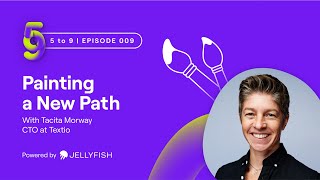
Tacita Morway, CTO of Textio, talks about painting as her mental sanctuary alongside tech leadership. She moved from drawing as a kid through landscape architecture and software engineering before returning to oil painting, now working in a dedicated space in her Boston home. She shares her tools, her approach to iterative work, and how constraints and imperfection fuel creativity.
Chapters
And so they've got a handful of paintings that I've done in their room. I always have a mixed feeling because I always look at the paintings and I'm like, "Oh, that's not done.
Oh, I like, that's the part that I struggled with." This is 5 to 9, the podcast where we discover the hidden passions and hobbies that engineering, product, and technology leaders obsess over when the workday ends. Tacita, so excited to have you here.
Hi, I'm so excited to be here.
So excited to be here. This is an awesome summer edition, 5 to 9. No, I'm actually traveling today, so I'm actually not in my normal like office space and this stuff, but I'm super excited that we're able to make time and get together here because I'm so excited to hear about how Tassida kind of manages to make her thing work between the work and life and all that jazz. But before we get there, Tassida, can you please introduce yourself and let other folks know who you are?
Happy to. I'm Tacito. I'm the CTO for a company called Textio. I'm based in the Boston area, and, uh, that's the, the brief overview summary.
Well, the more import— the more important part, as the general theme we're doing here, is like, what do you do in the other hours besides those Zoom to Zooms? And, you know, like, the fuck tonight? Like, how do you do— what do you do to kind of keep your brain sane? And actually, I remember You know, we're talking about, you had a bunch of different things you did, but we're going to choose to talk about one. But like, I don't know, how do you think about this? What kind of keeps you sane through this world?
Finding the quiet time, whatever gives me time where it's just like, there aren't other inputs. So those other activities aren't like working out. People don't tend to talk to you a whole lot while you're in the middle of working out. For me, painting. When I'm painting, when I'm drawing, got my music going, it's like, just quiet. And that's, that's where I find my sort of my balance.
I am with you around quieting the brain. And, and I think we all have our own modes for that. Because it's, it's sometimes like some folks like to work out, some people like to run. I, I like to run sometimes. Like it might be cooking, but these are things that keep your focus and activity. So the other things don't like jam into your, like, what's actually happening here. So yours is art, right? Like that. And so, you know, how did you find your way there? And like, how did you get there? And, and why does it work?
So it works because I'm, I can't do it and I can't make myself do it well. And that's really freeing. So I always liked drawing as a kid. I was terrible. And my grandmother, uh, showed me these ways. She used to paint. And had these like watercolor landscapes and they were just like really simple, easy things. And the result was just so beautiful to look at. So she would like hang out with me and I would paint with her and I loved it. I loved the process. I loved again, the quiet that we had together doing that. But because I wasn't good, I kind of never focused that or in my brain, in my mind, my labeling for myself was like, oh wow, like I see those other kids in class who can draw and it just comes naturally to them. They're like, they got this. I clearly, I don't have that was what I told myself for the majority of my first half of my life. And then I got into software engineering during college and I went to software engineering out of school, but I grew up in a family of like construction workers, manual labor, like that whole world felt so unfamiliar to me that I was like, whoa, whoa, whoa, whoa. Where have I landed? This, I don't know about this office life. And so I veered off and took other paths along the way. I was a heavy machinery operator for a minute, but I missed the patterns thinking of engineering. So I thought landscape architecture. So I started exploring landscape architecture. And I did a program where they made you doodle and sketch and draw all the time. And I'm in this program and I'm studying like plant material and design patterns and all this stuff. And I was like, oh man, the thing I really like is just this doodling part. Like, I love sketching the people in the classroom and the plants in the world. And I was like, maybe actually, since I've just done a bit of a shift in my career, I should just go and dive into this thing. And what's interesting is, like, rather than just being like, I'm gonna go start spending my time painting and drawing on the side, I had this other narrative that I had to learn how to do it. Like, someone had to teach me to do it right. And so I applied to art school. And I got into art school, went to the School of the Art Institute of Chicago, which is an amazing place. And Chicago is phenomenal.
I didn't know this extra part. This is all bonus. I love this.
It was a, it was very, um, looking back, it's really, I sort of crack up at myself. I'm like, you know, that was a lot of extra school debt I signed up for when I could have just like got some paint materials and, and tried things out on my own. And I think the, um, growing up in construction, my dad was always like, the right tool for the job is the right tool for the job. I was like, well, I need to go learn how to identify the tools and understand the tools. And so I gotta go to school for this thing. So that kicked me off into it.
I think that's super cool. So this is like co-occurrent with your software engineering career.
Yeah.
Right.
Doing both. Yeah. So I, I ended up fully abandoning the software career for a while. Went to art school, went and started a landscape design company for a while. While doing that, I actually was building the software to navigate projects with my customers and everything. That got me back into software engineering. Realized that trees take a really long time to grow and code is really immediate. And I liked that.
Yes. Yes.
But when it—
the cycle time of plants is too long, right? Yeah.
Too long. It's just, that's when you plant that tree too deep and it takes you 8 years to find out. That's, I need to know that I introduced the bug immediately.
I mean, who knew there was like the CD pipeline for plants needs to be really worked on here, right? Totally.
So I left art for a really long time because of all of those other things, the landscape company, going back into engineering. Then I had kids along the way, so now I have zero time to myself. And at some point, I'm not sure what really kicked it back off again. I think I found space. I found a space to actually create art. And so I started—
what does space mean? Physical or mental or temporal?
Physical space where nobody else is gonna be in the same place as me at the same time. And that meant it was like I could have that quiet. I could have that— this is like I'm in my own realm. I'm not answering to anybody. Zoom's not— Slack's not going to get me. Kids, nothing. It's me and my music, my canvas. And so I got back into it. And since then, you know, it's been sort of probably 10 years that I've been getting back into it pretty regularly, a little bit less, on and off. Had some ups and downs. I just keep exploring different mediums and the ones that are like the easiest to clean up, the easiest to fit in because it is like, there's not a lot of minutes in that, the 5 to 9 time. And so finding the easiest place.
I, so, so it's, it's physical space, but it ends up being like temporal space and approval space.
Yeah.
And all these things. Approval space.
Yeah.
And so like, yeah. And, and like, look, I, you, you called your decision to go to art school irrational or something to that effect. And like, look, monetarily, probably, you know, all of us would agree with you, but, but I think the, I empathize with it because I think sometimes you need the approval. Like sometimes education structure gives you the approval and the right to go do something. You know, it's for your own self-rationalization.
That's right.
Right. It, it's like all these things, half the problem is your own head in this stuff. And maybe that's actually what the tuition goes for.
Totally.
Like, yes, yes, formally it's this, but it's actually a way of yourself opting into it, right? Like, that's the— it's something to that.
I think that's totally right.
And by the way, I, I love your physical space. I love the, you know, the mansard roof attic room you're in. The walls are slightly tilty, and so don't bump your head that way. It's got beautiful light. I can kind of already see the, uh, why this space works for me.
My dad actually built a lot of this. This is my childhood home.
Ah, Oh, really? That's cool. Does the, uh, space, is it just for art or are you allowed to actually have your laptop up here and do Zoom calls too?
So right out of the, I don't know how much of the view you can see here, but my desk is right there. My gym space is over in that area. So this is a lot of the activities where I need to be able to focus on particular things, whether it's my quiet or my work. Or my team or whatever, that's all orbiting around here. I do have another space that's in a different area for when I have to, when I'm painting bigger, the ceiling here is not tall enough. And so there's another space that doesn't actually have my computer in it and does create a different experience.
I mean, I, I'm excited to talk about that, like art that is bigger than you, but that's coming. So on the way to get there, like we kind of talked about how you arrived there, but like, let's make it tangible. Like, What's the medium? Like, are we— you said paint, you said drawing. Like, what do you work in? And, and like, look, I, my mental model for this is somewhere between high school using kind of tempera and gouache and kind of learning a little dabbling on a canvas to like now the other end of it, my kids doing art. So like, those are the two, but I, you know, those are my bookends that I, that are my knowledge. So teach me like, what, what's going on here?
So my primary, when I'm painting up until very recently, my primary choice has been oil paint. And I would, back when I had more time in life, I would go, I had a little travel setup that I had, and I would go find some garden, some, or a cityscape or something, and I would paint with oils. Now I still paint with oils, but it's here in my, here's my new little portable thing that, how awesome is this?
Okay, it looks kind of like, like it's cool. Like to me it looks like a kind of cigar box size thing that has kind of like a palette for mixing colors on top and you kind of peel it away. Did you 3D print this thing? It looks like a 3D printed thing. It's got all these like interlocking pieces.
This is the Gorilla Painter box. Highly recommend the whole thing. You just like close the whole thing up. Wow. Take it with you. It's got a little leather slap.
Oh, look at that thing! And how cool is that?
A little hole in the bottom to put your thumb in.
It's got a cigar box with a like a thumb in the bottom that you can put your things. You could hold it in your hand. The top flips open to actually put the canvas or the thing you're painting on. And then like where the cigars would go is a flat place that flips open. So you actually have more flat space and it slides open to put all the paint. So like this thing you can just take, you can take with you on site somewhere. Yeah. Okay. And you put your, and do you like, am I gonna see you on the, see you on the subway with this thing? Taking it out to the beautiful Boston Commons or something like that? Or like, where do you go with this?
I would think Because of the lack of time, I usually tend to go like, if I'm going to go outside, I'm going to go in my backyard, I'm going to go sit on the stoops, I'm going to like— but I don't do that too often anymore because moving away from this space takes more time and time is so precious. There's just not enough of it. So I— most of my, my painting now is here at my desk, which is awkward for me because I used to always paint from something I was looking at and now it's just like whatever comes to mind.
And it's funny, you've got this total mobile kit, which has constraints, right? Cuz the medium is smaller. It's, you know, I'm guessing it's, from what I'm seeing, it's about 8.5 by 11 sideways is the medium size. But like you have all this physical space in front of us, you could be painting bigger spaces. Is there a reason like why a certain size is good or bad or how?
So here when I'm painting small, I can paint faster and I can, so like this, here's a painting I did in between meetings and I don't know if you can see it, but it's a little vase and that's when it's this small. I can, like, I had 15 minutes, I had my palette knife and it was right here. So having it small in here, I can just like snap something and get it outta my system quickly.
I mean, if you ever wanted to paint a picture of Andrew, this is your chance. Joking. I actually said, well, no, you're, you're, you're, you're doing all of this in memory, right? 'Cause I don't see all of these things in front of you. I don't see vases, I don't see— 'cause the other painting you're working on, I'm overlooking your shoulder, is a dancer, I think, and, or something like akin to that. There's no, I don't see a dancer walking around here. That's beautiful.
Yeah. Most of my stuff now is just like, I'll start, a lot of times I'll start with drawing and I just like draw a little bit of messiness and then I just start painting over it and then something happens. And at some point I'm like, well, I'm, time here is done. And the painting just stops and it, I pull it off and I either paint over it to reuse the materials or it goes into a pile.
We'll get to the pile in a second. But you said earlier you used oil and then used a knife. Okay. So this is me, like I, like they wouldn't let us, and again, this is a long time ago, oil and you, you know, was a thing you weren't allowed to use as a high school kid because I don't know why it's expense or takes too long. I don't know which one it is.
Chemicals.
But maybe it could be chemical. There's chemicals involved. And then, and then I don't even know what an— I mean, I know what a knife is, but what does a knife mean in painting land?
Yeah.
So it looks like a, looks like a cake spatula thing, right?
Okay.
Or, or a thing you put like mortar on a building on, like you're doing brickwork.
That's exactly what it's like. And it's just as frustrating. The, and there's lots of different shapes and sizes, which are great. The thing that I like about the palette knife over the paintbrushes is cleaning this thing. You just wipe it down. So it's much faster. So like half the time I spend cleaning up.
And, and oil means it's actually like, it's liquid because of oil as opposed to when they say water-based is like, like it's diluted with water, right? This is diluted with oil, right?
So then you need all sorts of special things to actually like chemicals to clean the chemicals and it's the cleaning up process.
Wait, wait, what are these actually? Okay. Like actually I don't even know. Like Does paint come in a tube? And then you get like, again, I know it's not like, I am a neophyte at this stuff. I'm super uneducated about it, but like, right, there's tubes of paint.
And I've got way too many of them. The other day I realized I had like 98% of my paints are just blue, just different versions of blue. And a lot of them are actually the same version. I'm like, oh, I must need—
You have the perfect paint to paint me today.
I do.
I do.
It's gonna happen. I'm gonna remember this later on and it's gonna come up. So you have these, like, the oil paints, and then this. So then I, I leave the paints on my palette. I stick this palette in the freezer because then they don't dry as fast, which is awesome sauce because it's expensive. And then I just like—
how much do I mean? What does expensive mean? Like, a tube of paint's like $10, $20, $2?
Like, it can be like $10 to $50. I am not in the— I get like the student grade. I want to be in the like $8 to $10 range because most of my paintings I kind of toss. So I'm not trying to, I don't care if the paint doesn't last. The more expensive the paint, the longer it'll last without fading, and the richer the pigment can be. And you can get some different textures. The student grade stuff has a lot of whiteness. You can't get to really great colors, which is okay for me, 'cause again, I threw away most of my paintings, so it's not.
And when you put it in the freezer, like I'm actually thinking chemically what happens, because I guess you're maybe reducing evaporation. You put like in a Ziploc bag or something like that, or?
Yeah, I probably should because then your food doesn't get on it, but I don't.
Well, I was gonna say, does your food, or does your food get paint on it?
I have a little, like you make, I made a little, like there's a top shelf space for in the freezer. And so it's just sometimes like somebody will put an ice cube tray on top of it and be like, well, blah, blah.
Yeah. It's like chicken nuggets with a little shit of blue on them. Right. Like, okay. So you use that stuff and so you dilute it. So like oil means oil-based and you get the paint, you freeze the thing. You put it on with this knife thing and then how do you like make it more liquidy? Or like, do you mix it? Is it oil? Is it like cooking oil? And then you wash it with it? What's the, is it like a big production?
There's a whole bunch of different kinds of mediums you can use. I tend to not, like, I just, uh, the same thing I used to clean. So there's this Gamsol stuff that I like cuz it doesn't have a big, doesn't have a big scent. So I have this huge jar of Gamsol.
Oh, you have all this. Okay. You have these like chemicals on chemicals. I'm looking at these bottles. It looks like an old-timey pharmacy.
It's really cool.
Like, you know, I was waiting for little skeletons on them. Like, don't drink this.
I have a terrible judgment call. Like when I grew up working, doing construction stuff with my father and working on machines, you cleaned, you'd be covered in grease and oil on your hands. And the way to clean that is with more grease and oil. So usually there'd be a bucket of fairly clean gasoline somewhere. And that's how we washed our hands. So I have terrible judgment call. I'm like, you can buy this at the store. There's no, there isn't a death signal on it. So I'm probably fine. So I don't make probably the most responsible judgment calls on.
I wonder, I use Gojo.
Yeah. The orange.
We used to use for like, yeah. Yeah. Yeah. Yeah. It actually works really good. I don't know what it's in it, but it like, it magical.
Okay.
You said earlier you have kids though. So like, is this the part of the segmented space thing? Like, cause. You've got a lot of complicated chemicals and kids make a mess stuff. I'm guessing kids are older now, but there was a time where they like weren't. So was this also part of space and time segmentation too? Like that you can't have this now?
Yeah, because I definitely couldn't a long time ago. But even with my kids, so I have, I also have acrylics. And so I'll sit out in the back stoop with my daughter and she'll set her up with acrylics or watercolors. And I'm got my oil paint, my little box here going. The two of us will just do our own thing. So she's in water-based stuff. We're outside.
So there's acrylic. I, I've used acrylic before, so that's the water-based stuff. Okay. Tempera is the grade school version. And then in high school, middle school, you get to like acrylic, which kind of looks like oil paint, which is kind of goopy. It has physical texture, right? And then, and the oil's the fancier stuff that you get.
And that stuff is also like The acrylic tends to be, you can get like bigger tubes of it and it also tends to be cheaper than oil, which is nice. I'm gonna set my child up.
Does it take a long time to dry? Like when you're done with the painting, does it like take weeks and months to dry?
Oil paint, yes. Oil paint takes forever.
Like what are you talking, like weeks?
Weeks? It can, yeah, absolutely weeks. It really depends on how moist it is outside and how much you've thinned it. So if you use a lot of like that Gamblin stuff to thin it out or any other mediums, they've got mediums that help it dry faster and some that make it dry slower. What I like about it drying slow is that I can go back in, like here, you can see like a lot of stuff is sort of mixing. I don't know. Well, you can see it.
Okay. Okay. Okay. Yeah. Yeah.
When it's, yeah, because it stays wet for a long time, you can like mix sections in together and get the colors to like layer into each other in cool ways, which I find really satisfying.
It's a feature, not a bug.
Yes. It's a feature, not a bug. Right.
Cause yeah, just to like, you can work it for longer.
Yeah.
Right. Unless someone else smears it before it's dry, then it's—
which I definitely do on a regular basis.
Do you have a favorite color? Do they have fun names like crayons do and stuff?
I love, again, to the blues. So cerulean blue is like, I love cerulean blue. I don't— probably not even saying right, but that's one of my favorites.
Uh, sounds right to me.
And cobalt, I go back and forth on. So there's warm blues and there's cooler blues. Basically anything that's blue, I'm going to be happy about.
I was reading a thing back in the day. Isn't cobalt made outta crushed bugs or something like that?
Or indigo?
Like, is it the pure pigment?
There are some, there's actually several of the colors I think that way back in the day were involved crushed bugs. I think the ones I get, cuz it's, uh, the cheap student grade stuff, they're not watching you. I don't think. It's like probably crushed crayons or something.
I don't know. Yeah, we use the acrylic paints, crush them into make oil paint. That's, I got it.
I got it. Right. Circular.
Well, you use the word medium a bunch. Medium is like the thing you paint on, right? So, right?
Am I getting that right?
That's what the definition is.
There's also media. There's medium that you mix in with the paints so you can get different textures. Oh, different drying times. Okay. Uh, different blending.
Again, I'm, I don't really know. I'm thinking like you could mix sand in there. There'd be like different mediums. Just give it textures like that. Or like, or Rice Krispies, or I don't know. Like I'm thinking things that are textured.
Some people do, um, with different kinds of paints, they use something called a caustic, which is like wax, and you're mixing that in. This medium is more just like, it's different liquid stuff that you put in. And so like here, this is not for, uh, not for oil paints, but this is to make your acrylics. This is a medium that you could mix into your acrylics to make your acrylics slow down. Because acrylics dry so fast.
All right. It says satin glazing liquid by Golden is what that is. And so it slows down the drying.
Slow drying extender.
More time working on it.
Okay.
Okay.
All right.
So that's the medium that's like in your stuff. How about the medium that you paint? Because the medium is also used for the word, the thing you paint on, right?
Yeah. So I paint like this thing with the flowers. That's, this is cardboard.
Okay.
Yeah.
I was gonna say, I was like, I think that looks like cardboard, but could be wrong. I don't wanna offend your painting.
Nope. I'll paint on whatever's around. There's this canvas paper stuff, which is really awesome. So it comes in a little, like, little pad of paper, but it's canvassy, so that's really nice. It fits, it's already perfect size for my thing. This is paper that's meant for a bunch of different kinds of paints, and so it can hold the oil, could hold acrylic, wouldn't do well with watercolor. And so this, all this stuff is super, again, cheap. And since I'm not trying to preserve my paintings for super long, it works.
Okay. Yeah. I was, I was, I was asking you this briefly. Like, I wanna, we first reconnected on this, which is like, so my household is a crafty household, which means we just have like, not just stuff of medium everywhere, we have stuff of post-produced art everywhere. I'm kind of imagining Your house too is that version of that. Like, is that true? Is there facts of it? What do you do with those?
My older paintings I've actually hung up around because they're bigger. And so I used to paint much larger. And so it helps that like that works on a wall. And so I have like a handful of paintings that are around and my kids every once in a while will pick out a painting. They're like, I like that. I want that in my room. And so they've got a handful of paintings. That I've done in their room. I always have a mixed feeling cuz I always look at the paintings and I'm like, oh, that's not done. Oh, I like, that's the part that I struggled with. And yeah.
Are you, are you allowed to iterate on it? Right? Like, cuz in the software world we can iterate on this. Yeah. Are you allowed to iterate on this or is it okay? Yeah.
I got, okay. On my, there's always some painting on an easel in another part of the place here that I just, every once in a while I go back and be like, I'm gonna get it. And I never do. It's been working on it for like 5 years at this point.
But that's the interesting part, right? Like it can't, it's insurmountable.
As I was saying before, like I, I like painting cuz I can't get it right. Like that's what I got. Like you can't possibly, if you have sort of like ambitious kind of perfectionist sort of tendencies, you can't, you, you just can't get it right. And so it's really nice to be able to like, you put, you do it, hopefully you enjoyed the process. If you like the end result, you can stop. If you don't like the end result, you can stop and throw it away, or you can paint over it, or somebody else might like it. So it's just, it has kind of, there's no required endpoint to your journey.
I like that admission. I think there, like, there's probably analogies that hold to our day jobs on that stuff too. It's that it's, it's never done. Like both because you can strive for it, but it's okay and expected to never get there. I don't know, like maybe that's like a little too like fortune cookie on the whole thing, but like, it feels a bit of that.
Yeah. Like the, one of the, the things that from art school that I really enjoyed is you're sitting, you're painting in a classroom with a whole bunch of other people and inevitably you're gonna get stuck at some point. And like, I had a professor coming up and he'd be like, you just painted that nose like 17 times in a row over the past week. Like you're not doing anything new and you can't just like scraping it and repainting it is not getting you anywhere. And he'd like grab your paintbrush and hand it to somebody else in the class and be like, you go take a walk, you finish this painting. And then you come back and someone's done something to your canvas and now you have to go from there with their inputs having really released your thinking.
But it, but I bet it's actually better, right? Cuz it's not only on you at that point, right? Like it's like architects who like an empty plot of land with no, you know, hills next to it is really hard. Like some level of constraints is actually more interesting. Like not infinite, like not completely where you can't do anything, but like constraints actually help. Right.
And it just unlocks your thinking. It's like, I'm clearly, I've boxed myself into one solution. This person's gonna, like, that solution's not working, but I can't see past it. And this person's just gonna knock it away. And now I get to start from a new place.
Well, you re-dice roll it cuz it's not working. Which I think at least, okay, so, so we've talked about the medium as the thing you use to paint and we talked about medium as the physical thing you paint on. We haven't spent much time talking about what you paint of, like what, you know, you said memory briefly, you said you looked at things, but like what inspires you? Was there like an artist? Do you wake up with a dream? Do you think about things that happened a long time ago? Like how do you negotiate the what you're painting or is this all flowing? Like how? Is there a, looking back at your stack of paintings, anything like, is there a thing going on here?
So it all, at this point, since I'm not looking at things anymore, I mean, sometimes I still do, but a lot of times it comes from the marks that start off on the paper. So there's two other mediums that I use a lot. One is, um, I have a roll of butcher block paper and I just roll that out. It's really big and I can just like use charcoal and I use it like a chalkboard. And so I just like scribble on it, and at some point like a face will emerge from the scribble, or a profile, or a figure. And then I start scribbling over that, and I start scribbling over that. And so then it's just coming, like I see something in the marks. So that's when I'm drawing with charcoal and blasting my music, and you're standing, you're dancing, it's just like total flow. When I'm using the oils here, I'll draw a thing that I wanna look at. Sometimes it starts from like, I wanna see these colors. I wanna paint with these kinds of colors. And that looks to me in my mind like that's picking up a flower or a dancer or whatever. And it's because of the colors I wanna see. And then that suddenly brings in a, an image and then I sketch that out. I have a new medium that I found that I'm so excited about. It's awesome sauce. Are you ready? All right. So this stuff is so fun. It's called Ecoline.
It looks like you have ink droppers in my visual.
Yeah.
Let's see, you just showed me 10 ink droppers and a rainbow of colors, what you just showed me.
And this stuff, it's like ink. And I don't know what I'm doing. I've only done a handful of things with it so far. And this one is very much a flow thing. Like I just, uh, will sketch usually, usually for the 4 times I've done it. I started with a face, sketched the face, and then I just throw this ink all over and I squirt water. I've got a little water bottle squirter here, and then that face that I sketched initially kind of disappears, but there's like a remnant of it. And so then I draw on top of the remnant of it, and then I get a new image. So like, it was the first one I did. There was no sketching afterwards. It was just—
Whoa, that was cool. I see a face in there.
And then this was the—
it looks like that guy, uh, the guy from KISS.
Oh my God, far away. No, I absolutely see that, 100%. This one, let's see, maybe somebody will come up for this one. This was the next one that came up.
Ooh, I see that. Look, that is a— oh, I— okay, let me step back. I see an old-timey like 1900s hat. I see glamour and a Marilyn Monroe kind of face. Oh yeah, yeah, here. And then I see a flamboyance, maybe like carnival dress. I don't know, I'm making stuff up.
I love that. Yes. All right, am I there? You're there. I'm loving this interpretation. Okay, ready? Next up, let's go. Oh wow, the color's coming up.
Oh, this is— all right, so this is definitely in a Marilyn Monroe kind of thing. Maybe I'm just seeing that, but the rainbow hair thing, because part of it, it's the really strong lips, but then the, the rainbow wig or rainbow colors is dramatic and crazy. And that, so I don't know, like this is actually, we're to, we're gonna put this in the show notes for sure.
See what other people call him as well. It's so much fun. And like then I can bring up, I've got my pastels here. And so then I bring that out and I start drawing on top of that and I'll draw on top of the oils with pastels, which you just start mixing all this stuff up. So all of that, there's like flow with the charcoal from just making marks with the charcoal. There's flow from sketching something and the paint. So like I start with intentional marks and then this is just, I start with color and it, I don't know. I don't know. I, I love it.
Like I actually, like I'm actually like, again, I'm seeing your brain a little bit, but I think there's something about, I see this in amongst many is that like you do this in a way to kind of react. It's a strange— I'll project it into your way. It's a form of problem solving. Like you enjoy like some chaos that actually helps kind of free your brain. And then you're in a reaction interpretation mode and a reaction interpretation actually is in some ways calming too, because you're like in the purity of reacting. Because if you have a complete blank slate, it's a lot of pressure, like to just nail it. And I think—
that's right.
I think whether it's in the paper or just, just setting off things and just seeing what comes of it, then, you know, it's like introduce randomness to find patterns, which patterns give you a chance to do reaction and then refine it. Something like that.
That's it. Which is, it does root, like, that is the fun stuff in so many things in life, whether it's work or teaching your kids some new thing with, like, it's That reaction and getting to clarity from the chaos and like just riding through that when you're doing, you can't control things and it's just like you're riding the wave of whatever sort of influences you and triggers you.
Yeah. This is like a life philosophy thing too, probably. I mean, like, I, like, I don't know if you actually get to do kind of actual coding, kind of like good old-fashioned nerd stuff, right? I've long lost the chance to do that. But I actually think there is something about part of that maker brain is this world of like problem solving, debugging, fixing kind of it. And I know art sounds like it's the furthest away from it, but there is part of it that is that it's like, even though like it's a totally different construct at surface, but there are parts of the emotion that feel and the way the brain works that gets in there. I think that's what I'm saying.
And the satisfaction too of like when you like, when there is something you're wrestling with, with your image, and you reach a point where like, oh, like I got to something better. It might not be the best it could get to, and I will never know what that looks like. I can't, but I feel better about where it is. And it's like, I fixed the bug. I might've been able to fix that bug in a more secure, more performant way or something like that.
But it is better than it was. And like, that's a step forward. Yeah. I love it. Okay, so like let's stretch the analogy too far. How do you keep your code clean? Like, you know, you got all this stuff here. Like, how do you work? How do you organize it? Like, is it modules, components? Like, how do you separate it? Like, how do you not let the chaos take over your world here? Right? Because I'm looking at your place, it's pretty clean, or at least from what I can tell, right?
Like it's pretty, it's sparse.
Like I could, I could imagine this stuff going everywhere, the paint everywhere, paper everywhere, stuff everywhere. Like how do you contain that stuff?
If I had, if this wasn't also my workspace, I would probably want it to be a little bit more chaotic, but because of my workspace, I'm like, I keep it pretty tame. But when I have had other spaces that I could set up in, I also like to build things. So I'd build like the things when I would paint big, I need a place, a way to store my canvases. And so I'd build the structures and I would build little containers for like, instead of using some can. Which is, I really just do love this can, but I would build the thing that holds all my paintbrushes. And so I would just build little boxes and little containers and it was very satisfying.
And okay.
Okay.
So you're, you're containing the chaos as part of the, the joy.
Containing the chaos.
I forgot to talk about this. So big format paintings, which we've now been talking about 8 and a half hours. Like what does big format mean? Like how big? And then like, just outta curiosity, like is it canvas? Is it wood? Like what are we talking big? How big? You know? And then where does that live?
It's— so it's post-school. So, I mean, art school was Infinity years ago. It was a very long time ago. But in art school, which would be like 2 years ago—
yeah, I'm joking.
So I'm, you know, 28 now. So in art school, I would paint things that were between like 30 by 40 canvas or something that was my height, and That was unwieldy for apartment life or wherever I've lived since. That's not something I've been able to have space for. So now usually, like when I paint a canvas, it's, you know, 40 inches in some dimension or sometimes, sometimes they're even this, but like when it's bigger paintings, they're like 30 by 40, roughly shifting a little bit.
I mean, those are bigger commitments. They take longer to finish and they're kind of expensive in the stuff, right? Like the bit I know about art history stuff, some of the canvas reuse was just purely practical around expense. 'Cause that stuff's expensive, right?
Luckily, like, so there's a lot of places where you can get sort of packages of pretty cheap canvases. Like Jerry's Art-O-Rama is a great one.
Oh, this is, this is the good, bad part of the Amazon, Amazon-ish of the world. You get a lot of this stuff. Yeah.
And so you can now, you can get things that are reasonably priced. They're gonna warp if they're too reasonably priced. So I try and find something that's not like totally, totally bottom of the price range. Um, cause it's really annoying when they start twisting and warping and then you never are going to have it on the wall. It's like trying to dance its way off. But so I just have a handful of canvas. I still have all the canvases from when I was in art school and I would, every once in a while, just grab one of those and paint over that. So I reuse a lot of the things.
I kind of love it because you're not precious about that history. You're actually getting to add and evolve it, right?
Uh, one of my favorite paintings actually, like Two of them. There's two, a couple of my paintings that I like, and there's not a ton, but when I do like one, a lot of them have come from some painting that I had. I turned the canvas upside down and some of that old painting is coming through and it has an impact on what ends up there in a way that I've ended up really liking.
Yeah. You reset it. It's the evolution of that thing. Well, um, last bit here, like, so this seems like a very solo activity for you as opposed to, um, everything else in life. You know, like earlier you said you did it with your daughter side by side, but it's It's not like, it's not a group act too. This is you and your brain.
Yeah. Yeah. Like my daughter will sometimes, my son has even a couple times drawn with me. Sometimes I will draw like my partner or something and, or I'll draw someone like we're on a Zoom call and we're hanging out with a friend far away and they'll be like, hey, I'm gonna sketch you while we're hanging out. So that's as sort of group communal interactive as it gets. But for the most part, it's like me and my music and you thinking, because you said a lot of this was.
By memory or imagination, right? Like that's, you know, you're doing less of the, let me go study this figure and like, look at that for a while, right? This is all in your brain and that's the articulation of that, right? I love it. Well, this has been really helpful understanding how this calms you, how it fits into your life, how it teaches you some patience or iterativeness or never finishing. I love the posture that puts us all in that space. If some of the folks here that, that get to hear this story, or get to see some of your art or are inspired to do this, how would you say to get started in lieu of actually going to art school in Chicago and like, in lieu of that, like in a more practical way, like how do I get started?
I think finding the medium that's easiest for you to use most frequently. Like, oh, actually I do remember. I remember what got me fully back into it. Someone was doing some like drawing a day or painting it. They, Maybe it was even reading a book, like we're going to read some amount a day, but there's something, and they were tracking it, and I was following them on Instagram. And so they, each post was like day 47 out of 365, and I was like, I thought I'd do that with sketching. And I took the bus to work at the time, and I had a little pocket sketchbook, soup, just like not fancy paper or anything. And as I'm on the bus, I'd be sketching. I'd barely even be looking because I'd get carjacked then doing that every day for a while, at some point transition to like, actually, I want to do more than just sketch this thing, like fire hydrants. I'm tired of drawing fire hydrants at red lights. So you find the thing that's easy to do, like, it doesn't matter what it is, just as long as it's easy.
So knock the barrier down. That's it. I love this. It's akin to runners, which is, or at least my unlock for like running, which is like, just do a mile a day. It doesn't have to be fast, anything. Right. And then, and then you can find more from it from there. Right. So like, Well, I think what I'm here for is whether it's a pencil or a ballpoint pen and doodling in the, in the margins, like do whatever it is to get you in the flow and then you can build on it from there.
Yeah. You, once you build that initial habit, you start wanting it and then you start carving up the time.
Now let's go the other side. Let's say you did that and you're like, I want to get into this oil painting, knife slinging kind of a world. Like what's the entry point there? Like how do we start it there?
There's sort of two approaches. One is you go and you get the kit and you just start doing stuff. Just like, you just hit it.
You go to Dick Blick and you buy the thing and you just, good luck. You don't know what you're doing, but just do it.
And you're going to end up painting. So you can't, you can't get it wrong. You've done it. You just declared I'm painting, right? Put marks on canvas and done. Or even on cardboard. And then the other way is there's so many courses out there. There's like community classes. There's like, if there's an art school near you, they probably have something. And then there's so much stuff online. I have an Instagram account just for my art. And that's like, that one's like my public one because I don't care if people see that stuff, but it's a way that I get feedback on the stuff I do. But also I've trained the algorithm to just feed me other artists. And so there's a lot of just like random tutorials that will come up and like new, like that's how I found the Ecoline stuff. There's some woman who does this really cool stuff with it and I should remember her name. And so I started, I was like, I'm gonna buy this and try it out. So that's another— I love it.
So, okay. So old Tacita went to school and looked for the formality of this thing. New Tacita feels like more in the flow of like, just get started, do something. And if Instagram brings me a lesson too, then that's fine too.
Yeah.
Right.
Two paths. I mean, I loved art school. I'm not saying I didn't. But, and I got a lot out of it. Yeah. New Tacita would be like, just go hang out with some paints and see what happens. Yeah.
Yeah. Like don't wear the formality, just flow with it and see what happens happens. Well, Tacita, thank you so much for doing this with me. This has been tons of fun and it's like refreshing my brain around, like I haven't engaged with art as a production medium for a long, long, long time, but this is very cool and thank you for sharing.
Thanks so much for the conversation. I'm like, I'm ready to make some stuff tonight.
Love it. You do concept of blue shirts.
Yes.
That'll be your, uh, yes.
I'll send you what comes out.
Love it. All right. Well, thank you.
Thank you so much.
Andrew Lau here. I hope you enjoyed this episode of Five to Nine. Don't forget to subscribe so you don't miss out on the next episode. Who knows what hidden talents and hobbies we'll discover in the next episode of Five to Nine.
More from Pamela





68% say AI enhances efficiency. But only 10% report strong AI enablement. More trends on May 7.

68% say AI enhances efficiency. But only 10% report strong AI enablement. More trends on May 7.




