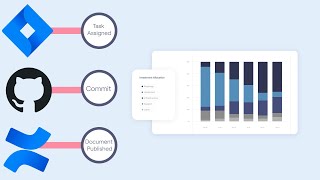
The video explains that as every company becomes a software-driven organization, engineering leaders lack a unified tool to turn engineering data into business decisions. It introduces the Engineering Management Platform (EMP) as a meta‑layer that sits atop existing engineering tools (Jira, GitHub, Confluence, etc.) and uses machine‑learning to synthesize signals into a comprehensive, business‑contextual view of work. EMPs provide analytics that align engineering effort with strategic objectives, surface technical‑debt and infrastructure work, highlight roadblocks, and enable risk mitigation and resource planning. By ingesting cost and HR data, EMPs also bridge engineering output to finance, making projects easy to capitalize. The video concludes with calls to explore a companion blog, an ebook on EMP building blocks, and the Jellyfish EMP product.
Chapters
These days, every company is a software company. From your local brick-and-mortar to legacy business titans, almost every line of business has undergone a digital revolution, from marketing and HR to finance and sales. But while sales teams have been monitoring their pipelines with Salesforce and marketing has been executing campaigns with Marketo, engineering leaders lack a tool to make business decisions driven by their data. They've had to make do with spreadsheets and traffic light diagrams. Why is that? Luckily, with the emergence of a new kind of application, the Engineering Management Platform, or EMP, that's all about to change. EMPs are a solution for engineering leaders that provide analytics and insights into where your teams are focusing their efforts. If you aren't aware of how much time is being spent paying down technical debt or maintaining infrastructure, you won't be able to properly resource the innovation on the roadmap. EMPs get everyone rowing in the same direction. They maximize the value of your teams by ensuring they're aligned with the strategic objectives of the business. Once your teams are aligned, EMPs enable you to evaluate your engineering process with comprehensive dashboards that make it easy to define success across your organization. Delivering software quickly is a top priority for engineering leaders and their teams, which is why EMPs preemptively highlight potential roadblocks. They mitigate risks and make it simple to see when and where your teams require support. Support, so you can ensure that they have all the resources they need to succeed. So, how do they work? EMPs sit as a meta-layer on top of your engineering technology stack. They ingest signals generated by tools such as Jira, GitHub, and Confluence, and leverage machine learning to reconstruct an accurate map of the work output of your organization. EMPs are the analytical link between engineering and the business, so it's important that they add business contextual data. You can even bring in cost data from HR so that your engineering projects are easy to capitalize for finance. That's an engineering management platform, a solution to align engineering insights with business requirements. If you'd like to learn more about EMPs, EMPs, click the links in the description to check out our companion blog or read our ebook, The Four Building Blocks of an Effective EMP. And visit jellyfish.co to learn more about one of the most advanced EMPs available today.