
You’re not doing networking wrong
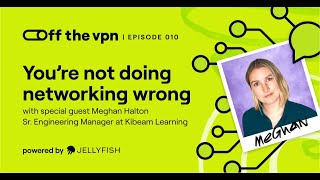
Megan, who runs PyLadies Vancouver and other tech communities, talks about networking beyond the awkward mixer. Remote events have limits, LinkedIn is a necessary evil for job hunting, and gamified formats like speed-networking help some people but not others. The real move: set conference goals, follow up with personal notes, and stop pretending you're bad at this.
Chapters
Now, would you be pro-LinkedIn if they brought like the old MySpace configuration where you could like— Oh yeah, the following arts and music. Uh-huh. We'd be into LinkedIn then. Is that what they're thinking?
Yeah, I can play like Evanescence when somebody visits my LinkedIn page. I'm down.
You're listening to Off the VPN, the show where two work besties get real about working in tech. Hey Jasmine.
What's up Allison? How are you?
I am doing great. How are you?
I'm doing excellent. I'm really excited about today's episode.
Tell me why.
We have a really exciting guest today, Megan. What's up, Megan? Welcome to the podcast.
Hi folks. Nice to meet— nice to see you. I've met you before, but it's nice to be here.
Thanks for joining us.
Thank you. So Megan is a senior engineering leader She has a really awesome career, done a ton of stuff. I'm excited for her to talk about her journey here and just the topic at hand today. Megan has also— you've done a ton of like volunteer work in the tech space as well as co-founding a company. I'll let you talk about that a little bit, as well as you're co-organizing and co-chairing a bunch of stuff. So you're like really involved in your tech community. And I think a lot of our folks who might be listening might want to be interested in what— how do you even do that? I'm really interested because I stay in my house all day and I don't talk to anybody. So, I just—
I mean, that's it.
Just all I do is talk to Allison. So, we're really excited to have you here just to share all of your amazing knowledge.
Awesome. Well, I'm glad to be here. It's very flattering that you say all that. To me, I'm just living my life in the best way I know how. But yeah, I've been in engineering in software engineering for like 12 years now. In that time, I've gotten to do a lot of kind of backend stuff, some hardware stuff. I've been in regular tech, in ag tech. I'm about to get into ed tech. I've spent 7 years in games. I'm really kind of spreading it all out. And as you mentioned, dabbling in my own stuff and starting my own little company, but also being super involved with my community. That's something I learned from my parents. They're both really involved in community where I grew up. And we actually started out volunteering together at our local community radio station. My dad like built the antenna for the community radio station and then I used to like operate the desk and stuff. So when you were talking about levels earlier, that was, that was a throwback to back, back in the day. But that's kind of how I started out and all through my, my kind of tech career. I've made sure that I'm trying to give back to the community and give back to kind of all those wonderful supports that I got coming through. As I level up and get a little bit more power, a little bit more influence, I get to spend that. So I try and do that in a responsible way.
It's beautiful.
Can you really—
it's beautiful.
Name drop, like, one organization maybe that you—
yeah.
Yeah. So, um, I, when I was a baby developer, uh, still working in Ireland, that's where the weird accent is coming from, just in case anybody's interested.
Weird? It's fire. It's amazing.
What do you mean? So I've been in Canada for the last 9 years and I was born in Canada too. So I have a weird mongrel kind of background of accent as a result. Um, but I spent 17 years in Ireland and when I was a baby software developer there, I founded CoderDojo in Shannon and my My local community, which was kind of a peer mentoring system for bringing kids into the land of coding and teaching them all about just how to get started. We started the babies with Scratch. And I say the babies, they were like 5 or 6. That's so cute. Yeah, they were really fun to work with, with Scratch. And then we brought them all the way up to like working on a little bit of hardware with Arduinos. We got our company to sponsor a, a 3D printer and we brought that in and we set that up and we got them tinkering on that. So it was a lot of fun. So Coder Dojo is kind of where I started with that. I also developed a little curriculum for the transition year students of the local high school at that point in time, which I delivered with a colleague. And then also, yeah, when I arrived in Vancouver, I got really involved with PyLadies, which is a fantastic global organization focusing on women in Python.
And the Python community.
And you organized that, I think, in Vancouver, right?
Yeah. Yeah. I was one of the organizers in Vancouver for PyLadies, which is how I met our mutual acquaintance, Lisa. Lisa and I got together to work on Data Jam, which was, or is, a kind of a hackathon for data folks. And that happens in Vancouver once a year. She's part of the R community. I was part of the Python, so it's natural synergy for data stuff there. Helped out with the Data Jam there for a couple of years. Also involved with PyCascades, which is a Python conference that runs between 3 different cities along the Cascades mountain range here on the West Coast, which is happening again this year. We've been running for the past, I think, 7 years. So yeah, it's been pretty good. And I'm the sponsorships chair for that this year. I've done some other stuff too.
I don't know how you have the time. This is amazing.
I have had 12 years. That's how.
I'm like, I did a puzzle last weekend. Uh, that was, that was like the highlight. That was like my biggest accomplishment this month. Uh, no, like really, really so exciting. And I, I think it's great. It was, it was hard. There was a lot of like, like the same monochromatic color. It was very difficult.
Okay. So thank you As we are, Megan, though.
But we're actually shared that as standup. I think where I came in a standup, I was like, I finished the puzzle.
You sure did. She sure did. I heard it.
I mean, I just think it's so exciting, like just like the impact that you have on actually like helping people hone their skills or maybe it's an introduction, like something I didn't realize. So someone said something to me, they were like, all of you software engineers talk about how easy it is to get you know, into software engineering and you're all a bunch of liars. And I was like, I was like, actually they're kind of, I, when you like start to think about it, you're talking about baby software engineer. I'm like, actually, yeah, this is the culmination of years and years of experience. You kind of, I think we undermine just like how many barriers there are. And I love that people are out here trying to help people just get more support and and just stay in the community or enter the community or whatever. So I, I, I, I think that's really exciting. Or, or maintain passion, I think, as well. So I have a little game to get us going. So I have, um, it's so, so as, as you can see where we're going with this episode, we're talking about, you know, and especially with the holidays, uh, when this is coming out, like there's holidays happening, there's lots of things The thing we really think about a lot is like community, right? And I think there's a lot of things about tech community. People I have spoken to especially who are like, how do you, how do I, how do I go to conferences? How do I go to meetups? Like there's kind of like fears and like how do I even, then there's like the next level, which is I'm going to these things, but how do I get more involved in the organization, right? And where, that's why I'm excited to have Megan here 'cause I can't answer that 'cause I don't, I don't do nothing. I show up and that's good enough for me. But I think like I really value like people who do this 'cause if it wasn't, for you, we wouldn't have anywhere to go. So I just have like a fun game. It's called, uh, Love It or Leave It. Uh, and they're just like kind of networking slash mixer community themes. And then we can like kind of talk about it and see like, you know, do we love it or leave it? Let's go. All right. So the first one, Love It or Leave It, remote only networking events. Do we love them or would we leave it behind?
I go to them. They're fine. Yeah. Especially when you don't have a choice and to include folks that aren't comfortable with the, with the in-person. I do find that personally I get less connection from them, but there is still connection, so they do still provide value. That's only my opinion. Yeah.
Yeah, I agree. I think they're a good option for bringing people together who maybe ordinarily couldn't all get together. Like obviously we saw with the pandemic that, that became required and necessary to move everything to remote. And Jasmine, we went to a few conferences online.
We did.
During that time. And I think, yes, it's harder to engage or maybe stay focused or really meet people, but it's kind of like what you put into it. So if you really do want to meet people and network and you really do want to learn things, like it's kind of on you. I'm loving it. We're not leaving that one.
So I have gone to a few of these and that's why I'm gonna say I'm gonna leave it. I'm gonna be the opposite from you guys. I'm just gonna say we'll leave it. Always. I, I, I do think there's value. I think that, and it's, it's a personal thing. I think they should exist because I believe in accessibility for people and that, and I think it's really important. Like, and I'm a remote person. I don't even like to go anywhere. I told you, I don't leave my house. But as someone who has started to go into going back to like in-person events, I, and I'm, I'm surprised I'm saying this right now. I really am. But like, it's a huge difference. There's like a huge difference in the level of connection. Um, at least for me personally, but I will say like content-wise, like I feel more engaged. I feel like I have more of like a presence. I feel like I, when I'm on, uh, the, the one thing about like an online event is it's really hard to eliminate distraction. And so that's why for me, I've learned, like, I feel like I get more out of the other event because I might have like work in the other tab and I'm on an online conference or something like that. And I notice, yeah, I struggle with that. So when I'm in person, I think I'm more present and like focused.
That, yeah, you're fully immersed in that environment. Yeah, yeah, for sure.
Okay. Next one. Love it or leave it. Happy hours, mixers at conferences. Just happy hour mixer. Just show up with a wicca.
Do I love it? No, but I don't want to leave it either.
Like, I'm sorry.
I'm so wishy-washy with these. Yeah.
What's the middle ground?
Yeah.
Like it.
Like it a little bit.
It's okay.
Yeah. I think it's necessary.
Not the game I made.
We're changing the game. Megan works in the gaming industry. Okay. We're changing the game.
This is, this is— next time I need to make it a lot more spicy. Like you have to pick one.
Okay. Well, we can, like, if I had to choose, I'd love it. Cause I don't, I don't wanna leave it. I think it's necessary, especially if you go to a conference alone. It can be a nice place to meet other people who came to the conference alone and, you know, um, maybe build a little alliance to visit different talks together if you find somebody with similar interests to yours.
Okay.
Like, that's nice about it. But yeah, being standing there with your little drink, kind of going, okay, gotta psych myself up. Who am I gonna talk to next? Uh, okay, pick that one. Let's go. That, that's the part I hate.
Yeah.
Yeah.
That part is brutal. I definitely think having a glass of wine personally for me before doing that helps. I'm a little bit more adventurous with some vino, but yeah, I don't know. I guess.
What'd you say? I said facts.
Has been seen it IRL. She's witnessed this. Yeah. I don't know. I really liked what you said, Megan, actually, because at first I was like, I'm going to leave it. But I do think there is something about Putting yourself out there a little bit and these mixers giving you the opportunity to do that. And then you can kind of, maybe if you hit it off with someone or multiple people, you can kind of form that alliance and be like, hey, these talks are happening tomorrow. Do you want to go together? And then you sort of like move through the conference with people maybe after that. And it just gets a little easier. I don't know. I, oh, because of what you said, I'm going to love it. Oh, well, Jasmine, are you okay?
I've never thought, I've never thought to ask somebody. That's like a, that's a line.
Hey.
You wanna go watch a talk later? That's like a networking line I've never heard of. I, I'm gonna write that one down. This is my preferred form of networking. Uh, personally.
Yeah.
This is where I thrive. I thrive at mixers. Don't know what it is. I think it's just like, usually I'm positive.
I am.
This is where I thrive.
I said, are you sure you don't know why?
No, it's not even the liquor. I think it's the, um, it helps. I just think like, It's very clear what this time is for. Everyone who's there wants to be there to meet people, right? Versus something like, I hate conference lunch. I hate lunch at conference time. It's so awkward. I hate it. No one wants to talk to random people. Everyone's cooped up with their whole company. It's like an awkward time to network. I hate it. I hate, I hate conference lunch. But conference mixer, I know what I came there to do. And if I'm not in the mood to network, sometimes you're like, like I'd pick one. I'm either, I'm in an absorb mode. I'm just gonna go to all the talks or I'm in a networking mode.
Mm-hmm.
And like, if I'm like, I can't talk to human beings today, I know not to go there. But when I'm there, I'm like, hello, I'm Jasmine. Like, tell me about your company. You know?
Yeah.
No, I have like the little, the virtual one. Yeah, I know.
I know people don't actually hand out cards anymore. I just wanted to say that.
Also the wine.
I just like the idea that you hand out cards and no one else does.
You like that idea? I'm going to get them off the VPN themed like this. I'm going to be like, check out a brand. Oh yeah, man in love with me too. Okay. I mean, sounds like we're mixed here. Now that some of these seem so obvious. Okay. All right. This one, love it or leave it, keeping up a LinkedIn presence. I know Allison's answer to this one, but I'm not going to say.
I'm sorry, I can't stay silent any longer. LinkedIn really stresses me out. I'm just going to go ahead and say that. I'm gonna say leave it because I think that if you enjoy that type of thing, by all means update your LinkedIn presence, but make sure you're doing it like for the right reasons. You know, you're doing it for, for you because I don't know, you, you have a community, you wanna share with your community what you're doing. Like I think LinkedIn, I've seen LinkedIn be used for a lot of like annoying purposes, like signaling or just people trying to like, I don't know, just like dump too much information. And I'm like, what is this, a social media? Like, or is this like a professional networking? Like, it's just like so many blurred lines. And for that reason I'm out and it confuses me and stresses me out. I just, I think like use LinkedIn for the right reasons. That's all. And I think it's misused a lot. I love LinkedIn.
Okay, I'm sorry.
No, that's okay. I was trying to take turns because I've been going towards the top in most of them.
You're our guest. You're number one today.
With LinkedIn, my gut says leave it, but my brain says we have— again, it's necessary, right? I've had friends that I've helped kind of try and find jobs and try and like reach out to folks and that kind of thing. And the friends that have less decorated LinkedIn pages have less success reaching out to recruiters, have less success with recruiters reaching out to them and all that kind of stuff. So for finding a job, it's very, it's a really great tool. I think almost all of my jobs, bar the first job, that I had, uh, came from LinkedIn, um, came from recruiters reaching out to me on LinkedIn. So love getting new opportunities and new cool things to do from LinkedIn. Leave actually having to respond to those things. Like, it's just another one, it's just another notification that's popping up and demanding your attention, and I hate that part.
Yeah, I, I'm with you. Necessary evil, LinkedIn. I just don't like keeping up with it. I think it's necessary, but if I could leave it behind and we didn't need it, I absolutely would opt into that because I don't know, it's just not, not my thing.
It's not.
And every time I get like, oh, I have to answer mess, I'm like, I can't do this.
This is too much. Like, much too much.
Too many people, too many things. But if I was looking for a job, you— LinkedIn is my favorite thing.
Like, Yeah, no, for sure. That's definitely— it is like a necessary evil. I think that's the right way to put it.
Um, it's an extraordinary tool. Extraordinary tool.
It does feel like gameable though, which is I think my biggest issue with it. Like all of the certifications, all the things you can add. And then like, to your point, Megan, there are people who are probably brilliant and can do really great things and deserve really good jobs, but but their page is just empty because I don't know, they didn't have access to those things or whatever it might be. So I, that's like my, that's my beef with it.
But yeah.
Would you be pro— or they were too busy doing cool stuff to like update their LinkedIn about it, right?
Like they're prioritizing something else over updating your work history on LinkedIn. I don't know.
Now, would you be pro LinkedIn if they brought like the old MySpace configuration where you could like, oh yeah, the following arts and music? Oh, would we be into LinkedIn then? Is that what they're—
I can play like Evanescence when somebody visits my LinkedIn page. I'm down. What was it?
It was like Anne Hart's colon, and then you just put the like, huh, comes out and it's— anyway.
Also, if I can have a top 8 favorite coworkers at any given time. No, I'm just kidding.
Honestly, that would be a great tool for hiring too though. If you think about it, like you find a great candidate and you're like, who are your top like 8? Professional contact.
It's all 8 of them are Allison.
All of my LinkedIn burner accounts.
All right, we're gonna pick one more. Let me see, which one do I think makes sense? Oh, I, I'm in between 2. Okay. How do we feel about, I wanna ask both of these cuz I've never done one of them. Okay. So we'll just do. Networking games? So like when you have to do like networking bingo somewhere, or you have to do something like that, or speed networking. How do you feel about like the gamification of networking?
I love a game.
Really?
I gotta say, love it. Yeah.
You too, Allison? I've never done—
I've never done— I don't think I've ever done a game at a networking event, so I don't know, maybe I would love it. Have you, so do you love both, Megan, like any game, but also like the speed aspect of networking?
Um, like as an introduction, as an icebreaker, like I wouldn't wanna go to just like an hour that was speed networking and nothing else, but it's great to kind of like, okay, pick my people that I'm gonna like go talk to about stuff that's interesting for the rest of the night. I think it's, it's a, it's a wonderful tool and it's also nice to have, especially for neurodivergent folks, structured icebreaker material, uh, with rules. So yeah, I, I've seen it work really, really well.
I have seen that. I get really excited about those. Yeah, it might be unpopular, but I never thought of that too, like that. It, I do think that for some folks this could be a really good tool. I think it makes me more awkward. Cause I'm like, I'm trying to like match game brain with not brain. I just, I, I'm not a competitive. Person, I just, I don't know what to do with it. So for me personally, it doesn't work. But, um, I do think that it does get people outside of their shell or feel like more and like they have a reason to talk to somebody. Hey, I'm gonna scratch this off my bingo card. Can we talk? Oh, da da da. It gives like some common ground. Uh, but for me, if I made a selfish vote and not everybody had, if I had to never do a networking game ever again, I would definitely vote that, but love that for other people.
Well, if you already know how to play the game that is life, right? Like you don't need extra rules.
Yeah.
Some folks need them.
Those are bars, Megan. That was a bar.
That one wasn't Robert Frost.
No, it wasn't. We were talking to Megan earlier and she was just spitting Robert Frost and it was just, it was like a really, like we had a pause moment. Me and Allison were like, wow. That was incredible.
Profound.
It was profound is the word. Profound is the word. Absolutely.
We weren't ready for it, but glad it happened.
Thank you, Irish education system. Yeah.
I have a story slash question that I wanna read sort of around this topic in particular around imposter syndrome at a professional conference.
So.
The next several days I'll be at a large professional conference for my field of work. It's the national conference and we have about 10K people discussing technical and business stuff. I am a decently motivated but shy and anxious guy, and for some reason the bosses decided to bring me along. I'm on the cusp of 30, and while my professional track record is solid, I've felt like a massive imposter at all past networking events, leading to social choking. I've actually never heard that term before, but I assume it's like when you can't, you just can't speak.
It's like, ah, yeah, been there.
Don't know the word.
Know the ex— have experience. Yeah.
Like I, I know what that's like. Um, I've heard stories from coworkers, accomplished professional engineers, many in their forties and fifties, going out all night and getting shit-faced during these conferences. I am terrified at the thought of schmoozing with vendors and clients for the next several days, let alone getting wasted with these people, as I'm not a big drinker. My bosses have paid a lot for me to be here, raising the stakes even further. It's a lot to take in. While I wouldn't mind being curled up at home right now, it's too late for me to turn back. Has anyone been in a similar situation? What worked to get over your nerves? What didn't work? Please, please, please help me.
Me.
Have we all been there?
Yeah.
All right.
Yeah.
We are qualified to answer this question. All of us.
Coming from my own set of experience, I've been— two conferences are coming to mind in particular. I went to my very first PyCon in 2017. I know I keep bringing up Python. I'm sorry.
No, Python is beautiful. I was dressed up as Python for Halloween, actually, our last episode.
Very cool. Cool. Can you send me a picture? Because I would love to see that.
It was, it was just a Python shirt. I don't know. Oh, it was just a snake shirt. Yeah, it was, it was underwhelming, but I still did it.
Awesome.
She tried.
There you go.
Yeah. Yeah. So I went to my very first PyCon in 2017 and like nobody else from my company was really going except for one recruiter and she was only going for one day. But yeah, I was like, okay, how to conference, right? And it can depend, right? Because it sounds like this guy is being brought specifically to speak to customers, which is a different experience than what I've had in the past. But for folks just generally that are considering going to their first conference and don't really know why they're being sent, you're being sent because it is a melting pot of ideas from your industry, right? And it's your job as an engineer in that industry or as another person in that industry to go in and get a, a better idea of what's going on. Um, so that you can take that knowledge back to your company and apply it there, right? That's kind of your job so that you can bring up, oh hey, I heard about this cool thing, this cool new tool, or this cool new approach, or whatever it happens to be in your next, you know, requirements gathering meeting or whatever it happens to be. So that's like for, I guess, the newbie to conferences in general, but for this guy, yeah. Uh, and. I would listen. I don't know. What, what do both of you think?
Yeah, I mean, I, I like, I actually like the listening aspect, like going in, hey, I've never done this before. I don't know anything about conferences. I actually am nervous about talking to vendors and clients and all of that. And so like everything else in life, the first time you do anything, your job is to learn and listen and not. You know, I think this person put a lot of weight on like, oh, what is my role in all of this? Like, I— it seems like they feel like they have to, they have to do a lot. And I feel like that pressure is probably coming from hearing the other stories of the other people who were like staying out all night and all that stuff, right? So I get why that exists. But yeah, I, I really like your point about just your job is to listen. Your job is to just recognize this is your first time and like do, do your best. You know?
Yeah. Everybody has a first conference, right?
Yeah, exactly. Jasmine, do you have any first conference stories? Yeah.
My first one, I was definitely more like in a listen quiet mode, like kind of like in the corner, like, and I, I think that's okay. You don't need to be the most social butterfly at a conference. There's, there's hundreds of people showing up to this thing, and if you're at a big, big conference, it's even more. So it's fine actually for this person. I actually listened to, so at Lead Dev there was this talk about how to conference, which I thought was super meta. Her name is Liz, she's an engineering manager, can't remember. Anyway, she's very cool. And I actually still take away from something, which is like having a goal in mind and trying to ease the pressure of trying to do a bunch of things. And so every conference I go to, I know it's gonna be different. I've had ones where I came back and my, my phone is like booked up with people that I met because I was just like very much like, wow, this is like a community I really fit into. There's others where I am like not so— I, my social battery is really low. Like I went to a conference recently, the one that I met— what's our mutual's— is it also Liz? It's not also— Lisa.
Lisa.
So we met, I met Lisa really quickly and I, I was on a non-social mode. Right, and didn't really put a ton of effort into. So I, my goal was I am just going to consume. So I always pick like, am I gonna be in a consume mode for the day? Like I just try to go to all of the, um, the, the sessions, or am I going to be in a like networking mode? And so I kind of decide and I set goals for myself so that it eases the pressure. You can't do all of the things cuz you're gonna start net— I've been at a conference where all I did was chit chat. and then I missed a bunch of the sessions and I have to ease that pressure too. Like, oh, I'm a dummy. Like that I'm gonna go to my company and they're gonna be like, Jasmine, what'd you do there? And I'll be like, yapping. I yapped. And so like, I, you gotta kind of ease the pressure of yourself. So I think setting goals for yourself, even if they're tiny ones, maybe you're like, okay, maybe I'll go out for one drink and I'll try to push to go out with those senior engineers later in the day. Like, it's cuz that's something I wanna try to push myself to do and it's outside of my comfort zone. Or you could say, nah, I'm not with that and I'm not gonna do that. I'm actually gonna just go to every session and that's enough for me. So I think it's just choose your adventure.
Yeah, exactly. And for somebody like, this happened as well at that original PyCon conference, is I didn't realize, cuz I, PyCascades was just getting off the ground that year. It was the very first year of PyCascades, or it was about to be the very first year of PyCascades. Like it hadn't happened yet, but it was gonna happen. And I was involved with that conference at that point. So getting to PyCon and then going and realizing, oh, these people that I'm working with in the community already are here too. Oh, cool. I'll go find them.
Right.
And so if you're on an open source mailing list or you're involved with a community or, you know, you're involved with, different kind of set that has a little bit of overlap, maybe one of your goals, to, to borrow Jasmine's language, could be find that person and sit down and have a coffee with them. And then, ooh, yes. Something like that. Yeah.
That's a really, that's like a layered approach too. Like you're kind of doing the pre-work, the homework before. You're not like going in cold, like, hey, I'm, yeah. Hey, I'm person number A, but you actually already are creating and establishing these relationships or like finding out where people are at and doing it it that way. I, I like that. That also just highlights how many different approaches you can take for these events.
Yeah. There's no one right way, right? Yeah.
And that's super smart too, of just like, if you are someone who maybe struggles with like in-person communication, like they use social choking, you have the opportunity to find people online in like your internet communities or like whatever work Slacks that you might be on or Reddit subreddits, like, who knows? Like you have the opportunity to sort of engage through, you know, a screen, which for a lot of us is easier. And then, you know, that can bridge to an in-person relationship once you get there. Yeah, that's super smart.
Yeah, I love that.
Well, I hope this person made it there. Okay. And Maybe they did networking bingo and they were like, wow, I love this.
This is great. Yeah.
Let's hope.
Yeah.
But everybody has a first conference and a lot of people have imposter syndrome and it's normal and natural and you're not weird or wrong. Yeah.
That's, and everyone's humans. Like I think we, I think like we get so wrapped up in the titles and the like. Oh, this person's super smart and they're saying the things that we forget that like, you know, you could be the smartest, like, oh, not even the smartest, but you could be like, oh, I know like this language backwards or forwards and I, I can recite everything about Rust. Like, you know what I mean? In public and, and, and you know, whatever. Uh, but they still not might not be able to like, you know, tie their shoes or something. Like I like to say this stuff where it's just like, You just— everyone's a human. Like, that doesn't make them imperfect or anything. Like, everyone has a value that they're bringing. And I don't know why I chose Thai shoes. I'm not pointing out anyone specific. I was just coming up with something like tiny, like, you know, we're human.
Assemble and like, keep furniture, maybe, right?
You would be surprised at like who you can connect with. And I think just that organicness and, you know, you put some effort, but you don't have to try too hard. Just be yourself and like the right people. Like again, not every two conferences are the same either. Some of 'em I'm like, uh, I'm not vibing. And then other ones I'm like, this conference was great. Like I really like was connecting with everybody. I found a lot of people that are similar or I wanna hear more from, you know? So it just depends.
Do you have an idea of like, and maybe it's personal, but maybe for both of you, like what for you makes a really good conference where you feel comfortable and what makes less good conference or one that you aren't vibing and one that you're like, okay, just kind of wanna like get in, get out.
I think for me, again, it's that social connection. So if I can, like, if I'm going to a conference where I'm connected with that community, um, and I already know some folks from that community and I can meet the folks that they know, right? Or, you know, I can leverage that connection to expand my network. I know that I've just used a bunch of corporate buzzwords. I'm sorry.
That's okay. We love verbal flounders.
But like to, to grow my network in a, in a very sincere way. I don't like doing things insincerely. And as well, like as much as I love those networking games, as much as I love all of that, it can be harder to establish like a longer lasting acquaintanceship, relationship, friendship, whatever it happens to be down the road with anybody that you meet through one of those games, cuz those are, are fairly superficial. So getting to do, or getting to know them through another person, right, can be a little bit more fulfilling for me personally.
Yeah.
Yeah.
That makes a ton of sense.
How do you, how do you maintain those things? Like, I feel like I'm, I am like the worst person at that. It's like I try to make sure I go to like a conference or meetup once in a great while because I don't do well with online community stuff. It's just, I'm just not on, on my Zoom, you know, if you know what I, yeah. You know what I'm talking about? Like, get on your Zoom. Um, I'm just not on it. And, and I, I don't think that that's my, I'm not good at it. And I, how do you like maintain these really? I think there's so much value. I think that's really clear, especially from even just you pointing those things out. Like, what do you, what are the, how, how do you not suck at it? Like me.
I don't know if you suck at it. I haven't seen any evidence that you do. Right. Um, I've only seen evidence to the contrary.
I'm claiming that I suck. Yes.
I think I suck. But I think we all, um, kind of feel that way. So share a little bit from my personal, like, experience life. This year I have follow-up as my word. I don't do New Year's resolutions, I do New Year's words. So I've put the hyphen in there, so it's still only one word, but follow-up is my, my word for this year. And what I've done is I, I've read a book or two and then I've gotten to the people in my community that I think are really good at following up and I've asked them how they did how they do that. The main kind of piece of feedback that I got from Joan Sheehan, who's my godmother and also VP of sales for a big company, and she's, she said, you're, you're doing okay at it. You're not, you don't suck. You're fine. Right. And all of these things are very natural and they just kind of happen with time. So for example, you become friends of your friends. Well, now you have built-in mechanisms to keep up with them because when you go to parties of those mutual friends, now you're, you're reconnecting and you, you're reestablishing that, right? You can always use, uh, excuses of like birthdays or big news items, for example, to kind of reach out and check in and say, hey, how are you doing? You know, or, or big events that are happening in their communities to say, hey, happy Diwali or Happy Christmas or whatever it happens to be, right? So that's all I know.
So, uh, you don't have a mega spreadsheet? Because I've known people who hold like networking spreadsheets.
That's amazing.
They have the emails, where they met them, and a fun fact about— I even started one. I don't know, that's fun. I tried it a couple years ago, couldn't— it's not my style. I'm the type to be like, I had a full— I'll be like, what? I'll remember your like star sign but not your name. Like that's, that's the type of, or some like really unique characteristic. Yeah. Um, not my name.
But people are flattered by that. They're flattered by anything you remember about them, right? Like I know I am if somebody remembers either my star sign or, or like a random fact. That's really flattering. You don't remember my name, but you remember that I'm a Pisces.
That's like fun. I'll be like, oh, I'll be like, you're, I'll be like, you're a Pisces and your dog's name's Marvin and well, you're, yeah.
I'm sorry, I don't know your name, and I'm sorry, but it's still like, you still made a connection. You're still showing that you listened at that time. You just forgot, you know, that one piece we're supposed to remember. But unfortunately, it can be difficult to remember them.
Hey, well, some people also have really good just professional memories like that. So they can map facts about people to people and faces, even if they don't remember the name. So I feel like, I don't know how you get one of those, how you get good at having a professional memory. Um, but that's definitely something that I think makes networking and this type of thing easier for some people over others. Like if you sort of have that like naturally built-in mechanism to just map faces to facts, I think it makes it a little smoother.
Hmm, for sure.
But like spaced repetition is a great learning tool for those of us who don't have that, right? So if you are meeting this person again at different events, you will eventually just get to know them, right? And you'll, you'll eventually onboard their name. Yeah.
You can't be like, oh, you're the Pisces, right? Oh yeah.
You can't, can't be like that 10 years out if you've met them 10 times since.
I mean, I'm thinking of like people, as you said this, I'm thinking of like not tech community, but like just people at my gym, never spoke to them. I probably, I, I could probably tell you what their sets are, but I don't know. Never spoken to them. Never had a conversation. It's kind of weird when you think about it. I should probably know their name at this point, but I just lock in, so I don't know.
But that attention is flattering, right?
I don't know. If someone was like, Jasmine, you're going to do kickbacks and RDLs today, I'll be like, that would freak me out. I'd be like, change everything.
They know my routine. Yeah. No, I do think there is an element of this was important enough to this person that they paid attention and they remembered, and that does make it special.
So yeah, more conference and networking things, but I like that you're not doing it wrong.
Yeah, you're not doing it wrong. As long as you're sincerely trying, you're doing it right. Stop trying.
That's like the third bar today.
Yes. Megan has so many good one-liners. Oh my goodness.
I know.
I don't know. I just feel like I could text you or email you in the middle of the night and you'd come back with an inspirational quote that would just change my life forever. Like, yes, I— that is the— that is the energy you give off, Megan. And it's great energy.
I know we're wrapping, but I want to say this. Like, I— there's a random woman that said this is networking. You think about it. A friend of a friend said that she has on like what, you know, like the old chain texts where you get like the picture and the thing. I was like, I want to be on that. I never thought I'd be the, the person who I want it. So I don't know who this woman is, but she sends me every morning, I get an inspirational text with emojis she writes herself. I feel like you could do this. You would be fantastic. You might be the woman and I just didn't even know.
No, I'm not. Um, I kind of want to sign up though. That sounds lovely. Is it a WhatsApp group? Can you add it?
Yeah, she just texts me. I don't know who she is. It's just a random Number.
Can you read the one from today or is it long?
Yes. No, it was nice today.
Hold on, we can end on this lovely note.
All right. From random lady who sends me texts. Inhale peace, exhale stress. Inhale calm, exhale worry. Actually sit for a few minutes and just breathe.
Well, this was a lot of fun and also educational. I feel like I could go to a conference tomorrow just because of the confidence you've given me, Megan, like straight up. I, I really feel like you provided a lot of ways of thinking about approaching networking and talking to people and putting yourself out there, but also like you can't do it wrong and like lower the bar for yourself. Just start trying things and then it'll get easier. Maybe I'll pull up to a conference tomorrow. Maybe, maybe I'll be at the next Vancouver conference. Who knows? But thank you so much. This was amazing. We're so happy to have you here.
You're very, very welcome. Thank you very much for having me on. You just reminded me of like my, my life motto that my dad absolutely hates cuz he's one of those people like, if it's a job worth doing, it's worth doing well. I live by, if it's a job worth doing, it's worth doing poorly. Right? So if it's worth doing, just do it. Just, you know, it doesn't matter how badly you do it, just go and do it. So same can be applied to conferences.
And if anybody wants that texted to them tomorrow morning, you know where to find Megan.
For sure. Thanks very much, folks, for having me on.
See ya!
Thanks for listening to Off the VPN.
If you have any juicy tech stories or some burning questions that need answering, visit jellyfish.co/offthevpn to share them with us.
We want to spill them on Off the VPN. And don't worry, we'll keep it on the DL.
More from Pamela





68% say AI enhances efficiency. But only 10% report strong AI enablement. More trends on May 7.

68% say AI enhances efficiency. But only 10% report strong AI enablement. More trends on May 7.




