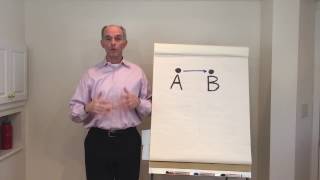
Patrick Mosher, with 30 years in engineering and organizational behavior, breaks down why work feels hard and how to fix it. He introduces the 4 E's of Productivity—Effort, Energy, Expertise, and Enlist—and reframes the Start-Stop-Continue framework as MASS, using physics concepts and practical tactics like moving the first rock to make work more efficient.
Chapters
Welcome to Change Science Academy, where we explore and discover alternative ways of thinking to drive measurable value in executing our personal and organization strategies. I'm Patrick Mosher, your host on this channel, and, you know, 30 years ago I was a chemical engineer and I was working within the industry, and, and one of the things that was just amazing to me is you do all the scientific work, build up all these experiments, do all this evidence and proof, and And then all of a sudden, somebody would make a decision based on something human. So I always wanted— was worried about that. So I started taking classes in persuasion and small group decision-making because I wanted to figure out how humans screwed up perfectly good decisions. So I spent the next 30 years of my career in consulting kind of marrying the science of things, of technology, marrying that to the social studies and organizational behavior, studying different cultures, on different personalities of organizations and helping large organizations go from point A to point B with their strategies of really taking large-scale change, post-merger integrations, new company launches, and getting from point A to point B. Now, as we all know, the best way to get from A to B is the straight line. But if you're watching this channel, I know that that's not your experience with change. So sometimes, you know, executing strategy takes a left turn and a right turn And sometimes you don't ever get to be. Sometimes you thought you got to be, but you're not actually there. Sometimes the organization is not aligned to get you to be. So this channel is all about trying to share tips, tricks, wisdoms, collaborate with you, the audience out there, providing those tips and tricks to figure out how to do A to B even better, faster, more efficiently, with more joy. So in this channel, we talk about the art and the science of things as well as the theory and the practice of things, really focusing on tips and practice and habits that we can develop to help make this go a lot better and faster. So that's what we're here to do. I'd like right now, if you could, write down some questions, some aspirations that you have, some problems you're trying to solve, and put those right in the comments section down below. We'll take a look at them and see if we can work those into future episodes. Today's episode is on work. Thinking about work, the definition of work is on the internet out there, and I'm going to get to that in a second. First, when you think about work, you tell your child, "Oh, I have to go to work today," or it's like, "Man, that's not working," or, "I can't get this to work." We think about work in really negative terms, which is unfortunate because work is what we do. What I'd like to do in this episode is try to give work a better name. To bring more joy to it, and how do we do that with more efficiency, more productivity, more joy, more energy? So those definitions of work that I found out there, one is it's an activity involving mental or physical effort, effort to achieve a purpose or result. So if you think about an activity or a task, that's kind of object A, and you're trying to get A to completion at B, and it takes some mental or physical effort to get there. But what I found interesting about work, it's also a physics or mechanics term as well. And so I looked up that definition, and that definition said it's the energy transfer to an object via the application of forces on it through a displacement. Basically, it says you got to put energy into something to make it move. And so both of those definitions, I really like them because that's what we need to look at is how do we make work work for us. So the first thing I want to look at is effort. When we talk about our effort, you know, that's what takes us to get from point A to point B. And so if you look at a particular object, and we'll call this object M for marble, and you want to take object M and take it from point A to point B and not take so circuitous a route all the way around to get to B. So we're going to talk a little bit about that. So, so I'm going to demonstrate that on our nifty change lab bench that I have in front of me. So what we're going to look at is how do we take object A, which is this marble, and we get it to point B. And that went pretty well. And this is really cool. This is my marble bag from when I was a kid. It's a leather marble bag. It's really kind of vintage. But if you look at all the tasks or activities that we need to get from point A to point B. Whoops. Sometimes the activities— you could hear it on the floor— sometimes the activities don't get to point B at all. Sometimes they get there really nicely. Sometimes activities you thought were done aren't done anymore. So you take a look at that and say, wow, there's many ways to get from point A to point B. Now I'm going to try a different way. I'm going to take it like a marble shooter when I was a kid. Now I'm probably not very good at this anymore. Hey, that worked pretty well. But some tasks got undone. Look at that. Then if you look at, there's many ways to get this from point A to point B. Oops, that was really off. When we look at that effort, this is the point A to point B, and probably the simplest way in this exercise to get this marble from point A to point B is just to put it there. One thing that I'd like to show with that too in future episodes is it's not necessarily working harder, but it's working smarter, but that's a future episode. Now, we just looked at getting those marbles from point A to point B. That's all about that effort or energy we need to put into it. The next thing I'm going to talk about are the 4 E's of productivity. I really like how that sounds because it sounds like the ease of productivity. We're going to go and talk about those 4 E's. We talk about getting from point A to point B and we want to do it better or faster The first way to do that is just through our own effort. And so we talked about our effort, and that's just about increasing our effort, and that's brute force. So we just force that thing over and we make it happen faster. The second E of productivity is energy. So how many times have you faced an activity that looks so big and daunting and you defeated yourself before you even started and it got really hard to do, and so the effort was a lot harder? In some ways, looking at bringing up our energy, my story about that is when I was in my MBA program in accounting class, accounting and me didn't get along very well. On the first test, I got a C. You could actually C out of that program, so I was really worried. What am I going to do? I could study harder, but I thought I was studying hard enough. Then I came up upon a strategy for myself. What I did was I started thinking of my own checkbook. As Mosher Enterprises. And so I created that checkbook, and I started doing journal entries and T-accounts, and I started doing depreciation of the computer and everything like that. And all of a sudden, that activity was great. I got 2 A's on the next test in accounting. It was great because what I did with my energy, I leveled up. So part of this is how do you take your energy about something that you're procrastinating or don't want to do, and how do you level up on that? How do you make it exciting for yourself and bring joy to that particular task? That's the second E of the 4 E's of Productivity. The third one is expertise. Now, if you talk about expertise, if you are better at something, then the effort isn't as big or as hard. You saw how horrible I was at shooting the marbles down there, but if I kept doing that and practicing that, I'd get much better at that. Then every time I did it, I could hit that point B. and now the marbles are going a lot faster. There's a whole area of study called grit to really look at. Grit really requires to have repetitive tasks, to do things over and over again so you get really good at it and you just see it through. Expertise is all about learning continuously. If you continue to learn, you're going to increase your ability to— that expertise and your ability to get from A to B more efficiently and productively and have more joy in it. And then the fourth E of the 4 E's of productivity is enlist. So how do you enlist people? So let's say an activity takes 20 hours to do and it takes you half a week to do that. But if you enlist 5 people to do it, it only takes all of you half a day. Now, not all tasks you can do that way and split it across like that, but If you can, enlist people to help you with that effort and split that effort across many people to get it done. The tactic there is to evangelize enthusiastically. People want passion in their world. They want to join hands with somebody to get something done. I'd encourage you to anything that you need to enlist, just think about evangelizing that task and do it enthusiastically because people will join you and get that done. Those are the 4 E's of productivity. That will help get your task to go from A to B with a little bit better and more efficient effort. Now, let's switch gears and talk about the project that you might have. I think about a project and think about each of these marbles as an activity or a task for that to get a project done. Now, you can see, I don't know if you can see that, but some of the marbles are bigger than the other ones. Some of those tasks are harder, more complex, and some of them are smaller, and some of them are repetitive. I have a couple of green ones here. You have to do the same thing a couple of times. We look at those tasks or those activities, and the next thing we're going to talk about is how do you prioritize those and how do you categorize those so that you can get from A to B a little bit better. There's a tried and true technique that you've probably heard before. It's called Start, Stop, And. Continue. But given this is the Change Science Academy, I'm going to take continue and break it into two different pieces. But let me start going through start, stop, and continue. So what I'd ask you to do right now is write down five tasks that you want to do next week, things that you think you need to do next week, five or six or seven, and write down those tasks. Then we're going to categorize them into these four categories. The first one in start, stop, continue is start. What do you look at when you start something? If you haven't started an activity, you have to ask yourself why. Is it because you're procrastinating? Is it a big mountain to climb up? Is there a lot of energy that you have to put in it to get it going? Part of it is, how do you get moving on moving this big mountain? I think of this big pile of rocks. I got to move this big pile of rocks from point A to point B. You can look at that big pile of rocks and think, "Oh my gosh, this is really hard." and then you just keep thinking about how hard it is. My technique for moving big things or getting started on something is move the first rock. So you just pick up a rock and move it from point A to point B. Oftentimes, all you need to do is prime that pump to get yourself into the game and then you'll start picking up the next rock and the next rock. So that's the first technique is when you— to start something, pick up the first rock and move it. We'll talk about stop. So you look at those activities that you have, and maybe there's other things not on your list, but all of a sudden, all those other things invade that list. Things like maybe watching TV, or getting caught in answering other people's agendas. So how do you stop some of those things? And I'm going to call this the distractor factor. So what are the distractors that are out there that prevent you from executing your strategy, getting your agenda done? Really look at those marbles that you have in your hand, those tasks that you have to do, and make sure that other people don't put other marbles in your hand so you can't get your strategy done. Part of that is pay attention to the distractors that are out there. The third, and this is the part of start, stop, and continue, the third one I want to look at is some of those tasks that you have out there are maintains. Part of it is that you just need to put energy into those tasks to just maintain them. Keep them going with a steady velocity, keep putting the energy in them, don't lose the energy on them. So what do you need to feed to keep it going? And I call these the steady eddies. So which of your tasks on your list are just steady eddies, things that you just have to get done and it's important to get them done? And then the last category that I want to put out there is accelerate. Now accelerate is a specific term in mechanics as well. That's why we're on the Change Science Academy channel. Accelerate is not just a multiplier of velocity, it's exponential velocity. It's velocity squared. If you look at velocity as being, well, I want to spend 1 hour on this tomorrow, then the next day you should spend 2 hours and the next day you should spend 4 and the next day you should spend 8 hours on that task to accelerate that task. When you look at accelerate, accelerating certain tasks, you don't want to categorize all your activities or all your tasks as accelerates. 'cause you'll just burn out. But some of those you just need to either get started and accelerate through it, or you've got a deadline looming, you really need to accelerate it. So thinking about that, I think about that tactic as the double down daily. So how do you double down every day? So yesterday I did this, I'm going to double down tomorrow, I'm going to double down the next day, and really plan that out at the beginning of your week. How are you going to double down daily on the activities that you really need to accelerate through the week? So instead of start, stop, continue, now we have maintain, accelerate, start, and stop. And interestingly, on the Change Science Academy, that spells out mass. Isn't that great? So, and I think about one of those marbles has greater mass than another, and sometimes some of those activities are bigger than others, more complex. And sometimes those rocks are bigger than other ones and you need help to move them. So when I think about mass, and looking at prioritizing your activities, think about which ones you need to maintain, what do you need to accelerate, what do you need to start, and what do you need to stop. Mass. Those are our tips for today. I hope you thoroughly enjoyed this as I've enjoyed bringing them to you. Again, go down into the comments section, make some comments about what things you see, what did you like about today, what did you love about today, and then also if you enjoyed this episode, I'd like you to do 3 things. One is to like the channel. Secondly, it'd be great to subscribe if you would, because you want to get notifications of when I'm putting out the next episode. Thirdly, if you really liked it, please invite 3 of your friends to join us. I'll leave you with this: learn continuously and live your life 100% empowered. Until next time.
More from Patrick

Unlock Your Unique Energy: The Ripple Effect Explained! #telepathy #telepathicconnection #purpose

How Telepathy Works: Tapping Into Energy Bigger Than Yourself with Patrick Mosher (Wisdom4Humanity)

Telepathy: Unlocking Mind to Mind Communication Explained #telepathy #telepathiccommunication #love

Unlock Your True Self: Connect to Infinity #telepathy #telepathicconnection #purpose #love #mission

True Self, Soul, and the Sense of Infinity - Patrick Mosher - Wisdom4Humanity #soul #trueself #love

Unlock Telepathic Powers: Your Guide to Intentions #telepathy #telepathiccommunication #purpose

Unlock Telepathy: Release Distractions, Embrace Love #telepathy #telepathychallenge #wisdom4humanity

Serendipity & Goldfinches: A Spiritual Moment Shared #telepathicconnection #spiritualjourney #love

Unlock Your Telepathic Power: Tap Into Larger Energy #patrickmosher #wisdom4humanity #presence #love

Build Telepathic Capability in 6 Simple Steps - Patrick Mosher, Wisdom4Humanity #leadership #love

3 Words Defining Today's World & Personal Rhythm #worldpulse #today #humanity #purpose #vision #love