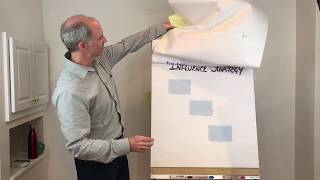
A framework for managing project stakeholders across four groups: supporters, unaware, competing, and opposing. Use assess-engage-enlist tactics to prevent derailments, from daily say-do pages for executives to finding mutually beneficial solutions in conflict.
Chapters
Hello and welcome to the Change Science Academy channel where we explore and discover alternative ways of thinking to drive measurable value in executing our personal and organization strategies. In this channel, we look at getting from point A to point B in a straight line, but we know that doesn't happen. It always takes curves and twists along the way, but we're really looking at how do we straighten that, have a higher probability of getting to the success of getting to point B Getting our strategies executed, that's what we're really looking at in this channel. Today, I want to ask you a question. Have you ever had a project where you're working on it, everything's lined up, everybody's really cool about it, they're great, and whoosh, everything changes because somebody stepped in and actually changed the priority or they took away your budget or something like that? Well, you know, today we're going to look at that from an influencing perspective. How do you influence folks and assess their influence so that doesn't happen to you? Well, I want to start by, by giving you an example from my 30 years of experience as a consultant. A few years ago, I was on a project called Patient-Focused Care at a hospital. And when we were working on the project, we had a great team. We had nurses, we had The housekeepers, we had admissions, we had admin, we had lab techs all involved in the project, quality assurance folks, transporters, we had everybody involved in the project. Great people. And working in a hospital for me as a consultant was a treat because in a hospital, people are in a caring environment, so they just cared and loved each other. It was amazing to me. It was great. And also the people there. You know, they really put quality into the work because when something doesn't follow a procedure in a hospital, well, people can die. So they were just incredibly vigilant about how they did their work. And so, it was just so great to work with them. But there were some issues. Now, the hospital had unions and there was a lot of union management strategies and techniques put in place. So that was good, but there wasn't anything in place for the union-to-union conflicts that happened as a part of this project. So, as we go through the influencing strategies today, I'm going to come to the end and show you how we use some of these influencing strategies, the degrees of influence, to actually resolve some of those issues along the way. Well, to jump into this, to talk about influence, I'm going to go to Momentum. And that's where mass times velocity is momentum. And on the Change Science Academy channel, mass is the level of effort. So if you've got a project that's 2 years long or longer than that, the mass of that project is humongous. But your mass might be, you know, your project might be cutting the lawn, so the mass on that might be only a couple hours long. Then we multiply that by the velocity, and the velocity is the distance. You get from point A to point B, that's your distance, over the duration of time that takes. But today's episode, we're going to talk about this little thing on the top, and that's called a vector. And when we talk about vector and influencing, we're going to look at the vector as the degree of influence. And you can look at a degree of influence as being positive or negative. Now I'd like you to think about a project that you're working on right now. And think about the key stakeholders on that project. Now, a key stakeholder, a stakeholder on a project is typically anybody who is significantly impacted by getting to B. Either on the journey from A to B or when you get to B. So, a stakeholder can be an executive, it can be a leader, it can be a manager, it can be a target group of people in your organization, it can be customers or even suppliers. All of those could be key stakeholders in your project. Well, I'd like you to think of, I don't know, 3 or 4 stakeholders that you have on the project that you have in your head right now. And as we go through the degrees of influence, I want you to start thinking about where they are in terms of the degree of support or lack of support that you have with them. We'll move on and look at degrees of influence. And what you see here is a right triangle. And here we are, we're at point A, we're trying to get to point B. I'm going to divide this into 4 different groupings. The first group is what I call the supporters. These are the people that are aligned with your initiative, and they're in the green. A key stakeholder in the green means that they know what B is, they're lined up with B, and even with this little 15 degrees, you can see how far off they can get at the end. So part of this is to keep them aligned along the way. When you look at sponsors and keeping them aligned along the way, what you want to do is keep talking to them. What we did on one of my projects a couple of years ago was we actually had 30 executives that we had to keep aligned on this very large organization. What we did with them is we created say-do pages every day. Each executive got a one-page at the beginning of every week. Of the things that we wanted them to say about the project. Maybe they had meetings, so we gave them speaking points. Or what we wanted them to do during the week, the things that, meetings that we wanted them to go to, or people we wanted them to talk to. So we gave each of these 30 executives a say-do report for a few months along this project so we could keep them all in the green and aligned with what we were doing. The second audience group that I'm going to put up here is at a 45-degree angle to this. If you see this 45-degree angle, and these are the folks that are probably unaware of your project. So you're still positive, but they may just not be aware of where you're trying to go, and so they're probably just unaware. Part of it is just to talk to them, engage them, and understand what they're trying to do and see if you can get them aligned with what you're trying to do with B. So maybe that's just informing them. The third category, and I want you to think about your key stakeholders and which category they are in. The third one is in the orange here. And in the orange, those are folks that are probably have a competing priority with yours. Now again, they're not negative to you yet, but they're still looking at, you know, competing priority. In this case, what you really need to do is sit down with the folks in this group and say, "Here, this is what we're trying to do, B," and they have their own B. Part of that is to come up with what could be a creative solution, either for both of you to get what you need done. When I took a collective bargaining class when I was doing my MBA a gazillion years ago, one of the things that the professor said there that I thought was so insightful, he said, "When there's two different positions on the table and it looks like they don't overlap at all, it looks like we're doing distributive bargaining or conflicting bargaining." There's always Z. And I thought that was incredibly exciting to think about. The number of solutions are infinite as the stars. So if you go into those situations, you feel like you're fighting, you know, for things that don't overlap, start searching for Z. And that's what you need to do with these folks, looking at those competing priorities, to come up with creative solutions, because maybe there's some solution that you can meet both your B and their B in the same way. Now, the last grouping that I want to put out on the table are this red group. And this red group, well, whatever they're doing is always directly conflicting to you getting B done. It's kind of the anti-B. And if you think about getting, you know, this grouping, these are folks that either they're competing for the exact same resources, so they're pulling away from yours, Or they're actually just actively or passively resisting your project. And so you have to be careful with these. Now, there's an old saying that's, that pay me now or pay me later. And my view on this, in 30 years of consulting, I always say pay me now in terms of, you know, put the conflict on the table early in the project so that you know where all the people stand. And when you start engaging people early in the process, They can get engaged in the solution, they'll feel more ownership over the solution, and they'll feel more engaged with the journey along the way. And that's what you need to do with this group is to get them on the table. Pay me now in terms of getting them on the table and engaging that conflict. We're in a society full of conflict avoidance. And what I really like to talk about is to get the conflict on the table, but create a safe container for that conflict. So people feel like they're heard and that you can come up with maybe some of the creative solutions instead of just pushing or pulling on this. So that looks at the 4 different groups. Again, go back to your project, think about these key stakeholders that you had and are they in the green, the yellow, the orange, or the red and what strategies you have to work with each of those groupings. So what are the strategies, the influence strategies? We've kind of covered them today. The first one is, in order to look at influencing strategy, you have to assess where they are on that curve. Are they green? Are they yellow? Are they orange? Are they red? So first assess, are they positive, negative? Are they, in what degree are they positive, negative? Then the second part of influencing strategies is to engage. Engage and gather their expectations. Again, when I was doing consulting, usually clients weren't upset if it was bumpy or there were difficulties along the way. Where they got upset was when expectations weren't met. So if something is going to go bad or it's difficult or the numbers aren't going to come in where you thought they were, or you're going to have a delay in the project, I've always said, you know, if you set the expectations that that could happen, and then when you bring it up sooner than later, then you're actually engaging the expectations of your key stakeholders and they'll be more forgiving and they'll own a part of it and they'll create a container of trust. And the third influencing strategy is to enlist. And so once you engage them, how do you enlist them so that they behave along the lines of getting to be? So part of that is enlisting them to be cheerleaders Enlisting them to reinforce the project so you can get from A to B. And as they behaviorally get involved in the project, they feel more ownership in it as well. So those are influencing strategies. The 3 questions to ask that you should always ask yourself: First, have I assessed the degrees of influence of my key stakeholders? Secondly, have I engaged my key stakeholders and gathered their expectations? Am I crystal clear about the expectations of all my key stakeholders? And third, have I enlisted my sponsors and leaders that have significant influence? So those are the questions that you should ask for your influencing strategy. Well, I hope you liked today's channel and I hope you got something, you know, good, a good gem out of this one to help you on your current project for an influencing strategy. And you should think about the degrees of influence. Well, if you liked this episode, please like it, subscribe, and maybe even bring 3 or 4 friends to the next episode of the Change Science Academy channel. And so I'll leave you with this: to learn continuously and live your life 100% empowered. Until next time.
More from Patrick

Unlock Your Unique Energy: The Ripple Effect Explained! #telepathy #telepathicconnection #purpose

How Telepathy Works: Tapping Into Energy Bigger Than Yourself with Patrick Mosher (Wisdom4Humanity)

Telepathy: Unlocking Mind to Mind Communication Explained #telepathy #telepathiccommunication #love

Unlock Your True Self: Connect to Infinity #telepathy #telepathicconnection #purpose #love #mission

True Self, Soul, and the Sense of Infinity - Patrick Mosher - Wisdom4Humanity #soul #trueself #love

Unlock Telepathic Powers: Your Guide to Intentions #telepathy #telepathiccommunication #purpose

Unlock Telepathy: Release Distractions, Embrace Love #telepathy #telepathychallenge #wisdom4humanity

Serendipity & Goldfinches: A Spiritual Moment Shared #telepathicconnection #spiritualjourney #love

Unlock Your Telepathic Power: Tap Into Larger Energy #patrickmosher #wisdom4humanity #presence #love

Build Telepathic Capability in 6 Simple Steps - Patrick Mosher, Wisdom4Humanity #leadership #love

3 Words Defining Today's World & Personal Rhythm #worldpulse #today #humanity #purpose #vision #love