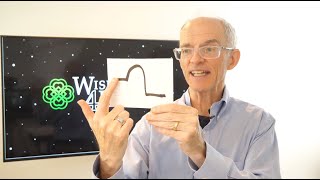
Patrick Mosher shows how to shift a movement from the hard startup phase to a sustainable rhythm. He's run a monthly program every single month since October 2018, through four name changes, and explains the difference: starting takes activation energy, but sustaining is lower-effort maintenance once you reach the peak.
Chapters
But let me move to sustain a little bit. And Chuck, you're definitely in start mode in some ways, but also from a life mission perspective, you're probably more in sustain mode from a life mission. If you really step back and take a picture, it's like, oh, wait a minute. So I'm going to walk into this a little bit. And we just did a long series of Start a Movement. And Sean, you've been with me for that, which is great. I think, Chuck, you have a lot of the recordings of that too, if you wanted to go back. But now we're going to talk a little bit about sustaining movement. And this could be really helpful with life mission work as well. So the definition of sustain— and I think both of you said the word sustain when you were talking about life mission. So I think this is really good for that too. So the definition of sustain— I love words. I'm a word guy. So the definition that I like for it is to continue for an extended period of time without interruption. That's the key, without interruption, right? So continue for an extended period of time without interruption. So, and Sean knows this story, but I'll put it out there. I'll be brief with the story, but I was a part of Brendan Burchard's Expert Academy, and I'd gone 3 times. And at the events, he always said, you know, if you really want to be an entrepreneur, you should really have a monthly program. Okay, everybody who's done a monthly program, stand up. And he'd have, I don't know, 500 to 1,000 people in the room, and 12 people would stand up. And so after I'd been 3 times You know, this is the kind of stuff too. It's like you get hit with the 2x4 3 times. And I said, for the, for the next one I go to, for the 4th time going to the same event, he's gonna ask this question and doggone it, I'm gonna stand up. So I promised myself that. And of course I didn't do anything with it until like a week and a half before the next one. I was like, okay, I'm going to launch my monthly program next week on Tuesday and then go to this event on Thursday. You know, so I did that. So I was— I used that as a, as a, as a deadline. And so I launched it and I launched it with a friend, um, whom you know, uh, Sean, Linda Fitzgerald. And I said, can you just show up? And she said, sure. So I launched it. So then when he said, anybody who's got a monthly program stand up, I got to stand up because I delivered it with a friend of mine. Okay, and Sean, you know how that goes because you've done the same thing with Your World, right? It's just like, just start with some friendlies, get it going and go. Okay, so that was that. So the evolution of that though, I have not missed a SIM, a monthly program, since October 2018. Okay, because I don't care, you know, before today, you know, folks were late today, and I was like, uh-oh, okay, if I have to deliver this alone, I will deliver this alone. That's how it's going to go. And so, so I'm ready to do that, right? Just to go so that— because I'm not going to miss a month. And I have done it by myself once, early days. So, so there's the evolution of this thing. And it wasn't SIM to start with, it was Authentic Interaction Mastery. It became Business Acceleration Mastery. And then it became Wisdom Monthly and Success and Significance. So it's not— it hasn't retained the same name. And I know, Sean, you've done the same thing. You've rebranded, you know, at least once that I can remember. And it's just like, yep, it's— but now it's Significant Impact Monthly, and it's been this way for, I think, 4 or 5 years now. So that's great. So there's an evolution of things. That doesn't mean you're starting over, just means an evolution. So, uh, here's the model I'm going to use to describe the difference between starting a movement and sustaining a movement. I've got a graphic for you here. Here we go. You guys look at this and go like, oh no, not that. Here it is, right? That's the thing, okay? When you're up at this higher level You're starting, you know, you're going like, I'm thinking about a movement, I'm thinking about a movement, thinking about this thing. And then you start and you, and you're climbing up this hill and you're putting a lot of— I call that an energy into that. Energy can be money, people, time. Um, so a lot, a lot of that energy. And then you get to the top and then you go down and you get to a more sustainable, more efficient energy level. Now, you remember this from high school. It's called activation energy. You're both looking at me staring like, I remember that from high school. Okay, well, it was in high school chemistry, so there you go. Oh, that's why. Okay, I see, Sean. That's why. High school chemistry. Yeah, no, I don't remember anything from that class. Okay, so, um, So that's activation energy. So, so part of this thing is when you're climbing up that hill, which you're both doing in some ways on the start of something, is that you have to put enough energy in the thing to get over the top. And we're all very familiar with putting energy into a thing and then stopping and then getting distracted by something else, and then the ball is back down on your feet. So there's that part of that activation energy. So I drew another little piece here too of the same thing. I do these on little scrap papers. So, so, um, so you see the red line there? That's the activation energy. That's the cost of starting something new. Okay, but then when you get to the top, all of a sudden things get easier. They get, they, they get smoother, and it's like, oh, okay, so, so, um, That's getting over the hump. And that's when you know when you're on that bottom line is when you're sustaining the movement. Okay, so let me ask you, do you— Sean, do you feel like you're starting your movement or sustaining it? Uh, definitely starting it. Okay, so you're still on the rise. You're still like, I got to put energy in this thing. And then, and then I know you kind of walk away a little bit and it's like rolling back down. It's like, oh no, no, no, no. And then you're roll— You're still in that mode of like pushing it up the hill. Okay, good. So, but I also want to give you guys, um, we all have examples of stuff, stuff in that stable state. Okay, not necessarily movement, you know, the job and all that, but there's other things that we have in our lives that are in that stable state. What are some of those things? Just, I have a list here, but what are some of those things? Just curious what your thoughts are. Let me add a couple to your list. Marriage, probably one that's, you know, I think for us is kind of in the stable state. Does that mean it's done? No. Does that mean we don't have issues every once in a while? No. Does that mean that it's all, you know, but we're on that other side, right? You know, it's, it's gotten to a stable state where we're maintaining things a little bit more. So I wrote down marriage. I wrote down community in some ways. Now, Sean, some of what you're looking at right now is like, oh, my community kind of like went on the other side all of a sudden, which is good. But some of the other things I wrote down here too was my wisdom councils. So, you know, I'm in— this will be our 7th wisdom council this year, and, and we have spreadsheets, we have work plans, and all that kind of stuff is in place. So I wrote that one down. And then also this summer I'm going to go to Pine Ridge Reservation for my 33rd year. So part of that is like, that's in a stable state. It's like, I, you know, got it going. I know how to pack. I don't have to worry about stuff. And the other one that I'll bring up today that Chuck, you brought up is piano. You're not learning to play piano. Now, is this thing an easy thing to learn for this, for September? No, but you're on the other side. You know, you know, you know what it's like to get in there and what it takes to get sit down and do that, right? Because that's in it. That's— that competency is in a stable state. It's in a sustained mode, right? And if you don't play for very much, it gets rusty, right? So there is a sustained mode. It's that you can't just like let go of the thing. You have to put some stuff into it just to keep it oiled and ready to go. So cool. Now that I've given you other examples, other examples that you can think about that are maybe not business related but are in sustained mode in your lives?