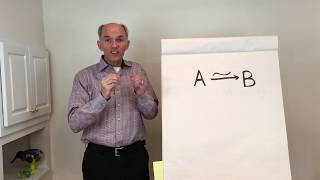
Patrick Mosher outlines four strategies for meetings that deliver real value: define clear objectives using seven question types, surface decisions upfront, get the right people in the room, and document outcomes with next steps. Pre-meeting prep and post-meeting accountability turn ordinary gatherings into high-impact ones.
Chapters
Hello, I'm Patrick Mosher and this is the Change Science Academy channel where we explore and discover alternative ways of thinking to drive measurable value in executing our personal and organization strategies. In this channel, we look at where we are at point A and we're trying to get to point B. Maybe B is an aspiration, maybe it's a project ending, maybe it's a goal that we have. but we're trying to get from here to there in as straight a line as possible. We also know that it takes twists and turns along the way. Every journey does. Part of what we're looking at in this channel is how do we effectively and efficiently get from point A to point B, kind of iron out this line to make it as straight as possible. Today, we're going to talk about one of my favorite topics and one of my least favorite topics. We're going to talk about meetings. Just the term meeting itself conjures up all sorts of terms like boring and even deadly meetings. Meetings can be horrible for us. How many times have you had a meeting that you had a lot of hope for and it just fell short of everything you wanted to happen? Or you had a meeting that you knew you were dreading, you knew it was going to be terrible. And it was just as terrible as you thought it was going to be? Or did you have a meeting that was just like, wow, we're going to get a lot done in this meeting, and it actually met your expectations? Well, what we want to do today is give you some tips and tricks and strategies to create those meetings where you get 10x value, 10x momentum out of the very next meeting that you have. So we're going to look at that today, and I want to start with a story. Boy, you know, this is a story from a few years ago. I was in consulting for 30 years, so I've been in tons and tons of meetings. Actually, I've conducted some great meetings and I've conducted some not so great meetings. In this particular story, I was one of the people, a participant in the meeting. There was about 6 of us in the room. It was about 2:30 in the afternoon on a Wednesday. We were tired and all that kind of stuff. I don't remember the topic of the meeting. It was some strategy or requirement or something like that. Anyway, we were all sitting there and it was just a deadly meeting, one of those deadly meetings. All of a sudden, The lights went out. The lights went out because we were in one of those rooms where there's a motion detector to see if somebody's in the room. They're trying to save and conserve energy. When people leave the room, then the lights go off after 20 minutes. Well, apparently, we had all left the room 20 minutes before because the lights went out. Well, as the lights went out, there was this pause as we looked around to see if the electricity went out in the building or something. He's like, when we realized, no, the electricity had gone out of us, we all busted a gut laughing and we said, I think it's about time for a break. So what we're trying to do in today's meeting is to not have those kind of meetings ever again. And there's 4 tips that we're going to bring up today, 4 strategies to help you create those meetings where you don't have them be so deadly. So let me jump right into it. So what we'd like to do is to cover 10x meetings today. And in those 10x meetings, I'm going to give you 4 strategies, and then there's some bonus pieces over here. So when we look at 10x meetings, what's it mean to have 10x? Well, it means that there's 10x value, 10x momentum, 10x energy, 10x something that comes out of the meeting. And so the first point of having a meeting that actually meets or exceeds your expectations, and the first piece of this is, wow, create objectives. I can't tell you how many times I've been in meetings where people come in and go, hey, let's have this meeting. Okay, great. And these people get in, a few more people go in, and they go, I want to do this with the meeting. And somebody else comes in, I want to do this with the meeting. And then you have all this mixed objective stuff, and then you have this meeting and people go, great meeting, high five. And you go, what did we do in today's meeting? So there were no clear objectives. What I really suggest that you do is create the objectives for the meeting, distribute those to your participants ahead of time so that you get agreement on what you're all meeting for. Because time is the most valuable thing we have, and when you don't have objectives for the meeting, you know, if they're ambiguous, you're going to have ambiguous outcomes and you're going to have a waste of time. So part of this is create the objectives for that meeting so that they're clear and everybody agrees to those up front, and post them ahead of the meeting and post them at the beginning of the meeting so everybody's real clear what you're trying to do. Now, I'm going to put these 7 yellow tickets over here and just say, what kinds of objectives might you have for a meeting? As we go through these, you're going to start figuring out where I'm going with this. Objectives. You might have an objective as to the why of the project or the why of the meeting. What's the purpose? What's the big purpose? Part of this is, why are we trying to even do what we're trying to do? I call that the big why. The second objective that you might kind of have in a meeting is what. And the what is point B. The what is, what's the solution look like? What's in scope, out of scope of the solution? So you might be looking at point B and what that looks like. What's that rally point B looks like? So that's describing the what. The third kind of objective that you might have is how are we going to get from point A to point B? This might be some agreement about what the activities are, what the effort is required to do it, what's the sequence of tasks, what's the phases of the project we're going to go through, what's the release plan for the strategy of this. But anyway, you might be starting to look at making some decisions and objectives around how are we going to get from point A to point B. So we look at the big Y, point B, and the line between A and B. So what's the, the fourth thing that we'd be looking at? Who's doing what? Part of this is like, who's in the room and what activities are y'all signing up for? So who is supposed to do what? Who's taking responsibility for follow-up actions? Who's taking responsibility for finding budget? Who's responsible for finding other people to help with this? So part of this is a who. Now the fifth one is very similar to the fourth one. But it's who, but I put a little I on there. I meaning, you know, if you're in the room, you've got this objective, and you're looking at everybody in the room, and there might be people not in the room that may have a big impact on whether this thing can happen or not. So I think of I as the influence factor. Who's not in the room, and what's your strategy for going to get those people who can influence this decision, these objectives, and get them back into the game? The next one, the sixth point, is when. So you'll probably talk about when things will happen. What are the milestones along the way? When are we going to get to point B? So you might start looking at the duration or the phases and when they'll happen. What are the deadlines or the timelines that you're looking at? So when would be another set of objectives that you might have in a meeting. Now, I've got all these. Can you guess what the last one is? Well, here's what we're going to talk about this time, is how much. Sometimes we look at, in meetings like this, and the objective is, what are the costs? What are the benefits? And do they balance with each other, or do we actually have more benefits that allow us to do these things? So I look at these as the 7 kinds of questions, 7 kinds of objectives you might have. Now, if you're in a meeting and you have 14 or 15 objectives around those things and you have 45 minutes for the meeting, chances are you're not going to get from point A to point B in that meeting. You're not going to generate the energy and enthusiasm, and you're going to walk away with expectations that are not met. So it's better to ratchet back on those objectives, come up with what are the critical objectives for this meeting, which leads us to the second piece here. The second tenet of meetings is decisions. What decisions are you looking for in this meeting? Now, maybe lined up with your objectives as to who and how and what and when, but what I look at in decisions, oftentimes, 30 years of consulting, we had lots of steering committee meetings, and part of this is, what are the decisions you need to make with this executive group so that you don't waste their time? So many executives just want to make the decision. Sometimes we roll around in the details way too long before we actually get to, "And then this is the decision we want you to make." So part of this is, I used to do this all the time with my executive teams during committees, is tee up the decisions at the front end of the meeting and say, "Today we're meeting about these 3 decisions, 1, 2, 3, and when we get through, we're going to go through a lot of detail today, and when we get to that point, Tell us, yep, I got it, we can make that decision towards A, towards B, or we can't make this decision and this is what we need to do to collect more information to make that decision. So a lot of times decisions are about what are the 2 or 3 that you have to make in this meeting and make sure everybody knows exactly what decisions you're trying to make. The third tactic to have a 10X meeting is people. And once I look at the objectives and the decisions in the meeting, I start, that really gives me a lot of clarity around who do I need in the room. If you don't have the right people in the room, well then you go to this who, why, and say, you know, am I getting the influence strategy together? Maybe that's the purpose of the meeting. But how many times have we been in meetings where we had these grand objectives, we said yes, we made it, high five, successful meeting, And we walk out and a day later or a week later, somebody undoes the decision. Somebody that wasn't in the room. And so part of this is, we look at who do you need in the room to meet these objectives and to make these decisions. And then oftentimes, we may decide not to have the meeting. We have to have the right people in the room either to make these decisions or to go after that who, why part and go after the influencing factors. And finally, the fourth tactic to have 10X meetings is to measure the success of the meeting. And what I mean by that, there's 3 important parts of measuring the success of the meeting. First of all, document the decisions in the meeting and recap those decisions at the end of the meeting. So many meetings don't end, don't give enough time for this because we have so much junk packed in here that we actually don't spend time at the end going, Let me recap here for you. Here's the decisions we made today. And that really helps clarify and lock those decisions in. So that's the first piece that we need to do. The second piece is to lock in on action plan. What are the next steps that we're going to do out of this? So many times in meetings, we don't actually generate momentum, we generate potential energy. So part of this is people make commitments. Well, okay, let's document the commitments that people made during the meeting. So that's number 2, and then recap those. Hey Bob, you said you would do this. Jill, you said you'd do this. You have a number of action items, assign them to people so that you can follow up on those things, which leads us to the 3rd piece under measuring success is how are you going to track the progress of all the things that you decided on that day? Does that mean that you're going to meet again in a week, 2 weeks? Does it mean there's an email that goes out? What is it that you're going to do to say that, yep, here's the decisions made today, and here's how we're going to check and make sure that we made the progress that we wanted. Because what we're ultimately looking for here is to create momentum to get from point A to point B, or even acceleration from point A to point B, so things go faster, they go more efficiently, effectively, and more energetically along the way. So to recap, these 10X strategies, these 4 things create the objectives, Identify exactly which decisions you need to make. Make sure you have the right people in the room. And then how you're going to measure success. Just these 4 tips will help you generate 10x meeting value or 10x momentum in your meetings. Now, I want to challenge you with a couple things. First of all, if you have a meeting coming up next week, I'd love to hear about it in the comments section below. Write down, hey, you know, I want to amp up this meeting and I don't know how. Maybe our community can provide some suggestions about how to amp up that meeting so that you can generate that 10x out of it. I'd really love to hear from you in the comments section below on meetings that's coming up, big significant meetings that maybe if we can just help you a little bit, you're going to get that 10x out of it. The second challenge that I put out there is please take one of these ideas, some of these ideas, Go have a fantastic meeting and then come back to this channel and put in the comments section, "Wow, I used, you know, I made sure I canceled a meeting," or, "I teed up these decisions and the meeting went swimmingly better." So let me know about those things too. Would love to hear those comments in the comments section below. Well, that's it for 10x value in meetings in this episode. I hope we gave you a little bit of value today. I really hope that you generate a ton of value out of your next meeting and many thereafter. If you like this channel, this episode, like this episode, please subscribe to the channel. Find 3 or 4 more people to subscribe to the channel. If nothing else, please share this episode with other folks that might be able to benefit from having 10X in your meetings. Finally, I'll leave you with this as I always do. I would love for you to learn continuously and live your life 100% empowered. Go have a ton of authentic exchanges this week. Until next time.
More from Patrick

Unlock Your Unique Energy: The Ripple Effect Explained! #telepathy #telepathicconnection #purpose

How Telepathy Works: Tapping Into Energy Bigger Than Yourself with Patrick Mosher (Wisdom4Humanity)

Telepathy: Unlocking Mind to Mind Communication Explained #telepathy #telepathiccommunication #love

Unlock Your True Self: Connect to Infinity #telepathy #telepathicconnection #purpose #love #mission

True Self, Soul, and the Sense of Infinity - Patrick Mosher - Wisdom4Humanity #soul #trueself #love

Unlock Telepathic Powers: Your Guide to Intentions #telepathy #telepathiccommunication #purpose

Unlock Telepathy: Release Distractions, Embrace Love #telepathy #telepathychallenge #wisdom4humanity

Serendipity & Goldfinches: A Spiritual Moment Shared #telepathicconnection #spiritualjourney #love

Unlock Your Telepathic Power: Tap Into Larger Energy #patrickmosher #wisdom4humanity #presence #love

Build Telepathic Capability in 6 Simple Steps - Patrick Mosher, Wisdom4Humanity #leadership #love

3 Words Defining Today's World & Personal Rhythm #worldpulse #today #humanity #purpose #vision #love