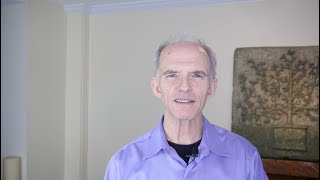
In this reflective monologue, Patrick Mosher recounts watching the Challenger explosion during his first year of a PhD in organizational behavior, which sparked his study of organizational disasters such as Challenger, Three Mile Island, Chernobyl, and the Titanic. He argues that such catastrophes are never the result of a single root cause but emerge from a web of complex, interrelated decisions made by many disconnected actors. Mosher highlights the limits of individual cognition and even advanced computational tools (algorithms, analytics, AI) in handling the massive, fast‑moving decision landscapes of modern systems. He extends this analysis to global challenges like pandemics, climate change, and biodiversity loss, emphasizing that single‑discipline perspectives (e.g., purely epidemiological or purely economic) are insufficient. Drawing on the Lakota phrase “Mitakuye Oyasin” (We are all related), he frames humanity—and all species—as a lattice of interdependent nodes whose collective wisdom must be linked to make unified, respectful decisions for present and future generations. The talk concludes with a call to each person to act as a node of wisdom, embracing differences, pulling together toward a purpose beyond personal security, and consciously evolving to preserve a clean, beautiful world for those yet unborn.
Chapters
I remember exactly where I was when I watched the Challenger explode on January 28th, 1986. I was in my residence hall room. I had a little TV on a stand, and I stood as I watched those trails of smoke. I cried. It started as a heaving, then went into one of those uncontrollable cries that just won't stop. I was in my first year of my PhD program in organization behavior, and in the program we studied organization disasters: the Challenger, Three Mile Island, Chernobyl, Titanic. One huge takeaway is we like to condense and rationalize these disasters into a single root cause. For the Challenger, it was faulty O-rings. The Titanic, running full speed at night. Three Mile Island, a spilled soda on a control panel. But it's never that simple. The root cause is a set of complicated decisions and assessed risks that's bigger than any single decision made by one person. There's a configuration of complex decisions made by disconnected yet interrelated people. No single brain could compile the information and make the critical decisions in the lightning-fast time needed to avoid disaster. Yes, we have computers to help us, and these ginormous systems help us build even bigger and more complex systems. Even more so, no single human brain can comprehend all the moving parts and possible outcomes. Oh, believe me, I geek out over the three not-so-easy A's: algorithms, analytics, and artificial intelligence. It's the complexity of seemingly disconnected systems of decisions that generate disastrous conditions. No single point of view is sufficient. If we face the pandemic solely as an epidemiologist, our world suffers economically. And if we face the pandemic solely as an economist, we suffer medically. Our systems are so big now, we no longer sink ships blow up rockets or make regions radioactive. Entire species are going extinct. Our daily decisions are changing the environment for future generations. Perhaps we're altering our very genetics. And yet, we are the stewards of this planet. Each of us is a node of wisdom. Like it or not, you and I exist in a great lattice of collective consciousness. Our survival on this planet depends on our ability to link our nodes of wisdom to make a continuous series of complex decisions that preserves and nourishes our world for future generations. We must be united on this front. Unity which includes differences of opinion and yet all pulling the rope the same direction. We work not just for ourselves, our children, or even our grandchildren, We work for the children whose eyes we cannot look into because those eyes are not yet born. There's a Lakota phrase, "Mithakuye Oyasin," which means "We are all related." It's a simple phrase. I used to think it meant to unify those present when the phrase was used, and indeed that's true. And We are all related means we are related and interconnected with those we don't even know. We are related to the generations who came before us. We are related to the generations who come after. We are related to all species on the planet: animals, plants, insects, marine life, desert life, deep ocean life, and eagles that fly in the sky. We are related through the complex systems of decisions made in every household and every boardroom. We are intricately interdependent on each other every day, every minute. Decisions that will change the trajectory of yours and my life are being made right now. So here's the challenge: step up as the node of wisdom you are. Your wisdom contributes to the collective consciousness. Make decisions and take action while respecting differences in opinion Allowing people to contribute their wisdom, exchanging authentically, openly, and respectfully. And most important, make decisions and take action, pulling the rope in the same direction with a unified purpose. A purpose not tied to your security or your freedom. You and I are here to do more than survive, more than thrive. We are here to consciously evolve. To preserve and pass along a beautiful, clean world for future generations. This is Metakuye Oyasin. Yes, we are all related. This is Wisdom for Humanity.