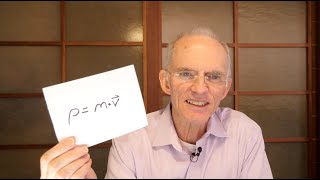
In this talk, the speaker frames the creation and sustainment of momentum for projects, movements, or teams using the physics formula momentum (p = mass × velocity) plus direction. He maps mass to the amount of effort or resources devoted, velocity to the speed of actions and decisions (distance over time), and the tilde (direction) to the alignment of all participants toward a common goal. The speaker illustrates the model with personal examples—Amber and Nate’s hobby project, corporate initiatives, and a physical demonstration with a ball in a room—to show how insufficient or misaligned effort leads to stalled momentum. He emphasizes that consistent effort, rapid decision‑making, and unified direction are the three pillars needed to generate and maintain momentum in any endeavor.
Chapters
So, so the very first thing that I think of is how do you generate momentum? You know, so you're all looking at this thing saying like, how do I generate momentum for this thing? I've got, I know what the movement is, I know what I'm trying to push to do. But how do I generate momentum? And of course, being the engine nerd that I am. Momentum is a physics term, and it is, uh, momentum is rho equals mass times velocity. Okay, rho equals mass times velocity. And so, uh, that's momentum. And how do I translate that into, uh, this world? Is to think about mass is effort. So if you think about your movement, the thing that you need to do, what effort do you need to put against it? And velocity is how fast it moves. And velocity is distance over time. Okay, distance over time. So, uh, if you think about this, and I'm going to use Amber, yours as an example of this, So, so how much effort does it take to sustain this thing? So momentum, the definition of momentum is sustained energy required to keep an object moving. The sustained energy to keep an object moving. And so thinking about that too, for, for, um, Amber and Nate, when you guys were both, you know, you have day jobs and, and this is kind of a hobby thing. It's really hard to sustain momentum on this thing because the problem is that you can't sustain the effort. So in that sense, using this, this formula, the mass isn't there, the effort, and the effort isn't constant. And, and the other thing about this, what I love about this, there's 3 elements to momentum: mass, velocity, and that little tilde on top. Is really important. Yeah, velocity is distance over time, but that tilde is direction. Direction. So when you have this thing on the side, you focus on this and then that thing and then this thing and then that thing and then that other little thing. And another thing looks really big, so you spend a little bit of time on that and then that drops off for a couple of months and then you can pick that back up. Does this sound familiar? right? And it's not just for your thing, it's also at work too. So I use this at work as well. So, um, if I think about mass is effort and velocity is distance over time, um, the distance then I kind of think of that as actions and/or decisions that you make. So what's the speed of action? What's the speed of, of the decisions that you make to, to move this thing forward? And of course, time is just time. And then the direction. And I like the tilde part of this too. And I use this example when I was in Machu Picchu, and I've used this actually in corporate too. If you're in a room and everybody's in a room and you say, okay, here's why direction's important. If everybody, if I put a big ball in the middle of the room right now and everybody stood up and pushed on the wall, on the ball, where would the ball go? Nowhere. Because the tilde— because everybody's pushing in a different direction. So another piece of this thing that's really important is, are you pulling the thing in the same direction? And are the people around you pulling and pushing in the same direction? And for, for the change folks on Team Paul and Amber, you've seen this a lot, right? It's like Lots of effort, lots of effort, but the directions are all over the place. So, so you're just not getting the, the momentum that you're looking for. Is this making sense for everybody? I love this application to, you know, this physics application to this kind of world because it really does directly apply.