Passive resistance is when someone says yes but means maybe or no, draining energy from progress. Watch for missed deadlines, analysis paralysis, and vague logic. Use the PRETI framework to test commitment strength across five dimensions: public, resources, energy, transformative impact, and influence.
Chapters
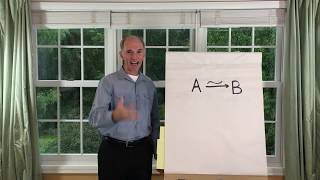
Hello and welcome to the A2B Academy channel, where we explore and discover alternative ways of thinking to drive measurable value in executing our personal and organization strategies. In this channel, we look at getting from point A, where we are right now, to some point B. Point B could be an aspiration, it could be a dream, it could be getting a project done at work, whatever it is. And we like to think of that being a straight line. But in fact, we take twists and turns along the way. In this channel, we look at ways and strategies to iron out that path from A to B to make it as straight as possible so that we get there efficiently, we get there with success, less risk, and just less energy burnt along the way. So today, we're going to talk about resistance, but we're not going to talk about the in-your-face act of resistance. We're not going to talk about our internal resistance. We're going to talk about passive resistance. Let me start with a definition of resistance. Resistance is refusing to accept or comply with something. It seems pretty simple. Or it's an attempt to prevent something by action or argument. Also, what I like about the term resistance, it's actually a scientific term as well. The scientific definition is a degree to which a substance or device opposes the passage of an electric current. So you think of an electric current going through something and then there's resistance in the wire. Either it's really long wire or it takes a long circuitous way to get there. But the next part of the definition I really like because that resistance causes energy dissipation. And so when we get resistance going from point A to point B, ah, we burn some of that extra energy, don't we? We burn energy by trying to get people on the path, we burn energy by not not really understanding where people are at, and that's where passive resistance is really tough. That's where we probably burn a heck of a lot of extra energy and it dissipates because of that passive resistance. So what is passive resistance and how do we see it when it comes up? And how I think about it is when yes means not yes. When yes means I don't know, yes means I'm I'm not ready to make a decision yet. Yes means, "I'll let you know later." Yes means, "Oh, I'll decide this later." Or, yes actually means no, but I'm not ready to tell you right now. It's not the right time, or the right space, or I'm not ready to say no in front of these people right here. That's where that becomes more of a passive resistance place. When we think about yes not equaling yes, yes equals either I don't know, or yes actually equals no. So I think about passive resistance in two ways. It's either built into a culture, and so there's a lot of passive-aggressive company cultures out there. And so when I think about that passive culture, that could be where there's this over-indexing on consensus building or collaboration. Saying no is a negative thing. Having conflict is a bad thing. And that actually creates this passive-aggressive where people go, "Oh yeah, we're willing to consider it. That's great." And in their heads they're going like, "Absolutely, that's never going to happen." So that's kind of a cultural thing. But then there's also a political thing as well. That's more conscious where somebody's saying, "I'm going to say yes right now because I don't want to say no in front of this person." Or, "I'm saying yes right now because politically I can't say no right now." I think of it as a cultural thing and/or a political thing where we see that passive resistance. Sometimes it may be conscious, but a lot of times passive resistance may actually be unconscious. That's when we really see some challenges with trying to figure this out. The first thing I want to start with here in talking about this passive resistance It's almost like passive resistance— I was thinking about this on a walk— is like, it's almost like having a metal detector. You know, you can't see where the metal is, but you want to find out where that metal is, so you have a metal detector. Well, what I'm encouraging you to do is to create a passive resistance detector, a PRD if you will. Now this passive resistance detector is out there trying to detect, is that a yes? Is that a real yes? Is that a possible yes? Is it a passive no? Am I seeing passive resistance? So, some of the indicators that might be in this passive resistance detector that you might want to try to pick up and use are things like slipped deadlines or people taking way too long to come up a learning curve or it might be analysis paralysis. It's, "Let's analyze that again. We'll analyze it again. We'll analyze it again." Well, analyze it from this perspective. All of that might be ways to actually show passive resistance. Passive resistance may also show up in terms of connecting dots that don't exist. Sometimes people are resisting something like, "Well, if we do this, this is going to happen." Oh, wait a minute. That logic may not actually follow through. Or there might be constant distractions or deprioritization of the thing we're trying to get done. When you see those things happening, that might be also a form of passive resistance. I also want to kick in that sometimes your intuition will go, "Hmm, that didn't just feel right." Those are some good ways to look at this passive resistance detector. Then I want to share with you some quotes. I was consulting for 30 years and I saw passive resistance all the time. I saw passive-aggressive cultures all the time. Part of that is, how do you know that you've got that happening? Some quotes that I used to hear along the way: "Well, if we do this, that won't affect me at all," or "Yeah, that will never work. It just won't work," or "Let's just go back to the old ways of doing things," or "I told you that this wasn't going to work," or "I know we've tried this and it worked here and here, but it's just not going to work over here." Those might all be different ways of people saying, "I don't think this is going to happen." Oh, the classic one that I heard a lot of times is, "You know what? They've tried this before. If we just wait this out, it'll just pass." Those are all ways that people throw in that passive resistance. I really encourage you to kick in that passive resistance detector and see, does your metal detector, your PRD like start bleeping, you know, really heavily. It's like, oh, wait a minute, I'm starting to hear some passive resistance here. The better skilled you get at that, the better you are at detecting it when it actually is happening. So I encourage you to really look at that. So now, if we look at passive resistance, how do we strategize against it? You know, what do we do when we see it? So the first thing is when you see passive resistance happening, I try to change the context because the person who's passively resisting, they may go like, "Well, you know, we'll consider that." I might try to change the context. Either the timing may not be right for that person to agree or to behaviorally commit to something. The space we're in might not be right, the form might not be right, or the people they're saying it in front of may not be right. So a lot of times I'll just try to change the context a little bit to see if I still get that passive resistance response from folks. "Yes, but you know, let's wait a little while," or "Let's analyze this a little bit more." I might try to change the time or the space or the people so that I get a different answer, you know, in a different context. But the second one that I'd like to look at is the most powerful one that I use, and this is getting commitments. And what I mean by commitments, I don't mean Oh yeah, I'm behind you 100%. That doesn't mean anything. I look for behavioral commitments. I look for ways that people go, "Alright, I'm behind you 100%. Alright, here's what I want you to do. I want you to go out and talk to your team and say that I'm behind this 100%, and here's what we're gonna do next to make it happen." That's a behavioral commitment. So what does a behavioral commitment look like? I'm going to go through 5 components of that. What I think about this is, is this behavioral commitment a 1, like, "Yeah, I'm kind of behind this," or is it a 10, like, "Let me at it. I'm going to go out there and make this happen with you." I've got a little acronym that I'm going to show you with this. The first one is, is the commitment public? Does the person actually give you a public commitment to this? Is an executive saying, "We are going to implement this by this time"? Is somebody getting in front of other folks and saying into a large crowd, saying, "This is gonna happen"? So, on a 1 to 10 scale, how public are they going with the commitment? That's the first one. The second one is resources. Are they committing resources? And I think of resources in two ways. Are they committing their time or other people's time? Are they committing money? Are they allocating budget and dollars for this thing? So if they publicly are out there saying, "We're going to commit a million dollars to this initiative," well, then they're publicly out there and dedicating resources to this. The third way to show a behavioral commitment on that 1 to 10 scale is, are they energetic about it? "Oh yeah, we're going to do this, that's great. Bob, can you go out there and do that?" "Help them with that." There's just no energy behind that. So part of that is, are you looking for that public support, the resources, and are they energetic about this? And again, going on that 1 to 10 scale on the behavioral commitment, how energetic are they about supporting this? Which gets me to the fourth one, which is how transformative is this? You know, "Yeah, we're behind this, but let's do a really simple pilot first and just do the I'm gonna do this little piece first and see if that works out. Okay, that's not a real good behavioral commitment. Part of it is, how transformative is the thing that they're asking people to do? Is it changing how they work? Is it changing how they think and how they're gonna operate in the world differently? Are they changing the way people work and live? I don't know. So, how transformative is the thing that they're committing to? And the last one is how much influence does this person have? So if you think about, you know, if this is somebody who goes, "I'm behind you 100%! I'm going to publicly go out to the mountaintops and tell everybody I'm energetic, it's transformative," but they don't have a lot of influence, well then the behavioral commitment isn't as big as if somebody who has that influence is going to go, "You know what? I'm going to take my team of 10 people and I'm going to dedicate them 100% to this." Okay, that is a transformative and an influential person who has the resources and the energy to make this happen. So this spells out PRETI, P-R-E-T-I. So when I look at behavioral commitments, I think of how pretty is it? Is it a public commitment? Is it a resources commitment? Do they have a lot of energy? Is it transformative? And does this person have a lot of influence? And when you have a high, pretty commitment, you know that you're going to break that passive resistance. And then if somebody goes, "Ooh, I'm not ready to do that yet," that's actually a good thing because then you go, "Okay, now what do you need to have that happen? What resources can I give you? What argument can I put on the table that will help you get over the resistance that you have or the concerns that you have, the interest that you have?" but it gets you to a place where you can actually have a good conversation. So I look for those behavioral commitments and I suggest them to people in that mode, just to find out, just to test, is this resistance or is there something that we can actually work with beyond just, "I don't think it's a good idea." Alright, so that's what we've got looking at passive resistance. We've talked about a few things here. We talked about getting your passive resistance detector, your metal detector, and honing those skills. We talked about changing the context, maybe, to change that passive resistance by changing the time or the space or the people you're trying to get that commitment from. And then we talked about P-R-E-T-I, pretty commitments, those behavioral commitments that are big, and that helps you overcome either overcome the resistance or actually have a conversation about what the interests are that you need to deal with. Well, I'd love to hear about, you know, how you thought about this, whether this was helpful for you. And please, the most important thing is to go out and try some of these things, you know, in your workplace where you see, you know, that passive resistance and, you know, try to overcome it. And I'd love to hear about those comments down below in this section. So, as usual, I'm gonna ask, If you like this, please like this channel, like this episode, subscribe to the channel, and bring 4 or 5 other friends over and share this video with other folks where you see passive resistance might be a big deal. I'd really appreciate that. Then finally, I'll leave you with this as I always do: live your life 100% empowered and learn continuously. Until next time.
More from Patrick

Unlock Your Unique Energy: The Ripple Effect Explained! #telepathy #telepathicconnection #purpose

How Telepathy Works: Tapping Into Energy Bigger Than Yourself with Patrick Mosher (Wisdom4Humanity)

Telepathy: Unlocking Mind to Mind Communication Explained #telepathy #telepathiccommunication #love

Unlock Your True Self: Connect to Infinity #telepathy #telepathicconnection #purpose #love #mission

True Self, Soul, and the Sense of Infinity - Patrick Mosher - Wisdom4Humanity #soul #trueself #love

Unlock Telepathic Powers: Your Guide to Intentions #telepathy #telepathiccommunication #purpose

Unlock Telepathy: Release Distractions, Embrace Love #telepathy #telepathychallenge #wisdom4humanity

Serendipity & Goldfinches: A Spiritual Moment Shared #telepathicconnection #spiritualjourney #love

Unlock Your Telepathic Power: Tap Into Larger Energy #patrickmosher #wisdom4humanity #presence #love

Build Telepathic Capability in 6 Simple Steps - Patrick Mosher, Wisdom4Humanity #leadership #love

3 Words Defining Today's World & Personal Rhythm #worldpulse #today #humanity #purpose #vision #love