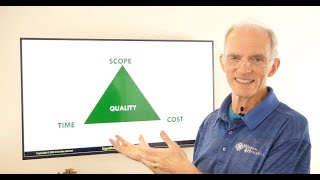
In this monologue, the speaker revisits the core principles of project management—the triple constraint of time, cost, and scope—emphasizing subtle distinctions that are often overlooked. Time is broken into two metrics: effort (the amount of work required) and duration (the schedule of milestones). The speaker highlights how both corporate and entrepreneurial settings frequently underestimate effort, leading to burnout. Cost is presented as a composite of software, hardware, and especially the often‑underestimated cost of time, illustrated with a personal anecdote about a neighborhood garage sale where the perceived hourly value was low despite significant intangible benefits. Scope is discussed in terms of scope creep, where expanding requirements, time, or cost without proper estimation harms quality and client satisfaction. The speaker urges keeping these fundamentals front‑and‑center to avoid mis‑estimations and project failures.
Chapters
asked me to do a Project Management 101. And so when you're asked to do that, and you both are very experienced at this, but you also know that when you're asked to do that, you go back to the fundamentals and you go like, oh yeah, right. That's how this works. You know? So, so here's the fundamentals. A project, and you mentioned these things, right? Oh, you guys are just nodding your head. You go like smiling. You're like, I've seen this before. But man, it's so helpful to go like, right, you know, I forget these things sometimes. So in teaching this, it's like project management is all about time, scope, and cost. Now, the subtleties of this is time is both effort and duration. So in a sense that I think of this as there's two metrics underneath this. Is how much effort does it take and what are the milestones, the duration of this thing. Does that make sense? So, so there's two pieces underneath this, and you both know in, in our worlds, in the corporate world, you had to estimate the effort of something. In the entrepreneurial space, nobody talks about how much effort it takes. Like, Let's launch this new thing. Yeah, baby, let's go. And then they're burnt out in a month and a half because they like, I didn't realize a monthly program took so much time to do. It's like, yeah, if you'd actually like estimated the time it takes to do the, all the steps to make that work, you understand. So this is time and dur— this is both effort and duration. Make sense? Okay. Cost is a whole bunch of things in cost. Cost is cost of software, soft cost of hardware. And the thing that people really underestimate is the cost of time. Okay, so, so I throw my stuff at this. This is why it's good to have a project description for other things too, because when you put your time into here, we underestimate the cost of our time. And, you know, how much are you charging for that? This past weekend, Carrie and I had a— there was a neighborhood garage sale. So we— so the whole neighborhood in our cul-de-sac did a garage sale. So Carrie and I went through all sorts of stuff and pulled stuff out there, and we figured out that we made $1 an hour. That was going to be my guess. Right? Right now, we were both like at the end of it going like, but huge value because the neighborhood all came out, which is great. An intangible value. I taught two girls how to play jacks from across the street. That's an intangible value. And we cleaned out our house. So I actually look at like 80% of the value happened before the garage sale even started because now there's gonna be a great trip to Goodwill or someplace else that's gonna get rid of a lot of stuff. It's good stuff too. A lot of the good electronic stuff. But the cost is sometimes underestimated. And then the scope. We all know scope, scope creeps. Okay. Now when you look, yeah, you know this both, both from a corporate perspective, but also as an entrepreneur, it's like great idea. And then these things just snowball into these big massive things. So expanding scope, time, or cost increases quality, or there's an expectation on quality that one or all three of these were underestimated. And then the client comes back and goes like, but I wanted this. And it's like, oh, we know. And then they get all messed up or pissed off because the scope or the time or the cost weren't accurately estimated. That all make sense? This was so good to come back to the fundamentals. And I know you both almost laughed aloud when you saw this thing. You guys are both, you know, experienced this, but I'd suggest that you keep this like front and center too, because I lose track of this thing too.