The Mass of a Task and How to get Your Big Ugly Task Moving
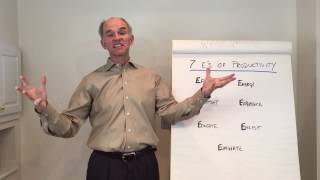
Big, complex tasks feel immovable because they have mass: internal resistance combined with size and density. The 7 E's of Productivity—Effort, Equipment, Educate, Energy, Experience, Enlist, Eliminate barriers—each reduce that mass. A lawn-mowing example shows how hiring help and removing obstacles shrinks the task enough to start.
Chapters
Hello and welcome to the Change Science Academy, where we explore, discover alternative ways of thinking to drive measurable value in executing our personal and organization strategies. In this channel, we look at art and science and theory, but basically we really want to come up with practices of how to get from from point A to point B in the most direct way possible. Now, if you've got a strategic initiative that you're working on and you're trying to get it done and you kind of take a circuitous path to get there, or you're a change manager trying to help your organization get from point A to point B, this channel is all about tips and tricks and methods and a place to collaborate so that we can look at how to get from A to B as best as we can. So today's topic is on mass. I think of mass as big ugly tasks. The other topic I have for this topic is how to move a big ugly task. I'd like you to start thinking about, do you have a big ugly task that you're thinking about right now that's in front of you, you're procrastinating about? Today we're going to talk about how to move that. When I look at these as mass, as a concept, I went out and looked at a definition in mechanics, and the definition of mass in mechanics is the measure of an object's resistance to acceleration or a resistance to change in its state of motion. Basically, it's saying that when something has a big mass, it doesn't want to move. So it's got that static motion to it, and we have to put some energy into it to make it move. So today we're going to look at how do you analyze how big that is, what's the mass of that big ugly task that you have in front of you, and what are some strategies to get it moving. So the first thing we're gonna look at here is analyzing that big ugly task. So when you look at that task, you say, well, you know, size is one big piece of this thing. How big is that task? So we look at tasks as being, you know, size, being from small to really large. Now you can have simple tasks that are pretty small and pretty large, so part of it is just how much effort, how big is that task. And then the second part that we want to look at is how complex is that task, and I think of that as density. So how dense is that task? If it's really complex and really hard, we're going to look at that task and go, "Wow, that's really complex and hard and dense." So, if I look at a 2x2 matrix on here, something that's really small and not very complex, very simple, those are just your to-dos, things that you do. Things that take up a lot of effort but are really simple are things that you know how to do, but there's a lot of it or it takes a long time and that kind of stuff. So there's that kind. And then you've got the small task that's really complex. Maybe you only have to do one thing. That's a very complex task, but hard to do. The things we're going to want to focus on today is this upper quadrant that says it's really big and it's really complex. That's the definition of a big ugly task. We're going to look at how do you take those big ugly tasks and work with them. Another piece of what makes something bigger, more mass, massive, is your internal resistance to doing it. Boy, you have total control over that. If you have a lot of resistance to doing something, all of a sudden that pile of rocks that you're trying to move from point A to point B, all of a sudden that big pile of rocks looks so intimidating. Now you've got that internal resistance. It may actually not be that big. It may be very simple, but you're looking at it and you're going like, "Oh, I just can't get that done." That's the internal resistance that you have for that task. You can actually make the task bigger. Because you've got some internal resistance to it. The final part is external resistance, and we're not going to cover that today because I want to focus on things that are in your control. We're going to talk about external resistance as external forces, and we're going to talk about that in a future episode. Looking at that big ugly task that you identified early in this episode, you start looking at it and say, is it small or large, and is it simple or complex? Put it in here. We're going to try to deal with these big ugly tasks. So, if you look at those, there's 7 ways that we're going to look at how do you reduce the mass of that task. So, we're going to go back to the 7 E's of productivity. And I like this, the E's, or E-A-S-E-2, the EASE of productivity. So this can be pretty easy if you really take a look at it. So if you take that big ugly task and you think, wow, I just did my mass analysis on it, my task analysis, and I said, This is how much effort it's going to take. Well, you can just get it done. Part of that is just brute force. Just brute force get that task done. That's the E for effort. The second E of productivity is equipment. Do you have the right tools for the right job? Part of it is if you get the right equipment, you can get it done better, faster. For example, if you've got something to do in your household, a piece of wood to saw, and you use a screwdriver for that, well, it's going to take you a lot longer to get that done. Part of it is, do you have the right tool for the job? That's the equipment part. The third E is educate. Do you have the skills to do that task? If you don't, what do you need to do? What's the step you need to do to get those skills? What's the competency that you have to be able to do that task? That's a learning mode. The fourth E of the 7 E's of Productivity is energy. Do you have the energy to do that task? A lot of times, you have to level up on your energy. Part of that is saying, "Wow, if you're looking at the big ugly task and you got all down on your energy and it's really tough, you're actually defeating yourself." Part of this is to look at that and to level up, get the energy up on that task. For me, a lot of times that's just reframing the task. Going back to this big pile of rocks that you have to move and you're saying, "Oh, it's going to take me all day. I'm going to sweat. It's going to be awful. It's going to be really hard." Well, a way to reframe that is to turn it into, "Wow, each rock that I move from point A to point B, maybe that's just a little mini workout and it helps strengthen my muscles and I'll be able to breathe better. That's going to be actually a great exercise for me to do." So that's a reframe of the task. The fifth E is experience. Part of this is you gain confidence with doing a task when you actually do a piece of it. When I look at experience, how do you put it into chewable chunks? You might have all these big things to do, but then how do you break it down into these little chewable chunks and then pick up the first rock? And move it from point A to point B. That gives you some experience, and then you're in it, and you know what to expect from that instead of fearing and wondering what it's going to look like. So experience is one way for the 7 E's of productivity. The 6th E is to enlist. Maybe you don't have the skills and you can't build the skills, or you don't want to build the skills to do this, so then you might enlist somebody who does have the skills. And the key thing on enlisting is to enlist enthusiastically. How can you help them join, get on the bandwagon, and help you get from point A to point B so it's fun for them? How do you enlist people that have the talent to help you along the way? The 7th E of productivity to make the mass of your big ugly task smaller is to eliminate barriers and distractors. Looking at that, what are the barriers getting in your way of getting from point A to point B? Anticipating those so that you can eliminate those and strategize those. Then also for eliminating the distractors that you have. I know when I have a big ugly task in front of me, all of a sudden my office gets really, really clean because I do everything else between now and starting that task to get those things done. My office gets really cleaned up. Part of that is how do I eliminate those distractors so that I just start Start. So those are the 7 E's of productivity. Those give you some tactics of looking at your big ugly task, but I want to now show you that in a demonstration. And so we're going to go to our Change Science lab table here, and here we are with point A to point B again, and we've got something that has to move from point A to point B. Let's pick a more colorful one there. So when you first look at this, you say, well, the effort to get from point A to point B of this marble Well, it's not too hard, so that looks like a simple task, and it's not very complex, it's not very complicated, it's not very hard. But you know what? If we want to make this harder, what we can do is make it a lot harder. So we got all these things. This is our pile of rocks that we have to move from point A to point B. And so the effort of this all of a sudden looked a lot bigger and maybe a little bit more daunting. So how do we get these things to move from point A to point B? Well, the second question to ask is, do I have the right equipment? Do I have the right tools for the task? I'm going to borrow from my grandson here. He has a couple of cool tools here. Here's a tool, and we start saying, well, we need to move these things, and so I'm going to try to get these things to move from point A to point B. I'm going to take some more of them here and get them over there from point A to point B. That's one tool we could use, but maybe the right tool for this job that I can get more done in less time is to fill up this piece of equipment and move it across. So getting the right tool for the right job. That's all about having the right equipment. The other way to look at this is, can I learn to make this task easier? Maybe if I start shooting these across, how can I learn to do this better each time and get better and better at it? 10,000 times, maybe I'd get really good at shooting marbles across here. I'm doing pretty good today though. That's the third piece. The fourth one is energy. How can I reframe this task to make it easier? Part of that reframing might come from what's these days called gamification. What I could do is say, "Well, for the smaller marbles, I get 10 points for getting it into B, and for the larger marbles, I get 30 points for getting it into B." You can look it up and search online for gamification. There's tons of great articles about it. How we're gamifying our world and gamifying it in our corporate world, which is pretty amazing. So people get badges and all that kind of stuff for doing pretty rote tasks sometimes. But that hopefully lifts people's energy. And then from an experience perspective, our 5th E, what chewable chunks can I bite off to make this work? And so again, we take our truck and say, well, I've got all these to move across, but maybe if I just load this up one chunk at a time and I dump it out here, boom, then I come back across and I load it up some more. These are chewable chunks that I do to get it across and so I can just start. So I'm not looking at this whole big thing here, but I'm taking it in chewable chunks. Finally, or for the 6th one, I can enlist people. So here's my little people that I'm gonna help along the way. And so imagine now that I have an assembly line of people. So I pass it to this person, they pass it across, All of a sudden, this task of taking all these marbles from going from A to B becomes faster because it's 3 or 4 times faster because I have more people that I enlisted to help along the way. The last one that I want to go through, the 7th one, is to eliminate barriers. How do I get from point A to point B when I've got all these barriers in the way that just block me from getting from point A to point B? Part of this is, Anticipate where those are and pull those away so that you have a free channel to this. There's the marble definition of what mass looks like and how I can help get from point A to point B easier using the ease of productivity. I want to put this in practice and take it off our lab bench and put it into our real world. I want to use an example. Again, I want you to be thinking of your big ugly task and those 7 questions. If I think about, for many years, I was a consultant for 28 years and I traveled pretty much every week all over the world doing stuff for big companies, post-merger integrations and new company launches. And part of that was every weekend I had to mow the lawn in the summertime. And so, it's like a 2.5-hour task with the very limited time that I had. And my wife kept saying, "Why don't we just farm it out? Give it to somebody to do?" I was like, "No, no, no. I want to own this task. I want to really own the stewardship of my land." For years, I was resisting doing that. Then finally, after many years, my wife convinced me to take that 2.5 hours of me taking my push mower out there every weekend and mowing the lawn. Then we hired Dave. Dave is amazing. Dave comes up with his truck. Off the back end of the truck comes his mower. You know those mowers that go really fast? You stand on the back and you move around like this. Man, he zips around the yard. I mean, he just goes around, gets the whole thing cut, and the effort of the thing is really, really tiny. It's pretty amazing. When you look at the completion of that task, it's no different for Dave than it is for me, but the effort for me, the mass of that task, not only the objective mass of that task, but the internal resistance that I had of doing that task too. It's like, oh, I got to spend another 2.5 hours on a Friday night or on a Saturday. I could be doing other stuff. Now Dave does it and he looks at that task and goes, hey, I can get a lot done in about 20 minutes instead of the 2.5 hours it took me. That's my example of looking at the mass of a task and how it's changed because Dave has the right equipment. He's trained on that equipment, and so the effort is smaller for him, the mass is smaller, he's got experience doing it, and I enlisted his help. All of those things made that task much more enjoyable, and so I can use that 2.5 hours a different way because I enlisted somebody to help. That's a view of looking at how you can use these 7 E's to make your big ugly tasks smaller. Again, I want you to look at your big ugly tasks that you have in front of you and ask the 7 questions. The 7 questions is: Is the task big and is it complex? What's the right tools for my task? What are the right skills to get this task done? And what can I learn to make the task easier? How can I reframe my task, maybe gamify it to make it less daunting and more fun? How do I energize myself around this task or get experience around this task and put it into chewable chunks chunks so that I can do little pieces of it at a time and just start. Pick up that first rock and just start. How do I enlist help with this? If I need to ask people how to do something or anything, ask the experts. Get a group of people that know how to do the thing that you want to do and get help. Finally, how do you anticipate the barriers that you have and eliminate those barriers and distractors to make it work for you? So there we have the 7 E's of productivity. And hopefully in today's episode, you learned a little bit about how to take the massive big ugly task in front of you and make that mass a little smaller and you can get started. And as always, what I like to say with this is just move the first rock. Just pick it up and move it from point A to point B. That's the best way to get experience, confidence, to get the learning and education to do these things. So jump in and move that first rock and learn as you go. So that's the tip for today. I hope you learned a lot today. And if you've got any comments, please put them in the box below. As well, if you really like this, like the page, like the episode. And then if you could, just sign up and subscribe to this channel. And find 3 or 4 or 5 other friends to come and subscribe to the channel. Would really appreciate that. And so that's it for today. Hopefully you got something out of this, and I'll leave you with this: to learn continuously and to live your life 100% empowered. Until next time.
More from Patrick

Unlock Your Unique Energy: The Ripple Effect Explained! #telepathy #telepathicconnection #purpose

How Telepathy Works: Tapping Into Energy Bigger Than Yourself with Patrick Mosher (Wisdom4Humanity)

Telepathy: Unlocking Mind to Mind Communication Explained #telepathy #telepathiccommunication #love

Unlock Your True Self: Connect to Infinity #telepathy #telepathicconnection #purpose #love #mission

True Self, Soul, and the Sense of Infinity - Patrick Mosher - Wisdom4Humanity #soul #trueself #love

Unlock Telepathic Powers: Your Guide to Intentions #telepathy #telepathiccommunication #purpose

Unlock Telepathy: Release Distractions, Embrace Love #telepathy #telepathychallenge #wisdom4humanity

Serendipity & Goldfinches: A Spiritual Moment Shared #telepathicconnection #spiritualjourney #love

Unlock Your Telepathic Power: Tap Into Larger Energy #patrickmosher #wisdom4humanity #presence #love

Build Telepathic Capability in 6 Simple Steps - Patrick Mosher, Wisdom4Humanity #leadership #love

3 Words Defining Today's World & Personal Rhythm #worldpulse #today #humanity #purpose #vision #love