A Conversation with Unilever CEO Paul Polman on the 21st Century Corporation
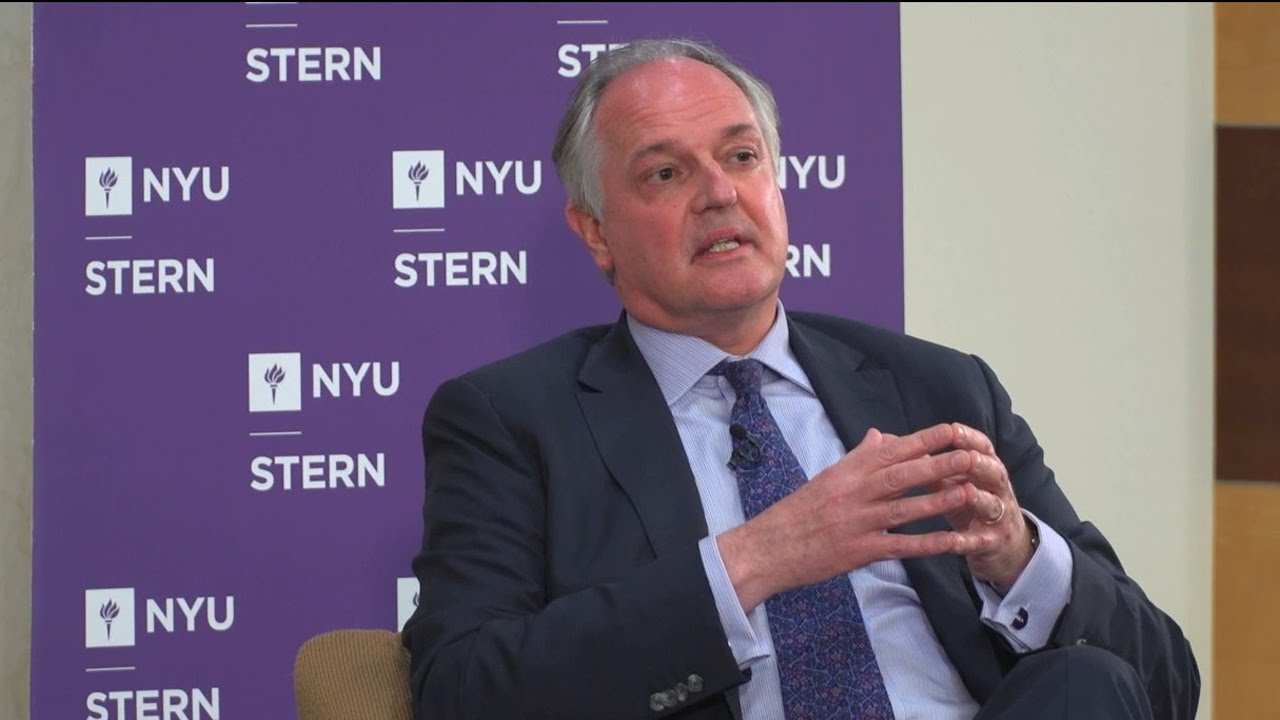
Paul Polman, CEO of Unilever, argues that economic incentives, not morality, will force corporations to abandon short-term thinking. He outlined four changes needed: re-educating boards, reshaping pay structures, engaging investors like BlackRock, and pushing regulators to reduce quarterly-reporting pressure. Unilever has already cut water use with waterless shampoos and moved its leadership center to Singapore to prioritize emerging-market talent.
Chapters
Good evening. Good evening, everyone. Good evening. I'm Peter Henry, Dean of the NYU Stern School of Business, and I'd like to welcome you to tonight's conversation with Paul Polman, CEO of Unilever, on the 21st century corporation. This evening's event is being hosted by Stern's new Center for Sustainable Business and the Huffington Post. I'd also like to thank Nespresso for providing not only the highest quality but 100% sustainably sourced coffee. Please enjoy. Before I welcome Paul and our panelists to the stage, I'd like to say a few words about Tansy Whelan and our new center. In January, we officially welcomed Tansy, the former president of the Rainforest Alliance, to the Stern community to teach and to create a new Center for Sustainable Business at Stern. In February, under Tansi's leadership, we launched the center with $1 million in funding from the Citi Foundation to put into practice the vision of a better world through better business. Chairing the advisory board of the center is John Williams, CEO of Domtar. He's in the front row. Thank you, John, for being with us tonight and for your commitment to the center. The center's purpose directly aligns with Stern's mission and belief that profit and principle must coexist, that leaders must create value for business as well as for society, and that business must, must be a force for good in the world. We are in the business of cultivating leaders who will embrace this mentality in their value creation pursuits. And as an alumna of NYU, Tansy has returned home to help us do just that. Thank you. Bringing to Stern 25 years of experience working on local, national, and international environmental and sustainability issues to engage businesses in a proactive and innovative mainstreaming of sustainability. Welcome back, Tansy. And hitting the ground running in her first semester, Tansy hosted a Fair for Jobs with Purpose for students, a panel on big data and sustainable development, and created a new course called Sustainability for Competitive Advantage that will be offered in the fall. Tonight is the center's feature event, and we are honored, truly honored, to have a leader, Paul Polman, CEO of Unilever, who will share his experience integrating sustainability goals with business goals to drive results for both shareholders and stakeholders. I'm especially thrilled to see so many Stern alumni, now employees of Paul's, also here with us this evening. When you think about sustainability and business success, Frankly, you think of Paul Polman. He grew Unilever's revenues and value at the same time he's committed to halve the company's environmental footprint, source 100% sustainably, and develop and promote high-performance brands with purpose. Paul was a leading advocate for business in supporting the passage of the UN Sustainable Development Goals and the Paris Climate Accords last year. And finally, I'm being appointed as Unilever CEO Paul also immediately told investors that he would not report quarterly financial results as it drove short-term, non-sustainable business decision-making. We look forward to hearing from Paul in just a few moments about his experience mainstreaming sustainability for Unilever. I would also like to thank and welcome the Huffington Post, which is co-hosting this evening's event. We have the pleasure of having with us Joe Confino, Executive Editor of Impact and Innovation and Editorial Director of What's Working. He will moderate tonight's conversation. Joe, formerly of The Guardian for 20-plus years, created the Environment, Global Development, and Guardian Sustainable Business sections. Joe is reimagining the role of journalism to help solve versus solely report on some of the world's most intractable problems. So we have a truly extraordinary lineup of folks on stage today. And on that note, please join me in welcoming Paul, Joe, and Tansy. Thank you.
Thank you very much. Thank you very much. The point of this evening is to have a dynamic conversation, so it's not just going to be questions from me, but also I very much want this to be the audience engaging. So I think we've got some roving mics, so we're going to be asking questions. If you violently disagree or violently agree with something someone is saying and want to add to that, put your hand on. We're not going to have a question and answer session at the end. We're going to try and weave it throughout the evening. I'm delighted to have these 2 here because, I mean, you're dealing here with the crème de la crème of thinking around sustainability, people who have been doing this day in, day out for a number of years, who really understand the dynamics of change and the extraordinary complexity of change. And one of the things I want to sort of deal with this evening is the fact that we're talking about 21st century companies, And we're talking about a number of challenges we're dealing with, whether it's climate change or resource scarcity. We're talking about sort of loss of ecosystems, loss of species. You know, we've got water scarcity. We've got so many sort of big issues we need to face. And yet often business is trying to either ignore it or bringing 20th century thinking to what now needs to happen. And that's not good enough. So, Paul, So for a 21st century company, we need 21st century thinking. I want to get to the grasp of what that actually looks like. But before we do that, I just want to— hands up who here are business students, current business students? OK, thank you. And I just want to ask you a question, because one of the things I keep on being told is that the problem with business schools is they're not being progressive. They're not sort of getting students prepared for this new world. And actually, sometimes there's a lot of old thinking going on. So one of the questions I want to ask you is, In terms of old Milton Friedman-esque thinking of shareholder primacy, how many here— can you just put your hand up if you think that that's what you're still being taught here, that shareholders are really primary and actually at the expense of other stakeholders? So put your hands up if you think that the teaching here is very, very modern, or actually, do you think that shareholders are still at the forefront? Hands up if you think shareholders are still being given too much prominence in your training here? Not much. Well, that's a good sign.
That's the end
of the panel. That's it. So Paul, let's just pick up on that. No one's putting their hand up. Do you think that fundamentally things are shifting, that people are being taught, that the thinking is actually embedded in now? Or where do you think we are in that process of change?
Well, I think more people would probably put their hands up if the question is slightly different. that how many companies are still being run for shareholders, but you put the question a little bit on the education here, which I think under Peter and others' leadership is probably one of the better or finer ones in terms of giving an all-round perspective on things. The situation on shareholders and shareholder primacy I think is unfortunately still very much there. It is very clear that the pressures on the short term for many companies outweigh them making decisions for the long term. Any statistic you would get from any survey that is being done even in today's world, 75% of the CEOs would say that they feel that short-term pressure. Interestingly also from their boards, may I say. And I think it's probably a little bit more in this part of the world than in other parts of the world that we come from, but it's definitely there.
And why do you think that is? Because, I mean, You know, you have a unique view of sort of seeing what the problems are. You know, your company operates all over the world. Your companies are being affected by climate change, being affected by resource scarcity, being affected by extreme poverty and sort of, you know, what's going on in your supply chain. Given that none of these are secrets anymore, we know what the challenges are, why is there still such a poor response?
So the answer is never simple in my opinion, and it needs to be really worked at 4 different levels. You cannot just blame the financial market for driving this short-termism. I think there is a lot to be done in many different parts. I talked briefly about the board. You really have to educate many boards on what their fiduciary duties are. Many boards feel really that the predominant fiduciary duty is towards their shareholders, whilst frankly most legal structures in the US, including in the US, the fiduciary duty is towards the long-term viability of a company if you really look at it. But that is often misinterpreted. Here on top of that you have a great movement coming up with the B Corps, which is a step higher even if you want to. Incentive systems are often misaligned. Many people even like us, we have our own pension plans in companies that make up the institutional market that we're talking about. If you look at all the investments in the world, 75% are institutional investors. Which are basically pension funds like ours. And it's surprising how many CEOs talk about the pressure on short-termism, but then you ask them how they invest their own pension plans and it's often on quarterly performance metrics that forces these fund managers to react this way. So you need to change incentive systems around that. And often their own incentive systems are aligned more towards the short term than the long term. So to solve this, we've created this, which we call Focusing Capital on the Long Term, has about $34 trillion of capital now there. One of the biggest ones is Larry Fink. Larry Fink from BlackRock has about $4 trillion under management, one of the biggest funds. And increasingly we're trying to rally these people around and say, what can we all do to change these behaviors? And for that you have to change the parameters. Now the good thing is, You can now target fairly well the right people. You know, you have 62 individuals in this world who have the same wealth now as the bottom 3.5 billion. So talking to these 62 high net worth individuals and say, how do you spend your money, is actually a very good thing. We target the 1,000 biggest companies that have their pension plans and say, how are you really investing? Very few companies have signed up to the principles of responsible investment. For their own pension plans, for example. Then we work with the financial industry, Larry taking the lead, and trying to galvanize them to change their incentive system in the financial industry. And then obviously you have to work with governments to put regulatory frameworks in place that drive that longer-term behavior. We now see governments like the UK or the European Union actually have legislation that really softens the requirements on quarterly reporting. We actually have one of the financial standard boards in the UK moving in a direction that if you want to quarterly report, you actually have to explain why you're quarterly reporting. And so I think the movement is in the right direction, but the help is not coming from Wall Street, if that's what you're asking.
Yeah, so what needs to change on Wall Street? So, you know, why is Wall Street still going that way when we need to start going that way? And what are the incentives that need to change? You know, how do you start to change that system? Because what we've seen is that It is possible for business to change, but that's often been under consumer pressure and it's very transparent. The whole point about the finance industry is it's opaque, no one understands it, everyone leaves them alone. How do we start to change that industry?
Well, interestingly, I think at the end of the day, the drivers of change will be the economic forces more than morality, if you want to. We'd all love to sit here and think that morality will make people change, but I think the desire to chase returns or some people would call it personal greed in some circumstances is unfortunately still too dominant. But the economic forces I think are increasingly pointing the financial market into a little bit of a longer-term behavior. Just give you a few examples. In the US, the average lifetime of a publicly traded company now is 17 years, and it's actually getting shorter because companies taking, prioritizing, managing their quarters, taking the wrong decisions, actually by doing so starving their own reason for being, and you see that happening. And the financial market is getting worried about that. The financial market is increasingly asking for more clarity on risk factors. In business models, and they see that these risk factors can cost them enormous amounts of money. If you twinkle with your car engine, or you sell horse meat instead of beef, or you do your labor rates, or you don't spend enough money on the maintenance on your wells, or et cetera, et cetera, then— or you have collapsing factories in your value chain, you see now 30%, 40% of the market value wiped off of companies very quickly. Where you see this happening most quickly, transparently is on the whole issue of climate change, a very sensitive topic in this company, but the financial market is rapidly catching on that most of the carbon or fossil fuel that has been discovered cannot be used. In fact, 2/3 of what has been discovered cannot be used if you want to stay below the 2 degrees, and they see increasingly the risks in companies that are heavily exposed to fossil fuel. So they demand that data, they demand a little bit more of a longer-term strategy around that. And it's again the financials that drive that more than the worry about climate change, in my opinion. But you've had in the US 57 companies in the last 2 years that are in the coal industry have gone bankrupt, one of the big ones recently. And the financial industry really wants to see where the stranded assets are or not. So the drivers, I think, of this are going to be some of the sustainability boundaries that we're undoubtedly going to talk Okay, thank you. Tansy,
what would you add to that? I mean, you've been— you know, now you've come out of the NGO world and you've been sort of going back to this meta-narrative of what's going on in the world. I mean, what is your experience of what Paul's saying?
Well, I would agree with Paul. I think there's some very interesting trends happening in the finance sector. So we've had traditionally socially responsible investing and now impact investing, but it's been at the fringe. And what we're seeing now is more focus on environmental, social, and governance data. And we're seeing more and more studies that are demonstrating that if you have outstanding performance on environmental, social, and governance data, you also tend to have outstanding financial performance. There's also an increasing number of indices and funds that are focused on ESG factors. So I think we're starting to see really a mainstreaming in the finance sector. We're not there yet, but it really is growing. And I find it interesting. I think there was a couple of meta-studies that looked at these 2,000 ESG studies over 15, 20 years and found 80-plus percent of them showed a positive correlation with financial performance. And I think that goes to the risk factors as well as the positive factors that you see in companies that really are mainstreaming sustainability into their core strategy. They're developing new innovations. They have higher employee retention and recruitment. They have reduced risk. They also have a stickier, kind of more loyal supplier base and more— better engagement with NGOs. So there's a real— you can start to break down and see the business case at a firm level for why companies that are performing well on ESG are actually outperforming the market.
But Paul, just wondering, I mean, You know, there's so much evidence. I mean, you just reeled off a whole list, evidence of why it's important to do this. Apart from the big issues we've got, you know, it's more engagement with young people. Young people want to— millennials want to have a, you know, make a difference in the world and have a purpose and meaning to their lives, et cetera, et cetera. If there's such a weight of evidence and better financial performance, what is holding us back? Is it just history? You know, is it just the weight of history that just holds us back and the weight of Past thinking that at some point it will just be swept away?
Well, I think over time it will be, but we are up against time. So what we're asking here is not really— we should not question the direction we're going, which is actually fairly clear. We should really challenge the speed with which we're going, and the speed is relatively slow. I think you have now 98% of the people that say there are issues on climate change, and we have a great agreement with all the countries of this world coming out of Paris in December. But the speed with which we're moving is relatively slow. And the longer we wait or the slower we move, the more costly it will be. And unfortunately, it's a question of human development. The slower we are, the more people suffer. And it's not us. So it's a little bit where you put the standards. Now, the question from the financial market is one between short-term and long-term. If you are a short-term investor, which we should not criticize by itself, but if you're really focused on the short-term and want to move your money around and maximize your returns, then you're going to put pressure on companies for the shorter term. You say, why would you invest for some of these things in the longer term? Why would you invest in IT systems or training of people or capital decisions or even investments you need to make to make your business models more future-proof, if you want to, if we can get a shorter-term higher return? So this pressure on changing performances on companies for most companies is still, for that reason, focused on the short term. Ultimately, I think it will go in the right direction, as I said. It's just how can we speed up that move is probably the most important thing.
And what do you think the next big change is going to be? So, I mean, where do you think we're going to see the next sort of real transformation coming from?
Well, I think we're getting to a point that people are starting to realize that the cost of not acting will become higher than the cost of acting. And that ultimately will be the trigger. You should start with the point that people in itself are not bad human beings. I believe in that principle very much. So I have never met a CEO who wants more air pollution or more unemployment or more people going to bed hungry. They just simply don't exist. So then you ask yourself, why don't they get involved more or why don't they do more? And you come to the conclusion a little bit that there are some boundaries around them that make them behaved this way, which is always the case. It's the same in companies. When a company doesn't get its right behavior versus what it was expecting, it's because we put the wrong boundaries around people. If you reward a salesperson on the number of orders he gets, he's going to make these orders very small and has a lot of orders. If you give him an incentive around the value, he might have a different behavior. So these boundaries are very important. And this world has a few boundaries that we need to widen or change. We've talked about the short and the long-term boundaries, so I don't want to get too much on that one. But we also have put in our system an accounting system where we measure the financial performance, but certainly not the environmental or social performance. So if we don't put a price on carbon, for example, then we will be hard-pressed to solve the climate change issues at the speed that is needed. So you need to move to environmental and social accounting. Which is actually a very good thing, and for capitalists as well, by the way, much better than legislation or any other things. A capitalist right now is being taught to optimize his capital, which is very narrowly defined. But if you ask them also to optimize social or environmental capital, they will be very well placed to do that. So we need to value those things in our system, and many efforts are going on to broaden that definition, call it GDP+. So that is a boundary barrier. And then there is a big issue of trust in society, which has a lot of reasons. We don't need to dwell on that, but there is a low trust in institutions. There's a low trust in companies. There's a low trust in CEOs, if you want to. And the Edelman surveys would point that out on a daily basis. So you have to— in order to tackle these issues, it requires partnership. between many different institutions, and it requires us working at different levels. That's what we did when you were at the Rainforest Alliance, but it requires trust, because if you have no trust, you don't get these partnerships. The development agenda was a good example. When we made this development agenda at the UN, there were still many countries that said, well, the private sector shouldn't be really playing here because it's really governments that should do this, but it's impossible to manage a global development agenda without the private sector. The private sector now globally is 60% of the global GDP, 80% of the financial flow, and 90% of the job creation. To implement this global development agenda to alleviate poverty, which is by all means possible in the next 15 years, you need about $3 to $4 trillion a year, very low compared to a global economy of $100 trillion. But the governments themselves have only an overseas development aid, if you want to, of about $160 billion. So you need to use that money if you want and frameworks to unlock the trillions to make this development agenda come alive. And it has to be the private sector. You cannot solve these issues without that partnership. And for that, you need to build trust. And the only way that you can get trust over time in society is transparency. That's the only way that builds you trust. And it has to be earned by doing things, not by talking.
Can you just come into the whole issue of, you know, what— how the sort of civil society— so Paul's talked about firstly this issue of partnerships, but also the pressure points of the role of civil society in sort of driving change, because business left to its own would act very slowly. So what is the state of play? Where is that change happening well? Where are partners— what's the role of partnerships in driving change? Yeah,
and I think as business is evolving, civil society has been evolving as well. Because I think 10, 20 years ago, nonprofit organizations saw business as the problem. And we still do at times. But I think that the challenge was that despite the fact that these companies were making mistakes or having problems in their supply chains or whatever, just attacking them was not resulting in positive change. And so therefore, we started to see a number of different nonprofit organizations begin to design with companies solutions for some of the challenges that the companies were facing that were part of the mission of the organization. So Rainforest Alliance, where I used to work, really began working with companies about 25 years ago plus to design new ways of sourcing sustainably, of doing sustainable forest management or sustainable agriculture management. And in doing that, we had to set up— Rainforest Alliance had to set up governance systems to engage with a whole variety of stakeholders. And that's complicated. And so what's been fascinating for me is to see how companies have become more like NGOs, those that are embracing this agenda, and NGOs are becoming a bit more like business as they embrace that agenda. There remains NGOs whose job it is, and it's a good job, to campaign against companies and to point out all the negative things that are happening and to really push. But then there also are NGOs who really are trying to figure out the solutions with business because they bring a fresh point of view. Business comes at it with one perspective and civil society can bring another, saying, well, did you think about what would happen with women if you did this? Or did you think about what would happen with water if you did this? And I think that iterative process of learning is fascinating. I went to a Unilever Sustainable Advisory Board meeting in India some years ago. And Unilever was bringing together all their suppliers to talk to them about the challenges in India, the population and water and inequities and all of the problems that were important to Unilever in their supply chain. But they gave a presentation that I would have given as an NGO, right, just sort of explaining the whole environment.
And Paul was like an NGO, he was talking like an NGO leader.
Exactly, exactly.
Paul always said we're an NGO, so that fits well then. There you
go. So it was fascinating to see this happen, but I think the thing that civil society can bring to bear on the challenge, one of the areas is that civil society works with soft power, it doesn't have the ability to force anybody to do anything. Because of that, you learn how to find win-win solutions, right? Mm-hm. And working with business around what those win-win solutions are for problems of inequity, problems of sustainability, right, is I think what's exciting about where we're going. And also what, for business school students, in terms of skills that are needed in this new kind of generation, we need to be able to work and facilitate with a variety of different stakeholders. Business used to be able to just operate in a silo and ignore all that. And as you were saying at the beginning, Paul, it's no longer just about shareholders. You actually have to manage for a lot of stakeholders and figure out how to do that. It's a complex and challenging issue.
So, Paul, I'd just broaden it out a bit on that, which is around leadership qualities, because the leadership qualities, what you're saying, is it's not top-down, it's not do what I say. It's a much more— it's networked. It's actually about working from the bottom up rather than as well as from the top down. You talk about a sort of, you know, the new world we're in. What are the leadership qualities we need to see?
So, well, it's a little bit difficult to pretend I know the answer when I'm here at a university that is sort of leading in its way, but so I have to be careful here. But what is very clear is that the average length of a CEO now is less than 4.5 years in office. And I think part of the reason is that they are struggling with dealing with this environment, which so many people have called the VUCA environment— volatile, uncertain, complex, and ambiguous. And if you talk with a lot of CEOs, they're actually checking out fairly quickly. It takes them a year, a year and a half to get into the job. Then they have to deal with the realities of the global economy, which are not in the best shape they've ever been. And then frankly, they're checking out already, hoping that they won't get an activist investor before before they're out, or that their business results more or less are still okay. And that's about your 4.5-year tenure. And that's obviously impossible to manage some of these, or to get companies at scale to get involved in some of these longer-term issues, whilst they all well realize that these longer-term issues are also of crucial importance to their own sustainability. So that is undoubtedly a challenge.
But, you know, you're in this world. You've been— surviving as well.
So what are the skills? So we spent a lot of time working on what we called thinking about the leadership for 2020 onwards. And we created a program called Unilever 2020. We got the input from most of the people that we could get input from, from the academics, internally benchmarking, consulting, and whatever you could ask for. And we first of all spent a lot of time envisioning a little bit the world in 2020. Is going to be quite different. Different from many different aspects, be it by technology, be it by millennials itself, be it by the geopolitical situation, the global economy, be it these planetary boundaries and some of the issues that you have to deal with. So it's a quite different environment. And we said, what are the leadership skills? And undoubtedly, the basic leadership skills that you always would be looking for in terms of basic level of intelligence or integrity or hard work would always be there, but we found some other leadership skills that are becoming increasingly important. In a more volatile world, for example, purpose-driven business models would do better, in my opinion, than not. Also provides a beacon a little bit in terms of the tougher decisions when you have so many changes. So people have to be purpose-driven. We look for people with a higher level of awareness of what's going on in the world and are willing to engage to solve these issues. Far more important now than it has ever been. Partnership, as we talked, is a very important thing. The advice I got when I became CEO 8 years ago was don't talk to too many NGOs because they cause you problems. In today's world, there is not one day that goes by that I don't talk to an NGO, and it's literally on a daily basis. So this partnership concept is quite difficult. And then the most difficult thing I think you have to look for is people that are systemic thinkers. Because these issues are incredibly complex. The issues of water or energy, food, you know, it's like a little balloon. You push it on one side and it pops on the other side, and it's difficult to get your hands around it. That's why you don't see many CEOs in the climate change negotiations or the Sustainable Development Goal discussions, because it's simply too overwhelming. So how are you able to be a systemic thinker? By distilling that down to some few concrete action steps and actually make them happen are some of the skills that we want. So these are some of the examples. We created deliberately a new training center in Singapore. We called it Four Acres East because we have a Four Acres close to London. We spent quite a lot of money on that, worked with the best universities around there. Singapore always has had a great ecosystem in the academic world as a priority of Lee Kuan Yew at that time, and that certainly has blossomed even more so. And we are continuously upgrading our curriculum there to be sure that we stay ahead.
And just one thing, because when I interviewed you 3 or 4 years ago around that center, you said you placed in Singapore because one of the reasons was about getting away from this Western style of thinking. So can you talk just a little bit more about, you know, within business, a lot of people have the answers to these problems are not the normal business sort of, you know, sort of mass There are a lot of people who think differently, who might be very quiet. Can you talk a little bit about why you placed in Singapore and how you bring different—
So one of the major worries for us was, if you actually look at some of the things— and I grew up in the Netherlands. But if you grow up in Europe or the US, you think the whole world turns around you. And we've done fairly well in making others believe that. But unfortunately, that's about 20% of the world population, and 80% of the world world population will be outside of Europe and the US, and it's rapidly changing. And so, and styles are often difficult, different. So if you look at companies, many companies will say, I have a hard time getting Asian talent to senior management. And what they're basically saying is, these people don't have my Western MBA style, so I downgrade them. So you have to be sure if your center of gravity is definitely changing, A company like ours has 60% of its business in the emerging markets already today, and by the time I'm finished as a CEO, it will be 75%. It would already have been 70% were it not for the currency devaluations that we've seen. So you have to be sure that your organization reflects the global population that you serve, and it is very clear that the management style in the Far East is a far more power that even style, far more inclusive style, different type of communication style. Actually a more longer-term view. These parts of the world would actually have to watch it. Countries like China or many of the Asian countries take a much longer-term view towards business than we do and actually don't have these pressure systems as well worked out on the short term as we have here. So that's why we decided to bring the training center there and it's interesting because we've done it now for about about 5 years, and we've actually seen quite a significant change already in our ability to get more senior management from that part of the world.
Tanja, I just want to bring back one of Paul's points around systemic change, because it's coming much more now into the mainstream dialogue that this idea of silos, that we need to think very differently and we need to think with much greater complexity, which, as Paul says, the danger is that people get scared off by it because you realize this old spiritual notion that everything's connected. And as soon as you do one thing here, it will affect here, which can actually make it harder to act. And Paul's saying, well, one way through that is just to choose a few things you know you can do. But can you tell us a bit about what is the thinking that's changing? And how do you stay effective with complexity?
Yeah. Oh, you've just given me an easy question. Thanks so much.
Good luck. That's
an ambitious one. Yeah. So I think complexity and change also. The rapid rate of change is really challenging. So I think one of the things that I've seen in looking at companies, when they embed sustainability in the core business strategy, they're embedding a way to manage change and complexity systemically. Because sustainability requires you to look at the environmental, social, and economic all at once and to design what you're doing around those different factors. So just to give you an example, Nike embeds innovation— or embeds sustainability in their innovation strategy. In doing that, they were looking at creating a new sneaker. How do they reduce the waste that comes from the sneaker? So they found a new technology called Flyknit. Technology that uses one piece of yarn which is recycled. And with that, they created a $1 billion business that reduces waste, but it also creates an incredibly high-performance shoe. If they hadn't been thinking their design criteria that included sustainability innovation, they wouldn't have come up with that solution. So it really— when you take a step back, it's about design. It's about how do we think about things in a systems way and a design way. Another interesting example actually comes from Domtar where they were looking at— they had 2 different factories with different types of effluent in the factories that they had to pay to dispose of that was challenging and expensive to dispose of. When they started to think about these things systemically, they saw that they could actually take the 2 byproducts, put them together and create a fertilizer which neutralized some of the challenges of the toxicity of it and also saved them money basically. So there was again a systems thinking before these were 2 completely separate factories, didn't— had nothing to do with each other, but by looking at how do we deal with this problem across our entire company, they thought about that particular issue completely differently. So that's— it's putting in place that design thinking, right? and the sets of questions that you need to go through as you analyze your decisions.
OK. I'm going to open it up in a moment. But Paul— Yeah, I just wanted to pick up with you on that, Paul, which is around innovation driving real change, driving new products, new services. How much of a change has that been for Unilever? Tremendous.
I think it has been an accelerator for growth. movement that you see that is happening now is because people see this enormous business opportunity. If there wouldn't be a business opportunity, I think you would not see business jumping on this so quickly, including the financial market, by the way. Right. But increasingly, the investments in green energy already far outstrip now the investments in fossil fuel. It's also creating more jobs, by the way. The moment that Tesla comes out with their Model 3 and sells 325,000 cars in 2 minutes, Everybody says, Houston, there's an opportunity, not a problem. So we increasingly have to talk this, especially in the US, by the way, where the language is slightly different from Europe. We have to talk the hard language of this is an enormous opportunity. Just think about the global development agenda on a macro level, not to worry about Unilever, but I'll come back to what it has done for us. But on the global level, As I said, to, in the next 15 years, to irreversibly eradicate poverty, which to me seems to be a reasonable objective that we should go for, and we do that obviously in a more sustainable and equitable way, we would all benefit from that. Let me just give you a simple example why we would benefit from that. Just, we have a hard time getting the global economy to grow right now. We spend enough money, more than we've ever had with quantitative easing. In fact, the debt crisis that we had in 2007, 2008 was because we had a high level of government and private debt. Since then, we've put in another $57 trillion in debt in the global economy, and what have we gotten for it? It was probably one of the worst returns in terms of investment in the human agenda. Every year now, this world spends $9.6 trillion on violence prevention. The costs of war and the costs of dealing with the effects of that. For $9.6 trillion alone, you can wipe out all the debt of the emerging markets, you can implement the sustainable development agenda, and you can give the European Stability Board the funds to manage the European crisis, which they undoubtedly are going to get again. So we have an enormous opportunity by reorganizing a little bit our global economy. Some people think that Just by giving women in this world the same rights as men have— access to education, financing, land rights, all the other things— will unlock the global economy by $28 trillion. Infrastructure investments, for example. So this is not an economy where people say we have overcapacity. This is an economy where we have underinvestment as long as there's poverty. But we're not collectively able to address it because increasingly we look at our own interests First is the interest of the common good. Politics has shrunk back to their own countries. This country is a great example of that. The horizon of a politician is about 3 months at most. And obviously then these major issues will not be addressed. So the more we talk of opportunities, I think, the more we galvanize businesses into change. And the interesting thing is you don't need everybody to see this. You just need enough of them to create a tipping point. Tipping point. And change theory would suggest that you need to get about 20% of the people to create a tipping point. You want to get out of deforestation, which is a big issue in the world, you need about 20% of the right companies to move it forward. You want to move the financial market in the longer term, you focus on the 20%. So increasingly, we spend a lot of our attention on driving these transformative changes, whatever they are, by getting these right groups of people together. And that was probably one of the reasons you saw this success in Paris. Now, in Unilever, what have we seen? Not to spend too much time on our company, because that's the least of my concerns, but we have— See, I mean,
it's the least of his concerns because he's got a broad view.
Well, it is the least of my concerns, but we have, at a time when only 30% of the millennials want to work for corporates because they just don't see this anymore as something they can associate themselves with, We get 1.8 million applicants a year and we are the number 3 most looked up company in LinkedIn. In most countries we operate, we are the preferred employer. So that gives me already reassurance that someone takes care of my pension because you get the right people in. It's very important. We have seen, we have taken cost out of the system of $600, $700 million by designing all of our factories for zero waste, by moving to green energy and redesigning our products to get the waste out, obviously, which we've done tremendously— water, electricity, whatever. So we have, on the product front, one of the main drivers that will limit growth, especially in the emerging markets, is actually already today the planetary boundaries. There was water shortage in Brazil last summer. Yes. You won't have much electricity when it is provided by hydro. You're in the ice cream business, we happen to have Ben and Jerry's or the Magnums or the Breyers. So if you are in the ice cream business, there's no electricity, it's not so good to be in the ice cream business. Or if there is no water, if there is no water, which was the case there as well, water shortage, then people don't take showers. Instead of taking a shower every day or every other day and not getting into the habits of the Brazilians right now. You see a significant cutback of that, you see also a cutback in your products. The main limitation to our growth already now is the planetary boundaries. Why do we see in this world that there is a race to the top between China and the US, actually, when it comes to climate change? Because Obama has understood— and I'm not blowing his trumpets— but the Chinese have understood that the limitation to growth is actually already today these planetary boundaries. And if they don't unlock that, then obviously the system is being challenged with far more severe consequences. And we are starting to see the same in our business models. So our waterless shampoos, our fabric softeners that only need one rinse, our significantly reduced deodorant cans which have less aluminum packaging, handwashing bar soaps. We said we need a bar soap normally actually to get the disinfectant Believe it or not, bar soaps, you need about 30 seconds of handwashing to get a good result. We said, you know, you just don't have the water. Besides that, a child, for 30 seconds for a child looks like a lifetime. But you don't have the water. So we said, produce a product that is in 10 seconds gets a better disinfectancy. So in our emerging markets, we've done extremely well with product upgrades like that where we respond to some of these planetary boundaries. And come in with technology that we otherwise would not have had. Now, it's interesting, last week I was in Poland, and just to take a small little anecdote, and the sales guy takes me around, which is a super guy from Poland, and he says, well, let's visit a few customers that we always do. And he said, well, you know, I've actually become far more efficient with how the cars drive around, about, and his number was about 30% more efficient. So I thought, well, that's a plan for our salespeople to cover more. customers. And he said the reason he was doing this is to cut the CO2 emission. Now, which company would you hear a sales guy say, I figured out a more efficient way of driving to cut the CO2 system? In many companies, there are cost savings programs. I've had them my whole life in the previous companies I worked for. And frankly, they are not very motivating because, you know, you do them and then they come back with another one. You never see the money back. Your budget is cut. It's about the worst thing you can imagine. In fact, my first job I had in the company when I started in 1979 was about cost savings. And what I do every year is I check if that job still exists. And it actually still exists. It reminds me of that movie Office Space you should look at, the red stapler. But in our company, where, for example, 800 million people go to bed not knowing if they wake up the next day for hunger, not having access to food. 800 million people still in this world, yet we have the audacity to waste 30%, 40% of the food in our value chain. If we have a program in the company of attacking our food waste, half of our company is food, people are not attacking this as a cost savings program. They're attacking this because people go to bed hungry. And I can tell you that unlocks an energy that I've never seen anywhere else. When people work on any of our brands that we have, our bar soap brand, we are not in the business of selling bar soaps, we are in the business of helping a child reach the age of 5 by teaching them how to do handwashing. So we are in the business of teaching kids how to do handwashing, helping a child reach the age of 5. No problem having people work on those brands. Our toilet cleaner brand, not a pleasant topic to talk toilet cleaner, toilet cleaners, but their mission is fighting the open defecation. A billion people in this world still not having access to toilets with all the risks associated to that. So their goal, 25 million toilets. So if you work on a brand like that, people are fighting to work on a brand like that because they want to make a difference. So if you can link everything you do in a company, which has been basically my basic philosophy, that everything you do in this company to explain to anybody else that you make a positive impact on society, you have a long-term reason for being. The less bad, the CSR type things are not good anymore, nor a shared value as I always point out to Michael Porter. You really have to go to business models now where you can show that you make a positive impact on society. And then society will say very quickly, we welcome you. It's interesting because our growth has actually accelerated. Our share price has done extremely well. So we've seen an acceleration in our business because of that. More people want to work with you. You create these partnerships that unlock other things. Because you take the flip side of the development agenda, you take the Sustainable Development Goals, which basically talk about the shortfalls in the world that need to be still worked on. So the flip side of that is the The enormous opportunities if you find the solution. If you are the one that feeds the 800 million people that go to bed hungry, or still the 4 million children that don't make it every year past the age of 5, et cetera, et cetera, these are enormous opportunities. These 1 billion toilets that aren't there. So if you bring that into your business model, it is undoubtedly an unlocker of growth beyond what you can imagine.
Great. Thank you. So let's open it up to questions. to questions. So, gentleman here, if you can stand up, say your name, where you're from, or what you do, and a quick question, no statements please, and then a lady down the front.
Sure. So my name is Will Freese. I work for Morgan Stanley in their technology division. I have a question about incentive structures around sustainable business. So I think everyone in this room can agree generally that These— the sustainable business initiatives that you talk about are— it's a clear win from a long-term economic standpoint, from a business standpoint. There are very clear cases for it. But I suspect that in a large organization, it's very difficult to get a consensus on the viability of these initiatives.
So your question?
So my question is, is there— how do you align your incentive structures to people who might not be so forward-looking?
Great, thank you.
Yeah, so companies have always done long-term investments, which we sort of accept. Investment in people, in training and development. Your investments here at the university is a long-term investment. It's not going to pay out the moment you walk out. So investments in IT systems, in fact in factories, the minimum recuperation time of an investment in factories is 5 years. So these longer-term cycles make more sense. Unfortunately, the financial market discounts them too much, so you never get rewarded for the longer-term things to really drive as many as you can. So why doesn't it make sense to invest in the future of all of us? as a priority, which is really what sustainability is. There is no sustainable business if there is no sustainable world. So in the company internally, you might have sometimes restrictions. When we say to people, well, we want sustainable agriculture, but there is a cost. You might have to buy sustainable certificates or convert this market. We manage that just like we manage anything else. By having some savings here, we invest it there, and we make plans that are multiple year plans. We don't compromise on that. To make all of our factories, all of our factories are zero waste to landfill, we had to invest in that. But now that they are zero waste to landfill, we're saving $50 million every year. It's a very good payout proposition. To move to solar or to wind farms, which we have, or biomass, we have to invest in that. We've made a decision to go totally out of coal. Short term cost us money. But there is not one of these projects that has a that is more than 3 years for us. So, and if they are, we just don't do them yet. We are not going to be stupid here, because the main thing that you have to show is that what you do and how you balance these trade-offs still produces a reasonable financial result. If not, you won't get enough time, even a company like ours, from your investor base, which is quite normal. I think the challenge we have is, how to manage these different forces and still produce the results. Now interestingly again in our company, very quickly, it produces an enormous performance culture because if you are a very purpose-driven business, not evangelical or religious, just a purpose-driven business and you would fall financially short, I know what would happen. The guns would come out, the papers would write, the financial market would jump on you, my job would be gone. very quickly. There are many examples in history that would support that. So our people are so convinced that what we are doing is one contribution to a better world for all, that that is a different business model in terms of if we all would operate that way, it would really have an impact, that they are very, very keen to get the financial results.
Tenzing, just one thing I want to ask you about Paul, because I can't ask Paul about Paul. Every conference you go to on sustainability, every conversation you have about sustainability, people talk about Paul Polman, which is not very helpful in the sense that we haven't got this huge number of people to go with. How much— is Paul very different? Is it just that he's more passionate, but actually there are hundreds of business leaders out there just like Paul, but they're just doing it quietly? How different is Paul and the way he's running Unilever from general business?
Make the answer short. Very short.
Well, I think one element of what Paul has done was to put out there a big, hairy, audacious goal in terms of setting the targets of having the environmental footprint and 100% sustainable sourcing, et cetera, and making it very visible and putting his entire organization And I think that really galvanized attention and holding himself accountable to it, right? I think that also Paul's commitment to the challenging processes of international engagement like the UN discussions around sustainable development goals and the climate change is also something that most CEOs do not take the time because it is very time-consuming and challenging. to work with those processes. So I think there, that passion has been driving it. That said, I think that there— and I'm sure Paul knows a number of them— really terrific CEOs who are embedding sustainability into the DNA of the company, who are setting clear targets, who are making very strong commitments. On my advisory board, I have John Williams, CEO of Domtar, who is one of them. So we see many, many CEOs really taking a step forward. Nespresso is another one who— they have embedded sustainability into everything that they do, even into the capsules, which I know people have concerns about. They've been innovating around what is the recycling issue. They work with all the farmers. I mean, they look at every aspect of what they're doing. So I see more and more CEOs taking that leadership and that responsibility because they see it as good business and because it motivates and engages their employees and also reduces risk and creates a better business for them.
Great, thank you. Yes.
Hi.
Can you stand up, say who you are, where you're from?
Sure, absolutely. I'm Cinziana D'Orobanzo. I'm a faculty member here at Stern, and I'd like to ask you about the partnership with NGOs that we've been talking about earlier. Tansy actually earlier mentioned that within civil society, NGOs specialize, and some sort of focus their mission on just bringing attention to what they consider to be bad practices, some try to provide solutions. So what I want to ask you is sort of on any given day when you have to decide which NGO am I going to talk to or listen to or maybe, you know, how do you think about these things? Am I, you know, who do you ignore, who do you decide to have a conversation with, who do you decide to work with going forward, how do you choose the right partner?
It's not only myself, obviously, it's the whole mechanism in a company like ours, but what I focus on first is what is the issue that needs to be solved and what is then the best to work together with. So you take the issue of the smallholder farmer in the value chain. The farmer always in this world gets the short end of the stick. 80% of the people that go back to Hungary are subsistence farmers. They're also malnutritioned because they're barely monocrop farmers. So the moment the cow has its milk, the farmer loses his bargaining power. The moment they pick a leaf of— a tea leaf from a bush, they cannot do anything. Because you cannot transport it. You are captive to whoever has its factory close by, willing to buy or not to buy. So that is why farmers stay in poverty. So, for example, with NGOs, you have to be sure that if you make a value chain, that the value is not equally distributed, but there is enough value in a value chain. That is where NGOs, for example, come in. Who does the training in sustainable agriculture. We're now expanding our tea plantations which have 60,000, 90,000 people on them. So we need to train 20,000, 30,000 people. We don't have that capacity. In fact, we would be bankrupt. Who would look at social compliance in our value chain? 75,000 suppliers. We're changing 20,000 suppliers a year, even with a hardcore of suppliers that will always be with us. But who would do their auditing of the value chain? We cannot do that. If you would do that as a company, you'd be bankrupt all the time. And so working with NGOs is important. I was asked at one point in time to chair the Food Security Task Force for the G20, which I still do occasionally, but the G20 doesn't seem to be very interested in food security, to my surprise. So we still keep working on this. But one of the things they said was, well, you represent the business, so create a group of business leaders to give us what we need to do to solve the food security problem. Security Assistance as well. I said, I won't do that. Absolutely not. I said, I will only do that if we take the OECD, the FAO, the World Food Programme, Oxfam at that time. And we got into issues of land rights. We got into issues of biofuel that otherwise a lot of the CEOs would conveniently have avoided. And we came with a robust plan that still holds still today that basically says we're wasting $800 billion of food every year. That's a lot of money. Forget the carbon footprint and all the other things that come with it, it's a separate story. And to feed the people that go to bed hungry costs you about $80 billion. So we're wasting 10 times more than what it— which is the minimum we can do from a human respect point of view is to feed. But we still can't galvanize the politicians because it's not a very sexy political agenda. This is a sad thing. So I'll fight for that till the end. But we only will get these solutions because we enroll all these people. We are now building a new tea plantation in Rwanda. I work with the governments, with DFID. We are some of the biggest recipients of funds from the Dutch Development Agency, DFID, USAID, when Rochelle was still there in USAID. Or we work with NGOs that we bring in like the Rainforest Alliance and in this case Ian Wood Foundation or others to jointly go in because I will have issues on land rights, displacements of people, sustainable agriculture, ensuring that the farmer is represented. And we have to figure out how to make that an economically viable model. But it can only be economically viable long-term if it is viable for all key players in the value chain. And if you sit together and design it, you can actually arrive at that. We can easily go down to another 1.5 or 2 billion people, that 3.5 billion marginal people in this world who live on less than $1.75 a day. So if we can easily go down 1.5, 2 billion people by just being adults and working together and making value chains efficient. And as I mentioned before, it's never a question of money, that's the interesting thing. This world is awash with money. We have too much, we don't know what to do with it clearly. So putting that to good use by working together across these value chains. So I always say we are an NGO. People laugh about that. But I am really not a government organization. So I think not being a government organization is what an NGO is, non-governmental organization. So we really make very clear that our reason for being is to solve these issues out there. Then we have to figure out how to make that a sustainable Nobody else is going to do that for us. So that is where our challenge is. How do we get a return and give the people that expect a return the satisfaction to stay with us?
Tenzin, just to ask a question related to that, which is around— there's been this whole fear of NGOs being co-opted by business. So we have some businesses that are very keen to work and a lot of that to who are sort of looking to get a PR advantage from a name recognition, and a lot of companies don't really want to create change. And often the memberships of these organizations are much more radical because they say business is bad, and you have this difficulty of NGOs working— the senior leadership working with business and keeping their memberships happy, Greenpeace being a good example. What's the risks of NGOs losing their independence by getting so close to progressive businesses, actually, we start to So does it matter if we lose that clarity and actually we're all NGOs?
I think that clarity is important. I think that it can be challenging to walk that line and make sure that you're not becoming co-opted, because if you do that, you're not actually doing your job well for the company. If you're just becoming a yes-man to the company, you're not actually beneficial to them in your certainly not beneficial to your mission as an NGO. So I think it is, as you start to work more closely with business, you start to understand more of the challenges that they confront, you start to empathize more and you start to recognize and want to help them solve the challenges they have, but you always have to maintain some distance from that so that you can still be an honest broker in how you create that— That's true. Work together. to solve the challenges. And I think that some NGOs lose sight of that. It is something that they do lose sight of. And we all need to keep each other honest. So Rainforest Alliance would often have NGOs saying, you're not doing this or you're doing that. And I think it was healthy to be scrutinized as Rainforest Alliance, just as it's healthy for companies to be scrutinized in their behavior.
Okay, thank you. The bigger challenge we actually have is too many NGOs fighting for the same territory and not really interested in the end product because the end product means the end of the NGO. If you are fighting to stop animal testing and all of a sudden there is legislation in Europe to stop animal testing, the NGO is gone. So the challenge actually is on both sides. But if you are an NGO that really believes in a cause, then you should work with everybody that gets you as quickly as possible to solving whatever issue you feel passionate about.
OK, great. We've got— just to say, we've got 4 questions at the moment. Gentleman there, lady over there, gentleman here, and then we'll go from— and lady there. So again, keep your questions brief if you can.
Major Bendigny, 1987, I believe, Stern School graduate, downtown Manhattan. Not as nice of a building as this building. Okay, real quick. Climate change, okay? When you read— I read articles, some articles say it's a big issue, you gotta act quickly. Some articles say, yeah, you got time. And I'm sure my understanding, you know, you've spent a lot of time with it. What's— can you just define it specifically? Explain it and define it specifically. What are the issues and how—
How serious is it and how quickly can we act?
How serious is it, blah, blah, blah, blah.
So the second
part of the question No,
no, let's do one question each because there are a lot of people who want to ask. Yes, Paul.
Yeah, climate change already right now, if you look at the normal weather patterns that we've had historically and you look at the fluctuations now in extreme weather patterns, the world is already incurring costs of about $3.7 trillion. So the good thing about the internet is that you can cost now everything. Nearly on a daily basis there is occurrence of climate change. And the good thing, by the way, is it's also happening in this country, so it sensitizes people. That's not a good thing in itself, but it's actually a good thing that rich people also start feeling the effects. If you now live in California, you really talk climate change. If you were here and you had to deal with Hurricane Sandy, you really talk climate change. Not surprising that the millennials in this country, 80% of them really are interested in solving the issue of climate change. So 98% of the scientists will tell you that we have about 1 trillion tonnes that the atmosphere can capture to stay below the 2 degrees Celsius. Anything above the 2 degrees Celsius, by the way, on global warming would have catastrophic consequences. Catastrophic consequences in terms of where people can live, where crops can grow, water levels that would rise. Most of the coastal cities would flood. And many— and I could go on and on. Yes. And it's obviously, again, the poor people that suffer. Anything above 2 degrees, the World Bank already thinks that 100 million people will be pushed further back into poverty if you go above the 1 degree. And we just passed the 1 degree, by the way. At 1.5 degrees, people are now discovering the coral reefs are gone. One of the biggest issues now, for example, in Australia is bleaching of the coral reefs. Much more sensitive because the oceans also absorb the heat before the atmosphere does. Now, a billion people happen to make their living off the oceans. Because of the warming of the oceans, the disappearance of the coral reefs, you're actually questioning the livelihoods of a billion people, our own fish supply. So the story goes on and on and on. And that is fairly well documented why we need to reverse that. Not surprisingly then, we get for the first time in history 193 countries at the UN, 193 countries to come to Paris in the COP21, as it's called, So basically all the countries and say we are going to reverse this trend. They all submitted what was called their INDCs, Intended Nationally Determined Commitments, and lo and behold, it is a— we were on a 4-degree trajectory. With the agreements in Paris, we are now at 2.7 degrees. But the good thing is they've all agreed to come back every 5 years. They've agreed to put financing against that for the poorer countries. They've agreed to make a transparent and accountable system. And it's actually 4 times better, what we've just agreed, than the Kyoto Protocol. And it involves all countries. So we're on the right path. The only problem is they haven't said by when. And by when is not the end of the century. Right now, politicians come and go. Finance ministers have not been involved. Some say it's your problem, you should solve it. So it's easy to sign, but not necessarily to act as fast as you want. So the next wave, now that we have a base, and now that everybody has agreed that was what's submitted in Paris, there's no backtracking, that's the minimum, from there we need to go up. We can start to ratchet it up and hopefully stay below the 2 degrees. But that requires peaking by 2030 at the latest, and it requires really thinking about 1.5 degrees instead of 2 degrees. And that's then a question of time on how do you get there. And the biggest challenge obviously is there are 3 areas where climate change really affects us the most, if I may keep it very simple and very short. It's cities, land use, and energy. So our energy system needs to be totally converted from combustion engines to green energy. It's a big transformation. Cities need to completely be redesigned because they absorb about 80% of your energy directly or indirectly. And land use I've talked about, you need to move to climate-smart agriculture. agriculture. We are currently— 50% of the deforestation in this world is driven by the demand for food. And we're cutting forests every year the size of Belgium, 12 million acres. It's unsustainable. That is— it was Hubert Reeves, who actually lives across the border, a Canadian philosopher, said, man is the most insane species. He worships an invisible God and destroys a visible nature, not realizing that the visible nature destroys is the invisible God he worships. And that's basically what we are doing. So we have to focus on those 3 things. The main one of these 3 things is actually energy, and enough has been said about that, and cities. Interestingly, on cities, one soundbite so you see what the challenge is. We have 50% of the world population is in urban areas, which is 3.5 billion people right now. The world is going to 10 billion people by 2050, more or less. 9.5. And 70% will live in cities, so 7 billion people. So the population of cities in this world, urbanization, will move from 3.5 billion to 7 billion. So we need to build as many cities in this world as we've currently built. Houston, what does that mean? That means that every 6 weeks we're building about a New York to accommodate this. And how we are going to build these cities is going to decide how we are going to live, or if we're going to live. According to some people, in the future or not. And there's an enormous opportunity that we have. In the next 15 years alone, we will be spending $90 trillion on building infrastructure in cities. And how we are going to spend that in terms of density of population, public transport, building codes, et cetera, is really going to be a deciding factor. So we have a huge opportunity. It's an opportunity. It's not a threat. A huge opportunity to spend that right. I live in London. And many of the roads in London are still from the Roman times. So once you are locked down, you're stuck. And if we design the wrong thing right now, we pay the price for that for generations to come. And the issue to then solve it will be disproportionately higher. There are some people that think technology will always take care of any issue because human beings are so smart. But if technology takes care of any issue, you explain to me why 800 million people still go to bed hungry.
Paul, just— yes, one second.
Just one example of this in New York City and tying it back to that systems and design thinking. So 90% of New York is covered with concrete, right? So if you have extreme weather events coming from climate change, like we had with Sandy, the city is not able to absorb it. So then you have sewage runoff, you have all kinds of challenges. So what do you need to do then? the city with green infrastructure rather than gray infrastructure, which would be more pipes, which cost a lot of money, which don't necessarily work when you have these kinds of challenges, right? So thinking about existing cities and how we design them to deal with climate change, but also to be more sustainable, because if you have more green infrastructure here— concrete itself is a significant energy user, and also it reflects heat, right? So you have all kinds of things that happen when you start to think about greening your cities that have a positive impact. So again, going back to systems and design thinking, you can begin to address some of these, and it's a business opportunity. So New York City is under a consent order, a $2 billion consent order to deal with this. They've got to bring in the private sector and new financing mechanisms to make it happen. It's a business opportunity.
The insurance company has come back because it's the most— when we talk about financial industry, where you need to focus on is the insurance industry, I've discovered. So we're focusing on those because the insurance industry bears the brunt of these costs right now. And the insurance industry has done a lot of studies and they've come to the conclusion that anything above 2% is uninsurable. Now, you tell me how we can live in this world without insurance.
So, Paul, just given that, so just very briefly coming back to domestic politics, I mean, We had Mike Bloomberg the other week saying that, you know, the Republican Party can no longer be called the party of business because actually every senior sort of Republican candidate in the election and now Donald Trump are to varying degrees sort of climate deniers. What do you think about that?
Yeah, I don't think that what his opinion is right now— he seems to change it now that he has the election of the Republican Party, a lot of his opinions are changing quite rapidly, I notice. So it will be interesting to see where this opinion is going. He all of a sudden likes Mexicans and many other things. So we need to follow the man closely to see what he says. But he clearly hasn't fully educated himself on the topic yet, and that's fine. Not everybody can be knowledgeable about everything. But the reality is that more and more people, even in the Republican Party, are starting to realize that there is an issue that needs to be addressed. Now the issue is climate change is there. Many people will actually agree. Then the discussion is, is it man-made or not? Then the discussion is, can we do something about it or not? And there's obviously in the U.S., in anything when you transform an economy like this, there are winners and losers. And what you now see is that there are more people convinced that something needs to happen. especially the millennials. By the way, the millennials in 2016 will already be equal numbers in voting than the baby boomers, and they overwhelmingly will vote for action against climate change. And then by 2020, they will have a majority above anybody else. So the polls, if the baby boomers can be incited to vote, will actually be a trend that I think will change a lot of the things in this country. But having said that, we have to continue to make the case when we go to Washington, the language, the economic language of why this is an enormous opportunity for the economy. And we have to find ways that we flush out the lobbying. There is a lot still going on with companies say one thing and trade associations saying the other thing, or incumbents that have really a stake in a fossil economy that resists that change. And that in this country is enormously powerful, and unfortunately that's still how politics functions here. Less so in Europe, so we don't have that pressure as much. But the more we can make that transparent and flush that out, then I think the faster we can move.
Great, thank you. Yes? I've got an idea for you.
In
Japan— No, no, sorry. So we've got a question over here. Yes.
Hi. Hi there. Kate Ferranti. I work for a small sustainable food business in New York City, and I'm a second-year MBA here. Thank you for being here and for your leadership, and especially your comments on there being enough wealth in the world, which I think is something we don't acknowledge enough. To that end, something that I think gets lost in the sustainability and CSR conversation is the role of fair living wages for everyone throughout a supply chain and a company, as well as the role of executive compensation. Could you share your views on that?
Yeah, absolutely. So not to blow my own trumpet because I think I get paid way too much. I've made that public in the newspapers and then I get attacked by others for saying that. But I've never changed my salary since I came. I've never asked for a salary. In fact, one of the rare individuals that have never asked for a salary in my life because I trust that others will do the right thing. But I've never changed that and in fact in Unilever we've never changed that for most people. So we do think that some of this executive compensation is way too high and the incentives to earn them are the wrong incentives. So you do definitely have to change that. Interestingly, we are now working with Norges, which is the Norwegian private wealth fund. They've earned a lot of money in oil, as you know, and they own 1% of the wealth and much of that is invested very smartly, unlike the Saudis were doing, although they're actually changing now also. It's a separate story. But they have invested this in companies. So they are often the biggest shareholder. And they have started a divestiture movement quite rapidly. And that is taking hold. There's now about $2.6 trillion of money under management globally is part of the divestiture movement. Many university funds, Endowment funds, but obviously that's a small amount in the grand scheme. But the other thing they're starting to attack, as of last week, I was in Norway on Monday, but as of last week they've announced that they are going to question much more proactively executive compensation and making that more aligned with performance if you want to, more longer term, more clawback possibilities and all the other things, which by the way seems to me common sense and is all the things We've implemented in Unilever from the day I came. It's absolutely no problem to me. The second thing is your question on fair wages and living wages, etc. There's obviously a whole debate, what does that mean, because everybody has a different definition. But I think we've all come to discover that to go out in New York and tell your friends that you bought a $1 t-shirt which then came from the Rana Plaza factory where 1,050 innocent women lost their lives. And they knew they were losing their lives when they went into the factories. The cracks were on the wall. And these people were paid 11 cents an hour, which is, in my opinion, as close as it gets to modern-day slavery. And the next lowest country is Vietnam at 26 cents an hour. So you see even how far they've moved from it. All of a sudden in New York now you see in the windows, you know, it doesn't come from here, it doesn't come from there. People are starting to educate themselves what's on the label and we should continue to push that transparency, which obviously the internet provides you the right tools for. But we have to create a society that is more inclusive. In Unilever, we said one of our overarching goals is to create livelihoods for 5 million people and to create jobs for 5 million women between now and 2020. And the reason I'm so keen on expanding the smallholder farming with tea and with other things we're doing, and that's basically where the 5 million are coming. And by the way, folks, focusing on women as a driver for that is because you won't solve the world's unemployment issues. As I mentioned before, 230 million people are unemployed in this world in the normal workforce and we need to generate 40 million jobs a year. We generate only 20 million jobs. Then on top of that there are the 3.5 billion which I would say are unemployed because they are in marginal jobs. Now the biggest threat that is coming, not to scare you too much, is the Fourth Industrial Revolution. When you get robotics, artificial intelligence, Internet of Things, think about all the cars being driverless. Think about all the supermarkets without people at the checkout counters. Think about all the factories, robotics. People are estimating that that could destroy about 1.8 billion jobs on the high end of the equation at a time that you also still have 2 billion more people coming into this world. So if we don't invest invest in smallholder farming, especially in areas like Africa where a billion more people are coming, if we don't invest, the numbers will not add up at all. And our current system that we have designed economically was designed at a difficult— at a different time, at a time when we didn't have the abundance of labor. So now we should move out of taxing labor, if you want to, and actually taxing goods. Because we now have a shortage of goods. We cannot afford to just produce stuff, stuff, stuff and create these planetary boundary pressures that we have. And we need to find more jobs for people. So you need to reconfigure the economic system. Very few politicians are jumping on that. It's obviously difficult to do, but it's an absolute must. And then obviously create in your value chain a more inclusive growth, which gets to your broader fair wage which is really the objective of the Sustainable Development Goals. The goal is a simple goal, to irreversibly alleviate— irreversibly solve poverty, alleviate poverty in a more sustainable and equitable way. And so that is a broader thing actually than minimum wage because it's about rights, it's about skills, it's about opportunities.
Great. Sorry, I'm going to stop you because we're starting to run out of time. gentleman here, and it may need to be our last question, which I apologize to everyone for, but we're running out of time.
Thank you. Gary Applebaum, Stern alum, and mergers and acquisitions out of Johnson& Johnson Consumer. So my question— first of all, thank you to the panel for hosting this, and Mr. Polman, importantly, for your commitment to sustainability. My question is, given the fact that emerging markets are not laden with infrastructure by virtue of not even having infrastructure, what do you see as the opportunities and challenges for emerging markets to accelerate the speed to sustainability different than some of the developed markets?
Oh, they can leapfrog. There's absolutely no doubt about it. And increasingly, these developing markets are starting to see that. These main cities that need to be built, most of them are in the developing markets. Just like China went to the mobile phone, you know, you can again leapfrog in green energy. And some of that is already happening. The investments in green energy now in China is investing more than half of the solar in their country and wind turbines, and they're actually starting to gain over time, in my opinion, a competitive advantage of that. And you see these centers of excellence already popping up. So it is very much an opportunity that is enormous. But the reality is that in these emerging markets, often the skill sets aren't there, so we need to build capabilities. Often the funds aren't there, so we need to provide blended financing or more financing mechanisms that work. And frankly, in many of these markets, in order to really unlock economies in that direction, you need to have functioning states, which is goal number 16 of the Sustainable Development Goals. How can you get rid of corruption? How do you drive transparency, rule of law? Because that's the big unlocker of those economies. In Africa, a good example, overseas development aid in Africa is about $80 billion a year. But that same amount, actually $90 billion a year, disappears every year, disappears again out of Africa into banks and, you know, of individuals. So if we don't stop that and we don't make these functioning states, including their ability to collect tax and all the other things, because multinationals like yours and mine have— and I'm not saying yours and mine, you have a very good company you work for and Jorge Mezquita actually is a good friend of mine, so say hello when you see him. But many companies have become very skillful to not pay any tax in these poorer countries. And that's just never a possibility for these countries to come out of it. So we also as companies have to be much more courageous to say fair tax, transparency, ownership, and all these things. And it's actually in the interest of companies like J&J's or ours because we often are the ones that end up paying and competing with the ones that don't pay. So creating these level playing fields is very important to me. But a huge opportunity now that emerging markets are starting to discover to leapfrog, and that's actually why you see them being so aggressive. Since Paris, many things have happened on the positive trend, including China upping again the ante and many actually emerging markets now.
Paul, just to finish off, I mean, got a lot of people who are sort of, you know, starting their careers. What's your advice to these people? So given everything you've laid out, which is both the challenges and the opportunities, if they want to sort of make a difference in their lives going forward, what is the route they should take? So what's your advice to them? And also, Tunzi, but also for those who are the sort of— who, you know, may have been students a long time ago, but but actually embedded in businesses, what difference can people really make?
Tell me the Japan idea. Write it down and send it to me. paul.polman@unilever.com. So the main thing in life is, I think that many people are discovering, more so perhaps in our generation, is what is a meaningful life, what is a full life? If you leave this world a little better than you found it. And if you say in that process I positively influenced some other people, that's already a good start of a meaningful life. What is true leadership? True leadership at the end of the day is putting the interest of others ahead of your own, knowing very well that by doing so your own interest actually will be served. It's a very selfish thing. I work a lot with the blind and deafblind in Africa for different reasons, but by working with these people, I become very humble and I actually get more satisfaction from what we do to find a solution than you probably provide to these people in the first place. So it's a very selfish thing. But leadership is all about giving and knowing that by doing so you are better off in the end yourself. If you come at that point in your career, you will have a very balanced life. We live in a part of the world, you go to a university that is obviously top, you can do what you want, you can work where you want, you live past the age of 5, you don't have to worry about food, your jobs, etc. But you're only about 2 to 3% of the world population. The others are not in that position. They're trapped in a factory in Bangladesh or they didn't make it past the age of 5 and all the other things. So then it's our duty to put ourselves to the service of those. And by doing so, we all actually will be better off. What are the 3 skills that you would need? In my opinion, or the 3 advices I would give is, I would simply say do what you like to Follow your purpose. You all must have a purpose in life. What is your purpose? It doesn't have to be the same. Thank God it is not because there are enough issues that need to be addressed. But become purpose-driven. When Tom's Shoes started his Tom's Shoes, Blake said, you know, I want everybody to have shoes, even the ones that can't pay. So let the rich ones pay for it. So he created a Robin Hood model and that's a very successful business model. We actually do the same in our business. on some other things. So what is your purpose? And then you have to create your passion around it which undoubtedly makes it successful. And then obviously you need to have a little bit of positive attitude because life doesn't go the way you want. There are a lot of naysayers on the way. There are a lot of— because if it would be that easy, all these things we are talking wouldn't be there. You know, my father told me always the story of the carrot, the egg, and the coffee bean. And the water was boiling and they all fit taste going into the water. And the egg was soft and mushy and didn't know what it wanted. But when it went into the water, it became hard and stubborn and couldn't do anything else. When the carrot went in, the carrot was strong before it went in, but when it went into the boiling water, it became soft and mushy and couldn't do anything else. But when the coffee bean went into the water, it simply changed the color of the water around it, but it stayed the color beans. So, my only advice to you is be the coffee beans in life. Thank you very much.
Wow. Wow. Tanzi, what would yours be? I
can't go out there. I know, I know.
I agree. I agree. It'd be unfair because— yeah, let's just leave it like that. Let's just leave it like that. So I just wanted to really, really thank Paul. Paul is an extraordinary man. He won't admit it himself, of course, but, you know, I've been following this sustainability in business for more than a decade now, and he has sort of driven this agenda and actually proved what everyone needs to see, is that it's possible to create a global business which has this sort of social justice and profitability at its heart. That it's able— Paul has basically shown that it's able to do— you're able to be successful and be socially responsible. And to show that a CEO can be passionate and can see the world as beyond the borders of a company. And and to take issues of social justice and to take on political establishments and institutional establishments as a business leader. And so many business leaders hide behind those high walls, and Paul has consistently shown his ability to break down those walls and to drive change, and it's extraordinary to watch that. And Tunzi as well is a sort of— is one of those great leaders who has fundamentally changed sort of agricultural practices, shown the ability to have fair trade and justice at the heart of sustainable agriculture and supply chains. And I think, you know, to have the two of them here and to get their wisdom and to hear firsthand what their advice is and how the world is changing and our place in that. And the fact that I think Paul and Tonzi both showcase that, you know, no individual is powerless to create change and that it's not about— it's very easy to see the world as a place full of challenges, that we're going to go to hell in a handbasket. And what they both show is that actually this is a world of opportunity, but that it's for every one of us to grasp those opportunities. And every one of us is powerful to drive change. So I'm going to have to— forgive me, because I know many of you will want to speak to Paul, but I'm going to drag him off for a Facebook Live sort of thing for the Huffington Post. So we're going to literally exit and dive out. So forgive us for the fact that Paul won't be around, but if we can just really thank him and Tunzi and— Thank you.
More from Paul




Paul Polman on Purpose, Profit, and the Future of Capitalism | Enduring Excellence



Scottish Leadership Institute Net Positive with Paul Polman and Andrew Winston

