Unilever CEO Paul Polman: Pursue Your Purpose
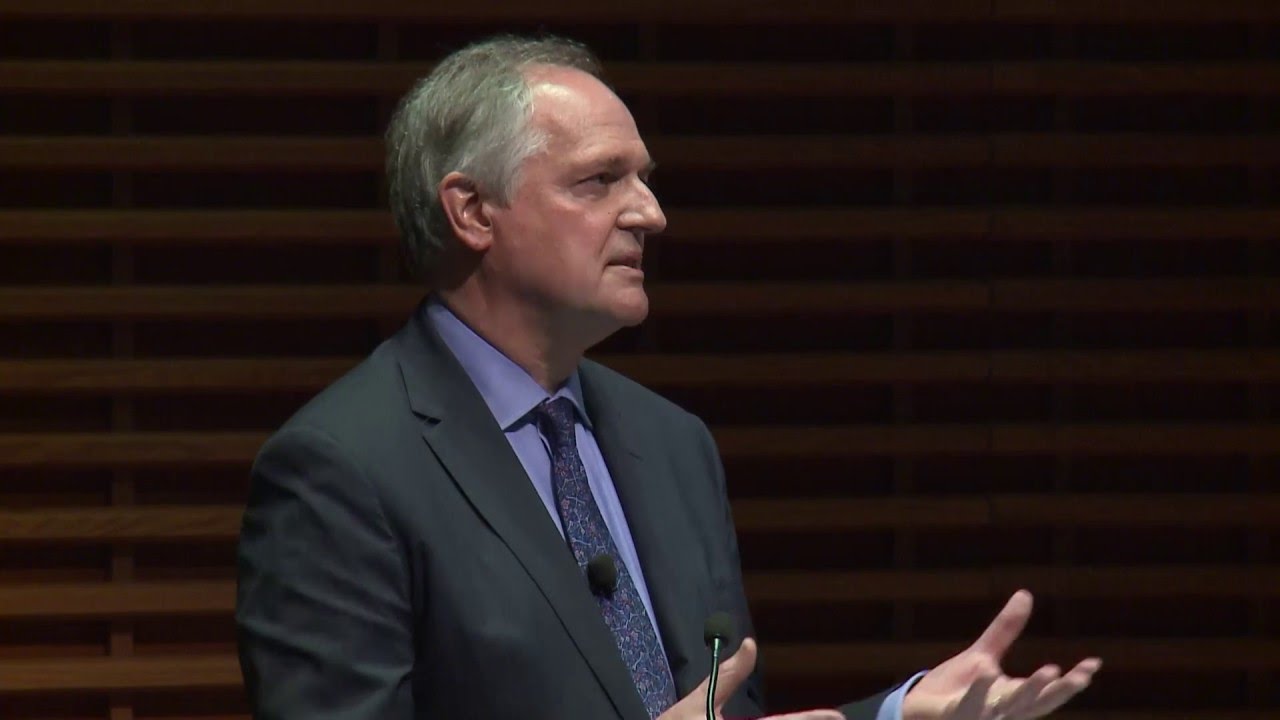
In the Conrad von Googelberg Memorial Lecture at Stanford, former Unilever CEO Paul Polman argues that purpose‑driven leadership is essential for solving the world’s most pressing challenges. He begins with a light‑hearted anecdote about an engineer, economist and doctor debating the oldest profession, then frames the central question: who created the chaos we now face? Polman reviews the progress of the past 15 years – reductions in extreme poverty, expanded education, and greater gender participation – while warning that inequality, mounting global debt, and climate change have pushed humanity to the brink. He critiques short‑termism, the mis‑aligned financial system, and the failure to value natural and social capital. Polman outlines how Unilever transformed its model through the Sustainable Living Plan, decoupling growth from environmental impact, achieving zero‑waste factories, and embracing circular economy principles. He stresses that trust, built on transparency and partnership, is the foundation for lasting prosperity. The lecture highlights the rising influence of millennials, the need for purpose‑driven future leaders, and practical advice for emerging professionals: discover personal purpose, adopt a positive attitude, and act as a “coffee bean” that changes its surroundings without losing its essence. Polman calls on businesses, governments, and individuals to mobilize resources, redesign incentives, and act now to achieve the Sustainable Development Goals and limit climate change.
Chapters
Thanks for being here. Thanks for the kind introduction, Jim. I wasn't planning to talk too much about Unilever, if you don't mind. He said enough already about it, so that's probably where it stops. But flying in this morning to, to come here, I had to take an early plane. And I was sitting there at the airport in Los Angeles, and I overheard 3 people talking. And I know it's very impolite to listen to people talking at an airport, but I know you all do, so I'm not ashamed to share the story with you. But I quickly discovered that it was an engineer, an economist, and a doctor. And they were bragging, and the doctor said, hey, we have the— I have the oldest profession in the world. And the other said, why is this? He said, well, you go to the Book of Genesis. You know, Eve came out of the ribs of Adam, and both— or Adam came out of the ribs of Eve, or whoever. Both of them survived. That was the first successful operation. Doctors have the oldest profession. And the engineer said, I don't think so, because when there was chaos, we created the universe. And to make order out of chaos, you have to be an engineer. So engineers have the oldest profession. And the economist said, I don't think so. Because who created chaos in the first place? And I think that describes a little bit what I want to talk about today: who created chaos in the first place? But before I do that, let me first tell you how pleased I am to be here in this Conrad von Googelberg Memorial Lecture. We were just talking with some of the kind people who have known him and studied with him in the class of '87, but he seemed to have been a remarkable person, and frankly. a little bit ahead of his time. As I said then, I would love to have met him, but it's certainly an honor to be part of his life indirectly by recognizing him. And doing that in a school like Stanford obviously is a wonderful opportunity. You have a great institution here. Undoubtedly, I'll call my mother today and tell her I was at Stanford, and she'll be very proud. But you also have a very progressive, and we were talking that vision towards what the role of the education should be and the people that you are producing here for tomorrow's world. You've been very instrumental, as Jim said, to work on the high carbon stock issues around deforestation, etc. And if we don't have the academic world actively involved, I don't think we can solve so many of the world's problems. And we had a chance this morning with a tremendous group of professors and faculty and PhD students and others to talk a little bit about the challenges of palm oil in the supply chain, which are not all that obvious, and to think about that together, the more you talk about it means that these issues are solvable, but we all need to contribute our own individual parts to this. And as a university, I think more than ever showing your leadership in the area of sustainability will place you very well, because the future issues that we need to solve are obviously the challenges of climate and energy or water or biodiversity or natural capital and many of the other things. The students that are here, I think the skill sets that we need to learn to be successful in life, undoubtedly many of them are going to be the same as we've always had. We need hardworking people, a certain level of intelligence, integrity. All these things are not going to change. But increasingly we need to have some other skill sets to to be successful in this world. And clearly, many people struggle with that. Otherwise, I believe we would have solved already some of the challenges that are out there. But to be a good business person, you need to know as much in the future, in my opinion, about sustainability as you know about sales. So you need to know as much about climate change as you do about cash flow. Or you need to know as much about international development as you do about business development. It really requires a broader vision if you want to manage these challenges that we know we, we are seeing every day in this world. The first thing, to start on a little bit of a positive note, I think it's actually a great time to be here. If you look at the last 15 years, the world has actually come quite a long way. We've seen the effects of globalization actually benefiting many people, as we can see that the spread of some of these ideals of democracy, or the opportunities that it offered by getting an increasingly integrated global economy and an interdependent world has undoubtedly lifted many people out of poverty. In fact, in the last few decades, more people have been lifted out of poverty than any time in human history. More people are going to school than any time in human history. More people have access to clean drinking water. Or sanitation. And yes, it's also true that more women are actually participating in the global economy than ever. In fact, the original goals that we set in 2000 for the global agenda, which were called the Millennial Development Goals, had as a simple objective to halve the number of people living in poverty over the 15-year period from the year 2000 to 2015. And in fact, we have achieved that. We have achieved that and we should be proud about that. This is a healthier and wealthier world than at any time. And— but at the same time, I have to take a step back a little bit after these 15 years. And it reminds me a little bit of Dickens who wrote in the 1850s his book— 1870s— The Tale of Two Cities. At that time he was talking about Paris and London. I'm spending most of my time in London. But his book starts with, it was the best of times, it was the worst of times. And I think we're a little bit in that situation right now. Whilst we've lifted enormous amounts of people out of poverty, we also have still challenges that need to be solved. And many of these challenges actually, I think we became fully aware of that in the crisis in 2007, 2008. Some people said it's a financial crisis, then some people said it's a governmental crisis, then it became economic crisis. And we're still recuperating from that. In fact, it was the worst crisis on record since the Great Depression in the '20s. And I think it made us realize— I've always found, by the way, that this was more of a crisis of morality than anything else. But it made us realize that the system we had created had certainly lifted so many people out of poverty, but it wasn't quite sustainable. It came at an enormous cost, a high level of private or our government debt, an enormous level of overconsumption, and frankly leaving too many people behind. I've always said that in any system where too many people feel that they're not participating or are being left behind, that system will ultimately rebel against itself, just like a cancer in a body. And you've seen that happen actually increasingly. So the question is, have we learned anything since this crisis? I hope the answer would be affirmative, but if you look at the hard numbers, you have to really ask yourself questions. The debt that caused this crisis, by the way, an economic system that was very much around, we asked the Saudis to pump the oil, we asked the Chinese to produce the plastic, and we asked the Americans to consume. That's basically what we were doing in a very simplistic way. And You'd think we would have learned from that now that we are 8 years further or 9 years further, but the global debt actually has gone up by another $57 trillion. That's 40% more global debt. Obviously quantitative easing and all these things have played a role for it, basically in Europe and the US. Companies, actually you see the same behavior, very little investment in the future of companies, more being given back on special dividends and share buybacks on the financial side because of this abundance of capital, but very limited amounts of money are entering in the real economy. You look at overconsumption, I think we're still on this linear consumption path. Only 10% of the packaging, for example, gets reused. 90% ends up in landfills and unfortunately more and more in the oceans, and that's not going to last either. So on the consumption pattern, we still haven't moved to a circular consumption pattern at the speed that is required. In fact, you take the top 1.2 billion people in this world, to which we all belong, believe it or not, but the top 1.2 billion people consume 75% of the world's resources. And the bottom 1 billion, only 1%. But I can assure you, if you are on the bottom, you all aspire to live like us. And the numbers just don't add up anymore. We're living way beyond the limits of our planetary boundaries and Climate change obviously is one of the effects that we see. And then you think we left too many people behind. Well, we're again a little bit further and frankly in the next— the 8 years since the crisis, the Gini coefficient in all countries in the world has actually gone up. The only country that is an exception I believe is Ecuador by memory, but the rest we've actually increased the gap. There are now 62 people in this world that have the same net wealth as the bottom 95%. In fact, the top 1% in the world has— sorry, the bottom 3.5 billion. The top 1% in the world has the same wealth as the bottom 99%. We've created really a system that is not sustainable, but we've not, certainly not made it better. And one of the key effects that you see from this is climate change. In fact, the World Bank, Jim Kim, estimates that if we We've, as you know, we've just passed the 1 degree towards the 2 degrees, which is about the maximum that everybody sort of thinks that this world can handle before the consequences become dear. Lots of people are starting to talk now about 1.5 degrees. In fact, scientists are finding out with the bleaching of the coral reefs, for example, that above 1.5 degrees, the coral reefs are gone. Scientifically now basically well established. And if that happens, you'd put the livelihood of about a billion people at risk again. But interestingly, Jim Kim from the World Bank issued a report fairly recently that if we stay on the current trajectory, then about 100 million more people will fall into poverty. Climate change, as I've said many times, is actually a human development agenda. It's the poor that suffer. When you had Hurricane Sandy or other things in the US, I have sons living in New York, they had a great time climbing the stairs, they didn't have to go to the gym. They saw some people a little bit more than they were watching television. But in the end of the day, within a few weeks, you were back with the resilience you've built up. But the people in Haiti and others, they were pushed back another few years. Climate change is a development agenda issue more than anything else. 14 of the last 15 years have been the warmest on record. California has not been excluded from this. I think Jerry Brown has been a fairly outspoken governor in this state. The water shortages that you have and the extensions of the limitations of water you can use as a good example of that. In fact, the IMF estimates that the real cost of climate change to the global economy already today, if you include everything, which is air pollution, you know, in China 1.8 million people a year lose their lives to air pollution. But you count all the externalities in there, they're estimating that that is about $5.3 trillion already now. in costs of actually not acting. I was just looking at the London School of Economics, I guess one of your competitors to some extent, that said that climate change, actually the economic losses, could go to about $27 trillion. That's about 20% of the world's assets. That's quite a lot. And the Sustainable Accounting Standards Board said, in fact, if you look in the US, 93% of the US equities would actually be at risk because of climate change. And it's not just the financial side of that. WWF was calculating that in the last— since the '70s, we have lost about 50% of our mammals, reptiles, or birds. So it's a question a little bit of when is it our turn, in my opinion, if we don't take any actions, without being a doomsday scenario. I was reading a book from Hubert Reeves, who is a Canadian philosopher, and Hubert Reeves said something that stuck to me when I read this. He said, man is the most insane species. He worships an invisible God and destroys a visible nature, not realizing that the visible nature he destroys is the invisible God he worships. Amen. And that is about what we are doing right now, and that's obviously not a pathway that is sustainable. So I was very glad to see 2015 hopefully being a watershed year, because in 2015, 2 historic things happened. First of all, the signing of the Sustainable Development Goals in September at the UN, which are the follow-up from the Millennial Development Goals covering the next 15 years, where 193 countries in the world went together and said for the next 15 years we have an opportunity to irreversibly eradicate poverty, irreversibly eradicate poverty in a more sustainable and equitable way. Out of that came 17 goals. Goal number 1, obviously poverty alleviation. Goal number 2, food security. Goal number 5, gender equality. Goal number 6, water sanitation. Goal number 16, governments. Goal number 17, partnerships. 16 goals, that if we would work all these goals, we could indeed do that. And the first test of these Sustainable Development Goals came in December last year in Paris with the famous COP21. The COP21 where all the countries in the world, again about 190 countries, submitted their intended nationally determined commitments, what they thought they could do to stem the tide of climate change. We were on a 4-degree trajectory, and lo and behold, in Paris with the agreement, we've actually bent that curve. The agreement covers all countries, 4 times more than the Kyoto Protocol, and it was on a voluntary basis. You propose— just adding up what was proposed— no backsliding, cannot go back, 5-year review, $100 billion a year financing to move forward, obviously, and help the poor countries. A pretty good agreement as a starting point. Obviously, we've discovered that we cannot wait till the end of the century to tackle climate change, and now we have to work on accelerating it, but the base has been laid. So I'm actually very pleased that for the first time in history, we could be the generation, if you want to, and especially the young people here, that solve poverty, which is a noble goal to go for by itself, but also ensure that future generations don't have to deal anymore with the effects of climate change. I was very pleased a few weeks ago in New York where I was present when 175 member state countries actually ratified the Paris Agreement. We need 55% of the countries, 55% of the carbon emission to make that go into law. But interesting to see the US right now, the Chinese and some others are actually trying to push this agenda forward to ensure a more rapid implementation. Now this agenda, which is an enormous agenda for humanity, zero poverty, zero carbon emission, I don't think any business person would set such an audacious goal for his own business. And certainly not if you tell him or her that it's in the next 15 years more or less that the thing needs to happen. So we won't get there if we don't work all together. And business has an enormous role to play, which is the only thing really I want to leave you with, that more businesses need to start taking a higher level of responsibility to be part of that solution. After all, there is no business case in enduring poverty. I've discovered that a long time ago, even in our company, which is fortunate enough to be in 190 countries and reach 2 billion consumers a day. We have to be sure that this is a more inclusive society. An interesting statistic, not to bother you with that, but the world spends $9.7 trillion a year on violence and war prevention and spending on actually having these things. $9.7 trillion. If we would just take that money, which is 3 times higher than the development agenda I'm talking about, we could wipe out all the debt in the emerging markets with that. And we could give some level, some of the money still that is left to Europe to start stabilizing their European monetary system if we wanted to. This is just a little plea from my home base so that we get a little bit for this. But this is what we are currently doing. This world has become reactive and spends behind the symptoms of the results instead of attacking the cause. You see the same in other areas, by the way. Healthcare is a good example where you have an enormous epidemic coming up of diabetes 2 with obesity and we end up spending all the money treating it instead of going to prevention. This is very much what we're doing in the global economy as well. Now you won't solve this development agenda if you don't get business involved. It's very simple. The development agenda, as I mentioned, costs about $2 to $3 trillion a year. Which, by the way, is a pimple on a global economy of $100 to $110 trillion. It's actually a shame that we have to talk that or knock on people's doors. And as we know, there's enough money that is going around. Just have to put it to better use. But the overseas development aid from all the governments in the world has come down now to about $160 billion. And the pressure is more downwards than upwards with all these attempts to reduce these government deficits. So you need to use that relatively small amount of money to unlock the private sector financing to make this development agenda come alive. Now, another statistic that would show you why the private sector should be involved is because if you look in basically the emerging markets, which will be 80% of the world population very soon, you'll have the private sector be 60% of the GDP, about 80% of the financial flow, and 90% of the job creation. So if you don't involve the private sector, it's very hard to see how you can actually then solve these things. And then the bigger companies have to be obviously even more so involved. The top 1,000 companies in this world have actually about 50% of the world market cap. And not only that, they actually have done in terms of revenues, you're talking about $35 trillion. So if you don't get these big companies involved, you don't get to that tipping point, and we're obviously one of those. So yes, there is a self-interest to make these economies function, but it is also an enormous opportunity for business, obviously, if they understand this and be part of this. Not being part of it, I think, risks the very essence of your business model in the first place. Now, business has many responsibilities. I always like to quote Viktor Frankl, who wrote this book, Man's Search for Meaning. Viktor Frankl was a survivor of Nazi Germany, and in his book he wrote that when they built the Statue of Liberty on the East Coast of the United States, they forgot to build the Statue of Responsibility on the West Coast. There is no liberty without responsibility. So if you're a company of our size, or if you're a country like the US or others, then you need to have that responsibility to actively be part of that solution. For business, it obviously means responsibilities towards human rights, towards paying our fair tax in the places that we operate, towards being part of fighting this enormous disease of corruption that is still everywhere in many places in the world. And I think an increasing amount of businesses start to understand that enough For sure not, but an increasing amount is. Business starts to understand also increasingly that not acting might actually have a higher cost than acting. I think we're actually at that point right now, that the cost of inaction is higher than the cost of action. And you see that again if you look at some of these numbers of climate change. But you look at food security, this is still a world where about 800 million people go to bed hungry every night, not even knowing if they wake up the next day. Thank you. Which is totally unexplainable if you then at the same time realize that we're wasting 30 to 40% of the food that we're producing, as if we don't care. The food that we waste is about $80 billion— sorry, $800 billion every year. Forget the effects on climate change and all the other things, that's just a small detail that comes with it. But we're wasting $800 billion in food whilst it actually only takes $80 billion to feed these people that go to bed hungry. Thank you. Isn't that an equation that humanity should be able to solve? And yet we're unable on the G7 or the G20 to get food security on the agenda. It's in fact, as far as I'm concerned, a scandal. Now equally there are enormous opportunities in this development agenda, opportunities for business, for all businesses if they really understand that. Just investing equally in this world in women as we do in men, access to financing, education, land rights, which unfortunately is not the case in the majority of the countries still, would unlock the global economy by $28 trillion. Any $1 investment in nutrition— we still have 160 million stunted children being born every year, and it could be your child or mine— just investing $1 gives us $17 back to society. Investing $1 in water and sanitation has a payback of $6. Any business would really love to have these returns on their investments. And yet, why don't we do that? If we have such enormous opportunities, why can we not get the world together and do this? I think the first main element that is clearly missing is trust. It's an easy word, trust, but we are running currently a society where everybody mistrusts each other. If you look at the Edelman survey, which is published every year at the time of the World Economic Forum, you will see that trust in governments is at an all-time low. Trust in business, trust in CEOs even lower. And as a result of that, obviously many people have given up. I think one of the extremes that you see this year in your political cycle in this country, which is a great amusement to all of us living abroad, and I'm glad I live abroad, Watching it from a distance, but it is really, people are fed up. They've all become against anything because the established order is clearly not attacking the issues that need to be attacked with a maturity and a sense of morality that is needed. And that is the same, by the way, in many other countries. It just doesn't get as much share of voice as obviously the US media does. But trust is very low and trust in business is even lower, as I said. And that's not surprising because we've seen enormous amounts of scandals. Normally I could take the Financial Times of the day and I can open every day of Financial Times and there's one or another company that gets caught because they refuse to invest in safety in the wells in the Gulf or they refuse to invest in the safety of their workers and the factory collapses in Bangladesh or they manipulate labor or foreign exchange rates or they start to tinker with the emission standards of their engines. And the list goes on, the list goes on. And in this age of transparency, what companies need to understand is that there isn't really any place to hide anymore. I don't think that these issues are more or less than they were before, but they are certainly more transparent than they were before, that I can tell you. So companies need to take notice of that and be sure that the way they operate is, you know, is transparent and take responsibility for that if we want to build that that trust. Trust can only come from transparency. Transparency builds trust and trust is needed to build prosperity. And anytime these companies don't behave responsibly, you see over and over that about 30 to 40% of their market cap disappears. So increasingly, not surprisingly, it's interesting also to the financial market that want to know that what they are investing is, you know, is responsible investing. The other thing we need is obviously transparency, as I said, that goes with trust. I don't think you can build trust without that transparency. We are publishing far more data now as a company than we've ever done in the history of mankind, I believe, and we will continue to do that. Because by showing what we do, by giving access to that to many people, we can build that. The other thing that is needed is a different business model. If you want to solve all these issues like climate change or food security, poverty alleviation or access to clean drinking water or education if you want to, you cannot be victim to the quarterly reporting. This market and this world has become incredibly short-term, incredibly myopic, and many companies unfortunately would forego doing the right decisions long-term if it affects their quarterly profits versus market guidance. We've become very myopic and not surprisingly the average length of a publicly traded company in the US now has gone down to The average tenure of a CEO is now 4.5 years. In that short cycle, these longer-term issues that really are important for all of us are not getting the attention that they need. So you need different business models. In Unilever, when I became CEO, we stopped doing quarterly reporting. We stopped giving guidance. We moved our compensation systems to the long term. But more importantly, we developed business models models that really are firmly ingrained in the principle of partnerships. It was Einstein who said the definition of insanity is to do the same thing over and over again and expect different results. That's not going to work anymore. We've come so far. If we now really want to snap out of this and create this better world for everybody, we have to become adults and start working at a different level as well. And that different level has to come via trust, as I mentioned, and but certainly a different form of partnership as well. It's a partnership more than just you and I working together because the two of us can do more than each of us individually. It's first and foremost a partnership for the common good where we put the interest of others ahead of our own, knowing that by doing so we will actually be better off in the longer term. If we get that higher level of partnership, of moral— morality, if you want to, I think we can solve any of the world's problems. We don't need more PhDs, with due respect, or send missions to Mars to find the answer. For most of these issues of the development agenda, we have the answer. And frankly, increasingly we see others becoming aware of the enormous potentials or the downside of risks if we don't act. I personally would only want to invest in companies that create a better future where I can retire in or my children can live in. So we see people becoming much more conscious of how they use the power of their wallet. Millennials are the best example of that. In fact, this is the first year that the millennials in the US will have the same number of voting power as the baby boomers. Unfortunately, they're not as politically engaged because they've been turned off a little bit by what is happening. But it's the same now in 2020, which is not that far off. We have significantly more millennials as voting power, and these people are far more purpose-driven. They are far more conscious of how they put their dollars to use, and hopefully will be a big wave of change that will benefit us all. But the financial evidence is also there. I personally don't believe that the thing will move at the speed that we need to move it if we don't get the financial market involved. Unfortunately, if you want to, it is still a market, a global economy that very heavily depends on that. And the interesting thing is that most of the studies now actually show that companies that are more transparent obviously take risks away from the financial market and have a lower cost of capital. It also shows that you get better operational performance. Companies that think about climate change or some of these issues also make their whole value chain more resilient. And then not surprisingly, the stock price performance, everything else being equal, is actually better of companies that are more responsible in this market. The— what Unilever has done with their Unilever Sustainable Living Plan that Jim briefly referred to is actually create a business model where we totally decouple our growth from environmental impact and increase our overall social impact. Impact. But the difference from CSR and staying in your own shop if you want to, or making it only part of your company, is that we fully integrate this in all we do. It is in fact our business model, and we take responsibility of the total value chain. You cannot solve issues if you just stay in your own narrow little box and work in silos. If in our case you're in the food business, you have to take responsibility from the farm to the fork and all the issues that are in between. The issue of malnutrition or stunting, the issues of climate-smart agriculture, the issues of food waste, the issues of creating jobs for smallholder farmers, the issue of deforestation— half of it driven by the enormous demand of food— and on the other hand, the issues of obesity and some of the other things we talked about. Yes, if you want to be a responsible company and you're in that business, you then also have to be co-responsible to finding solutions to these issues that show up in your total value chain. I think that the divestiture movement or the financial market is getting increasingly interested in this agenda. We had in Paris at the COP21 $24 trillion of capital under management asking for a price on carbon. We thought in Paris that we could get the divestiture movement, you know, the carbon divestiture, you see a lot of that at universities now with your endowment funds, etc. We thought we could get to $100 billion. We actually got $900 billion at the time of Paris, and that number has gone up to $2.7 trillion now. So the financial market is catching on. And you can see that. 57 companies in the US have gone bankrupt that were in the coal business, Peabody the last one, just in the last 2 years alone. You can see it in other things. Tesla makes actually relatively few cars. The Model 3, tremendously popular, 325,000 orders for that car in the first few days alone. Despite selling less than 1/20th or 1/30th of the cars of General Motors, it has already half the market cap of General Motors. Increasingly, the financial community is feeding— is voting with their wallets, and they're getting actively involved as they see this as an enormous risk but also an enormous opportunity. Investment in green energy right now is far exceeding the investment in fossil fuel even with the low prices in fact that we have. Now let me pick up pace and do only one or two more things before we open it up to Q&As. I think the first one is the millennials because there are many millennials in, in the audience and I would just say that a purpose-driven business model makes a lot more sense. Only 30% of millennials actually want to work for corporates. They just don't feel it's cool anymore to work for corporates for the reasons that we mentioned. Since we moved to this much more stronger purpose-driven business model, we actually find ourselves to be the 3rd most looked up company on LinkedIn after Google and Apple, not even being a product name. Unilever is sort of the holding name and all of our products have different names. We get 1.8 million people applying to our company every year. And in most countries that we operate, we're the preferred employers. So even from that point of view, it would make sense to be able to attract the best and brightest would certainly guarantee a future of your company. What we also see clearly is that millennials don't want to just be part of this. They very much understand that the next 15 years are going to be crucial for them. They want to be an active part in shaping this future. I had the pleasure to be serving on the high-level panel to develop these Sustainable Development Goals for the Secretary General. And we put this website out there, The World We Want, and within a nanosecond we had over a million young people, many from Africa, writing down what they want. They want to be actively involved in shaping this agenda, and too often we still exclude this young generation. Next to the millennials, we also obviously need a different type of leadership. I was very excited to hear that here at Stanford you're actually trying to put this curriculum together for future leaders. And that you have a first one coming on with the Young Global Leaders from the World Economic Forum. That's a very exciting step you're taking there. But it is very clear that the leaders of tomorrow need to be purpose-driven, need to be able to work in partnership, need to feel comfortable with that level of transparency, need to be systemic thinkers to be able to handle this complexity, but above all need to be human beings. Human beings with a high level of awareness and engagement and a certain level of humanity and humility. If we get more of these leaders, and we're clearly short of it now, looking at the average tenure of a CEO, but if we get more of these leaders, I think that we're on the right path to solve some of these key issues that we have. So in conclusion, I think we are— we should not feel despair. I think we're moving in the right direction, but The challenge is obviously how fast we move, because the longer we wait, the more difficult the challenge will be, or the more expensive it will be. But for me, the reason to move fast is the longer we wait, the more people will live in poverty. And there is no excuse that we let that happen. I've always felt that if you belong to the 2% of the world population that can do and like what they want, go to wonderful institutions like this, find the jobs they like or work, not— don't have to worry about their child not making the age of 5, or being stunted or being included in the workforce and all the other things. If you belong to those 2%, then it's obviously your obligation to work for the other 98%, and that is what we're trying to do in Unilever. It was Martin Luther King that actually said that everyone can be great because everyone can serve, and all of us in our own humble ways can make that difference to together create a better world for all and certainly for generations to come. And that's obviously the world I want to live in and I want to be part of that challenge to say this is what we really did in the coming 15 years so that nobody else has to worry about these challenges. I like the Dalai Lama. One of the things the Dalai Lama said that if you seek enlightenment for yourself, simply to enhance yourself and your position, you miss purpose. But if you seek enlightenment for yourself to enable you to serve others, you are with purpose. So my message to you very simply is, go with purpose. Thank you very much.
Thank you. Well, Paul, thank you so much for those inspiring words. I think we're— you've left us with many things to think about. But there were some exciting things you said. There are signs that governments, companies, people in general are not only more aware, but taking action to do something about the development agenda, about sustainability. But that was not really the case a few years back when you took over Unilever as CEO. And you came in the first day and made huge changes. Well, how did you handle all the challenges and the resistance that came with that?
Well, so I had, there were changes indeed, but first of all, there was a burning platform. And in fact, I had 2 of them. I came in from the outside, which helped a little bit by not being so biased towards some of the changes that needed to be made, perhaps. But the business was not doing so well, so that was a burning platform. And then you had the crisis in 2007, 2008. So it wasn't difficult to convince people that we needed to do things differently. And Because I came in from the outside and actually I had worked what some people thought was competition in the past. I don't have that concept myself, but some people felt that the Trojan horse was let into the company. And I discovered very early on that it was for me to prove that I could be part of the team instead of them to prove that they could be part of my team. And I had to establish myself, so I spent an enormous amount of time digging into the history of the company. Jim Collins, in his book From Good to Great, talks about nurturing the core before you stimulate progress. And we actually went back to the roots of this company. We actually went to Port Sunlight, which is in the, in the north of England, where the company had started. Symbolically had a meeting there with our senior management and discussed a little bit what had made this company great. And we came to some enormous values. and one of them is certainly doing well by doing good. This was a man, by the way, that instituted in the UK the 6-hour day, which was very revolutionary in the 1800s, I can tell you. When he became a lord and he went into Parliament, he introduced the pension plans. He was all— when his employees would go to war and volunteer for the wars that were there, World War I and World War II, he obviously dealt only with World War I. but guaranteed the wages to the wives so that they could live. And so he was an extraordinary man in that sense, but always of the belief of doing well by doing good, founding the Marine Stewardship of Sustainable Fishery at the Roundtable of Sustainable Development. So what we did is we took all that strength and said, can we not turn that into a business model that is desperately needed right now, where we link all of this and see this as an increasingly powerful driver for future business growth. And what the surprise in all of this, it's hard work, it's not that easy obviously, and some people are always skeptical, but you need them to make better plans. But people rally quite quickly towards something when it is a higher purpose and want to be part of that. People want to make a difference. They want to leave this world in a little bit better place. They want to touch people positively. And if you can work for a company that— where those values can come alive, then people feel happier. And we've seen it in our engagement scores, which were sort of in the bottom third when we started, and now they're off the map because people want to be part of this.
On that note, can you tell us, when did you find purpose in promoting sustainability as a business practice?
Well, it was always— the question is always, why didn't our predecessors deal with this as much as they should have? And the answer is really, there wasn't— the issue wasn't so evident. Because we've lifted so many people out of poverty, we really got the issues of planetary boundaries. If you go back even at the time that the original Millennial Development Goals were developed, the word sustainable didn't show up there even. There were issues of HIV, there were issues in the developing markets. Now many of these issues have become global. because of our interdependent world. So it's only in the last 10 years, I think, that people have become fully aware of what needs to be changed. And that's why you see this momentum now. But I would not worry about that. What we have to now do is just to be sure that we can accelerate. Because as usual, there's always a little bit of vested order that doesn't like the change. If you're on the right side of the equation in this transformation of this global economy, you are more likely to be resistant than if you are not getting the benefits from the global economy. But the reality right now is that about 99% of the people are not getting the benefits of the global economy anymore. So I hope we can build this momentum and accelerate that to make the changes. By the way, nothing to do with being Democrat or Republican or being a Dutchman, often accused of smoking pot and all the other things, which is liberalized in our country. It just has to do with a common sense agenda to make this world work for all of us long-term. If you see the cost that Europe now has on refugees, for example, it's enormous. And then if you see the money that we spent, it's a pittance to actually solve these issues. So it's becoming increasingly transparent, I think, that this is an agenda for humanity.
The way you frame things, to me it sounds like Today there's also momentum, and today we are still at an inflection point companies could use to change business practices. And yet you don't see, you know, those that do stand out because not many are doing it.
Yeah, and that's a good question. That's a good question. But I start from the premise that I believe in the goodness of people because I never met a CEO who wants more unemployment or more climate change or more pollution. Unless they don't tell me, but I don't think they're there, really. So you have to believe in the goodness of all of us. And then you have to ask yourself the question, well, if that is the case, why doesn't it happen? And there are obviously many reasons for that. The global economy isn't functioning, so you have to work very hard to even keep your own company afloat. These issues of tenure, that you might not have the skill sets. So there are many of those reasons. But I think in essence it boils down to the behavior of people. is governed by the boundaries in which you operate. And that is true for all of us. If you become a father or a mother and you have children, you start to get different boundaries and you have different behaviors. You might not go out to the bar every night anymore with your buddies. You might want to do a little bit more babysitting or sit together with your kids. If I tell a salesman that he gets rewarded on the number of orders he writes, sales orders, he's going to split many orders and write a lot of orders. If I tell him he's going to be rewarded on the total sales volume he brings in, he might have a different behavior. And there are 3 main things in this world that drive people's behavior in a dysfunctional way. The first one is the short-termism versus long-term. So we have to move the market to the longer term. Larry Fink, who runs BlackRock, one of the biggest institutions, has written about that because everybody sees this destructiveness of that. The second thing is this balance between man and nature. We have put the boundaries wrong. If you, if you can again not that I want to be religious here, but if you go to the Book of Genesis, it says man's dominance over nature. And we have started to interpret that as that we can literally dominate nature and destroy nature, that we are smarter. But our intelligence was meant to be stewards of nature. So we have to give nature a value in all we do. And we need to move the narrow definition of GDP, or the profit and loss statement in a company, to more integrated reporting. Including the environmental and social capital next to the financial capital. Capitalists are very good at optimizing capital, but we've only put them on the path to optimize financial capital. But if we put a price on carbon, for example, we would move much faster in bringing climate change down. Just like you put a price on water, we bring water usage down. So move to environmental and social accounting next to financial is absolutely a must. And then the third element of the boundaries is really our financial system. Our financial system's rewards are all on capital and unfortunately not on labor because they were designed at a different time, but we have been slow in evolving it. One of the reasons that we've been slow of evolving it is that most of the institutions that we have created at the time of Bretton Woods, which was a long time ago for you, in the '40s, but it was when 90% or 85% of the world economy was in Europe and the US. Now we have a global economy, and we haven't figured out yet how to— and it's very interdependent, and we haven't figured out yet how to create the institutions to rule it. And we need to move to a system where we don't reward capital. You take this country. I was in New York on Monday or Tuesday. A few heads from guys, and I'm not against them, but a few hedge fund guys last year together made $10 billion. Their tax rate probably is 10%. Then they give $25 million to charity to help the homeless in New York. They are heroes. They're all of a sudden philanthropists of the highest order. They probably used the $25 million also to offset their tax bill on the 10%. But they created the problem in the first place because our system rewards the capital at no tax, and the people that work and labor often get 40%, 50% tax. At a time that we need to create more jobs, we need to actually subsidize labor and penalize capital, because we have enough of the capital. We don't need to get higher returns. Now, I think that's a very radical thought for some people in the US, but it's absolutely needed if we want to change the global economy.
Oh my gosh, after that answer, I have so many questions about what you think of tax systems, supply chains, governments, world thought leaders, but I'm gonna take a pause right now and allow the audience to make a question. There's going to be a microphone over here, and we have a microphone in the back as well. Okay, so we have a question right here. If you can just stand up, say your name, and ask one question, please. Thank you,
Paul. Thank you for an inspiring talk. You talked about supply chains, sustainable supply chains, and the role of CEOs in that. Can you talk about sustainable consumption? So how do we move people away from, let's say, buying more cars? We are looking at penetration of electric cars right now in the market, but have you thought about Where are we gonna dispose the batteries in the next 30, 40 years?
So one of the things that people are starting to think about obviously is to move from this linear economy that I briefly referred to, to this circular economy. Right now we're basically digging it out of the ground, producing, and then dumping it again. And if we keep digging, you know, you end up in Australia and there's not much left, and that's really what we are doing. So how can you be sure that someone else's waste is someone else's input? So that nothing goes to waste. So in Unilever, we, for example, said we want to run all of our 500+ factories that we have at zero waste. We actually achieved that 2 years ahead of target by thinking about it differently. Our costs go down, the pride goes up, quality goes up, actually, customer service goes up. A lot of benefits from doing that. So the circular economy concept thinks about moving into that direction. Now, it's very exciting with millennials, actually, They are not as possessive as we were. They really are growing up in a sharing economy. Ubers, Airbnbs are the example of that. But increasingly they feel very comfortable by paying for experiences but not paying for physical goods. So that goes into the right direction. But having said that, it needs obviously much more. So in Europe now there's a directive on circular economy coming in. Many countries in the world don't have waste recycling systems yet. And it's difficult for countries to do or start sometimes. But if you have a country like India or Brazil or China not having waste recycling, then Houston, we have a problem. So we've put the global consumer goods industry, for example, together to, because no company can do it alone, to move into some of that, targeting country by country, for example, to move to recycling systems or other things. And at the end of the day, we need to, which is very hard for companies to understand, we need to stimulate consumers to use less. And people might say, why would you advocate that as a company? Because there is a big difference between using less material and creating more value. I can create far more value with less material, but you have to think about that. So we look at all of our products, for example, do compactions, do lightweighting on plastics, be sure that actually the products leave from what's in the bottle because In many products, 15-20% stays in the bottle when you throw it away. And as we do all these things, you actually get higher customer satisfaction, create other relationships with consumers you can build value of. So you have to indeed think about a growth model without using more stuff, but creating more value in its broadest sense. And those models are actually very successful. You take food, and food in the US, food in the US has always been driven by calories. You would go to one of these pizza places. I mean, I'm a victim of it myself with my 3 boys. I could go to Pizza Hut and as a European, I could never understand it because I brought in 2 or 3 coupons and I would leave with money and 5 pizzas. And, you know, so I never understood how this system worked, but this was, you know, the American dream, I guess. So, but it was all based on calories and it was the lower the better, the more we could get calories. And that gave a certain level of happiness, I guess. Now you see in the food industry in the US, it's rapidly moving to nutrition, where people are willing to pay more for less, actually. I would go to a restaurant where I get half a plate, I would actually pay more, so that I don't have to see all that stuff I can't eat anyway, or feel very bad that it's thrown away afterwards. I actually pay more for it now, and I think that's happening in the global economy in total. So that notion of that little bit more purpose-driven and, and more conscious sharing is creeping in.
So Paul, in these last 2 minutes that we have with you, could you share some advice? Most of us here are MBA students looking to go back into for-profit organizations and will probably not be the CEO right off the start.
You might.
Thank you. What can we do to bring sustainable practices into the organizations we go into?
Yeah, first of all, don't have an ambition to become a CEO. That is a stupid ambition. I always tell people, not because I don't like my job, but it's just anybody can have that title. The most important thing is that you pursue your purpose. You feel strong about, if you figure out what— where you want to make the difference, that's the first thing you need to do. And some might fight for women's rights, some might want to fight for people in emerging markets, some might want to include better education, but you need to have something that you want to have an impact in this world, and that has to align with your values. If that aligns with your values, you are going to be successful because it will drive your passion. It doesn't matter You know, the money you earn is not an indicator of success anymore. You know, people's self-worth should not be measured by people's net worth. It's very important if you want to have a good life. And then the third thing is obviously a positive attitude is equally important because the things never go the way you want it to go. Otherwise someone else would have done it before you. So the road to change is a road that has many skeptics or cynics. Rejections, but if you are strongly driven by your purpose and your values, I think, and the stronger they are, the better beacon you have in a very volatile environment to deal with these challenges. You stay guided, as someone once said, by the lights of the stars, not by the lights of the passing ships. And at the end of the day, you need to do what you really feel you can make the biggest difference if you're in a fortunate position like ours. I, I don't say it on camera, but I, the reason I work in this company and give my energy to that is because I can have a bigger impact in doing what I do now than I can see in any other opportunity that is offered to me. And if that is a possibility to have a bigger impact to change the world for the better, then that's my duty to do that until someone else can do it better than I do. And the final point I just want to leave you is the importance of positive attitude reminds me of a story that my father always told me of the boiling water with the carrot, the egg, and the coffee bean. And the egg is actually very soft but goes into the boiling water and becomes very hard and stubborn. You can't do anything with it. The carrot was actually strong, went into the boiling water, but became very soft and mushy. But the coffee bean went into the water and changed the color of the water around it, but stayed the coffee bean. So my message to all of you is just be the coffee bean in life. Thank you very much.
Everyone, a big round of applause for Paul Polman, please.
More from Paul




Paul Polman on Purpose, Profit, and the Future of Capitalism | Enduring Excellence



Scottish Leadership Institute Net Positive with Paul Polman and Andrew Winston

