Breaking the Paycheck-to-Paycheck Cycle | Expert Tips from Penny Kidd
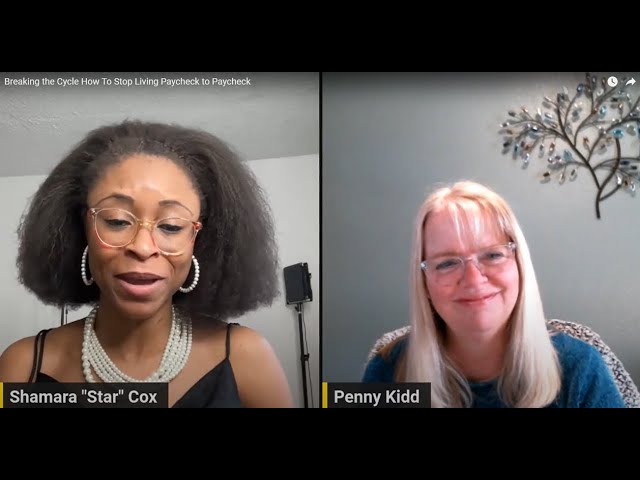
Money coach Penny Kidd went from $30,000 in debt to debt-free and mortgage-free by treating finances as a behavioral issue, not a math problem. She shares tactics like tracking income and tying budgets to pay cycles, plus client wins like one person paying off $20,000 debt in six months.
Chapters
Welcome, welcome, welcome! I am super excited. I have a, a powerful live today with Penny Kidd. She's actually going to be teaching on how to stop living paycheck to paycheck, so I think that that is amazing, and I'm looking forward to going right into this. But before I start asking you questions, please introduce yourself and tell us about your brand.
Oh, um, yeah, I'm Penny Kidd and my business is Pennywise Coaching, and yes, Penny is really my name, and I just had to be a full-on adult before I figured out I could do something with my name and money. I'm actually an old social worker, so I really come at money coaching from a behavioral mindset and social work philosophy, not really finance, you know, geek. But yeah, I live in Colorado and I work with people around the country, really helping I like to say helping people make their money behave. They're, you know, having a plan, being intentional, maybe not giving so much of it to interest and craziness, but keeping more of it and doing things you want to do with your money.
So yeah, I love that, and I'm happy that you jumped right into saying making your money behave because that's exactly what we're going to be talking about today. So tell—
so I want you to tell me, how did you get started with helping entrepreneurs to make their money behave so that they can actually have financial Yeah, I, well, I've been coaching 10 years now and it started with my own journey of getting out of debt and, um, learning how to, how to budget basically and figure out what to do with my money because I don't feel like anybody teaches us that. And there's all this shame and embarrassment and weirdness around money. And so everybody thinks everybody else is doing it right. We're the only ones who have a hot mess behind the curtain. And, um, I, I I decided to make my money behave when my girlfriend at work came to me and said, hey, will you come help me? Because I'm always living paycheck to paycheck. There's just never enough money. And we sat down at her kitchen table and figured out she probably had about $40,000 worth of debt. And this was 20 years ago. And so you could probably call it 80 today. So it's significant. And I was like, oh, she has a lot of debt. Okay, well, let's figure this out. We're going to read a book and start doing some stuff together. And she said, I don't have time to read a book. We work 50, 60 hours. I got 4 kids. I said, okay, I'll try to read the books. I'll be the Cliff Notes, but let's do it together so we can talk about it and feel like you can talk to somebody openly. And we met together 2 times, and then unfortunately she was hit and killed by a drunk driver. And so it rocked my world, made me go, whoa, nobody expects that. You know, she was 42 and I was 40, and I had 2 littles, and I was like, yeah, I got to get this figured out. I can't just wait for, you know, it to get better. So my husband and I kind of started our own journey and we had $30,000 worth of debt and a mortgage. And then I just rolled up my sleeves and said, I want to be different. I don't want this to impact my kids and my— because I don't know what tomorrow brings either. So we got to that place of like, okay, so we're going to learn how to do this and live within our means. And we paid off our $30,000 and we paid our mortgage off and we cashflowed 2 kids through college. So I think sometimes when people say I helped my kids get through college without student loans, they assume I started when they were born. No, no. My oldest was in 9th grade before I thought, oh, she might go to college.
What am I going to do? You know?
So I wasn't an early planner, you know? And so I really believe that you can make changes. You just have to start today and that you're the oldest or you're the youngest you're ever going to be today. Right? And so don't tell me you're too old. I've worked with people that turned 80 and, you know, 18. So it's not about when, it's just about start and do something different. And so I was really started on the personal front and really debt reduction and looking at that piece, like, where's your wasting your money? But then more and more of my clients had businesses and I would say, well, how much do you make? And they go, I don't know, I just take whatever I need for my business. And like, that's probably not a really good plan, you know, because what happens when you've scrambled the golden egg on your business and you don't have any money to keep the business afloat? And so I started working more with entrepreneurs who, most of them are solopreneurs, a few have some staff, but you know, if you don't have a plan on the business or the home front, then we got kind of a double the mess really. And any crisis on either side affects the other, right? And, you know, having some systems and some knowledge about when do I get paid, how much, what do I need in my business to keep going so that I can build more and make more is super important. And, you know, most of the people I run into, they don't have some degree in business. They just had some passion like I did about, oh, I wanna tell people I want to do this thing, but we didn't get trained to be a business owner, right? So, and then it all just comes back to, okay, let's look at the picture and start creating a plan and simplify things. And I think sometimes myself included, I had accounts all over. I don't know how many different banks, 3 or 4 banks and 2 accounts at everywhere trying to get my, I knew I was supposed to kind of have these little buckets. And my husband said one day, he goes, if you died tomorrow, I'd be hosed because I don't even understand what you're doing over there. And so then it became really important that we got on the same page and that if something were to happen to either one of us, the other one could keep going. Because that's the other thing I've seen is whether divorce or death or whatever crisis or traveling, if you have a partner, you need some accountability and support around that. Yeah.
So That's so powerful. Um, you said a lot. What— there's a couple of things that stood out to me. You were talking about how what really got you started in this was when your friend passed away. But it's so interesting because she was coming to you for this help, and then you really noticed, like, wait a second, we also have debt after she passed away. So I thought that that was powerful. And then another thing you talked about was you weren't saving for your children's college from when they were born. Like, you literally started when your oldest was 9, which lets us know—
15.
Oh, 15. 9th grade.
9th grade.
Yes.
Yeah, 14 maybe.
Yeah, yeah. And so this lets us know that this is possible. Like, anything you put your mind to, you can actually do it. What are some things that actually hinder people from getting started today with managing their finances?
Mindset, you know, belief. Like, oh, I can't have that. Or— I was a social worker, so I really had you know, believed with all my heart that it was a passion project, it was a calling. I was never going to make money. I didn't need money. I didn't care about wealth, whatever. And it kept me playing small and like everybody else playing on me, right? And so I think it starts with mindset and then it's like, but you got to put some legs on the mindset. I can think I'm going to you know, whatever all day long, but you gotta, you gotta put some actions in place. And, um, so that's where I think people don't like the B word, the little budget word, but it's really foundational to what I do is— and I'm like, just call it a spending plan, you call it whatever you want, it's your money, your plan. And I think we treat budgeting like it's being on a diet. Well, if you're on a diet, you're eating the way you want to eat to achieve these certain goals, right? So money's the same. We just happen to call it a budget because that's what the world has called it. But if you can decide that this is my money, my plan, and where do I want it to go? Do I want it to go to charity? Do I want it to go to Europe? You know, whatever. But it's not usually that we want it to go to Visa in forms of 29% interest. That's what we want. So like, how do we then align our goals with our money and our passion. And, you know, as a public servant, I was doing what I felt called to do, but I also realized I have bills, I have children, I need to eat, I want to retire someday, I don't want to be a burden on this world. And so it takes some money, that part, you know.
I love that. I love that you talked about, um, you know, you had this mindset that kind of was like this is just how I'm gonna be, you know, I don't really need money. There's a lot of us who grow up with that mindset, right? I, I'm a Christian. Yeah. Okay, the mindset that I grew up with was that like, you know, God's gonna take care of everything, I don't need money, God doesn't want me to be rich, right? I've been in churches where they preach you into poverty, just tithe and everything will be good.
Yeah.
I remember one time, and this was 2020, I remember just on the floor just mad at God because I'm like, I'm tithing, I'm winning souls for Christ, why am I still living at home my mother. I have my own place. And God said to me, if you sow oranges, will you be able to reap apples? And I was like, no. And that's a dumb question. Duh, right?
Like, duh. That's like—
and so he's looking at me like, so you're sowing seeds for the ministry to win souls for Christ. Do you think you're going to reap wealth? Yeah. I mean, that's what I was taught. That's what I thought was gonna happen. And that really started my journey. He started to show me like, no, you actually have to plant seeds for wealth, right? And this, this started with a transformation in my mindset and then starting my business and being okay with accepting money, right? Like, I was always good at managing, paying off debt, all that stuff, but it was the growing the money part, right? And so our mindset really does play a role in how we manage our finances. So So what's one thing that you teach your clients or you help them to overcome so that now they're mastering their money mindset so they can either save, pay off debt, or even grow their money?
Well, I don't know if it's one thing. It's many things that tie into how to learn how to budget. But for me, budgeting— I think this epiphany I had when I started budgeting was that it wasn't a one-time event. I had this picture like if I could just get the right budget, everything else would fall into place. But then, you know, something life throws you a curveball and you're like, well, that budget. So I would think, well, budgeting is stupid. It doesn't work. It's, you know, whose idea was that? And Quicken would spit out some budget and I'd be like, where'd you get those numbers? I can't live on that, you know. And so I budget now with people is creating a spending plan for every paycheck. You have to look at your month. Obviously, your rent or your mortgage is monthly or your cell phone or whatever, but your life is very different day to day, week to week. And so if you can break it down into little bite-size, like, what do I need for— if you get paid every 2 weeks, what do I need for this 2 weeks? What if I get paid weekly? And what if he gets paid weekly and she gets paid monthly? And how do those— but for me, it's like, okay, where are these dollars going to go? Are they, you know, yes, I need to pay my cell phone bill and I need a certain amount of groceries and I want a certain amount of coffees or eating out or whatever your thing is. Right. And I believe it's okay to have some wants and some joy along the way, not to live so rigid. Yeah. Because you can't sustain it when you're saying, if you tell me I can never have chocolate, right, in my whole life, because I'm going to be like, well, then what's the point of that? Right. And so I think, but Do I need Starbucks every day? Do I need to eat out every meal? And, and there's a difference between needing to eat and needing to eat steak and lobster. Right. And so finding that balance between wants and needs and goals, because if you say, and I want to insert thing here, you know, go to Europe or go to retire, we got to find some somewhere. You can make more, you can spend less. That's about as complicated as it is.
I love that. I love that. Make more, spend less. And I think that that's super important. Oftentimes when I'm listening to financial gurus, a lot of times they're always talking about, you know, taking— getting rid of stuff, like stop spending money on this. But there was one person that I listened to and she was like, instead of not spending money on these things, just make more money. And I'm like, yes, like, that makes sense. Because who wants to live a life that they don't get to enjoy? Right? Because I'm always budgeting. And I don't want to say budgeting like it's a bad thing because it's not. It's actually great. I love my budget. Your budget tells your money where to go.
Exactly.
We're going to be the shepherds of the stewards of our finances. Your money needs to know where to go, right? Um, but if you are living a life where it's like, I can't enjoy my money, right, then what's the point? Because then what happens is you begin working and then working hard, and then you just feel like, what am I doing with my money? And that's how some people end up cracking, right? So I love that you're talking about Making more, spending less. Now, there's something you talked about before with business owners. You said, you know, when you ask them questions like, how are you paying yourself? They're like, I just kind of take what I need. Why is it so important that their finances are managed in a certain way, and how do you help them to do that?
Well, like you, I think we're called to be good stewards of our money, right? And if you're— whatever your business is, you're probably doing it because you have a passion for it, for some level or another, right? And if, if you're not kind of intentional with that, how does it have the ability to grow and serve you in the way that you wanted it to, right? And my business started out very small, and I, I struggled with even charging people because I would hear people say, well, if people have problems with their money, why are they going to pay you? Girl, I'm like, yeah, I don't know. I don't know. I just want to help them. But then I would start seeing the impact of my help and I'm like, yeah, I'm worth paying me for my time and my knowledge and my support. And yes, you're paying me something, but do you realize how much you're paying Visa or your car loan? So what are you getting out of that? At least I can give you education and support and life skills.
Yes.
And it's like kind of going to college or whatever. You invest in this now so that it can grow astronomically. And I think it's doubly important for business owners to have a plan so that their business sustains and grows and hires more peoples or whatever they wanna do. Right. But we didn't usually go into business for the hobby of it.
Mm-hmm. Mm-hmm.
You go into business to make some money. I don't know if it's a little or a lot, but You probably did it so you could make money or step away from a job or something like that, right? But there's very few people I know that don't need any money.
Yeah, yeah, that's so powerful. I love, I love that you shared that. Um, even when it comes to the business owner and you just helping them to manage their finances, I love when you said, okay, well, if people are struggling with their finances, why would they pay me? Then there's a lot of financial coaches when they're just starting out, that is the mindset, right? But of course, there's a principle. It's found in 2 Corinthians 9:6. It says, those who sow sparingly shall reap sparingly, and those who sow generously shall reap generously. And what a lot of us don't recognize what we're doing is when we're investing in a coach, we're sowing into that business. Now I get to reap, right? And so, like, you, Penny, you have created this lifestyle where you have no debt. You and your husband are living great the way that you're living. Every time someone pays into your business, they actually get to reap that in their business. Now, does it just come though? Because they also have to, like you said, put some legs on the mindset, right? So, but as you teach them, they now get the opportunity to experience that inside of their life. And that's, of course, why they would be investing in you to help them to do that. So speaking of your clients, tell me, like, what was the most success you saw? It could be a couple of your clients. It could even be in your life that you have helped someone.
There are many. There's the financial piece, right? Like, more and more of my clients, I used to think, oh, they have so much debt. And now I don't even register that anymore because the numbers just keep getting bigger and bigger and astronomical, right? But I'm working more with people who make more and they have more debt. They just don't know where their money's going. So I've seen people with several hundred thousand dollars in debt. And by learning to live within their means. And now we can create that plan, you know, the path, $20,000 in 6 months or something where they were like, how did I pay you and pay down that much debt? And now I have thousands of dollars in savings so that they're not leaning on the credit card for their emergency fund. Right. I think those are quantifiable, always fun to like see the numbers go down. But then there's also the People that are saying my marriage is better, I'm talking more with my spouse, we're communicating about this thing that we were embarrassed or ashamed or we were afraid we'd fight, so we just would avoid it. Those are harder to put numbers to, but it's, or I'm sleeping better, I'm not so stressed. I don't feel like the world is coming to an end because I And I never want to pretend that it was easy to get out of debt. It was hard work. But I still, I don't look back at those years as like, oh, remember when we slaved away? And my kids learned some good skills during those years because they were informative years too, where they were used to being like, buy me this, buy me this, buy me this. And I would start saying, we don't have a plan for that. Or you use your money. Here's your money. You have to start sort of budgeting your money too. And, you know, as a— God, that's a whole nother podcast. But, you know, your guilt as a parent and not giving your child everything because maybe I don't love them enough because I said no. I told my daughter she couldn't go to NYU to school and she was a theater kid. I have to go to NYU. I have to go to New York. That's where I want to be. And I was like, I can't help you. If you want to stay in state, there's great colleges. You get whatever degree and then you go to New York. And I just told you before we jumped on here, that's where she lives. Works on Broadway and she's living her dream, but she didn't come with all the student loans that to go beyond Broadway where you're not even sure if you're going to get a job. Right. And so it's like, okay, let's do— that's kind of the difference between eating and eating steak and lobster. Let's get a degree and then go find the job and then have the life. You don't have to go find your life in another state to have that schooling, whatever. So, um, I don't even know if I answered your question.
Totally answered my question. I love that you went beyond, okay, they paid off their $20,000 in debt in 6 months. Like, that is amazing.
Yeah.
One thing you said, you started touching on the freedom part, which was, I have families where their marriage is better. They can actually have conversations about money now. They're going to sleep and they're at peace. That's what freedom is. Yeah, that's what financial freedom is, right? There are a lot of people who are struggling, and in their mind, a lot of it is in their mind. How am I going to pay my mortgage? And so now they're stressed out, right? I'm going to a job that I don't love because I need to get this paycheck. But here you are, Penny, coming and helping them so they can experience the freedom that they want. And I love that you didn't sugarcoat it. You didn't say like, well, you know, everyone paid off $20,000 in 6 months. That's not true. Right. We also talked about it's not easy, right? But it becomes simple when you have a coach and you have a plan.
You have a possible goal.
So powerful. Another thing that you talked about, I don't even think you realize you did this, is the power of your words. You didn't say that, but this is what I got. You said that whenever your children would ask for something, you would say, we don't have a plan for that. I love that language because I have a nephew that whenever he would ask me for something, he'll be like, yeah, my mom says we don't have any money. And I'm just like, why are you speaking brokenness? Right. For you and then over your children? They don't know. Yeah. And so I was trying to think of what kind of language could I use? So I typically just say no. I'm like, no, that's it. But now that you said we don't have a plan for that, I'm like, yes, I'll be using that for now. That is so important because, well, you know what I'm going to throw to you? You can talk about the power of your words.
Yeah, it's 100%. And I think my son, he's an adult now, but my favorite thing he used to say when I'd be like, okay, well, do you have money for that? And he'd say, my money's in dad's wallet. I'm like, yeah, no, it isn't. Sorry, nice try. And it was this humor kind of, no, I want you to pay for it. I don't want to spend my money. I want you to pay for it. And then when you're trying so hard to make a change, And your kid comes to you with their shoes flopping like this, the rubbers. I'm like, what did you do today during, you know, you know, in like math, he's pulling the rubber off his shoes so that mom feels like, okay, now you gotta go buy you shoes. I can't send you to school with your feet hanging out. But I was like, all right, last time, you know, you have to tell me. I can't pay attention to when you're growing and when your shoes are wearing out. You gotta tell me. You're 13 or whatever, right? And, uh, I said, I'm happy to take care of your needs as best I can. Right. But sometimes there's choices. Can you be in every sport? Can you do everything? Can you buy the biggest, brightest name brand, whatever? Maybe not, but, or you need to learn to work and you cover that part, you know? And I think it builds good humans when you start transferring some responsibility to kids to say, Like, I didn't pay all of my kids' school. They had to work. Yeah. But I said, you know what, I'm not signing on your student loans. And all my friends were like, you have to. I said, no, you don't have to. Yeah. And they will be fine. And they— nobody's gonna die if I don't sign on their student loans. Yeah. And they figured it out.
Yeah.
You know, and they built character. And I, as, as an old social worker, I think it's more about that than the right pair of shoes, right? The right brand. And so I do think it is about— it's not say— and even to us ourselves, not to kids necessarily, but my words, instead of I don't have money for that, I'm choosing not to spend my money that way right now. I'm choosing to save my money so I can go on that trip because that's more important to me than going out to lunch with you. Sorry, friend. I would love to see you because a lot of times we do those social things, especially young people. Where everything revolves around going to have a drink, going to have dinner, whatever. And one of my young clients right now has really pivoted in what she's doing with her friends and saying, hey, could we go for a walk instead? I want to be with you. What's important to me isn't the hamburger we were going to have. It's the time with you. Could we go do that? Could you come over? Could we have a potluck with all our friends? So I think when you start thinking creatively and realizing your why, you want the relationship and you think you have to go out because that's what your friends all do. But then all of a sudden you're like, but I want something different with my money. So how can I sort of have both? And yeah.
Oh, I love that both. And that's so powerful. Like, I can still be able to manage my money in a way and still be able to go out. And something you said about your children, you said they survived and they grew, like they learned another skill set. Taught them to really push through as opposed to relying on debt. That's something that happened to me. Like, I was reading this book, it's called Creative Power for Your Finances.
Have you ever heard of it?
It's by Charles Capps.
So powerful.
It's what helped me to get out of my poverty mindset and to stop speaking death over my finances. One thing that he talked about is like one of our first things whenever we're trying to go to school or anything like that, the first thing thought is to take out debt. And honestly, it's just really how society is. Like, America has so much debt, right? Of course they will then train their people to be in debt too.
That's what we have to do.
Exactly. If you want this now. But really, when you were just like, no, I'm not going to co-sign on their loans, and they figured it out and they're fine right now and they have no student loan debt.
No, they're thriving. They're they're way better off than I was at their age.
Yeah, amazing. I think that's powerful, and you gave them such a powerful gift. The best thing about this conversation is that you're not just doing it for your family. You have so many clients who get to experience this too. So tell us how— if someone is looking to get started with you, how can they work with you?
The best way is to reach out through my website, which is pennywisecoaching.com, and there's a schedule button at the top, or contact— I can never remember what it says— but it, it links to my calendar, and you can set up a free hour with me to chat about your situation and see if we're a good fit. If anything I, you know, have to offer you is what you're looking for. I work with, you know, personal individuals or couples, and then I also work with the entrepreneurs. So you don't have to have a business, but if you do, you know, and I'm really clear about, I'm not a financial advisor, I'm not a CPA, and I'm not a bookkeeper. So I'm a coach, right? You got to do the work and we talk about a lot of those things, but I can't tell you how to invest your whatever. And I think that's the way I start. But then what I found really interesting, like, we were talking a little bit about your clients or your population, they're usually doing better already with their money, and maybe they don't have debt, or maybe they do. But I don't only work with people in debt. I also work with people who have money that just— it's not quite going where they want it to go. They really don't have a plan. So they're like, Yeah, I don't carry any debt, but I'm probably overspending because I'm not growing my plan like I want. So to be clear, I don't have to just have a bunch of debt, but those people who do, that's an easy target because you can say, did you realize you're going to spend $50,000 in interest? No wonder you feel like you're in the wheel. So I just encourage people just to ask and talk to me for a few minutes and see if it's a good fit. Um, the other thing I wanted to share with you is I'm about to launch a book, my first book, like within the next couple weeks. Um, and it's, it's talked about Make Your Money Behave. That's the title of it. And really some concrete tips and some strategies. And, um, so hopefully, you know, then the next week I'll have a URL to give you in a way to buy that. But, um, it's coming and it'll be on my website as well too. But, you know, I think The biggest thing is just start, whether it's with Penny Kidd or somebody else or your own or reading a book, just start because we have to do some changes. And you know, our society is in such a place right now that if we don't start taking some ownership of our own stuff, we're headed around a really scary path. And that's where I think no matter where you're at and what your income level is or whatever, it's important that we take care of our own and then build that legacy. For me, it's about It's not just about my life. I want to impact those beyond your, your life and your kids and my grandkids. And, you know, yeah, but we have to start.
I love that. It's like you're creating this generational cycle of financial freedom, which is what a lot of people want. They want to be able to— yeah, now you actually have the seeds for that because once you teach one person, they get to teach their family, and then everyone—
exactly.
So that's—
yes, that ripple effect.
Exactly. We'll be sharing Penny's link in the, um, chat, in the, the description afterwards, so all of you can actually get access to it. Even if you're watching this live a year from now, you'll still be able to get access to it. And then whenever you have your book, we can add your book there too.
Perfect.
That's amazing. I love that you talked about that you don't only help people pay off debt, like your goal is to help people make their money behave. So yeah, are making money, but they're not seeing the fruit of it. I'm going to show you how to make your money move the way that you want it to move. That type of clarity breeds confidence because when they are actually aware of where their money is going, they can actually make more money. They can start saving, they can put it in reserves, or they can invest it. So it really just becomes this cycle of financial freedom. And I think that's super powerful.
Well, and I love that, you know, you're, you're coming from that Christian perspective. And like you said, I forget how you said it, but you're like, you were preached into poverty or something. And there's a lot of truth to that, that Christians have all this like guilt about. But why not us have the money to— because we're going to do good things with it.
Yes.
Right. And so I had to break that and still sometimes feel challenged by that, that like there's not some kind of nobility in being poor. I can do great things when I have great money.
Yes. I can do great things when I have great money. That needs to be on a t-shirt.
All right, I'll make that.
There you go. There you go. I always tell people, you can be righteously rich.
Exactly. That's a great—
yep, it's super important because as you said, there's a guilt inside of us that's like, I shouldn't have this much money. But God can do so much more with you when you have the money and know how to manage it. Like, when we look at the Old Testament, I mean, pretty much everyone in the Old Testament were righteously rich. Yeah, God used them to build nations. And what people don't understand is that there are nations inside of us that God wants to build. But if you keep yourself bound by debt, your nation is not going to be set free. You're just going to be giving birth to debt and debt and debt, and then God can't really use you in a larger capacity. So having that freedom and not being bogged down by the world systems of debt is super important. So I love that you're doing this work. This is very important work. Looking forward to sharing your links so that people can get access to you. I thought that this was a powerful conversation, Penny. We have to—
thank you. I know, I'm really grateful.
Yeah, absolutely. Thank you all for tuning in. I know you'll be able to catch the replay where you can get access to Penny's website and figure out how you can make your money behave. Everyone have a great day.
More from Penny

Where can you save money and still enjoy life? I saved $35 on concert tickets! #budgeting #finance

#primeday2026 doesn’t mean you buy stuff that is not in your budget! #amazon #primedaydreamdeals

A group could be your ticket to financial success! #budgetingtips #financialfreedom #money #debtfree







