Building Financial Confidence | Quick Fixes to Stay in Control Insights by Angela Dumas
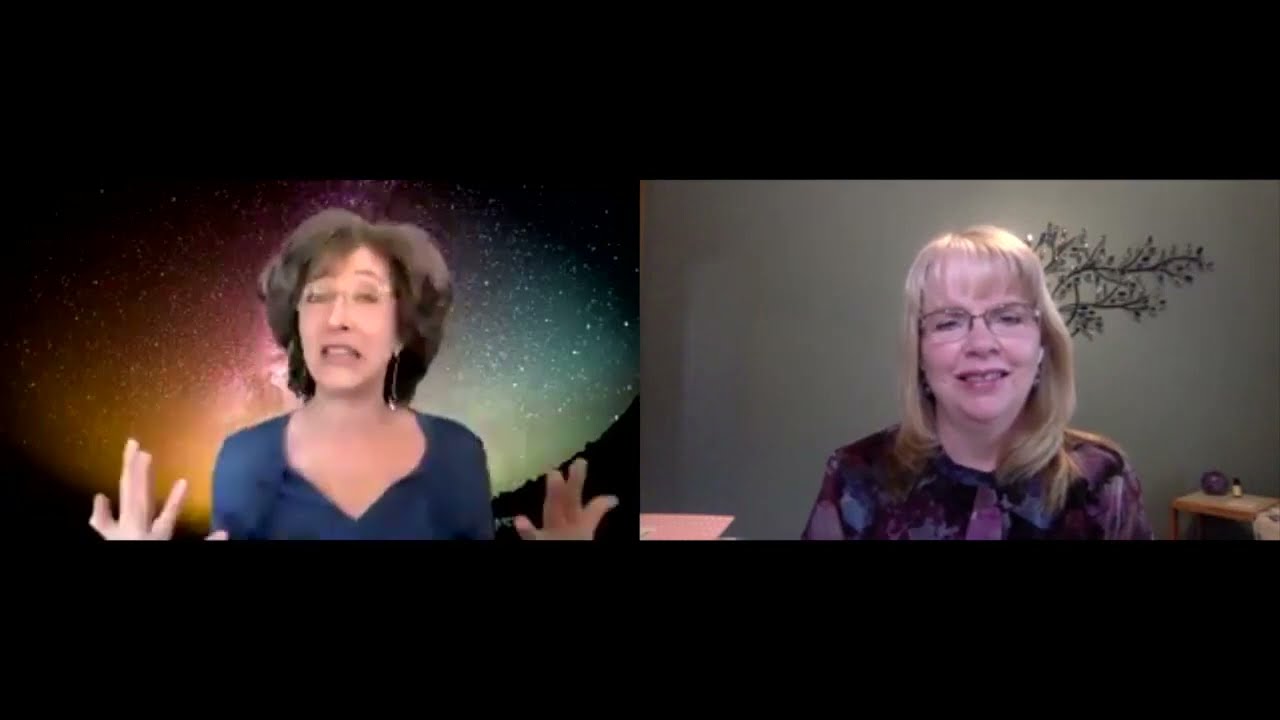
This content was created by Penny Kidd. This content was uploaded by Penny Kidd. This is a YouTube interview/video (title: "Building Financial Confidence | Quick Fixes to Stay in Control Insights by Angela Dumas") published 2024-06-02 as part of the Money and Me Mastery Series. Host Angela Dumas interviews guest Penny Kidd (financial coach, founder of PennyWise Coaching and former social worker) about money mindset, overcoming scarcity beliefs, eliminating debt, creating a custom spending plan, practical budgeting baby steps, and resiliency during financial flux. Penny offers a free spending-plan starter and a 45-minute complimentary coaching session. The conversation is aimed at spiritual entrepreneurs and personal-development audiences.
Chapters
Welcome to Money and Me Mastery Series. We're here to reveal how money blocking stories unlock the gateway to happiness, wealth, and freedom. I'm your host, Angela Dumas, and I'm on a mission to help spiritual, spiritual entrepreneurs and personal development junkies Heal the relationship with money so you can finally access the freedom around money you so richly deserve. And this is why our team has gathered a host of high-vibe experts on a gorgeous panel. And today our lovely guest is Penny Kidd, and I'm going to go ahead and properly introduce you. So Penny Kidd. She's not an investor or advisor. She's a financial coach. PennyWise Coaching is about helping you connect your money goals and values and learn the day-to-day skills to achieve your goals by creating a custom spending plan to pay off debt and live within your means so you can build wealth for a future you deserve. Right on point. Penny Kidd was a social worker for 30 years and combines that with her experience of eliminating all her own debt, including the house, to mentor others who are ready to achieve financial freedom. As a compassionate coach, educator, and accountability partner to women and couples for 7 years, Penny takes the shame and embarrassment out of money to fast-track a future you desire. She's been married almost 30 years to Mark and has 2 amazing children in their 20s who have graduated from college without student loans and 2 dogs who have taken their place in the nest. Hello and welcome.
Thank you. Thank you for having me, Angela.
Oh, it's such a delight. We'd love to learn about your money story and how that impacted your life, your success, and those who you serve in the world. So let's begin with our first question. What was it that you learned growing up that still stands out from childhood today?
It's always really interesting to me to kind of think back at that because of course after you get a few years behind you, you kind of forget where, where things started, right? And, um, I grew up sort of that, um, middle-class poor, if you will. You know, we had enough to cover our needs but not very many of our wants, and feel like everything was a little bit like, there's no money for that, we can't afford that. And so I was working by the time I was in 5th grade, delivering papers. My first job was working for my brother, who officially owned the, uh, the newspaper route, and I worked for him and did that was where I got my spending money, right? And I remember working really hard and having to get up at 5 o'clock in the morning for paper delivery and just to be able to have a little extra money to go roller skating or to a movie or whatever. And a lot of the expectations around clothing and fashion that was, you know, you always wanted to kind of be cool with your friends and wear what they wore, what, whatever was the cool thing at the time. And we had enough for the basic JCPenney's jeans, but not the Levi's kind of thing. And if I wanted the extras, I had to fund them myself. And so there was a real scarcity attitude around money for us. And I know my parents worked really hard and they really valued, had a huge work ethic and taught us very young how to work. But not really how to plan our spending or the belief that we could have more, that there was more than just enough. So I had to work really hard on that later and still feel like it's an everyday battle for me. As a social worker, one of my friends who also does some money mindset stuff, I remember her saying she also had a history of social work and She said, "I didn't realize when I became a social worker, I was taking about poverty." And there's a lot of that around my career too, where you work really hard and you make sort of a living wage, but there's not much extra or ability to kind of lean into an attitude of wealth or abundance.
So you just kind of gave me a bit of the obstacles that you had to overcome. How, how did you start overcoming them?
I think a lot of it became, um, surrounding myself with people who believe differently than what I was taught or what I thought. I think that We have this circle of knowledge and influence, and if you don't expand your circle and the things, whether it's what you read, what you listen to, who you hang out with, um, I really believe that that changed and transformed my belief systems that I, you know, I can still help people and make some money. I can still, you know, I can be wealthy without being evil. You know, you're— I feel like there's this dichotomy in our society that isn't true. And so for me, it's, it's an ongoing battle. I feel like every day I wake up and have to check my attitude and beliefs because what I was taught or believed early in my life is not necessarily true. And so it's, it's meeting people like you and rubbing shoulders with other people who have really some amazing stories and yet are really giving people and to be okay with merging both sides of those desires in my life.
Yeah. Beautiful. Was there an incident or a moment in your life that caused you to think differently about money and change your behavior, like a pivotal thing?
There was about, um, it's probably been about 15 years ago now, um, when I was a caseworker in child protection, a friend of mine came to me at work and said, hey, you seem really good with your money. Will you come help me? Because we're always living paycheck to paycheck. And I was kind of surprised that she would ask. And, you know, because in general, in our society, everybody talks about their new car, their bells and whistles and their trips, but they don't really talk about what's really going on in their finances. And I didn't really necessarily feel like I was really good with my money. I just paid my bills and balanced my checkbook. But she said, well, that's more than I'm doing. So can you come help me? And so we sat down at her kitchen table and kind of looked at, you know, what her bills were. And I would ask questions like, how much do you give the kids for this? And how much does this cost? And most of the answers were, I don't know. I don't know. I don't know. I just do whatever comes up. And so I said, well, okay, well, let's kind of create a plan. And I had heard some people talking about creating a spending plan, or the dreaded B-word, the budget. And, um, you know, I said, we need, we need to do this, and I want to be better at this, so let's do it together and be accountability buddies, and we can work on, on this situation together. And I left that night knowing she had probably about $40,000 worth of consumer debt. Plus they had just bought a new house and they were planning to buy a new car. And so I was kind of afraid for her and worried about how she can handle that and driving home and actually, ironically, kind of went to get tires that night, was sitting reading a book in the, in the Sam's Club while I was waiting for my tires to get done and realized, huh, wonder how much debt we have and Got home and even though it was all in Quicken and very organized, I had no concept of what my financial picture looked like either. And so when I got home, I realized we had about just a little under $30,000 worth of debt plus our mortgage. And I was like, oh yeah, I guess I'm not really much better than she is. So let's be accountability buddies. We're going to learn how to do this together. We'll read this book. And she said, I don't have time for a book. I got 2 babies and 2 teenagers and I work full-time. When am I going to read a book? And so I said, okay, I'll read the book, we'll be the Cliff Notes, and let's try to do this together. And we had just got started, met together, I think, 2 times. And then unfortunately, she was hit and killed by a drunk driver. So that just rocked my world, you know, and her husband was in the car, he suffered a traumatic brain injury. So he was in and out of comas for 3 months. And you know, kids were all farmed out and I knew their financial picture. And I knew that we had even talked about life insurance for some reason that day. And I knew they only had what, what the county gave us, which was 1 times our salary, so $40,000 or so. And, you know, you can't hardly bury somebody for that, let alone take care of 4 children. So It just made me realize that that could be me. You know, I went home to my husband and said, we have to get our act cleaned up. We, we don't know what tomorrow brings. We don't know that there's a pandemic coming. We don't know that, you know, the job loss isn't coming. And so we have to get our situation cleaned up because there's, there's no magic, you know, prince on the white horse coming in to rescue us. We have to kind of take control of that ourselves. And so it was a slow start for us. But, you know, after a few years of kind of learning and processing and creating systems, we finally got on the same page to eliminate our debt. And then I started helping other people learn how to do that and realized that it is not about behavior or math. It's about the behavior. You know, we can all do the 5th grade math that it takes to do a budget, but the behavior is a little harder. Um, to change, you know, and to really deal with those conflicting things in our, in our heart.
Yeah, so you've just answered a couple things. I just want to highlight them for a moment. Uh, the loss of your friend like that, and this whole new— this— the way you were connecting with— that's just— must have been extremely traumatic, and it, it really is It really got to me there for— it's such a shock to hear that. It is. At the same time, it was such a blessing because she actually helped you get clear exactly, like, like, everything happens for a reason is my particular thought, and not a memory.
I agree.
It seems like you agree. But she helped you get on track. And also, one of my questions was going to be like, did you learn as a kid how to face money? Nobody ever says yes to that. You just said you— this helped you actually face your money situation because no one wants to talk about money, right? But there is a way to talk about it that doesn't have to be scary. It is so hard to not get pulled into the fear around it because of what we've been taught, if that's what we were taught. I had someone on yesterday who just didn't have the fear, but that is more rare than someone like you are, you know, sharing with us. So, um, out of this tragedy came miracles, and I'm sure there's some other miracles. What other miracles would you be willing to share with us about your story now?
Yeah, you know, I was almost 40 when this happened. I wasn't a young pup, and I felt like, um, everything I used to hear was, well, everybody's in debt. And I remember having that conversation with her. Some of the things that we spoke about at that table is now what I hear from my clients going forward. It's like, oh, everybody's going to be in debt, everybody has a house payment, everybody has a car payment, that's just the way of life, blah, blah, blah. And, and it all of a sudden made me wake up and think, I don't want to be like everybody. I— if that's what everybody's doing, I, I know I'm going to play with somebody else because, um, it wasn't a quick fix. You know, we all think that somehow we're going to win the lottery or get some great inheritance and it's going to rain down on us. But we hear time and time again that even those people are broke again in a short period of time because they didn't learn anything different. You know, you can go blow through the money. So it really, I think one of the greatest miracles and the thing I'm most proud of in my legacy is that It's helped my marriage. I communicate better with my husband about all things, but it starts with, what are we going to do with this paycheck? You know, and then what are our dreams? What are our goals? What do we want to see next? And then to impart that to kids who were, you know, probably in late middle school or late elementary, early middle school kind of age when they're all of a sudden having their world turned upside down because mom and dad are learning how to handle money. And yet I'm very proud now of them as young adults of how they react to financial crisis or make decisions around their money. And that they're willing to come have conversations with me that most families never have. And at the same time, when they're adults, I have to let go and say, your choice, it's not my decision, but also I'm not going to run in and I'm not going to save you if you don't kind of get this figured out. I want to be able to bless other people and support them. But as a social worker, I know there's a fine line between helping and enabling. And so I have to walk that strategy, right? But I really am on a mission to help people take the shame out of talking about money. I don't know where this all came up that we have to be We're so embarrassed to talk about our finances instead of saying, here's where it is. Now let's work on it. How can we get better? And much of that goes back to what you help people look at is that mindset stuff, right? I can teach them how to budget their paycheck all day long, but if we don't ever address our beliefs around money and what we can do to make more or save more, nothing changes. So it's, it's a combination, I really believe, of mindset and behavior. So yeah, I mean, there's probably been multiple miracles. And I mean, throughout my life and through since we, we really have made this shift around our personal finances. And, and then just as we were trying to get out of debt and pay my house off, we were just about to pay the house off. My mother came to me and, and, well, just kind of offhandedly in a conversation, told me about how she was stressed about her money and that her CPA had told her she could run out of money if she kept taking out of her IRA what she had been pulling. Well, she was only taking enough really to survive, and she didn't have a house payment anymore, and she's— her medical bills were going up, and she didn't really do anything extravagant. She really was very frugal, but she never had a plan with her money. And so to watch my mom run out of money at the end of her life. And then the stress that that put on the kids to say, okay, what are we going to do if mom runs out of money? And, you know, how are we going to take care of her? And is that our job to take care of her? And what do we— what social services kind of things could we plug her into? And so that was a change in a relationship that I didn't anticipate at that stage of my life. And, um, You know, I oftentimes feel blessed that she passed away right before she ran out of money. And it's never a fun thing to lose a parent and to go through the grief. But I also think it would have been devastating to have 10 more years or 20 more years of dealing with somebody without any income and trying to live on what little Social Security provides you. So, again, that was just kind of a lesson and a part of my money story about how do I then make sure I don't leave that legacy to my kids.
Yeah. And the cool thing is, is just looking at your money, that changes the mindset because the mindset is fear, fear, fear. Don't look. Oh, no. You know, warning, warning. And when you say, wait a minute, I'm going to just take a look, that's the courageousness that gets you that first breakthrough. With quite a few people, I've seen the same thing where they don't realize how much they're leaking. It sounds like they're making a lot, but the energy, money energy, is leaking everywhere. And then they wonder why they are where they are.
Yes.
You instilled that in your children to be open. So whenever parents even open up to it at all, the child or the children immediately shift because of it, because mindset is, is like a frequency, right? And it expands out. So, um, uh, I know that there's— like, I'm grateful for your friend because in my world, her karma was to have— this was her karma, and it was your karma together to get on track.
Yeah, I always feel like she's right here, you know, watching over this saying, go Penny, go, you know, change another one, help another one. Because, you know, that was both of our hearts was to help people. That's why you become a social worker, right? But if you— I just never in my wildest dreams thought it would be around money, you know, and yet today I really believe I'm a social worker around money. I'm not, you know, a finance person. I don't do the investing or the accounting, you know, that kind of piece. It's— I tell people, like you said, the fear. I tell people that, you know, it's kind of like the scary monster in the closet when you're a kid, and it gets bigger and bigger and bigger, and you just— but if you turn the light on, it's not usually so scary. And so if we can just turn the light on, on our finances and go, okay, what can I change? You You know, how often do I need to eat out? What subscriptions do I absolutely have to keep? What are my long-term goals? What do I want to do at the end of my life? Do I want to work till I drop or do I want to, you know, bless other people? What's, you know, you kind of have to stop and think about that stuff. And unfortunately we're just really not taught it in school. So we're kind of on our own to figure it out and to reach out to other people who are smarter than us maybe who have been there before and say, okay, what did you do? How did you do it? And what could I maybe do differently so that I can change my situation? That's not so scary. You know, when you have a buddy, it seems like it's way less scary.
That's, that's really great. Um, because again, you're coming together in a supportive way, not just like, here, go do it, which is there's some— sometimes we need to do that too, but to have that partnership, I like to say coming together in the spirit of partnership, right, of whatever it is, even if it's money. Um, because money, to me, there are so many facets around money that are not always talked about, although it's kind of coming of age now. It's, it's really opening and blossoming like a lotus. Um, so with the constant flow and flux of the current climate. Like, this world is always going to go up and down. It has from the beginning of time. And with that, how do you ride the waves, um, with these comings and goings, the ups and downs? What do you do?
I think a lot of it is just being, um, centered and mindful that we're gonna be okay. I think for me, having a higher power and a belief that it's, it's not about what's right here today. There's a longer plan, you know, in the universe. And so, um, I don't, I don't know how. I just think it's, it's, it's almost more why than how. Like, because I feel like we'll be okay. I guess part of the how is because I have a plan and I have some cushion. And, you know, I, I could be like anybody else. I could lose everything. I could, you know, but when you have a mindset of we, we know how to adjust into flux, you know, I was hit just like anybody else during COVID and, and yet it really hasn't changed my world. And so, you know, it's like all right, this kind of sucks right now. What are we going to do to get better? And what kind of changes can we make and pivot, you know, instead of wallowing in the pain and the pity and the sadness of, you know, the circumstance. And I think having good people around you to help buoy you up to keep going forward is huge. And to ask for help and to ask for support when you're having down days. And, you know, it's, it's really normal. And I think if we pretend that nobody else is having those, we're fooling ourselves because everybody has— like you said, it's a wave that you can't necessarily get off, you just have to ride it.
Yeah. And you're— you really touched on something that was also Something I was going to ask you about that for me, maybe it's not even a how or why, but the trust, right? The deep trust is part of how we actually navigate. I believe, um, get into our heads so much, the fear comes and the figuring it out and wanting this or wanting that, that keeps you out of that alignment and attunement with the truth of the right? And so you really do have a deep faith or trust or conviction, I should say, about that it is going to be okay come what may.
Yeah. Yeah. So, well, because there's parts we have control over and parts we don't. And so do what you can do. Don't just, you know, throw your hands up and say, oh, okay, well, you know, this is how it is. Well, no, I think we all have some responsibility to do the pieces that we can do. You know, whether it's work more or spend less or, you know, there are some things that we can do. But at the same time, you have to have that trust in, you know, that we're going to be okay. We're probably not going to be living in a cardboard box. You know, most of us, most of the people that are watching this are going to be okay. It's a matter of what can you tweak and what can you do so that you, you feel more and more okay every year., right? And that you go, okay, we've got, you know, we've got a plan, we have a cushion, we'll be okay.
So you just kind of answered it, but let me—
let's go a little further. I keep thinking of you.
Yeah, people always answer the question.
It's so great.
What is the most important thing for the audience to know in how to navigate this current climate, especially with regards to money and purpose?
Well, I think as you touched on before, it's important to not just bury your head in the sand and say, well, you know, there's nothing I can do, and so it's just going to be awful. And I think being proactive is huge right now. And I've talked to a number of people in the last 6 months that I've said, you know, none of us could have planned a pandemic. I get that. And, and yet I'm sure there are people that were, um, But we're all going to have our own personal little pandemic, whatever not pan would be, you know, and life crisis happens to all of us, whether it's health or death or job loss, whatever, right? Things happen. That's part of being a human being and living is that stuff's going to come your way. What are you going to do as early as possible to pad yourself from that? And that if you're in a crisis right now, then you kind of slip into, okay, back to the basics. What do we need to keep? You know, what's a have-to, what's a want-to? You're going to have to eliminate a lot of the want-to. And, you know, again, most of us in America and, and in that kind of middle class and above, we have a lot of fluff in our lives that you know, our grandparents probably didn't have. And so if you started thinking, what can I, what can I bring in? You can always add it back when life gets more consistent and stable. But there are choices that we make on a daily basis, from everything that the type of food we buy to what subscriptions or what entertainment we're doing, where we live. I mean, we really do have choices, but if we feel powerless, we're going to be powerless. I think.
So with your free gift offer, how can they be powerful empowered?
So my free gift offer is an opportunity to start looking at it, to turn that light on, if you will, and to start kind of pre-budgeting. And it's just a spending plan starter to kind of gather your numbers, because if you don't know where you are, you're never going to get to where you want to be. So you kind of have to start with today. What are my bills? What am I spending on, you know, gas or groceries or dining or whatever? And so you have to kind of look at it. So we're turning the light on. And so this is a really simple sheet to kind of create and say, okay, I'm going to start, start the baby steps, right? You just, you just do something. And so Hopefully this is something that gives them an opportunity. It's not a full-fledged budget, it's just gathering the numbers and seeing everything from your basic expenses to your irregular expenses, and then also what debt you have. You know, a lot of people think, oh, you know, everybody has debt, but it's kind of stealing your wealth when you are paying a bunch of interest and not having the opportunity to then do something else with that money, whether it's to give to somebody else or grow your future. If you're just always paying on the back stuff, you can't pay it forward very well. So this is an opportunity really just to look at it and get it in one place and to get it out of your head and onto paper and say— and, and sometimes you have to look back a little bit. You have to go at 1 or 2 or 3 months worth of bank statements or credit card statements to say, what have I been spending in order to make any changes going forward? So the plan is, I think most important is to set up a plan around the dollars and to say, this is how much I'm willing to spend. And then I stop, you know, but if you never set a boundary, you really don't make much progress.
This is really gorgeous because what better time than right now? And I know a lot of people are telling me, "I'm so busy, I'm so busy." I'm like, there is a pause in the world for a reason. Timing probably is not ideal for what we imagine it to be, and yet here it is. So when we have this thing, it's the time to kind of go back, take a look, and there's a courageousness. So I invite all of you, all of us to be courageous in taking a look, especially for new business owners. And this— and you guys that are even seasoned, I see it all the time. Yeah. And, um, although I don't do business strategies either, and I do it like more from an emotional standpoint of view or what have you, really getting underneath of all that, you are laying out a plan. Penny Kidd is offering you something to do, a simple Overview so that you can start freeing up the fears and get clear about who you are. I— this is where breakthroughs happen, in the smallest little bits of things, where it's that way, it's not so such a huge total dive. I love that you're offering this, and I think it's going to be a very incredible, um, assistance to many people because it is a baby step And yet, grab your courageousness, everybody. Just like, I'm going to be courageous and I'm going to check it out. And even if it's hard for the moment, grab your tools, whatever it is that you do to be like, I can do this. It's okay for me to do this. I deserve to do this. I deserve to know what I'm leaking. Where is my energy leaking? Let me grab my energy back. So I don't know if it's a good way to say it or not. I just— it was compelling.
Oh, it's Perfect. And I think we all can get better at what we do. I've had a lot of people say, oh yeah, I make plenty of money. I don't need to do a budget. I'm like, well, the wealthy people didn't really get wealthy overnight by just doing whatever felt good. They had a plan. And so if you want to improve your situation wherever you are, you're the youngest you're ever going to be today. And you just— this is the beginning, right? And like you said, there's a time, there's a reason that we've had to slow down. And, and, you know, we can do more than just clean out closets in our house. There's a lot of people are like, oh, getting all these little honeydew projects. Well, are we doing things that are going to have meaningful lasting impact? You know, bettering yourself somehow.
Honeydew is great, but it's also just keeping busy. This will actually get you somewhere and it gets you a place to start anew or a fresh start. With a new mindset. So this is beautiful. Thank you so much for coming and spending your precious time with us.
You're so welcome.
Very grateful to have you and be connected to you. I feel like that's a pretty cool, fun thing.
And, uh, can I offer one more thing to your people? Yes, I would love to offer, um, a 45-minute free session with anybody that is interested in just reaching out to to kind of dip their toe in the water, talk a little bit more about their circumstances and, and what coaching can do for them. So if they are interested, they can also go same, same website essentially that the free gift is on, but pennywisecoaching.com. On the Contact Me button, there's a place to schedule a time if they want to just pick a time to visit. I would be happy, no pressure, no high sales pitch. Really just tapping into some of my resources and, and things that I might be able to connect them with, that would be a gift to them as well.
That's very generous, and I'll make sure to put that on, um, for you who are watching this today, you've already received a link to her free gift. You're going to have a picture of her, what she does, and we're going to add this in there too. So So anyway, thank you so much, um, again.
Welcome. Thank you.
And we'll talk soon.
Okay.
Blessings.
Thanks.
More from Penny

Where can you save money and still enjoy life? I saved $35 on concert tickets! #budgeting #finance

#primeday2026 doesn’t mean you buy stuff that is not in your budget! #amazon #primedaydreamdeals

A group could be your ticket to financial success! #budgetingtips #financialfreedom #money #debtfree







