Can You Eat Healthy on a Budget? | A Financial Coach & Wellness Coach Weigh In
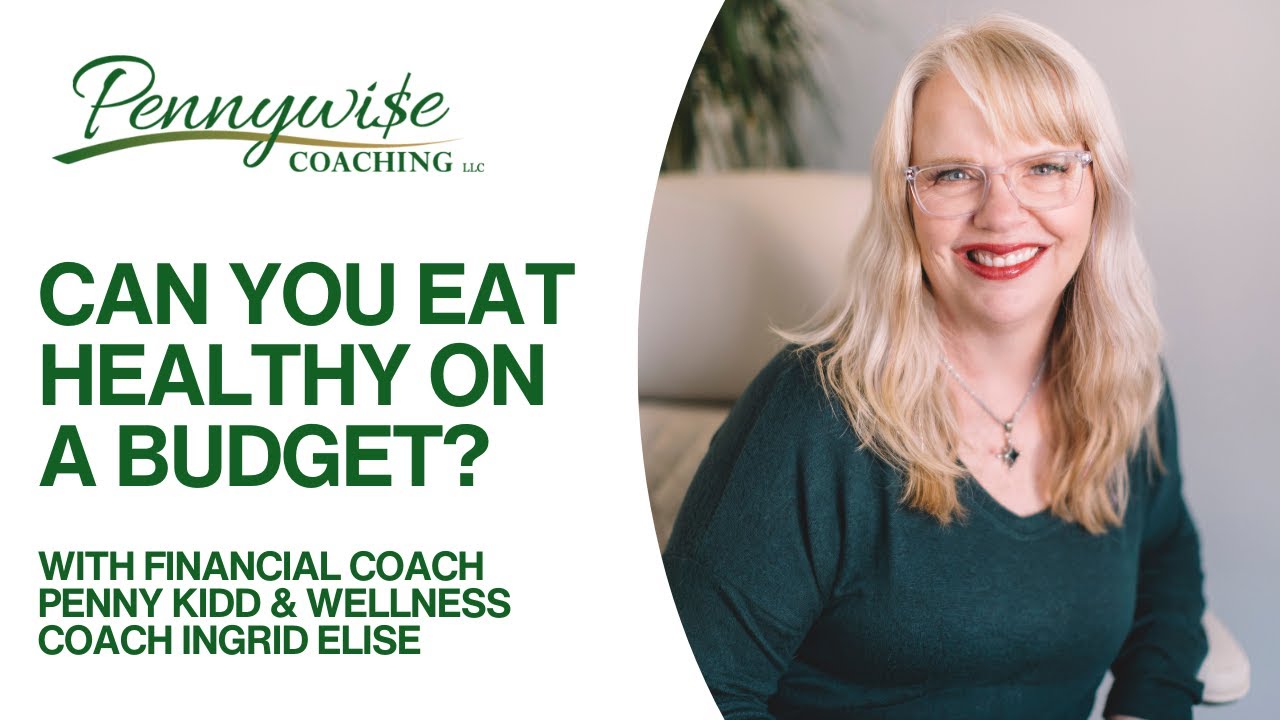
Penny Kidd and nutrition coach Ingrid Elise break down how to eat well without spending a lot. They cover meal prep with five ingredients or less, where to shop (Costco, Grocery Outlet, farmers markets), and eating-out swaps that save money while keeping you healthy.
Chapters
Hey everybody, it's Penny Kidd with Pennywise Coaching. I am so excited to be here today with my friend Ingrid, who is an amazing wellness coach. She'll tell you a little bit more about all the things and how she specializes in food and what goes into our body. Um, but we thought there's a huge intersect of food and money because we all have to eat and we all have to spend money. So we thought we would have a little conversation around that today. So welcome, Ingrid. Thanks for coming.
Thank you.
Thank you, Penny.
I appreciate being able to talk to your, your audience.
Yeah. Tell us a little bit about you and what you do.
Thank you, Penny. So I am a nutrition health coach. I specialize in helping people to reverse their diabetes, to lower their blood sugar, kick their, their food cravings, and generally eat a, a much healthier diet than the standard American diet that most Americans enjoy.
So yeah, do you find that people always assume that's going to be more expensive?
Yes. Yeah, that's a big, uh, myth that I would like to bust right off the bat. So thank you for asking that question, Penny. Probably the number one question or objection that I get from my clients is, oh, but I can't afford to eat healthy. It's like, it's too expensive. It's too expensive to buy organic, for example. Um, and it really is a total misconception, but something that I challenge my clients as being a limiting belief. It is a limiting belief that I can't afford to eat healthy, therefore I'm going to continue to eat junk. It is a limiting belief, and this is a big part of what I do is I educate people as to how they can make healthier, budget-friendly choices. That it really is a matter of, okay, well, how much are you spending on Starbucks? How much are you spending on DoorDash? How much are you spending on eating out? When you're too tired to prepare food, what's your go-to? How much money are you spending on, oh, my pants don't fit, so now I have to go up a size and spend money on clothes because I've gained weight?
Yeah.
So there's all these factors that come into play when it's about, oh, I can't afford to eat healthy. My big response to them also is, well, you can either invest in your health now or pay for your sickness later down the line. Which means reduced productivity, time off work when you're sick, increased cost of medications. We all know that insulin is very expensive, and a lot of people simply stop taking their medications because they cannot afford it. When, you know, diseases like your metabolic diseases like type 2 diabetes, it's reversible, and it's reversible simply by eating healthier, and it doesn't have to be expensive. And so this is a big part of what I do is Show people. I don't just tell people, I show them. Every week I show them, here's how you can cook and prep— not even cook, but prepare food, 5 ingredients or less, that's budget-friendly and that's going to lower your blood sugar.
So yeah, I love that. And we'll talk about that before we jump off, about how people can follow that, because you have some really easy concrete tips. And I think it becomes daunting to those of us who don't consider ourselves like great cooks, or, you know, we don't know how, we don't understand the— but you really have helped people break it down and read ingredients. And to— and at the same time, I feel like you're very approachable with people like, okay, maybe you can't buy organic, or maybe you can't do this all the time. What can you do that gets you one step closer to where you want to be? Right. And that's kind of how I approach money too. It's not all or nothing and don't spend any money. That's just not realistic. And I don't even say it's, it's you have to never eat out or something like that. There, you can never go to Starbucks or you can never, but it's the frequency in which we do that that causes us pain in both our pocketbooks and our waistline. Right.
And it's, it's what, what you spend your money on. It's like, well, you know, yeah, I want to go to my favorite restaurant. So what can you order that's going to, you know, like be be easy on your wallet but also fit in with your, your lifestyle and your healthy eating protocols. Because you can go— I go, I eat out all the time, right? The In-N-Out Burger, oh my gosh, I love In-N-Out Burger. I will go to In-N-Out Burger all the time. But do you think I order the big soda and the huge fries and everything? No, I'm very happy with what I order. And of course, my, my family and friends who I go with, if they want to eat like that that's up to them. But I'm sitting there and I have my really healthy, you know, version of, of that particular meal. It's the same with any steakhouse or any, you know, um, if I go to a bar and everyone's, you know, eating burgers and, and having beer, I'm okay if they eat that because there's always something on the menu that I can find. And of course, you know, eating like this I don't necessarily order appetizers and a main course and dessert and the alcohol. I mean, just by cutting out alcohol— I'm not saying don't drink alcohol, um, but you can have one drink. You can have, uh, a drink, a cocktail that is low in sugar, but you're not going to spend all that money on a bottle of wine. And you may share a dessert instead of ordering dessert here and there. So it's, it's— there's lots of ways that you can be creative to still enjoy. I, I love to eat out. I eat out whenever I can.
So tell me about like just one, one example at In-N-Out. What would you eat versus what maybe either you would have eaten back in the day or that somebody with you would eat? You said sodas and loaded with sugar. What else? What would you choose versus what, what I used to eat?
Yeah, you know, the, the, uh, the, the double, you know, burger with all the fries or the animal fries or the fries or cheesy fries, things like that. My favorite to order is, um, the protein style burger, which is basically a lettuce wrap. It just— you just cut out the bread and you cut out the fries, and I'll just drink water. Um, sometimes I will drink a Diet Coke, but not very often. Not very, because it's like, I like a diet soda every now and then. It's not the healthiest, but I don't drink them every day. It's kind of a treat, right? Um, my other favorite is I just order the patties And it's a really popular thing now at these fast food, you know, burger places, is you just order the patties. I will just order 6 patties with the salt on them, and I am not at all embarrassed about doing that. I proudly walk up to them, say, 'I want 6 patties.' And you know what? I just eat those patties because they're salty and tasty and good, and I find that I'm so satisfied after eating that. I don't miss all those highly processed carbohydrates, right? Um, so, you know, there's always a way to find something. It's the same with McDonald's. I love me some McDonald's, and I'm talking about fast food because I know so many people like fast food. I love McDonald's breakfast. I love it. And you can order now really à la carte. So, you know, I can order the scrambled eggs, I can order a side of bacon, I can order a black coffee. Or I can just say put a little creamer in there and that's fine. Ordering à la carte, well, sometimes it could be a bit more expensive. Again, if you're not doing it every week or every other day, it's a once in a, you know, once in a while thing, it becomes more affordable. It becomes more affordable and, and better for your waistline.
Well, and I, I think some of it, and just like money and learning to be intentional with your money, You're learning a new habit and you're practicing it over and over again, right? It's not perfection, it's progress. And if we just make a little incremental changes, it can wind up being a huge difference over time. Right. Tell us a little bit about your backstory. How did you get into this? Tell me your health journey.
So, yeah, I mean, I kind of fell into health coaching when I overcame my own very serious illness. It was a terminal diagnosis. They didn't expect me to live past about 3 years, but luckily the medications worked really well until they didn't, until the side effects became just too much for me. And I was looking at it a new way. I was right up there, you know, with type 2 diabetes as well because I'd gained a lot of weight and I led a very sedentary lifestyle. I ate the standard American diet. I was all about the junk food and the snacks and the sugar and the alcohol. I mean, you know, I would drink wine and eat a bag of chips and watch 5 hours of TV because I just felt terrible. I didn't have any energy. And I decided, well, perhaps I should really look at what I'm eating. Um, and the rest is history. People were coming to me and saying, Ingrid, you look great, you've lost all this weight, you look really healthy, what's your secret? And I'm like, well, it's not really a secret. I simply follow the science. And, you know, I eat better. Of course, now that I've cut out all the wine clubs, I mean, that's probably about $10,000 a year I'm saving just on wine. Which is now, you know, I can put that towards healthier options. I'm not spending the money on junk food and garbage. And, you know, when I go to Costco, which is one of my favorites, I'm in and out. I have my basic items, which is mostly protein, um, and, and the veggies. You know, there are places that you can shop that make it more affordable. Um, yeah, I kind of fell into it, and everyone was asking me for help. And so, um, this is, this is what I do. If I can really helps someone, particularly if they're in that pre-diabetes phase before it becomes full-blown. That's ideal. But that being said, I do work with, um, you know, obese women who are on insulin and on all the medications, and I help them to gradually change it. So I've been through it, I lived it, and I still face the same challenges as everybody. I still, like, you know, get stressed and want to get to the emotional eating and, and, and eat a pint of ice cream or get into the chocolates, and I'm like Okay, well, how's that working for me? Not so well, not so well. So it, it, it, again, it's a lifestyle, a permanent lifestyle change. It takes a lot of mindfulness and really being strong about your why. Why? I want to get healthy. I want to save money. I want to invest in my health so that I can do all the things that I want to do, particularly down the line. And a lot of women I work with are kind of empty nesters, or seem to be empty nesters, and it's like You want to enjoy your retirement, right? You've worked all your life and now you're retiring. And do I want to be healthy enough to go chase my grandchildren around? Do I want to be able to get on a plane and go travel? So I'm like, okay, invest in your health. Be mindful about what you're spending money on. If it's junk food, put that money towards your, your travel budget. It's— and then also the whole other thing is how to eat when you're traveling. It doesn't have to be— it's the same concept as when you're eating out. There's always something. I can always, every single time, find something on the menu that will suit me. And it goes back to asking for what you want. Like, how is that prepared? How is that cooked? Is it grilled or is it deep fried? Oh, can you grill that instead? Um, and not having— feeling like you have to load up on all the, you know, heavy sides and everything. Which add to your waistline, but then also add to the bill at the end of the night.
Right. Right. No, I love that you— well, to know you is to know that Ingrid is not shy and she's going to ask for what she wants anyway. But I think giving us permission to do that and to be like, you're not putting them out, you're in a restaurant, whatever, or you make the choice on how you cook it for your family and I think one of the things that I'm excited to kind of pursue with you and some of my other colleagues is like, is putting together like a booklet of some kind that is like easy meals because I have this conversation all the time and people think, oh, it doesn't have anything to do with money, but it does when people like, I'm DoorDashing, I'm picking up because I have to and I'm in a hurry and I'm busy person. And, and just those little tweaks of like, what if you didn't go every day? What if you went twice a week? What if you put in some food? So one of the things that I'm excited to kind of flesh out with you over the next few months or whatever is to put some meals together because like you said, your Tasty Tuesdays, your goal is to have 5, 5 ingredients or less.
5 ingredients or less that are low sugar, diabetic friendly, low in processed, ultra-processed foods. That's really easy. It's like, don't even think of it as cooking. And my argument when people say I can't cook, I'm like, well, can you drive a car? Yes. If you can drive a car, then you can get some ingredients and put them together. And there's so many tools out there, just like when you're budgeting, there's so many really cool tools out there that will help you come to, to a budget. Um, so I, I teach people not, not only how to get 5 ingredients or less and make a meal, but meals that you can eat more than once, multiple times, like cook once, eat multiple times. So for those people whose objections are, I don't have time, well, I can show you how to cook a meal with 5 ingredients or less that are budget-friendly and waistline-friendly and diabetic-friendly that costs a fraction of what you would pay in DoorDash or takeout and is going to be on your table and in your mouth again in a fraction of the time. You don't have to wait 45 minutes for DoorDash to show up, and in the meantime you're starving and you're shoveling other junk that you've got lying around the house. I mean, that's right. A tip that I learned a long time ago is if it's not there, you can't eat it. So, you know, friends, you have the choice whether it even goes in your shopping cart or not. If you put it in your shopping cart and it comes home, the chances are you're probably going to eat it.
That's right. Yeah. Yeah. Your, your best line of defense is at the grocery store or in— now nowadays with the click and pick kind of options, Instacart or whatever, I think you're less marketed to, you're less tempted than you are when you're wandering down the aisle. When I first started hearing that, I thought people would spend more and that it was sort of a time saver. You can actually be mindful about what you buy. You can stick to your budget because you can see No, it's the price going up in your, in your shopping cart, right?
Yeah, yeah. And I love the online grocery, um, shopping concept. I was doing that well before lockdown because of course during COVID then everyone was, you know, you couldn't go to the grocery store.
Yeah.
And what I loved about that is I was able to save my everyday items that I would buy all the time. And you're right, you're not dragging your kids into the grocery store. They're not there at the checkout with all the candy and the junk food. Sodas and everything. And, and I found that it was not just a time saver, it saved stress. It's like, there it is. I have to be really disciplined because I've got my shopper. Um, and so it's just kind of another level of security. Um, and, and it's the same with where I shop. There's so many— you don't have to shop at Whole Paycheck, right? You don't have to shop at those stores. There are I love the Grocery Outlet. I love, love, love, love, love the Grocery Outlet. I go there all the time. I love Costco. There are so many, you know, places like Walmart that have a lot of ranges of products. You just got to rethink. You just got to rethink how you shop because there's plenty of options that are affordable. And it's the same thing as, oh, I can't afford to buy organic. Okay, well, that's fine. Just understand that there are certain types of produce we call the Clean 15, that you can eat. And even if they're being sprayed, if they have a skin on them, for example, like an avocado, you're gonna not eat the skin, so it's not getting into the flesh of the fruit or onto the— right, that, like, cabbage is another great example. That's a clean one. Even if it's been sprayed, you just take off the outer layers and there it is. You're not going to eat the outer layers. And obviously washing and things like that, I teach people how to mitigate the effects of you know, those sprays and everything. However, the other thing is shop at your local farmers markets. You're supporting your local farmers, you're more likely to get something organic. And if you go towards the end of the, the day, all these farmers are packing up to go home and they don't want to take—
you've got great deals.
Yeah, exactly. So, you know, there's always a— and plus, I mean, the farmers markets are wonderful. It's a wonderful day out. Bring your kids, bring the dog, you know, it really is a joyful fun experience. And as we get into the, you know, the warmer weather, it's like, oh my gosh, the farmers markets are wonderful. You just have the whole rainbow of colors and everything's fresh and beautiful. So, you know, for every objection I get, I've got a suggestion. I've got a suggestion. It really is a mindset, and it really is reframing, because you want to get the most bang for your buck because it's going to be better on your bank account and it's going to be better for your health in the long run. And it's really, you know, It's like, oh, but my kids won't eat that. Yes, they will. If they're hungry enough, they will eat that. And I know because my kids were like, oh, we want our Happy Meal. And I'm like, no, you're going to have hummus and celery. And you know what? They like the hummus and celery. But you know, they also like their Happy Meals. And it's just a matter of teaching your kids when they're little. You know, if I could go back and do it all again, I would be a little bit— no, I'd be a lot more strict about that.
Right, right. Well, and I think just the waste, you know, when you think about how much you throw away, let's say you buy it cheap or you buy it because you buy this huge quantity, but then it goes bad and you throw it away.
Oh yeah.
What I mean, that's a cost. That's that hidden thing too, where you're like, like when you were talking about, you're either gonna pay it in your healthcare costs later or you're gonna pay it to take care of your body now. It's the same way. And you know, I tell people, you can, you can, save money into the, into the poorhouse in Costco. You have to be careful about what you buy there, but you can split it, you can freeze it, you can do some things that help make it be a good value, right?
Right. And that's what I would do when my daughter first moved out of home. I'm like, look, I'm doing a Costco run. I've got this big bag of broccoli or the double bag of salad.
I'll give her one.
You know, there's things, things like that. Um, you know, those big pallets of, of, of water and things like that. Well, let me give a few to her. So there's always— that's always a good thing. And they have a lot of really great frozen products too that are healthy that you buy in bulk that you can, you know, a big bag of chicken breasts that comes frozen anyway. You just take out the ones when you need it. Um, but also, you know, I, I love the whole idea of cook once, eat multiple times. So you get these big portions, you get like the double pack of the tri-tip. I mean, that's a California thing. I don't know if you have tri-tip beef in other parts of the country, but sure we do.
We might call it something different, but yeah, something different.
Different, um, but these big, you know, kind of big roast. Yeah, exactly. And, you know, we throw those on the barbecue and that will last, you know, I've got two very, you know, hungry boys, um, you know, that will last quite a few days, but they will just pick at it and eat it, and then I don't have to worry about cooking for a few days because it's there. Um, also my son, um, I homeschooled my son for 5 and a half years, and a big part of what we taught when he was really little, it goes back to teaching your kids and setting that good example when they're little He— we used to do scavenger hunts in the grocery store. We spent a lot of time on kind of the old home science. It's like, I think you're of the generation with me. It's like we did home economics and home science and stuff like that. I taught him how to read labels. I taught him how to go grocery shopping. You know, between me and his nanny, we taught him how to cook. He was there with the big knife chopping vegetables when he was in kindergarten, first grade. Oh, he's had— but, you know, he cut himself once and then that was it. He kind of learned. And to really, you know, get your kids involved with meal planning. Yeah, it's a hassle sometimes to take them, especially if they have a meltdown by the time you get to the checkout and you give in and it's like, oh, just shut up here, have the sugary, you know, cereal or whatever. No, get them involved as a family. To get your kids involved in making healthy choices, get them involved in meal planning and understand, okay, if they want pizza, guess what? They can have pizza, they can have cupcakes, they can have chicken nuggets. It's just a matter of swapping them out for healthier ingredients, right? Healthier ingredients. And it's really, you know, you can literally have your cake and eat it too. You just need to shop a little bit differently. Um, may— you might pay a little bit more for organic, example, for example, but you know, you're not going to pay more for all of the junk that you have been eating before.
Right. That's what I was thinking the other day when I was in the store and just walking down the chip aisle and I was like, dang, I forgot how, you know, and I feel like with the cost of living, those things are impacted too, right? And you're like, okay, if I'm not buying a $5 or $8 bag of chips, I can spend a little more on the food that I should be eating. So exactly.
Think of the money you're saving on all the junk and add a little bit of that to buying organic, because it does matter. It does matter. But by the same token, we have to be realistic, and there's, there's things that you can do to kind of, again, mitigate that by washing your produce properly and, and looking at the most important ones.
Yeah, yeah, yeah. Well, thank you. So tell us a little bit about how people can find you in the world if they want to learn more about you and be inspired by you.
Thank you. Well, my biggest platform is Facebook, and, um, I do a lot of my broadcasts and a lot of my posts I do to the public because I identify as being a teacher. I love to teach. I love to educate in a really fun and entertaining way. So Facebook, and I'll give you the link so that you can post that. Um, Ingrid Elise is my handle. Um, every Tuesday I do a Tasty Tuesdays, which is my live cooking show. And again, it's 5 ingredients or less that are budget friendly, that are low in sugar, low in carb, diabetic friendly, um, and, and really economic and just so simple. It does, you know, we overthink so many things, we overcomplicate everything. It really can be that simple. And I don't use really complicated recipes, it's just really simple. And I also show people, you know, what tools are there that investing in an air fryer or a slow cooker I tell you, you're going to save yourself a lot of grief, particularly if there's foods that you really like. Well, you can make them at home in the air fryer, and they're probably better. In fact, I know they are better than what you would get at the fast food restaurant, whatever restaurant, at a restaurant. I mean, it's so simple. So there's all kinds of tools. So Tasty Tuesdays, I broadcast that live, and then there's, um, you know, you can always watch the replay. That's the main That's the main thing. I'm working on some books that are coming down the pipe. Um, but really I'm, I'm all about, you know, educating through my, my videos and my reels and my stories is kind of how I get the message out right now.
Well, and I appreciate that, and I love that you're non-judgmental and that you're just like, just do a little better, just do a little better. It's not like anybody has to come perfect.
It's, it's baby steps. For a lot of people, it's, it's a matter of, um, okay, so for example, oh, but you know, I have to have my creamer in my coffee. Okay, but do away with that ultra-processed sugary garbage that's full of chemicals. Get your heavy whipping cream and a little stevia, or you can get some of those syrups that are sugar-free, and there's your creamer. Same thing. Um, and it's going to go a lot further, especially it's like, oh, that's a great example. It's like Okay, who doesn't like their big sugary, you know, coffees and blended coffee drinks? You can make those at home. They've got cleaner ingredients and they're a fraction of the cost. I mean, who wants to pay $7, $8 for a big thing when you could pay $7, $8 and drink those for a month?
I know, right? Yeah. Well, I'm going to cut us off, but thank you so much for your time and for sharing your wisdom and, um, how much I resonate with you. And I feel like we're similar personalities in different industries, but really it's about progress and grace in the process.
So, well, financial health is a big part of that wheel of life, um, and without the financial health, you are going to stress your body out emotionally.
That's right.
Yeah. So thank you for having me, Penny.
You're welcome.
All right, thanks everybody.
Be wise.
More from Penny

Where can you save money and still enjoy life? I saved $35 on concert tickets! #budgeting #finance

#primeday2026 doesn’t mean you buy stuff that is not in your budget! #amazon #primedaydreamdeals

A group could be your ticket to financial success! #budgetingtips #financialfreedom #money #debtfree







