Create a Life Plan That Aligns with Your Finances & Future Goals !
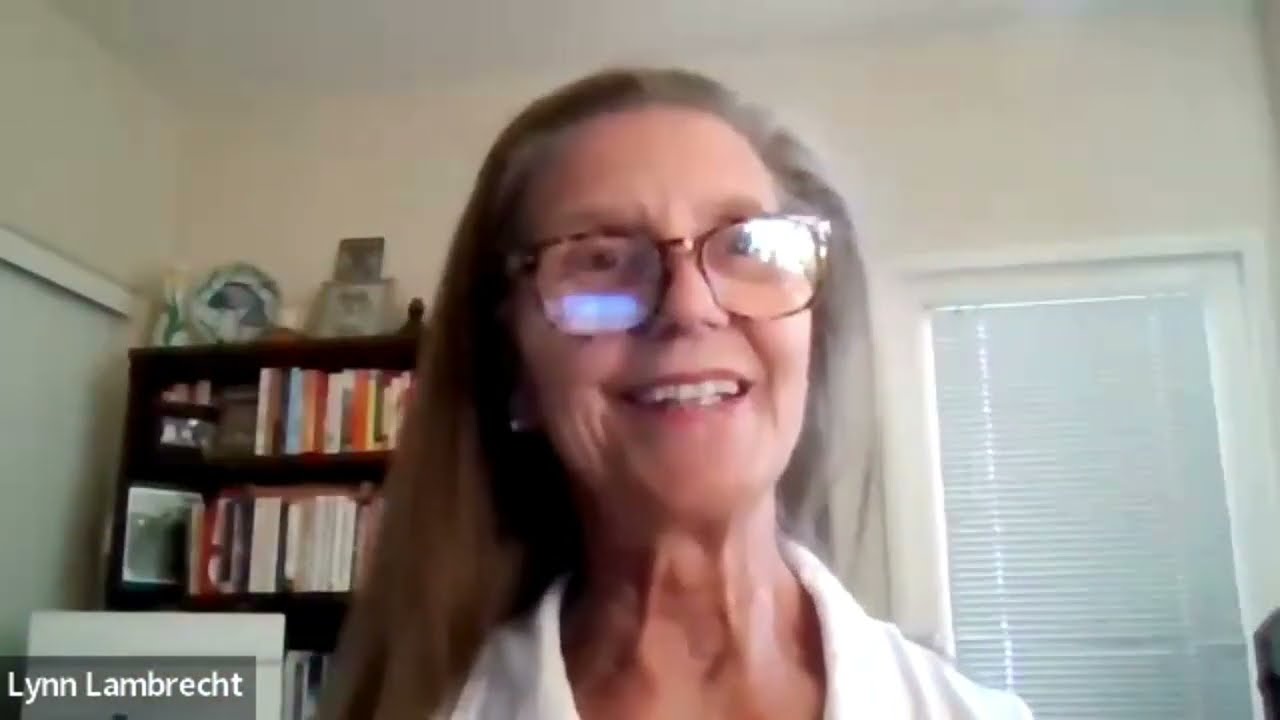
Penny Kidd and Lynn Lambrick discuss building a life plan that covers finances, emergencies, and what happens if you're suddenly unavailable. Lynn developed a "trail of breadcrumbs" system documenting legal and financial information so partners or family can step in during crises. They share stories of what goes wrong without plans and how small regular steps build systems that actually work.
Chapters
Hey everybody, it's Penny with Pennywise Coaching. I am going to have a really great conversation today with my friend Lynn Lambrick, and, um, we've already like pre-talked some of our talk, so we're going to see what— where this goes. But we love the intersection of our two, uh, businesses and, and passions around life and Mine is more around money and budgeting and debt elimination and living within your means. And, and Lynn, do you want to share a little bit about you and what your big passion is?
Oh my, mine is navigating all the moving pieces of life. And from a real practical baseline level, the administrative side that nobody teaches us when we're little and we have absolutely no clue how all these things that seem like disparate parts come on in and influence our lives, whether it is the financial aspect that, thank heavens, we have Penny Kidd, whether it's protection policies that we get, whether it's our legal documents that we have. It's how we organize our papers and documents. It's all the decisions that we get to make around healthcare. And, you know, who is your— who are— who's on your team? Um, you know, all the way up until, and not, not excluding our end of life celebrations. Um, and whether we're businesses, I mean, I don't know. I'm the one that wrote my exit plan as I was writing my business plan because I thought, okay, hold on. I wanna like work my way backwards. And it's kind of a little bit how I live my life, which my older brother and sister will tell you. I was dropped by aliens. They have no idea where I came from.
Well, and you— wow, there's so much to unpack there. You have— you are a little bit of an enigma and a unique individual compared to most of the people that I know and talk to. But I think you have, um, you have some insight, you have some life experience and reasons why you feel the way you do. Maybe you're You know, maybe you weren't cracked out of the egg like that, but you, you have developed some passions around that. And what I've always known you for is kind of that end-of-life planning, but you do so much more of that. You're not an attorney, right? You, you're not an estate planning attorney.
Well, I've been sassy with all these rascals for the last, you know, 40 years of my professional life, you know, so, um, so it's really Interesting, because I think the professionals that I worked with in my corporate life, they were the ones that kind of gave me a baseline understanding of what some of the terms meant and all the rest of it. But I mean, I also, I've always been the one that said, what's in it for them? Meaning the customer. And so when people are talking all over like this, you're thinking, what the heck? How does that influence me? How does that impact me? And so I'm the layperson interpreter. I used to just rewrite contracts and give it to the attorneys and say, could we speak more like this? And they'd say, go to law school. And I'd say, no, I have way too much fun giving you sass. So it's just, I think what's interesting is that my years in aviation impacted very deeply what I do now. And, you know, for—
Tell us more about what you did. What did that look like?
Well, I had my normal day job, but then I was also a volunteer emergency team responder. And so when I was asked to do that, I of course wanted to know what that entailed because that seemed kind of important to me. When I was in college and graduate school, I paid for school and I was an RA, a resident assistant in undergrad and a head res in grad school. And I had a lot of crisis intervention training. Everyone in my family is in sciences, medical, dental, dietitian, that kind of stuff. I was the non-science person per se, but I had that other gene of being cool and calm under fire and also being the one that wanted to make sure that people that were impacted by anything had access to resources and support. When they told me about this volunteer position, I said, "Hey, certainly." I had no idea that I would work 2 airplane crash sites in my 20s. And so that was the genesis of what I, why I do what I do now. It's kind of been with me for the last 40 years. And I really understood the impact of losing someone really, really quickly and not being prepared. And there's, you know, you deserve to grieve in those moments. And when I was on, um, heading up the crisis phone lines for families, from midnight to 6 in the morning, I wasn't hearing an ability to be sad and grieve because there was too much disarray of not knowing how to recreate life without the person they counted on being there, without access to the information that that person had. And that lay— that was just heavy on me. It made me feel sad, inexplicably sad, but also mad that we don't have these conversations as a society. And it just seems so odd because my family didn't want to talk about it. My friends didn't want to talk about it. I mean, anybody I grew up with, they, it was more, no, I mean, okay, yeah, yeah, yeah, yeah, yeah, yeah, yeah, yeah. And I used to describe my family as the cute little ostriches with their heads in the sand and their little bottoms up and shaking. So I don't know. I just, I saw a different side of it and decided in my corporate life, my daily life, I did all of my legal documents and, and created what I called my trail of breadcrumbs so someone could walk in and help me if needed in my 20s. And I started doing it with my teams as I started getting promoted. So I had everybody in groups of 3, we had step-in plans. So I just took it very differently to heart. And realize that I love the preciousness of each day, but I also want somebody to be able to help me if that's ever needed. And I don't want to leave a mess behind for others if they have to walk into my world because I am incapacitated or when I'm gone.
So one of the things you really tout and, and talk about and teach us about is having You know, more than just doing a will, right? There's so much more to it.
It's our day-to-day life, Penny. I mean, think about it. What we— I, I'm guilty too. Autopilot. I wake up, I know what my PIN numbers are. I wake up, I know how to access my garage. I wake up, I know how to do this. So what— honestly, when I do individual work, it's so fun because I'll just say, you guys, we're going to peel back the onion. And we're gonna start from walking in your house. And they're like, huh? So it's fascinating to me because we do what we do and we divide and conquer and play to our strengths and we rely on others to do what they love and we do what we love. And sometimes never the twain shall meet. But because of those experiences I had in my 20s, I realized how important that darn trail of breadcrumbs is so that somebody could actually step in. Because this isn't just about when we're no longer on this planet. You could be taking a sabbatical and be gone for like 6 months or a year, and somebody might have to like take care of your house. How do they do that? Um, we could be, um, have a medical situation that does not— that is an extended one that allows us not to be fully functioning. And in that case, who's going to pay our bills? Know who's going to take care of our day-to-day stuff if we don't show them. So it's kind of like making sure that you have a team of helpers. That's kind of how I view life. Think of me as Mrs. Rogers. Let's just, you know, like, who's in your neighborhood? Who are your helpers?
And getting it out of your head and into some form, right, that somebody else can do something with because I think what I hear you saying is that, yeah, we know, we know all this stuff. We know how to do it. We got, we got life. But can somebody else fill our shoes temporarily or permanently to take care of things?
One of my favorite client stories is a gentleman that isn't from this country originally. And I, for those people who don't know, I have lived abroad on two different occasions for 4 years each. So expats are kind of my thing too sometimes. And he has taken this so seriously that he literally has a Zoom call with his kids once a year and says, access this for me. He has like, he has them test, tested. So it's kind of like, you know, um, in an office environment, oftentimes we're going to have like contingency plans, et cetera, et cetera. But guess, or even from evacuation notices with fires that we have and earthquakes and tornadoes and hurricanes like today and floods and all of that. Okay, so what's the best way to do, to actually go through that practice rather than wait until the first time it hits and then realize all the stuff you forgot? So little practice drills. It's kind of like being in school and having practice drills, even in sports. It's, it's just, it's just a little practice drill. I mean, I tried to run all my stuff out to my car and, um, to as a test. Because we had— it's fire season and I realized that my fireproof safe with all the stuff in it was so freaking heavy and I'm like struggling going down that 18 stairs. And I thought, okay, I need a different plan, you know? So it's just, it's actually really kind of interesting. My neighbors thought I was crazy because, you know, I'm running everything to the car, but I thought, you know, I just need to have a practice drill. So I don't know. I'm one that has practiced this.
Wow. Yeah. Who, who are, or tell me some story about maybe best case and worst case. You've got a guy that's running test, you know, things. What are some of the stories that fire you up when you hear of a situation where somebody hasn't had a plan? Can you tell us a little bit about that?
I have a couple that aren't devastating, but they were eye-opening. One is a person that owns a business, has for 20 years in a really highly specialized area, found themselves in the intensive care unit. Her husband had no clue. Of anything about her business and was petrified. And so he made her promise that she was going to do something when she came out.
Okay.
Well, the first thing she did, she is a woman after my own heart. She said, I'm going to France with my sister. I had promised her. I thought, you go, girl. But she ultimately, a third person introduced she and I. And when we sat down the first time to meet, just to have a discovery call, she wasn't really sure what she wanted to do or why she wanted to do it. And I just started asking some questions about, you know, her business per se. And she was like, holy crap, I haven't even done that. So that's when we kind of sat back and I said, well, is this an onion that you'd like to peel? Because let's just take it slow. And I— you're running a business and it's a busy life, and I want your health first to be solid. I want you to feel comfortable, and I want your husband to be able to actually understand what we're up to so that he is, you know, if he's not a part of these discussions, that he is at least clued in so he knows what to do. So we would have like little 30-minute meetings like every couple weeks, and I'd give her action points, you know, like, it was like homework assignments. And we went back and forth and back and forth, and it got to the point where every time we met, her husband would bring lunch in and say, I'm, I'm sitting in. And so we would just kind of like sit in and do our thing. So, and she's doing fine. Um, it's been, you know, it's been a little over a year now, and she's now— they've opened up a foundation. They've done it together, and they're sharing the information, and they have their personal estate plan done. Their business is now incorporated inside of things. So it's just, it's really, really nice.
Yeah, that's interesting. My, one of my big things that fuels my coaching as a financial coach is getting partners on the same page, right? And, and making sure they both are aware. I just said to somebody today that, you know, she's like, oh, I just let him handle it. It's all good. And I said, and I know we all play to our strengths and we have different— I'm building my business. He has to handle the home front thing. And I said, okay, I appreciate that. And if he gets hit by a bus tomorrow, what then? Then what?
Right.
And, and that's kind of what started me on my own journey to getting my finances Under control was I had a friend who literally was killed by a drunk driver and left her husband in a coma and 4 kids and trying to figure out all the things. And she and I had met as friends 2 times, so I knew a little bit of her story just to be very sad and afraid for what their future entailed. Right. And I didn't want that to happen to my husband and I. And so it really helped us get on the same page and be better with our money and learn how to budget. But getting to know you and spending time with you makes me go, oh yeah, there's a lot of holes in my plan as a business owner.
But the best laid plans of mice and men are never done once. And that is sometimes a fallacy in our world of thinking. And I think partially it's because the emotion that's involved with working up to doing whatever this is, then people are like, Oh God, it's done. It's once and done. Okay, my own parents. Okay, my dad was in World War II. He had to do all of his statutory requirements before he left for war. He and mom were married right before he left for the war. Okay, so my brother was born, my sister was a miracle 8 years later, and they redid that stuff then. Well, I trailed her by another 5 and a half, and nothing was ever done. And it was interesting because As I was working the crashes, I would come home. I mean, I visited mom and dad every 3 months from wherever I lived because I've lived in 17 places in 35 years around the world. And I'd go home and I'd say, okay, dad, does mom know about— and he would laugh and say, Linnie, she doesn't want to know. Mom, do you know about— oh, your father handles that. I want him to handle that. Go, but before I had, I had the opportunity to change countries and companies. And so I, before I left, I said, okay, I can come home from anywhere in the world in, in 24 hours, but if you guys ever need me to help you do stuff and the necessary permissions haven't, you haven't given me that, then my hands will be tied and I will be unable to help. Are you finally going to let me walk through everything with you? And Dad said, Lenny, get home. You've been nagging us for 14 years. And so thank God I did, because my 4th year away out of country, my dad was diagnosed with Alzheimer's, and he would not have had the mental capacity to do what we were able to do for him.
Penny Kidd. Yeah. Yeah. And unfortunately, so many of us are backed into that corner because of a crisis. We lose a parent or a spouse, and all of a sudden you realize what you don't know. Right. And, and like you said, it's the best laid plans. And I have the best intentions to get things done. And we get busy and life gets beyond us. And we have, you know, we have a business to run. We have things, we have kids to raise, we have parents to take care of. We are all things, especially as women. And it, it's really daunting.
Yeah.
And it's unexcusable, really. But it's the same. And I feel like the same thing with money. When I, you know, like, when, when are you going to make time to learn about your money? When are you going to, you know, invest some time in yourself and some, maybe some money to learn some things that you don't know so that then you, you have a different path instead of just kind of wandering around to see what neighborhood you're going to wind up in. Right. And, um, And I, you know, just talking to you every time makes me feel like, oh yeah, I've got— I need to get that piece done. And I think you were saying earlier, oftentimes it's just creating little homework, little baby steps. Like, I will get this much done.
And honestly, sometimes it's the best way to go. I was working with a couple similar to how you do, Penny. We get personal. I mean, I don't need to be big. I just, I want to make sure every situation is different. And they were young and they had parents, but also had kids and they had their own business. And they were like, okay, we know we need to do this, but will you help us? And I said, sure, but let's work our way backward. What's your timeframe? And they said, 18 months. And I said, okay. And they said, really? And I said, you were hoping I'd say no. And they said, we were. And I said, okay, just remember, I was in corporate. I'll have some fun. But literally, I mean, it was 18 months and it was incredibly helpful for them. And it was helpful for me to see how their life, you know, got in the way, but also how they could carve a little time every month for just a couple of things. And that makes it, you know, everybody doesn't need to be 18 months, but I mean, I try to break things down into little pieces if they want pieces for that, or I give the big overview and you can take it and run. I mean, same with businesses, really. I mean, I'm working with someone now who was diagnosed with two major health things and doesn't have anything set for the business, has some personal stuff done with her husband, but nothing for the business. And so it's a little hard to concentrate on that when you're also in your healing plan. So that's what I don't wish upon people. But what are—
what are— sorry, what are some of the— what are the things that we don't even know we need to know? About, especially about businesses. I work with a lot of solopreneurs and, um, you know, we don't necessarily have this big corporate team or whatever that— what are some things that business owners in particular maybe haven't even thought of that they should start thinking of?
I know for me it was, um, there aren't a lot of people doing what I do. And so I will tell you that what's interesting is I found a person out of state, and I called her and I said, hey, I'm so grateful that you're doing what you're doing because there could be a bunch of us and we still would be under— it would be underpopulated. I said, but if something were to happen to me, may I put you in as a contact for my current clients? And may I set up an emergency email to be sent so that they at least have someone to contact? And she said, what are you talking about? I said, this is called walking our talk. But that's, I think, for any of us. If you have employees, it just depends on how— I mean, I'm little, it's me, but I also, I wanted my backup plan. So I've already done emergency communication emails should something happen to me, and they're in my draft file, and my helpers know. Where it is and off it goes. But it's also how do they access our calendars? You know, if we don't show up somewhere, how are they notified? You know, what happens? Because I think it's the communication piece that just always gets to my heart. That piece is, is for us, especially when we're smaller. If we fall off the map, people don't know why.
Yes. Oh, that's huge. I had a friend years ago and Um, we, we had a very close relationship and we didn't see each other very often, right? Yeah. It was always very intense when we saw each other and then it could be years sometimes. And, you know, so it wasn't unusual for me to not talk to him for a long time. And then, you know, some years went by and when I reached out, I found out he'd had a stroke and that, that's why he was like, I remember he, I remember during a time. When I could see your face, but I couldn't think your name or say your name or whatever. Right. And then it was a few years later that he passed away, and I didn't find out because I don't do news. And it made me at the time say— I've said things off and on to my husband, like, if I die, I need to have a list of people that you need to notify.
Because honestly, I have that. I mean, I have a contact list because it's personal, but it's also work. Price.
Yeah.
And I mean, I created what I call friend trees. So, um, it's like, okay, you tell this friend and they'll tell their main family contact who gets to do family stuff. This is like my group, my crazy group from my first, my first Northwest Airlines days, and their tree. This is my United tree. This is the tree. This is my Montreal tree. Because I thought, you know, I just need to make sure that there are trees, but because I don't want people to get the birthday notification on Facebook.
Yeah.
And I'm dead.
Yeah, exactly.
Yeah. That gives me the heebie-jeebies.
Wow.
Yeah.
Well, I know we, we have already talked probably our extended time. What, what can I do to be helpful to your people and what, what issues do you find with people around their money and end-of-life or planning stuff? What do you—
you know, it's interesting because Penny, you are incredibly invaluable to anybody, male or female. Um, but I will tell you the area that I see a gap, like the gap, the gaping hole is for either spouse. I will tell you when the other has controlled the money.. And I'll give you an example. My brother has been remarried. In his previous marriage, my sister-in-law literally handled all the finances. Okay. In this current marriage, um, he, she's wonderful. I sat them down next to each other, side by side, and I said, open up your bank account. And thankfully my brother had said, she's like this, she's gonna drive us nuts. So they opened up their bank accounts. And I said, okay, who pays the bills? This time it's my brother. And I said, okay, great, open up yours. And she did. And I said, do you see any of the bills?
No.
And I said, ah, and everything's done online. You don't have, you know, we don't have snail mail. How would you know who to pay?
Right, right.
So when you're talking about from a financial perspective sharing information, that is critical. And it's critical up one side and down the other. Okay. And I mean, even a couple on a well-being checkup, the husband swore the wife knew how to access investments. Clueless. Didn't know passwords, didn't know this and that. So when you're— I mean, that side of it, there's when you're doing the whole number side of it. Ask them about the access.
Right. That is one of the things I love about the way I teach budgeting is, is it's in a Google Drive and they both have access and we put as much information in there as far as like, when is it due, how much and how is it paid? Is it on this credit card? Do we go to the website? You know, how do we pay it? But then the other thing I've talked about, and as a financial coach, it's not just about the money, it's, it's the lifestyle, right? And my background as a social worker, I can't help but go into that, like, Do you have access? Do you have the password? Do you have a password keeper? What do you do if he changes the password? And, you know, those kind of things with regards to their accounts has become a natural kind of, um, and even to the point of saying, if, if you're really good at it, then okay, he gets to do it for a while, you know, and you're going to hold his hand and show him and lean over, but not be, you know, it's easy for couples to be, well, you should do this way or right, right. You know, Yeah, and it's like, no, you have to learn, and you learn best by doing. You don't, you know, just watch somebody else do it. So sometimes I'm like, okay, we're going to sit here and I'm going to be quiet, but I'll answer questions. You need to do that while we're watching. And like you said, with the practice drill, you know, um, it's— it is— I, I remember before Mark and I started getting out of debt and learning how to budget, he said to me, you know, if you died tomorrow, and I was in my 40s, probably 30s or 40s. He said, if you died tomorrow, I wouldn't even know where the money is because you have such an elaborate system. I had all these bank accounts all over the world and, you know, trying, trying to learn how to do this and I couldn't figure out how to get out of debt, you know? And so now I'm proud to say we, we are on the same page with, with all of our finances. We have much work to be done with some of the other pieces, parts that you're talking about. That. Yeah, but that is so much better.
You've conquered, um, the piece that gives you freedom, and it gives you a lot of freedom, and it gives you a comfort, um, especially as we chronologically advance, um, to know that, you know, okay, some of this is in stash to pay in case, you know, for long-term care or for assisted living, things like that. I mean, I— it's, it's fascinating to me. We have different needs throughout our lives, and we have different transitions stages throughout our lives. And I tend to work with a lot of younger people, um, to help them with their parents. But it's also— I catch the people my age too, which are the other end of the spectrum. So it's really fascinating. Our perspectives are so different, and yet our needs are very much the same.
Right, right. Well, and I think going through the death of my, my mother particularly— my dad died 15 years before she did right? And I was probably at the right age or whatever to be paying attention more when my mom died. But it, it made me help my in-laws with their stuff because they saw what we were going through and, and she had much of it organized. But there's just, there's so many things.
And even when we're fully organized, I will tell you, it is just gruesome to have, have all that after-action follow-up. I mean, talk about administrative yuck. And it is. And I mean, I have this little letter that I've written in my preface book, my ICE book, In Case of Emergency. And I'll just say, thank you so much for doing this for me. And please, please, after 45 minutes to an hour, get off the phone, take a break, because guess what? I'm not going to be here anyway. And I want you to just Relax, because this is— these are the important things, and I put it in order, and then just proceed ever so, ever so diligently, a little bit at a time. Keep on swinging. Oh yeah, exactly.
I think, um, one of the things as you're talking makes me realize that other intersection that you and I have always felt about, about life planning and money is there's this emotional baggage and huge fear and shame, and we don't want to talk about that. So we will be a little ostrich with our head in the sand. And so, but it doesn't make things better. Not talking about it isn't helping anything. No.
And I think especially, like, in crisis situations of either money or life, we revert to the role that we were in within the unit that we are within. And it's very interesting if you can pull yourself out of that. And just kind of say, hold on, how would I want me, how would I want things to be handled for me? And it's a really, I remember asking my parents when they were like my age, how do you define quality of life? And having them look at me like I had fallen off a turnip truck. And I said, no, really, I just want to make sure that things are honored for you as time goes because, you know, who knows? And I was always that who knows person. And so I knew, I mean, my dad said, Lenny, let's go outside. And he sat in his chair like out on the deck and he said, I wanna see the birds. I wanna look at the trees. I want that. I wanna hear Nat King Cole and Ella Fitzgerald. I want this, I want that. And you know what, what a gift. When he had his Alzheimer's, I knew exactly what he wanted.
Wow.
So then when dad was finished, mom was like catching on going, ah, I want cookies. I want chocolate. I want fuzzies. I want this. So when she was, you know, like on her final, I knew what she wanted too.
Wow.
And I keep thinking that for me, I have no clue why I even started, why I asked them that, but I'm so glad I did. And I have written down mine of what are like the aromatherapies, smells that I love and the kinds of tea that I like. And the music. Because you know what? I may not be fully here, but I might still be here. And I want to make sure that I have things that make me feel good.
I think one of the things that talking with you makes me realize is that it's not like you're alive and then you're dead, be gone. You know, it's not black and white. There's all that gradation in between. And those are the, those are the years that we plan for and if we really love somebody, our children, our heirs, whatever, wouldn't we be doing them a service to have some of this? Maybe we don't have all the i's dotted, but if we could have some of them done, that would be super helpful.
And just having the conversations too, because honestly, how do we best honor those that we love?
Yeah.
And that's, you know, kind of knowing their wishes. And I mean, I want to make sure people know mine because if they're going to speak for me, believe me, my voice would come back and haunt them. But it's just one of those things of, okay, hold on, this is how I describe it for me, and this is what is important to me. And I think those are great conversations to have. But I'm also the one that has seen when we haven't had those in the squabbles, and every family isn't able to proceed in a cohesive fashion. There's a lot of arguing.. And, you know, people, what do you mean that she has a do not resuscitate? No, give the— no, no, no. And I've talked to ER doctors and they've said that's the most vicious piece of this whole thing. We're trained to heal, and yet if we see a DNR, then we're going to respect that. But then when the family comes in and starts griping about it, and I'm like, So it's just a tough—
so sharing that, sharing your wishes is— and they say that too a lot with estate planning and stuff, right? It's important that people know what they want, not just waiting till the end to have some big, you know, reveal. I think TV has given us this, you know, false idea of what that all looks like. Yeah.
And it doesn't have to be everybody sitting around a bed. It can be having a cocktail. I mean, I know with my crazy friends, I mean, we sit around and put $20 in the kitty and buy ourselves a round and we say, okay, what's important? How do you want me to honor you?
That's cool.
I thought my attorney was going to burst and fall out of his chair when I said, okay, so GNO needs to have this. And he said, what's GNO? And I said, Girls Night Out. Pardon me? And I said, yeah, it's my grade school and high school girlfriends. And I would fly in to visit mom and dad. They, we would all get together and the kids said, oh, well, it's GNO, Lynn's in town, all the girls are going out. So I said, they need to have like a party. So, you know, here are their names and addresses and this is what I want. And he said, it's okay. I said, yes, here's my note for each of them and blah, blah, blah, blah, blah, go.
Oh, you are over the top. Oh my gosh.
Nobody can compete with Lynn Lambrick, but I'm sure I have gaps because, see, guess what? Legislation changes. I was just reading something today, Penny, before we got on, and I'm like, oh crap, digital assets are good. Some, um, updates are happening for implementation 2025 for 2026. So I, I've got to go research now. I'm, I'm the geek that loves to research all of that too, which is why we all have to get your newsletter.
So I think we should wrap up. We might have to have a part 2 someday, but I, I just really thank you for your time and your thought-provoking information. I hope people stayed with us to the end and, you know, got some golden nuggets here. But if they wanted to stay in touch with you, how would they do that? And how do they get some of that wisdom of yours?
Well, okay, so my website is thelivingplanner.com. And down at the bottom, there's like a little opt-in for the digital asset resource guide. And when you opt in, you're automatically put into my weekly email. And so if that's of interest to you, great. If you want to contact me directly, you may. My email address is Lynn@thelivingplanner.com, and it's Lynn with two N's and no E. And then my work phone number is 951- 400-5966. I'm on all the socials for the— as The Living Planner. And don't be scared, just reach out. There's a Contact Us on my website too, and you can go in through there. Although I'll tell you, most of them are Russian and Russian bots.
Well, I think, you know, if anybody is even considering baby steps, this is— it's, it's Your newsletter is one of the few that I keep keeping on, even if I don't read every single one of them. Thank you. They are full of wisdom. And you said you write them all yourself and I'm not AI-ing it.
I'm writing 'em. But you know what? I feel like the purpose of that newsletter is to educate you about a facet in life.
Right, right. So yeah. Well, thank you. And, uh, I'll just, I'll throw my information.
And how, and you, Miss, you give your info because frankly, when Let's share.
Yeah. And we'll, we'll be putting all that content. If you didn't capture it, we'll put it underneath or however we're sending out this video. My email is penny@pennywisecoaching.com and it's Penny like the money. And, um, my website's pennywisecoaching.com and, um, I'm on primarily Facebook and LinkedIn. Um, and A little bit on Instagram, but not so great on IG.
I know.
Um, yeah. So, um, and I have a free discovery call for people that just want to maybe reach out and kick the tires a little bit and find out what maybe they could do better. Um, and how I might be able to help. I'm always fascinated and honored at how some people with some, just a little bit of extra help can really turn the needle on their finances to the point where they thought, oh, it'll never be different. I'll die with this. And You know, all of a sudden we come back and go, oh, it'll be 4 years. How's that? And, you know, it's, yeah, it's mind-blowing. So, um, I just would encourage people to take that plunge and reach out and, you know, take 45 minutes out of your life and come chat with me. I'm not a strong arm and neither are you. And I think that, you know, we, we meet people when they're ready. No.
Yeah. And we're here when they're ready. And I have a discovery call, free discovery call also, just because Who knows? I mean, if it's something that you're interested in discussing, like Penny, I mean, it's just kind of important to have a place, a safe place to bounce some ideas off.
Yeah. Without judgment and embarrassment. I think, like we said, both, both of these topics, people have some strong emotions around and we're not here. I, I hope I was very transparent that I'm not perfect. I don't have it all figured out, but I'm on the journey with the rest of everybody.
So I learn every day. Thank heavens. That's the beauty of waking up in the morning and having a, I, I always get to jump out of bed and say, it's a great day to have a great day.
Yeah.
And then we get to learn.
Yep. Awesome. Well, thank you for having me, Penny Kidd. Yeah, I know it was super fun. So I hope you'll reach out to one or both of us and we can help you along your journey. Thank you.
More from Penny

Where can you save money and still enjoy life? I saved $35 on concert tickets! #budgeting #finance

#primeday2026 doesn’t mean you buy stuff that is not in your budget! #amazon #primedaydreamdeals

A group could be your ticket to financial success! #budgetingtips #financialfreedom #money #debtfree







