Eilish & Joel’s Debt-Free Journey | Couples Money Coaching Success
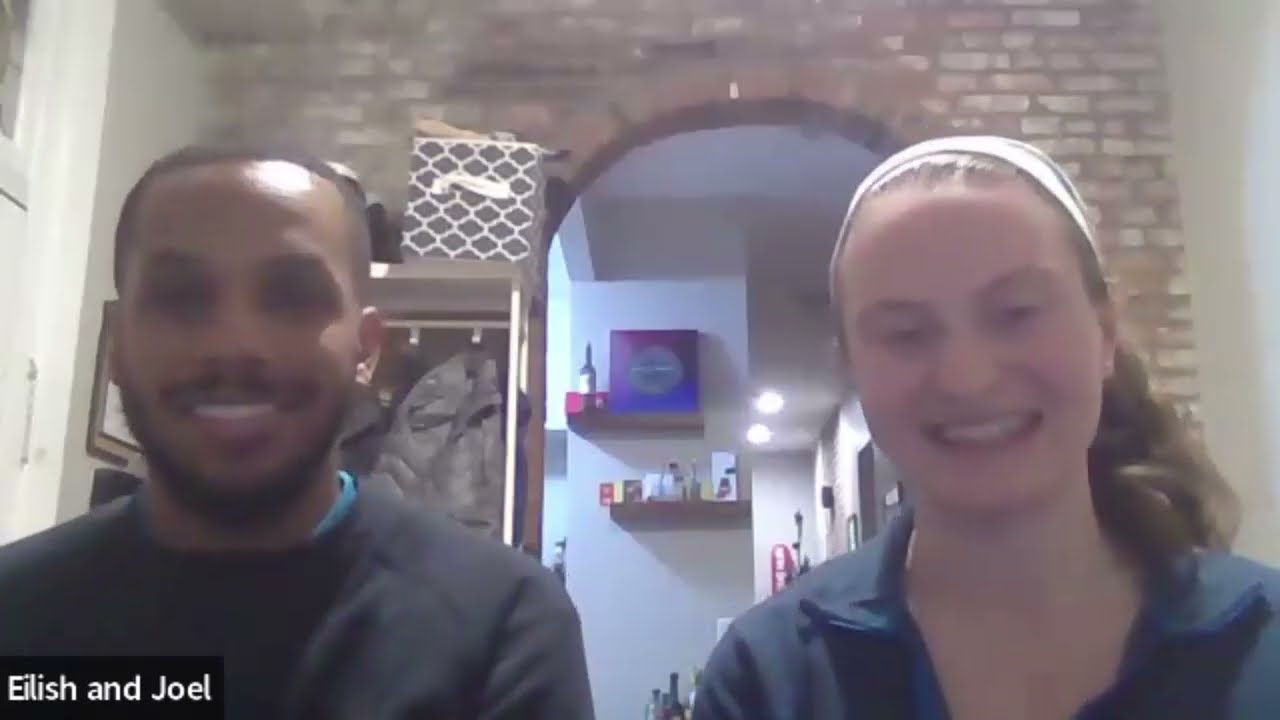
Eilish and Joel worked with Penny Kidd to tackle debt and combine finances while engaged. They had unequal incomes and struggled to communicate about money, but budgeting tools and coaching gave them a repayment plan and hope for their wedding.
Chapters
Hey Wise Guys, it's Penny with Penny Wise Coaching. I am here today with my clients and friend Eilish and Joel, and they have graciously agreed to kind of share some of their experience in, um, working with me and coaching with me. And, um, they kind of have a unique situation and that we've had some fun challenges/experiences with. So I wanted to kind of get your feedback and would just love to hear kind of a little bit about you guys and what your situation is and what maybe led you to coaching and what your experience has been like since then. Yeah.
So we are both athletic trainers by trade. So I had worked previously in the performing arts, in the touring performing arts, and then I decided to get off the road and I am now currently stationed home base in St. Louis. And that's where Joel works currently. So we are both pretty, I would say, just like career-driven, focused people, and we so happen to be engaged. So we've been together for 8 years. Joel popped the question, well, almost a year ago, which is exciting. And, and yeah, so we're living together now, which has been wonderful. But now, you know, we're kind of having those sort of questions of just, finances and what that looks like from two individualized people into one cohesive unit. So that is why we requested your help just to kind of start figuring that out and what questions we should start asking each other and things like that.
Yeah. Awesome. So, Joel, I had worked with Eilish just a little bit individually before in her last job. And then that was kind of cool because then you took some time off, Eilish, and traveled abroad. And so that was kind of a unique challenge too, to figure out, okay, how can I step away from my job for— how long were you gone? 2 or 3 months?
3 months.
Yeah. 3 months. Yeah. And so setting that up for success too and figuring out that irregular income of your, of your last job and per diem and housing. And there was lots of. Working parts and complicated things in, in your previous job. Right. And then you come home and tell Joel about, hey, I did this coaching with Penny. Maybe we should do this together now that we're kind of combining our lives. So, Joel, tell me a little bit about, you know, what that was like for you or any thoughts or feelings you had maybe before we started coaching. And then what, you know, what's been your experience since?
Yeah, I knew I needed financial help before and just previous years prior to, to moving to where we live now. And I was being on the road and she had good things to say about Penny Kidd and her experience and previous experiences. But it was one of those things where I had to get over myself to not be as scared or be as ashamed or as worried or whatever words you want to put to it about having money troubles or about having financial trouble. And, you know, for the most part, I've been very fortunate to have had a steady income in the last handful of years, minus a couple of months.. But then that financial— that those finances have grown in terms of salary and things like that. So I knew I needed to get on top of this debt that I had piling and sitting on the back burner and just weighing me down. And I could just see it every time I went to sleep or woke up. I knew this was there.
Right.
So it was just a matter of trying to— what strategies or what's the first step? What's the first step of trying to get help and that sort of thing? And we first were in contact and, you know, I wasn't fully there, and it was more so me than it was Penny, because you laid out things and you laid out, you know, Joel, what are your topics, or what do you want to focus on, or those things. And it was very easy to like, okay, you know what you're doing, you know, you at least have an idea of trying to help me and how to help myself, help me help myself. And so, finally came around to it, and I think it was once Eilish got back in town, because I think I was with work. I was— I got back in town and finally had a conversation and we talked to each other. We talked to Penny and we figured out a situation of, of how we could go about it. Not only continuing what Eilish did after she came back from her travels and starting with me from kind of starting from scratch as a new client, as a new person, but also how do we start together now that we're living together, we're engaged, we're in the same city, we're, you know, all these different things and prepping for life together in the future? How can we take all these personal goals and couple goals and focuses and try and focus together on that with Penny Kidd and give ourselves some sort of financial path to my future things together and any of that sort of thing?
Yeah, it is uncommon, I think, for people that are just coming together, maybe getting engaged, getting married, to seek out support before it gets, you know, kind of muddled and, and complicated. So I, I really give kudos to you that you saw that, you know, we're really great as a couple and we talk about most things, but we don't really talk about money a lot. And we kind of don't know how to go from being two very independent people into one couple, in one unit, to move forward together as a team who maybe has different situations with income and debt or savings or, you know, wishes or whatever. So talk a little bit about any of the, um, growing pains, if you will, or, or successes that you've had since, since then. What have you— what has happened in terms of your relationship and that dynamic around money?
I would say it's gotten easier to have conversations about money, um, without it being such a stressful thing. Um, I think planning a wedding is also— that's just stressful in itself on a whole other side of it. But I think just day-to-day, like, just living together, I think the, the idea of the previous years of, of I've paid the bills You know, and because most of the time it was by myself and she was on the road and, or she was doing things, or we were living separately and then we finally came together and we split up. So I think it was just a matter of like simple things like that as to, you know, HBO and ESPN, all these different things, all these subscriptions are in my name and I was paying them. So then it was, okay, you give me this amount of money or whatever it was, and it was just very almost kind of free casual sort of thing. And then I think now it was like, no, we're living together, we're doing life together. Let's figure this out. And let's, you know, rent is usually a simple thing because you can just take that number and divide it by 2. But it's like, what are you paying for? What am I paying for? What do we use together? What do we use separately? And not being afraid to have those conversations and not being afraid to divvy out what we need to divvy out. And if we need to cut something out of our lives, we cut something out of our lives for not only my bank account or her bank account's benefit, but for our benefit together. So I think that's— it's been easier to have money conversations, or I'm more— I know personally I'm more open about saying things about money a little bit, a little bit more freely. Um, but cool.
Yeah.
Um, well, I think also too, I know at least on my end is, you know, trying to just figure out what those conversations are as a couple because that. We've been just like, kind of what Joel was saying, is we've just been individual for, for so long. And so, um, and I think also too what has helped has been the budget sheets that we, that we've been doing with you. Um, but then also too, um, Cube as well has been kind of helpful as well, just to kind of, kind of just help combine like each individual into, into one in a way.
Yeah.
Um, and also too, just, I think we've also just had more open conversations of just, okay, well, what's going to make us happy? And, you know, what are the things that we need to do in order to make sure that each of us as individuals are happy in what we do individually so that we can then kind of come together as well as, as a couple as well?
Yeah, for sure. Well, and I, I think, um, it's very hard when you you know, you have lived a few years on your own as adults and kind of developed your own habits and, and ways of doing things, and not wanting to step on the other person's toes or telling them how they should spend money, but at the same time feeling like, you know, maybe it's not the traditional whatever, who's supposed to pay for what anymore. We have to kind of go through what is our relationship going to look like and what do you know, how do we move the needle? Because one of the things we talked about early on is that it's one thing to say, oh, well, I'm the one with debt, so this one shouldn't have to, you know, pay anything. But at the end of the day, if, if the other person can't afford to go travel because they're paying off debt, you are going to be impacted by the other person's situation, right? You just can't not be so. But at least by looking at it as a couple, whether you fully— you know, I don't usually want people to fully merge their money until they're legally married, but at least by doing, you know, if you're living together, like, you can have that conversation about who pays for dinner. Do we both contribute to the dining so that when we can decide, do we go out to eat or not? Or, you know, do we keep this subscription or whatever? It's not quite so my money, I'll do what I want with it feeling.
And another thing that I just thought of is just, you know, Joel's salary. Fortunately, he gets paid very well, and myself, I get paid decently too. Like, it's a livable wage, but it's not as much compared to Joel's as well. So also us just kind of navigating that too, just like you were saying, just with like kind of contributions to us together, what that looks like as well. And it was something we were continuing. It's a continual work in progress.
I will say it is. Yeah. And I think it will be till you die. Right. And hopefully that we're just creating the foundational conversations and your goals and direction of your money are going to change. But it is like, okay, we've created this good foundation to the relationship to have, you know, the money talks and to instead of fights, if it will, you know, um, Is there anything that stands out to you about your experience with coaching that maybe surprised you, or that if you were to tell somebody else about what coaching was like or whatever, what would you tell somebody that's considering coaching?
Yeah, I mean, there's— for me, it was a sense of vulnerability and just really kind of getting vulnerable, um, with like just thought processes and habits and how to— what's working, what's not working. You know, I know for a few times there has been some tough love conversations, but, you know, all in all, they are important and they kind of just help continue, continue growing. So, okay.
Yeah, I'd say just the— you see the debt that you have and you see there's a finish line somewhere in there. Down the line. Um, obviously larger amounts, the finish line may seem a little bit further away, or you, or you have to have a little bit, I guess, maybe stricter strategies to, to try and bring that down and try and, you know, get that away. But I think seeing the, the coaching point, there was a, there was some hope in it. Um, it didn't seem like, and I'm still working through it, but it didn't seem like it was gonna be like you're saying, you're working on this relationship with money until you die as a couple, but it doesn't seem like you're dealing with debt until you die. And then you're, you know, kids or whatever it may be, like, I'm still paying his debt. Um, so I think seeing that there's, there's a light at the end of the tunnel and there's a, there's a finish line, and you— yes, if you work through it on your own, you may be able to figure it out, but I think also having somebody else to help lead you that way and show you like look, this is— yeah, it's tough because you can't take whatever this amount of money is to go do whatever you want to do. But ultimately, you kind of got yourself in the situation. So— but this is the way out of it. This is— this is a flashlight in the dark tunnel of like, how do we— I got myself in here. How do I get myself back out of here? So I think having somebody like you, Penny Kidd, to help guide and navigate, help guide and navigate that situation, definitely helps. And it— yes, it's your debt or it's our debt in a sense, but you're not alone in trying to figure your way out of it.
Well, and we came up with some cool strategies for you. And I remember Joel particularly having like this lightbulb moment of, oh, well, that's not as bad as I thought it was going to be because you get in your own head and you assume and if you don't really look at it and have a plan, you just feel like, oh, I'll just be in debt till I die. Okay, whatever. This student loan will be around forever because that's what everybody tells me, but when you really can start looking at the money that you make, which probably is just going to keep going up because you're at kind of baseline of your careers, then if you're on purpose with the extra money that comes in, whether it's from side hustles or you get better jobs or whatever, then it works for you, right? Instead of just dripping through your fingers, which is unfortunately what most Americans are doing. They don't really realize that those little bits can really make a huge difference and How you pay it down or what interest rates are and what, you know, that those little tweaks can really make big differences. So, well, awesome. Any last thoughts you have about, you know, your experience? Or I know some people, I think, assume that I'm going to come in and tell them how to spend their money and be this like taskmaster. But, um, I don't know what your experience was.
I will say that's not the case. Um, you know, I, I don't think you say you have to do this or you have to do that with your money. I think you're— it's— you're, you're more of just considering all the options, right? Or considering like all the road paths of just, well, you could take the path that you kind of want to do, but what are your thoughts on this? What are your thoughts on that? And having kind of those those conversations. I think those are really great. And yes.
And then you decide. Yeah.
And yes, like I said earlier, there's a lot of vulnerability to it too, because sometimes I think also there's just sort of like this social pressure of kind of doing things or doing this fancy thing or that fancy thing or seeing whatever is on Instagram or all the Instagram ads and yeah, go ahead, to go do this thing or buy this thing, but really just kind of stopping, slowing down and saying, okay, well, is this actually something that I need, or is this something that will make me happy? And is that something that is helping me with my goals of what I want to achieve financially?
Yeah, yeah, that's good. Well, I so appreciate you guys. It's been super fun to walk this journey with you, and I hope that we get to continue and It's been interesting and fun for me to, like, look at wedding planning and trip planning and where all the things our money goes that isn't just paying down debt. Right. But it's, it's a part of our value and it's part of our life. And I want you to have a life and do the things, but not then regret it because you had the biggest, fanciest wedding or whatever and you put it all on credit cards. Right. So, so yeah, it's been It's been my privilege to do it with you guys, so I appreciate that. And, um, I, I hope that we get to keep in touch and hear the next story as the future unfolds for you guys. And, um, I appreciate you coming on today.
Yes, thank you.
Thank you.
Thanks. Be wise.
More from Penny

Where can you save money and still enjoy life? I saved $35 on concert tickets! #budgeting #finance

#primeday2026 doesn’t mean you buy stuff that is not in your budget! #amazon #primedaydreamdeals

A group could be your ticket to financial success! #budgetingtips #financialfreedom #money #debtfree







