Healing Through Finances | Empowering Talk with Suzanne Jabour
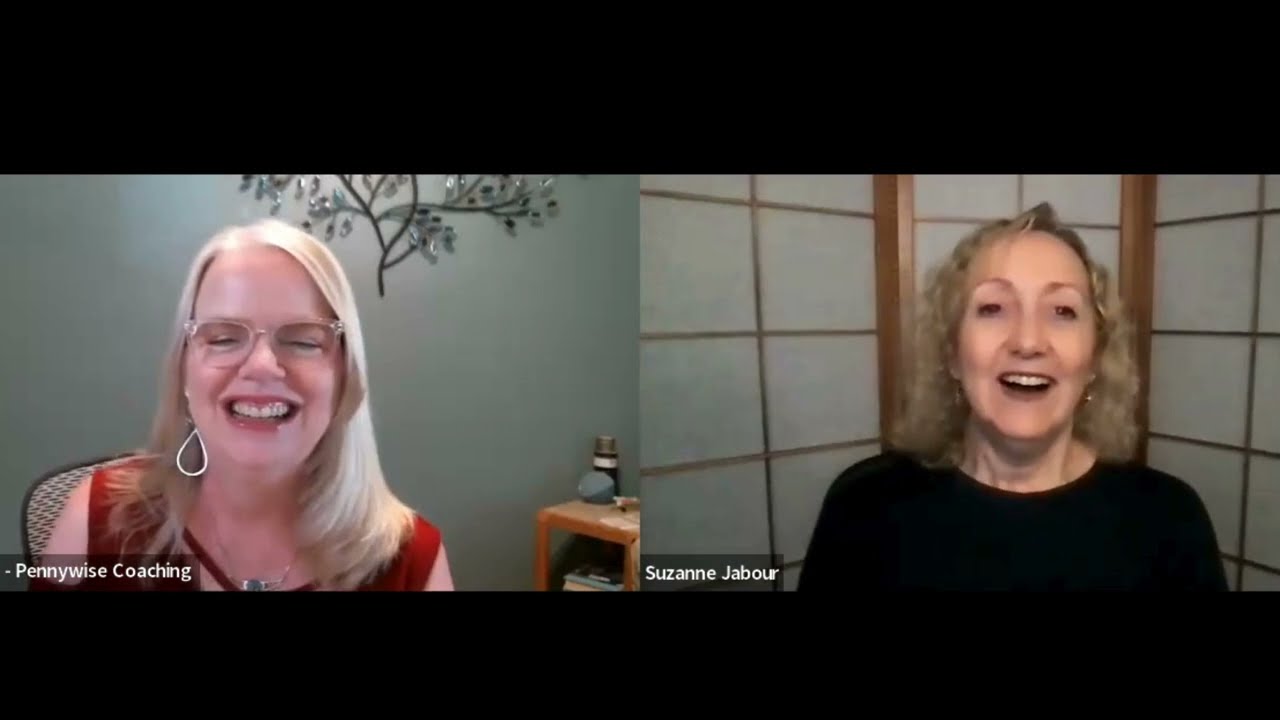
Grief educator Suzanne Jabour talks with Penny Kidd about how loss—whether death, job, or health—hits your finances hard. Funeral costs, lost income, and hidden expenses pile up fast. Breaking the silence around money and grief, and offering specific help like meals or errands, matters more than vague sympathy.
Chapters
Hey everybody, this is Penny with Pennywise Coaching, and I'm here with my friend Suzanne Jabbour, and I have a great conversation to have with her today and some questions. Suzanne, do you want to give us a little intro about yourself and then we'll jump in?
Yeah, thank you so much for having me. Um, I'm a grief educator. And what that means is my mission, job, talking points are all about grief, how it works, what the symptoms are, what we can expect to happen to us, what we can maybe understand is happening for other people, all with the intention that we shift our silence, we shift our taboo so that in times of grief and loss, instead of the isolation that we're creating right now because we just don't know, what to do, we instead create really deep connections. So that's really become my mission, goal, purpose. That's what I'm here for. So yeah, open, easy conversations about grief to just really help people understand it better and provide that education piece. You know, it's not all about my story, it's not about my deep sadness or my grief experiences. It's about how can we take that, what I've learned, what I learned from continuing to study and talk to people and make it so that we feel more comfortable understanding what's really going on for us and maybe for someone else that we're trying to support.
Great. Yeah. When we met not too long ago, we found that there was a lot of ways that finances and money intersect with grief, right? So we thought we would have a little conversation today about, um, types of grief and how you know, how money may or may not play into that. But just tell me a little bit about what you know about grief and the kinds of things that we grieve around. Um, I think it's a word that we probably put some kind of, we think we know what that means, something on it, right? But I bet you have seen that it's not as black and white.
Absolutely. And I think that's part of where we're missing a really robust opportunity to build that connection that we're all craving so much. So when I talk about grief, I'm talking about the natural response to loss of all kinds. So when we broaden our definition, you know, we kind of understand that grief comes with the loss of a loved one when someone dies, we understand, oh, yeah, that's grief when someone dies. But it comes with any loss. So when we see that change brings loss and loss brings grief, then we can see that we're actually in grief on and off to varying degrees as a regular part of our lives.
Right.
And we kind of close that aspect off because grief has this big taboo about it and because we think it's only, you know, only certain losses are kind of worthy of grief or worth grieving. But what that does is it kind of shuts us off from our emotional experience, which we're learning, you know, and science is really backing up is so important for us to actually stay connected to for our health. And also when it comes to the financial piece, obviously there's financial impact of the loss of a loved one, especially if it's a spouse or someone who's a contributor to the family income. Mm-hmm. But grief also comes with the loss of a job, the loss of a business, the loss of a marriage, you know, divorce or separation, estrangement. All those relationship losses. And so many of those have big financial implications. And we want to kind of, well, I mean, finances is another thing that still has some taboos around it. So then we're compounding the taboos of things we're not gonna talk about that we think we should be able to do all by ourselves. And it's just wrongheaded. We've been wrongly taught. So we're here as a financial educator and a grief educator to, you know, start that reeducation process of saying no, like, you're not supposed to be able to manage your finances all by yourself in a vacuum, and you're 100% not supposed to grieve in a vacuum. So how do we have these kind of conversations so that people can see, oh yeah, I could say something about this to someone, even if that someone is just me, even if I'm just having a conversation with myself as a starting point.
So tell me a little bit about, um, what you have seen with those variety of types of grief And what are some of the financial impacts? And you can break them down, like if, you know, um, the death of somebody and what it— I mean, I've told people it's, it's not free to die even.
No, it's really not. And I was thinking about that this morning and thinking just the costs of, you know, dealing. And, you know, we're— we have to be technical. We have to talk about this like it's normal because it is. So we do have to deal with the the person's body. Like, you have to do either the burial or the cremation. There's all the costs associated with that. And that was actually shocking to me how much that was, because we wanted the most, you know, simple cremation possible, and it was still thousands of dollars, right? Like, it just was shocking to me how much it was going to cost to do what seemed like is part of life and just should be free, you know? It's kind of like, I feel like you also shouldn't have to pay for toilet paper. Like, don't we want everyone to have toilet paper? It should just be free. Yeah, but it's not. So there's that reality of, you know, are you going to do a cremation or a burial? You probably want to have some kind of celebration of life or funeral service or whatever you want to have. That all comes with money. That all has a cost. The reception after has a cost. And that's not even taking into account the loss. You know, if it's someone who was an income earner in the household, that becomes a huge loss. And especially, you know, so often in older couples especially, it seems to be that the husband dies sooner than the wife. And often in that, you know, one generation beyond me, even the husband was the main breadwinner.
Right.
And so it's that big loss of income, of the pension, of, you know, a lot of that is not necessarily put in place to continue, right? If you haven't done your paperwork properly with a good advisor because you've thought you were supposed to do finances by yourself, right? You need to be really aware of how those beneficiaries are set up. And then when it comes to the other kinds of losses, you know, if you've lost your job, like that's a huge financial impact. That you have to have dealt with. And I know when you're working with your clients that they have an emergency fund. I'm sure they do.
Right. That's always where we start.
Right. That's where you start is like, what's your backup plan for when your plan doesn't work? Right. So it's having that emergency fund. It's having that, you know, that money that will hold you over through the ruptures. Right. Because we know the only constant in life is change. And it seems like especially post-pandemic disruption and change is the norm.
Right.
Like, it just seems to be much more common, much more regular, much closer together. All those sort of little ruptures that we have in our life. And I think if you don't have a financial plan for weathering those, it's the same. It adds that same layer of complexity as if you don't have an emotional plan and a support system plan and a skill set plan for weathering grief because it happens to all of us. You know, the only thing that's guaranteed is that we're all going to die.
Right.
So at some point we are all going to experience grief because we love. That's what humans do. And when someone dies, we grieve. That's how it works. It's very normal. But if we haven't done any thinking about how that might work or what we might do or who we might rely on, you know, the same way we want to kind of pre-plan so many things in life, we can have given some thought to what we might think we would do. And you never know, you know, what was so interesting to me this time around. So my most recent loss was my son, and obviously that's, you know, in that hierarchy of how we kind of understand big things to grieve, the loss of a child kind of wins that, uh, race or whatever. I don't know, that hierarchy makes no sense to me at all because grief is grief.
Yeah.
And even though I had experienced the death of my dad and the death of my mom, you know, Ben's death was a whole different thing.
Very different.
But if we know there's symptoms, you know, there's 8 or 10 really normal symptoms that we can expect, and then you don't think like I did that there's something wrong with you, because then you're left with this big grief and this big hole in your life, and now there's something wrong with you. Yeah, there isn't. It's just grief. It's how it works. There's symptoms, there's phases, you know, there's an ebb and flow to it. And, and we can practice on all those losses that aren't the loss of a close loved one. Right? Not that a job loss is a small loss, but it's a different level of grief.
Right.
If we want to kind of, you know, and we have to use the language we have, which is kind of misleading because I really don't believe there are levels, that there are some losses more worthy of grief than others. It all depends on how it hits you. And some person's job loss might be a gift. You know, I have a friend whose husband lost his job. He said to him one day, yeah, you know what, I think what I want for my birthday is to lose my job. And the next day he got his notice. I was like, wow, he manifests really fast, right? That's what he wanted. So that job loss, while there's grief attached to it, right, because even though he wanted it, you're now no longer working with those same people, you have loss of routine, loss of all the comfort things, it's not a job he's grieving, right?
Right.
Whereas sometimes when we lose our job, we've lost a huge part of our identity and a huge part of our social circle. Like, so every loss is different, and there's some regular symptoms, there's some regular kind of phases to expect to go through. There's, you know, a need for witnessing. Grief always needs witnessing. So that sense that if we can just be able to sit with someone while they either talk about it or scream about it or cry about it or don't, that at every level of every version of grief is really what we need.
I love that there's no one way Excuse me. Um, and as you're talking, I'm thinking about all the other things that you grieve. You know, you grieve the loss of a pet. Yeah. And some people poo-poo that, but when you love your pets, like some of us do, it, it's a visceral feeling, right? Um, and it, there's, you know, the loss of your health there, you know, and it, it is not just people and parents and kids and whatever. I mean, I can't, I can't imagine the loss of a child, and yet I've always tried to not, not rule that out or, um, know that that's possible. You know, I talk to my 20, 30-year-old kids about the need for life insurance and You know, do you need life insurance when you don't have people dependent on you? Maybe not, but maybe there's a reason to have that for other living benefits. And, and the fact that sometimes you don't die, you have some issues that, you know, have financial impact along the way, whether it's a diagnosis or whatever, right? So many, many people have children, little kids who have things that cause them illness or death. Right. And so for us to feel like it will never happen to me is kind of Pollyanna something, because something's going to happen to all of us. Like you said, the only thing we can guarantee is that we're all going out eventually. And life keeps happening while we're living.
And there'll be a bunch of bumps along the way.
Yeah.
I think, you know, and I think it comes with the financial piece, too, and the grief piece. The reason we don't even want to think about that and we want to believe that it's not going to happen to us is because we're so scared. It's because our fear is so high. And to me, the best way to counteract fear is with information, right? Because if we understand something, it's less scary.
Yes, I totally agree.
To me is, you know, if we understand it, yes, there's going to be life ruptures and you're going to feel a whole bunch of ways, and I can't necessarily predict those ways, but what I can predict is you're probably going to have some brain fog. You're probably going to have some sleep disruption. You're probably going to have some issues with eating, with your digestive system. You're going to have some neurological symptoms, probably. You might feel super tired, even if you're sleeping lots. You're going to feel tired. You're going to need people that you can talk to, and you're going to need practical support.
So, and I can insert money in every one of those.
Absolutely.
You know, I mean, yes, yes, yes. And you start going, yeah. And because there's all this shame and embarrassment, like you said earlier about money and grief is not taught. We aren't. Um, and, and there's this baggage somehow everybody seems, or many people are carrying around that they should know better. They screwed up or, you know, why did this happen to me? You know, um, all of those things, we're probably all going to bump into them at some point.
Yeah.
I don't know anybody who's perfect with money. Hi, my name is Penny Kidd and I'm not perfect with money.
Oh my gosh. And you know, I'm still in denial.
Exactly.
Right.
And I think the being willing to be open and honest and confront things and learn and say, I don't, I don't know some stuff and I didn't do very well in this situation. How can I make it better? And I think that's. Most of the people that come to me for financial coaching are in a place where they're desperate to make changes. I just heard from somebody today that had referred somebody, hasn't quite followed through yet, said that this person had some kind of mental breakdown around his finances. Yeah. And it's real, you know, and it's painful and stressful. And yet finding that person of support to help you get through that and to realize it's just money, right? And I can say that in sort of a tongue-in-cheek kind of way. And, and yet for you, I would never want to poo-poo, you just lost someone or whatever, if it, it is where you're at. But I think allowing yourself to be a little messy in both sides and just say, okay, I'm going to try to be a little better and work through it and ask for support and help. It's huge.
And I think what you said about shame is so important because there's so much shame and blame in both of these spheres. And what I know about shame especially, and blame too, is we can't learn when we're in shame, right? If we're in shame-based meaning-making, if we're feeling like, oh, I should have known better, I should have done something differently, I made this big mistake. I feel so stupid. We can't learn.
Right.
And what we really need to do in both spheres is learn because they are skills that nobody taught us. And they're subjects that for most of us had some taboo around them. So we didn't learn from other people's stories, which is how we learn as humans. We've always learned through story. We've always learned through sharing our experiences. And so when we have taboo areas that we don't do that with, like no one says, oh my gosh, I got tens of thousands of dollars into credit card debt and I can't even believe how that happened. And I didn't even, I wasn't even really paying attention. We're not having that conversation. Nobody's putting that on their Instagram, right? But it's the reality for tons of people.
Yeah.
And it's because we don't have the information and we don't have the skills. And sometimes it's because we are under-resourced and it's like, it's a product of being under-resourced that we've ended up in credit card debt or wherever we've ended up financially. And we can shift all of it. And it's the same with grief. There's no shame. There's no blame. However you're experiencing it is exactly right. And however you've shown up to support somebody is the best you knew how to do at the time. And so on both sides, we need to be out of shame because both sides need to learn. Grievers need to understand grief better cuz we don't really know how to do it. We don't know how to find our own path. And people supporting them need to stay outta shame so that we can learn how to show up cuz we don't really know how to show up for people in the way that is needed.
So we avoid it altogether. Yeah.
And then we end up isolated when what we all really need is connection.
Do you have any, um, specific tips that you like to share with people you've worked with around first steps even? I mean, I know it's a journey, but what would you tell somebody that realizes maybe I'm, I'm not dealing with my grief yet?
Yeah. If you're the griever, then the first step really is to just give yourself permission. We need to really give ourselves permission to grieve how we need to, because unfortunately in this moment, culture isn't giving us permission, society's not giving us permission, most of our friends and family aren't giving us permission, right? That's what I am, you know, here to really shift and bring people along to help shift. So we have to give that permission to ourselves, and whether we can find a space to grieve with someone else to find that witness, or two, whether we can grieve publicly. I chose to grieve out loud. That was the path to survival for me. Most people don't make that choice because that's really scary. For me, I knew that was the only way I was gonna make it. But, you know, we just have to give ourselves permission to do it the way that we instinctively know we need to do it. Cuz you're gonna get tons of advice, most of it from people who have not grieved what you're grieving. And I say often, you know, even if you have had, have experienced as a parent the death of a 22-year-old son who suffered from depression and anxiety and that ended up being terminal, that's not the same grief as mine.
Yeah.
It's just never going to be the same. And there's some common symptoms, timeline things, you know, the timeline is way longer than we think. Even if you can just give yourself permission for it to not be over in the 3 to 5 days you got off of work. Right? It's gonna be probably 2 years. 2 years is that early phase really where we're still grappling with significant symptoms and significant, you know, emotional upheaval. And I think for the people who want to support someone better, we have the— we have what we do backwards. So the most common questions I get asked are, what can I say and what can I do? And we— what we've been trained to say is one of those clichés and platitudes. It's kind of pat. It's a 1 or 2 sentence and like we're done. It's very closed. What we've been trained to offer is this big magnanimous, you know, anything I can do, just phone me, right? And so many people say that to me. I really like anything I can do, just let me know. We need to flip those. What we need to say is something really open-ended, honest, and from the heart, because you can't do any harm when you're speaking from there. And those clichés and platitudes mostly do harm. So we want to ignore all of those, do a ceremonial burning. I love having a workshop where we write them all down, we brainstorm them all, and then we like rip it up and burn them. Because really, that's where they should go, back to the '50s or wherever they came from. Let's send them back there.
Right.
And we need to say something really open, which is probably, if we're being honest, which is the key, going to start with, I don't know what to say. And what I want you to know is I really care about you and I'm here to walk this path with you. And let's, you know, how can I help you today? Can I bring you a cup of tea or coffee? Right? Which gets us to the what can I do, which needs to be very specific. Yes, no, very specific offers. I'm going to the grocery store today. Go stand in front of your fridge, open it, tell me what's missing. I'll bring it to you this afternoon. Right? Very specific. Do you need bread or milk?
Well, and don't you think, like, historically, maybe it's, maybe it's a, I would say Midwest, but I didn't grow up in the Midwest, but that kind of idea of bring food. You know, it's something you can do, which I think is appreciated at some level. But then you, when you're the receiver, sometimes you've got more food than you know what to do with. And it's a week out.
I've never thrown out more food in my life.
Right. I've never thrown out so much food. And yet maybe 6 months from now you need a meal or you need to be taken to lunch, right? And to sit down.
I didn't eat or do my grocery shopping for about the first year and a half.
Yeah. Yeah.
Because the grocery store is really complicated.
Yeah.
So if you don't hate the grocery store, if you don't mind grocery shopping, offering grief groceries, there's actually a name for them. They're called grief groceries. Really?
Right.
It's not like the grocery store is that complicated for people. And if you think about it, it makes a lot of sense. I could break that down, but we don't need to. But grief groceries, really helpful. And food, you know, we want to, we get that rush of assistance at the beginning.
Yes.
When for many of us, our digestive systems are so dysregulated that we're barely eating.
Right.
So you're bringing me a whole bunch of food that I can't eat because I'm not eating hardly anything. What really helped me was people who offered to take a recipe, who said things like, I love to cook. Can you send me a recipe that freezes well and I'll cook it for you? So they're sending me something I know I can eat that is comfort food to me. That I know how to freeze, like I can just warm it up, right? So those kinds of things are super helpful. And it's specifics. Offer something you like to do or something you're doing anyway. I'm going to the Home Depot to get yard waste bags. Do you need some? I'm grabbing light bulbs. Do you need some light bulbs? Like, what do you— everything you need, the griever needs too. That's the thing to remember, right? If you're doing it for yourself, they need it too, right? When I go out on Thursdays to take my garbage cans to the curb, can I take your garbage too?
Yeah.
Can I stick in your backyard? Right? Because I'm going to tell you, a griever in the very acute earliest days, they have no idea what day it is.
Right.
Thank goodness I live in a condo. I just could take garbage out to the dumpster anytime. If I had had to remember that it was Mondays or whatever day and I had to get it out on time, it would have just never happened. It would have been overflowing in the backyard.
Yeah. Yeah.
So super practical, tangible things. That's how to help. Specific offers.
Right. Well, yeah, this, this week I've been helping my neighbor buy a car. And go car shopping. And she lost her husband 3 years ago. She's in her 80s. And I, there's an element of it to me that I'm still delivering on that. What can I do for you? Yeah. Because of the grief. And my husband was cleaning her dryer vent this last week. And, you know, at some level it's that we offered to be there for the long haul. And she, I'm sure at this point it doesn't feel like I'm doing it because she lost her husband. But there is an element of it's still a way to support somebody, right? That's way after the fact.
And grievers need support that long term. Like, we really do. And I know that seems like it goes against everything we've been taught, because what we've been taught is all wrong.
Be resilient. Yeah, you'll bounce back over it in the first year.
Like, people are like, oh, you're still doing that grieving thing? Yeah, for the rest of forever. So How can you help me for the rest of forever? And our needs don't stay the same, but I can tell you, you know, I can understand that for your neighbor, having to go buy a car on her own for sure will have activated her grief, right? Something like the dryer vents, which probably she did, or her husband did, or they did together. She watched the ladder or whatever, right? That activates your grief when you come up against those everyday things that you would have done with your loved one or they would have done for you. It really, that brings it all to the fore again.
And that's okay.
That's part of how we move forward.
Yeah.
We don't want to leave them behind. They're coming with us. And sometimes that's really hard. So that's beautiful. Like, that's the kind of long-haul support that people need. And as you say, you're not specifically doing it because you think, oh, you know, she lost her husband and so she needs help. But you're seeing, because you're operating from that place of empathy and compassion, that she might need some support with this thing and make the offer. And if the person says no, that's great. They get to decide whether they take the offer or not.
Right.
Make the offer and keep making the offer. Offer something different. Offer 6 months later.
Yeah. Well, I keep thinking about all the ways that money touches these things. And I've been coaching people for 10 years and run across many scenarios like this. And trying to help them plan, kind of plan for the worst and hope for the best kind of thing. But the being in denial about anything doesn't really serve us. And so, you know, just say, oh, I'll worry about that debt tomorrow and next year. And when I get a better job, I'll do X. Or, you know, I think starting today and to start being aware and, and just looking and being cognizant of things that you can lose, whether it's your car can break down or your parent can pass and you have to fly there. Your grandma died, your dog died. How are you going to pay for that? Your dog is sick. And so for me, a lot of it is trying to preemptively plan for things you don't know what they're coming. And that's again why you have an emergency fund and why you start going, okay, I have a car. That's probably going to need tires or maintenance or something. I better set some money aside for that, right? Because otherwise our go-to is always lean back on debt, right? And I remember when my dad died 25, 28 years ago and the— my parents had prepaid funeral plans, but you couldn't prepay the opening and closing of the plot because those expenses are very relevant whether you're in the '50s or the '80s, right? So, um, when, you know, so that was a huge thing for my mom to have to deal with. So then at least when she passed, we were aware that, okay, it's not all paid for just because they paid for this lion's share. And then all those other things you're talking about, like whether it's a service or food or, you know, reception type stuff, those have costs that go with them. And I think there are ways to plan around that. And to one of the things that A lot of people rely on life insurance. Oh, life insurance. And yeah, but you don't, you know, people say you don't get it right away.
Nope.
You know, it's not, you know, within 3 to 7 days when you're burying this person, you don't have the life insurance policy. And so having some money in a payable upon death account that literally, but still that would take a couple of days to get the death certificate and stuff. So, but better than nothing, right? But who's that person?
Your child together. With you and your loved one that is set aside.
This money is for that.
Saving this is there, but that you can access, and then it's there and it's done. And if you've put that away over, you know, over your lifetime, it's cost you almost nothing as you go. You know, $50 here, $100 there, $20 even would make a big difference because it all adds up, right? But it is that sense of what can we anticipate and then at least have an emergency plan for.
Yeah, yeah.
But like, why we're not planning better for like, there's going to be all these expenses when we die. We know that's going to come, but we have so much fear that we don't even want to talk about it. But it's the only for sure. It's 100%. There's 100% possibility.
Yes. Yeah. Well, it makes me think about my own situation, like, okay, what can I clean up, right?
Yeah.
So are there any last minute things that you either you have questions about or you have tips that you want to share, or otherwise, I think we could talk all day, but we probably should wrap it up.
Yeah, I think we've given people a lot to chew on. And I just say, if you have questions, if you need more information, if you want to chat, right, just head to my website. It's easy. SuzanneGibourde.com. Find me on LinkedIn where you found this. Um, you know, cause I'm here to help the same way that Penny's here to help with your finances. I'm here to help with your grief, whether it's yours or someone else's, whether it's expected or unexpected. Um, we need help. There's things we need help with. There's skills we need to learn. And that's all it is. We're just skill building.
Yeah. So I'll put your contact in, in the, um, notes, wherever all the places this will wind up. Um, but spell your name and your website so people can find it.
Oh, sure. It's Suzanne, S-U-Z— I'm Canadian, sorry— S-U-Z-A-N-N-E, uh, last name is Jabour, J-A-B-O-U-R.com.
Great. Awesome. And I'm at pennywisecoaching.com. And we will be sharing this out on our social medias and YouTube and LinkedIn and all the places. But, um, I think there's lots of valuable tips. So I hope people not only watch this, but share it with their loved ones. Right? And start planning and not be afraid to, to talk about the end of things and the planning for grief and giving themselves permission to grieve, you know, and it can be grieving financial situations, right? And so, um, I think that's what— Yeah, watch it together.
Start that conversation because it's all about starting the conversation. It's going to feel awkward and it's going to feel messy and that's okay.
Yep. Awesome. Okay. Well, thanks so much for your time.
Thank you.
Have a great day.
All right.
You too. Bye. Bye.
More from Penny

Where can you save money and still enjoy life? I saved $35 on concert tickets! #budgeting #finance

#primeday2026 doesn’t mean you buy stuff that is not in your budget! #amazon #primedaydreamdeals

A group could be your ticket to financial success! #budgetingtips #financialfreedom #money #debtfree







